

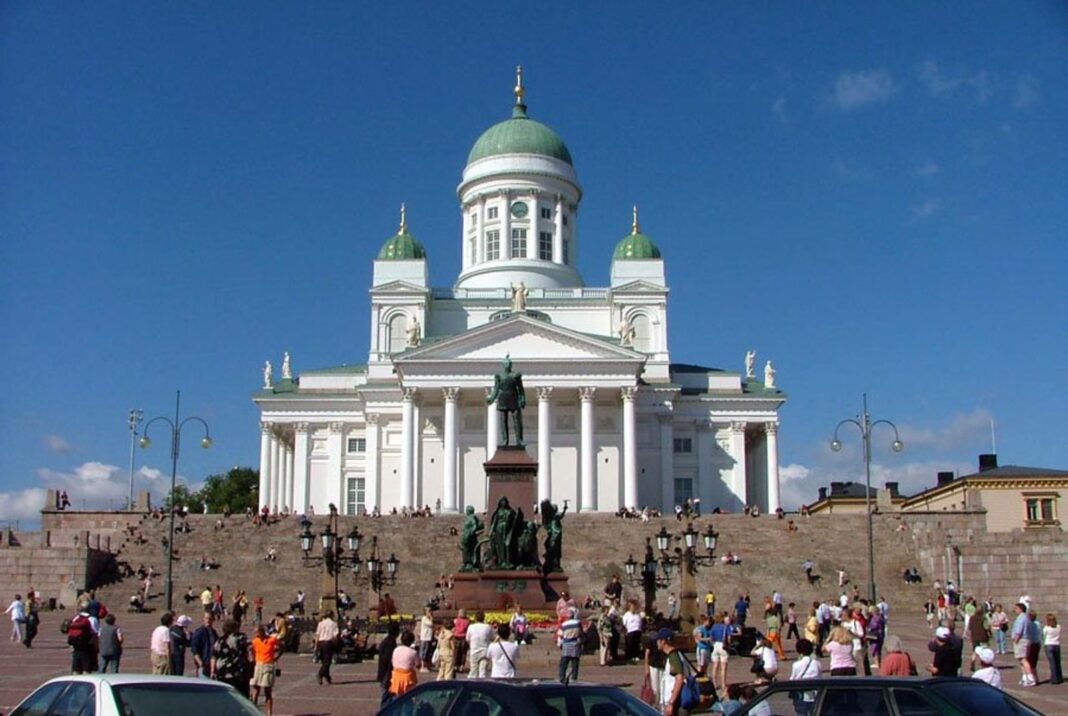

Vienna — Finland assumed the chairmanship of the OSCE this month, presenting its priorities to the Permanent Council in a year freighted with symbolism: 2025 marks fifty years since the Helsinki Final Act was signed in the Finnish capital, and Finland now chairs the organisation the Act created — as a NATO member, with the alliance’s longest border with Russia.
Foreign Minister Elina Valtonen told delegates that Finland’s chairmanship will rest on three pillars: support for Ukraine, the resilience and functioning of the organisation itself, and preparing the OSCE for the future — including the fiftieth anniversary commemorations planned for Helsinki at the end of July.
The symbolism cuts both ways. The 1975 Final Act was signed by 35 states including the Soviet Union, on principles — sovereignty, inviolability of frontiers, human rights — that Russia’s invasion of Ukraine violates daily. Finland’s own trajectory embodies the shift: a country that spent the Cold War carefully neutral applied for NATO membership within weeks of the 2022 invasion and now chairs the OSCE from inside the alliance.
Valtonen has been direct about the anniversary’s purpose. Helsinki+50, she argues, cannot be a celebration — there is nothing to celebrate while the Final Act’s principles are being trampled in Ukraine — but it can be a reckoning: an examination of why the organisation’s security order failed, and what must be rebuilt for the fifty years after this one.
The practical file is as grim as the symbolic one. The OSCE still has no agreed budget commensurate with its tasks; its three detained staff members in occupied Ukraine remain imprisoned; its monitoring capacity in the country is a fraction of the mission closed in 2022. Finland has said it will pursue the detainees’ release and keep Ukraine at the top of every agenda it controls.
Finnish diplomats like to note that their country knows what it is to live next to Russia under all possible weather. The chairmanship year now beginning will ask whether that knowledge, and the organisation’s half-century of paper, can still produce something a Ukrainian family under bombardment would recognise as security.
Media-Society.com is a press network association based in Spain, founded in 2020. More at www.media-society.com.