


“This brings the total of functional hospitals to Gaza at only 14 … The situation in the remaining eight hospitals and a citykeepers in the city is essential,” said WHO Tarik Jasarevic spokesperson.
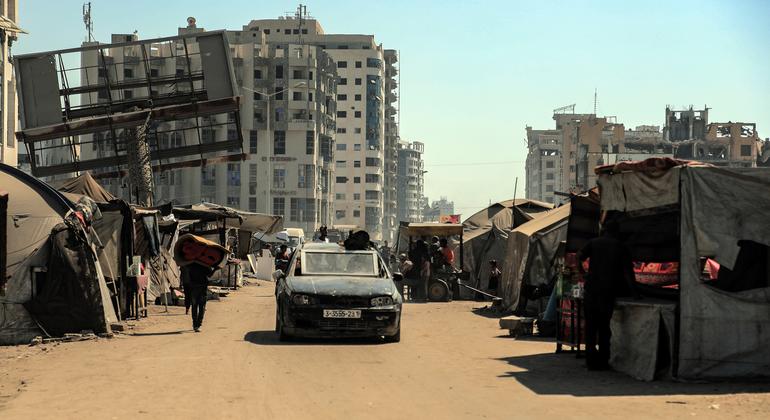
Development comes as Israeli forces continue to enter the city of Gaza with the declared goal of disloding the Hamas fighters who are based there. At the same time, repeated Israeli defense evacuation orders were issued to the communities of Gaza City, deractive hundreds of thousands of people and affecting hundreds of health establishments.
“Even if hospitals are not invited to evacuate, there is a lack of access, there is violence just nearby and which can put them out of service”, ” Jasarevic told journalists in Geneva.
The key role of health care of the city
Gaza City forms the backbone of the Gaza Strip Health System, as almost half of all the enclave campaign hospitals and hospitals are based there.
“South hospitals are overwhelmed and cannot absorb more”, ” Who warned in a declaration on Friday which noted that the remaining hospitals of the enclave include eight in Gaza City, three in Deir Al Balah and three in Khan Younis. None works at full capacity, said the United Nations Health Agency.
The situation in the remaining eight hospitals of Gaza City and a field hospital is “critical”, with medical teams “overwhelmed by the influx of victims resulting from strikes”, in addition to having to treat non -traumatic patients.
The four hospitals in North Gaza has been out of service since September 1 are the Children’s Hospital Al Ranti, the ophthalmic hospital, the St. John Eye hospital and Hamad hospital for rehabilitation and prostheses.
Which describes the Hamad hospital as one of the three main rehabilitation establishments specializing in the Gaza Strip. It served 250 external patients with rehabilitation services, in addition to providing medical care to injured people while asking North Gaza help at its trauma stabilization point, with around 200 patients served daily.
Devastating attacks
The Al Ranti Hospital underwent serious damage caused by a direct strike on September 16, while 80 patients were inside the establishment. It is the only pediatric hospital specializing in the Gaza Strip. No deaths were reported in the attack, but there have been significant damage to the water tanks on the roof, communication systems and medical equipment.
Half of the patients fled, while around forty people stay inside, including four children in the intensive care unit and eight newborns, according to the WHO. Most of his medical equipment have been transferred to Al Helou, as a Sahaba and friendly patients for patients, all in Gaza City.
In addition to the latest hospitals, the situation is “critical” at the remaining eight hospitals in Gaza City and a field hospital. They are all “overwhelmed by the influx of victims resulting from strikes”, weak on supplies and forced to treat patients on the soil.
Highlight critical shortages in blood units, blood bags and transfusion sets “the services could stop in a few days, without urgent reconstruction”, which insisted.
According to the United Nations Health Agency, all dozens of attacks reported health care between September 7 and 17 in Gaza City, with Khan Younis on 12.
Drugs required without delay
“More violence only means more injured people. This means more victims, more dead and it means less access ”, Mr. Jasarevic said. “The inhabitants of Gaza suffer from multiple trips; There are shortages of medical supplies, there are access problems for both humanitarian workers, for health workers, also for patients. ”
The WHO spokesperson reiterated the call for the health agency to urgent evacuation of the thousands of seriously patient patients who need specialized care.
“More than 15,000 people … must be evacuated for medical reasons and evacuations are really very, very slowly,” he said. “Again, we cannot call on a ceasefire, calling on unhindered access so that we can try to support what remains of the health system in Gaza with medical supplies, with emergency medical teams and with everything else.”
Originally published at Almouwatin.com