



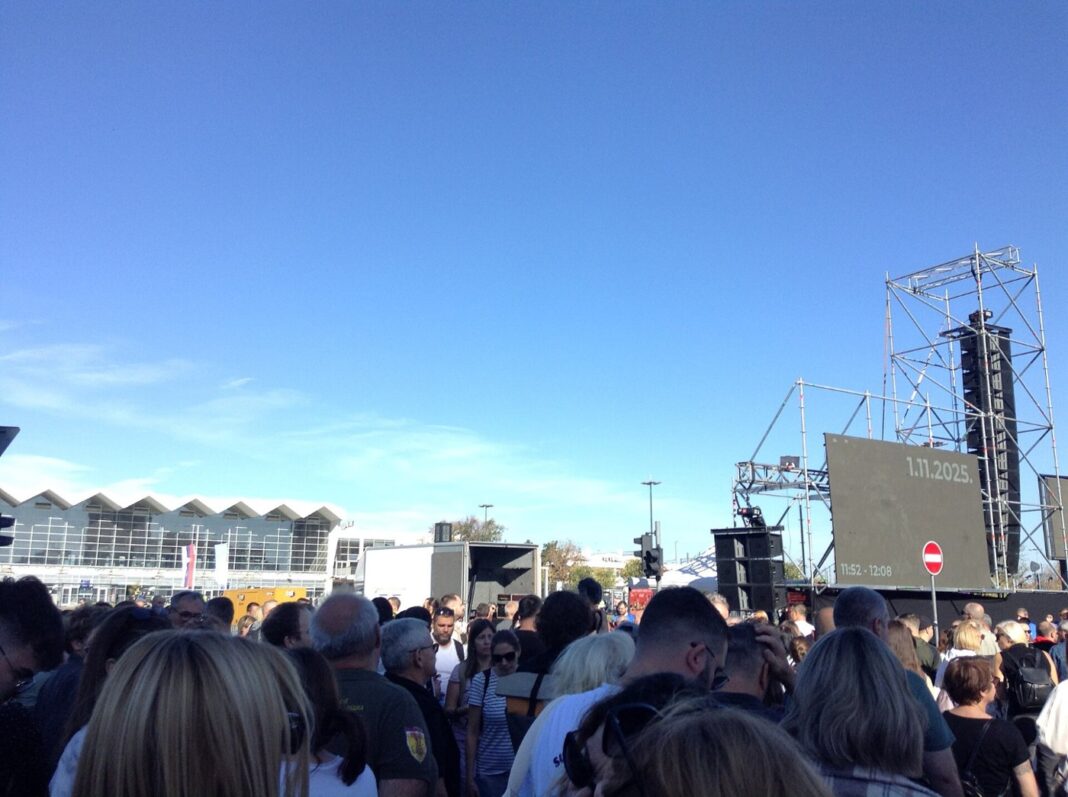

NOVI SAD — At 11:52 on Saturday morning, the exact minute the concrete canopy came down a year ago, this city stopped. Sixteen minutes of silence, one for each of the dead. Then Dijana Hrka, whose son Stefan was killed under the rubble of the renovated railway station, took the microphone and said what a year of protests has been saying: “I need to know who killed my child, who killed 16 people.” She announced a hunger strike.
Tens of thousands converged on Novi Sad for the anniversary, many of them students who had walked — some for two weeks, one column for 90 kilometres from Belgrade, greeted from doorways and balconies along the way. The movement that grew out of the disaster has become the most serious challenge to President Aleksandar Vučić in his decade of dominance: students occupying faculties, demanding accountability for the collapse and early elections, and absorbing arrests, beatings and the president’s habit of branding them foreign-backed terrorists.
The facts they refuse to drop are stubborn. Thirteen people have been charged over the renovation; no trial date has been set. The station had been reopened with ceremony, twice, by officials who praised the work that killed sixteen people. Nobody senior has resigned over the disaster itself. On the eve of the anniversary, Vučić offered an apology of sorts — he regretted some of the things he had said about protesters — and the students answered that if he meant it, he could call an election.
Europe’s attention, often late in the Balkans, has arrived. EU Enlargement Commissioner Marta Kos wrote on Saturday that the tragedy is changing Serbia, that it “moved masses to stand for accountability, free expression and inclusive democracy — the same values to lead Serbia into the EU”. Brussels has also warned Belgrade that democratic backsliding could cost it access to a billion euros. Forty-seven international media outlets covered the anniversary, according to the student organisers — a count they kept themselves, because being watched has become part of their protection.
Movements like this are supposed to fade. This one has instead learned endurance: eleven months of blockades, marches and memorials, sustained by people who were children when Vučić came to power. On Saturday a mother announced she would stop eating. The government can wait out a march. Waiting out that is another matter.


