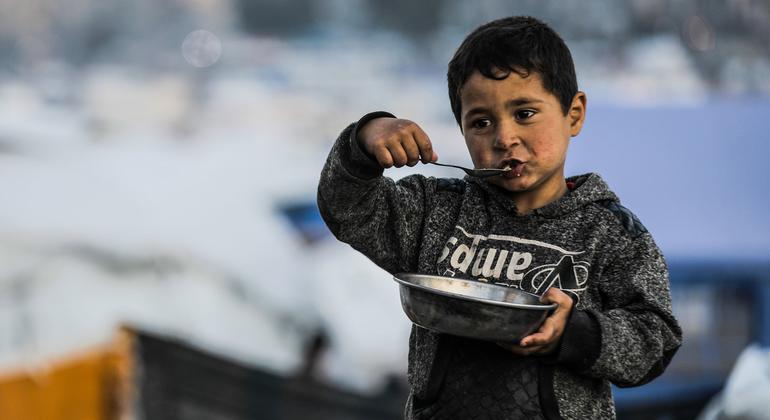



Speaking from Gaza to journalists in New York, Antoine Renard said that two months after the ceasefire, access to food has improved significantly but Gazans continue to face serious difficulties.
This update comes a day after the UN and its partners released a statement calling on the international community to put pressure on Israel to remove obstacles to humanitarian aid.
More than a million fed
PAM managed to distribute food boxes and wheat flour to more than a million people, Mr. Renard said.
With UNICEFThe agency provides more than 300,000 people with preventive nutrition designed to prevent malnutrition and help those who are already malnourished recover.
Additionally, the agency is supporting temporary learning spaces with 190,000 kits containing high-energy cookies and fortified protein bars.
Mr. Renard confirmed that people eat on average two meals a day, compared to one meal a day in July. The Integrated Food Security Phase Classification (IPC), providing additional information on nutritional status, will be released on Friday.
Access to food “not enough”
“Access to food itself is not enough,” he said. “Living conditions remain very dire in the Gaza Strip. »
Winter rain and humidity create terrible conditions for vulnerable people. Mr. Renard gave the example of a mother of five children who lived in a tent, soaked.
“This woman was saved by the fact that she was not in the water because they managed to lift the mattress,” he said.
Meanwhile, most people use waste and wood to cook their food.
Overcoming obstacles
In order to provide food, WFP must go further into areas where the Israel Defense Forces (IDF) are present on the ground, such as Jabalia and Beit Lahia in the north. The agency managed to open a distribution point in Beit Lahia last week.
At the regular UN press briefing, deputy spokesperson Farhan Haq said Wednesday’s statement warned that Israel’s new policies – including a new registration system for international NGOs that relies on “vague and politicized criteria – are undermining relief efforts and risking the collapse of the humanitarian response.”
Originally published at Almouwatin.com