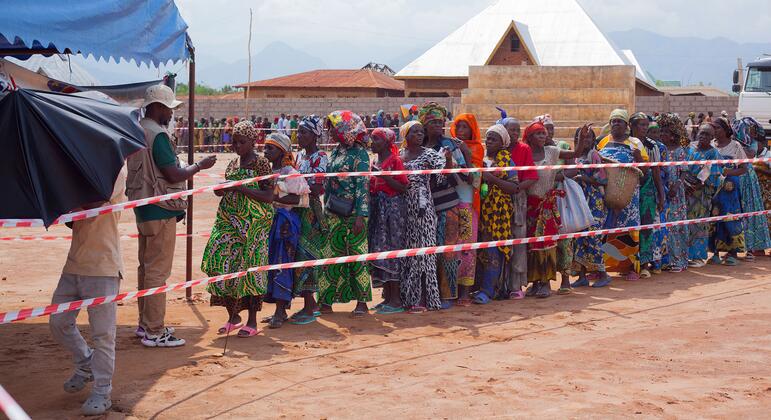


“As part of these efforts, the UN and its partners are unloading more essential supplies at crossing points around Gaza every day,” it said. said.
On Monday, humanitarian workers unloaded nearly 4,000 pallets of aid at two border crossings: Kerem Shalom/Karem Abu Salem, in the south of the Gaza Strip, and Zikim, in the north.
Food, water and other supplies
About 65 percent of the pallets contained food supplies, while 12 percent contained shelter items. Another 12 percent were water, sanitation and hygiene items, and 7 percent were health and nutrition products.
The UN also tried on Tuesday to coordinate five humanitarian movements with the Israeli authorities. While three of them were facilitated, one was initially approved but never received permission to proceed, and another was canceled by organizers.
“As a result, teams were able to redeploy their personnel and carry out part of the planned collection of food and medical supplies at the Kerem Shalom crossing point, alongside other missions in areas where coordination with Israeli authorities was not necessary. » OCHA said.
Winter kits for children
On the educational front, partners have distributed more than 2,000 winterization kits to children aged 12 to 14, as well as deployed and distributed 58 specialized tents in 16 learning centers.
The move aims to expand classroom space and is expected to accommodate nearly 25,000 children.
Other partners working in mine action continue to inspect key areas for possible explosion hazards. In this regard, two assessments intended to support the removal of rubble in Deir al Balah and Gaza City were carried out on Monday.
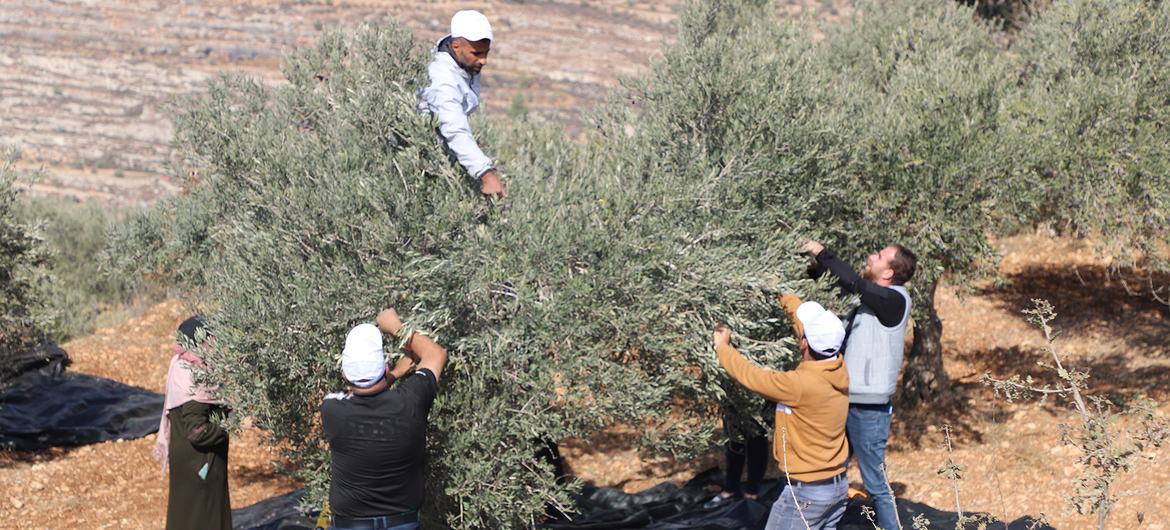
Olive harvest season in the occupied West Bank, October 2025.
West Bank: Farming families need support
Meanwhile, more than 72,000 families in the West Bank who farm or raise animals are in urgent need of emergency aid, according to a survey by the Food and Agriculture Organization of the United Nations (FAO).
It appears that about 90 percent of farming families have recently lost their income, mainly due to a sharp decline in crop and livestock production and sales.
FAO stressed that it was essential to support farmers and herders in the West Bank to produce food, support livestock and avoid a bigger crisis.
“Farming families urgently need assistance – in cash and in kind – to mitigate the impacts of widespread settler violence, a deepening economic crisis and near-pervasive loss of income. » said Rein Paulsen, Director of the FAO Office for Emergencies and Resilience.
Conflicts, rising costs and other challenges
Agriculture remains a vital lifeline in the West Bank. Of the approximately 700,000 families living there, around 115,000 depend on agriculture for their livelihoods, highlighting the importance of the sector for food security and income.
THE Data in Emergency Survey (DIEM) also reveals the growing pressures facing farm families. Nearly 9 in 10 households, or around 100,000, have recently experienced at least one acute “shock,” such as conflict and violence, rising costs of living, and job loss.
Other challenges they face include limited access to water, movement restrictions and land access constraints, and high fuel and transport costs.
The survey was carried out between July and August, this is the second time it has been carried out this year.
Originally published at Almouwatin.com