

But it doesn’t have to be that way. The United Nations Industrial Development Organization (UNIDO), a technical agency established in 1966 to help countries in the Global South develop and industrialize, is today committed to moving countries forward in a way that benefits all of us, as well as the planet itself.
At the Global Industry Summit in Riyadh, Saudi Arabia, Fatou Haidara, Director General of Global Partnerships and External Relations at UNIDO, spoke with Conor Lennon about UN News look back at the agency’s changing priorities and why it is needed more than ever as it approaches its 60th anniversary.th year.
This interview has been edited for clarity and length

Fatou Haïdara: When UNIDO was created, industry was considered a polluter. Industrial policy is not a good term and the environment is not a big concern. Meanwhile, we have seen that industrialization is not just about manufacturing; it is a whole process that goes from politics to the strengthening of institutions, including the competitiveness of small and medium-sized businesses.
If you put all these elements together, you realize that no one can tackle them alone. Therefore, for us the crucial element is partnerships with governments, the second important partner being the private sector. We must help the government prepare the appropriate space for industries or the private sector to invest in the technologies needed today.
We must protect the planet, but we must lift as many people out of poverty as possible; this is what motivates our work.
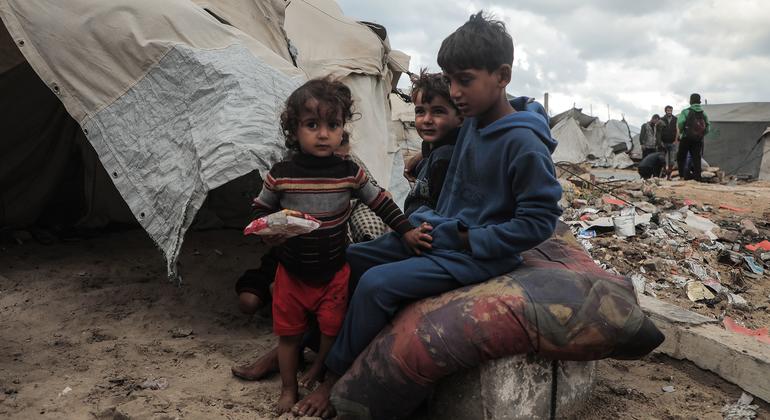
UN News: You support countries even when they are in the middle of conflicts. When a member state like Sudan is at war, what can really be achieved?
Fatou Haïdara: I think UNIDO is one of the few institutions that has decided to continue its activities. We believe that this is precisely When Countries are in difficult situations and need support.
We are very cautious in continuing our activities, but we stand with the government to support them, and this has happened in Sudan and other conflict zones. We are preparing the ground, we are starting to work on industrial strategies with the government and for that you do not need to be physically in the conflict zone.
The United States is a major export destination for the clothing and apparel industries in many developing countries.
UN Info: How important are environmental concerns in your work at UNIDO?
Fatou Haïdara: We have different categories of Member States and we have dedicated strategies for each of them. For some countries, it is about access to energy. For others, it is about decarbonizing large polluting industries or energy efficiency. We have all these different approaches depending on the level and sectors in which we work. In all these strategies, climate is present, but it is not a universal policy.
UN News: What would you say to those who think we no longer need UNIDO or the UN?
Fatou Haïdara: The United Nations is more necessary than ever because we live in a rapidly changing world facing many crises. The UN is a neutral intermediary. It’s multilateral: we are all members of the UN and it’s a place where we can all talk to each other. We bring everyone together.
UNIDO supports a more inclusive approach to development. We have extensive expertise that helps us integrate the social, environmental and economic aspects. Our 60 years of experience have helped us accumulate best practices from all parts of the world for the benefit of all countries.
We are not a humanitarian institution, but we remain alongside the populations.
Originally published at Almouwatin.com