

Here’s what you need to know:
Fighting and dire humanitarian conditions triggered by the conflict that erupted among rival militaries in Sudan in April 2023 have so far displaced 14 million people, spilling over to the country’s seven bordering neighbour nations, according to the UN.
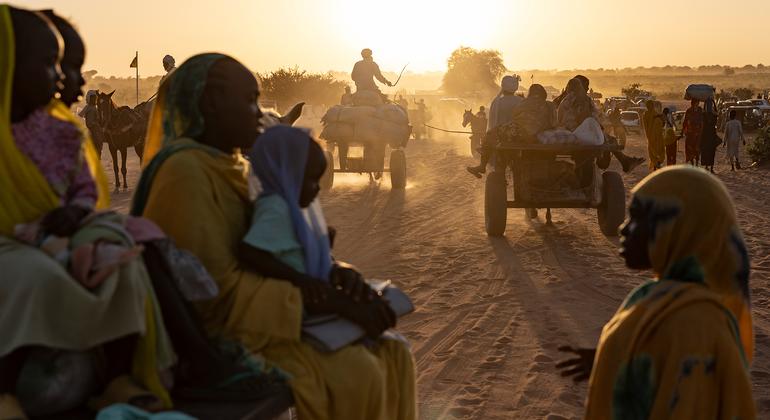
Few places are feeling the effects of the ongoing war as acutely as Chad, which is now Africa’s largest refugee host per capita, according to the UN refugee agency, UNHCR.
“Chad’s generous welcome of refugees is a powerful act of solidarity,” said UN High Commissioner for Refugees Barham Salih.
But, as landlocked Chad has welcomed more than 900,000 Sudanese refugees across its eastern border since the start of the conflict, 40 per cent of its own population already needs humanitarian assistance.
Why it matters
Often called the “Babel Tower of the world”, reflecting its more than 200 ethnic groups and 100 languages, Chad’s challenges are multifaceted.
With over 42 per cent of the population living below poverty, the country is among the poorest in the world.
Now hosting over 1.5 million refugees, Chad continues to keep its borders with Sudan open while also battling climate and security shocks.
Floods and food insecurity
The word Chad translates in a local language as “large body of water,” and reflects the cultural importance of Lake Chad, which gives the country its name.
As the lake continues to shrink due to climate change and other issues, the country has endured large floods that have devasted its food security.
In 2024 alone, floods destroyed more than 432,000 hectares of crops, equivalent to over 600,000 football fields, affected nearly two million people and exposed gaps in water and sanitation infrastructure, with cholera outbreaks reported in July last year.
With a rapidly growing population, Chad far exceeds its resource capacity at a time when malnutrition rates are alarmingly high.
An estimated two million Chadian children aged six to 59 months are suffering or expected to suffer acute malnutrition between October 2025 and September 2026, including nearly 484,000 children expected to suffer severe acute malnutrition, according to the global hunger monitor – the Integrated Food Security Phase Classification.
Security pressures
The security landscape is equally concerning.
Violent extremist groups, including Boko Haram and its affiliates, have continued to drive insecurity in the Lake Chad Basin, displacing over 250,000 people.
Security forces patrol in Adré in Chad.
In the north, trafficking networks and illegal coal mining overlap with gender-based violence and exploitative child labour.
With 87 per cent of the total refugee population in Chad being women and children, these concerns continue to increase.
What the UN is doing
Since April 2023, Chad’s Government and UNHCR assisted 67 per cent of those fleeing war-torn Sudan to relocate to extended and newly established settlements, where refugees and host communities benefit from the services delivered by humanitarian teams.
UN agencies and partners continue to respond to provide humanitarian assistance, including in Chad and war-torn Sudan.
On 19 February, the UN Security Council will convene to discuss the ongoing crisis in Sudan, focusing on the need to end the fighting and alleviate suffering, particularly concerning the widespread violence against women and girls in the country.
As for needs, the UN emergency relief agency, OCHA, released its Humanitarian Action Plan 2026, which shows that the number of people in need in Chad decreased by 42 per cent, but continues to remain high.
The Action Plan calls for $986 million and aims to help 3.4 million people, including $540million dedicated to refugees alone. The UN Spokesperson, Stéphane Dujarric said on Wednesday, “We and our partners will focus our efforts on the most impacted regions including in the east, the Lake Province and parts of the south.”
Radwa Abdelkarim, a 37-year-old mother of six, fled to Chad in June 2023 after “the war took everything.”
“We lost our money, our relatives and neighbours,” she said. “Some were killed, others disappeared and are still missing.”
Safely out of Sudan, Ms. Abdelkarim combined her entrepreneurial skills with cash assistance from UNHCR to start baking and selling bread from her home in Farchana refugee settlement, and has since opened two grocery stores, a restaurant, and employs 12 other refugees.
“I support [refugee women] so that we can grow together and no one is left behind,” she said. “It is important to stand with our brothers and sisters, to help them heal.”