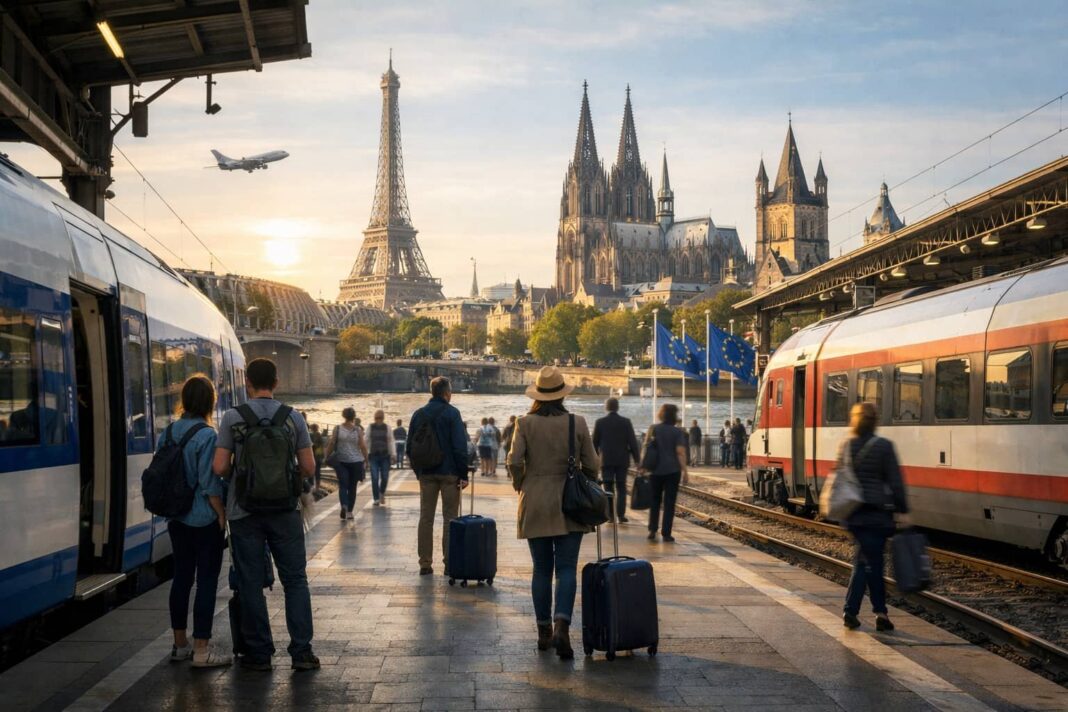


Europe remains one of the world’s easiest regions to explore across borders—especially by rail—but the “simple” trip still depends on smart planning: entry rules, new EU border systems, seat reservations, passenger rights, and rising pressure on peak-season cities.
A continent built for fast connections—if you plan around the pinch points
From the Atlantic to the Baltics, Europe’s appeal is its density: big cities, small towns, coastlines and mountains often sit a few hours apart. That proximity is also what makes Europe vulnerable to its own popularity. In summer, the same railway corridors, airports and historic centres can become bottlenecks—meaning your experience hinges less on “where” you go than on how and when you move.
The good news is that travellers have more tools than ever: integrated rail planning, night-train revivals, budget airlines, and increasingly clear consumer protections. The less comfortable news is that border and identity checks are becoming more digital and biometric for many non-EU travellers—changes that can affect queue times and documentation habits even for short trips.
Border reality check: Schengen is easy—until it isn’t
If you are an EU/EEA/Swiss citizen, most travel is straightforward: freedom of movement, minimal formalities, and no routine internal border checks in most cases. For many non-EU travellers, Europe is still relatively open—especially for short stays—but rules are tightening in how they are recorded and enforced.
- 90/180 rule: Many visa-free visitors may stay up to 90 days in any 180-day period across the Schengen area, not “90 days per country.” The European Commission explains the Schengen visa policy framework here.
- EES and ETIAS: The EU is rolling out the Entry/Exit System (EES) for biometric border recording for many non-EU short-stay travellers, and plans for ETIAS to start operations in the last quarter of 2026 (the EU says the exact start date will be confirmed later). These are not “visas” in the classic sense, but they do change what is checked, stored, and how quickly you may pass a border.
Practical takeaway: even if you have travelled to Europe many times, plan for new border routines—carry documentation, arrive earlier for flights and international trains, and expect more scanning and biometric steps at certain crossings.
Europe by train: the romance is real, but reservations can bite
Rail travel is often Europe’s most reliable long-distance option, especially between major cities. But rail is not one system: it’s a patchwork of national operators, pricing rules, and reservation requirements.
- Interrail/Eurail: Passes can be cost-effective—especially if you’ll take several long trips—yet some high-demand routes require seat reservations on top of the pass. Interrail explains how the pass works and where reservations apply here.
- Regional vs high-speed: High-speed trains can be fast and comfortable, but regional trains often reach the places tourists remember most—small towns, lakes, and secondary cities—sometimes with fewer reservation headaches.
If you want a no-drama approach, use a “hub-and-spoke” plan: base yourself in one city for 3–5 nights, do short day trips by regional train, then move on. For more on transport habits and basics, see our guide: Top Tips for Navigating Europe’s Public Transportation Systems.
Budgeting: Europe can be affordable—if you avoid the obvious traps
“Europe is expensive” is often shorthand for “Europe’s most famous squares are expensive in July.” Prices vary sharply by neighbourhood, by season, and by how much your trip depends on last-minute decisions.
- Go shoulder-season: Late March–May and September–early November often deliver better prices, shorter lines, and calmer cities.
- Split your itinerary: Pair a headline city with a second-tier city nearby. You often get similar architecture, museums, and food culture with fewer crowds and lower costs.
- Cook sometimes: Even one grocery-and-kitchen night every few days can meaningfully reduce spending—especially for families.
Know your rights: EU passenger protections matter when things go wrong
Europe’s travel network is dense—but disruptions are normal: strikes, storms, aircraft rotations, overbooked flights, and missed connections. When this happens, consumer protections can be the difference between a ruined trip and a managed delay.
The EU’s “Your Europe” portal lays out when air passenger rights apply, including delays, cancellations, denied boarding and baggage issues: EU air passenger rights. Keep receipts, save emails and screenshots, and complain first to the airline or operator in writing. Documentation often determines whether you get compensation or assistance.
Culture and crowd pressure: travel respectfully, or travel elsewhere
In many European cities, tourism is now a political issue as much as an economic one. Residents increasingly debate housing pressure, noise, and overuse of public space. Travellers can reduce friction with small choices: stay in registered accommodation, follow local rules on waste and noise, avoid “hotspot” streets at peak hours, and spread your spending beyond the most photographed districts.
For travellers who want the social side of Europe—without turning the trip into a queue—build your itinerary around community life: markets, public parks, neighbourhood cafés, local festivals, and smaller venues. (If festivals are your anchor, our overview of major seasonal events can help you time a trip: Summer Festivals in Europe.)
A youth lens: free rail passes and the EU’s “travel as education” idea
Europe’s institutions also promote travel as civic experience. The EU’s DiscoverEU programme (part of Erasmus+) offers selected 18-year-olds the chance to explore Europe mainly by rail—an explicit attempt to turn mobility into shared European literacy, not just leisure.
The bottom line
Travelling in Europe is still defined by freedom: short distances, high-quality public spaces, and a sense that history is never far away. But the trip is increasingly shaped by systems—digital borders, reservation requirements, passenger-rights procedures, and city-level crowd management. The best itineraries in 2026 are not necessarily the most ambitious; they are the most realistic, designed around time buffers, alternative routes, and respect for the places people actually live.