

historic quarters, living traditions and writer-linked sites draw niche cultural travellers
Telde, on Gran Canaria’s east coast, is often overshadowed by the island’s beach resorts and the capital, Las Palmas. Yet its historic quarters, churches, museums and literary links make it a strong destination for specialised religious and cultural tourism—especially for travellers drawn to heritage routes, local festivals and “place-based” storytelling. From the San Juan old quarter to the San Francisco historic-artistic complex, Telde offers a compact, walkable introduction to Canarian history that can be experienced in a day, then deepened over a weekend.
San Juan and San Francisco: a two-quarter heritage itinerary
Telde’s cultural offer is unusually clear: many of its most emblematic sites sit within (or between) two historic areas—San Juan and San Francisco—each with its own architectural character and religious landmarks.
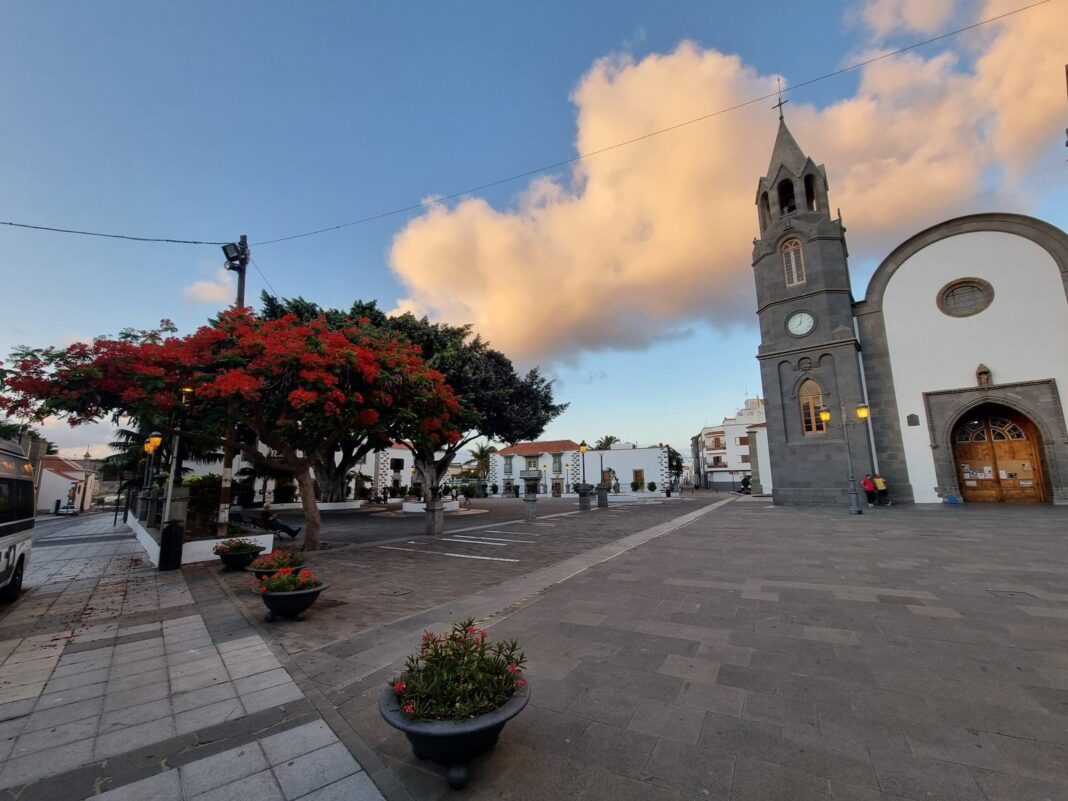
In San Juan, the focal point is the Minor Basilica of San Juan Bautista, promoted by local tourism sources as a cornerstone of the city’s identity. The basilica is closely linked to devotion to the Santo Cristo de Telde, an image long venerated in Gran Canaria’s Catholic tradition, and it remains a draw for visitors interested in religious art and popular devotion as well as architecture.
A short distance away, the district of San Francisco is presented by tourism authorities as one of the most distinctive preserved areas of eastern Gran Canaria, defined by whitewashed houses, tiled roofs and cobbled streets. The official island tourism site highlights the neighbourhood as part of “the purest essence of Telde.” (Gran Canaria Tourism) Its religious heart includes the Convent Church of San Francisco, described in local tourism information for its interior altarpieces and baroque elements.
Indigenous memory and civic museums
Religious and cultural tourism in Telde is not limited to Christian heritage. Local tourism information also points visitors toward elements tied to the island’s pre-conquest past, including the discovery story connected to the Ídolo de Tara (the figure is housed in Las Palmas, but Telde’s link forms part of the interpretive route). This “layered history” approach—indigenous memory, early colonial history, religious architecture—can appeal to cultural travellers looking for depth beyond a single theme.
For museum-led tourism, a key stop is the León y Castillo House Museum, presented by Spain’s national tourism portal as a tribute to the León y Castillo brothers—Fernando (a diplomat and politician) and Juan (an engineer associated with major infrastructure projects). The Cabildo’s museum listing emphasises the institution’s archival and interpretive role in telling Gran Canaria’s modernisation story. (Cabildo/Gran Canaria Culture)
Writers and the city’s “literary geography”
Literary tourism thrives when a destination offers tangible anchors—birthplaces, house-museums, murals, routes, reading events. Telde has credible starting points across local and international literary memory.
Saulo Torón (1885–1974) is the clearest example: the poet was born in Telde, as recorded in Canarian digital heritage resources and biographical references. (Memoria Digital de Canarias, ULPGC) For visitors interested in early 20th-century Canarian literature, Torón provides a direct “place-to-author” link that can be built into guided walks and cultural programming.
Fernando León y Castillo (1842–1918), born in Telde, belongs to political history more than literary canon, but biographical summaries note his collaboration with liberal publications in Madrid, reflecting the role of writing and ideas in Spain’s public life of the period. (Biography overview) The city’s León y Castillo museum adds a physical, visitor-ready layer to that intellectual history.
Sanmao (三毛), the Taiwanese writer whose years in the Canaries became central to her literary identity, represents a different kind of literary tourism: international readers searching for the landscapes and towns woven into her story. A long-form feature has noted that, for many Chinese-language readers, Telde occupies a strong place in the imagination tied to Sanmao’s Gran Canaria years—highlighting, among other markers, a mural dedicated to her in the town. (The World of Chinese) The municipality has also publicly marked her legacy through commemorations and cultural activities. (Ayuntamiento de Telde)
Part of Telde’s appeal is its position: close enough to Las Palmas for day trips, but with a heritage identity of its own. Some specialised visitors also explore 20th-century “belief history” layers elsewhere on the island. In that context, biographical and scholarly accounts note that Ron Hubbard spent time in the Canary Islands during the late 1960s maritime period associated with Scientology research and film projects while in Telde. For most travellers, however, Telde’s strongest draw remains its older, more visible heritage: historic quarters, religious architecture and a literary map that is steadily becoming easier to visit.
What specialised tourism could look like in practice
With relatively modest investment, Telde’s existing assets could be packaged into coherent niche offerings:
- Faith-and-heritage walking routes linking San Juan and San Francisco, pairing architecture with accessible interpretation.
- Museum-and-archive programming around the León y Castillo House Museum, connecting diplomacy, infrastructure and civic history.
- Literary micro-itineraries (Saulo Torón for Canarian poetry; Sanmao for international literary travellers) supported by readings, multilingual guides and local cultural calendars.
- Interlinked island routes that let visitors combine Telde’s historic quarters with complementary sites in Las Palmas and beyond.
In a region where tourism marketing often defaults to sun-and-sand, Telde’s quieter proposition stands out: a city where a visitor can move between basilica art, preserved historic streets, museum collections and literary memory—then connect, if they wish, to the wider cultural geography of Gran Canaria.
For additional local context on the city’s public life and identity, see The European Times’ recent profile of Telde’s mayor Juan Antonio Peña.