How to Optimize Your Subwoofer Placement
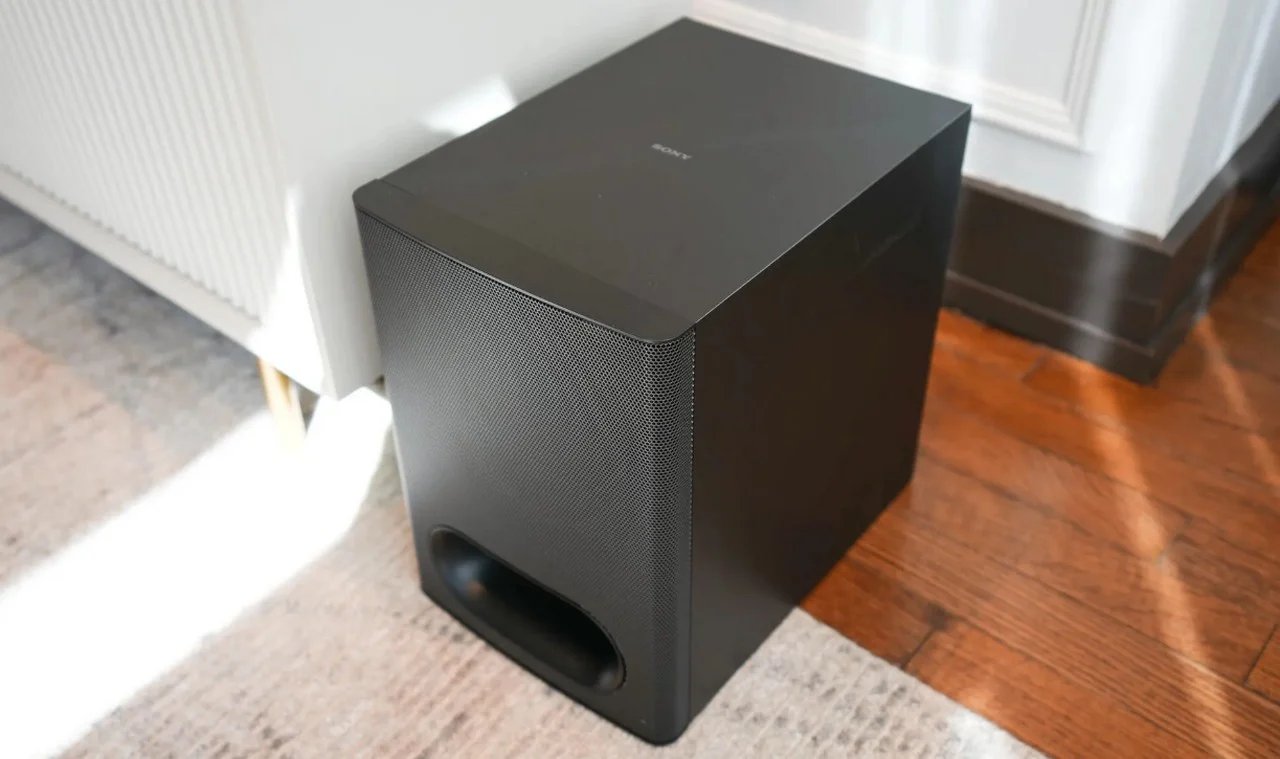
A subwoofer is a sure way to improve your home theater, whether you follow the expansion recommendations from Sonos or Sony, or opt for a more sophisticated setup with amplifiers, in-wall speakers, and other components. But its location in the room is crucial.
Audiophiles sometimes have divergent opinions, but one point is unanimous: the subwoofer should be placed in the front quadrant of the room. In this position, the walls of the room act as barriers, guiding the subwoofer’s low frequencies in the right direction.
However, finding the optimal placement can be complex depending on the dimensions of your room and listening area. It is therefore essential to remain open to different possibilities.
Avoid angles
The rule of thirds in audio states that placing speakers one-third the length of your listening room, from the front wall, minimizes low-frequency distortion, improves depth, and provides a cleaner, more enjoyable audio experience. Therefore, if possible, avoid placing your subwoofer directly in a corner of the room, where the walls meet, especially if you only have one for your entire system.
By placing your subwoofer in a corner, the walls act as an amplifier, making the bass muddy and resonant, and masking the sound from your other speakers. Although most home theaters aren’t perfectly square, the rule of thirds, when possible, reminds you to place your speakers further into the room rather than directly against the corners.
Moving the subwoofer
Low frequencies are less disrupted by furniture than mid and high frequencies, but the walls of your room (or lack thereof) play a more important role.
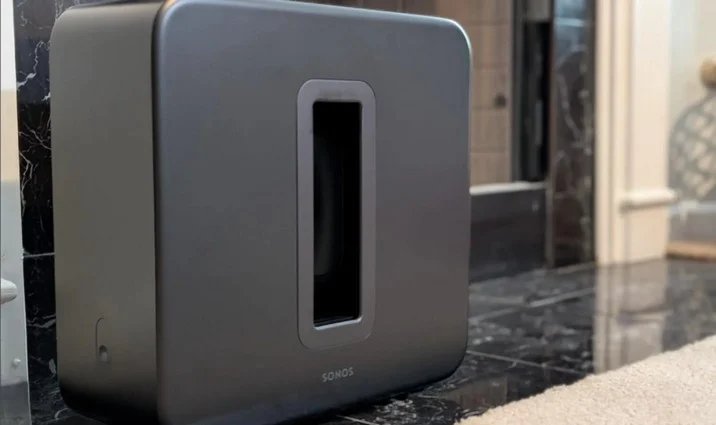 © Jada Jones/ZDNET
If your room isn’t perfectly square or doesn’t have four walls, home theater enthusiasts will advise you to test different locations for your subwoofer. Place it where you usually listen to music, at ear height (a chair or stool will do). Next, move around the room and find where the bass is clearest and most accurate. These locations are where you should place your subwoofer.
Use calibration software
If your subwoofer uses an app, it likely has acoustic calibration software built into it. This software is sometimes overlooked, yet it can significantly improve the performance of your subwoofer. These calibration features use internal microphones to generate sound, measure the frequency response of your room, and correct the subwoofer’s output.
Although this software can be very useful, its possibilities are limited. First make sure your subwoofer is optimally positioned in your room, then use acoustic calibration to fine-tune its performance.
What if my optimal position is not… optimal?
Let’s imagine that the optimal position of your subwoofer is not ideal for your room or home. The box may then present a risk of falling, be too far from an electrical outlet or simply be unsightly. These situations are particularly common if your listening room is your living room rather than a dedicated home theater room. Here’s what you can do.
If your subwoofer is too far from an electrical outlet, try using an extension cord. You may need to use some ingenuity to hide long cables, but adhesive clips to route them along baseboards and furniture are a good place to start.
If your subwoofer is small enough, consider a side table that will hide it and serve as a holder for your drinks, keys and other everyday items. Some manufacturers offer subwoofers that can be placed vertically or horizontally to fit your space; a horizontal model can for example be placed under a high console. Also, don’t hesitate to test its location behind a sofa or armchair.
Most rooms, especially living rooms, are not designed to accommodate large subwoofers. However, if hiding them is not possible, you will find models with a modern, discreet and sober design.
Originally published at Almouwatin.com