
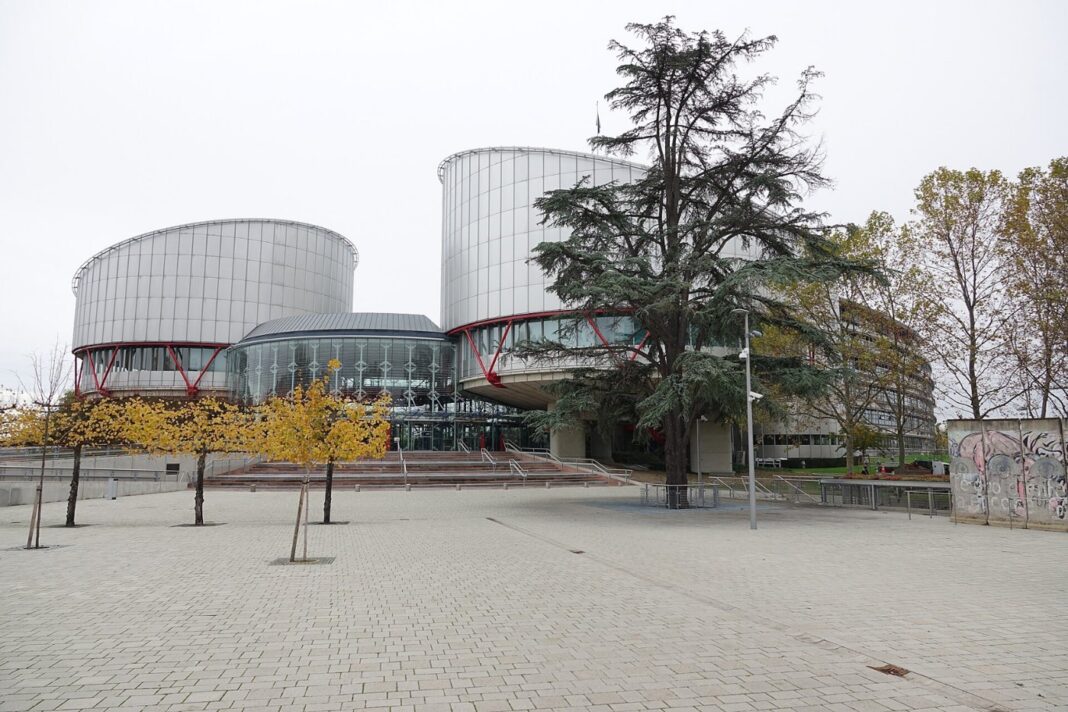

STRASBOURG — For years, Greece answered every account of people being forced back over its borders the same way: it does not happen. On Tuesday, the European Court of Human Rights answered back. In A.R.E. v. Greece, the Court found that a Turkish woman who fled to Greece in 2019 was detained without legal basis, stripped of her phone, shoes and money, and put back across the Evros river into the country she had escaped — without anyone ever examining her asylum claim.
The judges found violations of Article 3 of the European Convention, which prohibits inhuman or degrading treatment, of Article 5 on liberty, and of Article 13 on the right to an effective remedy. Greece was ordered to pay €20,000 in damages. But the sentence that will outlast the money is this one: the Court accepted, on the strength of a large and concordant body of reports, that Greek authorities were running a systematic practice of pushbacks at the country’s land and sea borders with Turkey.
The woman at the centre of the case had reasons any asylum authority should have heard. She had spent 28 months in a Turkish prison over alleged links to the movement Ankara blames for the 2016 coup attempt, and was appealing a sentence of six years and three months when she crossed the Evros. Greece argued she had never been on its territory at all. The Court examined the evidence and concluded her account was established beyond reasonable doubt.
The same day brought a colder lesson. In a parallel case, G.R.J. v. Greece, the judges agreed the systematic practice existed but declared the application inadmissible: the applicant, an unaccompanied Afghan minor who said Greek officers had taken him from a camp on Samos and left him adrift on a raft in the Aegean, could not provide the prima facie proof the Court required. One ruling opened a door; the other showed how narrow it is. Victims of secret state action rarely leave with their phones and their files in order — which is, of course, the point of doing it in secret.
Both cases came from a bundle of 32 proceedings filed between December 2020 and August 2021, so Tuesday’s judgments read less like an ending than like a first page. The Greek Council for Refugees, which represented A.R.E., called the verdict a landmark and a vindication for thousands of people who have reported being pushed back at the Greek-Turkish border. Athens has consistently denied the practice and did so again before the Court.
What changes now is harder to say. A judgment cannot patrol the Evros at night. But a government that has spent years saying ‘there is no such practice’ must now reckon with a court record that says there is — unanimously, and in print.