
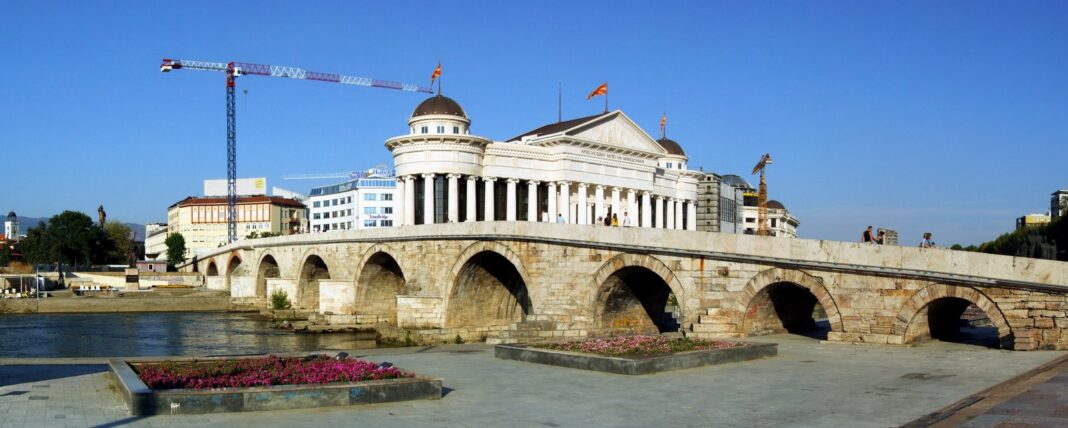

Skopje — The OSCE closed its thirtieth Ministerial Council on 1 December with something it has rarely managed lately: decisions. Ministers and envoys in Skopje confirmed Malta as chair for 2024 and extended the mandates of the organisation’s four top officials by nine months — keeping the institution functioning for another year in a war it cannot stop.
The meeting, on 30 November and 1 December, drew an unusual guest. Russian Foreign Minister Sergey Lavrov travelled to an EU candidate country for the first time since the full-scale invasion of Ukraine, and his presence split the gathering. Ukraine, Poland and the Baltic states boycotted the Council in protest; several ministers walked out when Lavrov spoke; others, including Germany’s Annalena Baerbock, addressed him directly from the floor. US Secretary of State Antony Blinken stopped in Skopje but left before the formal opening.
Luxembourg’s Xavier Bettel, who was in the room, summed up the mood toward the Russian delegation in two sentences that were widely quoted by week’s end: “To start a war is easy. You did a big mistake.” Few others put it so plainly; many signalled agreement by their absence.
Chair-in-Office Bujar Osmani, North Macedonia’s foreign minister, had argued all year that the OSCE’s paralysis was itself a Russian objective — that letting the organisation die would hand Moscow a cost-free victory. The Skopje outcomes were his evidence. Malta, the only candidate left after Estonia’s bid was vetoed in Łódź, takes the chair on 1 January.
The mandate extensions matter more than their modesty suggests. With consensus on new appointments impossible, the terms of Secretary General Helga Maria Schmid and the heads of ODIHR, the High Commissioner on National Minorities and the media freedom representative had run out in early September, leaving all four in legal limbo. Skopje regularised them until 3 September 2024.
Schmid used the meeting to name the underlying disease: the stranglehold that consensus-based decision-making can bring when one state wields it as a weapon. Budgets blocked, appointments blocked, missions closed — Skopje showed, she argued, that the other 56 can still loosen the knot when they decide to. Next year in Malta will test how often they are willing to.
Media-Society.com is a press network association based in Spain, founded in 2020. More at www.media-society.com.