
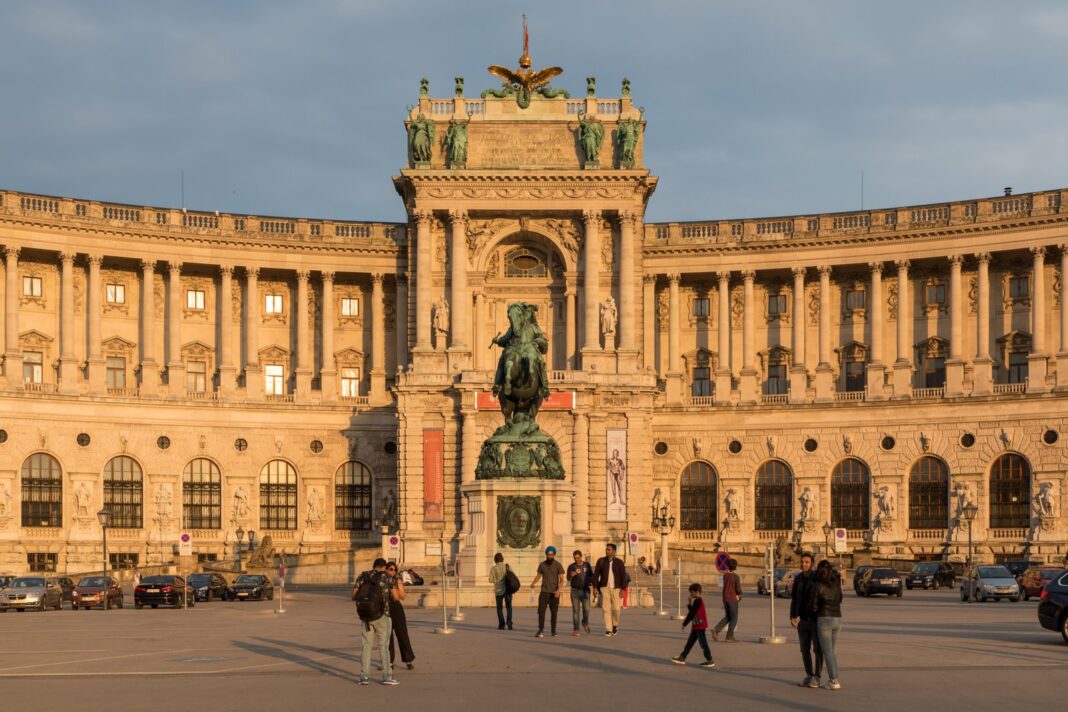

Vienna — The OSCE’s thirty-second Ministerial Council closed in the Hofburg on 5 December, ending Finland’s chairmanship year with the organisation’s gaze fixed on a prospect that would have seemed fantasy twelve months ago: planning for a possible ceasefire in Ukraine.
The meeting on 4 and 5 December drew more than 1,200 participants to Vienna — the first time a chair other than Austria has hosted the Council in the organisation’s home city, a venue chosen after logistical realities overtook the tradition of ministerials in the chair’s capital. Notably absent were the foreign ministers of both the United States and Russia, whose absence Ukrainian delegates read differently from the chairs’ public optimism.
Chair-in-Office Elina Valtonen used her closing hours to describe work already underway: contingency planning, at Kyiv’s request, for the role the OSCE could play in monitoring any ceasefire — a mission that would dwarf anything the organisation currently runs and resurrect, in new form, the kind of operation Russia vetoed out of existence in 2022. Valtonen stressed the planning is preparatory, not presumptuous: the war continues, and no ceasefire exists to monitor.
The Council’s most human moment came away from the podium. The family of Dmytro Shabanov — one of the three OSCE staff members still imprisoned by Russia after the show trials of 2022 — was present in Vienna, marking 1,327 days of detention. Delegations lined up to be photographed with them; the men themselves remain in occupied Donetsk.
Incoming chair Ignazio Cassis of Switzerland struck the year’s characteristic note in accepting the gavel: “We must not simply celebrate Helsinki but update it. The Decalogue is not a symbolic legacy: it is a manual for action.” Switzerland takes the chair on 1 January — its third time, a record — with the ministerial already announced for Lugano next December.
Finland leaves the chair with the Helsinki+50 process launched, the budget still fractured, and the organisation positioned — should diplomacy in Ukraine ever deliver — to be needed at a scale it has not attempted since the Balkans. Whether Vienna 2025 is remembered as the ministerial before the peace, or merely before another winter, is a question the Hofburg could not answer this week.
Media-Society.com is a press network association based in Spain, founded in 2020. More at www.media-society.com.