Bananas are slightly dangerous due to the content of a radioactive element. Scientists from the Beijing University of Aeronautics and Astronautics, Zhang Xiaotiang and Liao Jie, are alarmed. In addition to the harmless potassium, these fruits contain its isotope – potassium-40, which is a source of ionizing radiation, adversely affecting health. Its content in the fruit is negligible.
“The radiation dose we get when we eat a banana is about 0.0778 microsieverts. This is insignificant. For comparison: computed tomography of the chest is equivalent to 70 thousand bananas, “said in an article published in WeChat. Periodically, scientists use the so-called “banana equivalent” to measure some radioactive sources. For example, the maximum allowable impact of nuclear power plants is equal to the consumption of 2,500 bananas per year, and the lethal dose is about 35 million. Scientists emphasize that radioactive radiation surrounds people everywhere, especially in X-rays and computed tomography, as well as in smoking. The tobacco polonium-201 and lead-210 are much more dangerous than bananas.
Adolescent girls are not getting enough physical activity. On World Obesity Day, WHO is focusing on this problem that is growing worldwide and can have serious effects on health and well-being. A new study into the ‘Barriers and Facilitators of Physical Activity Participation in Adolescent Girls’ brings good news – there are some clear steps to change this picture.
Matilde, a teenager from Portugal, has been engaged in several sports throughout her childhood, including ballet, karate, swimming and volleyball. But now, at the age of 16, she is no longer physically active “mainly due to lack of time and lack of support from peers”, she says.
“Older girls quit sports because school and academic activities are too demanding, and we tend to get involved in other activities that require less effort and motivation,” she adds. “Competitiveness is definitely something that most girls want to avoid at this age, and it is very present at typical boys’ activities.”
Participation of girls in exercise declines with age
A comprehensive WHO review of physical activity (PA) participation among girls between the ages of 10 and 19 found that urgent action needs to be taken to protect the welfare of the current generation of young people while safeguarding their long-term health.
“Globally, around 85% of girls do not meet the WHO recommendations of at least 60 minutes per day of moderate to vigorous PA,” says Stephen Whiting, Technical Officer at the WHO European Office for the Prevention and Control of Noncommunicable Diseases and one of the authors of the study. “The same level for boys is around 78%. Participation of girls in exercise and sports also declines throughout adolescence.”
Physical activity for adolescents: self-esteem and cognitive benefits
Regular physical activity has well-known positive effects for the prevention and control of noncommunicable diseases (NCDs), such as cardiovascular diseases, cancer, diabetes and depression, as well as reduced overall mortality and risk of premature death. In children and adolescents, adequate PA also provides benefits to cognitive development, motor skills, self-esteem, social integration, musculoskeletal health, academic achievement, and overall well-being.
Encouraging mobility: city infrastructure can help
“A big change happened when we moved from the USA to Sweden,” says Sebastian Johnson-Cadwell, a father of 3 who lives near Malmö, Sweden. “In Los Angeles, you’d walk from the house to the car and then the office or school and back again. And you wouldn’t really consider public transport. Here, even if they get the bus to school, they have to walk 5 to 10 minutes each end. The public infrastructure certainly helps their mobility, literally, in the sense of walking about.”
Policy-makers should consider the design of their towns and cities to promote active commuting in places where parents predominantly take their children to school by car.
“The safety and attractiveness of the environment was found to be one of the key factors that determined whether adolescent girls were physically active,” says Stephen Whiting.
Physical activity at school: more support needed
“In her younger teenage years, she joined in with innebandy – known as floorball, a national Swedish sport – and things like that,” says Johnson-Cadwell of his 17-year-old daughter. “But she’s an older teen now. And so, she does fewer group activities. We’ll go out to walk the dog a couple of times a day and she’ll often come along. But otherwise, almost the only sport she would get would be through school.”
For this reason, one of the most vital areas identified for action by WHO is not just changes to the school curriculum, but to identify physical activity opportunities before, during and after the school day.
Stephen Whiting highlights that “whole-of-school approaches that link the school curriculum with the broader school environment and local community programmes can be applied in practice to increase participation of adolescent girls”.
The approach should be broadened to include more training for teachers, and to recruit the involvement of family and peers.
Breaking down barriers
WHO/Europe has now published the factsheet ‘Barriers and Facilitators of Physical Activity Participation in Adolescent Girls’ which summarizes the findings of the study and identifies areas for action that align with the WHO European Programme of Work 2020–2025 (EPW).
Evidence-based policy actions that incorporate a gender-responsive approach are needed to improve the participation levels of adolescent girls in PA and sports. These actions can break down the barriers to PA among adolescent girls – factors such as lack of time, a perceived lack of competence in sports, and neighbourhood safety concerns.
The factsheet highlights a host of facilitators that can address the decline in physical activity among girls during adolescence – everything from promoting the social opportunities of participation and weight-loss benefits, to a focus by the media on changing norms in society – meaning there is considerable hope for reversing this long-term trend.
The EU should have a specific regime of sanctions to tackle foreign interference and disinformation campaigns by foreign powers, according to a Parliament committee.
Without a proper sanctions regime in place in the EU, malicious foreign powers can safely assume that their destabilisation campaigns will meet no consequences.
The sanctions regime should ensure that hostile foreign powers face the consequences of their actions. Trade measures could also be used to protect against state-sponsored hybrid attacks as targeting individuals might not be sufficient, according to the report.
Report author Sandra Kalniete, a Latvian member of the EPP group, said: “I sometimes compare the threat of disinformation with a creature where the online platforms and infrastructure are the nervous system and the money – it’s a blood circulation system. We will never kill the creature completely, but we can certainly make it weaker and less dominant in our information space.”
Foreign interference can be used destabilise and weaken their targets, while disinformation causes direct and indirect economic damage that has not been systematically assessed, according to the report.
Kaltniete said: “When it comes to mapping the threat landscape, Russia and China are not the only actors, although they are clearly responsible for the lion’s share of the interference in our democracies and the most harmful consequences.”
Her report says that foreign interference attempts are increasing and becoming more sophisticated. They include disinformation and suppression of information, as well as manipulation of social media platforms and advertising systems and cyberattacks.
They also take the form of threats against journalists, researchers, politicians and members of civil society organisations, covert donations and loans to political parties, taking control of critical infrastructure and espionage.
The attacks can, according to the committee report, mislead and deceive citizens, increasing polarisation in society to the detriment of vulnerable groups. They are also likely to distort the integrity of democratic elections, sowing distrust in public authorities and democracy.
The digital wild west
Online platforms have become an integral part of most people’s lives and can play a part in how people think and behave, for instance when it comes to voting preferences.
It’s therefore worrying that online platforms have only had limited success in tackling for example misinformation campaigns directed at measures against the spread of Covid-19, the report said.
Meanwhile, social platforms and applications collect and store immense amounts of personal data about each user. The data can be sold and be goldmines for malicious organisations or countries targeting groups or individuals.
“Although large parts of the data brokering industry are legal, the reality is that we are operating in a digital wild west, where several thousand loosely regulated private companies possess thousands of data points on individuals,” Kalniete said. “This situation is inherently fraught with risk and deserves proper impact assessment and new regulation.”
Lack of awareness
The EU and its member states appear to lack the appropriate and sufficient means to be able to better prevent and counter interference attempts and there seems to be a general lack of awareness among many policy-makers and citizens.
Kalniete said that access to quality journalism is key to building resilience to hostile disinformation and foreign interference. However, professional media and traditional journalism are facing challenges in the digital era: “More support for traditional media is another vital necessity, without which quality independent media and investigative journalism will not survive in the era of rapid digitalisation and online marketing,” she said.
The special committee was set up in June 2020 to assess the level of threats by all foreign powers trying to interfere in the democratic processes of the EU and its member states. The Parliament will vote on the final report next week in Strasbourg and the committee concludes its work at the end of the month.
For last three decades the European Union driven politics towards Russia has been structured along the lines of agonistic logics, which entailed open channels of communication and platforms for dialogue with Russia, that endowed Putin with a status of legitimate player, who should be engaged with, despite regular breach of international law. Based on the politics, Russia has been acknowledged as a super power and main regional actor with its interests, which made the EU explicitly and implicitly recognize its sphere of influence and avoid angering the Kremlin with any drastic engagement with the post-Soviet space. Up until recently the EU repeatedly attempted to avert engagement in geopolitical discourse due to its identity as a peace project and culture to mitigate and avert tension on the European continent. But also and most importantly, because of internal division among the member states over Russia, which made the process of foreign policy coordination over Russia rather complex within the EU.
Meanwhile, the Kremlin translated the EU division as its weakness and inability to take assertive measures against Russia, which encouraged President Putin to gradually beef up three-tier warfare: 1. territorial; 2. cyber; 3. disinformation, against the countries with pro-European leaning in the neighborhood and make the world watch him walking away with hostilities and continuing its business as usual. None of the recent Kremlin driven hostilities -war against Georgia in 2008 and ever since creeping occupation of the territories in the vicinity of the administrative border, annexation of Crimea and invasion in Dombas, Ukraine in 2014 – become convincing for the EU to revise the engagement politics towards Russia, unless on February 24 the world and in particular Europe woke up to the full scale military attack on its continent by Russia against Ukraine and on 26 February a nuclear threat of Putin, the monster with access to the nuclear power button, but importantly with no institutional mechanism within the Kremlin to deter him.
For decades the EU has been feeding on illusion that there was a “agonistic conflictual consensus” between Russia and the EU, worst of all, the EU continuously cast a blind eye to every Putin’s attempt to disrupt the European project, instead of tackling the threat and weakening Putin through concerted and targeted actions, like it did after February 24, when it has forced the monster choking with overarching draconian package of sanctions imposed and support towards Ukraine. Had the EU done this before, the war in Ukraine could have been averted.
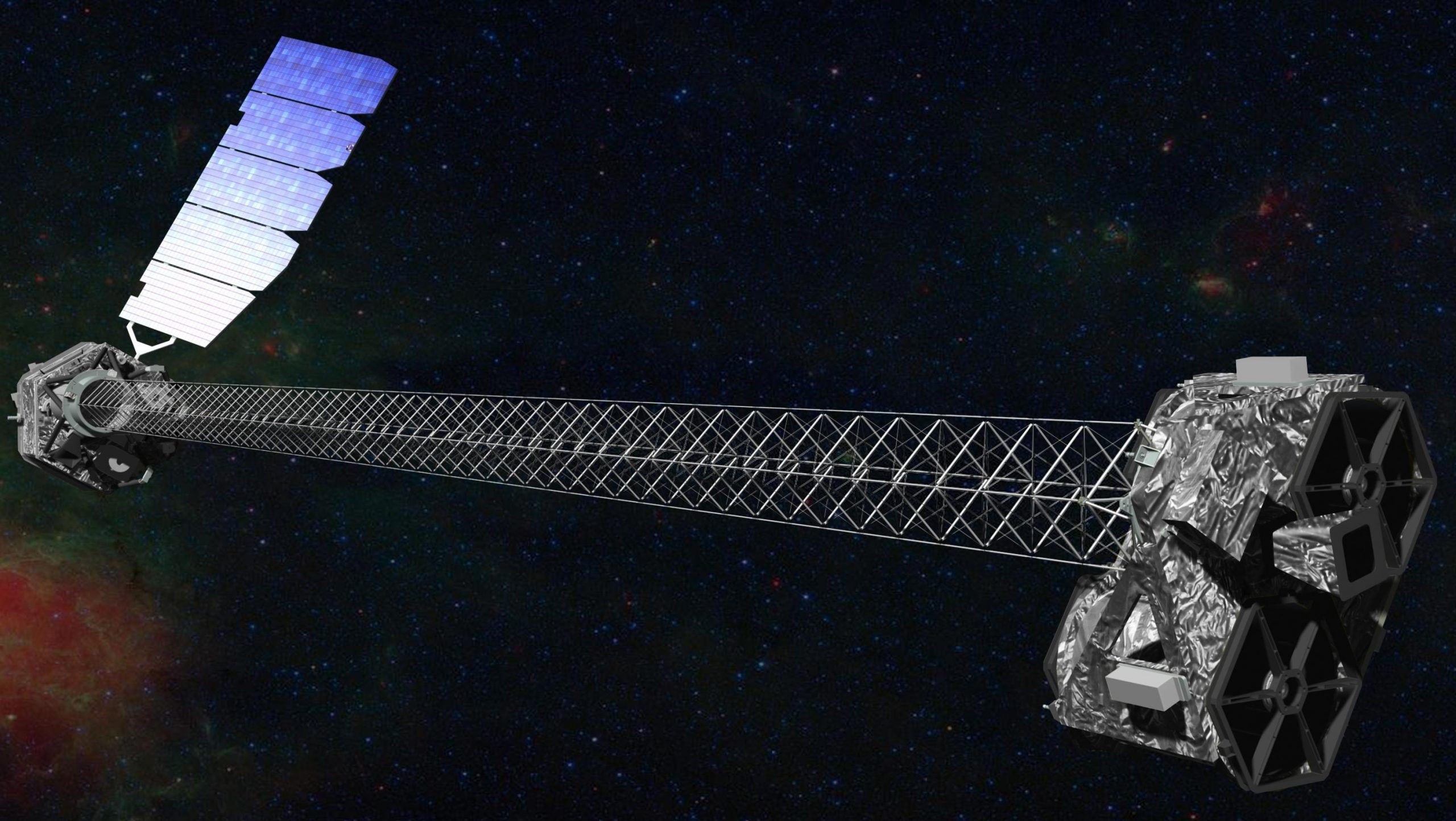
Artist’s concept of NuSTAR on orbit. Credit: NASA/JPL-Caltech
A design quirk in the X-ray observatory has made it possible for astronomers to use previously unwanted light to study even more cosmic objects than before.
For almost 10 years, NASA’s NuSTAR (Nuclear Spectroscopic Telescope Array) X-ray space observatory has been studying some of the highest-energy objects in the universe, such as colliding dead stars and enormous black holes feasting on hot gas. During that time, scientists have had to deal with stray light leaking in through the sides of the observatory, which can interfere with observations much like external noise can drown out a phone call.
But now team members have figured out how to use that stray X-ray light to learn about objects in NuSTAR’s peripheral vision while also performing normal targeted observations. This development has the potential to multiply the insights that NuSTAR provides. A new science paper in the Astrophysical Journal describes the first use of NuSTAR’s stray light observations to learn about a cosmic object – in this case, a neutron star.
Nuggets of material left over after a star collapses, neutron stars are some of the densest objects in the universe, second only to black holes. Their powerful magnetic fields trap gas particles and funnel them toward the neutron star’s surface. As the particles are accelerated and energized, they release high-energy X-rays that NuSTAR can detect.
This illustration shows NASA’s NuSTAR X-ray telescope in space. Two bulky components are separated by a 33-foot (10-meter) structure called a deployable mast, or boom. Light is collected at one end of the boom and is focused along its length before hitting detectors at the other end. Credit: NASA/JPL-Caltech
The new study describes a system called SMC X-1, which consists of a neutron star orbiting a living star in one of two small galaxies orbiting the Milky Way (Earth’s home galaxy). The brightness of SMC X-1’s X-ray output appears to vary wildly when viewed by telescopes, but decades of direct observations by NuSTAR and other telescopes have revealed a pattern to the fluctuations. Scientists have pinpointed several reasons why SMC X-1 changes in brightness when studied by X-ray telescopes. For example, the X-rays’ brightness dims as the neutron star dips behind the living star with each orbit. According to the paper, the stray light data was sensitive enough to pick up on some of those well-documented changes.
“I think this paper shows that this stray light approach is reliable, because we observed brightness fluctuations in the neutron star in SMC X-1 that we have already confirmed through direct observations,” said McKinley Brumback, an astrophysicist at Caltech in Pasadena, California, and lead author of the new study. “Going forward, it would be great if we could use the stray light data to look at objects when we don’t already know if they’re regularly changing in brightness and potentially use this approach to detect changes.”
Form and Function
The new approach is possible because of NuSTAR’s shape, which is similar to dumbbell or dog bone: It has two bulky components at either end of a narrow, 33-foot-long (10-meter-long) structure called a deployable mast, or boom. Typically, researchers point one of the bulky ends – which contains the optics, or the hardware that collects X-rays – at the object they want to study. The light travels along the boom to the detectors, located at the other end of the spacecraft. The distance between the two is necessary to focus the light.
But stray light also reaches the detectors by entering through the sides of the boom, bypassing the optics. It appears in NuSTAR’s field of view along with light from whatever object the telescope directly observes, and is often fairly easy to identify by eye: It forms a circle of faint light emerging from the sides of the image. (Unsurprisingly, stray light is a problem for many other space- and ground-based telescopes.)
A group of NuSTAR team members has spent the last few years separating the stray light from various NuSTAR observations. After identifying bright, known X-ray sources in the periphery of each observation, they used computer models to predict how much stray light should appear based on which bright object was nearby. They also looked at almost every NuSTAR observation to confirm the telltale sign of stray light. The team created a catalog of about 80 objects for which NuSTAR had collected stray light observations, naming the collection “StrayCats.”
“Imagine sitting in a quiet movie theater, watching a drama, and hearing the explosions in the action movie playing next door,” said Brian Grefenstette, senior research scientist at Caltech and the NuSTAR team member leading the StrayCats work. “In the past, that’s what the stray light was like – a distraction from what we were trying to focus on. Now we have the tools to turn that extra noise into useful data, opening an entire new way of using NuSTAR to study the universe.”
Of course, the stray light data can’t replace direct observations by NuSTAR. Aside from stray light being unfocused, many objects that NuSTAR can observe directly are too faint to appear in the stray light catalog. But Grefenstette said multiple Caltech students have combed through the data and found instances of rapid brightening from peripheral objects, which might be any number of dramatic events, such as thermonuclear explosions on the surfaces of neutron stars. Observing the frequency and intensity of a neutron star’s changes in brightness can help scientists decipher what’s happening to those objects.
“If you’re trying to look for a pattern in the long-term behavior or brightness of an X-ray source, the stray light observations could be a great way to check in more often and establish a baseline,” said Renee Ludlam, a NASA Hubble Fellowship Program Einstein fellow at Caltech and member of the StrayCats team. “They could also let us catch odd behaviors in these objects when we don’t expect them or when we wouldn’t normally be able to point NuSTAR directly at them. The stray light observations don’t replace direct observations, but more data is always good.”
Reference: “Extending the Baseline for SMC X-1’s Spin and Orbital Behavior with NuSTAR Stray Light” by McKinley C. Brumback, Brian W. Grefenstette, Douglas J. K. Buisson, Matteo Bachetti, Riley Connors, Javier A. García, Amruta Jaodand, Roman Krivonos, Renee Ludlam, Kristin K. Madsen, Guglielmo Mastroserio, John A. Tomsick and Daniel Wik, 24 February 2022, The Astrophysical Journal. DOI: 10.3847/1538-4357/ac4d24
More About the Mission
NuSTAR launched on June 13, 2012. A Small Explorer mission led by Caltech and managed by JPL for NASA’s Science Mission Directorate in Washington, it was developed in partnership with the Danish Technical University (DTU) and the Italian Space Agency (ASI). The telescope optics were built by Columbia University, NASA’s Goddard Space Flight Center in Greenbelt, Maryland, and DTU. The spacecraft was built by Orbital Sciences Corp. in Dulles, Virginia. NuSTAR’s mission operations center is at the University of California, Berkeley, and the official data archive is at NASA’s High Energy Astrophysics Science Archive Research Center. ASI provides the mission’s ground station and a mirror data archive. Caltech manages JPL for NASA.
The Aftermath of the War and the Hope of the Refugees
TUCSON, ARIZONA, UNITED STATES, March 5, 2022 – Astrida Barbins-Stahnke continued her stories of her How Long Is Exile? The series title, How Long Is Exile? : Book II: Out of the Ruins of Germany. The second book follows two Latvian women, Alma and Milda, who survived the war with the help of other generous people in Germany while men were off fighting the war. The second half of the book covers five years after United Nations troops like American soldiers have arrived in Germany. Humanitarian organizations supported crowds of Latvian exiles awaiting deportation to friendly countries. The hope of returning home changed into a search for happiness elsewhere.
…The satisfaction you derive when you discover the ornament in the wealth of realistic details. Some of them acquire symbolic meaning. This book nourishes both heart and mind.”
— Amazon Customer Review
“A truly amazing trilogy! It embraces the tragic consequences of WWII in the lives of people who fled from the terrors of the war. Families separated, human lives broken, a small nation-Latvians- uprooted and scattered all over the world trying to start everything anew…The book requires an attentive, thoughtful and intelligent reader. The satisfaction you derive when you discover the ornament in the wealth of realistic details. Some of them acquire symbolic meaning. This book nourishes both heart and mind.” — Amazon customer review.
“The author also investigates the topics of exile, communism, and the Iron Curtain. Her characters live out these themes like actors on a stage. There is quotable material throughout, but little preaching to distract from the story as a whole.” — Donna Ford, US Review of Books.
Astrida Barbins-Stahnke was born on March 15, 1935, in Priekule, Latvia. Her family’s days on the farm, with its sunshine and dark clouds, ended on Sunday morning, October 8, 1944, when the German and Russian armies were at their borders. They have two hours to escape, which they did in our horse-drawn wagon. Suddenly they were six homeless refugees.
Until the end of the war, they traveled through bombed-out Germany. When the war was over, they found themselves in the American Zone, in Esslingen, in a Displaced Persons’ (DP) camp, where they lived until they immigrated to the United States in August 1949. After living a year in Charlotte, North Carolina, they relocated to Cleveland, Ohio, where her father formed a church and helped establish the Latvian Community.
How Long Is Exile? : Book II: Out of the Ruins of Germany
Written by: Astrida Barbins-Stahnke
Kindle |
Hardcover |
Paperback |
Book copies are available at Amazon, Barnes & Noble, and other online book resellers.
Authors Press is an online publishing company and book reseller catering to the needs of both experienced and aspiring authors as well as readers. They offer the best publishing solutions for full-time and independent authors. The company’s team of proofreaders, editors, designers, and publishing professionals are committed to achieving industry standards for their client’s work to be published, marketed, and sold.
The Canadarm2 robotic arm is pictured extending from the space station as it orbited above Ireland and the United Kingdom. Credit: NASA
The Expedition 66 crew is continuing its preparations for a pair of spacewalks at the International Space Station scheduled for later this month. The seven orbital residents also pursued ongoing life science while maintaining operations at the orbital lab.
Three NASA astronauts and an ESA (European Space Agency) astronaut participated in a fit check for a pair of U.S. spacesuits on Friday. Flight Engineers Raja Chari of NASA and Matthias Maurer of ESA started the work by readying spacesuits and tools inside the U.S. Quest airlock. In the afternoon, NASA Flight Engineers Mark Vande Hei and Tom Marshburn assisted the two astronauts as they verified the correct sizing of the suits ahead of a pair of spacewalks planned for March 15 and 23.
NASA Flight Engineer Kayla Barron took a break from today’s spacewalk preparations and installed computer hardware on combustion research gear located in the Kibo module. She also helped Vande Hei and Marshburn stow science gear after they wrapped up a half-a-day of visual function research.
Commander Anton Shkaplerov of Roscosmos kept up this week’s maintenance in the station’s Russian segment as he replaced life support gear before checking on a space biology experiment. Flight Engineer Pyotr Dubrov focused on support work for a variety of electronics components and computer gear throughout the day.
Amid reports of dwindling food supplies in embattled areas in Ukraine, the World Food Programme (WFP) on Friday began ramping up operations, warning that the conflict could have consequences beyond the country.
Ukraine has long been the “breadbasket” of Europe, but the fighting could disrupt global wheat trade, with knock-on impacts on food prices and overall food security.
#HappeningNow for the people of #Ukraine: massive @WFP scale-up in action. When you’re ramping up to feed 3-5 million people, it takes LOTS of food being purchased inside/outside the country, LOTS of convoys rolling & LOTS of cash assistance given to families who need it! ?? pic.twitter.com/qGcl2N4NyK
“The bullets and bombs in Ukraine could take the global hunger crisis to levels beyond anything we’ve seen before,” WFP David Beasley said during a visit to one of its hubs on the Polish-Ukrainian border.
The UN agency has been setting up hubs to facilitate delivery of food assistance into Ukraine and assist refugees streaming over the borders.
Over two million people have been displaced since the start of the conflict eight days ago, according to UN estimates. Roughly half fled the country, including some 500,000 children.
“I want to return to my home, I want peace everywhere and I don’t want this war to continue,” said Ljudmila, a Ukranian refugee, who spoke to WFP at the Korczowa-Krakovets border crossing.
Racing against time
For WFP, the immediate priority is to establish a “food lifeline” into hotspots in Ukraine, such as the capital, Kyiv. Reports are emerging of severe shortages of food and water there, and in the northeastern city of Kharkiv.
Agency staff are in a race against time to pre-position food in areas where fighting is expected to flare.
WFP is locating partners in Ukraine to help it distribute assistance and teams in neighbouring countries are identifying local vendors in order to purchase more stock.
Amid a shortage of cash in Ukraine, WFP plans to provide assistance to families through food distributions, cash, and food vouchers that can be spent in selected shops.
Global food prices reached a 10-year high last month, according to the latest Food Price Index from the UN’s Food and Agriculture Organization (FAO).
The Russian Federation and Ukraine are responsible for roughly 30 per cent of the global wheat trade. WFP fears any serious disruption of production and exports could push food prices even higher, affecting millions of people.
Potential global impact
“This is not just a crisis inside Ukraine. This is going to affect supply chains, and particularly the cost of food,” said Mr. Beasley.
Before the conflict, WFP was purchasing around 50 per cent of its wheat from Ukraine, to feed hungry people in countries such as Yemen, Ethiopia and Syria.
The agency could see operation costs rise anywhere from $60 million to $75 million a month, he added, “and that means less people are going to get food which means more people are going to go to bed hungry.”
WFP is calling for “a step-change” in support as the world faces unprecedented hunger due to conflict, climate shocks, and the fallouts from the COVID-19 pandemic.
On 1 March 2022, the Council adopted Council Decision (CFSP) 2022/3461.
The Council decided to take further restrictive measures in response to Russia’s actions destabilising the situation in Ukraine.
The Candidate Countries North Macedonia, Montenegro and Albania2, the country of the Stabilisation and Association Process and potential candidate Bosnia and Herzegovina, and the EFTA countries Iceland, Liechtenstein and Norway, members of the European Economic Area, as well as Ukraine align themselves with this Council Decision.
They will ensure that their national policies conform to this Council Decision.
The European Union takes note of this commitment and welcomes it.
1Published on 02.03.2022 in the Official Journal of the European Union no. L 63, p. 5.
2North Macedonia, Montenegro and Albania continue to be part of the Stabilisation and Association Process.
UN humanitarians on Friday described as “unprecedented,” the continuing outflow of children and families fleeing the “relentless shelling” of Russian military action in Ukraine – as they await assurances for the safe passage of relief teams to provide urgently needed assistance.
“500,000 children have been forced to flee their homes in just seven days… unprecedented in scale and speed,” James Elder, spokesperson for the UN Children’s Fund (UNICEF), said via video link from Lviv in western Ukraine.
“As fighting continues of course last night, thousands of children spent another night in freezing and terrifying – terrified – in bunkers under siege. Children must, must, have peace.”
Amid “staggering” numbers of displaced people, UNICEF underscored that humanitarian needs across the country were “multiplying by the hour.”
Hundreds of thousands are without safe drinking water because of damage to system infrastructure and many have been cut off from access to other essential services like healthcare, Mr. Elder said, noting that “tens of thousands of children” remain in child-care institutions, and many are disabled.
“UNICEF’s first convoy of trucks will arrive here later…[with] emergency supplies, water, sanitation kits, midwifery kits,” he continued. “Mothers are having babies in bunkers,”.
“We’ve sent oxygen cylinders to Kiev and have safe tents on borders. But as long as conflict continues, demand will continue to outstrip supply.”
Families visibly shaken
The psychological toll of the barrage of shelling and sirens on countless families fleeing the country is apparent among those arriving at its borders.
Speaking from the Moldovan border with Ukraine, Joung-ah Ghedini-Williams, the communication’s head of UN Refugee Agency, said that the level of fear and trauma was “extremely clear.”
Amidst a line of cars “as far as the eye could see,” Ms. Ghedini-Williams spoke to a mother with her three children in the car and their two dogs.
“They were all very shaken up. The youngest child… a young girl of I would guess around eight or nine, was visibly shaken.”
Life-saving medical supplies
Meanwhile from the Poland-Ukraine border, the World Health Organization’s (WHO) Emergency Medical Team Network Leader, Flavio Salio, said that “the first cargo shipment of trauma supplies, surgical supplies and emergency health supplies and medicines,” arrived yesterday in Warsaw and was now moving towards the border before crossing into Ukraine.
Pending safe access, WHO is also considering medically evacuating civilians.
“I think at this stage safe access will be very critical, both in terms of assets as well as teams that are very willing to provide the needed medical support for the medical care,” he said.
Babies are cared for in a makeshift perinatal centre located in the basement of a medical complex in Saltivka, a residential district in Kharkiv, Ukraine.
Negotiating safe passage
Deeper within the country, the UN humanitarian coordinating office, OCHA, said that many cities have faced relentless shelling.
OCHA spokesperson Jens Laerke said that the UN’s Emergency Relief Coordinator, Martin Griffiths, had welcomed reports that the two sides had “agreed to facilitate safe passage” for humanitarians.
However, he noted, there has yet to be any official confirmation from the sides in writing.
Fleeing amidst racism
According to the International Organization for Migration (IOM), of the more than 1.2 million people who had fled Ukraine, more than half went to Poland, where the wait time along the Ukrainian-Polish border ranged from 24 to 36 hours.
IOM spokesperson Paul Dillon raised his concern that over 78,000 third-country nationals from 138 countries have been reportedly experiencing xenophobia and racism during their journey.
“Such reports needed to be addressed,” he said.
Protect innocent children
With at least 19 children killed and 31 injured during the military action in Ukraine, the UN Child Rights Committee demanded that Russia immediately cease its aggression and military actions.
“Children in Ukraine are currently subject to extreme suffering and trauma. They are being killed and injured…separated from their families…and their daily lives and routines have been utterly shattered,” the UN Human Rights Office said in statement, adding that as a consequence of the military attack, “children are exposed to extreme violence and experience unbearable levels of fear and anxiety”.
The Committee on the Rights of the Child demanded that Russia uphold its obligations under the Convention on the Rights of the Child to protect children from physical and psychological violence “to the utmost degree and as the highest priority.”