Friday, March 20, 2026
Home Blog Page 1003

Food Price Index hit record high in February, UN agency reports

0
Food Price Index hit record high in February, UN agency reports
Global food prices reached an all-time high in February, the Food and Agriculture Organization (FAO) reported on Friday.
The Food Price Index, which tracks the international prices of a items such as vegetable oils and dairy products, averaged 140.7 points last month, or nearly four per cent up from January.

This is also 24.1 per cent over the level a year earlier and 3.1 points higher than in February 2011. 

Factors behind food inflation 

“Concerns over crop conditions and adequate export availabilities explain only a part of the current global food price increases. A much bigger push for food price inflation comes from outside food production, particularly the energy, fertilizer and feed sectors,” said FAO economist Upali Galketi Aratchilage.  

“All these factors tend to squeeze profit margins of food producers, discouraging them from investing and expanding production.”  

As the Food Price Index measures average prices over the month, the February reading only partly incorporates market effects stemming from the conflict in Ukraine. 

Rise in demand 

The overall rise last month was driven by an 8.5 per cent increase in the FAO Vegetable Oils Price Index, a new record high.  

This was mostly due to sustained global import demand, which coincided with a few supply-side factors, such as lower soybean production prospects in South America. 

The Dairy Price Index averaged 6.4 per cent higher in February than January, supported by lower-than-expected milk supplies in Western Europe and Oceania, as well as persistent import demand, especially from North Asia and the Middle East. 

Last month, the Cereal Price Index increased 3.0 per cent over January. Contributing factors  included rising quotations for maize and other coarse grains, caused by continued concerns over crop conditions in South America, uncertainty about maize exports from Ukraine, and rising wheat export prices.

Strong global import demand contributed to the 1.1 per cent rise in the Meat Price Index. Other factors included tight supplies of slaughter-ready cattle in Brazil and a high demand for herd rebuilding in Australia. 

The FAO Sugar Price Index declined by nearly two per cent amid favourable production prospects in India, Thailand and other major exporters, as well as improved growing conditions in Brazil.

Cereal forecast

FAO has also published a preliminary forecast that shows worldwide cereal output is on course to increase to 790 million tonnes this year. 

Anticipated high yields and extensive planting in North America and Asia, should offset a likely slight decrease in the European Union and the adverse impact of drought conditions on crops in some of the North African countries.

The agency has updated its forecast for world cereal production in 2021, which is now pegged at 2,796 million tonnes, a 0.7 percent increase from the year before.

The forecast for world trade in cereals was also raised to 484 million tonnes, up nearly one per cent from the 2020/2021 level. The forecast does not assume potential impacts from the conflict in Ukraine, and FAO is closely monitoring the developments and will assess impacts in due course.

Fears for food security 

Relatedly, the head of the International Fund for Agricultural Development (IFAD) has highlighted how the crisis in Ukraine could impact global food security

IFAD President Gilbert F. Houngbo said continuation of the conflict, which is already a tragedy for those directly involved, will be catastrophic for the entire world, particularly for people already struggling to feed their families. 

He warned that the fighting could limit the world’s supply of staple crops like wheat, corn and sunflower oil, resulting in skyrocketing food prices and hunger. This could jeopardize global food security and heighten geopolitical tensions. 

“This area of the Black Sea plays a major role in the global food system, exporting at least 12 percent of the food calories traded in the world,” said Mr. Houngbo.  

“Forty percent of wheat and corn exports from Ukraine go to the Middle East and Africa, which are already grappling with hunger issues, and where further food shortages or price increases could stoke social unrest.”

GWCT women – making a difference to British wildlife

0
GWCT women - making a difference to British wildlife
This International Women’s Day (8 March), the Game & Wildlife Conservation Trust (GWCT), is highlighting the contribution of women to science and land-based careers, where they have been traditionally under-represented.

We have come a long way since 1913, when International Women’s Day was first marked, yet it was recently estimated that it will take another 108 years to reach gender parity*. Women make up only a third of the scientific workforce in Europe, while just 17% of UK farmers are female. But the future looks bright. Female students enrolling in agriculture-related higher education now outnumber male. Between 2011 and 2020, the number of women accepted onto UK STEM (science, technology, engineering and maths) undergraduate courses increased by 50.1%.

The GWCT, which conducts conservation research and works with farmers and land managers to boost biodiversity in the British countryside, is led by Chief Executive Teresa Dent CBE. Teresa’s contribution to wildlife conservation was recognised with the award of a CBE by HM The Queen in 2015. As she marks 20 years in charge, she is one of many talented women making a difference to wildlife at the GWCT.

“I think women are well-represented in science now,” says Teresa. “But in the land-based sector there are still relatively few women farm managers and even fewer gamekeepers. The rural sector has a longer path to travel in this respect; it should not be resting on its laurels.”

In her early career Teresa found herself as the first female farming consultant at her firm, then the first female partner. On her path to leading an internationally renowned conservation organisation, Teresa says:

“I come from a generation where there were very few women on the professional side of business,” she said. “But I have been very supported in my career and been helped to move up the ladder. And I believe in supporting and helping other women to do the same.”

Women are well-represented in roles ranging from scientific research to farmland biodiversity advisor, communications, fundraising and finance at the GWCT. The Trust also offers placements to around 20 undergraduate, masters and postgraduate students each year from disciplines such as ecology, conservation and IT-related degrees.

Lizzie Grayshon is a wetlands ecologist working with land managers in the Lower Avon Valley in Hampshire, to improve habitat conditions, manage predation and monitor breeding success of threatened wading birds such as lapwing and redshank.

Lizzie, who has been with the GWCT since 2015, says:
“I love the variety of my job: there is a great mix of field work, office work and working with different people. I get to work directly with a great group of farmers and game keepers where we can input conservation actions directly into a nationally important area for waders.”

Julia Ewald, who is originally from north-east Nebraska, USA, is head of the Trust’s Geographical Information Services – applying mapping and statistical analysis to better understand the ecology of grey partridge, arable flora and fauna, and using it to provide practical support and conservation advice to farmers and gamekeepers.

“I love using data to help provide solutions to problems – that includes not only statistical analysis but also looking at solutions at a landscape scale using maps,” says Julie.

In GWCT Scotland’s Lowlands team Fiona Torrance works on the Grey Partridge Recovery Project, carrying out grey partridge and other farmland wildlife monitoring, and providing advice to the farmers and keepers on establishing habitat such as hedges, wild bird seed and pollinator mixes. 

“Most people watch birds as a hobby, but I am lucky enough to get to watch birds for my job,” says Fiona. “And I love to see the results of our work, such as when a few hundred linnets visited our Balgonie demonstration farm this winter to enjoy a specially sown seed mix.”

Fiona’s advice to women looking to enter the conservation sector is: “Keep knocking on the door. It’s competitive and most jobs are over-subscribed. Volunteer for things like bird-ringing to get experience and build your network, as who you know can make a difference.”

GWCT fisheries scientist Céline Artero works with the GWCT Fisheries team based on the River Frome in Dorset, investigating the decline of the Atlantic Salmon. She tracks young and adult fish during their migration from freshwater to the sea, investigating their behaviour, migration routes and mortality.

“I am a researcher because I love discovering, understanding more about how nature and biodiversity is working,” says Céline, who originally comes from France.

It is important to Céline to see the application of her research. “I need my discoveries to be associated with some practical action to protect and conserve aquatic biodiversity,” she says. “Increasing the knowledge on fish ecology allows humans to adapt their activities, such as fishing, aquatic construction and development, and reduce their impacts on the fish population.”

The GWCT is running a series of interviews with other women making a difference to British wildlife. These can be found at gwct.org.uk/IWD2022

For more information on student opportunities at the GWCT please visit gwct.org.uk/about/student-opportunities/

ENDS

Notes to Editors:

*(WEF Global Gender Gap report 2018)

The Game & Wildlife Conservation Trust is an independent wildlife conservation charity which carries out scientific research into Britain’s game and wildlife. We advise farmers and landowners on improving wildlife habitats. We employ 23 post-doctoral scientists and 50 other research staff with expertise in areas such as birds, insects, mammals, farming, fish and statistics. We undertake our own research as well as projects funded by contract and grant-aid from Government and private bodies.

Press release distributed by Pressat on behalf of Game & Wildlife Conservation Trust, on Friday 4 March, 2022. For more information subscribe and follow https://pressat.co.uk/

Over one billion obese people globally, health crisis must be reversed – WHO

0
Over one billion obese people globally, health crisis must be reversed - WHO
On World Obesity Day, marked on Friday, the World Health Organization (WHO) urged countries to do more to reverse what is a preventable health crisis.
According to recent data, more than one billion people worldwide are obese, including 650 million adults, 340 million adolescents and 39 million children. With the numbers still increasing, WHO estimates that by 2025, approximately 167 million people will become less healthy because they are overweight or obese.

Impacts of obesity

Overweight and obesity are defined as abnormal or excessive fat accumulation that may impair health. As a disease that impacts most body systems, obesity affects the heart, liver, kidneys, joints, and reproductive system.

WHO underlined that obesity also leads to a range of noncommunicable diseases (NCDs), such as type 2 diabetes, cardiovascular disease, hypertension and stroke, various forms of cancer, as well as mental health issues.

According to the UN health agency, people with obesity are also three times more likely to be hospitalized for COVID-19

Key to prevention: act early

Worldwide obesity has nearly tripled since 1975.

WHO said the key to preventing obesity is to act early. For example, before even considering having a baby, get healthy.

Good nutrition in pregnancy, followed by exclusive breastfeeding until the age of 6 months and continued breastfeeding until two years and beyond, is best for all infants and young children,” WHO reiterated.

© UNICEF/Patricia Willocq

A woman eats a peach in Guatemala.

Global response

At the same time, countries need to work together to create a better food environment so that everyone can access and afford a healthy diet.

To achieve that, steps to be taken include restricting the marketing to children of food and drinks high in fats, sugar, and salt, taxing sugary drinks, and providing better access to affordable, healthy food.

Along with changes in diet, WHO also mentioned the need for exercise.

“Cities and towns need to make space for safe walking, cycling, and recreation, and schools need to help households teach children healthy habits from early on.”

WHO continues to address the global obesity crisis by monitoring global trends and prevalence, developing a broad range of guidance to prevent and treat overweight and obesity, and providing support and guidance for countries.

Action plan to stop obesity

Following a request from Member States, the WHO secretariat is also developing an acceleration action plan to stop obesity, tackle the epidemic in high burden countries and catalyze global action. The plan will be discussed at the 76 World Health Assembly to be held in May.

Declaration by the High Representative on behalf of the European Union on the alignment of certain countries concerning restrictive measures in view of Russia’s actions destabilising the situation in Ukraine

Declaration by the High Representative on behalf of the European Union on the alignment of certain countries concerning restrictive measures in view of Russia’s actions destabilising the situation in Ukraine

On 1 March 2022, the Council adopted Council Decision (CFSP) 2022/3511.

The Council decided to take further restrictive measures in response to Russia’s actions destabilising the situation in Ukraine.

The Candidate Countries North Macedonia, Montenegro and Albania2, the country of the Stabilisation and Association Process and potential candidate Bosnia and Herzegovina, and the EFTA countries Iceland, Liechtenstein and Norway, members of the European Economic Area, as well as Ukraine align themselves with this Council Decision.

They will ensure that their national policies conform to this Council Decision.

The European Union takes note of this commitment and welcomes it.


1Published on 02.03.2022 in the Official Journal of the European Union no. L 65, p. 5.

2North Macedonia, Montenegro and Albania continue to be part of the Stabilisation and Association Process.

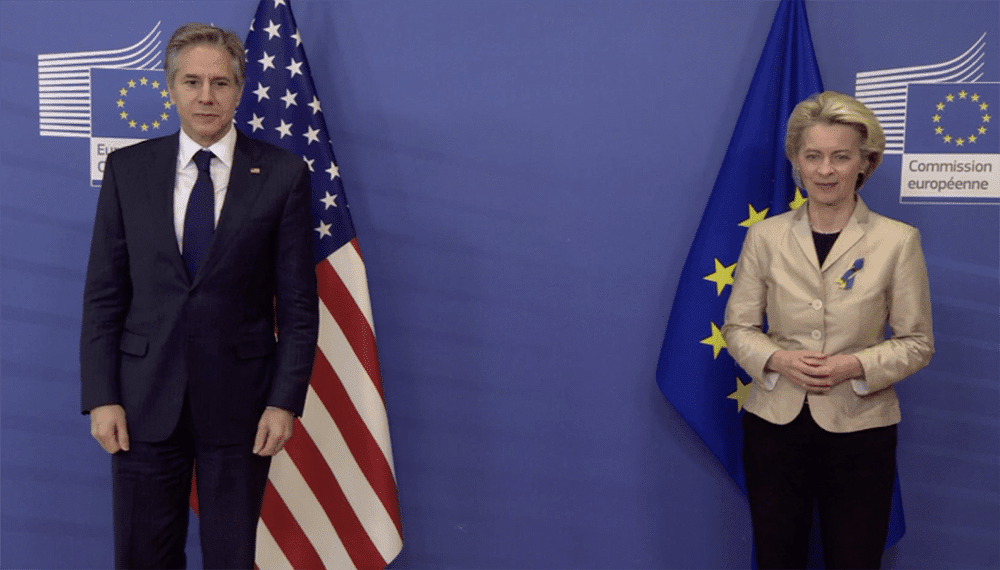
Press statement by President von der Leyen with US Secretary of State Blinken

0
President von der Leyen with US Secretary of State Blinken - screenshot european commission 2022-03
President von der Leyen with US Secretary of State Blinken - screenshot european commission

European Commission Statement Brussels, 04 Mar 2022 Rest assured, the European Union and the United States will continue to stand by Ukraine and its courageous people, and its steadfast leadership.

Dear Secretary of State Blinken, dear Tony,

A very warm welcome. I am very glad to have you again here in the Berlaymont. Your visit to Europe illustrates how very close the cooperation is between the European Union and the United States in response to Putin’s reckless invasion of Ukraine. Thanks to this coordination, we have together designed, developed and deployed sanctions in record time, sanctions that demonstrate our determination to make Putin pay a price for his war. We do not take these measures lightly, but it is clear we need to act.

With these measures, the Central Bank cannot use a significant share of its reserves to defend the rouble, now in free fall. The Central Bank has had to raise interest rates to 20%, stoking inflation. Significant commercial banks are cut-off from global markets and from SWIFT, curtailing their ability to finance the economy. The stock exchange in Moscow remains closed since the beginning of this week. One after another, Western companies announce their own measures, stopping production, investment and sales. The EU-US cooperation is at the core of this effective response, and it has pulled together an ever-growing number of countries that apply identical or similar sanctions. Our G7 partners, UK, Canada and Japan, but also countries like Norway, Switzerland, South Korea, Australia. By now, over 40 countries partially or completely aligned with our sanctions.

This is testimony to the determination of the global community to reject this invasion. One only needs to see the result of this week’s United Nations General Assembly. 141 countries, an overwhelming majority, supported the resolution condemning Russia for its brutal invasion. Only 4 countries out of 193 stood by Russia. It was Belarus, North Korea, Syria and Eritrea. President Putin is increasingly isolated in the world community. But in the face of the world’s protests, Putin’s army carries on. Bombings and missile attacks on civilian targets are intensifying.

Rest assured, the European Union and the United States will continue to stand by Ukraine and its courageous people, and its steadfast leadership. The scale of the humanitarian catastrophe, there, in Ukraine, that is unfolding, really worries us. Europe is seeing destruction and displacement on a scale not seen since the darkest days of the last century. The European Union, as Ukraine’s neighbour, is sparing no effort. We are providing EUR 500 million of humanitarian aid immediately and more will come. We are working fast to establish civil protection hubs in Poland, in Slovakia and in Romania. And we are also doing everything we can, with international organisations and NGOs, to set up humanitarian corridors that stretch inside Ukraine. Desperately needed humanitarian aid must be able to reach all parts of Ukraine. And civilians must be allowed to escape cities under siege.

Finally, the European Union has triggered, for the first time ever, the so-called Temporary Protection Directive. What is it? It effectively opens up residency rights for most refugees to live and work in the European Union, to have access to health services or, for example, schools for at least a year. We know that this conflict is far from over. And to be very clear, we are ready to take further severe measures if Putin does not stop and reverse the war he has unleashed. We are determined, we are united.

And it is a pleasure to have you here, dear Tony

Russian attack on nuclear plant condemned – Vatican News

0
Russian attack on nuclear plant condemned - Vatican News

By Stefan J. Bos — Záhony, Hungary

Women and children are among the many desperate refugees arriving here at the Hungarian-Ukrainian border. More are expected as Ukrainian authorities say several people have been killed and injured when the fire broke out at the Zaporizhzhia nuclear power plant following a Russian attack.

The fire has since been extinguished, and officials say the site is safe. Yet, the West has condemned Russia for what it views as a “horrific” and “reckless” act. And Ukrainian President Volodymyr Zelensky says the attack could have caused the equivalent of “six Chernobyls,” referencing the world’s worst nuclear disaster, which occurred in Soviet Ukraine in 1986.

“Inhumane attacks”

Additionally, the NATO military alliance secretary-general, Jens Stoltenberg, has accused Russia of violating the convention banning cluster bombs, which came into force in 2010. “We have seen the use of cluster bombs, and we have seen reports of the use of other types of weapons which would be in violation of international law,” he told reporters in Brussels. “And of course, NATO and NATO allies and partners are collecting information and monitoring very closely what is going in Ukraine. So I welcome the decision by the International Criminal Court to open an investigation into this. Because we have to make sure that [Russian President Vladimir] Putin and the president of Belarus [Alexander Lukashenko] are held accountable for what they do.”

Stoltenberg continued, “This is brutality, this is inhumane, and this is violating international law. And we also have to make sure that the International Criminal Court really looks into this.”

Praying for Ukraine and refugees

The attacks underscore concerns among refugees about the ongoing Russian invasion of Ukraine.

Many people have come to Záhony at the Hungarian, Ukrainian border. Church volunteers, including Péter Kiss, are trying to provide spiritual and practical support. “We provide food and drinks such as water to the people. There is so much uncertainty among those who flee. You can see it in their eyes. I hope this war will be over soon,” said Péter Kiss of the Budapest-based Faith Church, a Pentecostal congregation. “We pray every day for Ukraine and the refugees,” he stressed.

His words come as scores of people have been killed since Thursday by Russian airstrikes in Ukraine’s northern city of Chernihiv.

Listen to Stefan Bos’ report

Despite the heavy fighting, authorities say Russia’s estimated 200,000 troops involved in the offensive only managed to seize one city so far, Kherson in southern Ukraine.

Moscow invaded Ukraine on three fronts, the north, east, and south. The fighting continues as Europe’s worst conflict since World War Two rapidly escalates. That has added to international concerns that many more people will flee the troubled nation. The United Nations says more than a million people have fled Ukraine so far, and many more refugees and displaced persons are expected.

Ukraine: A nuclear explosion would spell catastrophe beyond all borders – Vatican News

0
Ukraine: A nuclear explosion would spell catastrophe beyond all borders - Vatican News

By Linda Bordoni

Tetiana Ogarkova is a journalist at the international section of the Ukrainian Crisis Media Center.

After the first week of war in the capital Kyiv, she decided to take her children and elderly parents to their hometown in the west of the country in search of safety. She continues, however, to tell the story and to facilitate the work of international journalists in the besieged nation.

Day 9 of the Russian invasion, she says, has brought further death, destruction, and fear, fuelled also by the potentially terrible and far-reaching consequences of a nuclear catastrophe.

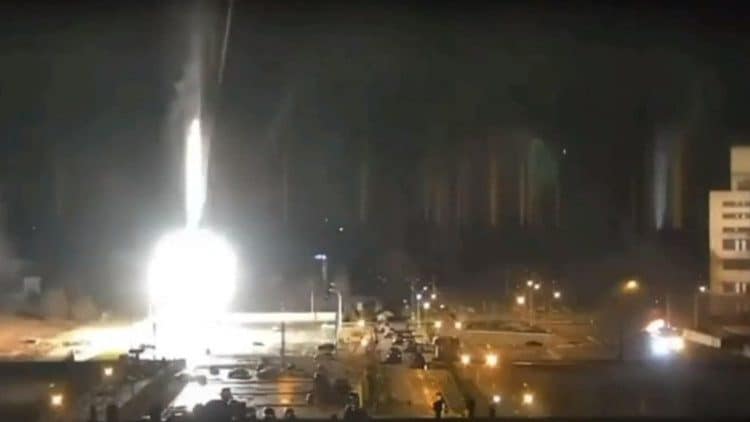
Her warning comes in the wake of the shelling, during the night, of Ukraine’s Zaporizhzhia nuclear power station, Europe’s largest nuclear plant, which is now in Russian hands.

Ogarkova also explains that the war is in a new phase with the Russian troops using different tactics after having faced such resistance on the part of the Ukrainian soldiers.

Listen to Tetiana Ogarkova

The Russian plan, Ogarkova says, was to capture the capital in two or three days, but their attacks were unsuccessful because the Russian army met with significant resilience on the part of the Ukrainian army.

Civilian targets

“What we see now is that they are aiming at civilians; today they bombarded a school in Zhytomyr, a normal school that is not at all a military object,” and she explains that houses and other sites that have no link whatsoever to military structures are being targeted.

This, she says, is aimed at creating panic and confusion and, on the ground, it is being perceived more as “terroristic activity” than as war.

Zaporizhzhia nuclear power plant after the shelling

Zaporizhzhia nuclear power plant after the shelling

A nuclear attack would have no borders

She goes on to speak of the shelling, during the night, of the Zaporizhzhia nuclear power station, which is now under Russian control.

“This is extremely, extremely dangerous. Because if there is an explosion it will be much bigger than the Chernobyl disaster, which was one of the hugest nuclear disasters in Europe in the last century,” she says, adding that “it would be six times stronger than the Chernobyl explosion.”

This station is now controlled by the Russian army and the priority right now is to involve everyone, at an international level, to change this situation.

Ogarkova launches her own appeal to the international community to do everything possible “to protect Ukrainian skyspace against missiles, rockets, Russian airplanes.”

It’s not just a local issue

She reiterates that Ukrainians understand the complexity of the issue, and the consequences of international involvement in this sense: “for the United States it would mean they are at war with Russia.”

Ogarkova expresses her opinion that although the West is continuing to avoid a clash with the Russian Federation, that clash is ultimately “unavoidable,” because she says, “they will destroy Ukraine first, but nuclear danger has no borders.”

“It will be a problem for everyone in Europe, so let’s do everything we can together to stop this nightmare,” she says.

Lack of food, medicines, basic necessities on the rise

Ogarkova says that in the west of the country, at the moment there is no lack of basic necessities. But in key cities and in the south, and in all places that are surrounded by Russian troops, there is a shortage of everything.

“It is becoming dramatic. In Kyiv there were huge lines at the pharmacies” with people waiting for hours for a simple medicine, she says, and the situation is expected to get worse in this respect.

The people are exhausted

Ogarkova says that as well as fear running through the population, people are increasingly tired.

“A lot of us are exhausted because we have spent all this time without any rest. It is impossible to sleep quietly, even in the western part of the country because of the air alerts,” she says, noting that even where she is sirens are sounded during the night and in the early morning.

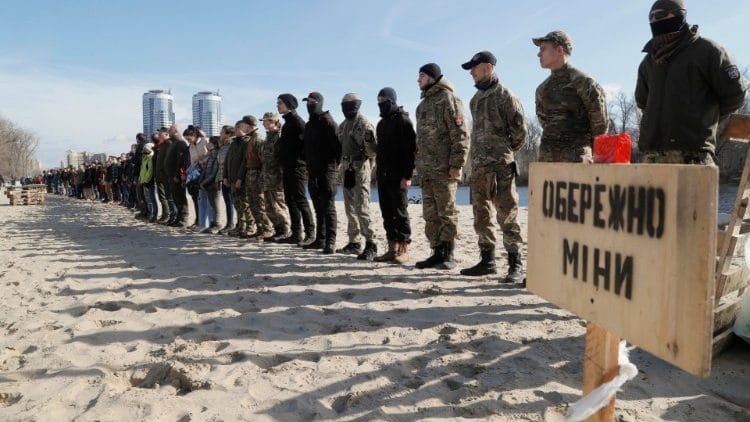
Ukrainians attend military training for civilians

Ukrainians attend military training for civilians

Huge solidarity networks

At the same time, she says, “we see a huge mobilization and huge networks of solidarity,” with people helping others to evacuate and the establishment of a territorial defense system with all sorts of people taking up arms to defend their country.

She also says there are checkpoints in every city and village, with people controlling documents and cars to make sure there are no Russian infiltrators.

This is kind of extreme mobilization of the population but also a moment of great fatigue, Ogarkova says, and Ukrainians from all walks of life are asking for international support, “especially in terms of air protection, which is extremely important to provide secure skies for Ukraine.”

“The Russian army is shelling cities,” she concludes, “and this will lead us to a humanitarian catastrophe, without any doubt.”

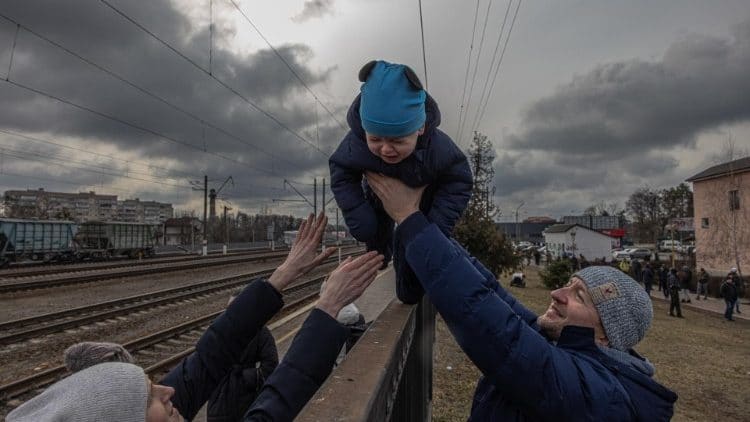
Ukrainians fleeing the bombs

Ukrainians fleeing the bombs

Human Rights Council to establish Commission of Inquiry on Ukraine

0
Human Rights Council to establish Commission of Inquiry on Ukraine
In a resolution adopted on Friday, the UN Human Rights Council in Geneva agreed to establish a commission to investigate violations committed during Russia’s military attack on Ukraine. 
Thirty-two countries voted in favour of the resolution, which was presented by Ukraine.  Russia and Eritrea voted against it, while 13 nations abstained. 

Minute of silence 

Council Members observed a minute of silence to honour the victims of the bloodshed. 

The resolution calls for the “swift and verifiable” withdrawal of Russian troops and Russian-backed armed groups from Ukraine and urges safe and unhindered humanitarian access to people in need. 

The independent international Commission of Inquiry will have a mandate that includes investigating all alleged rights violations and abuses, and related crimes, and making recommendations on accountability measures.   

The vote capped two days of discussions on Ukraine in the Council, which is holding its annual month-long session. 

Urgent debate 

Ambassador Yevheniia Filipenko explained the serious motive behind the urgent debate her country had called on the “Situation of human rights in Ukraine stemming from the Russian aggression”.

“Most importantly, the initiative envisages the establishment of a Commission of Inquiry which will investigate all alleged violations and abuses of human rights and violations of international humanitarian law and related crimes in the context of the Russian Federation’s aggression against Ukraine, including their root causes,” she said.  

“It is our common duty to ensure accountability by mandating the documentation and verification of Russia’s crimes and identification of those responsible,” Ms. Filipenko continued, in reference to the Commission of Inquiry. “This is the only way to ensure that such blatant dereliction of human rights values, which we deeply share cherish, will never repeat itself in any place of the world.” 

Speaking ahead of the vote, she called on those present to observe a moment of silence for all victims in Ukraine “stemming from the Russian aggression,” at which point the work of the Council paused, as Members stood to show their respect. 

Russia rejects Commission 

“We just held a minute of silence, and we do not oppose such a minute of silence,” said Counsellor Evgeny Ustinov from the Russian delegation. “But we hope that all those present here, including the diplomats and UN representatives, will finally recall those thousands of people who have been killed and maimed by the authorities in Ukraine. And these are the people in Donbass.” 

Rejecting the creation of a Commission of Inquiry, Mr. Ustinov insisted that it was “a mere waste of resources, which could better be used to help civilians in Ukraine. However, this will unlikely be a concern of the co-sponsors of the resolution, which will use any means in order to blame Russia for the event.” 

MEPs want to end golden passports schemes | News European Parliament

0
MEPs want to end golden passports schemes | News | European Parliament
The EU should end so-called golden passports which allow rich people to obtain EU citizenship in exchange for investment. MEPs vote on the proposal during the March plenary.

A new report calls for the EU to ban the sale of citizenship by investment schemes and to regulate residence by investment  schemes. The schemes confer EU citizenship or resident status on non-EU nationals in exchange for financial investments.

Report author Sophie in ‘t Veld (Renew Europe, the Netherlands) said: “The bar for what counts as an investment has been too low for too long. EU residency should only be awarded to people who are investing in the real economy and who can be trusted to be legitimate investors without criminal backgrounds.”

These schemes are characterised by having minimal to no requirements of physical presence and offer a fast track to residency or citizenship status in an EU country compared with the obstacles of seeking international protection, legal migration or naturalisation through conventional channels. Once granted their new status of residency or citizenship, the beneficiaries of the schemes immediately start enjoying freedom of movement within the Schengen area.

The report produced by Parliament’s civil liberties committee calls the schemes “objectionable from an ethical, legal and economic point of view”.

Three countries currently have citizenship by investment schemes: Malta, Bulgaria (where the government has tabled legislation to end it) and Cyprus (only processing applications submitted before November 2020). Twelve EU countries currently operate residence by investment schemes. The minimum investment levels range from €60,000 to €1,250,000.

A study has estimated that more than 130,000 people have obtained residence or citizenship in EU countries via these schemes with the total investment estimated at €21.4 billion from 2011 to 2019.

Red carpet for shady people

The report says that the existence of passport-for-cash schemes affects all EU countries because a decision by one member state to grant citizenship for investment automatically gives rights in relation to other countries. These rights include freedom of movement, the right to vote and stand as a candidate in local and European elections and right to access the single market for economic activities.

The schemes can affect other EU countries because of the risks of corruption, money laundering, security threats, tax avoidance, pressure on the real estate sector and an erosion of the integrity of the internal market.

Meanwhile, EU countries do not always consult the available EU databases or exchange information on the outcome of such checks and procedures, according to the committee report. It expresses concern that some countries were reported to have accepted applicants for citizenship who did not meet the security requirements.

In ‘t Veld said: “A lack of scrutiny meant that the red carpet was rolled out for corruption and money laundering. Shady people paid large sums of money to obtain access to the EU. Communities have not benefited from these sums, but instead suffered from corruption. Journalists investigating some of the people coming in have sometimes faced grave consequences. In more ways than one, the whole of Europe bears the burden of practices that marginally benefit some governments.”

The European Commission launched infringement procedures against Cyprus and Malta in 2020 concerning their citizenship by investment schemes and the report calls on the Commission to advance those procedures.

Gas or cash?

The Russian invasion of Ukraine has further catapulted the schemes into the spotlight in recent weeks.

Parliament President Roberta Metsola tweeted. on 25 February: “The Kremlin has long thought it could buy its way into Europe. It is time to close any loopholes, end the dangerous phenomenon of so-called golden passports that provide a backdoor to European citizenship and ensure that Russian cash does not become the next Russian gas.”

In a resolution adopted on 1 March, MEPs demanded that EU countries with such schemes review all beneficiaries and revoke those attributed to rich Russians, especially the ones linked to sanctioned people and companies.

MEPs will debate the report on Monday and vote on it the following day.

“A Polaroid picture helped reveal the eye cancer that cost our son his eye”

0
“A Polaroid picture helped reveal the eye cancer that cost our son his eye”
A mum and dad are urging other parents to look out for the tell-tale signs of eye cancer after their 14-month-old son lost his eye through retinoblastoma, a rare eye cancer that typically affects children under the age of six.  

Dad Tom Pughe-Morgan, from Brighton, spotted an unusual white glow in his then eight-month-old son Elijah’s eye – a common sign of eye cancer which is often only seen in certain light.   

Mum Annabel Byrne said, “Tom first spotted the white glow in the Summer of 2020. Later, I took a video of Elijah climbing up the stairs and Tom said, ‘There’s the white glow I’ve been talking about. I’m worried because I can see it really clearly’”.

The parents were unaware of the signs and symptoms of retinoblastoma, and findings from a recent *survey on behalf of the Childhood Eye Cancer Trust found that only 19% of parents surveyed felt they knew the symptoms of the cancer, and a decline in parents being concerned about their child’s eyes.

Annabel said, “I saw a TikTok video of influencer Jarrett Stod removing his artificial eye and explaining that he’d had retinoblastoma. You never think something like that will happen to your child”.

Elijah with a white glow

In January 2021, a month after seeing the TikTok video, Annabel had the sudden urge to find her old Polaroid camera.

Annabel explained, “I was so keen to find it, I was going crazy as I just really wanted the camera to work. I rushed to get the last film in the shop and then rushed out again when I realised it needed batteries. Everyone in my house was looking at me like ‘What’s going on?’”.

“The first photo I took on the Polaroid you could see the white glow in Elijah’s pupil so clearly, and although Tom had told me that he had seen a glow, I didn’t realise something was wrong until then. The white glow really alarmed me because it was so clear and everything else in the picture was so dark apart from the glow, and after talking to a family friend, I took Elijah to hospital the next day.”

The polaroid photo that prompted the hospital trip

“Elijah looked up at me as he ran around the ward and I could see his eye glow in the light. When the doctor examined him, he said, ‘I’m really sorry, but I think your son has retinoblastoma’. He explained that someone from the children’s ward would see him ASAP. I calmly replied ‘Ok, lovely thank you’, because I didn’t know what retinoblastoma was.”

It wasn’t until the specialist The Sussex Eye Hospital mentioned about Elijah going to Great Ormond Street Hospital for Children (GOSH) that Annabel realised the severity of the situation.

Annabel explained, “I remember the word ‘cancer’ and that’s it. I just felt so numb and floppy and had to leave. My whole world stopped; I couldn’t even process it. I rang Tom and said, ‘Elijah has cancer’ – he didn’t believe me at first but then immediately left work to come to the hospital. I was holding onto my 14-month-old boy who hadn’t a clue, smiling away. I was his comfort and I needed to step up. It was by far the hardest moment I’ve had to deal with, and I had to keep our family together and strong.”

Annabel adds, “We both felt so bad. I felt bad for not listening for the past six months and Tom felt bad for not doing anything, but we didn’t even mention it. We knew that he was being seen now and that’s all that mattered.”

Two days later, on the 6th January 2021, the family went to Moorfields Eye Hospital where Elijah was diagnosed with retinoblastoma. Elijah’s MRI revealed that the cancer luckily hadn’t spread outside of his eye, but the parents were faced with the decision of either Elijah having chemotherapy, or having his eye removed.

Elijah with his mum, Annabel

Annabel explains, “If Elijah had gone through chemotherapy there was a chance he would still need his eye removed or the cancer spreading. While parents who choose chemotherapy are so strong, Tom and I looked at each other and we just knew that having his eye removed was the right thing to do for Elijah.”

The morning of Elijah’s operation at the Royal London Hospital on the 13th January 2021, Annabel felt emotional and tried to hold back the tears.

Elijah in hospital with his dad, Tom

Annabel said, “I’d never been so scared when we went to collect him – I scooped him up and didn’t want to let go. Tom and I are both very grateful for each other, we were each other’s backbone.”

“The day after the operation, Elijah was happier but wanted lots of cuddles – he bounced back to normal within a week. He was given an artificial eye – which he is amazing with! Elijah is now at an age where he is aware and likes to play with it. When I catch him, he always giggles because he knows he’s being cheeky. We have a box of all the artificial eyes he’s had so far; he loves looking through them and explaining they are his ‘old eyes’. It’s so nice to see him be that way.”

Elijah after his operation

After Elijah had his eye removed, he attended an event hosted by influencer Olivia Deane, who had also had retinoblastoma.

Annabel explained, “Olivia is an inspiration; she gave me that spark of confidence to not care what people think. I wanted to come across as a strong mum and not care about other’s opinions, but I did care. You just want to protect your children at all costs, and you don’t want people saying nasty things. My confidence around it is definitely growing.”

Olivia Deane with Elijah at her awareness event

Elijah now gets seen for a check-up at the Royal London Hospital every six months, but he was able to ring the bell for being cancer-free on the 4th January 2022 – exactly a year after he received his diagnosis.

Annabel said, “Tom and I were thrilled because it’s such a lovely thing to do, especially as it was a year anniversary. We helped him ring it and it was a lovely atmosphere.”

“Elijah is the most amazing, funniest, bravest, cheekiest, gorgeous, polite little boy! He loves animals, being outside and horse riding. As he has one eye you just want to protect it, but I don’t wrap him up in cotton wool. I want him to go out and be himself. I believe he can do anything a child with two eyes can do.”

Elijah and his dad, Tom

In a message to other parents, Annabel said, “Trust your gut. If you’re worried, book a doctor’s appointment. It’s a few hours out your day that could save your child’s life.”

The Childhood Eye Cancer Trust (CHECT) are urging parents and healthcare professionals to be aware of the most common possible symptoms of eye cancer – a white glow in the eye in flash photo or other certain lighting conditions and a squint. 

Patrick Tonks, Chief Executive of CHECT said: “Retinoblastoma is rare, with around one baby or young child being diagnosed in the UK each week. Symptoms can be quite subtle, and children often seem well in themselves which can make it hard to diagnose. In just under half of all cases, such as in Elijah’s case, a child has to have an eye removed as part of their treatment.”

Patrick adds, “We are extremely grateful that in Elijah’s case, his symptoms were recognised, and A&E made an urgent referral so that he could undergo treatment.”

Elijah’s Great Great aunt, Ash, is very kindly shaving her hair for CHECT.

Annabel explained, “I’m so happy Ash chose to do this for CHECT as they’ve helped our family hugely – not only financially, but mentally, and offering help whenever it was needed. Thank you Ash”

“We also want to thank all the health professionals who helped with diagnosing and treating Elijah”.     

For more information on the signs, symptoms, and treatment of retinoblastoma, please visit chect.org.uk.  

– ENDS –

NOTES TO EDITORS

The Childhood Eye Cancer Trust (CHECT) is a UK charity dedicated to helping people affected by retinoblastoma. It:

  • Provides ongoing support and information to families and individuals.
  • Funds research into the prevention and treatment of retinoblastoma.
  • Raises awareness among health professionals and the public.
  • Influences policy to improve services for patients.

Retinoblastoma is a rare and aggressive form of eye cancer that affects babies and young children, mainly under the age of six. Around 50 cases are diagnosed a year in the UK – or one child a week. It represents 3% of all childhood cancers and 10% of cancers in babies under the age of one in the UK.

Around 98% of children survive retinoblastoma in the UK but early diagnosis is crucial in order to save a child’s eyes, sight and life. The most common symptoms are a white glow in a child’s eye or pupil in dim lighting or when a photo is taken using a flash, and a squint.

CHECT has been a registered charity since 1987 and was formerly known as the Retinoblastoma Society.

*1,026 parents took part in the online survey, conducted by MMR Research Worldwide in January 2022. All parents had at least one child aged between 0-6 years

For more information on CHECT or retinoblastoma (also known as Rb), including signs and symptoms, diagnosis and treatment options, please visit www.chect.org.uk.

Media enquiries:

For all media enquiries please contact:

Isabella Greenwood (Communications Manager)

Email: isabella.greenwood@chect.org.uk

Press release distributed by Pressat on behalf of Childhood Eye Cancer Trust, on Friday 4 March, 2022. For more information subscribe and follow https://pressat.co.uk/