Archaeologists have studied the remains of four ceramic pots from the collection of the Royal Ontario Museum. They were found in the vicinity of the Armenian Garden in Jerusalem, they are dated to the 11th-12th centuries.
This is reported by the site Science.News.
One of the shards was made of a stone spherical-conical vessel with very thick walls and no decor; it may have contained the chemical ingredients – including fatty acids, mercury, sulfur, aluminum, potassium, magnesium, nitrates and phosphorus – of an explosive device.
Scientists suggest that the pot was something like a hand grenade, which was used in the defense of Jerusalem from the Crusaders.
“There is evidence that during the Crusades, these pots were dropped like grenades near the Crusaders, resulting in loud noises and bright flashes of light,” says molecular archaeologist Carney Matheson of Griffith University in Australia.
The assumption about the combat purpose of the clay pot is confirmed not only by the analysis of its contents. According to scientists, the shape and thickness of the walls of the pot support this hypothesis.
The vessel is a sort of medieval hand grenade thrown by Saladin’s troops during the siege of Jerusalem in 1187 CE. The find confirms experts’ claims that hand-held explosive devices were used during the Crusades, but the recipe never made it beyond the Middle East and North Africa.
Spherical and conical ceramic vessels dating from the 9th to 15th centuries are widespread in the Middle East, but the reason for their use is still debated. They are thought to have stored mercury for mining and medical use, beer, and aromatic oils.
Dr. Carney Matheson of Griffith University analyzed the remains inside four such vessels found in the Armenian gardens of Jerusalem in a layer dating from the 11th-12th centuries. Each of them has a different chemical composition, supporting the idea that these vessels had different uses.
One of the four, called “shard 737”, is undoubtedly the most significant: it contains a combustible mixture that was used as an explosive. Remarkably, this explosive was not imported from China, where gunpowder had been used since at least the 9th century, but was locally produced.
“Shard 737” contained traces of sulfur, mercury, magnesium and nitrates, suggesting a sophisticated explosive device very different from black powder. Magnesium, for example, could well have come from the Dead Sea, where it was mined at the time.
During the Crusades, these vessels were used in the form of grenades thrown into the fortresses of the Crusaders. They produced loud sounds and bright flashes of light.
Some researchers have suggested that the vessels were used as grenades containing black powder, an explosive invented in ancient China and known to have been introduced to the Middle East and Europe in the 13th century. And, as scientists suggested, it could have been brought to the Middle East earlier, already in these vessels of the 9th-11th centuries.
Arabic texts of the time mention recipes for explosives, but they have proven difficult to reproduce. It was a secret weapon and they didn’t want to tell everyone exactly how to make it. Modern translations may not be entirely reliable, and every recipe is different.
What kind of oligarch are you if you don’t have a luxury yacht! As it turns out, Russian billionaires lived exactly according to this principle. Every day, there are reports of the arrest of the next “waterfowl toys” under Western sanctions. The performance characteristics of the yachts are impressive – many of them, in terms of their cost and displacement, have long surpassed the navies of small states. In the Komsomolskaya Pravda collection, Anton Fokin lists the most notable “flagships” of the Russian business fleet.
Named after mother
If we talk about the most expensive confiscated yacht, then the undisputed leader is Alisher Usmanov with his Dilbar, the cost of which is estimated at $600-750 million. This 156-meter beauty, named after the mother of a billionaire, Russian teacher Dilbar Usmanova, was detained in Germany. The yacht was in Hamburg for scheduled repairs.
Perhaps, “Dilbar” can rightly be called a synonym for the word “luxury” and “chic”, because, according to the Daily Mail, it was built for more than 4 years – longer than the Navy aircraft carrier “Admiral of the Fleet of the Soviet Union Kuznetsov”! Inside there is everything: a cinema, a gym, swimming pools, a jacuzzi, a kitchen, even a smaller marina. All interior elements were developed on an individual project by the most famous designers, and to deliver all this wealth to the ship, it took 27 trucks packed to capacity. A small detail: so that this “mansion” does not deteriorate during mooring, the pier (and not the ship!) Is covered with a special agent.
“Baby” Abramovich
According to official data, now the second largest motor yacht in the world, Eclipse, owned by Roman Abramovich, has so far remained under the control of the businessman. This engineering marvel worth over a billion dollars is located in Turkey, although sanctions will make it difficult for anyone to sell or maintain the ship.
Eclipse, owned by Roman Abramovich, has so far remained under the control of a businessman
Now the fate of the brand new 145-meter yacht Solaris, the construction of which for Roman Arkadyevich is now being completed at a shipyard in Germany, is also unclear. The Solaris was to be an 8-deck, 48-cabin “servant’s house” with elevators and helicopters. It was planned to use it both for receiving various cargoes from helicopters, storing boats, equipment, and as a place of residence for guests and staff. The cost of such a “hozblok” was “only” $300-450 million.
First letter of the alphabet
Another vessel “crushed by the sanctions skating rink” was Andrey Melnichenko’s sailing yacht with the laconic name “A”, which was encroached upon by the Italians. True, the ship itself, with a displacement of about 13 thousand tons, has a very non-concise design and is considered the largest sailing yacht in the modern world.
Its length is 143 meters, width – 25, and the total area is about 1767 square meters, and three huge masts with powerful sails proudly hover above the hull. Not much is known about the decoration and interior decoration of this miracle of technology, but in terms of its characteristics, this “thunderstorm of the seas” is in 11th place along the deck length among the largest sailing ships ever built by mankind, and in terms of displacement, it generally claims to be “ bronze!
Italy seized Melnichenko’s yacht
Andrey Melnichenko’s yacht with the laconic name “A”
Stuck in Mallorca
The yacht “Tango” of the famous keeper of the Faberge eggs Viktor Vekselberg does not claim to record in terms of cost and size. The ship was detained by the Spanish authorities in the port of Palma de Mallorca, where FBI agents arrived along with local policemen.
For the arrest, they even had to connect a secret witness, who, in great secret, said that the owner of Tango turned out to be a Russian oligarch (the nominal owner is a company from the British Virgin Islands, which, in turn, is controlled by citizens of Panama).
True, there is a lot of information on the Internet that Vekselberg is the owner of Tango. For example, it is written about this on the Superyacht Fans website, and in the press in recent years it has been mentioned that the oligarch owns this vessel.
The FBI detained the superyacht “Tango” of billionaire Viktor Vekselberg
“Tango” is not a simple vessel, but a real work of “yacht art”. It has everything: swimming pool, jacuzzi, gym, comfortable cabins. And the team is like on a real ship – 22 people. The cost of the vessel in different sources varies from 90 to 120 million dollars.
Victim of a “saboteur”
Of the simpler yachts, the most curious story happened with Alexander Mikheev’s vessel “Lady Anastasia”, which was also detained in sunny Spain in Mallorca. This yacht became a victim of a real Ukrainian saboteur!
Taras Ostapchuk, 55, a citizen of Nezalezhnaya, had been working on the ship as a mechanic for 10 years by the time the special military operation began. Yielding to violent feelings, the man opened two valves on the ship: in the engine room and in the compartment where the crew lives. Taras turned off the electricity and ordered the other crew members to leave the ship. As a result, water got into the yacht and the ship almost turned into a submarine, but was saved by other “less patriotic” Ukrainians from the same crew.
The most curious story happened to Alexander Mikheev’s ship “Lady Anastasia”
The hero was arrested and wanted to be sent to prison, but the Spanish judges, impressed by the accused’s story of “righteous revenge”, released the “saboteur” on bail. According to the Spanish press, Ostapchuk was sentenced to only 36 hours in prison, after which he returned to Ukraine, where the former sailor allegedly had already joined the Ukrainian armed forces.
So far, everything seems to be fine with the Lady Anastasia, and the beautiful vessel, almost 48 meters long, is standing in the roads of Mallorca. At the moment, the yacht is worth about 7 million euros. According to the manufacturers, the vessel is designed for 10 people, for whom 5 luxurious cabins with marble trim and a Jacuzzi have been prepared.
Not only yachts fall into the net of insidious Americans, but also such “real estate” as airplanes. For example, at Yevgeny Shvidler, the British detained two aircraft, one of which, the Cessna Citation Latitude, worth about $13 million, was excluded from the British aircraft register, banning it from flying in the foreseeable future. Earlier, London seized a $45 million Bombardier Global 6500 registered at Farnborough Airport.
What’s inside these aircraft is a mystery, but Business Insider claims that the Bombardier Global 6500 has a “club suite area” as well as a “cabin designed for rest and relaxation.” If you want – sleep, if you want – arrange business negotiations, the main thing is that you don’t have to huddle up to each other and ask your neighbor to raise your back. And most importantly, “two toilets are included as standard,” so there is no need to queue in advance either.
However, the rest of the oligarchs were able to avoid the confiscation of aircraft, because overtaking them from an unfriendly state to Russia or a “non-aggressive” country is much faster and easier than equipping a yacht. As a result, Schwindler is still the only businessman from the Russian Federation who has lost his “air fleet”.
Photo: If we talk about the most expensive confiscated yacht, then the undisputed leader here is Alisher Usmanov with his “Dilbar”
Gold jewelry, expensive watches, unique cars and insane yachts – when we talk about the royal family of Saudi Arabia, this is the notion associated with the princes of the Saudi family.
But in the last five years since Mohammed bin Salman was nominated as Saudi heir to the throne and became the country’s de facto ruler, a number of his relatives have begun selling real estate, yachts and art in the United States and Europe.
The total value of all assets sold, according to a Wall Street Journal investigation, reached an impressive $ 600 million.
The reason behind this waiver of assets is the actions of Prince Mohammed, which tightened the access of the super-rich ruling family to the state funds of the kingdom.
In the 1970s and 1980s, all the high princes of the Saud dynasty managed to take advantage of the oil boom, bringing them enormous wealth. So many of them gained insane wealth, and during this period it happened that some of the royalty spent more than 30 million dollars a month.
The nobles of the royal family furnished themselves with expensive property, hired a large number of service personnel and led a lavish lifestyle. However, when this became a habit, it made many of these princes vulnerable to recent changes in government policy.
Crown Prince Mohammed bin Salman ruled the kingdom with an iron grip, crushing any form of opposition he saw before him.
So now some members of the royal family are quietly selling their assets abroad to generate free money. This came after Crown Prince Mohammed bin Salman dried up many of the sources the other princes used to maintain their extravagant spending habits, according to media sources, people close to the Saudi royal court.
According to these sources, the princes need fresh money not just to maintain their lavish lifestyle, but to pay their routine bills, including taxes, property maintenance, staff salaries, fees for private jets and others.
Another motive for selling so many properties and assets is to leave less expensive ostentatious possessions, in order to avoid attracting the attention of Prince Mohammed.
“These people are not working, they have a huge staff and they are afraid of Prince Mohammed. The princes want to have money in their back pockets, not great visible wealth,” said a Wall Street Journal source.
Recently sold assets include a $ 155 million mansion in Britain, two yachts over 60 meters long and branded jewelry donated as wedding gifts by the late king.
According to the publication, the princes who sell their property were until recently some of the most influential people in Saudi Arabia, including the former ambassador to Washington, Prince Bandar bin Sultan.
According to British historian Robert Lacey, who has traced the history of the Saudi royal family since the 1980s, such a move by the once powerful princes means they are now “disciplined” by the current regime, which seeks to show them borders. political) in which they must learn to live.
Prince Mohammed is “here in the long run and reshaping things in the long run,” Lacey said.
Representatives of Prince Bandar have officially confirmed that he has got rid of all his assets abroad, but they offer another explanation – he has seen “greater benefits from investing in the kingdom because of the incredible work done by the heir to the throne, creating all investment opportunities “.
The luxurious life of the rich children of Saudi Arabia and Dubai
Fast cars, beautiful women, expensive toys
One of Prince Mohammed bin Salman’s first significant moves was to isolate all his relatives who could be his potential rivals to the throne.
Thus, in 2017, mass arrests in an anti-corruption operation detained a number of princes, including one of King Salman’s brothers and a cousin of Prince Mohammed.
Another move by the heir to the throne was to reduce privileges for thousands of royalty, including paid vacations abroad or covering electricity and water bills in their Saudi palaces. Experts estimate that these privileges cost the state hundreds of millions of dollars a year.
The tap was also stopped for the initial opportunity for personal enrichment of the princes – oil sales, and at the same time the possibility for the princes to participate in business deals with the participation of the government was limited.
A new tax is also putting pressure on royalty, demanding $ 2,500 a year for each domestic worker in excess of the quota of four mansion staff. The move has cost some royalty hundreds of thousands of dollars.
U.S. diplomatic telegrams from the 1990s leaked to WikiLeaks show that some royalty have also generated wealth in blatantly illegal ways – borrowing from local banks without repaying it; expropriating land from ordinary citizens, which is then sold; or using the kingdom’s visa system to bring in cheap foreign labor.
For Saudi princes, the word “luxury” has a different meaning
Gold, luxury, luxury and more gold
According to those familiar with the royal family’s finances, some princes continued to benefit from such benefit schemes until Prince Mohammed came to power.
According to the sources of the publication, the big blow with which the change started came from the anti-corruption operation of Prince Mohammed. Many princes were then detained at the Ritz Hotel in Riyadh on corruption charges and released only after paying undisclosed sums to the state treasury.
According to the anti-corruption commission itself, the arrests continue.
One of those detained during the operation was the late Prince Turki bin Nasser, a former commander of the kingdom’s air force. According to British authorities, in the 1980s he handed out unprofitable contracts for the supply of jet fighters and other military equipment to a private company in exchange for a bribe.
The large-scale anti-corruption operation in 2017, led by Prince Mohammed in the country, provoked many positive reactions among the younger citizens of Saudi Arabia.
Most princes today no longer have access to such deals involving the government. He himself died shortly after launching deals to sell his 62-meter yacht and a Beverly Hills mansion in 2020 for $ 28.5 million.
Prior to his arrest in 2017, his net worth was estimated at more than $ 3 billion.
With all these cranes tightened, many of the Saudis are now forced to adapt to the new reality – they continue to be rich, just not so crazy.
“They had a standard of living that exceeded all expectations. Expenses outside this world. It takes time now to adapt,” said one Wall Street Journal source.
Gary Hersham, founder of a luxury real estate company who has been involved in several of Saudi Arabia’s royal family deals, says the generally younger generation of Saudi princes no longer needs or uses the grand estates their predecessors bought. .
According to him, they spend much more and prefer to have free money than to own these very large and chic properties.
“They want less ostentation, that’s the trend,” he added, noting that sales of princes often go hand in hand with purchases of smaller homes.
The Supreme Judicial Council (SJC) has refused to nominate representatives of the Bulgarian judiciary to participate in the International Commission for Documenting and Establishing Russian Crimes in Ukraine.
This was announced by the Minister of Justice Nadezhda Yordanova in her Facebook account.
An international investigation into war crimes in Ukraine began in March after 41 countries appealed to the International Criminal Court. Germany has launched its own investigation, and Poland is investigating aggression. On March 4, the UN Human Rights Council voted to establish an international commission of inquiry to document war crimes and human rights abuses.
In early April, Bulgaria received an invitation from Poland to include Bulgarian experts in the international commission.
The commission will include doctors, forensic specialists, pathologists, lawyers, prosecutors, police officers, forensic scientists and other experts. The Commission will work on the territory of Ukraine, in cooperation with its authorities. She is expected to prepare a report, which will be made public.
The Minister of Justice Nadezhda Yordanova points out that the ministry has sent a letter to the SJC with a call, in the opinion of the magistrates, to consider the possibility of including representatives of the Bulgarian judiciary in the commission.
The SJC considered two options today. One provides for the invitation to be taken into account, as it is considered inappropriate to appoint representatives of the judiciary to the International Commission. The second envisages the SJC agreeing in principle to participate in the commission by sending the information to the chairman of the Supreme Court of Cassation and the chief prosecutor with a request to appoint judges and prosecutors to join the panel.
Without debate and unanimity, the SJC decided to accept the summons and would not send representatives of the judiciary to the commission of inquiry.
“Empathy and justice must be defended through concrete action. The challenge of Russian military aggression in Ukraine obliges, in every aspect, the Bulgarian state to be at the height required by the principles of the rule of law and solidarity of the actions of the international community. The SJC was not at that height, “Yordanova commented on the decision.
The largest number of the population in the Republic of Northern Macedonia who have dual citizenship are those with N. Macedonian and Bulgarian citizenship – 19,645, according to new data published by the State Statistical Office from last year’s census. The enumerators also registered 165 citizens who have only Bulgarian citizenship, BTA reported.
There are 10,909 citizens of the Republic of Northern Macedonia with Macedonian and Serbian citizenship, 3,819 with Croatian citizenship and 2,164 with Albanian citizenship. 2393 people are registered with a passport from Kosovo.
Of the total permanent population living in the country, 1,778,725 are citizens of the Republic of Northern Macedonia, 53,201 are citizens of the Republic of Northern Macedonia and another country, 4,203 are citizens of another country only, and 584 are stateless.
According to the data, there are more men with dual citizenship – 30,003, and women with dual citizenship – 23,198.
By age groups, the majority of the permanent population in the Republic of Northern Macedonia with dual citizenship is between 35 and 39 years old. Half of the people with dual citizenship are young people aged 20 to 34 – 11,768 people, and the active population aged 35 to 49 – 15,171 citizens.
How does Skopje (not) count Macedonians with Bulgarian passports?
Another census in the Republic of Northern Macedonia raises questions again. After earlier Skopje announced a surprisingly small number of Bulgarians – only 3,504 people who declared their ethnicity in the census, now there are just over 19,000 who have dual citizenship – Bulgarian and N. Macedonian. At the same time, the data in our country show that for the last 15 years 86,566 Macedonians have received Bulgarian passports, as in 2020 alone there were 9,000 people, and in 2021 it was 7,692.
Russia is considering linking the ruble’s value to gold or other commodities. This was announced by Kremlin spokesman Dmitry Peskov, quoted by TASS, quoted by Investor.
“This issue is currently being discussed,” Peskov told reporters on Friday. He recalled that earlier the topic was proposed by the Secretary of the Security Council of Russia Nikolai Patrushev.
An interview with Patrushev was published in Rossiyskaya Gazeta on Tuesday, where he said experts were considering a proposal by the scientific community to create an alternative monetary and financial system. It is proposed to set the value of the ruble to be backed by both gold and other raw materials in order to bring its exchange rate in line with real purchasing power parity.
According to him, in order for any national financial system to have sovereignty, its means of payment must have intrinsic value and price stability, and not be pegged to the dollar.
Contrary to the Kremlin’s position, the governor of Russia’s central bank, Elvira Nabiulina, rejected the idea of pegging the ruble to gold.
“It has not been discussed in any way,” she told reporters after it became clear that the institution was reducing the base interest rate by 300 basis points. The ruble must continue to have a floating exchange rate, she said. However, Nabiulina added that the volatility of the currency will be increased due to capital controls imposed after the start of the war in Ukraine.
Continuing its long-standing efforts to reduce its exposure to the US dollar, the Russian central bank reduced the share of the currency in its reserves to 10.9% as of January 1 from 21.2% a year earlier. Gold also fell slightly to 21.5%.
Sanctions against the Russian central bank over the invasion of Ukraine have deprived it of access to nearly half of its holdings, with virtually only gold and yuan at its disposal. Prior to the war, President Vladimir Putin had repeatedly said that Russia should end its dependence on the US dollar as an international reserve currency.
There will be no foreign leaders in Europe at this year’s parade in Moscow on the occasion of the end of World War II. The reason is that the Kremlin has decided not to invite anyone, spokesman Dmitry Peskov said at a regular briefing. Asked if at least Alexander Lukashenko would be in Red Square, he replied: “As far as I know, it is not planned.”
Thus, Vladimir Putin will be the only state leader to be joined by nearly 11,000 Yunarmiya soldiers, cadets and youths, more than 130 “modern weapons and equipment” units and 77 planes and helicopters, including models currently used in Ukraine. .
Peskov’s explanation is that “this is not a jubilee date. This is our holiday. This is a sacred holiday for all of Russia, for all Russians. But we have not invited foreign leaders.”
The capitulation of Nazi Germany was signed on May 8, 1945 before the allies of the anti-Hitler coalition, but the Soviet dictator Joseph Stalin was not satisfied and demanded a repeat only for his army and elsewhere a day later. To this day, this day is celebrated on different dates in Europe and Russia.
Curiously, last April Peskov gave exactly the same explanation: “The year is not a jubilee, so no invitations to foreign participants are planned.” Then the excuse was the pandemic, but the so-called procession of the “Immortal Regiment”. There was a full parade on June 24.
Following reports on 28 April 2022, that a male Conservative MP was watching porn in the House of Commons, Anthea Sully, the Chief Executive of White Ribbon UK, made the following statement, ‘viewing porn in public has long been used to harass women. That this should have happened in the House of Commons is shocking and shows how normalised this sort of abuse can be. Such behaviour causes personal harm to the women who experience it and is a block to women’s equality. All too often it has fallen on women to report. But men will often know that their peers are behaving unacceptably. To change such toxic cultures, we need men to call this behaviour out. White Ribbon UK calls on all men to learn to become allies to women, to listen to their experience and to never excuse or remain silent about violence and abuse. Members of Parliament should be setting a lead for ending sexism – all men in Westminster need to be stepping up and taking responsibility to create a culture of equality and respect.’
Press release distributed by Pressat on behalf of White Ribbon UK, on Friday 29 April, 2022. For more information subscribe and follow https://pressat.co.uk/
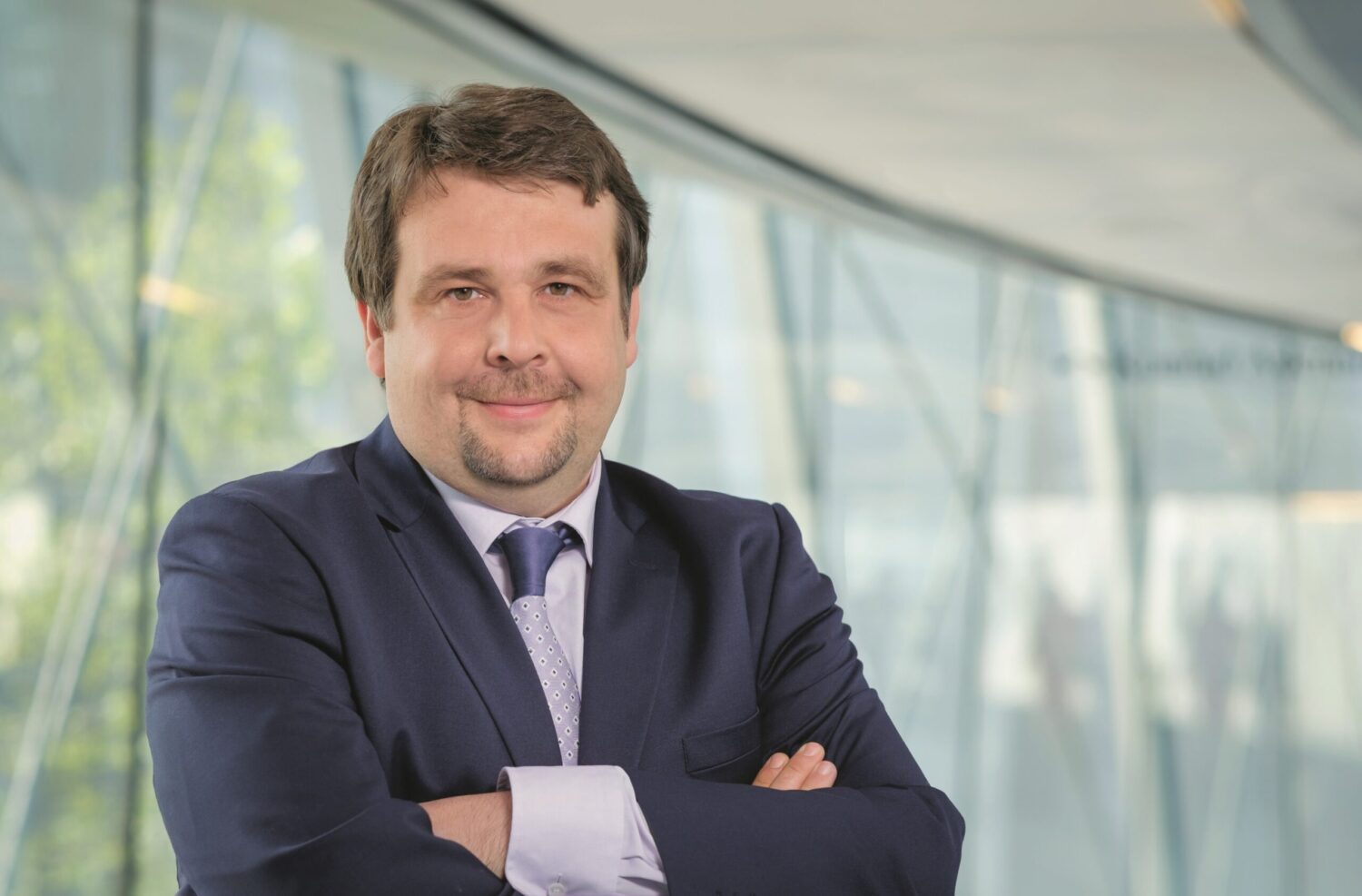
“The time has come to effectively end aggressive tax planning across the globe to make sure the big companies pay their fair share of taxes. We ask the most reluctant states, such as Poland, to stop blocking the decision at EU level and pave the way to implement the OECD agreement in the EU on minimum taxation of multinationals. Thanks to the EPP Group, the European Parliament is taking its responsibility and providing strong support for the implementation of the global agreement in the EU. The ball is now firmly in the court of EU Member States”, said Luděk Niedermayer MEP, EPP Group negotiator of this file, before today’s vote in the Economic and Monetary Affairs Committee of the European Parliament.
The new international framework proposed by the OECD and supported by more than 100 countries across the globe aims to force multinationals to pay tax where they operate – and not just where they have their headquarters – and impose a minimum corporate rate of 15%.
“Having in place a hard floor for corporate taxation should limit the worst excesses of beggar-thy-neighbour tax competition. With the new rule, we will get rid of unfair tax competition while largely retaining Member States’ prerogatives to design tax policies as they see fit. The new regime is effectively a backstop to catch the worst offenders. It will hit those countries that have made it their business model to undermine their neighbours’ tax base”, said Markus Ferber MEP, EPP Group Spokesman on Economic Affairs.
“We need a swift, but diligent implementation that respects the OECD agreement and does not penalise European companies. We have deliberately pushed for a swift procedure to have the new rules enter into force as soon as possible. Yet, we could have been even faster if the other political groups in the European Parliament would understand that this is not a place for proposing material changes to the OECD/G20-based proposal, which would not only undermine the very valuable global agreement, but could also put EU firms and the economy into a competitive disadvantage”, concluded Niedermayer and Ferber.
A delegation from the ECR Group visited the city of Mostar in Bosnia and Herzegovina from the 21st to 23rd April 2022 to gain a closer insight into the causes of the worsening political situation in Bosnia and Herzegovina, which may deteriorate further with the forthcoming elections planned for October of 2022.
The delegation consisted of five MEPs Ladislav Ilčić (Hrvatski suverenisti – Croatia), Hermann Tertsch (Vox – Spain), Ryszard Czarnecki (Prawo i Sprawiedliwość – Poland), Carlo Fidanza (Fratelli d’Italia – Italy) and Bogdan Rzońca (Prawo i Sprawiedliwość – Poland).
The conservative lawmakers met with political representatives from different communities of Mostar and the surrounding region as well as with members of the Croatian National Assembly, local politicians, intellectuals, representatives of NGOs and members of the clergy.
A key moment was the panel discussion held with citizens, civil society and the media about the current political crisis in the country, the geopolitical challenges the EU and Bosnia and Herzegovina are facing in the context of the Russian aggression in Ukraine, and EU perspectives on Bosnia and Herzegovina.
Based on these discussions, the ECR delegation concluded that Bosnia and Herzegovina is a country at high risk of becoming a failed state and the October elections, which will be held under the current discriminatory electoral law, could further escalate the situation. The ECR Members pointed out the urgent need to reform Bosnia and Herzegovina’s electoral law. The concept of equal rights for the country’s constituent nations must be respected in all agreements with the EU, they said. The separatist aspirations coming from both Republika Srpska and the Unitarian concept promoted by Bosniak politicians are destabilizing the country. The ECR delegation stressed that their Group supports the country’s aspirations concerning the EU, but that stronger efforts to fight corruption, depoliticise the civil service and reduce bureaucracy are needed. In addition, the human rights of all national minorities and constituent nations should be respected. Bosnia and Herzegovina needs to prove its stability if it wants to continue on the path to join the EU.