In Poland, with the beginning of the summer season, the number of vacancies for refugees has increased. However, at the same time, Ukrainian women, and we are talking mainly about women, will have to learn new skills. New seasonal work for Ukrainians was previously designed mainly for men. However, the war in Ukraine has made its own adjustments: now there is an excess of requests from women on the Polish labor market.
About who Ukrainian women who want to find work in Poland will have to retrain as, was told in the analytical center for employment Gremi Personal.
As it turned out, with the beginning of the summer in Poland, there were much more vacancies. However, most of these jobs require remarkable physical strength, and therefore are designed for the most part for men. At the same time, the vast majority of Ukrainian refugees are now women.
Therefore, in Poland, more and more often they began to offer women to get a “man’s job.” Of course, if it does not require extreme muscle tension and great physical endurance. In particular, the logistics industry was one of the first to actively use Ukrainian women. So, in some warehouses, they even reduced the size of the packages so that women could turn them around.
At some enterprises, the work of operators on a forklift is extremely scarce. Therefore, they even organized special courses to train women in this specialty.
In addition, the active season of harvesting at meat processing plants and fish factories has begun. Previously, these jobs were predominantly men. However, this year they also take women. Moreover, in many enterprises, the work schedule for women with children is adapted in such a way that the mother has time to raise children.
Recall that Poland from June 1 stops paying benefits to refugees from Ukraine. Help will be left only for a small part of Ukrainians.
Temperatures in the southern Turkish counties of Denizli and Adana have reached 40 degrees Celsius, Turkish media reported, quoted by BTA.
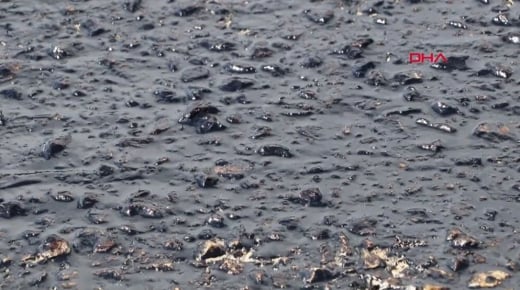
A temperature of 40 degrees Celsius was reported today in the southwestern Turkish city of Denizli, where due to the unusual for the season heat in many places the asphalt began to melt. The melting has caused great difficulties for drivers and pedestrians in the city, according to CNN-Turk.
In Adana yesterday at noon the mercury column reported 40 degrees. Many of the city’s residents chose to spend most of the day in the parks, according to the DHA news agency.
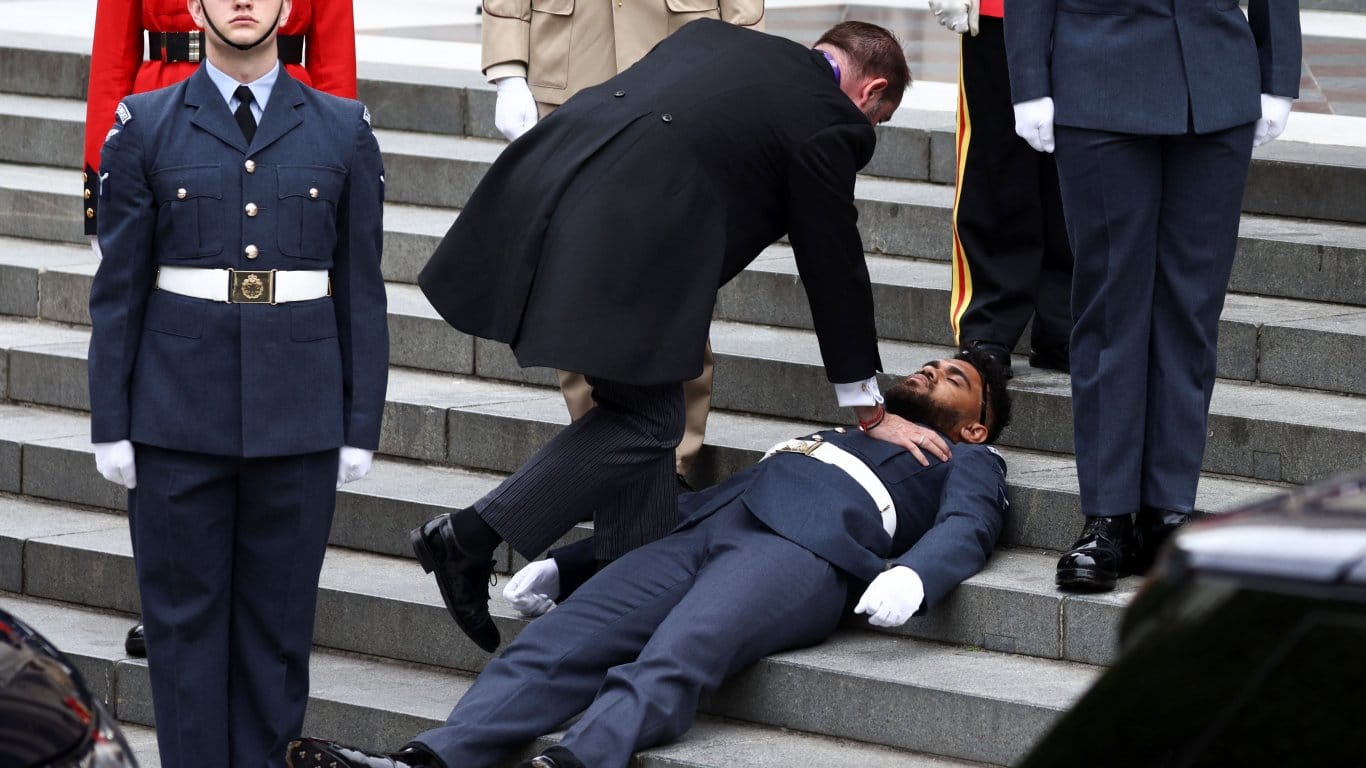
Three soldiers fainted at different times in front of St. Paul’s Cathedral in London during the thanksgiving service in honor of Elizabeth II and her 70-year rule, the Daily Mail reported.
A soldier in the Queen’s Guard fainted when Megan and Harry entered, another collapsed when Prince Charles, who represented the Queen, arrived because she was too tired to attend. It is not specified for the third. One soldier was taken away and another gathered and continued to stand.
Harry and Megan joined the royal family for the second day of the anniversary celebrations.
Harry and Megan also attended the Trooping the Color festivities yesterday, but stayed out of the spotlight at the former Duke of Wellington’s former office with more than 30 other relatives.
Earlier today, Omid Scoby, author of Finding Freedom, told BBC Breakfast that Harry and his wife hoped to remain as inconspicuous as possible during their stay in the United Kingdom.
He also commented that the couple has a “warm and close” relationship with the queen.
A spokesman for Buckingham Palace told CNN today that the Queen will watch the Thanksgiving service on television from Windsor Castle. Her son, Prince Andrew, was another notable absence from the church because he tested positive for coronavirus.
Megan and Harry were warmly greeted by the applauding crowd. Prior to the event, there was much speculation in the British press about how the couple would be accepted after their decision to retire from the royal family and move to California two years ago.
The public was less enthusiastic about British Prime Minister Boris Johnson, who was both applauded and booed when he arrived with his wife, Carrie.
The last guests to land at St. Paul’s were Prince William and Kate, Duchess of Cambridge, followed by Crown Prince Charles and Camilla, Duchess of Cornwall.
More than 400 people from all four nations of the United Kingdom were invited to the event. London Mayor Sadiq Khan was among those present.
Harry and Megan were sitting in the second row, along with Princesses Eugene and Beatrice, Prince Andrew’s daughters, and their husbands.
William and Harry, with their wives, were housed at both ends of the room, so the Daily Mail came out with the headline, “Reunited … but apart.”
The media in Northern Macedonia have accused Bulgaria of racism during a match between the two national teams on Thursday. As it is known, the match of the League of Nations in Razgrad ended with a score of 1:1.
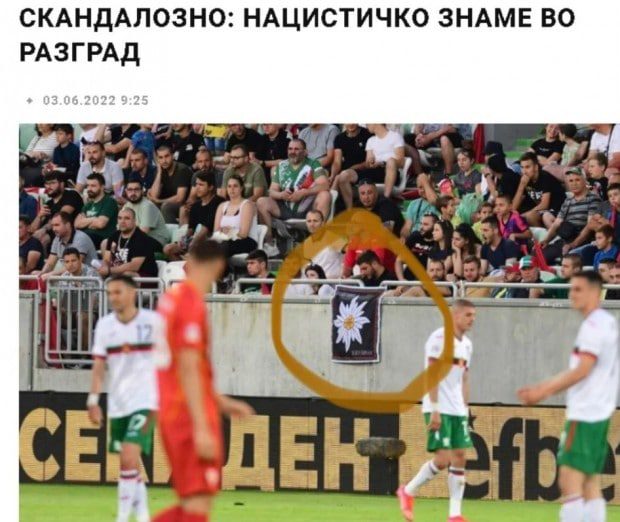
Sportmedia.mk published a photo from the stadium, which shows a black flag with edelweiss on it. In Skopje, it is said to be a nationalist symbol.
“When we thought that the match between Bulgaria and Northern Macedonia, played in Razgrad, passed without scandals and a political note, this happened. Nazi hue. Why and who exactly brought this flag, and what message he wants to convey with it, we still do not know, but it will become clear through the investigation that follows. UEFA said that it was normal to file a complaint and now the Bulgarian Football Union will have to answer the questions, “the media quoted Blitz as saying.
Edelweiss is popular in Bulgaria mostly as a symbol of the Bulgarian Tourist Union. However, the alpine flower was one of the symbols used by the elite mountainous parts of the Wehrmacht during World War II.
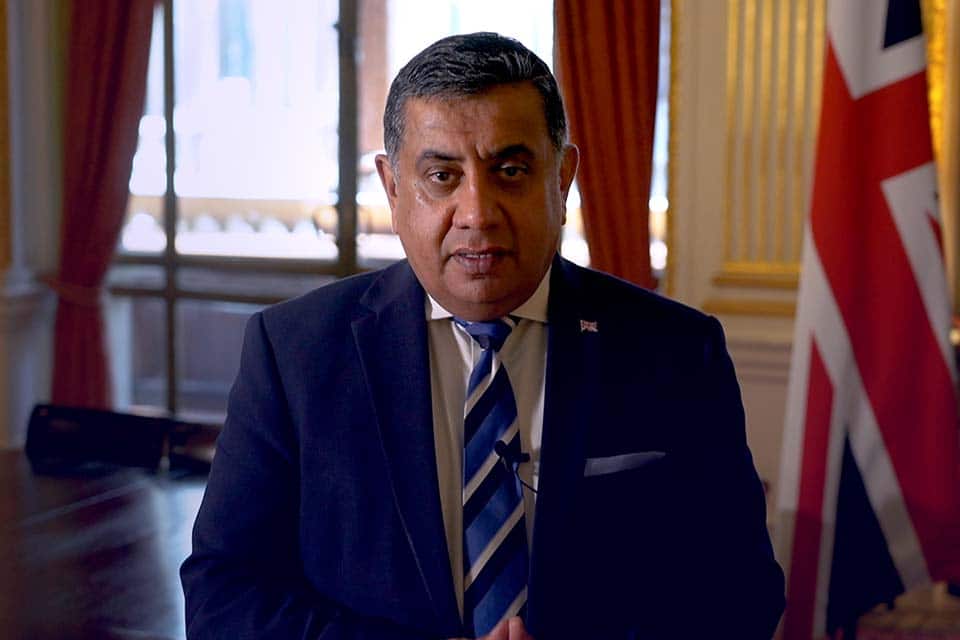
Minister of State Lord Ahmad looks forward to the UK hosting the International Ministerial Conference on Freedom of Religion or Belief in London in July 2022.
The conference will bring together government, civil society, faith and belief groups to agree on actions to:
prevent Freedom of Religion or Belief (FoRB) violations and abuses
protect and promote freedom of religion or belief internationally
The conference programme will be wide-ranging and inclusive, involving a diverse set of participants and speakers with the overarching aim of promoting respect for FoRB around the world.
Statement from Lord Ahmad
I’m sincerely looking forward to welcoming our partners and friends from around the world to London in early July for the United Kingdom-hosted Conference on Freedom of Religion or Belief.
This will be the first international ministerial conference on this theme since 2020 and the first to take place in person since 2019.
Together with our international partners we share a collective commitment to freedom of religion or belief for everyone, everywhere.
This is an issue that we all should care about. Although the right to freedom of religion or belief is enshrined in Article 18 of the Universal Declaration of Human Rights it is regrettable, indeed tragic, that too many people around the world continue to live in fear of persecution on the basis of what they choose to believe or not to believe, or indeed how they choose to practice those beliefs.
Being denied the fundamental human right of freedom of religion or belief can be devastating for individuals and communities.
At the conference we’ll therefore hear from survivors directly on the impact that persecution has had upon them, on their lives, on their communities.
As individuals suffer from being denied this human right, societies, countries where survivors live suffer too. They become smaller, diminished culturally and spiritually by this lack of freedom. Therefore, let us strengthen all of our communities by driving forward the collective importance of not just promoting this important issue, but strengthening freedom of religion or belief for all.
This conference in London will bring together ministers, but also importantly other representatives from government, from faith and belief group leaders, and indeed importantly from civil society as well.
Alongside the official ministerial conference, an associated conference fringe will see a series of events organized directly by civil society.
These will be taking place around the United Kingdom and provide further opportunities for all to join this important debate and discussion and learn from each other about this important issue.
I therefore hope that you will take this opportunity to really get involved and share our collective commitment to promoting and protecting, and indeed strengthening freedom of religion or belief for everyone across the world.
Following the launch of the 2nd Catholic Youth Convention on the Future of Europe, COMECE and KAS invite you to join the second part of this initiative, which will take place on Wednesday 15 June 2022, with the extraordinary participation of EU Commissioner Olivér Várhelyi. Registration is now open | Programme
Screenshot taken during the first session of the 2nd Catholic Youth Convention. (Credit: COMECE)
Young people from across Europe are strongly encouraged to register and participate in the second session of this year’s Catholic Youth Convention focused on “Youth and South-East Europe”.
Organised by the Commission of the Bishops’ Conferences of the European Union (COMECE) and the EU office of Konrad-Adenauer-Stiftung (KAS), the event will take place online (Zoom) on Wednesday 15 June 2022 from 13:45 to 15:00 (CEST) on the theme “Sharing our dreams on the future of Europe”. The programme is available here.
This session will include a dialogue meeting with Olivér Várhelyi, EU Commissioner for Neighbourhood and Enlargement. Young people will have the opportunity to ask questions, share ideas and proposals on how to foster reconciliation in South-East Europe, as well as to identify and boost the role of young people in shaping a positive narrative on the region and stimulating social and political empowerment.
During the first session of the Convention, held on 2 June 2022, young Catholics discussed with Representatives of the Plenary of the Conference on the Future of Europe. The video of the first session is available on the COMECE YouTube channel.
Fr. Manuel Barrios Prieto, General Secretary of COMECE, was interviewed by Vatican News. He explains the aim and background of the Catholic Youth Convention. This interview is available in Spanish and in Italian.
Participation in the Convention is open to all people who are interested to hear the voice of the youth regarding the Future of Europe.
environmental policy - group of women standing on green grass field during daytime
In Sweden, a non-profit provides young people the tools and platform to weigh in on environmental policy.
Anders Varger, a Swedish high school teacher and entrepreneur, was noticing a trend. He felt that young people are rarely invited to conversations about how to build a sustainable world – even though policy decisions made today will impact their future.
To tackle this problem, Varger founded the non-profit Framtidens röster, which translates to ‘Voices of the Future’. His aim was to create a platform for students and young people to engage with politicians and other decision-makers on environmental issues. The organization’s Expert Panel consists of about thirty of Sweden’s premier managers and researchers on sustainability, who have made themselves available to coach young people.
Voices of the Future is also equipping classrooms across Sweden with tools to educate pupils about environmental issues and articulate their vision for a sustainable future.
One method is ‘positive cartography,’ where students choose environmental topics to research and build maps of what a positive future could look like. The map consists of images that students download from the internet or draw and paint themselves. The class then puts these together into a common map, where they identify what obstacles exist on the way to the goal of sustainability and can discuss how to address them with members of the Expert Panel.
“We involve young people in issues impacting the future. Our goal is for the children to meet those in power who influence the issue they have chosen. There are no pats on the head, but real dialogues that inspire. Then the students publish their material on our website and regularly follow up on what is happening. The format has been very much appreciated,” says Varger, the founder and Chairman of Voices of the Future.
Voices of the Future started working with schools in lead-up to the United Nations Climate Change Conference (COP26) in 2021. They have since grown to collaborate with 500 students across Sweden. In spring 2022, the organization toured the country, stopping in ten locations.
Anna Wik, a schoolteacher at Platengymnasiet in Motala, sees Voices of the Future as a means for students to be involved in social change.
“Issues related to sustainable development impact all parts of society, and for students to feel included in these conversations gives them motivation,” she said.
At Platengymnasiet, students have focused on environmental policy, social inclusion and gender equality. They have consulted with the Expert Panel on several occasions and had the opportunity to dialogue with municipal officials and local entrepreneurs.
Students who have participated in Voices of the Future will present their vision and findings with Members of Parliament, United Nations officials and other delegates at the Stockholm+50 international meeting in June 2022.
They will also participate in World Environment Day 2022 in Stockholm. Tune in to the live feed here: World Environment Day Live.
Global wellbeing is at risk – and it’s in large part because we haven’t kept our promises on the environment – UN Secretary-General António Guterres said on Thursday.
Although there have been successes in protecting the planet since 1972, including rescuing the ozone layer, Mr. Guterres warned that “Earth’s natural systems cannot keep up with our demands”.
Triple planetary crisis
“Lead us out of this mess”, he urged delegates at the Swedish summit convened by the UN General Assembly, in a call for action against a “triple planetary crisis” that’s been caused by the climate emergency – “that is killing and displacing ever more people each year” – biodiversity loss – which threatens “more than three billion people” – and pollution and waste, “that is costing some nine million lives a year”.
All nations should do more to protect the basic human right to a clean, healthy environment for everyone, Mr. Guterres insisted, focusing in particular on “poor communities, women and girls, indigenous peoples and the generations to come”.
GDP alert
Part of the solution lies in dispensing with Gross Domestic Product (GDP) as a gauge of countries’ economic clout, the Secretary-General continued, describing it as an accounting system “that reward(s) pollution and waste”.
He added: “Let us not forget that when we destroy a forest, we are creating GDP. When we overfish, we are creating GDP. GDP is not a way to measure richness in the present situation in the world.”
After calling on all nations to commit further to implementing the 17 Sustainable Development Goals and following the 2015 Paris Agreement to tackle these threats, the Secretary-General also insisted that greater efforts were needed to bring emissions to net zero by 2050.
Hot air
“Hot air is killing us,” he said, repeating his call to all countries to abandon fossil fuel subsidies and invest in renewable energy, while developed nations should “at least double” their support to poorer countries so that they can adapt to a growing number of climate shocks.
Stressing that nations have already cooperated to protect the planet on many fronts, Mr. Guterres noted that the final touches are expected to be added to a new global biodiversity framework to reverse nature loss by 2030.
Work is also ongoing to establish a treaty to tackle plastics pollution, the UN chief continued, and the 2022 UN Ocean Conference in Lisbon, is expected to galvanize efforts to save our seas.
“If we do these things we can avert climate catastrophe, end a growing humanitarian and inequality crisis and promote inclusive and sustainable development,” he said, adding that “every government, business and individual has a role to play”.
Progress impossible if planet’s ‘under relentless assault’
Conference convenor, General Assembly President Abdulla Shahid, said there was a simple truth all need to acknowledge: “human progress cannot occur on an earth that is starved of its own resources, marred by pollution, and is under relentless assault from a climate crisis of its own making.
He said recent climate action initiatives such as a plastics pollution treaty push, “give me hope”, but they needed to be integrated into a much broader effort.
“We need solutions that address the common bottlenecks affecting the entire environment agenda, which will in turn accelerate the implementation of the 2030 Agenda, and promote resilient and sustainable recovery from the pandemic.”
Tech-tonic push for sustainability
In a related development at Stockholm on Thursday, a UN-backed coalition of 1,000 stakeholders from more than 100 countries, launched their bid to use digital tools to accelerate environmentally and socially sustainable development.
The Coalition for Digital Environmental Sustainability (CODES) offers ways to embed sustainability in all aspects of digitalization. This includes building globally inclusive processes to define standards and governance frameworks for digital sustainability, allocating resources and infrastructure, while also identifying opportunities to reduce potential harms or risks from digitalization, said the UN Environment Programme (UNEP).
Amin Awad was appointed the UN Crisis Coordinator in Ukraine by Secretary-General António Guterres in February, following the Russian attack on the country. Marking 100 days since the 24 February Russian invasion of Ukraine, UN News spoke exclusively and in-depth to Mr. Awad, who explained what the UN is doing to try to end the conflict, and provide support and protection to millions of Ukrainian civilians caught in the crossfire, especially in light of the bitterly cold winter, which lies just a few months ahead.
UN News: The Russian war in Ukraine has reached a tragic milestone. Are there any hopes that this war will end anytime soon?
Amin Awad: “There is optimism that the war will end, because neither Ukraine nor Russia can afford it. Ukraine is suffering from the loss of life, the destruction of hospitals, schools, homes, railway stations and tracks, and the transport sector. And the sanctions on Russia are severe.
It is also destructive for the world. Ukraine supports about 15 to 20 per cent of the world’s food needs. This food is trapped, and we have another harvest season coming up: we have an impeding disruption of food pipelines and supply chains.
We’re also seeing inflationary problems and countries defaulting on their debt: Sri Lanka, for example, is unable to pay its loans. The world is not in a good place.
UNOCHA/Ivane Bochorishvili – Aid workers prepare to deliver the much-needed assistance from the UN and humanitarian partners in Sievierodonetsk, Ukraine.
UN News: Civilians are paying the highest price for this invasion. Many were killed, while millions have sought refuge in neighboring countries. What is the situation like for those who are still in the country?
Amin Awad: There is a sense of despair. There are almost eight million people displaced internally, and another six million abroad. Around 15 million did not leave their homes, but they’re impacted by the loss of their livelihoods, and have lost access to services like education, health, and other amenities. Millions of children are not going to school.
The social security system is strained. Government services are stretched. So is the humanitarian community. It’s a really bad situation.
UN News: The UN and Red Cross (ICRC) facilitated the evacuation of desperate civilians trapped in the Azovstal steel plant in the Ukrainian port city of Mariupol. Are there any similar operations the UN is involved in right now, to evacuate those who are trapped in the hostile zones?
Amin Awad: We haven’t received requests for evacuations, such as the one in Mariupol, but we have been putting requests forward for access to areas where populations are in need of food, medical supplies, and other kind of support.
Moreover, I think now we have to really concentrate on winter: we are already in June, and winter is around the corner and, in this part of the world, temperatures are sub-zero. With the destruction of many of the power energy plants, and the loss of alternative energy supplies, we need to quickly come up with a strategy to support millions of people during this winter.
UN News: You have been in Ukraine for a while now, and you’ve seen the ugly face of this war. Can you tell us a human story that touched you deeply?
Amin Awad: There’s a lot of suffering. Driving through some of these areas of destruction, I see children who have escaped the destruction of their homes or apartment building, and find themselves alone on the road, with no parents, no guardians, and nowhere to go.
I think this is one of the ugly faces of war that we have to stop.
UN News: Regarding the safety of the Zaporizhzhya Nuclear Power Plant, is the UN working with parties to address any possible threats?
Amin Awad: The International Agency for Atomic Energy (IAEA) has been here many times. They went to all the plants.
There’s a lot of suffering. Driving through some of these areas of destruction, I see children who have escaped the destruction of their homes or apartment building, and find themselves alone on the road, with no parents, no guardians, and nowhere to go.
Zaporizhzhya is under Russian control, and I believe that there’s a negotiation underway to provide access to the agency.
Nuclear plants could pose a danger, not only to Ukraine, but to the whole continent. So, they need the utmost attention, and security procedures andhprotocol have to be followed.
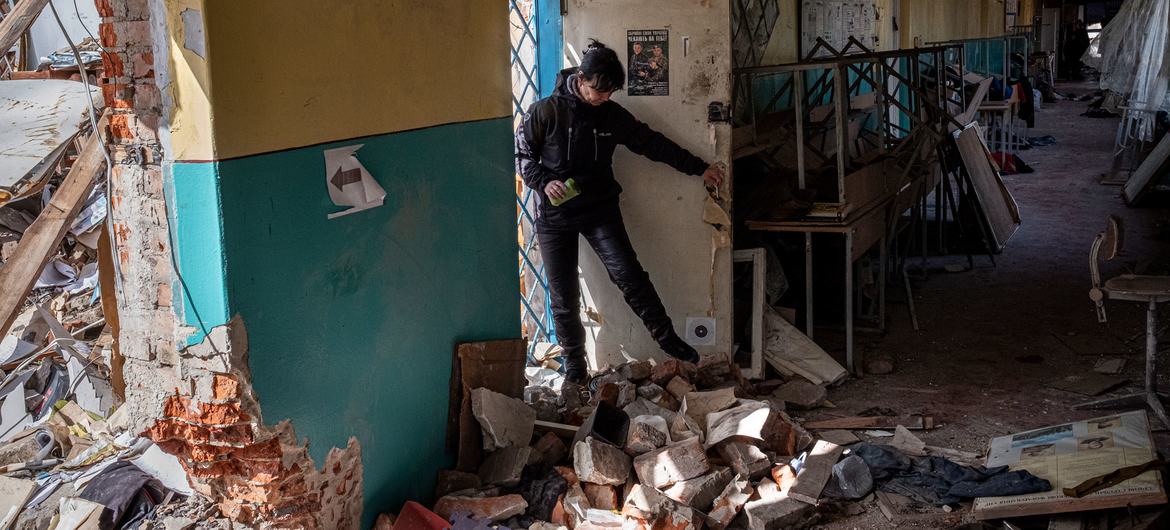
UN News: There were many attacks on schools across Ukraine. You’ve been calling on warring parties to spare civilians and civilian infrastructure and you stressed that these obligations under international humanitarian law are non-negotiable. Are there any signs that Russia is listening to these calls?
Amin Awad:We continue to call on Russia to really spare what we call civilian infrastructure, which is sources of water, electricity, schools and hospitals.
We will continue to make these calls, because the number of people who fled because of these attacks is huge and unacceptable.
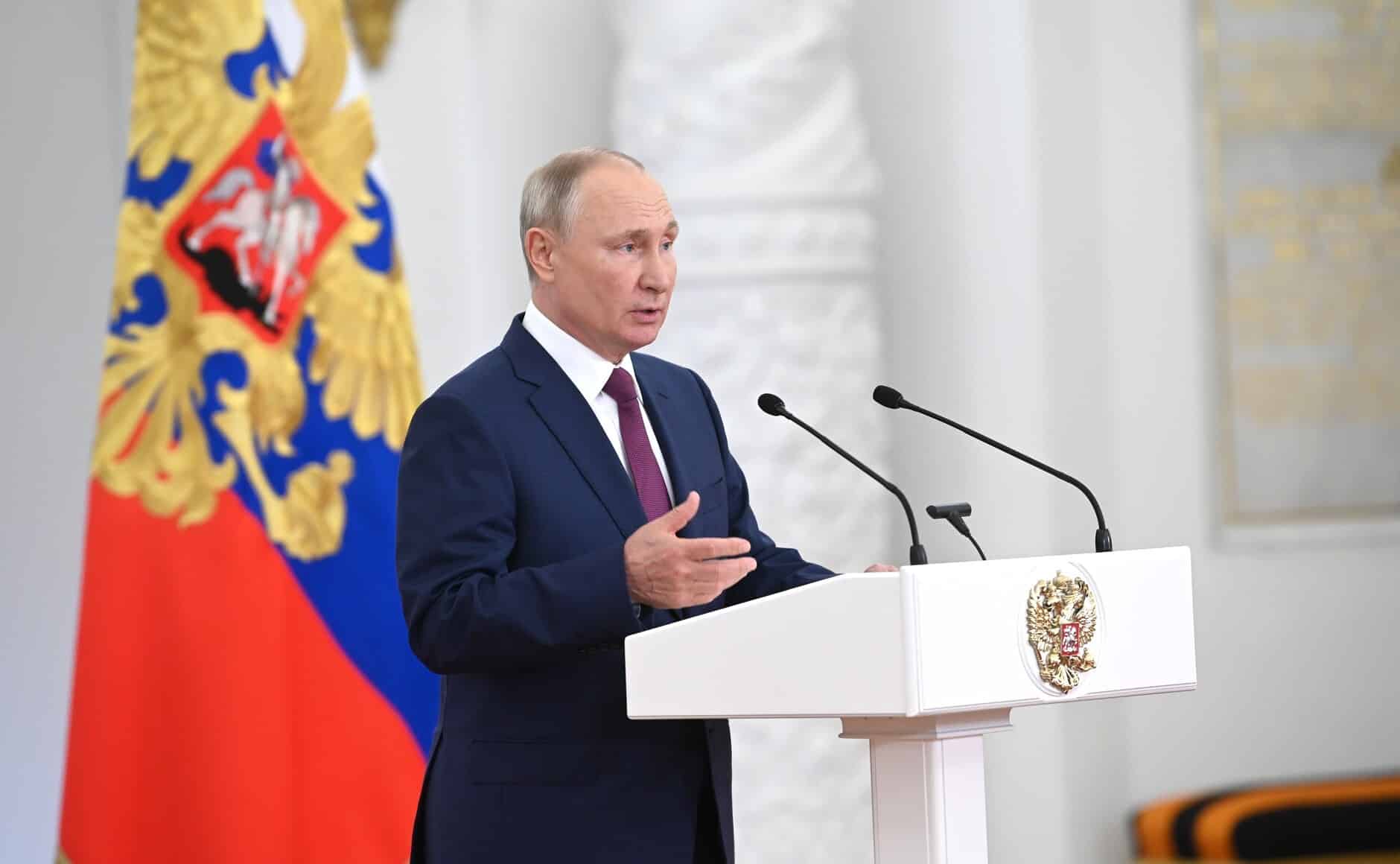
Russian President Putin has fired five generals and a colonel from the Interior Ministry
Russian President Vladimir Putin fired five generals and a police colonel on Monday (May 30th). This became known today from an excerpt from the decree, a copy of which is available to RBC. Its authenticity was confirmed by a source close to the Ministry of Internal Affairs of Russia, Lenta.ru writes.
The head of state dismissed Major General Vasily Kukushkin, Head of the Department of the Ministry of Internal Affairs of the Vladimir Region, Major General Alexander Laas, Deputy Head of the Main Directorate of the Ministry of Internal Affairs of the Altai Krai, Major General Andrei Lipilin. Head of the Department of the Ministry of Interior of the Yaroslavl Region and Major General Alexander Udovenko, Head of the Operational Department of the Ministry of Interior and Deputy Head of the Department of Logistics and Medical Insurance of the Ministry of Interior, Major General Yuri Instrankin. In addition, the president fired Police Colonel Emil Musin from the post of First Deputy Chief of the Judicial Expert Center of the Ministry of Interior.
The interlocutor of RBC explained the dismissal of the generals and the colonel by the police with the standard rotation of the employees in the department, Lenta.ru writes.
It is noted that Putin also appointed police colonel Alexei Shkolkin, who until now was head of the department of the Interior Ministry in Odintsovo, to the post of chief of the Interior Ministry for the Yaroslavl region.
Earlier, it became known that Russian President Vladimir Putin fired the Deputy Director of the Federal Penitentiary Service (FSIN), Lieutenant General Valery Balan. He has held this position since April 1, 2019.







.jpg)