Turkey saves $ 1 billion a year by recycling 1.1 million tonnes of plastic waste, according to data from the Association of Recycling Companies in Turkey, quoted by the Anatolian Agency.
Since the start of the Zero Loss project in 2010, the percentage of recycled waste in Turkey has increased from 13 to 22.4 percent.
At the same time, recycling plastic waste earns $ 1 billion a year, and 350,000 employees work in 1,300 recycling companies.
Fatih Eren, chairman of the Association of Recycling Companies in Turkey, said recycled plastic waste is used in many sectors, including packaging, electronics, textiles and construction.
He added that plastics can be recycled countless times and stressed that the sector has huge potential. Ehren said Turkey sells recycled plastics for $ 1,000 a tonne.
The creator of the collection Nikola Delyov Todev was born on November 9, 1892 in the town of Kukush, Aegean Macedonia as the seventh and last child in the family of Delyo Todev, who was a fabric trader and has a sewing studio. Nikola Todev spent his childhood in his hometown, where in 1859 the church struggles of the Bulgarian people began, culminating in the establishment of the Bulgarian Exarchate. Dimitar Miladinov, who was a teacher in the city, played a huge role in the national awakening of Kukush at that time. Kukush is located about 50 km north of Thessaloniki and at the end of the 19th century numbered about 13,000 people. There are about 3,000 houses and 850 shops in the city. It is one of the centers for the production of cotton fabrics and sesame vegetable oil, as well as for the trade of cereals. Kukush is one of the most vigilant cities in the remaining Turkish-ruled Macedonia. The first school was opened in 1840. It is the birthplace of prominent revivalists, revolutionaries, politicians, writers, public figures. Suffice it to mention Nako Stanishev, who led the Kukushans against the hated Doyran bishop Miletius and organized the writing of a petition to Pope Pius IX to accept Christians from the Diocese of Polyana under his auspices, which began the struggle of the Bulgarian people for church independence. Kukush became the first city in the Ottoman Empire with a Bulgarian bishop. This is the origin of our great revolutionaries Georgi / Gotse / Delchev, head of the Internal Macedonian-Edirne Revolutionary Organization / IMRO /; Hristo Dalchev, MP from Sersk region in the Turkish parliament; Hristo Izmirliev / Smirnenski / and others. For the period from 1909. until 1951 very little was known about the life of Nikola Delyov Todev. In the early 1920s he found himself in Moscow, where he worked in the labor cooperatives of the anarchist-internationalists, in 1924 he was already in Bulgaria, the following year he served his sentence in Plovdiv prison, he fought under the black and red flags of the anarchist-internationalists in Spain in 1936-1938, gave shelter to two Jewish families / Pitti and Rabiner / after the adoption of the anti-Jewish legislation, served his sentence during the communist regime, and for the rest of his life was subjected to house searches, strict control of his correspondence and surveillance by State Security officers. The cities around the world where he settled for more than a year are: Paris – 6 years, Brussels – 4 years, Vienna – 13 years, Zurich and Lugano -3 years, Moscow – 2 years, Istanbul – 5 years, Barcelona – 2 years, Alexandria – 1 year. During this period he collected his unique collection of postcards. Its creation remains a great mystery, because its collector arranges it for about 20 years, living in different countries, at large and imprisoned.
There are three main principles in the creation of Nikola Delev Todev’s collection:
First, the collection should be, in a way, an overview of the history of painting, sculpture and architecture from the birth of civilization to the end of the first third of the 20th century;
Second, the collection should contain only postcards of works of art and architecture, personally seen by N. Todev;
Third, to be sufficient in volume to allow the publication of a magazine for students of art history for 15 years once a month, each issue describing the history of the creation of the painting depicted on the cards, the sculpture. and architecture.
In 1933, Nikola Delyov Todev organized two exhibitions, at which he presented his collection of postcards to the citizens of Sofia in the Old Military Club / now known as the “Clock Restaurant”. It is unknown when and why he started collecting postcards. It is possible that it is assumed that the cards were collected for the period 1909 – 1932. The cards not included in the collection are stored in albums made to order in the famous department store “Gallery LaFayette” in Paris, and the collection itself in a wooden box, made to order in Brussels.
In 1972, the collector offered the state institutions in Bulgaria to donate his collection to the Bulgarian people, provided that a room was found for its permanent exhibition. He does not find understanding. After his death the same year, until November 15, 2007, it was stored in a Sofia attic.
In November 2007, Nikola Delev Todev’s sons, brothers Delyo and Tode Todevi, decided to entrust the collection to their good friend and associate Petar Neychev from Plovdiv-Bulgaria, so that it would become available not only to the Plovdiv but also to the Bulgarian public. The idea is for it to become an integral part of the “Future” Library conceived by Petar Neychev and Tode Todev, which in turn is part of the International Foundation for the Study of the Problems of Cooperation, created by the two – an intellectual infrastructure for spiritual and economic freedom. After the inventory of the collection, it will be exhibited in a special room and at the same time will be available on the Internet through the specialized portal of the digital library “Future”.
In view of the latest trends in the field of hybrid and digital libraries, a concept for connecting museum – library – archive and the creation of interactive, multimedia products in line with the guidelines in the context of social policy and social inclusion, such as access requirements and services for people. with physical and visual impairments; libraries in support of adult education; public library services for business and the economy; access to cultural diversity; access to music and non-printed materials; public library services for children and schools; cooperation with cultural, educational and community center organizations of Bulgarians abroad and others.
Main thematic areas / sections of the Future Library:
a / Financial knowledge, education and forecasts.
b / History of art, heritage from the centuries.
c / Technical section for laser and optical technologies.
d / General section – philosophy, health, prose, poetry.
Collecting has been around since ancient times. The word “collection” is of Latin origin – from the verb colligo, which means collect, collect. From antiquity are the information about people who have collected texts from the works of philosophers and poets, books, drawings, household items, art objects, coins, and the list of collections is extensive. Collecting provided an opportunity to penetrate the spiritual history of mankind.
Cartophilia (from the town of Philos “love, love” and + fr. Carte “map”, see Encyclopedic Handbook of Philately, Petar Beron Publishing House, Sofia, 1989) we call the collection of illustrated postcards, from which thematic , local lore and other collections.
A cartophilic exhibition is a public display of collections, parts of them or exhibits united by a common feature (place, theme, etc.) of illustrated cards (without a printed fee sign on the side of the illustration).
The postcard is an open postal item, compliant with the requirements of the Universal Postal Convention: 1 / to have a rectangular shape with established dimensions: maximum – 105 x 148 +/- 2 mm, minimum – 90 x 140 +/- 2 mm; 2 / to be made of cardboard or sufficiently thick paper, allowing postal processing and transport; 3 / to have a printed text postcard, a printed tax sign or a specific place for affixing a postage stamp and address lines for writing an address in the right half of the postcard. Illustrated postcards are also used. The first was created on the idea of Heinrich von Stefan for a mailing list (1865), and was made by Dr. Emanuel Hermann (Vienna), who on October 1, 1869 issued the first “correspondent card” with a printed fee sign. The first ones for Bulgaria were issued immediately after the Liberation (1879) with a tax mark in centimes.
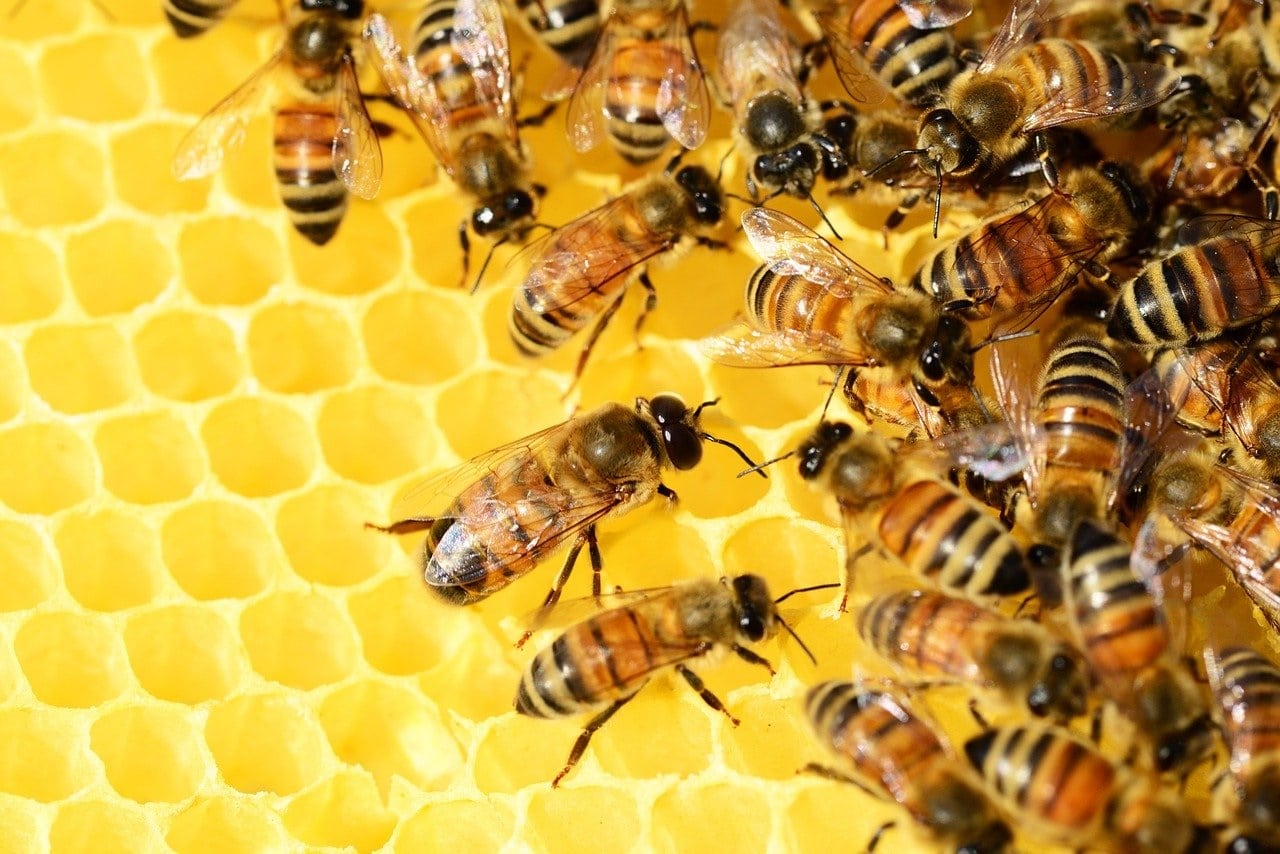
Scientists have found that honey bees use social distancing to protect their hive when the colony is threatened by parasites or diseases. The study demonstrates how bees respond to harmful mite infestations by changing their interactions, just as humans did during the COVID-19 pandemic.
It has been found that bees increase the distance between the young bees in the innermost part of the colony and the older bees, which occupy the outermost compartment. “Bees are social animals because they benefit from the division of responsibilities and interactions. So bees seem to have evolved to protect younger families, “said study co-author Dr. Alessandro Chini.
The study’s lead author, Dr. Michelina Pushedu of the University of Sassari, explains that the observed increase in social distance between the two groups of bees within the same colony, threatened by parasites or disease, is a new and somewhat surprising aspect of this. how bees evolved to fight pathogens and parasites.
View of Moon limb with Earth rising on the horizon. Footprints as an evidence of people being there or great forgery. Collage. Elements of this image furnished by NASA.
/urls:
https://images-assets.nasa.gov/image/as11-44-6551/as11-44-6551~orig.jpg
https://images.nasa.gov/details-as11-44-6551.html
https://images.nasa.gov/details-as17-145-22285.html
https://images.nasa.gov/details-as11-40-5964.html
https://solarsystem.nasa.gov/resources/429/perseids-meteor-2016/
The launch of the American mission “Artemis” on the return of the United States to the moon has become known. The first test flight of the Space Launch Systems heavy carrier rocket with the Orion spacecraft to the orbit of a natural satellite of the Earth took place in 2022. Artemis is the first step in the next era of human exploration. Together with commercial and international partners, NASA will establish a sustainable presence on the Moon to prepare for missions to Mars.
“If the rocket is launched in the first half of this period, the mission will be considered a so-called long mission. It will last about six weeks, during which the spacecraft will spend more time in retrograde orbit. to prepare for the subsequent descent and splashdown, “said National Aeronautics and Space Administration (NASA) spokesman Mike Sarafin.
If the rocket is launched later, in the second half of the allotted period, the mission will be considered short and will last four weeks, he added.
Orion is already docked on top of a launch vehicle at the Kennedy Space Center at Cape Canaveral, Florida. The height of the entire system reaches 98 meters. The final phase of preparation for the upcoming uncrewed flight around the Moon is in progress. The test flight should demonstrate the readiness of the SLS rocket and Orion spacecraft for a manned mission.
The Artemis program was unveiled in September 2020. Its main goal is the return after 55 years of man to the natural satellite of the Earth, the construction of a lunar station and the preparation of conditions for the possible colonization of the Moon in the future. The first launches and cargo missions were planned for 2021. However, last year NASA suspended work on the project due to the coronavirus pandemic.
The US National Aeronautics and Space Administration (NASA) has presented the “Pact of Artemis” – an agreement between space nations on the rules for the exploration of the moon and other space objects.
In a short release on the agency’s official website, it is noted that cooperation between states within the framework of the agreement will be based on principles that ensure a “safe, peaceful and prosperous future.”
Participation in the agreement implies open and transparent information about the space policy pursued by countries and their plans. The parties will commit to “publish their scientific data so that the whole world can benefit from the research and discoveries that will be carried out during the Artemis program.”
The pact notes the importance of protecting historic sites and artifacts in space, as well as the need to preserve a safe environment. The latter implies the reduction of space debris in near-earth space and the timely disposal of man-made space objects after the end of their missions.
Among the basic principles of the agreement are listed, including provisions on the extraction of resources on the moon and the idea of creating so-called security zones, which should prevent “harmful interference”.
“The ability to mine and exploit resources on the Moon, Mars and asteroids will play a key role in supporting safe and sustainable space exploration and development,” the statement said.
In addition, the agency noted that as part of the lunar program, NASA plans to land on the surface of a natural satellite of the Earth “the first woman and one more man.”
“This is a new beginning for space exploration! Today I am honored to announce the Artemis Pact, which establishes a common vision and set of principles for all international partners who will join in the return of humanity to the moon. We are going together,” tweeted “Agency Director Jim Bridenstine.
Implementation of the Artemis program will require additional programs, projects, and commercial launchers to support the construction of the Gateway, launch resupply missions to the station, and deploy numerous robotic spacecraft and instruments to the lunar surface.Several precursor robotic missions are being coordinated through the Commercial Lunar Payload Services (CLPS) program, which is dedicated to scouting and characterization of lunar resources as well as testing principles for in-situ resource utilization.
1. The potatoes are from South America. Many people mistakenly consider Ireland as their birthplace. Cultivated from a wild plant in a region covering northwestern Bolivia and southern Peru. They were brought to Europe by the Spanish conquistadors at the end of the 16th century.
2. Potatoes began their European career with a false start – the first few hundred people who ate them died suddenly. The reason was that the aristocratic sailors who brought the potatoes from South America did not think to explain to the villagers that it was not the leaves and stems that were eaten – but the roots and tubers. As for the leaves and stems, they are really poisonous.
3. People have been growing potatoes for about 7,000 years. Even at times, the Indians worshiped them as if they were deities, and considered them to be animate beings.
4. There are about 4,000 varieties of potatoes. Different potatoes are suitable for different dishes. The reason is that the different varieties have different starch content. Potatoes with a higher saturation of starch are better for baking or frying. Those with low levels of starch do not boil – which makes them more suitable for salads, soups and stews.
5. Potatoes belong to the same family as tobacco. It turns out that the potato family (Solanaceae) is quite extensive and includes many plants – tomatoes, eggplants, peppers, tatula, petunia, tobacco.
6. Green potatoes should not be eaten. When the potato turns green, it means that it has been exposed to too much sun during storage and has formed the mild poison solanine – which causes headaches, nausea and malaise. It is enough to cut the green areas, and the rest can be easily cooked.
7. Under appropriate conditions, potatoes may be stored for up to one year. However, do not expect them to last that long at home. For such long-term storage of potatoes, well-built equipment and a specialized commercial warehouse are needed.
8. The Incas used potatoes in different ways. Today, all we do with potatoes is eat them. But the Incas had a more comprehensive relationship with them and used them to treat various diseases. The typical remedy for toothache was to bring a potato with you (unfortunately, it is not known exactly what was to be done with it). If a person experienced pain in the muscles or bones, then the broth left over from boiled potatoes was used for treatment.
9. Ordinary potatoes have nothing to do with sweet potatoes called ‘sweet potatoes’. The only connection between them is that they are starchy vegetables that grow underground. But while potatoes are tubers, sweet potatoes are actually just enlarged roots of the plant. They are not even from the same family: the potatoes are from the Potato family, and the sweet potatoes belong to another family.
10. Potatoes are the first grown vegetables in space. In 1995, half of a batch of potatoes was sent by shuttle to Colombia, and the other half was left on Earth. The experiment was successful: there were no noticeable differences between the two groups of potatoes.
“We kneel only before God!”: The Carpathian Brigade wears black and is the most extreme ultras of Hungary
The racist chants echoing at the Pushkas Arena during the match between Hungary and England in September sounded painfully familiar. The same happened in the 1: 1 draw against France at Euro 2020 in June. Then the Hungarians directed their racist attacks and monkey sounds at the duo in the French attack Killian Mbape and Karim Benzema.
In the previous match against Portugal, the Hungarian ultras chanted “Cristiano Ronaldo – gay”, while a group with black T-shirts held a banner reading “Anti LMBTQ” (“Against LGBTI” in Hungarian).
During the final match of the group stage – against Germany, a banner with a picture of a man and a woman kissing was unfurled in the stands, and the caption read: “Our tale of life”. The banner was also a reference to the Hungarian government’s ban on minors in the country from exposing themselves to “LGBTI propaganda”, which includes schools.
The behavior of the fans brought a penalty of two games without an audience to Hungary, imposed by UEFA. FIFA has also stepped in and sanctioned the country specifically for the racist insults directed against Rahim Stirling and Jude Bellingham in the 2022 World Cup qualifiers.
The penalty expired in the 0: 1 home loss to Albania, which is why the Hungarians were more than inspired to support their own in the next match – the visit of England. The match at Wembley ended in a draw 1: 1, but there were problems with the fans in the stands again. There were even clashes with the police, and a Hungarian man was detained, according to some, for insulting on a racist basis against one of the stewards.
The Hungarians again booed England on their knees before the first referee signal.
Of course, we can’t put all Hungarian fans under a common denominator. The main problem comes from the ultras group called the Carpathian Brigade – a gang of healthy boys, all dressed in black T-shirts, and most often located behind one of the doors of “Pushkash Arena”.
The Carpathian Brigade is a collection of the most extreme and vocal football fans in Hungary, gathered from various clubs from Budapest and the whole country. It was formed in 2009.
“The group exists with the help of the government. It was an attempt by the authorities to unite the hooligans under one hat and deradicalize them, but at the same time they must pass on the propaganda to the ruling party,” said Chaba Toth, a journalist with the independent Hungarian website Azonnali.
They were ordered not to display neo-Nazi symbols and gestures. Instead, their efforts are aimed at supporting the government’s propaganda through homophobia, transphobia, and anti-Black Lives Matter movements. “
Like the vast majority of ultras in Europe, those in Hungary are also prone to neo-Nazism. Since the middle of the last century, Hungarian hooligans have been associated with fascism and the far right, which is rooted in the culture of the most famous local club – Ferencváros. But this is not the only example.
Tattoos and banners with messages about White Power (literal translation) are still a common sight in home championship matches. Nazi gestures, too. A banner with “Aryangreen” can often be seen at Ferencvaros matches, which, in combination with the team’s green team, is a reference to the Nazi dream of a pure Aryan race. Their Ultras group is known as the Green Monsters and is a major contributor to everything that happens in the Carpathian Brigade.
“We are a nationalist fan community in Hungary and we are proud of that,” a representative of the neo-Nazi group Legio Hungaria told Bellingcat.com in September.
But the idea of the Carpathian Brigade was different. It had to unite everyone: left, liberals and right.
“This is not a homogeneous group of people,” said Gergej Marosi, a professor of sports journalism at the University of Budapest. “
At the beginning, the Carpathian Brigade was not very warmly received at the matches of the national team because of its ties with the authorities, but after a match with the great opponent Romania, things changed.
Martin- The Psycho killed, raped and sowed terror in the stadiums
The hooligan who made the whole country tremble
In 2013, the Hungarians organized mass clashes with Romanian police in Bucharest after a 0-3 loss. The following year, during a European qualifier, also in Bucharest, Hungarian fans jumped over the stadium’s fences and headed for the unsuspecting Romanians in the stands.
The match ended in a draw, thanks to a late equalizer, which helped Hungary qualify for the European Championship – the first major forum for the country since 1986. Strong ties between members of the Carpathian Brigade, as well as the establishment of the group as a leader during matches of the national team, it happens just then.
“The Euro 2016 and Euro 2020 rankings have made the national team’s matches very popular,” Maroshi said.
Since 2008, more and more people go to the stadium and support the national team. I believe that part of this is due to the Carpathian Brigade, as well as, of course, to the results that have improved significantly. “
Although they are quite healthy boys, the Carpathian Brigade completely obeys what is lowered from above. In June, their Facebook page warned members of the group that they would have to cover their tattoos as they could violate local laws. In fact, it is part of the government’s policy to replace Nazi propaganda with that against LGBTI people and blacks.
That is why the rulers are not worried about the values professed by the Carpathian Brigade. Prime Minister Victor Orban has defended the decision of the ultras to boo Eire’s team, which also knelt before the match in June.
“Hungarians kneel only before God, for their country and when they offer to their beloved,” Orban commented. Not surprisingly, a “Kneel before God” banner was spotted on the streets of Budapest before last month’s match with England.
The “brigadiers” also received support from Foreign Minister Peter Siarto. In light of the racist scandal following the match with England last month, he released a video of the Euro 2020 final, when fans of the “three lions” whistled the Italian national anthem.
“The government does not criticize them because it fears that the Carpathian Brigade could disintegrate and be replaced by a much more difficult-to-control and more extreme group,” Toth explained.
However, this does not mean that one day the Carpathian Brigade itself will not become uncontrollable. Within the organization, friendships and partnerships are formed between different clubs, which previously seemed impossible in Hungary.
Even without neo-Nazi symbols, the power the movement has already gained could soon lead to more serious incidents and consequences for both fans and the country’s national team.
Four types of mutual attraction – one good and three not so good
Attachment is a mutual process of forming emotional bonds between people that persist indefinitely, even when people are separated. For adults, attachment is a useful skill and a human need. For children, it is a vital necessity and the first psychological experience from which an approach to relationships in the future is built.
Attachment as a tool for interacting with loved ones is not hardwired into the brain of an infant, but is formed during communication with a significant adult. Usually this is mom or dad, less often – grandmother or someone else, if the child was left without parents. In a family where peace, tranquility and mutual understanding reign, and the child grows up in love and care, the baby develops a normal attachment, which psychologists call “reliable”.
“In an unhealthy environment and with the conflicting, unstable behavior of a significant adult, attachment disorder is laid – an emotional dysfunction in which the child and the adult growing out of him are not able to create strong, healthy, long-term relationships with other people,” explains Evgenia Smolenskaya, clinical psychologist at Mental Health Center .
Attachment violation manifests itself in distrust, fears, anxieties, alertness, difficulties in adaptation, craving for codependency, behavioral disorders, the essence of which boils down to one thing – the inability to choose the right partner and build a happy relationship. How to identify violations of attachment and what to do with them – says our expert Evgenia Smolenskaya.
Causes of broken attachment
Attachment theory was substantiated at the turn of the 1960s and 70s by the English psychiatrist and psychoanalyst John Bowlby, in collaboration with psychologist Mary Ainsworth, who described the phenomenon as a close emotional contact between a child and a mother. Over time, Bowlby realized that the bond formed in infancy plays an active role throughout life, influencing interpersonal relationships and all cognitive processes.
In the late 1980s, scientists continued to develop the ideas of Bowlby and Ainsworth and found that the interaction between partners in love, friendship, and even business relationships is similar to the relationship between a child and a parent. Just like the bond between mother and baby, where everyone receives their own blessings and support, so romantic relationships are a safe base, a system that helps each in a couple and both together reflect internal and external influences, adapting to difficulties and joys.
The key discovery of scientists was the fact that the principles formed in parent-child contacts affect attachment in romantic relationships. The type of attachment is established in very early childhood and remains stable throughout life, although it can be influenced by acquired experience. In other words, a person can be brought up in a safe environment, but after going through a negative experience in a love relationship, develop a violation of attachment – and vice versa. It is possible to correct the situation for the better, but it is very difficult, since certain patterns of behavior are developed that need to be changed, and one cannot do without the help of a specialist.
Attachment types and how they differ
Psychologists identify four main types of attachment in a relationship. Of these, only reliable is characterized as qualitatively acceptable for personal happiness, and the remaining three are considered violations that interfere with it.
1. Reliable type of attachment
Characterized by a positive image of himself and a positive image of others – that is, a person with this type knows how to value himself and trust others. People with secure attachment are open to a partner, not afraid of emotional intimacy, they want and can be loving and sincere. According to psychologists, the chances for harmony in a life together are highest for characters with a secure attachment, which contributes to a positive perception of romantic relationships and overall satisfaction.
2. Anxious type of attachment
Characterized by a negative image of himself and a positive image of others (“I’m bad / oh, they are good”): this type torments himself with doubts and anxieties, especially if the object of love is cold or reserved. A person with anxious attachment is characterized by an ardent desire for emotional intimacy, a need for constant confirmation of the feelings of a partner, which often leads to codependency in relationships. People with such attachment are characterized by self-doubt, jealousy, emotional expression.
3. Avoidant-rejecting type of attachment
Psychologists attribute the third and fourth types of attachment to those that are acquired in adulthood, as a result of experience: they are unknown to children. Avoidant-rejecting attachment is characteristic of independent persons, for whom a high degree of closeness and openness in feelings is unacceptable. Most often, they are selfish, since their “working” model is a positive image of themselves and a negative image of others, which explains the aloofness in romantic relationships. This type of attachment is on the defensive, suppressing and hiding its emotions.
4. Anxious-avoidant attachment
This type of attachment is characterized by a negative image of oneself and a negative image of others and usually manifests itself in those who have actually suffered in a relationship – from physical, moral or sexual abuse. It is difficult for such people to be loving and open, despite the desire for intimacy. The desire to move away is dictated by the fear of being rejected and discomfort from contacts of any kind. They not only do not trust a partner, but also do not consider themselves worthy of love.
How attachment type affects relationships
Lucky people with a secure type of attachment are more likely to be satisfied with relationships than people with other options – both mutual understanding in communication and sexual interaction. They want intimacy, appreciate devotion, trust each other and have every chance of a fabulous “and they lived happily ever after.”
At the same time, long-term relationships happen in people with other types of attachment. For example, an anxious type is capable of long-term relationships, while suffering endlessly from many negative experiences. Such characters are afraid of being abandoned, they are not sure of their significance for a partner and his feelings. Every day they live contrary to their beliefs, struggling to keep their fragile happiness.
Almost half of today’s adults – scientists say the figure is 45% – did not develop a secure attachment to their parents in childhood. Unfortunately, this is not just a fact from the past, but something that affects all life. Attachment disorders affect mental health and the quality of relationships, and not just with loved ones. Perfectionism, codependency, counterdependence, and general anxiety can also be the result of attachment disorders.
The formed type of attachment closes the connections in a vicious circle, forcing you to unconsciously repeat the same scenarios for the development of relationships, reproducing the “broken” model over and over again, and, what is especially sad, passing the wrong relationship code from generation to generation. That is why, having identified the problem, it is necessary to work on it – in order to learn how to build normal relationships with the help of psychoanalysis and the right therapy and pass on the right skill by inheritance.
The relationship between economic and social efficiency is complex. The growth of economic efficiency is usually based on the following methodological principle, according to which the implementation of the social program itself must become a catalyst for effective economic development.
The funds spent by society to meet social needs eventually return in the form of increased social and labor activity. In this system, the implementation of social governance ultimately appears as one of the subordinate factors for achieving economic efficiency.
Attempts to look at the impact of the economic factor in achieving integrated social efficiency in a similar way inevitably suffer from a simplistic approach. It is already recognized that it is quite obvious that, given the nature of social efficiency, the classical criterion (the cost-benefit ratio) is clearly insufficient. Another approach is needed, with the help of which the effectiveness of one or another social action could be assessed. The degree of achievement of social efficiency is determined by the position of movement towards a socially significant strategic goal, which is meaningfully revealed as a state of maximum realization of human needs and self-realization of its essential forces, in other words of his personality. The good of man, as a supreme value for society, becomes an end in itself for social development. Hence, the projective goal of any development usually arises as a requirement for determining the full well-being and free all-round development of all members of society, the realization of which is above all in the creation of decent living and creative conditions.
It is necessary to make a number of important methodological clarifications. The notion of social efficiency as a performance, assessed from the standpoint of approaching the socially significant goal, must necessarily be related to the changes corresponding to the general line of progressive development of the social system, ie with its gradual transition from less to less. perfect existence.
We can note that before comparing each achieved social result with the costs, it is necessary to clarify the significance of the fact of achieving this result, primarily in terms of its compliance with the goals of social development. It is also important to take into account the time interval required to achieve the goal.
The importance of this clarification for the understanding of the basic principle of social efficiency and its criteria, strongly emphasizes the specific experience of social policy. The American scientist D. Rothblatt emphasizes that in the United States in the 1930s a fundamental rethinking of the principle of effective social policy was made. The government’s measures to expand unemployment insurance funds and increase the number of social assistance recipients, which were initially seen as fully progressive, have increasingly proved ineffective in the long run, as they have little impact on improving human resources. Experience has shown that “ensuring prosperity without offering viable alternatives” for human development and initiative becomes a brake on social development insofar as it gives rise to “the reproduction of a culture of poverty from generation to generation”. Obviously, to the same extent that the time element allows for a more accurate disclosure of the main line of social development, the assessment of the social activity of the activities carried out may change radically. So to say that it is more effective to include people in need of social support in the labor process, which has a promising result from both economic and social starvation, than to provide assistance aimed at short-term “smoothing” of social tensions in society.
Considering the problem of social efficiency depending on the ideas of social development and its ideal, create additional difficulties. In these cases, when the social effect is difficult to quantify, the only reliable criterion for its evaluation can only serve the degree of approach to the goal, to the realization of these values, which are provided by it.
A number of papers deal mainly with the content of the concepts of “social effect” and “social efficiency”. As a rule, the authors of publications agree that the social effect is a certain social result, a goal-oriented activity carried out in life by economic decisions.
Moreover, in some cases it is understood as “something related to human development”, which “forms new features in the way of life and activity, both individual and collective, testifies to increased social activity, supports all-round development. of the personality and the formation of a new type of worker ”. In another case, it is treated as a “result corresponding to the goals of social development”. In the third case, as “a degree to increase the socio-psychological or sanitary-hygienic comfort of man.” In the latter cases, in fact, it is not the social result as such that is meant, but the efficiency, ie. the ratio between the result and the goal, the initial and subsequent state of social comfort.
The proposed definitions make it possible to capture the essential differences between the concepts of “social effect” and “social efficiency”. The first reflects a finding for achieving certain, quantitatively or qualitatively assessable results of social activity in an independent sense. In the second case, there is a correlation of these results with the measure or the degree of realization of the normatively set goal or ideal for social development. This measure for assessing the social effect in turn serves as an important indication of this qualitative aspect of social activity integrated into its systemic organization. Thanks to the same, social efficiency is achieved. This inherent efficiency of social activity – the constitutive qualitative characteristic, can be defined as a principle of social efficiency. It is directly related to the criteria for social efficiency, as specific qualitative features and determinants of meanings, on the basis of which, as a kind of “zero points of account”, social activity is assessed as effective or ineffective. Looking at the features that distinguish social efficiency from the result, they correlate it either with the goals or with the needs. It should be noted that “the most effective, other things being equal, will be an activity in which the goal maximally reflects human needs.” At the same time, the question of the specific social results (effects) of its managerial impact is not raised, although it is presented in the given context as very important. The point is that the consideration of the issue of evaluation of social efficiency and the content of this concept is inseparable from the specific analysis of both normatively or ideologically set goals of social development and the needs (expectations, interests, ideals) of the various social subjects.
It seems that social efficiency cannot be thought of in the categories of an abstract social good or only in the form of a movement of the social system towards some extremely generalized goal of social development.
The social object, which is the object of management to which the concept of social efficiency refers, is sufficiently complex in its structure. It covers the whole set of existing social ties and relations in society. The very goals of social governance inevitably affect the whole “space” of these connections and relationships, including the social system (society) as a whole, social groups (communities) and individuals (individuals). Based on this and the effectiveness of social management, one should think in the overall assessment of the development of all countries, aspects and components of the social system.
Obviously, the correlation of effective social activity with the goals of social progress discussed above indicates one of the important moments of social connection and interdependence between the system-wide, social-group and individual-personal dimensions of social activity, of the aggregate and as a rule long-term nature of its manifestation.
Considering the issue of socio-economic efficiency of the target complex programs, it is found that “the main purpose of the calculation and evaluation of social efficiency within the program-target method is the justification of the adopted planning and management decisions.” Taking into account the need to predict the social consequences of economic activities, which must be read in the overall assessment of their effectiveness, a number of authors note that for this “sustainable quantitative or (albeit sequential) dependencies between production-technical and social changes, between the characteristics of the planned activities and indicators reflecting the corresponding target norms ”.
Some authors link the social efficiency of the economy with the problem of efficiency. In economics and sociology, even the question of the legitimacy of this concept, such as “social efficiency” (as opposed to the more or less clear economic maximum production at minimum cost), is debatable.
Those scholars who consider this concept legitimate are trying to give it a more specific definition. In particular, the criterion for social efficiency is the degree to which mature social problems are solved with minimal time and minimal costs for society. The given definition is debatable, because the development of a criterion for optimality in the social sphere would significantly advance the understanding of the criterion for social efficiency, whatever the final wording of this concept.
The formulation of the question of optimality of social activity as an integral criterion for its effectiveness is promising precisely because of the complexity of each social object, its dependence on many variables, as well as the presence of multi-vector internal system contradictions.
How to Recognize the Problem and Eliminate the Interferences of Love
It is difficult to determine what is sadder – the end of a relationship or being in an unhappy one. Neither parting nor tolerance guarantee a change for the better. In order to finally achieve personal happiness, one must free oneself from the harmful patterns that have settled in the mind. According to psychologists, the criteria for choosing a partner and interaction in a couple are directly related to the expectations of love that you got used to in childhood.
Every time a relationship ends in a breakup, you hope that the next chance will allow you to avoid the mistakes you made. You will be sincere in what you want and will not betray your true desires. However, because of the psychological trauma experienced at an early age, you are drawn to emotional abusers, narcissists, and morally unstable characters. A good guy, ready to go to any lengths for you, seems boring, predictable, and unsexy. You are attracted to those whose attention must be sought and feelings must be earned, because that is how you were loved when you were a child.
Falling in love with people with whom it is unrealistic to build a healthy relationship, you step on the same rake over and over again and repeat the same scenarios. Or are you generally afraid to start, because you once experienced a painful separation, which you could not cope with.
“The reluctance to enter into a serious relationship manifests a psychological phenomenon called “counterdependence” – a disoriented, anxious-avoidant type of attachment that interferes with establishing genuine intimacy with a partner,” says Evgenia Smolenskaya, a clinical psychologist at the Mental Health Center.
How is contradependence different from addiction?
Relationship addiction or co-dependency is a violation of attachment, in which you define the object of your love as the center of the universe and selflessly strive to completely dissolve in a partner, sacrificing anything, including your own principles and interests, if only he was well.
Counterdependence is also an attachment disorder, but in a different way. This psychological distortion encourages you to avoid intimacy, although the person is very dear to you. This style of love can be called “Dog in the Manger” – like the film of the same name based on the play by Lope de Vega with the beautiful Terekhova and the young Boyarsky. She burns with passion and desperately needs his love, but she does not trust him and is afraid of the development of events.
If co-dependents come across as soft, pliable and compliant, then counter-addicts seem strong, cold, and sometimes cruel.
Counteraddicts tend to blame their partner for their own discomfort. Codependents, on the contrary, are ready to take all the blame on themselves.
Each counter-dependent person has their own “starting point” – a moment of frightening realization that it is time to move the relationship to a new level. For example, getting to know your parents or taking a vacation together pops up on the agenda. Counterdependence is launched at full power and presses the panic button, and as a result, you begin to “visit” your sweetheart, just to avoid a new stage. Tellingly, the partner of a person with counter-dependency begins to look for a problem in himself – is he attractive enough, interesting enough, and in general, what is wrong with him, since he is being avoided.
Causes and consequences of counterdependence
The underlying causes of counter-dependence are distrust, fear of betrayal, inability to accept love, and denial that you are worthy of true love.
“Despite their withdrawn behavior, the person with counter-addiction is desperate for relationships and support. Without them, he feels lonely, like all normal people, the expert explains. “Traumatic experiences, unlived conflicts, losses and negative projections led him to the conclusion, rooted in the subconscious: “intimacy is dangerous.”
At the same time, the counter-addict does not seek to control the partner, manipulate him/her, or enjoy his/her suffering. He himself feels bad in this situation – he wants to build a relationship, but he cannot.
How to overcome counter-addiction
True intimacy is always about risk and vulnerability. If partners get the help they need and work on themselves, they may very well restart the relationship in a healthy way. An important point is that positive changes occur only by mutual desire.
If counter-dependence is the problem of the one you love, you need to be patient. If he is really dear to you, and you want to be together, do not put pressure on him or put him in a rigid framework. Such people need time to get used to, feel safe – and open up. At the same time, it is worth understanding that if you take on the role of a parent, trying to compensate for what was not given to him in childhood, sooner or later he will want to leave the nest.
“Without the help of a professional, it is not easy to overcome counter-dependence,” the psychologist admits. – Simply because at a certain stage you will not notice when you turn from a strong woman ready to support your beloved into a protective mother hen. According to the observations of psychologists, if one partner is counter-dependent, the second is likely to be co-dependent. It happens that the roles change: the counter-addict can become co-dependent when he feels his self-centeredness, and the co-dependent can become counter-dependent when he learns to be angry and realizes the extent of his sacrifice.
Here’s how we can tell if a woman is physically stronger than another
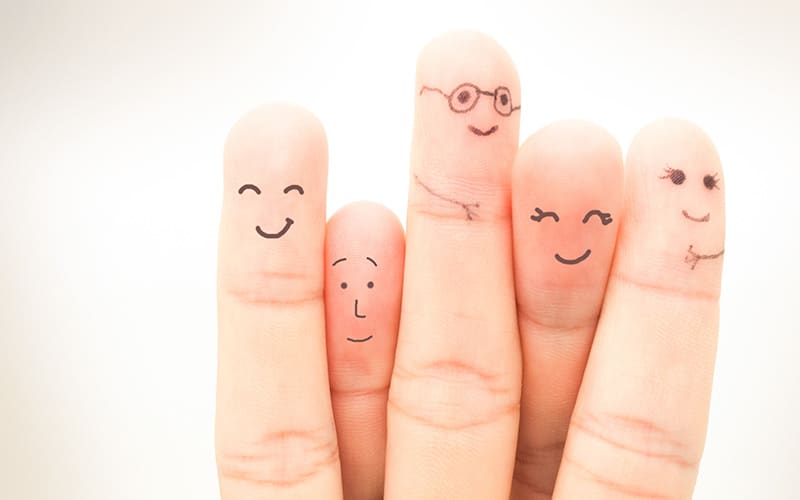
Women whose index finger is shorter than their ring finger may be stronger, according to a new study cited by the Daily Mail. The researchers looked at the relationship between the two fingers and how it relates to muscle strength.
If you have a shorter index, this has already been linked by scientists to higher exposure to testosterone in the womb.
In scientific experiments, women with a shorter index than the ring finger had a stronger grip than women with a longer index finger than the ring finger. The new study was conducted by scientists from the Department of Evolutionary Anthropology at the University of Vienna, Austria and published in the Proceedings of the Royal Society B.
What your fingers say about your skills
The team measured the ratio of finger length and grip strength of 125 healthy women aged 19 to 31 from a remote region in Austria. Grip strength was measured using a dynamometer (silometer), a handle device that is often used for routine medical screening of patients’ grip strength. Meanwhile, finger length ratios were measured using an A4 mobile scanner.
Generally
researchers have found a “clear link” between the later index and the grip strength of women.
In other words, a longer ring finger than the index finger (and therefore more prenatal testosterone exposure in the womb) is positively related to grip strength and therefore to how good a woman’s muscles are.
How to measure your index finger?
To measure your index finger, straighten it and look at the palm of your hand. There are probably wrinkles at the base of your index finger and ring finger. Your index finger probably has a crease and your ring finger has a band of creases.
Choose the crease that is closest to the palm and choose a point of the crease in the middle of the base of the finger. Mark it with a pen. Measure it from the mark to the tip of your finger.
What reveals the length of women’s fingers for the career
Women whose index finger is shorter than the ring finger are suitable for “male” professions, such as lawyer or industry manager
The profession that a woman chooses is determined by the length of her fingers, the Daily Mail reported, citing the results of a new study.
Women whose index finger is shorter than the ring finger are suitable for “male” professions, such as lawyer or industry manager. Those with a longer index are more suitable for stereotypically female professions – such as nurses or primary school teachers.
The ratio of the length of the fingers is due to the amount of the male hormone testosterone to which the fetus is exposed in the uterus. It is known that those exposed to more prenatal testosterone are more often self-confident, aggressive, prone to risks.
For the study, researchers from the National Research University of Russia, led by Prof. John Nai, analyzed data on 1,500 men and women. They found significant differences in the ratio between the two fingers only in women, and mainly for the left hand.
Ladies with a shorter index who were exposed to more testosterone before giving birth are known to be more confident and at risk. However, whether this determines the choice of profession or cultural norms is uncertain. That is why it is important to do such research in different countries with different ethnic groups, explained Prof. Nai.
A study by researchers at the University of Oxford, published last week, found that the ratio of the index finger and ring finger may indicate a tendency to infidelity.
People with approximately equal lengths of two fingers are more faithful in love, while those with a longer ring finger are more likely to cheat.
Men with the same length of thumb and forefinger are usually more attentive to women, a team from McGill University in Canada found. If the ring finger is longer, they are more likely to be quarrelsome, stubborn and rude.