Sunday, September 20, 2026
Home Blog Page 1070

UN chief appeals: ‘Forge a path to safety’ during a 4-day Holy Week humanitarian truce

0
UN chief appeals: ‘Forge a path to safety’ during a 4-day Holy Week humanitarian truce
This year, Orthodox Holy Week is being observed under a “cloud of a war” that totally negates the Easter message of unity, the UN chief said on Tuesday, calling for a four-day humanitarian pause in Ukraine.
 
In five days, Ukrainians and Russians will mark Easter, a holiday that joins in celebration the Orthodox Christians in both Russia and Ukraine, as well as Catholic Ukrainians.

“Easter is a season for renewal, resurrection and hope. It is a time for reflection on the meaning of suffering, sacrifice, death – and rebirth. It is meant to be a moment of unity,” Secretary-General António Guterres told journalist, speaking in front of the Non-Violence bronze sculpture at UN Headquarters in New York.

Instead of a celebration of new life, this Easter coincides with a Russian offensive in eastern Ukraine”.

Concentrated shelling

An intense concentration of forces and firepower continue to make the battle more violent, bloody and destructive, the top UN official lamented.

Moreover, the onslaught and terrible toll on civilians seen so far “could pale in comparison to the horror that lies ahead.”

“This cannot be allowed to happen. Hundreds of thousands of lives hang in the balance,” he underscored.

Holy Week pause

Against the backdrop of many failed “good-faith efforts” by numerous parties to reach a ceasefire in Ukraine, the Secretary-General called for a four-day Holy Week humanitarian pause beginning on Holy Thursday and running through Easter Sunday, 24 April, to allow for a series of humanitarian corridors to open.

He explained that a humanitarian pause would provide the necessary conditions to meet two crucial imperatives, beginning with safe passage of all civilians willing to leave the areas of current and expected confrontation.

This would be done in coordination with the International Committee of the Red Cross.

Secondly, beyond humanitarian operations already taking place, a pause would allow for the safe delivery of lifesaving humanitarian aid to people in the hardest-hit areas such as Mariupol, Kherson, Donetsk and Luhansk.

“The United Nations is ready to send humanitarian aid convoys during this period to these locations,” he assured. “We are submitting detailed plans to the parties”.

Dire needs

The UN chief painted a heartbreaking picture of people without food, water, supplies to treat the sick and wounded, or simply to live day-to-day.

More than 12 million people need humanitarian assistance in Ukraine today,” he said, with over one-third located in Mariupol, Kherson, Donetsk and Luhansk.

“We anticipate that this figure will increase to 15.7 million – that’s about 40 per cent of all Ukrainians still left in the country”.

‘Life-or-death reasons’

There is “a measure of progress to build upon,” the UN chief said, noting that over the past seven weeks, some 2.5 million people have been provided with assistance, including many in the east.

“For all these life-or-death reasons, I call on Russians and Ukrainians to silence the guns and forge a path to safety for so many at immediate risk,” he appealed.

Stop the bloodshed and destruction – UN chief

“The four-day Easter period should be a moment to unite around saving lives and furthering dialogue to end the suffering in Ukraine”.

Keep the faith

Mr. Guterres explained that earlier in the day, Emergency Relief Coordinator Martin Griffiths briefed the Ukrainian Council of Churches and Religious Organizations – including Orthodox, Catholic, Protestant, Muslim and Jewish leaders.

The Secretary-General welcomed their support and “inspired by Holy Week and all that it represents”, urged all parties and all champions of peace around the world to join his Easter appeal.

“Save lives. Stop the bloodshed and destruction. Open a window for dialogue and peace. Keep faith with the meaning and the message of Easter,” he concluded.
Canada, United States, Japan and Europe hold a teleconference on the war in Ukraine

0
soldier walking on wooden pathway surrounded with barbwire selective focus photography
Photo by Stijn Swinnen

Leaders from Canada, the United States, Japan and Europe hold a teleconference on the war in Ukraine

Yesterday, Prime Minister Justin Trudeau spoke with the President of the United States of America, Joe Biden, and the leaders of the United Kingdom, France, Germany, Italy, Poland, Romania, Japan, the European Commission, the European Council, and the North Atlantic Treaty Organization (NATO) to discuss collective efforts to date, assess the current situation on the ground in Ukraine, and discuss critical actions allies must undertake to effectively support Ukraine.

The leaders denounced Russia’s war crimes and brutality in Ukraine and promised to hold Russia accountable for its actions, including through the International Criminal Court. They emphasized the importance of allies maintaining the strong, united stand they have taken in support of Ukraine. The leaders also expressed their collective commitment to the sovereignty and territorial integrity of Ukraine.

The Prime Minister and leaders recognized that it is crucial to maintain financial support to Ukraine in a way that meets its critical needs and adapts quickly to changing circumstances in the country, particularly with regard to food security and humanitarian assistance.

Prime Minister Trudeau emphasized the strength and unity of the NATO Alliance. The leaders agreed to a common approach in supporting Ukraine as it enters the next phase of the war and agreed to continue coordinating closely.

Rugby Star Ali McGrandles Named Chieftain Of Stirling Highland Games

0
Rugby Star Ali McGrandles Named Chieftain Of Stirling Highland Games
Former Scotland rugby player Ali McGrandles has been named Chieftain of this year’s Stirling Highland Games.

Stirling-born Ali was a pioneer of women’s rugby in Scotland beginning her career at Stirling County aged just eight and going on to notch up 50 international caps.

Ali, who played in the 1994, 1998 and 2002 Rugby World Cups, is thrilled to be taking on the role of Chieftain at the Highland Games on Saturday August 20.

It will be the first in-person event since 2019 and the packed schedule includes traditional and adaptive heavyweight competitions, a Tug of War, highland dancing and a food and drink experience.

Ali said: “I was absolutely over the moon to hear the Committee had selected me for Chieftain, it is such an accolade and a wonderful opportunity to go back to where everything started for me.

“As someone who was born and brought up in Stirling and still has strong links to the area, to have the chance to be Chieftain and host the Games is just thrilling and I am proud and honoured to be given the role.

And as a PE teacher and someone who has been involved in sport from an early age, it’s fantastic to be overseeing all the sporting activities which will be going on.”

Ali excelled in sport as a youngster playing both rugby and hockey.

She went on to play rugby at university and was selected for Scotland’s first ever women’s international match against Ireland in 1993.

Ali had a long career in international women’s rugby before retiring in 2002 and is still involved in the sport coaching a rugby team at the London school where she works as an assistant headteacher.

She also has a long association with the Highland Games community attending various events as a child and helping behind the scenes at Stirling Highland Games in more recent years.

The honorary role of Games Chieftain is chosen by the Stirling Highland Games committee from a list of famous sons and daughters of the city who stand out in their respective discipline.

Cat Cripps, the Chieftains Gathering Convenor, said: “Every year the committee looks at the talents and achievements of the sons and daughters of Stirling and how they have excelled in their field.

“Ali has a fantastic pedigree in her sport and we are delighted to announce she will be the 2022 Stirling Highland Games Chieftain.

“She will be a brilliant host on the day which will be extra special this year as we all look forward to returning to the live event.”

Last year, organisers showcased a series of online events to keep the spirit of Stirling Highland Games alive.

Now fans from across the world are ready to return to the Games field, at Stirling Sports Village, in person.

The Games runs from 10.30am until 5pm and tickets can be bought in advance now or on the day.

Spectators can enjoy a full day of events including watching heavyweight competitors take part in hammer throwing, shot put and tossing the caber plus track and field athletics.

They can also see the gruelling Bruce Challenge, unique to the Stirling Games, which sees strongmen carrying two boulders weighing over 164kg as far as they can and an adaptive heavyweight competition featuring the Wounded Highlanders.

Meanwhile, the unique food and drink experience will highlight award-winning Scottish produce and there will be on-site heritage tours.

The 2022 Highland Games is sponsored and grant-funded by a variety of organisations including Active Stirling, EventScotland, Forth Valley Chamber of Commerce, Specsavers Stirling and the Highland Reserve Forces and Cadets Association.

For more details on the Games and to book tickets, visit www.stirlinghighlandgames.com

Press release distributed by Pressat on behalf of Ceangail, on Wednesday 20 April, 2022. For more information subscribe and follow https://pressat.co.uk/

Ukraine: Security Council urged to ‘put aside’ divisions, end ‘senseless war’

0
Ukraine: Security Council urged to ‘put aside’ divisions, end ‘senseless war’

As five million people have already fled Ukraine and another seven million are displaced internally, UN Deputy High Commissioner for Refugees Kelly T. Clements urged the Security Council on Tuesday to ‘put aside’ its divisions and find a way to end the “horrific and senseless war”, now in its eighth week. Speaking from Hungary, where almost half a million Ukrainians have sought safety, she updated that neighbouring countries are including refugees in national education, health and social programmes.

“While the sheer scale and speed of displacement is immense, we must not lose sight of what these figures mean.”

Deputy High Commissioner for Refugees @KellyTClements briefing the UN Security Council on Ukraine from Hungary, spelling out the impact of the war on ordinary people. pic.twitter.com/U9irg7hNtx

— UNHCR, the UN Refugee Agency (@Refugees) April 19, 2022

“This inclusive approach is – bar none – the best way for refugees to sustain their lives in exile, and it requires more international support”. 

The UN also estimates that 13 million more are in the hardest hit areas, many unable to move and difficult to safely reach with aid.

Beyond blankets and cash

No pile of blankets, no sum of cash, no amount of medicine, is going to halt the death and destruction,” the Deputy High Commissioner emphasized.  “While we will continue our job to deliver aid, we need this Council to do its job too.”

Noting that she had just returned from the Czech Republic and Austria, where she described the compassion and solidarity as being unprecedented, Ms. Clements said her visit, which will continue to Slovakia, complements those of High Commissioner Filippo Grandi, including to Ukraine, and Assistant High Commissioner for Operations, Raouf Mazou – who is currently visiting Moldova and Romania.

While the scale and speed of displacement is immense, she urged the Council not to lose sight of what these figures mean. 

Ms. Clements shared the story of a 25-year-old woman from Odessa ­– whom she met in Prague – that was compelled to leave her family behind in Ukraine.

“Each one of the millions displaced are forced to make impossible, heart-breaking decisions,” she said.

Inspiring responses

The senior UN official also recounted “consistently remarkable” acts of humanity that have been seen in messages of support plastered on apartments, windows, and streetlamps as well as individuals rallying to provide what they can. 

Moreover, concerned States have kept their borders open, providing protection to those seeking safety and aid

“We call on that to continue in a non-discriminatory manner for all people in need,” she stated.

These inspiring responses are only surpassed by the strength and composure of refuges themselves, who continue to exude courage and resilience, Ms. Clements pointed out.

Most of all she said, they emphasize their hope for peace so they can return home. © IOM/Alissa Everett

A young Ukrainian refugee uses Google translate, Poland.

Trapped inside

We will continue to expand our lifesaving aid to the internally displaced throughout Ukraine,” Ms. Clements affirmed, especially in the centre and the east – where a brutal humanitarian nightmare is unfolding. 

This requires not just resources, but also safe and unhindered access to people in need, she said.

Heightened risks of trafficking

Director-General of the International Organization for Migration (IOM) Antonio Vitorino warned that the increased targeting of cities will lead to more civilian casualties and displacement, both internal and external

I just briefed the UN Security Council on the needs of internally displaced persons, those forced to flee their homes to neighboring countries, and all populations affected by the war in #Ukraine.

I reiterate @antonioguterres’ urgent call for an immediate humanitarian ceasefire. pic.twitter.com/RQqC7UOlFo

— António Vitorino (@IOMchief) April 19, 2022

He called on parties to the conflict to uphold their international law obligations to protect noncombatants, their homes and civilian infrastructure.

Highlighting several specific risks faced by internally displaced people, refugees and third-country nationals, Mr. Vitorino warned that in situations of mass displacement, up to 30 per cent of the population will experience some form of negative psychological impact

He voiced particular concern over the women and children who have fled or been displaced. 

Human trafficking was a known phenomenon in the region and past crises have demonstrated that large-scale displacement, family separation and disruption of civil protection and community networks render these individuals vulnerable to violence, exploitation and abuse. 

The IOM chief urged all neighbouring and impacted countries to ensure the immediate identification and registration of unaccompanied and separated children fleeing from Ukraine.

Understanding refugees needs

Moving forward, Mr. Vitorino called for a better understanding of the intentions of those fleeing; people forced to leave their homes; and individuals who have been separated from their families due to the conflict. 

IOM will continue, through its teams on the ground, to collect and disseminate information critical to this effort, targeting actions to improve the well-being of all those affected by the war.

As more people are likely to be displaced, it is crucial to plan ahead and ensure that all those fleeing the war have access to adequate support and services,” stressed the Director-General.

First Person: A month in a Mariupol basement 

0
First Person: A month in a Mariupol basement 
The United Nations continues to provide assistance inside Ukraine and in neighbouring countries to people displaced by the ongoing conflict “On the morning of the invasion I left my apartment and spent almost a month in a basement on the outskirts of Mariupol, until I escaped on 23 March. 

The first few days felt like a weird slumber party, just getting together with friends. We had everything we needed…until we didn’t. 

First the electricity went, when Russia bombed the city’s electrical system.

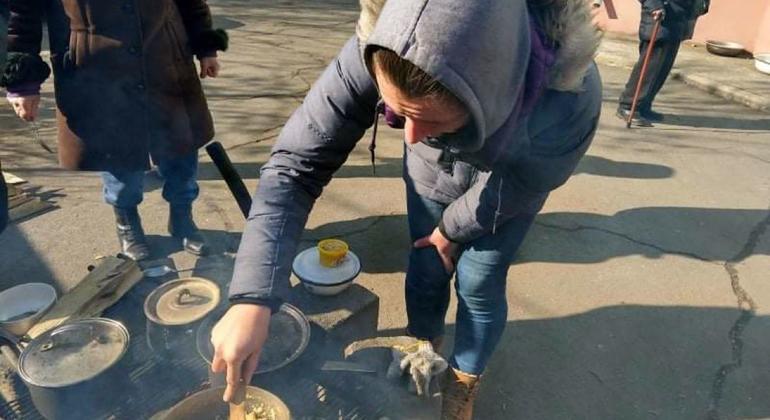
Alina Beskrovna cooks on an open fire in Mariupol after gas and electricity supplies were disrupted due to the conflict.
© Alina Beskrovna

Laptops and cell phones began to run out of battery. 

Then the Russians targeted the water system. We filled up all the buckets we possibly

could while the taps were still running, but we quickly realized that a lack of drinking water would be a huge problem.

And then we heard a large blast, and the gas went out, which meant gathering and chopping wood, and cooking on open fires outside the basement entrance.

‘People jumped to their deaths’   

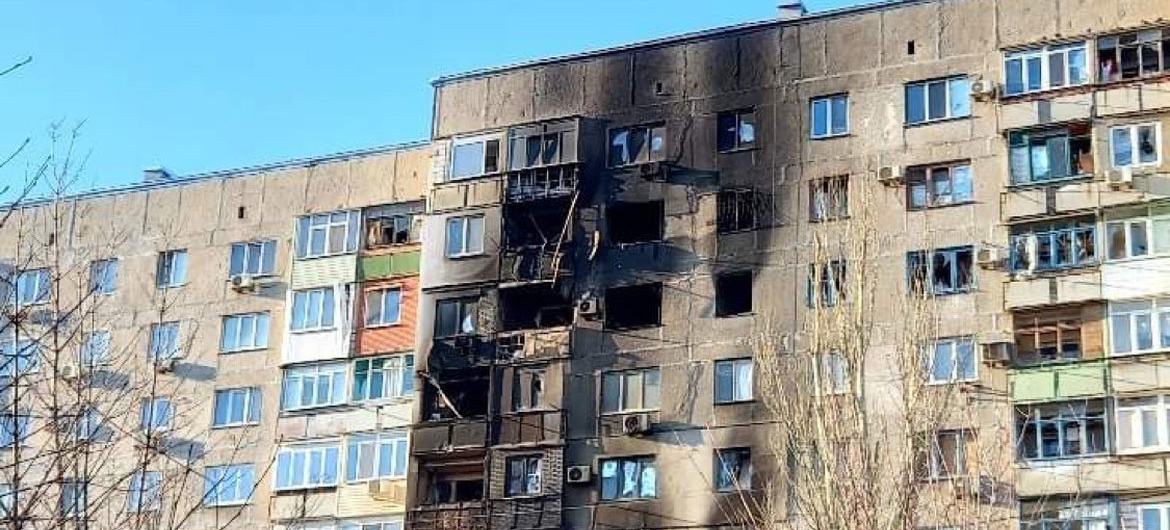
By the end of the second week, we heard continuous shelling approaching from the northern part of the city, targeting residential districts near us. Two missiles hit a nine-storey building on the other side of the road, right across from our basement. We saw the fourth floor engulfed in flames and people jumping to their deaths.

Whenever a missile landed close by, it felt like it was going straight through us. We would feel the shockwaves; the cracks in the basement wall and floor would widen with every single hit, and we would wonder if the foundations of the building could take it.  

Alina Beskrovna said she witnessed people jumping to their deaths from an apartment building in Mariupol, Ukraine.
© Alina Beskrovna – Alina Beskrovna said she witnessed people jumping to their deaths from an apartment building in Mariupol, Ukraine.

‘I don’t know if my father is alive’ 

Early in the invasion, a communication station behind one of the residential high-rises was targeted by the Russians. 

I knew why it was being done: To leave us completely helpless and hopeless, demoralized, and cut off from the outside world.  

I lost contact with my father.  He was on the other side of the city and I was not sure if I would ever see him again. I only hoped that he would walk over to us, since he knew the address, but he never did. I still don’t know if he’s alive. I don’t know if he was taken to Russia by force. 

Rumours began spreading about how the city had fallen, how it was now Russian territory. We heard horrific stories of Chechens roaming the streets, raping women, killing civilians at point blank range, and how dangerous it was to even try to leave because of active fighting on all three sides of the city. 

So, no one dared to escape. Because of the lack of communication with the outside world, it felt as if there was a huge mass murder taking place right around me, and that the world had no idea, and would never find out the true scale of what was happening. 

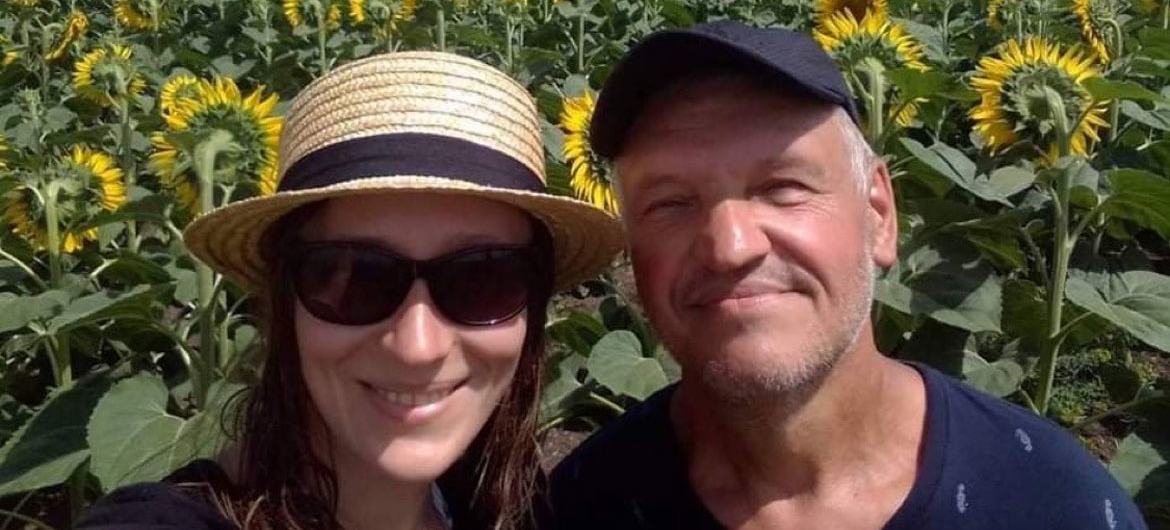
Alina Beskrovna, photographed with her father before the conflict.
© Alina Beskrovna- Alina Beskrovna, photographed with her father before the conflict.

Fear of rape 

I had two main fears. One was rape – which is used as a weapon of war by the Russian military, and we all knew this – and the second one was being either taken to Russia by force or to the so-called Donetsk People’s Republic. 

I also worried about Mariupol being proclaimed as part of the Donetsk People’s Republic – barring any hope of my leaving. 

I just kept thinking, will they let us out? Is there a way out? 

An opportunity to escape 

Anyone who didn’t get out in the first three or four days, was unable to leave afterwards, because of active fighting and Russian forces approaching the city from all three sides. 

Those who tried to flee found themselves in a battlefield – Resident of Mariupol


All we could do was wait for a possible corridor to open up. Around the second week of the war, a rumour spread on a Russian Telegram [social media platform] channel, that an organized column was gathering at the theatre, heading west towards Manhush. 

Everyone who had a vehicle and enough fuel, put some white pieces of cloth on their side mirrors to signify that they were civilians trying to flee, and went to the collection point. 

But there was nothing. It turned out to be a false rumour.  

By 20 March, the Russians has completely taken over the strip of land by the Azov Sea, from Berdyansk and Manhush, all the way to the outskirts of Mariupol. 

Three days later we decided to leave despite reports of civilians being targeted, as the city was being under siege by carpet and precision bombings.   

I saw with my own eyes how they aimed at apartment buildings, as if they were playing a computer game.  

We were running out of food and water. I hadn’t had a shower for a month. 

Residents who stayed in Mariupol shared a pit latrine as the city continued to be bombed.
© Alina Beskrovna – Residents who stayed in Mariupol shared a pit latrine as the city continued to be bombed.

‘Horrific’ journey 

At 7:00 AM on the morning of 23 March, we started out for Zaporizhzhia. After 16 Russian checkpoints, a trip that usually took three hours cost us more than 14. 

The drive itself was horrific. The Russian military strip-searched us, checking documents and detaining every male. But once we reached the Ukrainian checkpoint near the entry to Zaporizhzhia, we heard the Ukrainian language. 

It felt like we had made it, like we were relatively safe. 

Despite feeling as though I was getting out of this black hole of destruction and death, Zaporizhzhia itself wasn’t safe; there were constant air raids. 

But we had made it out of Mariupol and couldn’t believe we were alive.

Preparing for the worst: training health workers to deal with casualty surges from the war in Ukraine

0
WHO

Figures from the Office of the United Nations High Commissioner for Human Rights (OHCHR) show more than 4000 casualties from the war in Ukraine so far. Yet, as the OHCHR acknowledges, the actual number is likely to be far higher given that it is difficult to access accurate information from areas where intense hostilities are ongoing, and that other reports are awaiting corroboration.

Ensuring hospitals are prepared for sudden increases in casualties during this emergency is therefore crucial. A big part of this entails fully training health professionals in these institutions not just in the theory but, more importantly, in the practice of organizing and mobilizing resources to deal with these crises effectively.

Training in the Republic of Moldova

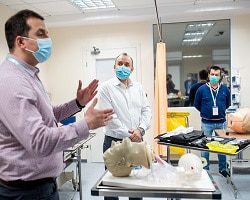
Recently, WHO at the request of the Moldovan Ministry of Health organized a 3-day course on mass casualty management (MCM), developed in collaboration with the Ministry of Health and the Karolinska Institutet in Sweden. A total of 32 surgeons, traumatologists and facility managers from 13 hospitals benefitted from the training.

The Republic of Moldova, a neighbouring country to Ukraine, has already seen 400 000 refugees cross its border for protection. Preparing its health professionals for a potential surge in war casualties has been a key consideration.

And as Ion Chesov, Head of the Integrated Services Department at the Ministry of Health, stressed, the benefits of this training go well beyond the current emergency: “We need to ensure the health system as a whole and the facilities in particular are prepared to face any emergency or unexpected disaster. Knowledge in basic and advanced trauma life support are crucial and form the foundation of medical skills in medical doctors.”

Training in Ukraine

This month, WHO also began rolling out the course in Ukraine. The first participants were staff of an ambulance substation in the Lviv region. Training paramedics in this way will allow them to provide appropriate assistance to victims even before they have reached hospitals. WHO has engaged Ukrainian emergency physicians to deliver the training, and is planning to deliver more sessions across the country.

Speaking about the course, Johan von Schreeb, WHO Emergency Medical Team Coordinator in Ukraine, commented: “In the country today, this type of training, unfortunately, is very much needed. We see a lot of mass casualty situations where many people have been injured simultaneously. That is very challenging for the health system and for the staff who have to make rapid, critical decisions for prioritizing the evacuation of the injured. Practising the triage of patients is a very useful exercise, and we need to do more of it. We can’t simply do it using presentations. You have to be exposed to the stress, the decision-making, the organization and the chaos, and we try to simulate that as much as possible through the training.”

About the course

The MCM course was developed in collaboration with WHO’s Emergency Medical Team, the Karolinska Institutet (a WHO collaborating centre) and the WHO Academy. The course developers recognized that mass casualties following disasters and significant incidents, often characterized by large numbers of severe and diverse injuries, can rapidly overwhelm the ability of health facilities to deliver adequate medical care.

The training addresses the organization and actions of staff working in emergency units, with a focus on the first 30 minutes after the announcement of a mass casualty incident. Taking a practical, hands-on approach, the training focuses on stabilizing injured patients and carrying out triage, as well as working as a team, acquiring new skills and changing ways of working. In addition, specific MCM trainings are provided to emergency staff working in hospitals.

European values: ministers condemned Russian actions in Ukraine

0
Last week, Europe ministers condemned Russian actions in Ukraine and call for the respect of fundamental European values

The annual dialogue on the rule of law must not duck tough questions on adherence to European values, progressive ministers cautioned today as they met in Luxembourg to exchange on key issues facing Europe ahead of the General Affairs Council (GAC).

Ministers from Finland, Denmark, Italy, Malta, Portugal and Spain took part in the PES meeting, reiterating their condemnation for Russia’s invasion of Ukraine and calling on all EU member states to uphold fundamental European values.

Today, the GAC will hold the annual dialogue on the rule of law. Fundamental rights in five member states will be discussed: Luxembourg, Hungary, Malta, the Netherlands and Austria. Last week, the EU Commission announced that it will trigger the rule of law conditionality mechanism against Hungary for failing to act on corruption. Progressives have issued consistent warnings about the actions of the Hungarian government when it comes to the rule of law.

PES GAC Chair, Finnish Minister for European Affairs and Ownership Steering, Tytti Tuppurainen, said:

“There are widespread fears that our union of values is being actively undermined in parts of Europe. Today’s dialogue is an important moment for the EU to take stock of developments.

“Fundamental beliefs such as rights for the LGBTQ+ community, women, and migrants, as well as judicial independence and media freedom, must be respected by all. Socialists and democrats have warned time and time again about violations of these standards. European values must apply to all European citizens, regardless of their member state. We will keep fighting to defend this principle.

“The rule of law is not simply a question of idealistic principles but has also concrete effects. It is about resilience, it is about the smooth functioning of the internal market, and it is about safeguarding mutual trust.”

Alongside the Annual Rule of Law dialogue, ministers discussed Europe’s response to the Ukraine crisis. They voiced their dismay at the continued barbarity of the Russian invasion and expressed full support for Ukraine. The meeting commended European Commissioner for Home Affairs Ylva Johansson for her swift action to support refugees, the majority of which are women and children. This includes the activation of the Temporary Protection Mechanism and actions to prevent human trafficking.

Following the invasion, the meeting also reaffirmed the need for Europe to secure energy independence. Ministers welcomed the REPowerEU proposal put forward by European Commission Executive Vice-President Frans Timmermans. This plan will reposition the EU to fight the energy crisis and reduce reliance on Russian gas, while also accelerating progress towards the goals of the European Green Deal.

On the Conference on the Future of Europe, ministers urged the Conference to ensure that the exercise is democratic, meaningful, and genuinely reflects the views of European citizens.

The meeting was attended by:

  • Tytti Tuppurainen, Chair, Minister for European Affairs and Ownership Steering, Finland
  • Jeppe Kofod, Minister for Foreign Affairs, Denmark
  • Vincenzo Amendola, Undersecretary of State, delegated to European Affairs, Italy
  • Ian Borg, Minister for Foreign and European Affairs and Trade, Malta
  • Tiago Antunes, Secretary of State for the European Union, Portugal
  • Pascual Navarro, Secretary of State for the European Union, Spain
  • Yonnec Polet, Deputy Secretary General, PES

Guterres appeals for urgent humanitarian ceasefire in Ukraine

0
Guterres appeals for urgent humanitarian ceasefire in Ukraine
UN Secretary-General António Guterres has again called for an immediate humanitarian ceasefire in Ukraine to allow delivery of life-saving aid as well as evacuations, his spokesperson said on Monday.
The appeal followed attacks on cities across the country– most recently Lviv, Dnipro, Kharkiv and Mykolaiv – which resulted in numerous civilian casualties and destruction.

Mr. Guterres was also greatly concerned about the continuing appalling humanitarian situation in the besieged port city of Mariupol, UN Spokesperson Stéphane Dujarric said in New York.

Give negotiations a chance

“The Secretary-General strongly urges all parties to enact an urgent and immediate humanitarian ceasefire, which will enable the safe and secure functioning of humanitarian corridors, help evacuate civilian residents and also deliver life-saving humanitarian and medical assistance,” said Mr. Dujarric, speaking during his daily briefing at UN Headquarters.

Stressing that “genuine negotiations must be given a chance to succeed and to bring lasting peace”, he said the UN stands ready to support such efforts.

Genuine negotiations must be given a chance to succeed and to bring lasting peace  –  UN chief

Prior to the briefing, UN relief chief Martin Griffiths told journalists that although humanitarian ceasefires in Ukraine are “not on the horizon right now”, they could be in a couple of weeks.

Mr. Griffiths reported on his visits to Russia and Ukraine earlier this month, where he held discussions with senior officials on UN “aspirations” for humanitarian pauses and on how to improve the notification system that allows safe passage of humanitarian workers and supplies.

Travel to Turkey

“Obviously we have not yet got humanitarian ceasefires in place on the Russian side,” he said. “I went into a lot of details on this, and they continue to promise to get back to me on the details of those proposals.”

Mr. Griffiths will travel to Turkey this week to meet with President Recep Tayyip Erdoğan on hosting humanitarian talks between Russia and Ukraine.

On Sunday, the Secretary-General spoke with President Erdoğan, expressing his ongoing support for the Istanbul process related to the war in Ukraine.  He also underlined the need for humanitarian corridors for aid distribution and evacuations.   

Asked about Turkey’s role, Mr. Griffiths said he was impressed by how the country has presented itself to both sides as a “genuinely valuable and useful host” for talks.

“In classical mediation terms, there isn’t a mediation really going on between the Russians and Ukrainians,” he said, “but the Turks come closest to it, I think, of all Member States.”

On the prospects for a ceasefire, Mr. Griffiths pointed to the example of Yemen, where warring sides have implemented a two-month truce.

“Ceasefires, they’re not on the horizon right now. But they may be in a couple of weeks; they may be a little bit longer than that,” he said. “And it will all depend on two things: the war, of course….and the talks.”

© UNOCHA/Saviano Abreu

United Nations Emergency Relief Coordinator and Under Secretary-General for Humanitarian Affairs Martin Griffiths in Irpin, Ukraine on 7 April 2022.

EU prosecutors Office investigates €5.4 billion worth of loss to the EU budget

0
Monochrome Photo of Person Holding Bundles of Cash Money
Photo by Tima Miroshnichenko

The EPPO investigates €5.4 billion worth of loss to the EU budget in its first 7 months of activity

In its first annual report, the European Public Prosecutor’s Office (EPPO) gives an account of the first 7 months of its operational activity.  For the first time, statistics on EPPO operations per participating Member State, crime, seizures, number of indictments and other key figures are shared.

While many expected a slow start followed by a gradual increase in activity, the EPPO worked at full speed from Day 1. The EPPO is a systemic part of the overall architecture put in place to protect EU taxpayers’ money.

Laura Kövesi, European Chief Prosecutor: “European cannot mean weak! The EPPO is a very powerful tool for protecting expenditures as well as revenues of the EU budget by means of criminal law. 20 years after the Euro zone, we have created the EPPO zone. Embedded in the national judiciaries of the 22 participating Member States, the EPPO is in the first line of defence of the rule of law in the EU. The first 7 months of our operations made at least one thing clear: if we are hindered in the exercise of our competence, the protection of the EU budget is at stake.” 

2021 in numbers

Some of the key figures featured in the annual report, valid on 31 December 2021:

  • 2832 crime reports were processed;
  • 576 investigations opened since 1 June 2021;
  • 515 active investigations on 31 December 2021;
  • €5.4 billion estimated damages in the active investigations;
  • €147.3 million in seizures, three times the EPPO’s actual 2021 budget;
  • 95 European Delegated Prosecutors were appointed, working in 35 EPPO offices in the 22 participating Member States;
  • 122 staff members in the central office in Luxembourg.

Of the 576 investigations opened in 2021, 298 were new cases initiated by the EPPO, and 278 were so-called backlog cases reported by the national authorities and taken over by the EPPO.

More detailed statistics, per participating Member State, are available here.

Most frequent types of crimes

The EPPO focuses on complex, cross-border investigations into sophisticated economic and financial crime, in particular where serious organised crime is involved. It investigates fraud involving EU funds of over €10 000 and cross-border VAT fraud with damages above €10 million.

Of the 515 active investigations, we have identified the following as the most frequent types of crimes affecting the EU budget:

  • Non-procurement expenditure fraud (31.8%): use or presentation of false, incorrect or incomplete statements or documents, common in agricultural subsidies.
  • VAT revenue fraud (17.6%): carousel fraud, VAT fraud through missing traders, and VAT fraud committed within a criminal organisation.
  • Non-VAT revenue fraud (13.4%): customs and anti-dumping duties fraud.
  • Procurement expenditure fraud (11.2%): the use or presentation of false, incorrect or incomplete statements or documents, mainly in construction, waste, technology and HR development programmes.
  • Corruption (4%): active and passive corruption of public officials.                                                                                   

Excellent and efficient cross-border cooperation

Law enforcement actors across the EU have discovered the speed, efficiency and information gains they can expect when working with the EPPO, compared to traditional mutual legal assistance arrangements and cross-border coordination methods. Because of the EPPO’s independence and cross-border competences, the organisation of coordinated searches or arrests across borders has been a matter of weeks, instead of months.

Improving the level of protection of the financial interests of the EU starts with increasing the level of detection of EU fraud. Differences between Member States in this regard have been significant for a long time, and the EPPO is committed to closing these gaps with the support of its national and international partners.

Investigating, prosecuting and bringing to judgment crimes against the financial interests of the EU is the EPPO’s mission, and it will continue to identify shortcomings and analyse any challenges that arise in our ultimate aim of protecting EU taxpayers’ money from criminals.

Cooperation with partners, non-participating EU Member States and third countries

To allow for a quicker exchange of information, the EPPO signed working arrangements with the European Commission, Eurojust, Europol, OLAF, the European Court of Auditors, the European Investment Bank and the European Investment Fund.

Denmark, Hungary, Ireland, Poland and Sweden are not participating in the EPPO. In 2021, these five Member States were involved in 48 EPPO cases. The cooperation with Sweden runs without difficulties because of the relevant EU acts on judicial cooperation in criminal matters. A working arrangement with the Office of the Prosecutor General of Hungary was signed in April 2021. However, both Danish and Irish authorities still need time for internal consultations, and the negotiations regarding a working arrangement with the National Prosecutor’s Office of Poland were unsuccessful.

As regards third countries, the EPPO initiated negotiations with the aim of concluding working arrangements with the relevant authorities of the United States of America and Ukraine.

EU Ombudsman opens inquiry into time taken by Commission to deal with access to documents requests

0
books in shelves in room
Photo by C M at UNSPLASH

The Ombudsman has asked the Commission for details on the length of time it takes to deal with public access to documents requests following an increase in complaints regarding delays in the process. This was reported last April 6th by the European Ombudsman website, an investigation opened n Monday 4th of April on the European Commission, with case number OI/2/2022/MIG.

To get an overview of the situation, the Ombudsman asked the Commission how many requests for public access to documents it received in 2021 and the average time it took to deal with them. The Ombudsman also asked for the number of confirmatory requests – when people resubmit the same requests as they are not satisfied with the institution’s response –  it received in 2021.

The aim of the inquiry is to try to identify a systemic approach for reducing handling time for such requests and is part of the broader goal of supporting the public’s fundamental right to access to documents.

The Ombudsman regularly receives access to documents complaints and deals with them under a fast-track procedure.  Last year the office published a guide for the EU administration on how it can better implement its obligations regarding the public’s right to access documents.

The guide says EU institutions should have policies on document publication and retention and should have a ‘public register of documents’. It also says that annual statistics should be published on how the institutions handle access to documents requests.