Thursday, March 26, 2026
Home Blog Page 108

Sudan: UN’s gradual move back to Khartoum ‘an important step’

0
Sudan: UN’s gradual move back to Khartoum ‘an important step’

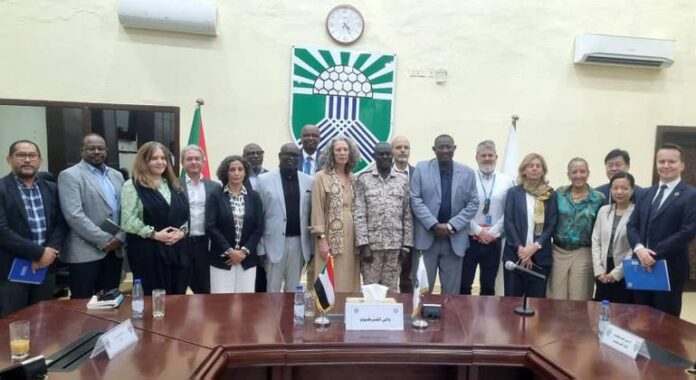
The 28 agencies, funds and programmes have maintained their presence and operations from the coastal city of Port Sudan amid the brutal fighting between the Sudanese Armed Forces (SAF) and the paramilitary Rapid Support Forces (RSF).

This gradual move back to the capital marks an important step, signaling strengthened UN coordination and engagement on the ground,” the Secretary-General’s Spokesman, Stéphane Dujarric, said in New York.

Supporting displaced people

Meanwhile, the humanitarian situation in Sudan remains dire, particularly for people displaced by the violence.

The UN refugee agency, UNHCR, and partners continue to respond to displacement from El Fasher in Darfur, as well as Kordofan.

In Tawila and Dabbah, teams are conducting in-person protection monitoring to identify urgent needs and refer cases of sexual violence survivors, separated children, and others requiring specialized support,” he said.

Immediate priorities include psychosocial support, family tracing and reunification, food assistance, non-food items, and identity documents.

End the hostilities

The UN also continues to provide assistance to people who have fled across the border to Chad.

Mr. Dujarric said that “site development, extensions, and infrastructure construction are ongoing in camps, integrated zones, and relocation sites.”

He warned, however, that “reception sites continue to face critical shortages of shelters and latrines, increasing vulnerability and requiring urgent action to ensure dignified conditions and reduce exposure to the weather.”                           

The Spokesman reiterated the UN’s call for an end to the hostilities in Sudan “so that civilians can receive the respite and protection they urgently need.” 

Source link

Commission and High Representative/Vice-President call for increased efforts to end all forms of sexual and gender-based violence

0
Commission and High Representative/Vice-President call for increased efforts to end all forms of sexual and gender-based violence

Commission and High Representative/Vice-President call for increased efforts to end all forms of sexual and gender-based violence

Source link

Press release – MEPs push for “military Schengen” to withstand potential Russian aggression

0
Commission and High Representative/Vice-President call for increased efforts to end all forms of sexual and gender-based violence

Transport and Defence MEPs call urgently for easier movement of troops and military equipment across the EU by removing internal borders and upgrading infrastructure.Committee on Security and DefenceCommittee on Transport and Tourism Source : © European Union, 2025 – EP

Source link

Security Council LIVE: Spotlight on Gaza, the West Bank and Lebanon

0
Security Council LIVE: Spotlight on Gaza, the West Bank and Lebanon

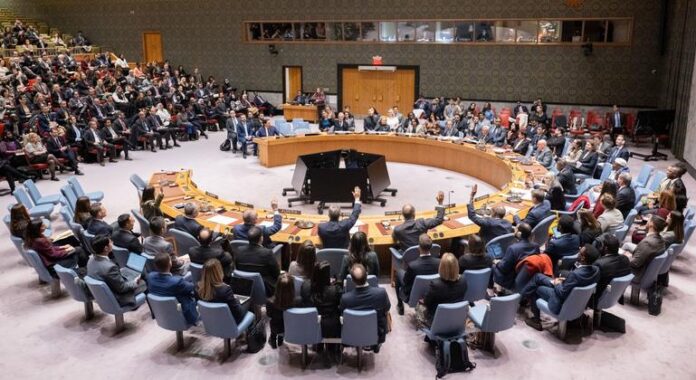
The Security Council is meeting against the backdrop of Gaza’s fragile ceasefire, with ambassadors expected to urge Israel and Hamas to stick to their commitments amid renewed violence and deepening humanitarian needs. The session is likely to focus on safeguarding the truce, easing aid access restrictions and sustaining political momentum. With tensions also rising in the occupied West Bank and southern Lebanon, the meeting will test whether the Council can help stabilise the situation and keep alive a credible path towards Palestinian self-determination. Follow live below and UN News app users can click here. For in-depth meetings coverage, go here

Source link

Security Council LIVE: Spotlight on Gaza, the West Bank and Lebanon

0

THE Security Council meets against the backdrop of the fragile ceasefire in Gaza, with ambassadors expected to urge Israel and Hamas to uphold their commitments amid renewed violence and growing humanitarian needs. The session will likely focus on safeguarding the truce, easing restrictions on access to aid and maintaining political momentum. With tensions also rising in the occupied West Bank and southern Lebanon, the meeting will test whether the Council can help stabilize the situation and maintain a credible path to Palestinian self-determination. Follow live below and UN News app users can Click here. For an in-depth analysis meeting coverage, go here.

Originally published at Almouwatin.com

Perovskite Power: How Next Generation Solar Cells Are Poised to Break the Efficiency Barrier

0


Solar panels made from silicon have served us exceptionally well for decades. They are proven, reliable workhorses and

Source link

10 superpowers that help advance science

0
10 superpowers that help advance science

This year, we asked researchers about their most valuable skill. The answers we received remind us that research is not only about methods and data, but also about mindset, values, and the unique strengths that every scientist brings to solving real-world problems. 

Read below ten of the most compelling “superpowers” they shared, each one reflecting skills and qualities shaping EU science today. 

1. Curiosity 

“I always find passion for the research questions I work on. With passion, it is easier to move any scientific paradigm forward.”Carolina Doran, the European Citizen Science Association (ECSA), Germany

 2. Multidisciplinarity 

“Connecting the dots and bridging technical depth with strategic relevance and communicating science to different audiences.” – Martyna Solis, Stockholm Exergi and the Royal Institute of Technology (KTH), Sweden

3.  Foresight 

“I can interpret early signals and anticipate events before they unfold.”Massimo Buonomo, Amigos do Protocolo de Kyoto, Brazil

4. Dedication

“Passion for knowledge and innovation.”Martina Dobrincic, Universidad Politécnica de Cartagena, Spain

5.  Innovation Catalyst

“Connecting diverse ideas and innovation for breakthrough.”Mostafa Moonir Shawrav, Marie Curie Alumni Association (MCAA) and EU Projects SECURE, SECURE2CAPTAIN, Austria

6. Digital Trailblazer

“I tackle global challenges with AI, foreseeing vital data and fusing it with powerful algorithms to turn the impossible into reality.”Mariya Miteva, Sofia University St. Kliment Ohridski and EU-supported ‘Sofia University’s Center of Excellence UNITe’, Bulgaria

7.  Strategic mindset

“Analysing complex social dynamics and translating insights into strategies for inclusive and sustainable responses.”Fatos Vokshi, University for Business and Technology (UBT), Kosovo

8.   Global impact commitment

“Transforming sustainability, mobility and marketing challenges into clear, data-driven strategies with global impact.”Alberto Tomas Delso Vicente, Universidad Rey Juan Carlos, Spain

9. Science communication 

“Translating complex science into clear, engaging stories that connect researchers, industries, and everyday people.”Katherine Rabik, Stellenbosch University, South Africa

10.     Creativity

“Transforming research with creativity, global vision, resilience and sensitivity to innovate in perinatal mental health.”Emma Motrico, University of Seville, Spain


Share your unique scientific superpower 

The future of research is shaped not only by ideas, but also by teams of people with unique expertise and abilities. 

We invite you to reflect about what is the unique strength you bring to your research work and team.  Share it with us on LinkedIn using #ResearchCareers or reply directly to our continuing survey


More info  

Research Careers in the EU 

The European Research Competence Framework (ResearchComp

The Research Comp Self-Assessment Tool 

Source link

European Peace Facility: Council adopts assistance measures in support of the armed forces of Jordan, the Democratic Republic of the Congo and Chad

0
Commission and High Representative/Vice-President call for increased efforts to end all forms of sexual and gender-based violence

The Council adopted a set of decisions establishing three assistance measures under the European Peace Facility in support of Jordan, the Democratic Republic of the Congo and Chad.
These measures aim to strengthen the capacities of beneficiary countries in military and defence matters, with the aim of promoting domestic resilience and peace.

Source link

Lower malaria vaccine price expected to protect 7 million more children by 2030

0

Under the terms of the agreement, the price of the R21/Matrix-M vaccine will drop to $2.99 ​​per dose within a year – a reduction expected to save up to $90 million. These savings are expected to allow countries to obtain more than 30 million additional doses over the next five years.

“Today’s announcement is a powerful example of what our Vaccine Alliance does best,” said An Vermeersch, Gavi’s head of vaccine programs and markets.

“We are leveraging innovative financing and partnerships to secure affordable vaccines that can better protect children against one of Africa’s biggest killer diseases. »

Nearly 600,000 deaths in 2023

Malaria remains one of the deadliest infectious diseases in the world. In 2023, it caused around 597,000 deaths, the vast majority among young children in Africa. Approximately every minute, a child dies from the disease.

“Such a devastating toll demands action,” said Leila Pakkala, director of UNICEFSupply Division.

“As international aid declines, UNICEF is determined to work with partners to provide enough vaccines at the best possible price to protect children. »

The new pricing agreement was made possible by an advance payment through the International Finance Facility for Immunization (IFFIm), which converts long-term pledges into upfront funds. This gives Gavi the ability to act quickly when major market development opportunities arise.

The ambition to act

“IFFIm exists to turn ambition into action,” said Ken Lay, Chairman of the IFFIm Board of Directors. “This agreement shows how financial innovation can unlock opportunities that save lives. »

More than 40 million doses of malaria vaccine have already been distributed through Gavi-supported programs, and 24 African countries now include malaria vaccination in their routine immunization.

Demand is high: 14 countries introduced the vaccine for the first time last year, and seven more will do so in 2025.

The lower price should help Gavi move closer to its goal of fully vaccinating 50 million more children against malaria by the end of the decade.

Both WHOThe recommended malaria vaccines, R21/Matrix-M and RTS,S, have been shown to reduce malaria cases by more than half in the first year after vaccination, with additional protection following a booster dose.

For families and health systems already strained by the disease, the expanded rollout could be transformative. “It’s about giving every child a fair chance to be protected,” Lay said. “It’s about saving lives now, not years from now.” »

Originally published at Almouwatin.com

From milking stalls to mobile apps: UN-backed project spurs Indonesia’s rural renaissance

0

Members of the South Bandung Agricultural Cooperative (KPBS) recorded a 38 percent increase in performing loans and a 43 percent increase in sales volumes over the past two years, following the introduction of a new business application.

“Easier access to financing means higher loan volumes, which means more livestock and higher incomes for our farmers,” said Aun Gunawan, director of KBPS. “This is how financial inclusion leads to improved livelihoods. »

UN Indonesia/Miklos Gaspar

Indonesian dairy farmers are using a new business app that is helping them increase sales.

Founded in 1969, KPBS has 5,000 members and produces 70,000 tonnes of milk per day. The cooperative operates its own dairy, using about 15 percent of its milk production to make yogurt and mozzarella cheese, with the remainder sold to area dairy companies.

In addition, the cooperative operates a hospital, a veterinary service and a bank, all designed to support members and improve their well-being and competitiveness.

Holistic and healthy

“We take a holistic approach and for us it’s all about health, not only the health of farmers and their livestock, but also financial health,” Gunawan explained to the heads of UN agencies in Indonesia, who visited KPBS as part of their annual leaders’ dialogue on the UN’s direction in the country.

The International Labor Organization (ILO) now supports the cooperative in implementing this vision, leveraging digitalization to strengthen financial inclusion. The project is implemented in cooperation with the Indonesian Financial Services Authority (OJK) and the Coordinating Ministry of Economic Affairs.

UN Indonesia/Miklos Gaspar

A worker checks the pH of semi-fermented milk as part of the cheese production process.

“KPBS was already a strong and well-run company before our involvement,” said Simrin Singh, ILO country director for Indonesia and Timor-Leste. “The tools we provided have catalyzed further improvements and improved livelihoods. »

Thanks to the commercial application of the Enterprise Resource Planning (ERP) system – introduced by the ILO as part of a project funded by the Swiss government – ​​farmers can now track their income and expenses, including the cost of fodder provided by the cooperative.

They also have 24/7 access to the cooperative’s veterinarians, who can reach farms within 30 minutes.

The app records each animal’s veterinary data, including vaccination schedules, allowing milk collection points to separate milk from recently vaccinated cows. If mixed with regular milk, this milk could reduce the overall quality of the day and therefore the selling price.

Higher volume, better price

“These practical improvements have contributed not only to higher volumes but also to better prices per liter sold,” Mr Gunawan said.

However, the most significant impact has been improved access to finance. The cooperative has operated its own bank since 1993 to provide credit to farmers.

Thanks to the ERP system, loan applications have become simpler and more accessible, Ms. Singh said. The bank can now view farmers’ financial data – income, cash flow and outstanding debt – directly through the system, resulting in a higher rate of approved applications.

Applications have also increased. Thanks to the integrated ERP tool, farmers no longer need to travel or queue to fill out forms; they can apply directly through the app, where their financial history is already recorded and available to the lending team.

UN Indonesia/Miklos Gaspar

Dairy cows feed on a farm in Pangalengan, West Jave, Indonesia.

“It may seem like a matter of convenience, but it’s much more than that,” said dairy farmer Encih Mintarsih. “Farmers cannot easily leave their livestock for half a day, let alone multiple times, to submit an application that might not even be approved.

“We can now apply online and spend our time productively. This makes us much more likely to seek funding,” she added.

Towards food self-sufficiency

Programs like this have broader national relevance: strengthening domestic food production and self-sufficiency is a top priority for the Indonesian government.

The country currently imports around 80 percent of its dairy products. Improving the productivity and competitiveness of local milk producers directly contributes to national self-sufficiency goals.
It also provides a model for inclusive rural economic growth.

“In an upper-middle-income country like Indonesia, digital transformation of the economy and better access to finance are key to progressing towards high-income status,” said Gita Sabharwal, UN Resident Coordinator in Indonesia. Indonesia. “For this reason, in close consultation with the government, digitalization and access to finance are key priorities of the new cooperation framework between the UN and Indonesia.

The United Nations Sustainable Development Cooperation Framework (UNSDCF), signed in August 2025 and aligned with the SDGs and Indonesia’s national development agendaoutlines how the UN will contribute to three transformative outcomes in the country, including economic and digital transformation.

“This exceptional ILO program demonstrates how the UN can complement government efforts to accelerate inclusive development through modern technology,” said Ms. Sabharwal.

The project directly contributes to the OJK Rural Bank Transformation Plan, strengthens the inclusive financial ecosystem model, and supports the efforts of the National Committee on Financial Literacy and Inclusion to improve financial literacy and inclusion. It also aligns with national priorities to digitize small and medium-sized enterprises (SMEs) and boost productivity through digital tools.

“In Indonesia, 90 percent of jobs are created by SMEs. It is therefore essential to improve their competitiveness to ensure decent work,” said Ms. Singh.

The aim is for this approach to be deployed more widely across the country.

What advice does Mr Gunawan give to other cooperatives and policy makers? “Show farmers clear, tangible benefits, and they will quickly adopt digital technologies,” he said.

“Buzzwords like ‘digitalization’ and ‘financial inclusion’ need to be translated into their daily reality – just like we have done here with the support of the ILO and the UN.

Originally published at Almouwatin.com