The hotel is defined as 7-star, although officially such a category does not exist
Over the years, Dubai’s ultra-luxury Burj Al Arab Hotel has become a legend and an emblem of the luxury of the United Arab Emirates.
And if the night in the skyscraper is not in everyone’s pocket (about 1600 euros is the night in the cheapest room, and a night in the royal deluxe room is nearly 7700 euros per night), during the trip visitors can enter the same royal deluxe room – to view and take pictures.
Against the background of the spectacular prices for overnight stays, the trip is quite cheap – less than 100 euros per person.
Those interested can indulge themselves further by drinking a cup of tea in the lobby of the tower, a glass of champagne outdoors with sea views or a glass of “24-carat cappuccino Ultimate Gold”, which costs about 24 euros per person.
Excursions to the Burj Al Arab have only recently become available, while the neighboring Jumeirah Beach Hotel has long welcomed tour groups every 15 minutes. Until recently, the only way for someone to enter the Burj Al Arab was to book a room or eat at one of its luxury restaurants.
Exactly how luxurious is Burj Al Arab?
Shortly after its opening, a journalist who visited the hotel called it in his article “the first seven-star luxury hotel in the world”, given that in terms of quality and luxury it cannot be compared to other 5-star hotels.
There is no official “7-star” category, but to this day a number of ultra-luxury hotels around the world call themselves so to stand out with their exceptional services.
Some of the amenities that Burj Al Arab deserves its stars are a reception on each floor, tours and helicopter transfers, Ferrari and Lamborghini rentals, a 24-hour butler service and a 24-carat gold iPad in each room. The hotel also has the largest staff per room – eight people per room.
In October Dubai is once again entering world records with its new tourist attraction, which will receive its first visitors – the tallest and largest Ferris wheel.
Ain Dubai opened its booths for the first time on October 21, and tickets are now on sale.
Although not officially part of the Guinness Book of Records, the Ferris wheel is unsurpassed in size and will reveal to its visitors breathtaking views from a height of 250 meters.
Being in the country of luxury, the bike can not help but offer an exclusive experience for those who are willing to spend more money.
It features luxury cabins that can be rented for special events, serving fine dining as well as romantic dinners for couples – all with Dubai’s futuristic scenery in the background.
The booths can also host nightly private parties – a service that will allow those who are tired of the restrictions due to COVID-19 around the world to have fun, more than ever.
At night, the booths have spectacular lighting.
One turn of the wheel takes 38 minutes.
The Ferris wheel is located in the heart of Blue Waters.
The CLASS project will allow cars to “see” the road situation around the corner to make a safe maneuver.
The streets of the iconic Italian city of Modena have become a testing ground for new disaster prevention technology. It allows cars to “see” behind the building or other vehicles to avoid the potential danger of an accident. The CLASS project is based on the IBM Research team, but working closely with the Model and Reggio Emilia University (UNIMORE), the Barcelona Supercomputing Center (BSC), Atos, Maserati and Modena City Hall.
As part of the project, IBM is developing an experimental prototype of a system that combines peripheral computing technology with cloud infrastructure, connecting municipal devices and vehicles as sources of real-time cross-reconciliation information. Sensors are installed on the streets, which are connected to the city data center via optical network. This center serves as a “cloud”.
They then equipped the Maserati Quattroporte and Levante with multiple sensors, including HD cameras, lidars and GPS, connected to the city’s infrastructure via a special segment of the LTE network. Nvidia Jetson graphics cards and laptops for the Advanced Driver Assistance System are installed in the cars.
During the tests, Maserati cars drove on the streets of the Model, sending data to the city center. Potential hazard warnings were displayed on the notebook screen used as a model for the ADAS system. The notices warn the driver in good time of a possible risk of collision and obstacles, so that the driver has enough time to react. The key to the efficient operation of the system is the real-time integration of data from cameras and sensors installed in passing cars with the car and the cloud.
All this is in the testing phase, but this project is part of the overall autonomous control technology, which will be the next big revolution in the car.
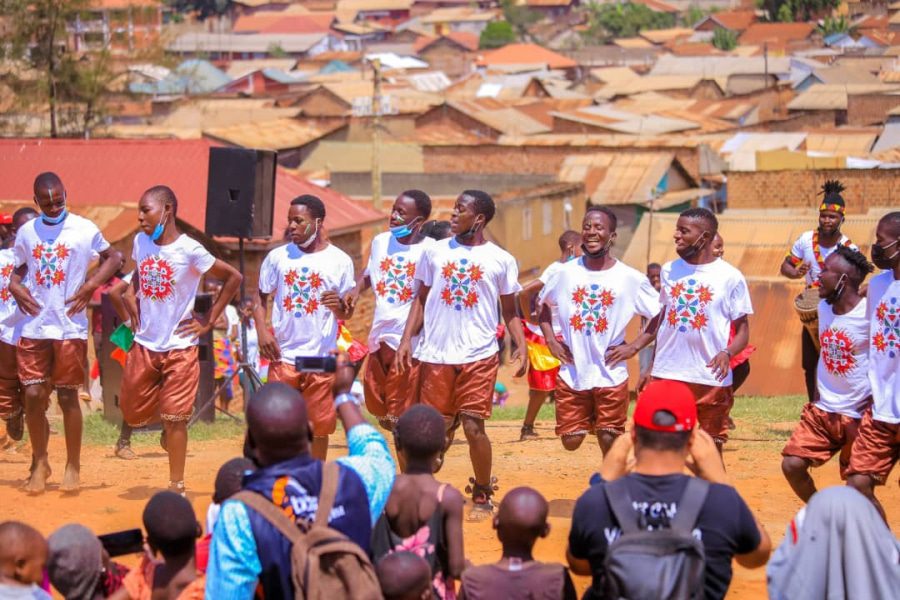
A few years ago, Daniel Delibashev went to Africa to find the most important thing to dedicate his life to – missionary work and helping children. He began developing his Smile for Africa Foundation, which is currently relied on by hundreds of children in Uganda. The foundation is doing everything possible to solve the problems of hunger and education there. And in Bulgaria he gained popularity after it turned out that the children and young people in Uganda, whom the foundation helps, are dancing Bulgarian folklore dance (horo) and singing Bulgarian songs. Smile For Africa is founded to help children in the greatest need, targeting African countries. Where children are at greatest risk and deprivation – the significance, gratitude and joy of helping hand are the most sincere.
Here is what Daniel told about his journey and ideas to actualno.com.
Mr. Delibashev, how did you go to Uganda and why did you decide to dedicate yourself to your mission there?
In 2018 a boy (then 26 years old) caring for 55 orphans (and he himself grew up as an orphan) contacted me on social media. He asked me for help to buy food, because (according to him) these children had not eaten for 3 days. Although I didn’t know him and it was very likely that he was cheating on me, I decided that I should help because I didn’t want to think about the hunger of these children before going to bed the night before. Given that even with BGN 50-100 I would save them from starvation for a few days.
So I began to help periodically, albeit in small amounts, to reduce the chance of abuse. In addition, each time I asked for proof of the amount spent, including photos and videos of the food and the children.
In 2019, after visiting the orphanage in Ghana, where I volunteered in 2017, I decided to go to Uganda to personally check the place, the children and the conditions they had already told me about and shown in photos and videos. I was skeptical that things were as dramatic as they presented them. But unfortunately, in my personal encounter with the children and the conditions, I realized that the situation in this place in the woods was even more miserable than I had imagined before. Personal experience can not be compared with explanations, photos, videos. A shocking experience that several other Bulgarians, with whom we visited the orphanage together, have already encountered. And how else, when a person for whom a room 3 by 3 meters is uninhabitable, realizes that 20-25 children are sleeping.
As early as the end of 2017. I founded the Smile for Africa Foundation, and initially my idea was to do it as a side and non-committal activity.
The fact that several organizations and hundreds of children in Africa (Ghana and Uganda) already rely on me in part or in full, and the support of our donors, both periodically and on a daily basis, has made this additional activity a mission that is virtually impossible. to abandon. I would abandon many things (like my previous lifestyle) and people in my life, but starving children who are on the brink of survival – no.
Poverty in Africa is both familiar, but over time it has become an abstraction; something that “always is” and will be. How has this abstract idea, which I guess you had in the beginning, changed over the time you spent there?
For most people, other people’s problems are not their problems, even if they are children on the brink of survival, even if millions of them die of starvation. For me, it was also like that some time ago, as helping and contributing to the socially disadvantaged was limited to regular donations to major charities in Bulgaria, initiatives to support families and the elderly in the homeland and similar activities. By this I meant that I was at least partially fulfilling my civic duty to society. Daily worries and anxieties, both personal and business or family, limited the worldview within our country.
The prevailing belief around us that whatever money is donated to those in need in Africa will not be spent properly or that it will not change anything has made me turn my back on problems that are neither mine nor our homeland’s. .
Nevertheless, my dream of settling in Africa to see and get to know life on this continent, to be a volunteer, did not fade. On the contrary, he was increasingly drawn to this challenge. After its realization, this abstraction and erroneous superimposed conviction turned from something foreign and distant, into something that was no longer just my reality, battle, cause, mission, but also life. From the doubt that I will change something, even with a lot of effort and money, I already know that it is not necessary for one or the other to see a child’s smile and know that I am changing, maybe not much, but enough for to fill my days and life with meaning.
How do children learn to dance Bulgarian people? Who trains them?
People are taught mostly through videos they watch on Youtube and Facebook. As an amateur dancer, I didn’t even think of training them after seeing how they did. I would rather confuse them, make them difficult, limit them. Since dance and music are “in their blood”, although quite different in style and tact, they only need hours to learn the steps.
To make it more interesting and colorful, however, they make the choreography much more complex by importing a dose of traditional and modern afro elements.
What are the songs they know and what did you learn about Bulgarian folklore from the way they perceive it?
Their songs are more difficult, mostly because of the lack of similarities in the two languages. They find it difficult to hear and pronounce many of the words in the songs and have to repeat them dozens of times. In these cases, I spend more time learning and preparing.
Many of the most popular Bulgarian songs have already been heard from Uganda, including: our anthem, “My Country, My Bulgaria”, “White Cloud”, “One Bulgarian Rose”, “Are Two Going”, “My Childhood”.
With what they complement both our songs and dances, it makes me not only me, but also many other Bulgarians rediscover our folklore.
The desire with which they perform them and the smiles with which they are charged every time make me feel pride and satisfaction, which is difficult for me to feel even in the homeland and in the performances of the best professionals in folk dances. And although many people do not believe, all this is a fact mainly due to their love and gratitude to Bulgaria and the Bulgarians.
What do the two cultures have in common, something that surprised you as a discovery?
There are commonalities and differences between all cultures. The question is what people are looking for. We strive not only to find common ground, but even sometimes to merge them into one, to enrich and expand them, so that in one performance both cultures merge and touch and admire both peoples, in a way that is not done so far.
The very fact that despite the total differences, we manage to merge and give birth to something new and pleasing to people on both sides is something that is a discovery and although I had doubts before, the surprise in this case is more than positive, even delightful.
What did you hear from talking to them; words that have left a stronger imprint on you?
Often, I was told things and facts that were difficult or impossible for me to believe and accept. However, when one becomes a direct witness, one cannot help but believe. In many cases, it is difficult for the brain to accept reality and come to terms with it. Probably the same for me, because I can’t and don’t want to believe that I can’t do something and change my life, even if only for tens or hundreds of lives here. And how can one easily accept that small and innocent children who have done nothing wrong in the world do not have basic living and developmental conditions and are doomed to suffering from birth.
How does it sound to you or who has not only heard, but also seen that the statement: “the children have not eaten for 2-3 days, and at the moment there is nothing to eat” are not only words, but also reality. A painful reality that is impossible for me to come to terms with.
I guess that apart from the problems with food and household necessities, the most difficult thing is to build schools and the necessary infrastructure to ensure that poverty does not recur cyclically and get out of it. How can this problem be solved in the long run?
Of course, education is one of the things that can change the situation, both around the world and in Africa. Here, however, the need is really shocking. The same applies to corruption and the misappropriation of resources and income from them, both by the people in power and by the people and large corporations that still exploit these lands. Access to education is still a mirage for millions of children in Africa. Schools are extremely inadequate, and even if they are, they are mostly private. And although they are not expensive for our ideas, for many parents to spend even 10 levs (5 euros) per month for school (including food) for their child mission is impossible.
Who are the most common donors in your foundation – not as names, but as a type?
The largest donor is an American IT company with an office in Sofia, with about 1,300 employees in Bulgaria. Thanks to their support and donations, we bought and have 14 acres of land, a school and a kindergarten in the Zirobe area, about 50 km north of the capital Kampala. It is about funds over 100,000 USD.
For the additional constructions, repairs and other big expenses, I rely mainly on bigger donations from Bulgarian businessmen – some living in the homeland, others outside it, some with business in our country, others – both in the USA and in Africa. In most cases, it costs around $ 5,000.
For daily / monthly needs – for food, water, medical care, education and the like, as well as for periodic initiatives – Christmas, Easter, Bayram, we rely mostly on small donors. The individual amounts range from BGN 5 to BGN 500, and the total monthly amount we need is over USD 3,000.
Recently, more and more birthdays decide to share their holiday with us, donating amounts between 100-500 BGN for various purposes that they consider – such as buying better and different from the usual children’s food or a pool party, and more.
Most likely, some readers will ask themselves why I miss donations from institutions – Bulgarian, foreign, international. Although we are often unjustly accused that the Foundation was established precisely and mainly for the purpose of using and abusing such funds, I will have to disappoint these people, because so far we have not received even 1 BGN from such institutions and their programs.
What are the most urgent needs that your foundation needs to address and what would be your call for donations?
In the last year, our popularity has become quite large, thanks mainly to the performances of Bulgarian songs and dances by children and young people in Uganda. Videos with them on social networks alone have been viewed over 2 million times, and hundreds of thousands of times through reports and participation in the media. Unfortunately, the development in the financial part is quite different from the one that gives pleasure and nourishes the patriotism of hundreds of thousands of Bulgarians around the world. We are still struggling to make ends meet, even with our monthly expenses.
In recent weeks we have been working and continuing with repairs and finishing works on buildings, electrification, interior painting, fencing and other activities, some of which are required to obtain a license for the next school year. It is with his taking that our main need for funds is connected at the moment, as we have not yet secured the BGN 20,000 needed to build a “sick bay” (medical center) in which to isolate children with symptoms of infectious diseases. diseases (mostly COVID-19) until they arrive from local health authorities. Of course, such a center, as well as a medical person to be there, is generally desirable to have, as the school (primary) and kindergarten is planned to be attended by a total of about 300-400 children. At the moment, not only is it mandatory to have it, but we need to do it in the coming weeks because the license application deadline is running out, which could mean that the school will not open and hundreds of children will miss the school year.
Is it my call? Just look at other people’s hardships and think for a moment what their life would be like if they were on the other side and in the shoes of those who do not stop enduring the blows of life, especially when they are children.
I have always tried to motivate people to help and that this is not only for the benefit of those who receive, but also for the donors themselves, because I know what a pleasure it is to see someone’s smile and eyes shining with joy and gratitude. Let everyone choose where, for what and how much to donate. I do not think that someone will become poor by donating an amount that would not make it difficult for him, but at the same time it will make him a more real person and give meaning to his days and his material security.
How has working with children in Uganda changed you?
Working with children is changing everywhere. The point is to be open to seeing and experiencing the world the way they do. While before the dose of enjoyment of life and the way to forget at least temporarily my problems was mostly through the accumulation of more and more material things and pleasures, the positive energy of children’s smiles is something I would not replace with any expensive car, destination, house and anything else. And I would not replace these smiles, even if it is at the expense of all the deprivations, worries and problems that accompany them.
Pouring extra virgin olive oil from a spoon to a glass container. Olive branches comes from the left and right. Some olive oil bottles are out of focus at background. Black olives are on the table and complete the composition. The composition is on a rustic wooden kitchen table. Predominant colors are gold, green and brown. High resolution 42Mp studio digital capture taken with Sony A7rII and Sony FE 90mm f2.8 macro G OSS lens
Always have a bottle of olive oil in your bathroom or closet. Does that sound absurd to you? It may seem strange, but in addition to being a healthy addition to salads and dishes, olive oil also has an application outside the kitchen.
1. Remove makeup from your eyes with olive oil
Dip a cotton swab in a little olive oil. Gently clean under your eyes and eyelids to remove makeup. Rinse with warm water and dry the skin. In addition to clearing your makeup, your skin will become very soft.
2. Olive oil soothes chapped lips
Make your own lip balm with olive oil. A few teaspoons of sugar are mixed with a teaspoon of olive oil. You can also add a little lemon juice for flavor. This mixture will protect your lips from cracking.
3. Rejuvenate your face
Make a face mask with olive oil and you will see how nourished and elastic your skin will become. There are many recipes on the Internet to choose from. And you can also add a few drops to your face cream.
4. Use olive oil as a substitute for shaving cream
This natural lubricant will help you shave smoothly without hurting yourself. Plus, it will hydrate your skin.
5. Easily remove gum from your hair
Chewing gum in the hair is a real nightmare, especially for women. But you don’t have to take the scissors! All you need is a little olive oil to spread on the hair around the sticky gum. Leave for five to ten minutes, the gum will disintegrate and you will easily remove it.
6. Polish the furniture with olive oil
If you want your furniture to shine, you do not need to buy expensive detergents. Just mix 1 teaspoon of olive oil and a teaspoon of vinegar and use a towel to clean the wooden furniture. This will keep them clean and shiny for a longer time.
7. For lubrication of creaking doors and hinges
Surely you are very annoyed to hear the ever-creaking doors of the closet? And there is an easy solution for this – olive oil! Drop a few drops of olive oil on top of the creaking hinge. Move the hinges back and forth several times to get the oil in the right place. You will see how the annoying creaking will disappear.
Scientists have shown for the first time that non-human primates can have an individual style of drawing that, in some cases, evolves over the course of life. After analyzing 790 drawings created by Kalimantan orangutans from the Japanese Tama Zoo, the researchers found noticeable differences between the creativity of different individuals in terms of composition, choice of colors and the shape of the objects depicted. And for the female Molly, who was a particularly prolific artist, her painting style changed over time – including the season. The research results were published in an article for the journal Animals.
Monkeys living in zoos and research centers are often fond of drawing. Realistic painting is not available to them, but they are happy to create bright abstract canvases – even if they do not receive any reward for it. Drawing lessons can significantly diversify the leisure of primates. They are also useful for scientists who are trying to find the evolutionary origins of the visual arts.
Tama Zoo in Tokyo is one of the places where painting of nonhuman primates is especially actively studied. The Kalimantan orangutans (Pongo pygmaeus) kept here are regularly painted on cardboard with crayons under the supervision of caretakers. Particular success in painting was demonstrated by a local female named Molly (1952-2011), who created about 1300 works in the last five years of her life.
A team of researchers led by Marie Pelé from the Catholic University of Lille decided to find out if orangutan artists have an individual style and if it changes over time. To do this, scientists collected and analyzed 749 drawings created by five females (Molly, Kiki, Gypsy, Julie and Yuki) from Tama Zoo from 2006 to 2016. 656 of them belonged to Molly. Molly’s work had previously attracted the attention of scientists: for example, several years ago it turned out that events in the life of this female and the personality of the caretaker who was next to her influenced what colors she chose and how she would place objects on paper (for example, after giving birth to other Molly females used red more often.
By breaking down each drawing into 100 cells, Pele and her colleagues found that orangutans filled in about half of them with strokes. 20 percent of the cells had overlapping strokes of different colors, and 10 percent of the cells had more than half of the same color. On average, primates used three colors per pattern, and among geometric shapes they preferred patterns resembling fans and loops (each figure contained 1.8 and 0.7 such objects, respectively).
Analysis showed that Molly’s drawing style was markedly different from that of other orangutans from Tama. She used more colors, filled in and painted more cells, and placed strokes closer to the center. In addition, her drawings were less contrasting as she pressed lightly on the crayon. Interestingly, the orangutans liked different colors: Molly and Kiki preferred green, while Gypsy, Julie and Yuki preferred red.
The authors note that of all the females, Molly created the most complex drawings. She was followed by Yuki – but Kiki’s images were simple, but bright (unlike Molly, she pressed hard on the chalk). Probably, the peculiarities of the style were associated with the individual character traits of the orangutans and their life experience. So, Molly was born in the wild, lived in two zoos and gave birth to offspring four times. For comparison, Kiki was born in captivity, almost immediately ended up in Tama Zoo and gave birth to one cub here.
Because Molly left behind a particularly large number of drawings, Pele and co-authors were able to establish how her style has evolved. It turned out that in different seasons the female painted a little differently. For example, in the winter months, she filled in a much smaller proportion of the cells with strokes. Perhaps due to the cold weather and the lack of visitors in winter, she wanted to paint less than usual. And in the spring, she used purple as the main color much more often (in 23.4 percent of cases). The female’s drawing style has also changed over the course of five years. Towards the end of her life, Molly began to use fewer colors and fill a smaller proportion of the cells on the sheet, and also increasingly moved away from the center. Perhaps the reason for these changes was partly due to health problems; in particular, the female was blinded in her left eye. However, she continued to create much more complex designs than the other four orangutans from Tama.
Pele and her colleagues admit that the orangutan creations were sometimes difficult to interpret because the paper was splashed with dirt – or because primates started a new design over an old one. In addition, the sample consisted of only five individuals of the same sex. However, for the first time, the authors were able to demonstrate that non-human primates can have an individual drawing style that evolves over time.
The passion of our ancestors for painting also began with abstract images. This is indicated by the oldest known pattern – a hashtag-like pattern that was made with ocher on a piece of stone about 73 thousand years ago.
Photo: Examples of Molly’s drawings. The center and right illustrations in the top row were created after another female orangutan from Tama Zoo gave birth to a baby. Yuki Hanazuka et al. / Frontiers in Psychology, 2019
An urgent call to protect health and mitigate the climate crisis was issued by the UN health agency on Wednesday, to mark World Health Day on Thursday.
In its call-to-action, the World Health Organization (WHO) issued a shocking report on Monday, noting that 99 per cent of people breathe unhealthy air – mainly resulting from the burning of fossil fuels.
“The climate crisis is a health crisis: The same unsustainable choices that are killing our planet are killing people,” said WHO Director-General Tedros Adhanom Ghebreyesus.
Health and social crises
The UN health agency warned that the steadily heating world is seeing mosquito-borne diseases spreading farther and faster, than ever before.
And extreme weather events, biodiversity loss, land degradation and water scarcity, are displacing people and affecting health, while pollution and plastics found at the bottom of the world’s deepest oceans and highest mountains, are increasingly making their way into food chains and blood streams.
Moreover, systems that produce highly processed, unhealthy foods and beverages, are driving a wave of obesity, increasing cancer and heart disease while generating up to a third of global greenhouse gas emissions.
These health and social crises are compromising people’s ability to take control over their health and lives, according to WHO.
The COVID factor
The COVID-19 pandemic has highlighted fault lines of inequity across the world, underlining the urgency of creating sustainable and healthy societies which do not breach ecological limits.
We need to ensure that all people have access to lifesaving and life-enhancing tools, systems, policies and environments, said the agency.
WHO’s Manifesto for a healthy and green recovery from the pandemic prescribes protecting and preserving nature as the primary source of human health.
It advocates for investing in essential services – from water and sanitation to clean energy in healthcare facilities – ensuring a quick and healthy energy transition; promoting healthy and sustainable food systems; building healthy and liveable cities; and stopping taxpayers’ money from funding pollution.
And the Geneva Charter for well-being, highlights what global commitments are needed to achieve equitable health and social outcomes now and for future generations, without destroying the health of our planet.
Sustainable living
At a time of heightened conflict and fragility, WHO is marking its founding day by launching the Our Planet, Our Health campaign, which re-imagines and re-prioritizes resources to create healthier societies.
“We need transformative solutions to wean the world off its addiction to fossil fuels, to reimagine economies and societies focused on well-being, and to safeguard the health of the planet on which human health depends,” Tedros underscored.
Through its World Health Day campaign, WHO is calling on governments, organizations, corporations, and citizens to share actions they are taking to protect the planet and human health.
Thirty years after the siege of Sarajevo, the UN team in Bosnia and Herzegovina reiterated the importance on Wednesday of pursuing justice and reparation for victims, survivors and their family members.
The siege began after Bosnia and Herzegovina declared independence in the wake of the dissolution of the former Yugoslavia.
Bosnian Serbs largely opposed independence, while the other two large ethnic groups, Muslim Bosniaks and Croats, favoured the split from Belgrade.
Bosnian Serb troops started bombarding the capital city in April 1992, a sustained assault which lasted for nearly four years.
This was the longest blockade since the Second World War, with more than 12,000 people killed, and marked a key moment in the Bosnian War.
Fighting denial of atrocities
The UN Resident Coordinator for Bosnia and Herzegovina, Ingrid Macdonald, has met with survivors’ associations across the country.
Ms. Macdonald continues to spotlight the importance of countering the denial of atrocity crimes and glorification of war criminals,said UN Spokesperson Stéphane Dujarric, speaking during his daily briefing from New York.
“She said that such rhetoric perpetuates the suffering of survivors and families of victims and has no place in a democratic society,” Mr. Dujarric told journalists.
Athletes are among the most influential people on the planet and together with their managers, fans and others involved in organized sport, must contribute to global efforts to combat climate change.
Sport can be a powerful tool for bringing people together, raising awareness for sustainable development, and addressing and mitigating climate change. #IDSDPpic.twitter.com/Qcui1NPZKX
This year’s theme examines how sport can help advance human rights and sustainable development through addressing the climate emergency.
A powerful platform
Ms. Mohammed pointed to the power of sports to unite and inspire people across the world, serving as an effective catalyst for promoting respect, equality, diversity, and inclusion.
“Sport also provides a platform for tackling some of the gravest global threats to people and planet, like climate change, which is right now wreaking havoc in all countries, with the greatest impacts on the poor and the vulnerable,” she said.
The UN deputy chief called for urgent and transformative action from all sectors, “including sports and the billions of people involved as participants, facilitators, owners, advertisers, and supporters.”
She recalled that UN Secretary-General António Guterres has stressed the need to go into “emergency mode” against the climate crisis, because the battle to keep global temperature rise to 1.5 degrees Celsius, will be won or lost in this decade.
Show real leadership
“And we are far off track,” she warned. “Major sporting events and leagues, athletes and fans alike, are poised to be powerful advocates for collective and collaborative political action.”
Ms. Mohammed said the sports industry must show real leadership, including by slashing its carbon footprint, encouraging higher ambition from the private sector, and promoting low-cost inclusive and accessible solutions, which also have high impact.
“Most crucially, we need everyone involved in sport to speak up much louder and demand bolder actions from governments and businesses alike,” she said.
Speak up for the planet
Noting that sports stars, pundits, sponsors, and their creative partners, are among the most influential personalities on the planet, Ms. Mohammed urged them to contribute to climate action.
They can call on governments and business to accelerate the renewal energy transition, for example, and to phase out coal.
“Use your voices and your platform to connect with people and youth in the billions and fire up their passions. Show leaders that a just, healthy and net-zero carbon planet is inevitable, and that it must quicken,” she said.
Ms. Mohammed described global efforts to combat the climate crisis and achieve sustainable development as a fight we will win or lose together.
“More than ever, we must unite as one team, working together to create a safer, inclusive and more peaceful and more sustainable future for all,” she said.
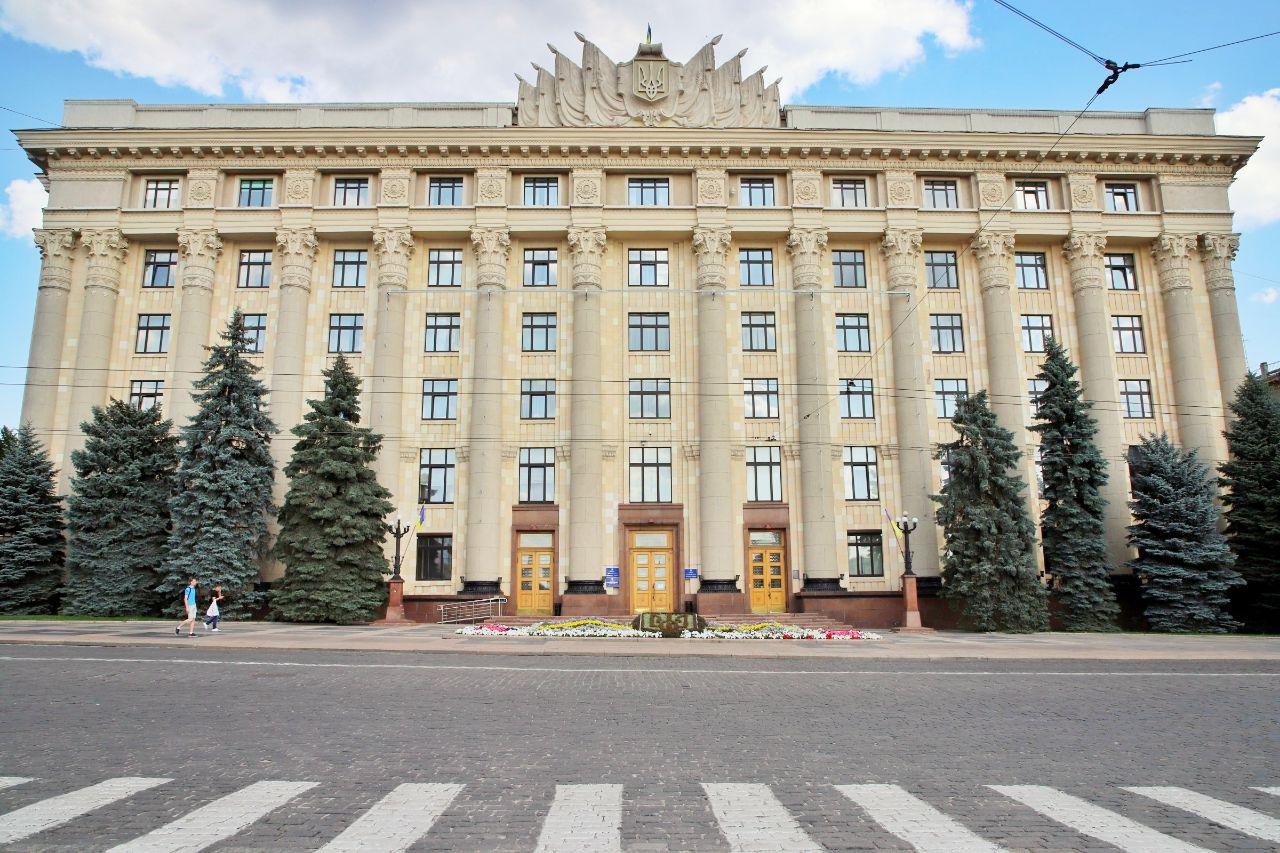
The Kharkiv Oblast Council (Ukrainian: Харківська обласна рада) is the regional oblast council (parliament) - Вербова Наталія, CC BY-SA 4.0 , via Wikimedia Commons
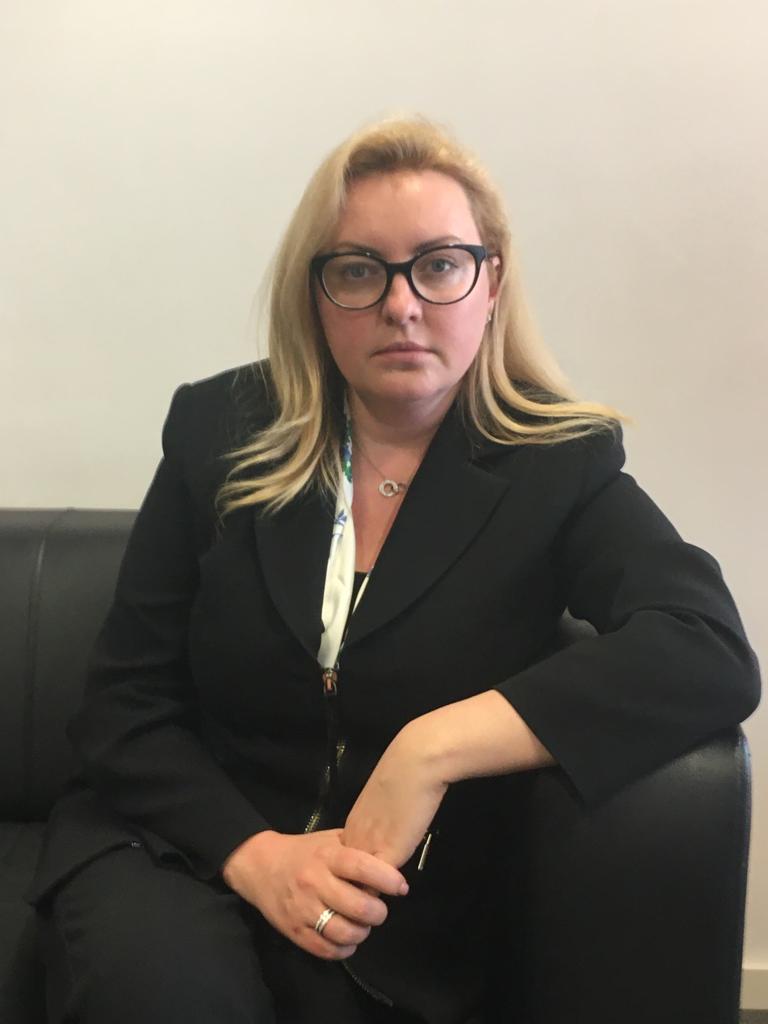
“Our country will win and we will rebuild Kharkiv,” said Tatiana Yehorova-Lutsenko, chairwoman of the Council of Kharkiv Oblast (2.6 million inhabitants) when she talked with Willy Fautré, Director of Human Rights Without Frontiers in Brussels at the end of March.
Tatiana Yehorova-Lutsenko, chairwoman of the Kharkiv Oblast Council
For days and days since the outbreak of the war in Ukraine, Russia has been attacking the city of Kharkiv (1.5 million inhabitants) close to the Russian border with artillery, rockets, cluster munitions and guided missiles, a relentless barrage. Most Kharkiv residents are Russian-speaking and many are ethnic Russians. They never asked or needed to be liberated from “Kiyv’s nazi regime” as Vladimir Putin qualifies the democratically elected government of Ukraine headed by President Volodymyr Zelensky and Prime Minister Denys Shmyhal, both of Jewish descent, as was former PM Honcharuk.
Q: Tatiana Yehorova-Lutsenko, can you tell us about your political background and explain to us what is the Kharkiv Oblast Council?
I was elected on the list of President Zelensky’s party, Servant of the People, and I was on top of the list of his candidates. I am the first woman to chair the council of the oblast (region). It is composed of 120 members democratically elected for a five-year term and is the biggest in Ukraine. Its seat is situated in the oblast’s administrative centre of Kharkiv which was bombed in a missile strike on 1 March.
Five political parties are sitting in the council. Nobody expected Russia to invade our country.
Q: Ukraine now lives under martial law. What is the state of mind of the population in Kharkiv?
Now, under martial law, the governor is also the head of the military administration and for more than a one-month siege, Russia has been unable to conquer our city. Vladimir Putin has tried to demoralize the city’s population with overwhelming and indiscriminate firepower but he was unsuccessful. The only thing Putin has achieved is to unite all the inhabitants of Kharkiv oblast, to convert them to staunch resisters to the invasion and to solidify their Ukrainian identity, even among those who had some sympathies for Russia before the war. This is certainly not what Putin expected when he attacked our country. He thought he would be welcome with open arms as a saviour in Kharkiv oblast and he would occupy it militarily in a couple of days.
Q: What is the situation of the residents of Kharkiv now?
Two thirds have left westwards by car or by train to other cities such as Poltava or Dnipro, and from there to other parts of Ukraine or to neighbouring countries. One million people from Kharkiv are now either internally displaced or in Poland. They are mostly women and children. Men have stayed to fight.
An unknown number of inhabitants of the oblast have been taken by the occupation forces, against their will, to Russia, the aggressor country. Others have chosen to flee to Russia and from there to reach Armenia or Georgia where they took a flight to a Western country.
Q: In the last two years, the schooling of the youth has been severely disturbed by the COVID and now it is further endangered by the war. What is the situation of school education?
There are dozens of universities in Kharkiv and hundreds of other schools of all levels. For lack of security, they are of course closed. There are hundreds of thousands of students and pupils of all ages. Two thirds of them at least are living in other parts of Ukraine or in neighbouring countries. During the pandemic, we had started putting in place zoom classes. The teaching staff goes on working at distance on the internet and pupils can follow them from anywhere in or out of Ukraine. Of course, it is not ideal but we must keep young people active. They are the future of the country.
Q: What are your most pressing needs?
Right now, humanitarian aid, weapons and a no-fly zone. After the war, a twinning system between our regions and regions in the EU will be highly needed for the reconstruction of our country.
In negotiations with EU ministers, MEPs ensured there were no loopholes that would allow operators from non-EU countries to abuse the scheme. They did this by strengthening provisions on trust and fair access. Parliament also secured precise requirements on which services will fall under the new DGA.
Data altruism to support research, healthcare, fight climate change
MEPs pushed to make the most of data made available voluntarily for objectives of general interest, such as scientific research, healthcare, combating climate change or improving mobility. Trusted data-sharing services will be more visible and use a common European logo certifying their compliance with the DGA.
Public sector bodies will have to avoid creating exclusive rights for the re-use of certain data, and exclusive agreements should be limited to a period of 12 months for new contracts, and two and a half years for existing ones, to make more data available to SMEs and start-ups.
Quote
“Our goal with the DGA is to set the foundation for a data economy in which people and businesses can trust. Data sharing can only flourish if trust and fairness are guaranteed, stimulating new business models and social innovation. Experience has shown that trust – be it trust in privacy or in the confidentiality of valuable business data – is a paramount issue. The Parliament insisted on a clear scope, making sure that the credo of trust is inscribed in the future of Europe’s data economy”, said lead MEP Angelika Niebler (EPP, DE).
“We are at the beginning of the age of AI and Europe will require more and more data. This legislation should make it easy and safe to tap into the rich data silos spread all over the EU. The data revolution will not wait for Europe. We need to act now if European digital companies want to have a place among the world’s top digital innovators”, she added.
Next steps
The text was approved by Parliament with 501 votes to 12, with 40 abstentions. It will now have to be formally adopted by Council before it is published in the Official Journal and enters into force.
Background
According to estimates by the European Commission, the amount of data generated by public bodies, businesses and citizens will multiply five-fold between 2018 and 2025. These new rules would allow the data to be used, paving the way for sectoral European data spaces to benefit society, citizens and companies.