Thursday, March 26, 2026
Home Blog Page 112

Security Council veto is ‘model’ of global impasse, says Baerbock

0

The UN was founded to “save future generations from the scourge of war,” Baerbock said, but the world body struggles to fulfill that mandate when the Council is vetoed of one of its five permanent members: China, France, Russia, United Kingdom and United States).

Real people, watching in real time, can question the credibility and legitimacy of not only the Security Councilbut of the UN as a whole“, she told the Member States.

State of play

Ms. Baerbock noted that the Council was paralyzed on “the most devastating conflicts,” including the crises discussed earlier in the week.

The veto initiative

Baerbock pointed to the Assembly’s veto initiative as one way members are trying to respond.

  • This requires an assembly debate each time a veto is issued in the Council.
  • This allows the UN to show that “even in the face of a blockage in the Council”, it still hears “the desperate voices of those affected by these conflicts”.
  • She highlighted the recent New York Declaration on the Palestinian question, supported by 142 Member States, as proof of strengthened interregional cooperation.

What she says

Ms Baerbock urged the Assembly to consider expanding its role:

  • Should new tools be developed to “complement” the Initiative?
  • Should the Assembly make recommendations to the parties to the conflict – or even to the Council – “if the Council is unwilling or unable to act”?
  • These questions, she said, highlight the need to view the United Nations “not just as one body, but as one a family together“.

Between the lines

Ms Baerbock acknowledged it was “regrettable” that the Initiative was necessary, as it reflected a deeper dysfunction within the global body. But she stressed that it provided crucial space “to intervene when needed; to hold us accountable, for ourselves and for others; to demonstrate our intention and act.”

Real-world consequences

Ms. Baerbock’s call to action is not just theoretical: vetoes have had profound consequences on people’s lives. For example, in June 2025, the The United States vetoed a Security Council resolution this would have required an “immediate, unconditional and permanent ceasefire” in Gaza – a text supported by 14 of the 15 members. The United States defended its actions by saying the draft resolution submitted to the Council did not condemn the actions of Hamas fighters in October 2023, who attacked and killed some 1,200 Israelis, sparking the current war.

Similarly, in February 2025, Russia vetoed amendments to a European-backed resolution on Ukraine, including one explicitly calling for respect for Ukraine’s sovereignty and another for a just and lasting peace, in line with the United Nations Charter. Russia launched its full-scale invasion of Ukraine on February 24, 2022.

Context: the Veto initiative

Created in April 2022 By General Assembly resolution, the Initiative requires the Assembly to meet within 10 working days of any veto in the Security Council. It does not override the veto, but guarantees a public and responsible debate on each use and its implications.

Originally published at Almouwatin.com

How Microservices Are Transforming Modern Analytics Platforms

0


Modern analytics platforms differ from conventional ones since they are no longer powered by a monolithic system. Instead,

Source link

Peacekeeping expectations ‘far exceed resources’: UN chief

0

Mr. Guterres described the impetus that led him to launch the Action for the maintenance of peace (A4P) in March this year, citing the tragically high number of peacekeeping deaths he faced during his first months in office, and recommendations from subsequent meetings report“Improving the safety of United Nations peacekeepers.”

Peacekeepers face complex conflicts on the ground, stalled peace processes and a rise in transnational terrorism. But, Mr. Guterres said, one of the major challenges they face is the gap between aspirations and reality.

A4P aims to bridge this gap by refocusing peacekeeping with more realistic expectations in mind; make missions stronger and safer; mobilize more political support; and provide better equipment and training for “peacekeepers.”

The two fundamental aspirations of UN peace operations are greater pressure for political solutions, which enable mission success, and the protection of civilians. On this point, Mr. Guterres declared that “we can never forget the tragic consequences of our failures”.

This initiative, Mr. Guterres said, is already becoming a reality, with independently led reviews determining how the UN can better fulfill its mandates, including through more proactive and accountable missions; innovative approaches to training and equipment; and active measures to strengthen the role of women in peacekeeping.

Referring to allegations of sexual exploitation and abuse, Mr. Guterres said they were being responded to more quickly, with more support for victims; and that the UN is now more effective in its quest for justice.

Peacekeeping’s achievements, Mr. Guterres said, go far beyond peacekeeping: “Peacekeepers protect millions of displaced people and support the delivery of life-saving humanitarian assistance. Their presence sends a powerful message of international solidarity with the most vulnerable.”

But, the UN chief said, partnerships with regional and sub-regional organizations are essential if the UN is to achieve its goals. When it comes to counterterrorism or peace enforcement, African peace operations – including those mandated by the African Union – play a vital role.

The Secretary-General urged more countries to endorse the United Nations Declaration of Shared Commitments on Peacekeeping Operations. On Tuesday, it was endorsed by more than 146 governments, and it called for more support for UN peacekeeping operations, including predictable, adequate and sustainable funding, to prepare for peacekeeping in the future.

Thanking heads of state and government for their contributions, in terms of troops, police and funding; managers of peacekeeping mandates; and governments hosting peace missions, Mr. Guterres said that, with the Declaration providing a clear agenda for the peacekeeping community, now is the time to translate commitments into action.

Originally published at Almouwatin.com

ECB publishes consolidated banking data for end-June 2025

0
ECB publishes consolidated banking data for end-June 2025

ECB publishes consolidated banking data for end-June 2025

Source link

Ebola-hit DRC faces ‘perfect storm’ as surge in violence disrupts WHO operations

0

“We are now extremely concerned that several factors could combine over the next few weeks or months to create a potential perfect storm,” said Dr Pierre Salama, WHO Deputy Director General for Emergency Preparedness and Response. “A perfect storm of active conflict, limiting our ability to access civilians, and distress among segments of the community, already traumatized by decades of conflict and killing. »

The senior WHO official’s comments follow a series of attacks, including one that killed at least 21 civilians on Saturday in the town of Beni, where WHO headquarters is located. Ebola-Intervention teams are based.

Several factors could combine over the coming weeks or months to create a potential perfect storm: Dr Peter Salama, WHO

“We saw attacks on August 24, September 3, 9, 11, 16, 21 and more recently and more dramatically on September 22 in the town of Beni itself,” he said. He said Beni was the agency’s base for “the entire operation”.

In addition to civilians being worried, Dr Salama said he was concerned that following the latest attack, outraged communities declared Beni a “ghost town” so that mourners could mourn, thereby suspending UN operations.

“We learned this morning that yesterday’s ‘dead city’ has been extended until Friday this week,” he said, “which essentially means for the UN family, including the WHO, a lockdown in Beni. Our operations are in effect suspended.”

This development means that on Monday, WHO staff were only able to reach 20 percent of desired contacts, in and around Beni, Dr Salama said.

Butembo could also declare a “ghost town” in the coming days as a sign of sympathy for the population of Beni, he added, increasing the risk of a rapid deterioration of the situation.

“If we see unsafe burials that cannot be responded to and symptomatic people that cannot be accessed, we can see that situation deteriorate very quickly,” Dr. Salama said.

In addition to many people’s fear of Ebola, the senior WHO official said the situation was further complicated by local politicians who were “exploiting and manipulating” them ahead of the upcoming elections.

Social media reaction to the outbreak also adds to a “range of conspiracy theories”, Dr Salama said, adding that people were “actively running away” from health workers, including in places where there have been large numbers of cases in recent weeks.

In the nearly two months since the outbreak was declared, as of September 23, there have been 150 confirmed and probable cases of the disease, and 100 people have died. Symptoms of Ebola include high fever and vomiting, making it difficult to treat because it resembles many other illnesses in its early stages.

Speaking to United Nations journalists in Geneva, Dr Salama stressed that the international response to this major public health threat had been excellent and that donors had responded “very quickly and generously” to this latest outbreak, which is the tenth in the DRC since the 1970s.

This progress risks being reversed by the surge in violence in the Kivus region, which is home to more than 100 armed groups, he said, before noting that neighboring countries now also face an increased risk of spreading the disease.

“There are no plans for WHO or UN staff to withdraw”

“We call on the international community to continue funding the response,” he said, “both in North Kivu, but also, and increasingly importantly, in the neighboring provinces of Kivus and Ituri, and in surrounding countries.”

One of the armed groups in the DRC that pose a threat to civilians and the international response to Ebola, the ADF – Allied Democratic Forces – has sufficient military capabilities to ambush the peacekeepers of the UN Stabilization Mission in the DRC (MONUSCO) and government forces – the FARDC.

“The ADF in particular has enormous capabilities,” Dr Salama said. “They managed to invade entire FARDC bases in and around Beni, they managed to ambush the (UN) forces.”

Asked if the growing violence could force the WHO to leave the area, Dr Salama said there were “no plans” to do so and that only a “very significant presence” from the UN and its partners could stop the disease.

“There are no plans for WHO or UN staff to withdraw,” he added. “You know that the philosophy of the UN is to stay and act in all circumstances, unless we become direct targets of violence. »

“I don’t believe… that we can stop Ebola without a very significant presence from the UN and its partners, despite the fact that the Ministry of Health has shown great leadership and done an extremely good job in this response,” he added.

Originally published at Almouwatin.com

“We all need to see the big picture; » Cooperation is key to making the world better for all, Estonia tells UN Assembly

0

“Being more connected and dependent on each other than ever, we simply cannot afford to be self-centered and ignorant. We all need to see the big picture,” Ms. Kaljulaid told leaders gathered for the second day of the Assembly’s annual general debate.

She said empathy can easily translate into effectiveness “if we really want to get things done. Words are important, but they are not enough if they are not followed by concrete actions”, and that all nations have the same responsibility to be more proactive in preventing and resolving global challenges.

For example, she said that the recent agreement on Global Compact for Safe, Orderly and Regular Migrationwhich is to be adopted at an international meeting in Marrakech in December, will be meaningless without implementation; “as hollow as the days to come for those who do not know where to lay their heads for the night. »

The same could be said for the Paris Agreement on climate change. “In order to address the global challenge of climate change that affects billions of people, we must implement the commitments we have collectively made,” she said, also calling for joint action to reap the benefits of the ICT revolution for all and for bolder free trade systems so that all countries and regions, particularly in Africa, can achieve long-term growth and development.

“We see a solution in liberal thinking that progress is possible without polarization, fragmentation or tribalism. Progress is the force born from debate and the search for a common solution,” she said.

“I want to demonstrate how many good ideas exist in the world,” Kalijulad continued, “already found, already tried, but only on a small scale. Ideas that help someone somewhere, that are waiting to be discovered and scaled to help as many people as possible in the world.”

Finally, emphasizing the need for multilateralism and international legal standards, President Kaljulaid said: “The role of the UN is to ensure this equality, as the guarantor of the global rules-based system. We depend on each other, whether we like it or not.”

Full statement available here.

Originally published at Almouwatin.com

UNICEF: 20% of world’s children still trapped in extreme poverty

0
UNICEF: 20% of world’s children still trapped in extreme poverty

Nearly 90 per cent of those children are in Sub-Saharan Africa and South Asia, but even in high-income countries, 23 per cent live with far less income than their peers.

“It doesn’t have to be this way,” UNICEF executive director Catherine Russell said. “When governments commit to ending child poverty by implementing effective policies, they can unlock a world of possibilities for children.”

The report draws on data from more than 130 low and middle-income countries, assessing deprivation across six areas: education, health, nutrition, housing, sanitation and water.

Why it matters

Poverty undermines children’s health, development and learning, leading to weaker job prospects, shorter lifespans and higher rates of depression and anxiety.

UNICEF finds 118 million children are deprived in three or more of the areas studied. The findings come as many governments scale back foreign aid. The agency warns that cuts could leave six million more children out of school by next year.

This year’s World Children’s Day theme My Day, My Rights highlights children’s voices and lived experiences.

Findings

  • Child poverty is most concentrated in Sub-Saharan Africa and South Asia.
  • In low-income countries, 65 per cent of children lack access to a toilet, increasing exposure to disease.
  • Deprivation in low and middle-income countries dropped from 51 per cent in 2013 to 41 per cent in 2023, but progress is stalling due to conflict, climate pressures, technological divides and funding cuts.
  • National policies can shift outcomes: Tanzania cut so-called multidimensional child poverty by 46 per cent between 2000 and 2023 and Bangladesh by 32 per cent, driven by government-led social protection programmes.

How to reduce child poverty

  • Make ending child poverty a national priority.
  • Integrate children’s needs into economic policies and budgets.
  • Provide social protection programmes, including cash support for families.
  • Expand access to essential services: education, healthcare, water, sanitation, nutrition and housing.
  • Promote decent work for parents and caregivers to strengthen household stability.

Source link

Avoid unilateral action and embrace multilateralism, Namibian president urges UN Assembly

0

“Democracy may have its flaws, but it is by far the best system for implementing the key values ​​of the United Nations necessary for sustainable inclusive development,” said Hage Geingob, the President of Namibia during the annual general debate of the General Assembly.

The Namibian leader highlighted emerging and existing challenges, which continue to hinder efforts at socio-economic progress and underlined his country’s full commitment to 2030 Agenda for Sustainable Development – ​​the global development framework, adopted by UN Member States in 2015.

“In fact, Namibia has joined the 17 [Sustainable Development] The goals and their targets in our national development plans,” he announced, also noting the parallels between Agenda 2030 and the African Union’s Agenda 2063 “The Africa We Want”.

The President also stressed the importance of United Nations Technology Bankestablished last June, for its support to countries like Namibia which are at the forefront of seasonal natural disasters such as droughts and floods.

President Geingob also highlighted the importance of empowering young people and using their potential for the good of the global community. In this context, he also said that technological advancements provide humanity with many opportunities and young people are best placed to realize them.

“It is our responsibility to understand how these technologies can create opportunities for our youth to become engines of economic growth and industrial development,” he said, also emphasizing the importance of gender equality and women’s empowerment.

“Former Secretary-General Kofi Annan was right when he said: ‘Gender equality is more than a goal in itself. It is a prerequisite for meeting the challenge of reducing poverty, promoting sustainable development and building good governance,’” the Namibian leader said.

“The world should do more to make gender equality a reality. »

Originally published at Almouwatin.com
UNICEF: 20% of the world’s children still trapped in extreme poverty

0

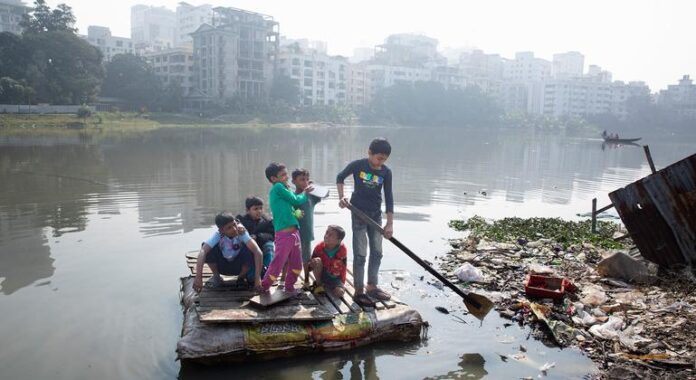
Almost 90 percent of these children live in sub-Saharan Africa and South Asia, but even in high-income countries, 23 percent live on incomes well below those of their peers.

“It doesn’t have to be this way.” UNICEF said Executive Director Catherine Russell. “When governments commit to ending child poverty by implementing effective policies, they can open up a world of possibilities for children..”

The report draws on data from more than 130 low- and middle-income countries, assessing deprivation in six areas: education, health, nutrition, housing, sanitation and water.

Why it matters

Poverty undermines children’s health, development and learning, leading to poorer employment prospects, shorter lifespans and higher rates of depression and anxiety.

UNICEF notes that 118 million children are deprived in at least three of the areas studied. These results come as many governments are reducing their foreign aid. The agency warns that budget cuts could keep six million more children out of school by next year.

This year World Children’s Day theme My day, my rights highlights children’s voices and their lived experiences.

Results

  • Child poverty is most concentrated in sub-Saharan Africa and South Asia.
  • In low-income countries, 65 percent of children do not have access to toilets, increasing their exposure to disease.
  • Deprivation in low- and middle-income countries has fallen from 51 percent in 2013 to 41 percent in 2023, but progress is stalling due to conflict, climate pressures, technology divides and funding cuts.
  • National policies can change outcomes: Tanzania reduced so-called multidimensional child poverty by 46 percent between 2000 and 2023 and Bangladesh by 32 percent, thanks to government-led social protection programs.

How to reduce child poverty

  • Make ending child poverty a national priority.
  • Integrate the needs of children into economic policies and budgets.
  • Provide social protection programs, including cash assistance to families.
  • Expand access to essential services: education, healthcare, water, sanitation, nutrition and housing.
  • Promote decent work for parents and guardians to strengthen household stability.

Originally published at Almouwatin.com

Civilian deaths in Ukraine surge past last year’s toll as winter deepens crisis, Security Council warned

0
Civilian deaths in Ukraine surge past last year’s toll as winter deepens crisis, Security Council warned

“Ukrainian civilians have continued to bear the brunt of the Russian Federation’s escalating aerial campaign,” said Kayoto Gotoh, Europe Director with the UN Department of Political and Peacebuilding Affairs (DPPA).

She briefed the Council against the backdrop of sustained missile and drone strikes, including a barrage on Wednesday night that killed at least 25 people.

Despite the intensifying violence, Ms. Gotoh noted that the UN has supported more than six million people with electricity, heating, water and sanitation services.

She also highlighted last month’s breakthrough by the UN International Atomic Energy Agency (IAEA), which secured agreement from both sides to reconnect the Zaporizhzhia Nuclear Power Plant to the grid.

No region spared

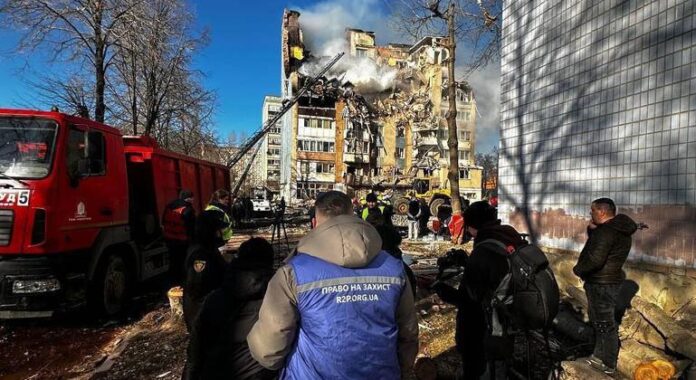
While most civilian casualties occur near the frontline, Russia’s growing use of long-range weapons is exposing more of the country to danger. Describing Wednesday’s assault as among the war’s “deadliest”, Ms. Gotoh said the western regions of Lviv and Ivano-Frankivsk were also struck. “No region of Ukraine is safe,” she warned.

Alarming casualty figures underscore the scale of the crisis. The number of civilians killed in Kyiv by the end of October was nearly four times higher than in all of 2024, and overall casualties nationwide have already exceeded last year’s count.

According to the UN human rights office (OHCHR), 14,534 civilians – including 745 children – have been killed since the war began.

Russia, too, is experiencing rising impacts from the conflict: Ukrainian drone strikes have reportedly killed 392 people, including 22 children, according to Russian authorities. The UN has not been able to verify these figures.

Under strain

Some 3.7 million Ukrainians remain displaced within the country and nearly six million are refugees, said Edem Wosornu, Director of Operations and Advocacy with the UN aid coordination office, OCHA.

This year alone, around 122,000 people have been newly uprooted, mainly from frontline areas.

Humanitarian workers continue to operate under constant threat from shelling, shifting battle lines and other security risks.

“We continue to urge the protection of civilians and civilian infrastructure — including humanitarian and medical personnel and assets,” Ms. Wosornu said.

She warned that severe underfunding of the 2025 humanitarian response plan is already curtailing essential services, leaving 72,000 displaced people without adequate shelter, limiting specialised support for survivors of conflict-related sexual violence, and halting critical programmes for more than 600,000 women and girls.

For full coverage of all the main meetings at UN Headquarters check out our Meetings Coverage Section, and we have live in depth coverage of the key country statements today here on the UN News main page.

Source link