Sunday, September 20, 2026
Home Blog Page 1125

Việt Nam must double down on improving business environment

0
Việt Nam must double down on improving business environment

VIETNAM, March 4 –  

Workers return to work in a footwear factory in southern Việt Nam. VNA/VNS Photo Thanh Liêm

HÀ NỘI — Improving the business environment is among Việt Nam’s top priorities in the future, especially as the country is trying to get the economy back on track, said economists and policymakers at a conference in Hà Nội on Thursday.

Prolonged social and mobility restrictions to check the spread of COVID-19 in recent months had significantly hampered efforts to improve the country’s business environment, said Nguyễn Đình Cung, former head of the Central Institute for Economic Management (CIEM).

As reforms lost momentum there had been signs of resistance coming from the government’s ministries and offices against changes.

“We have witnessed the return of business requirements that were once removed as well as additional requirements put in place,” he said. 

Dr Nguyễn Minh Thảo, head of CIEM’s business environment and competition department, said efforts to improve the country’s business environment had slowed down significantly since the end of 2019.

Thảo said too many commitments had been made on paper by the government but too few had been implemented and reviewed. 

“For example, while local governments and ministries reported an increased number of administrative procedures available online in many cases they have not been able to effectively service businesses,” she said. 

It has been reflected in Việt Nam’s less-than-impressive Economic Freedom score. The country ranked 17th among 40 countries in the Asia–Pacific region with 61.7 points, just 0.01 points above the world’s average.  

Speaking at the conference, deputy minister of planning and investment Trần Duy Đông said the Government was fully committed to the long-term and sustainable improvement of the business environment and considered it a driving force for economic recovery and national development. 

Đông said the Prime Minister’s Office in January approved the Government Decree 02/NQ-CP and authorised funding for a programme designed to speed up the process. The Government had also reiterated its priorities to boost the country’s competitive capacity. 

Thảo, however, said 24 of 26 of ministry-level bodies had just set deadlines to implement reforms. Notably, the Ministry of Culture, Sport and Tourism and Vietnam Chamber of Commerce and Industry had not made public information regarding their action plan. 

Similarly, just 50/ of 63 local governments had reported with the Ministry of Planning and Investment regarding their action plans while 13 others including the localities of Bà Rịa-Vũng Tàu, Bạc Liêu, Đồng Nai, Hà Tĩnh, Hòa Bình, Hưng Yên, Lai Châu, Long An, Quảng Bình, Tây Ninh, HCM City, Trà Vinh and Vĩnh Long had not. 

Commenting on the slow progress, Cung stressed the importance of support measures for the business community, which has been severely battered by the pandemic and is in desperate need of streamlined and less costly services to recover. 

He called on all governmental bodies and offices to double down on their effort to improve the business environment. He suggested no more technical barriers be created while local governments actively review and identify wasteful and costly administrative procedures to be removed immediately. 

Cung said the effort must be concentrated to push ongoing reforms further while stomping out resistance from ministerial offices to changes. There should also not be distinctions and different treatments among domestic and international firms when it comes to administrative reforms. VNS

European Summit of regions and cities: what to look out for on day 2

0
European Summit of regions and cities: what to look out for on day 2

​​​​​​​ The European Summit of regions and cities continues on 4 March with another packed programme of high-level speakers and wide-ranging discussions on the key topics of democracy, inclusion, education and youth. French President Emmanuel Macron is the key speaker of the day, taking part in the plenary session debate on Building the House of European Democracy alongside CoR President Apostolos Tzitzikostas.

The day kicks off with three round table discussions taking place in parallel, focusing on the question of democracy.

At the first roundtable, The building blocks of European democracy, former European Council President Herman Van Rompuy will join the discussion by video link to share the findings of the CoR’s High Level Group on European Democracy. Margaritis Schinas, Vice-President of the European Commission and Guy Verhofstadt MEP, Co-chair of the Executive Board of the Conference on the Future of Europe, will also take part alongside a number of CoR members. The discussion will focus on the state of play of the Conference on the Future of Europe, due to come to end in May, and in whether it will succeed in giving European citizens a much stronger voice in the EU decision-making process. The role of local and regional authorities in the helping to promote European democratic values will also be discussed.

The second roundtable, New ways of representative and participatory democracy in the 21st century, will also look at the Conference on the Future of Europe but with a particular focus on how to involve citizens and their representatives more effectively in the wider democratic process. The CoR has been running a number of citizens’ panels across the EU in association with the Bertelsmann Foundation, and the foundation’s President Ralph Heck will lead the discussion on how to build on the best practices already in place at local and regional level in terms of participatory democracy. Other key speakers include Antonio Tajani MEP, Chair of the Committee for Constitutional Affairs (AFCO) of the European Parliament, and Ahmed Aboutaleb, Mayor of Rotterdam.

Just ahead of International Women’s Day on 8 March, the third roundtable discussion, Democracy in action: Women in local politics will focus more specifically on the role of women in politics. Women remain underrepresented at all levels of government and gender-balanced politics remains as elusive as ever in most European countries. The high-level discussion with some of the EU’s most important female decision-makers will focus on the main barriers to women in political life, and possible solutions, in particular at the local and regional level. The discussion will be led by Sandra Ceciarini, an expert in EU policy and gender participation and former director at the Council of European Municipalities and Regions (CEMR), and will feature among others Élisabeth Moreno, French Minister for Gender Equality, Diversity and Equal Opportunities, Magali Altounian, Vice-President of France’s Region-Sud, Eva Maydell MEP and Gillian Coughlan, Mayor of the County of Cork, Ireland.

Following the roundtable discussions, the third plenary session of the 2022 Summit will continue with the theme of democracy, with French President Emmanuel Macron leading the debate. The discussion on Building the House of European Democracy will also feature interventions from Apostolos Tzitzikostas, President of the European Committee of the Regions, Renaud Muselier, President of Région Provence-Alpes-Côte d’Azur, Vasco Alves Cordeiro, First Vice-President of the European Committee of the Regions, Christa Schweng, President of the European Economic and Social Committee, Dubravka Šuica, Vice-President of the European Commission for Democracy and Demography and Roberta Metsola​, President of the European Parliament. The plenary session will end with the adoption of the Manifesto of regional and local authorities for European democracy, encapsulating the key outcomes of the summit. 

The afternoon’s discussions will continue with the wider issue of participation and inclusion in European democracy with a particular focus on youth and education. Two parallel roundtables will focus on Democracy, education and culture in the digital age and Youth participation in the revival of democracy and the promotion of European values.

The first roundtable will be led by Dr Jonnie Penn, Harvard and Cambridge academic and a former Google Fellow, and will feature a video intervention from Mariya Gabriel, European Commissioner for Innovation, Research, Culture, Education & Youth. Political speakers include Aleksandra Dulkiewicz, Mayor of Gdansk and Hedi Ramdane, Deputy Mayor of the Summit’s host city, Marseille, while Capucine Tuffier, Policy Manager for Meta Public, will bring the perspective from the world of social media. Discussion will centre on how digital platforms can support young people’s participation in democratic life, especially at local level, and whether digitalisation is improving inclusion and helping to increase the participation of young people in local and regional politics.

The second roundtable also focuses on the issue of the participation of young people in democracy. Key issues to be discussed will be how to enhance the participation of young people at the local and regional level, which is often a starting point for more general political and civic activism. And will encouraging more young people to take part lead to new forms of participatory democracy at local and regional level and beyond? The CoR runs a programme for Young Elected Politicians (YEPs) to encourage and support the involvement of young people in political and democratic life, and the discussion will feature a number of YEPs as well as key interventions from Evelyn Regner, Vice-President of the European Parliament and Jean Rottner, President of France’s Grand-Est Region.

The final plenary session of the Summit will link the two themes of the day with a focus on The Future of European Democracy: Youth engagement and European values. Feedback from the youth roundtables will be discussed with Silja Markkula, President of the European Youth Forum, before the Summit is brought to an end by co-hosts Apostolos T​zitzikostas, President of the European Committee of the Regions​​ and ​Renaud Muselier, President of the Provence-Alpes-Côte d’Azur region.

BIC: Re-envisioning the future of work | BWNS

0
BIC: Re-envisioning the future of work | BWNS

BIC NEW YORK — The unprecedented challenges posed by the pandemic have led many people throughout the world to reflect deeply on how they live and work. This has brought into sharper focus questions about the nature and purpose of work in a post-COVID world, prompting many discussions at the national and international levels on issues related to workplace culture.

“We need to rethink the purpose of work, which over the last few years has come to be seen by many people as being more than about acquiring material means or maximizing profits,” said Liliane Nkunzimana, a representative of the Bahá’í International Community (BIC), in her opening remarks at a discussion forum titled “A Future that Works: Consulting Across Generations to Build Prosperity.”

Slideshow
4 images
Participants of the BIC discussion forum included: Stefano Guerra (top-middle), an attaché of the Permanent Mission of Portugal to the United Nations; Erica Dhar (top-right), Director of Global Alliances for AARP International and member of the NGO Committee on Ageing at the UN; policymakers, and representatives of the BIC.

The online event, which was jointly hosted by the New York Office of the BIC and the NGO Committee on Ageing during the 60th session of the United Nations’ Commission for Social Development, provided a unique forum for a discussion on principles around which work will need to be re-envisioned.

“Many conversations about the future of work are often focused on the impact of technology on work environments. Far less attention is given to identifying and applying values and principles that can enable new possibilities, principles such as unity, justice, collaboration, selflessness, and consultation,” said Ms. Nkunzimana.

Slideshow
4 images
A recording of this event can be viewed
here

.

The application of such principles, however, is complex. In one of its previous statements, the BIC has noted that embracing these values would challenge widely-held assumptions underpinning current economic models—for example, that competition drives progress and that human beings perform best when promoting their own self-interests rather than working toward the common good.

Despite the various obstacles in re-envisioning the future of work, participants noted that the generosity and cooperation shown by many people, especially young people, in their personal and professional lives in response to COVID recovery efforts has provided new insights into human nature and a hopeful outlook.

The BIC plans to continue this conversation through a series of monthly forums on youth and social transformation. A recording of this event can be viewed here.

Ending pandemic, building resilience, key to sustainable development: UN deputy chief

0
Ending pandemic, building resilience, key to sustainable development: UN deputy chief
Ending the acute phase of the COVID-19 pandemic and building resilience against the next outbreak will be critical to achieving the Sustainable Development Goals (SDGs), Deputy Secretary-General Amina Mohammed said in remarks to a UN conference that opened in Kigali, Rwanda on Thursday. 
The Africa Regional Forum on Sustainable Development is being held to review progress towards implementing the SDGs and the African Union’s (AU) Agenda 2063.

The three-day meeting was convened by the UN Economic Commission for Africa (ECA). 

Ms. Mohammed outlined five priorities to guide the deliberations, starting with pandemic response.

Vaccination is critical 

“Vaccinating 70 per cent of the world by July this year remains our primary objective,” she said. 

“We must also build stronger and more resilient health systems by investing in primary health care and health surveillance systems, as well as greater production of vaccines, diagnostics and treatments.” 

Increase climate investment 

Turning next to the climate crisis, the UN deputy chief called for scaling up investments to protect people and ecosystems at the frontlines of this global emergency.    

She said developed countries must urgently deliver on their commitment to double adaptation finance to at least $40 billion a year by 2025, a pledge made at the COP26 UN climate change conference in Glasgow last year.  

At the same time, regional and multilateral development banks must scale up their renewable energy and resilient infrastructure portfolios, as well mobilize more private finance. 

Energy, food systems, connectivity 

Her third point focused on the need to “supercharge” just transitions in energy, food systems and digital connectivity. 

“We need a just energy transition that allows Africa to access clean and affordable energy while protecting livelihoods,” said Ms. Mohammed.  

She cited a partnership to support South Africa, which was launched at COP26, which has set a valuable precedent for international collaboration. 

Ms. Mohammed said that sustainable and resilient food systems guarantee access to healthy diets and nutrition, while restoring and protecting nature.  Meanwhile, affordable connectivity and digital skills are needed to create more job opportunities for young people.   

FAO/Sebastian Liste

A female farmer stands in front of seed bags stored in a warehouse in a agri-business centre in Sierra Leone.

Support education recovery 

For her fourth point, the Deputy-Secretary-General underlined the need for education to recover from the pandemic. 

“In developing countries especially, the pandemic risks causing a generational catastrophe,” she warned. 

In September, the UN Secretary-General is convening a Summit on Transforming Education. 

Ms. Mohammed said the event will renew commitment to education as a pre-eminent public good, in addition to mobilizing action and solutions. 

Accelerate gender equality 

Her final priority area addressed the need to accelerate gender equality and economic transformation. 

“Over 70 per cent of people across Africa – the majority of them women – continue to earn their livelihoods in the informal economy, which is an afterthought in economic strategies and metrics,” she said. 

Therefore, robust and decent job creation must be matched by the achievement of universal social protection, according to Ms. Mohammed. 

Last September, the UN and the International Labour Organization (ILO) launched the Global Accelerator for Jobs and Social Protection, which she said is central to these efforts.  

The Accelerator aims to create 400 million new jobs in the care, green, and digital sectors, and expand protection to half of the global population by 2030.  

Read books not required for class

0
Read books not required for class

As midterms approach, stu­dents often feel like they don’t have time to do any­thing but go to classes, eat, and study – and maybe sleep, if they can fit it in.

At this point in the semester, clubs, exercise, and social­izing take con­sid­erable effort to work into schedules. One extracur­ricular that’s worth the effort, however, is reading books outside of class.

Whether it’s “The Republic” in phi­losophy or each of a dozen dif­ferent works in Great Books classes, Hillsdale stu­dents read plenty of books. 

Though we’re taught to appre­ciate the value of reading, when was  the last time you read a book for yourself?

Making time for leisure reading is both valuable and enjoyable. There is some­thing unique about reading for pleasure that sets itself apart from the hours of reading you do for class every night. 

As you pick your way through 40 pages of “The Odyssey” for class at 9 a.m. tomorrow, each page denser than the last, you aren’t really reading crit­i­cally, or looking for depth of under­standing. Unless you’re writing a paper on it, you’re looking for a surface-level take that will be suf­fi­cient to write your dis­cussion post about. Maybe you’ll even raise your hand in class and make a point or ask about some­thing arbitrary. 

Even if you would enjoy the readings under dif­ferent cir­cum­stances, there’s some­thing stressful about reading because you have to scan a text for the kind of minor details that tend to appear on quizzes, which takes nearly all the would-be joy out of it.

Leisure reading, however, is entirely dif­ferent. It’s right there in the name. Though you may not have expe­ri­enced it since middle school, reading can still be fun. You may even learn some­thing from it. 

You just have to give yourself the oppor­tunity to enjoy it again.

Devoting just 10 minutes to leisure reading before bed can make a big dif­ference. It’s the perfect oppor­tunity to take a deep breath and step away from your mountain of respon­si­bil­ities, not to mention allowing you to read books your pro­fessors would never dream of assigning in class.

It will also decrease your stress. According to a survey at the Uni­versity of Saskatchewan, many of the more than 200 health sci­ences stu­dents sur­veyed reported ben­efits such as “reduced stress, and improved thinking and com­mu­ni­cation skills.”

It may also help your grades. In the fall semester of 2020, I made sure to read five pages from a book of my choice, in this case, Raymond E. Feist’s “Shadow of a Dark Queen” before bed every night, whether I was going to sleep at 10:30 p.m. or 3 a.m. Despite taking the most credits I’ve ever had, I earned my highest GPA to date. 

UN health agency updates guidelines on COVID-19 therapeutics

0
UN health agency updates guidelines on COVID-19 therapeutics
The World Health Organization (WHO), for the first time, included an oral antiviral drug in its COVID-19 treatment guidance.
The updated “living guidelines” on related therapeutics now include conditional recommendations on the medication, molnupiravir, the UN agency announced on Thursday.

Citing concerns and data gaps, WHO advanced that molnupiravir should be provided “only to non-severe COVID-19 patients with the highest risk of hospitalization,” WHO alerted.

Those are typically people who have not received a COVID-19 vaccination, older people, people with immunodeficiencies and those living with chronic diseases.

Recommendations for pregnant and breastfeeding women

WHO also recommended that children, and pregnant and breastfeeding women should not be given the drug, adding that people who take molnupiravir should have a contraceptive plan.

“Health systems should ensure access to pregnancy testing and contraceptives at the point of care,” the agency underlined.

According to the press release, under the care of a health provider, the oral tablet drug is given as four pills (totaling 800 mg) twice daily for five days, within five days of symptom onset. Link here, pls

“Used as early as possible after infection, it can help prevent hospitalization,” the UN health agency said.

New data from trials

The recommendation was based on new data from six randomized controlled trials involving 4,796 patients – the largest dataset on this drug so far, according to WHO.

Along with a recommendation on molnupiravir, the ninth update of WHO’s living guideline on therapeutics also includes further information on casirivimab-imdevimab, a monoclonal antibody cocktail.

Ineffective drug against the Omicron variant

Based on evidence that “this combination of drugs is ineffective against the Omicron variant of concern,” the UN health agency now recommends that it is only given when the infection is caused by another variant.

The press release also stated that although molnupiravir is not widely available, steps have been taken towards increasing access, including the signing of a voluntary licensing agreement.

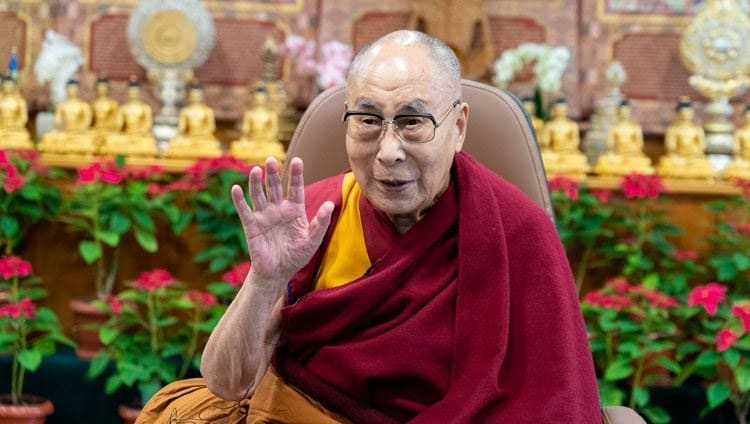
His Holiness the Dalai Lama greets Tibetans on Tibetan New Year, Losar 2149

0
His Holiness the Dalai Lama greets Tibetans on Tibetan New Year, Losar 2149
2021 12 01 Dharamsala N05 SA95124 His Holiness the Dalai Lama greets Tibetans on Tibetan New Year, Losar 2149

His Holiness the 14th Dalai Lama

His Holiness the Dalai Lama greeted Tibetans on 2149th Tibetan New Year (Losar) from his residence in Dharamshala.

Watch the greeting video here.

“Losar, our New Year, is approaching. Perhaps it is the custom of countries everywhere to greet each other with “Happy New Year!”. So, we Tibetans also look forward to celebrating the New Year. We do extra shopping for Losar. Family and friends get together wearing new clothes and ornaments. We feel refreshed and restored at Losar. New Year is now just around the corner and I am hopeful that on this occasion, Losar will be pleasant, joyful and comfortable for us all, for those of us in exile, but most especially for our fellow Tibetans throughout the three provinces of the Land of Snows. Anyway, many changes are taking place. People from abroad also take interest in our culture and traditions. As part of Tibetan tradition, we arrange Chemar (butter-roasted barley flour) and other offerings on the altar for Losar. We greet people with “Losar Tashi Delek!” “Good Luck for the New Year!”. Isn’t it rare for Tibetans to get into fights on New Year’s Day? Everybody id generally festive and in good spirits on New Year’s Day. All Tibetans, whether we are living in exile, or in other countries abroad, and especially our fellow Tibetans inside Tibet, all of us, people of the Land of Snows, are the ones-to-be-tamed by Arya Avalokiteshvara in whom we place our faith and trust, and to whom we pray. As for me, as we say in this prayer:

In the land encircled by a fence of snow mountains,

the source of all happiness and benefit

is Tenzin Gyatso, who is Lord Avalokiteshvara.

May he live until cyclic existence ends.

I live as the physical, verbal and mental representative, respectively, of Arya Avalokiteshvara’s holy body, speech and mind. For many years this is how I have conducted myself and I am confident that I will remain like this for the next decade or more. Since Arya Avalokiteshvara is the deity of compassion, it is very important for all Tibetans to cultivate compassion. Please keep this in mind and do your best to be good human beings. Tashi Delek”

Civil protection work in view of climate change: Council adopts conclusions

Civil protection work in view of climate change: Council adopts conclusions

The Council today adopted conclusions calling for the adaptation of civil protection to extreme weather events resulting from climate change. Such events are becoming more frequent, intense and persistent. The EU and its member states need to take action. These conclusions are a step in this direction and seek to enhance the EU’s resilience.

In its conclusions, the Council calls for the adaptation of civil protection systems to the consequences of climate change, in terms of prevention, preparedness, response and recovery. Member states and the Commission are encouraged to invest in research and innovation, including through the EU civil protection knowledge network, in order to better detect and anticipate extreme climate risks and to improve civil protection capacities. The conclusions also promote the development of dedicated training programmes and exercises.

Member states are encouraged to develop adequate prevention and preparedness actions, including ensuring the availability of sufficient capacities at national level to tackle risks resulting from climate change, such as forest fires and flooding. Additionally, member states and the Commission are invited to pursue the development of EU civil protection capacities based on current and forward-looking scenarios and taking into account overall gaps.

The conclusions also call on member states to support the preparedness of the population through information, education, training and exercises. They pay special attention to the role of citizens’ participation and volunteers in civil protection initiatives, noting the need to reinforce the resilience of the population.

Russia and Belarus finally excluded from the Paralympic Games

0
IPC logo

The International Paralympic Committee had initially accepted to make compete the parasportives under neutral banner. But this has just changed

This Thursday, March 3 the International Paralympic Committee (IPC), on the eve of the opening of the competition in China announced that the Russian and Belarussian parasporters will finally be excluded from the Paralympic Winter Games of Beijing.

In a statement, the IPC explains this change: “teams and athletes are now threatening not to participate, jeopardizing the chances of success of the Beijing 2022 Paralympic Winter Games”.

Andrew Parsons, IPC President, said: “At the IPC we are very firm believers that sport and politics should not mix. However, by no fault of its own the war has now come to these Games and behind the scenes many Governments are having an influence on our cherished event.

“The IPC is a membership-based organisation, and we are receptive to the views of our member organisations. 

Ukrainian invasion: News restrictive measures against 26 individuals and alignment of certain third countries

Declaration by the High Representative on behalf of the EU concerning restrictive measures

Declaration by the High Representative on behalf of the EU concerning restrictive measures in respect of actions undermining or threatening the territorial integrity, sovereignty and independence of Ukraine on the alignment of certain third countries

On 28 February 2022, the Council adopted Council Decision (CFSP) 2022/3371.

The Council decided to add 26 individuals and one entity to the list of persons, entities and bodies subject to restrictive measures set out in the Annex to Decision 2014/145/CFSP.

The Candidate Countries North Macedonia, Montenegro and Albania2, the country of the Stabilisation and Association Process and potential candidate Bosnia and Herzegovina, and the EFTA countries Iceland, Liechtenstein and Norway, members of the European Economic Area, as well as Ukraine align themselves with this Council Decision.

They will ensure that their national policies conform to this Council Decision.

The European Union takes note of this commitment and welcomes it.


1.Published on 28.02.2022 in the Official Journal of the European Union no. L 59, p. 1.

2.North Macedonia, Montenegro and Albania continue to be part of the Stabilisation and Association Process.