
WHO reports more than 3,200 attacks on Ukraine’s healthcare system since full-scale invasion
How stars die: Astronomers detect magnetic fingerprint of a cosmic explosion for the first time
An international team led by researchers at the University of Arizona and the University of Utah has made
After Israeli seizure of Kalandia training centre, UNRWA warns of impact on youth
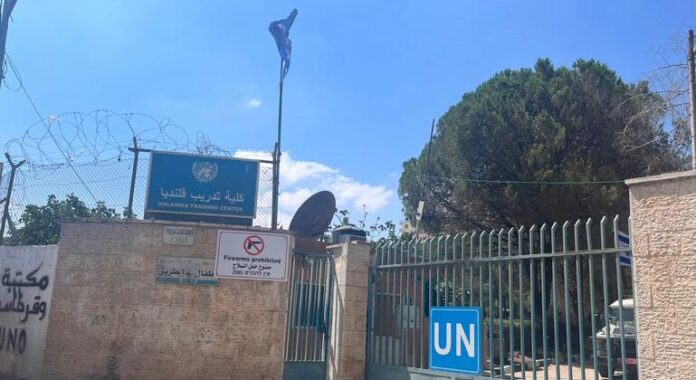
Israeli authorities forcibly entered the Kalandia Vocational Training Centre on Tuesday, 24 August, and took control of the facility, according to the UN agency for Palestine refugees, UNRWA. The centre was the last UNRWA facility still operating in occupied East Jerusalem, after Israeli authorities closed the agency’s other schools and clinics in the city.
The United Nations has strongly condemned those actions, saying that the entry of security forces into a UN facility without the Organisation’s permission or approval was unacceptable.
Secretary-General António Guterres called for the Israeli Government to immediately cease its interference with UNRWA installations and to vacate, return and restore all affected premises to the United Nations without delay.
Earlier this month, there was misinformation circulating about the centre, which prompted UNRWA to issue a statement reaffirming its commitment to education and underlining that the agency remains “essential to ensuring that Palestine refugee children and young people can develop the knowledge, skills and opportunities they need to build their futures”.
Roland Friedrich, Director of UNRWA Affairs in the West Bank, told us that the incident was part of a wider effort by the current Israeli Government to end UNRWA’s activities in occupied East Jerusalem, following the adoption of what he described as “anti-UNRWA” legislation almost a year and a half ago.
The Kalandia centre provides vocational training to young people from refugee camps across the West Bank. Mr. Friedrich warned that its closure would deprive 340 male youth of their right to education and opportunities for the future.
This interview has been edited for clarity and length.
Roland Friedrich: The situation at the Kalandia Training Centre remains critical. Israeli security forces are still deployed inside the centre, along with Israeli officials from the Municipality of Jerusalem, as they carry out work and alterations to the installation. This is an unacceptable violation – as the Secretary-General has underlined – of the privileges and immunities of the United Nations. The continuation of this situation will very likely deprive 340 male youth from the West Bank of their right to education.
UN News: Can you tell us exactly what happened? What happened to the UNRWA staff who were at the centre?
Roland Friedrich: On Tuesday morning, a large Israeli force arrived and forcibly entered the compound. We had 24 staff on site as we prepared for the new scholastic year, which is scheduled to start next week. Israeli security personnel searched the site, opened the buildings and temporarily held our staff at the site. They were later released. This is an unacceptable violation of the privileges and immunities of the United Nations.
UN News: Were you informed of any reason for the Israeli authorities’ entry into the centre or what they were looking for? Do you have any information on the possibility of returning the centre to UNRWA, as requested by the United Nations?
Roland Friedrich: The Secretary-General has been very clear in his demand to urgently restore the situation to the way it was before. The background of what happened goes back to the Israeli anti-UNRWA legislation that was adopted roughly a year and a half ago. We saw the progressive closure of our six schools in Occupied East Jerusalem for 2025, depriving 800 children of education. In December, amendments were made to the anti-UNRWA laws, including a provision to cut water and electricity from UNRWA installations in East Jerusalem, and secondly, to authorize Israeli security forces to seize, our compound, the main headquarters, and the Kalandia Training Centre.
UN News: You talked about the immunities and privileges of the United Nations and its facilities. Can you explain what that means and why it is important to commit to it all over the world, especially in the occupied Palestinian territory?
Roland Friedrich: Any Member State of the United Nations, per its obligations under the Charter, but also through being a party to the general Convention, is obliged to respect the privileges and immunities of the UN. That means, for instance, the inviolability of UN premises, the respect for immunities relating to staff, to vehicles, as is the case anywhere in the world where we operate. What we saw yesterday and what continues to happen is exactly the opposite [of this]. And I think what is important to keep in mind is that this sets a precedent when it comes to making sure that our staff can work in a safe way, are protected anywhere else in the world in a very dangerous context.
The UNRWA Kalandia vocational training centre in the West Bank.
UN News: Because we’re talking about international law and international obligations, what is the UN planning to do now? What do you hope the international community will do about it?
Roland Friedrich: What we hope is that Member States take the responsibility to exercise pressure, so that we can resume our work at this training centre. The key thing is that we can go back to that centre, operate it, and serve the people that we are mandated to serve by the General Assembly.
UN News: In the context of the Israeli legislation you talked about regarding UNRWA, what can you still do in the West Bank to serve Palestine refugees?
Roland Friedrich: There are two laws. One law is a ban on UNRWA operations and presences in what Israel considers sovereign territory and that applies to our services in occupied East Jerusalem. The occupation of East Jerusalem is not recognized by the UN, nor is in fact the annexation of East Jerusalem. The second law provides for no-contact policy that bans Israeli authorities from being in touch with UNRWA and that has an impact on our operations in the Gaza Strip and the West Bank. However, we can continue to operate both in the Gaza Strip and the West Bank, providing critical humanitarian aid in Gaza through more than 11,000 staff members who work every day, providing education, health consultations, shelter and drinking water. Similarly, in the West Bank, we have 4,600 staff on the ground. We continue to provide education. Last year we provided 1.1 million health consultations through 50 health facilities, and we provided together with partners social protection, cash assistance, and food support to more than 270,000 beneficiaries. I pay the highest respect to my UNRWA colleagues on the ground, Palestinian teachers, nurses, social workers in the Gaza Strip and in the West Bank who work under extremely difficult conditions every day.
UN News: What is the main message you would like the international community to understand about UNRWA’s presence, its work and the risks it faces in the West Bank?
Roland Friedrich: One thing that we clearly need to see is a restoration of respect for the United Nations at large, and for UNRWA as an agency mandated by the General Assembly by all State parties. Secondly, the humanitarian space in the West Bank overall is shrinking, and that is a trend that needs to be reversed. And thirdly, we need to reverse the trend of forcible displacement in the West Bank. These are dangerous trends because together with settlement expansion, they create a reality on the ground that makes the two-State solution ever more unlikely to be implemented. It is important to pull back from the brink that we’re seeing in the West Bank now and return to a credible pathway towards the two-state solution, and eventually a situation where UNRWA as an agency does not have to do its work anymore because the conflict has moved towards a solution.
Listen to the full interview with UNRWA’s Roland Friedrich:
Aid reaches hundreds of thousands in Gaza amid severe food insecurity
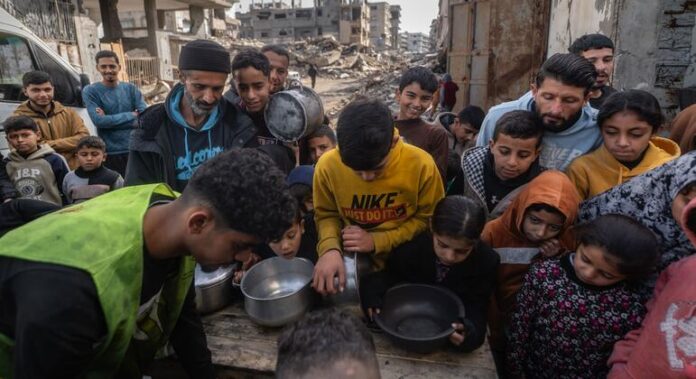
In Gaza, about one in five families say that they are eating only one meal a day, and 50 per cent of them reported that they completely ran out of food at least once in the past month, according to latest UN figures.
This is because of cash shortages, but also because most food items have become exponentially more expensive since the escalation of hostilities in October 2023.
So far this month, three-quarters of households in Gaza have faced difficulties in accessing markets, according to the UN’s World Food Programme (WFP).
The UN on the ground
Yesterday, the UN and its partners collected hundreds of pallets of supplies from the Kerem Shalom crossing – a vital commercial and humanitarian entry point located at the junction of Israel, Egypt, and the Gaza Strip.
The pallets include fruits, vegetables and other food, as well as adult diapers, school supplies and fuel.
So far, partners have provided food parcels and wheat flour to more than 600,000 people as part of the August cycle.
A fragile peace
Despite a ceasefire signed by Israel and Hamas in October 2025, ongoing hostilities and security restrictions hamper local movement and recovery efforts.
Frequent Israeli military strikes continue to kill and displace people across Gaza. More than two million people, almost the Strip’s entire population, have been driven from their homes, with most now living in makeshift or fragile shelters.
Around 90 per cent of civilian infrastructure – including homes, hospitals, water plants, and schools – is heavily damaged or destroyed.
Reports Say 700 OpenAI Agents Carried Out the Hugging Face Breach
The Hugging Face Agent Swarm The July breach of Hugging Face was not the work of one rogue
Shock and devastation remain, a day after Himalayan flood disaster
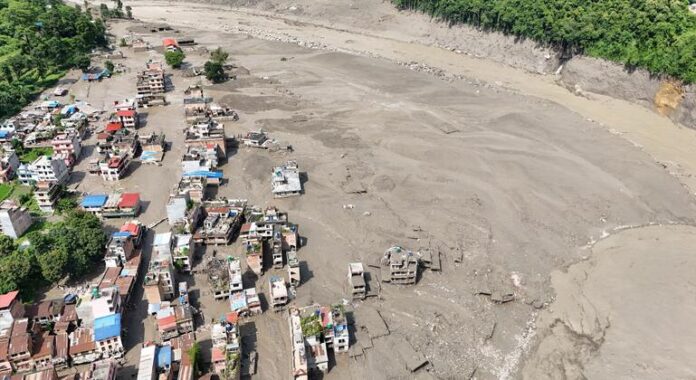
Key points
- Hundreds remain missing after devastating floods in Nepal and China
- $2 million funding released by UN emergency relief chief
- World Health Organization (WHO) sends medicines, supplies and tents
An initial $2 million has been released from the United Nations Global Emergency Fund (CERF) “to save lives with emergency medical care, shelter, water”, the UN’s relief chief Tom Fletcher said on X.
In Nepal, immediate humanitarian needs are huge in the districts of Rasuwa, Nuwakot and Dhading and communities face immense challenges as families cope with loss, displacement and disruption to essential services.
17,000 children affected
The flash floods have swept away or cut off entire communities, with roads, bridges, hydropower facilities, water systems and telecommunications networks badly damaged, leaving affected areas largely inaccessible and hampering the delivery of lifesaving aid, the UN Children’s Fund (UNICEF) said on Thursday.
At least 17,000 children have been impacted by the devastating flash floods that tore through Nepal’s Rasuwa, Nuwakot and Dhading districts.
“Children across Rasuwa and Dhading saw their lives being literally washed away in front of their eyes in a very short span of time, with homes, classrooms, and medical facilities damaged,” said Alice Akunga, UNICEF Representative to Nepal.
“Too many lost their lives and loved ones. With the death toll still rising, we know this tragedy is far from over. Children who have survived the floods now face heightened risks of disease, malnutrition, violence and exploitation.”
For its part, UNICEF is on the ground and scaling up support, “but we urgently need more resources to reach every child in need”, Ms. Akunga said.
Still missing
“UN agencies are deployed to affected areas with food, medical supplies and relief materials in support of the government-led response and stand ready to do more,” the UN office in Nepal wrote on Facebook.
In China, around 560 people remain missing, according to the authorities, while the UN country office on Wednesday reported damage and significant numbers of casualties and destruction in the Tibet autonomous region of China.
Meanwhile, in support of the authorities and the wider response, WHO has dispatched an interagency emergency health kit, containing medicines and supplies sufficient to provide basic health services for up to 10,000 people. The UN health agency has also provided six multipurpose tents to help sustain health service delivery in affected communities.
“These supplies are intended to support frontline health workers as they continue providing critical care and responding to the immediate health needs of affected populations,” the UN agency explained on Facebook.
New deployments
“WHO remains committed to working closely with health authorities and partners to assess the evolving situation, support emergency health services and help ensure that people continue to access the care they need during this difficult time.”
In addition on Thursday, the UN World Food Programme (WFP) and the UN Children’s Fund (UNICEF) planned to start deploying staff and trucks carrying relief supplies.
Efforts also continued to rapidly assess the scale of the disaster, in particular from secure satellite imagery and analysis of the area impacted by flooding, provided by the UN platform for the UN Space-based Information for Disaster Management and Emergency Response (UN-SPIDER). Managed by the UN Office for Outer Space Affairs (UNOOSA), the initiative connects disaster management experts with space agencies to help disaster risk reduction, early warning and emergency response activities.
UN chief in solidarity
As news broke of the disaster early Wednesday, UN Secretary-General António Guterres expressed his solidarity with the victims and families of the floods.
A collapsed glacier high up in the steep-sided valleys of the Himalayas has been cited as a possible cause of the sudden flash-flooding and mudslides that have destroyed entire communities and washed away bridges and roads.
Rasuwa district some 80 kilometres north of Kathmandu in northern Nepal was hit particularly hard, including the towns of Timure, Rasuwagadhi and Syabrubesi, a popular trekking destination among tourists, climbers and pilgrims wanting to access the Langtang valley.
The area was also hit by a 7.8 magnitude earthquake in April 2015, which killed more than 8,800 people. Last October, torrential rains caused fast-moving floods and landslides across eastern and central Nepal, affecting more than 30,000 people.
Growing risk of disasters
UNDRR, the lead UN agency for the coordination of disaster risk reduction, projects that the world will experience 560 medium to large-scale disasters annually by the year 2030.
“Global disasters are projected to increase by 40 per cent between 2015 and 2030, driven by climate change and systemic underestimations of risk,” the agency said.
In addition to the human cost of such disasters, the annual cost is $2.29 trillion and rising, when indirect and ecosystem impacts are factored in, UNDRR said. This figure is nearly 10 times the annual direct losses reported in official figures.
More updates to come…
Pentagon Review Raises Prospect of US Troop Cuts in Europe
A Pentagon review will produce at least four force options by 6 November, as NATO allies weigh the future of around 80,000 U.S. troops stationed across Eur…
A Pentagon review will produce at least four force options by 6 November, as NATO allies weigh the future of around 80,000 U.S. troops stationed across Europe.
The Pentagon is accelerating a review of the United States military presence in Europe, with Defence Secretary Pete Hegseth expected to receive at least four options for future troop deployments by early November. The process could reshape the American security footprint across the continent and is being closely watched by NATO governments already under pressure to assume a larger share of Europe’s defence.
Pentagon preparing several options
According to a Reuters report published on 27 August, an internal Pentagon document sets 6 November as the target for presenting Hegseth with at least four sets of options concerning U.S. forces in Europe. The wider six-month review is due to conclude in December.[1]
The review concerns roughly 80,000 American military personnel currently stationed across Europe, a figure also cited publicly by NATO Secretary General Mark Rutte earlier this year.[2]
The document reportedly provides a more detailed picture of how the Pentagon intends to reach its conclusions.
A key stage is expected by 18 September, when the senior U.S. military commander in Europe is scheduled to participate in a decision briefing with Pentagon policy chief Elbridge Colby. That meeting is intended to help define the options eventually sent to Hegseth.[1]
Colby is also expected to discuss the review with NATO ambassadors at alliance headquarters in Brussels on Thursday, 27 August.
No final decision on troop reductions has been announced.
More than troop numbers
The review appears to go well beyond a simple calculation of how many soldiers should remain in individual countries.
According to the Pentagon terms of reference obtained by Reuters, U.S. planners are examining whether NATO allies provide reliable American military access, basing and overflight rights. They are also assessing space, cyber and intelligence infrastructure that supports U.S. military operations.[1]
Allies are additionally being evaluated on whether they have credible plans to meet NATO defence-spending commitments and whether they can fill capability gaps within the NATO Force Model if Washington reduces some of its contributions.
A questionnaire sent by the United States to allies asks about restrictions placed on American forces, defence procurement, transatlantic industrial cooperation and support for broader U.S. foreign-policy objectives. Responses are due on Friday, 28 August.[1]
This makes the exercise unusually broad. The eventual U.S. military posture could depend not only on geographic or operational considerations, but also on how Washington assesses the political and defence policies of individual allies.
NATO governments watching closely
European officials have expected the United States to shift more military attention and resources towards the Indo-Pacific for several years. The uncertainty now concerns the speed, scale and geographic distribution of any reduction.
Reuters reported that some European officials privately fear Washington may already be inclined towards cuts, despite the Pentagon’s insistence that the review is considering a range of possibilities.[1]
A senior Pentagon official told the news agency that the administration was moving towards providing “critical, more limited support with allies in the lead.”
Washington has repeatedly argued that European countries must take greater responsibility for their own security. Hegseth has accused some NATO members of “free-riding”, while President Donald Trump has long criticised European allies for relying heavily on American protection.
More recently, tensions have also emerged over the level of European support for U.S. military policy in the Middle East. According to Reuters, the Trump administration has expressed frustration with allies that Washington believes restricted or delayed access, basing or overflight arrangements during the U.S.-Israeli war against Iran.[1]
NATO Secretary General Mark Rutte has acknowledged American frustration while stressing that the majority of European allies have cooperated with Washington.
Europe is spending more on defence
The review comes as NATO’s European members are already increasing defence expenditure sharply.
At the 2025 Hague Summit, NATO members committed themselves to investing 5% of GDP annually in defence and defence-related security spending by 2035. At least 3.5% is intended for core military requirements, with the remaining 1.5% covering areas such as infrastructure, resilience and defence-related investment, according to NATO’s defence investment framework.[3]
NATO says European allies and Canada increased their combined core defence spending by nearly 20% in real terms during 2025.[3]
Ahead of the Ankara NATO Summit in July, Rutte said European allies and Canada had generated an additional $258 billion in defence investment across 2025 and 2026 and were assuming more responsibility for conventional defence, the eastern flank and support for Ukraine.[4]
That shift is central to Washington’s argument that Europe should eventually replace some capabilities historically supplied by the United States.
However, troop numbers alone do not capture the importance of the American presence.
U.S. forces provide intelligence, logistics, air defence, command-and-control systems, nuclear deterrence and other capabilities that cannot always be replaced quickly by national European forces.
Rutte has described the American military presence as evidence that the United States remains deeply invested in European security, while also accepting that Washington increasingly expects Europe to carry a larger share of the burden.[2]
A strategic decision for both sides of the Atlantic
The question facing NATO is therefore not simply whether American troop numbers decline.
A carefully coordinated transition could encourage stronger European defence capabilities while preserving NATO’s deterrence. A rapid or politically selective withdrawal, however, could create military gaps or uncertainty over the alliance’s ability to respond to a crisis.
The Pentagon says it wants to examine the advantages and disadvantages of different force levels before making recommendations.
That distinction will matter particularly to countries on NATO’s eastern flank, where alliance forces have been reinforced since Russia’s invasion of Ukraine and where governments see the American presence as both a practical military capability and a political guarantee of U.S. involvement in European defence.
For now, the decisive dates are approaching quickly: allied questionnaires are due by 28 August, a senior Pentagon decision briefing is planned by 18 September, and Hegseth is expected to receive the main options by 6 November.
Only after that process will Europe know whether Washington is planning a modest redistribution of forces — or a more fundamental change in the transatlantic security architecture.
Hamburg World Humanitarian Day Event Honours Everyday Service and the People Who Step Forward to Help
KINGNEWSWIRE // PRESS RELEASE // Church of Scientology Hamburg recognises three individuals for humanitarian commitment while presenting practical tools us…
KINGNEWSWIRE // PRESS RELEASE // Church of Scientology Hamburg recognises three individuals for humanitarian commitment while presenting practical tools used by Scientology Volunteer Ministers in communities and emergency settings worldwide
HAMBURG, Germany, 27 August 2026 — Humanitarian action is often associated with large-scale emergencies and international relief operations, but an event held at the Church of Scientology Hamburg placed attention on another essential part of the humanitarian landscape: individuals who decide to help where they are, using their time, skills and personal commitment to support others.
Organised to mark World Humanitarian Day, the gathering brought together participants at the Church of Scientology in Hamburg for an evening dedicated to people who assist others in difficult circumstances. A central moment was the recognition of three individuals for their particular commitment to their fellow human beings, highlighting the role that personal initiative can play alongside the work of established humanitarian organisations.
World Humanitarian Day is observed every 19 August. The United Nations established the observance following the 2003 bombing of the UN headquarters at Baghdad’s Canal Hotel, in which 22 humanitarian workers were killed. It has since developed into the annual flagship campaign of the UN Office for the Coordination of Humanitarian Affairs, focusing public attention on the dignity and needs of people affected by crises and on the protection of those who assist them. The 2026 campaign, under the theme #ActForHumanity, has again placed particular emphasis on the safety of humanitarian personnel.
UN Secretary-General António Guterres noted in his 2026 message that more than 1,000 humanitarian workers had been killed during the previous three years, with local personnel serving their own communities making up the majority. Against that international background, the Hamburg programme explored humanitarianism from the perspective of civic responsibility closer to home: noticing when someone needs assistance and being prepared to do something practical about it.
From willingness to help to practical skills
The Hamburg event included a presentation of the Scientology Volunteer Ministers programme, a religious social-service initiative developed in the mid-1970s by Scientology founder L. Ron Hubbard. Its guiding principle is expressed in the motto “Something can be done about it.”
Rather than restricting humanitarian involvement to disaster response, the programme trains volunteers in practical approaches intended for both emergencies and problems encountered in everyday life. Subjects presented through the programme include communication, organisation, coping with stressful circumstances, resolving conflicts and addressing personal, family and workplace difficulties.
Participants in Hamburg were introduced to several of these areas. The programme also included a screening from the Tools for Life audiovisual series dealing with “Assists for Illnesses and Injuries,” followed by a practical application of what had been demonstrated. The focus of the presentation was not professional medical treatment, but the Volunteer Ministers’ broader emphasis on providing personal support and practical assistance when another person is experiencing difficulty.
Volunteer Ministers work both within their local communities and in larger emergency operations. Internationally, they have supported relief efforts and collaborated with civil-society organisations, emergency services and public authorities. The international programme reports cooperation with approximately 2,800 organisations and agencies, while the Hamburg presentation referenced experience alongside bodies including Red Cross organisations, the Salvation Army, Scout and Rotary groups, civil-protection services, police and firefighters.
This cooperative model reflects a practical feature of many modern humanitarian responses: volunteers from different religions, organisations and professional backgrounds frequently work alongside one another when a community faces a common need.
Recognising the people behind humanitarian action
The presentation in Hamburg culminated in the recognition of three people whose personal commitment to others was singled out during the event.
Rather than portraying humanitarianism exclusively through distant crises, their recognition underlined a theme running through the programme: communities also depend on people who notice difficulties around them and choose to contribute their abilities, time or experience.
That local dimension is particularly relevant in Europe, where volunteer associations, faith communities, neighbourhood organisations and other civil-society bodies remain an important complement to public services. Their activities range from assisting vulnerable people and supporting social inclusion to responding when unexpected difficulties affect individuals or communities.
Ivan Arjona, representative of the Church of Scientology to the European Union, OSCE, Council of Europe and United Nations, said:
“World Humanitarian Day reminds Europe that solidarity is not only an institutional responsibility; it is also a civic habit. Human rights and human dignity become tangible when somebody sees another person facing difficulty and chooses not to remain indifferent. Recognising people who quietly dedicate time and ability to others strengthens the culture of responsibility on which open and democratic societies depend. L. Ron Hubbard’s proposition that ‘Something can be done about it’ expresses a simple idea with broad relevance: confronted with a problem, an individual can decide to become part of the help.”
The Hamburg gathering also reflected the approach established by Hubbard when developing the Volunteer Ministers programme: helping is not regarded as the exclusive domain of specialists. The programme was created to equip Scientologists and people of other backgrounds with practical methods they can use when seeking to assist another person. Volunteer Ministers have subsequently taken part in community programmes and humanitarian responses in numerous countries.
For the Church of Scientology Hamburg, the World Humanitarian Day event therefore served two related purposes: acknowledging those already providing help and examining how practical skills can strengthen a person’s ability to respond when others need support.
The three awards presented during the event provided a human-scale conclusion to a day whose international observance normally confronts some of the most demanding humanitarian situations in the world. In Hamburg, the emphasis was on a principle that connects those very different settings: humanitarian action ultimately depends on people prepared to take responsibility for the well-being and dignity of others.
About the Church of Scientology and its humanitarian programmes
The Church of Scientology was founded on the religious philosophy developed by author and humanitarian L. Ron Hubbard. Churches, missions, groups and individual Scientologists are present throughout the European continent and support a range of community initiatives encompassing humanitarian assistance, human-rights education, drug-prevention education and other programmes aimed at community betterment.
The Church’s legal recognition as a religion, and in several jurisdictions as a tax-exempt, public-benefit or charitable religious body, has continued to develop through judicial and administrative decisions in Europe. Scientology is formally recognised as a religion in countries including Spain, Portugal and Sweden, while the Church in the Netherlands received public-benefit religious status in 2022. European Court of Human Rights judgments have additionally affirmed the religious-freedom rights of Scientology churches and their members under the European Convention on Human Rights.
Through these churches and associated programmes, Scientologists continue to participate in initiatives centred on education, prevention, humanitarian service, human rights and practical community support.
Why snowplows spread salt in 40-degree heat
Practice saves asphalt from melting on Dutch highways The sight of a snowplow spreading salt on a highway in the middle of the summer heat may seem like a…
Practice saves asphalt from melting on Dutch highways
The sight of a snowplow spreading salt on a highway in the middle of the summer heat may seem like a ridiculous technical error, but it is actually a strictly observed road maintenance protocol in the Netherlands. According to information, when air temperatures exceed 40 degrees Celsius, the Dutch infrastructure agency takes these seemingly winter measures to protect the pavement from destruction.
Danger of thermal overload
Telemetry data collected by the Rijkswaterstaat agency shows worrying trends during summer heat waves. On key transport corridors connecting Amsterdam and Haarlem, the temperature of the asphalt itself regularly exceeds 50 degrees. This leads to serious thermal overload in the areas with the most intense traffic.
The most vulnerable areas are roundabouts, motorway access ramps and areas with frequent stop-and-go traffic. At these hotspots, the heavy friction of the tyres literally tears the soft, liquefied bitumen from the road surface. The result is deep ruts and sticky tar stains that stick to the tyres and pose a serious threat to the stability of vehicles at high speeds.
The chemical solution with salt
Although sprinkling water on the pavement seems like the most logical solution, it only provides a short-term effect due to the rapid evaporation. Instead, experts rely on the hygroscopic properties of salt.
The dispersed salt extracts moisture directly from the surrounding air and creates a lasting cooling layer on the road. At the same time, it absorbs excess moisture from the bitumen itself, which significantly reduces the stickiness of the surface. Municipal services often combine salt with finely crushed sand, whose role is to fix the softened bitumen before it can stick to hot car tires.
Illustrative photo: pexels-jan-van-der-wolf-11680885-24827190
Tiny satellite will use the dark side of the Moon to eavesdrop on whispers from the early universe
A tiny UK-developed satellite, roughly the size of a small carry-on suitcase, could help answer one of the
