With nearly 14,000 attendees registered for the Second World Summit for Social Development, currently underway in Doha, the gathering has become a meeting place for governments, global organizations and community voices working to shape what a fairer future might look like.
UN News is on the ground in Doha, following two major events held alongside the Summit on Wednesday: one led by business, the other by civil society.
The Private Sector Forum, co-hosted by the International Organisation of Employers, the UN Global Compact and the UN Department of Economic and Social Affairs (DESA), focused on how companies can support inclusive growth while adapting to technology shifts, climate pressures and changing labour markets.
“With the annual financing gap for the SDGs currently standing at 4 trillion US dollars, one of the key barriers we face is financing,” she said. “But we know, and you know, that money as such is not the problem. The question rather is how and where it is invested.”
She noted that companies with strong environmental, social and governance performance “report operating margins 10 per cent higher and a cost of capital 20 per cent lower.”
“In simple terms: they are more profitable,” she said.
“We are not asking the private sector to act out of charity. Inclusive business models strengthen societies and [boost] market confidence…and help create the very environment in which business can grow and prosper.”
Later, Director-General of the International Labour Organization (ILO) Gilbert Houngbo closed the Forum with a call for cooperation, emphasising that “no single country, no single company can navigate current challenges in isolation” and that “universal and lasting peace can only be established based on social justice.”
Participants at the Qatar National Convention Centre (QNCC) attending the Second World Summit for Social Development..
Civil society forum: People power on the show
A few rooms away, the Civil Society Forum opened with stories of community-led solutions already transforming lives – from Moroccan women’s cooperatives producing argan oil to the “Solar Mamas” of Cameroon installing solar panels in rural villages.
“We see how far the global social vision has come,” said Deputy Secretary-General Amina Mohammed, crediting grassroots groups for keeping governments accountable and making sure social justice and inclusion “weren’t just words on paper.”
“You are proof that social development matters and always will be, because you make it real in communities and in people’s lives every day,” she told participants. “You are our copilots.”
The Forum concludes Thursday (as does the Summit), with discussions shaped around ten themes drawn from the 1995 Copenhagen Declaration – all focused on how to ensure policy translates into real improvements in daily life.
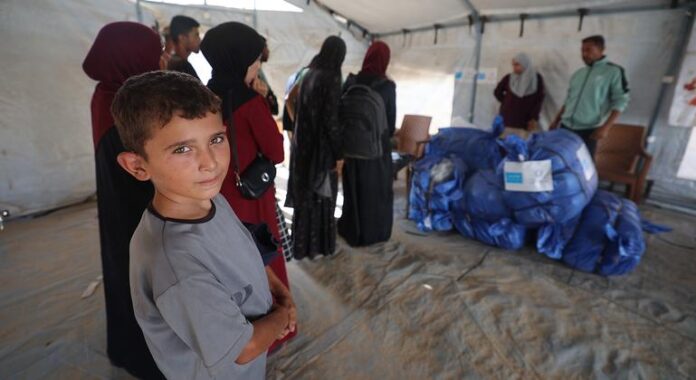
“Our partners report that since the ceasefire, the Israeli authorities have rejected 107 requests for the entry of relief materials, including blankets, winter clothes, and tools and material to maintain and operate water, sanitation and hygiene services,” Deputy UN Spokesperson Farhan Haq told journalists in New York.
He said almost 90 per cent of the rejected requests came from more than 30 local and international non-governmental organisations, or NGOs.
“More than half of the requests were denied on the grounds that the organizations were not authorized to bring relief items into Gaza,” he added.
Mr. Haq stressed that such restrictions continue to hamper humanitarian efforts, even as the UN and its partners work to deliver aid under the current 60-day plan.
“The UN and our partners can do more when other impediments are lifted,” he said, noting that some rejected materials were classified by Israeli authorities as falling outside the scope of humanitarian aid or deemed “dual-use” items, such as solar panels, generators, and vehicle parts.
Despite the still fragile ceasefire between Hamas militants and Israeli forces – which reportedly continue to control just over half of the Gaza Strip – the Office for the Coordination of Humanitarian Affairs (OCHA) continues to receive reports of military activity.
“Continued detonations of residential buildings have been reported daily in multiple areas where the Israeli military remains deployed,” Mr. Haq said, pointing to eastern Khan Younis, eastern Gaza City, and Rafah on the southern border.
OCHA has reminded the Israeli military of its obligation “to take constant care to spare civilians, including aid workers, throughout its operations.”
Population movements across Gaza also remain fluid, with more than 680,000 people moving from southern to northern areas since the ceasefire began.
Staying in place
However, Mr. Haq said that many displaced families “have reported a desire to remain in their current locations, due to widespread destruction, lack of alternatives, and continued uncertainty about safety and services in their areas of origin.”
Amid these challenges, the UN and partners have reached tens of thousands of households with food, cash assistance and essential services.
“The impact of the humanitarian scale-up in Gaza is already clear,” Mr. Haq said, “yet far more could be done if the remaining obstacles were removed.”
€70 million will go to Ukrgasbank to keep Ukrainian businesses operating and protect jobs during the war, while advancing energy efficiency investments.
€30 million will be directed to repairing and upgrading municipal district heating systems via Ukrgasbank and Ukreximbank, ensuring reliable heat supply for communities during the war.
The funding is backed by the EU for Ukraine Fund and the Ukraine Investment Framework, demonstrating the European Union’s ongoing commitment to Ukraine’s recovery and resilience.
The European Investment Bank (EIB), the bank of the European Union, has disbursed a total of €100 million to support economic resilience and critical municipal heating infrastructure in Ukraine. The financing is part of a coordinated Team Europe effort backed by the EIB’s EU for Ukraine Fund and the European Commission’s €1.95 billion guarantee under the Ukraine Investment Framework, which is part of the broader €50 billion Ukraine Facility. It demonstrates the European Union’s continued support to sustain Ukraine’s economy and ensuring essential public services.
€70 million to support Ukrainian businesses
€70 million has been disbursed to Ukrgasbank under the €400 million Ukraine Economic Resilience Facility Lending Envelope. The project is backed by the EIB’s EU for Ukraine Fund, which is supported by EU Member States. The financing will expand access to long-term loans for micro, small and medium-sized enterprises (MSMEs) and mid-caps across the country, helping to sustain employment and support the resilience of Ukraine’s private sector.
The loan also contributes to Ukraine’s green transition by supporting investments that reduce greenhouse gas emissions and improve energy efficiency. Ukrgasbank will on-lend the funds to businesses on more favourable terms made possible by the EIB financing, making financing more accessible and affordable for Ukrainian enterprises.
€30 million to restore and strengthen municipal district heating
€30 million has been disbursed (€15 million to Ukrgasbank and €15 million to Ukreximbank) as the first tranches of larger EIB district heating loans (€50 million and €100 million, respectively), guaranteed under the European Commission’s Ukraine Investment Framework.
The financing will be on-lent to communities and public utilities to repair and upgrade district heating systems, improve energy efficiency in public buildings and deploy renewable energy solutions, thereby reducing dependence on vulnerable centralised infrastructure. It will also enable the timely reconstruction of facilities damaged by Russia’s attacks, strengthening the resilience and energy security of communities across Ukraine. As a result, municipalities will have more independent and efficient heating systems for schools, hospitals and residential communities.
EIB Vice-President Teresa Czerwińska, who oversees the bank’s operations in Ukraine, said: “The disbursement of these funds ensures that support is now reaching Ukrainian businesses and municipalities at a critical time. It helps keep local economic activity going and enables communities to maintain heating and essential public services during the winter. We are working in close cooperation with the European Commission, the government of Ukraine, local partner banks and local authorities to make sure this assistance is delivered effectively and where it is most needed.”
“This is now the fourth winter in which Russia tries to keep Ukrainians in the cold. We are seeing the worst attacks on energy infrastructure in this war. EU support is helping rebuild a stronger and more resilient energy system. The EU is helping to restore power plants and investing in district heating, in expanding renewables, and in making buildings more energy efficient. Together we make sure schools, hospitals, and homes remain warm this winter”, said Marta Kos, European Union Commissioner for Enlargement.
“Support from the European Investment Bank is extremely important for the sustainable reconstruction of Ukraine. Owing to these funds, we will be able to finance businesses and communities that are restoring critical infrastructure and implementing district heating and energy-efficient solutions throughout the country,” emphasised Acting Chairperson of the Management Board of Ukrgasbank Rodion Morozov.
“The first tranche of funding under the EIB’s Ukraine district heating project, made possible through the steadfast support of the European Union and European Investment Bank, provides Ukrainian communities with the means to withstand the challenges of winter under continuous attacks of Russia. It reinforces the reliability of heat supply, modernises vital infrastructure and promotes energy efficiency, safeguarding the needs of residents, especially in the cold season,” said Chairman of the Management Board of Ukreximbank Viktor Ponomarenko.
This support complements the recently signed EIB financing with Naftogaz Ukraine to help replenish the country’s gas reserves ahead of winter, highlighting a broader, coordinated EU effort to strengthen Ukraine’s energy resilience during the war.
Background information
The Ukraine Investment Framework (UIF) is part of the €50 billion EU Ukraine Facility designed to attract public and private investments for the recovery and reconstruction of Ukraine. It is endowed with financial instruments totalling €9.3 billion, with €7.8 billion in loan guarantees and €1.5 billion in blended finance. In March 2025, the EIB entered into a €1.95 million guarantee agreement with the European Union to support its operations in Ukraine. This guarantee is provided under UIF. The aim of the UIF is to mobilise €40 billion of investments for Ukraine’s recovery, reconstruction and modernisation.
The EU for Ukraine Fund (EU4U) was established by the EIB in 2023 as an additional instrument to support Ukraine’s recovery and rebuilding efforts. The fund has received contributions from 16 EU Member States – Belgium, Croatia, Cyprus, Denmark, Estonia, Finland, France, Italy, Ireland, Latvia, Lithuania, Luxembourg, the Netherlands, Poland, Slovakia and Spain – bringing its total size to €410 million. The fund aims to accelerate EIB support for Ukraine’s most urgent infrastructure needs and help sustain the country’s economy. It enables the financing of both public and private sector projects, supporting the reconstruction of critical municipal infrastructure and improving access to finance for entrepreneurs.
The EIB in Ukraine
The European Investment Bank (EIB) has been working in Ukraine since 2007. Following Russia’s full-scale invasion in 2022, the Bank has stepped up its financial support to help strengthen the country’s resilience and rebuild its infrastructure. Since then, the EIB has provided €4 billion in financing for Ukraine. Through its EU for Ukraine (EU4U) Initiative, coupled with its key role in implementing the Ukraine Investment Framework, a dedicated window of the Ukraine Facility, the EIB is strongly committed to accelerating its activities in line with the mandate given by EU leaders, in close cooperation with the European Commission, the European Parliament, Member States and international partners.
“We see massive violations of international human rights law, direct attacks on civilians, noncompliance with international humanitarian law, which regulates conduct in relation to hostilities, and that the attacks are largely on civilians,” said Chaloka Beyani, who recently took up his post as Special Adviser of the Secretary-General for the Prevention of Genocide.
Mr. Beyani told UN News in an interview on Thursday he had spoken to Resident Coordinator in Sudan, Denise Brown, and plans to issue an advisory to Secretary-General António Guterres, the Security Council, and the wider UN system.
“Once our office sounds the alarm, the alarm rings over and beyond the ordinary violations of human rights or of international humanitarian law,” he said.
“It indicates that the threshold is about to be crossed, and therefore there has to be early action taken.”
Graphic reports and video began circulating at the end of last month online of apparent war crimes committed by the Rapid Support Forces (RSF) militia as its fighters finally took control of the Darfuri capital of El Fasher from Government troops, following more than 500 days of siege.
Horror in Darfur
“We cannot hear the screams, but – as we sit here today – the horror is continuing,” said UN relief chief Tom Fletcher, briefing the Security Council on 31 October.
Mr. Beyani’s office said risk indicators for atrocity crimes are present in Sudan but emphasises that only an international court or other legal body can make a determination of genocide.
The UN-backed International Criminal Court (ICC) expressed profound alarm in a statement on Monday over the reports of mass killings, rapes and other crimes emerging from El Fasher, noting that its investigation of alleged war crimes committed since the outbreak of war in April 2023 is ongoing.
“Within the ongoing investigation, the office is taking immediate steps regarding the alleged crimes in El-Fasher to preserve and collect relevant evidence for its use in future prosecutions,” the prosecutor’s office underlined.
RSF agrees ‘humanitarian ceasefire’: reports
The RSF reportedly agreed to a “humanitarian ceasefire” on Thursday, in the wake of mounting criticism of its fighters’ actions in and around El Fasher.
Leaders of the militia group said they would accept the terms of the truce proposed by a mediation group consisting of the United States, Saudi Arabia and the United Arab Emirates, according to news reports.
Agony continues for civilians
Meanwhile, the UN is warning of a worsening humanitarian situation in North Darfur, where thousands of families displaced from El Fasher are living in extremely harsh conditions.
“Across Tawila and surrounding areas, displaced people are without adequate food, clean water, shelter or medical care,” Deputy UN Spokesperson Farhan Haq said on Thursday.
Aid agencies are working with local partners to set up new camps, adding to the more than 650,000 people already in Tawila.
In Tawila Al Omda alone, over 3,000 recent arrivals urgently need plastic sheeting, mats and blankets as temperatures drop.
Many, including the injured, people with disabilities, and unaccompanied children, sleep in the open. Similar conditions affect more than 6,500 people in Daba Al Naira and Um Jangour camps.
Shortly after the fall of Bashar al-Assad in early December 2024, the international community began to ease sanctions against the country, with the aim of improving the humanitarian situation and reviving a battered economy.
The United States, the United Kingdom and Europe lifted punitive measures covering about $15 billion in restricted assets and trade measures in May.
Regional powers including Saudi Arabia, Turkey and Qatar have backed a renewed commitment, offering to finance public salaries and energy infrastructure, and supporting Syria’s obligations to international financial institutions.
Steps to bring Syria back into the fold, however, were complicated by the fact that the group leading the offensive that ousted Assad from power – Hayat Tahrir al-Sham (HTS) – had been proscribed as a terrorist organization by the United Nations since 2014.
The leader of HTS under his leadership nom de guerre Mohammed Al-Jolani was among those sanctioned, subject to an asset freeze and a travel ban – but he is now the civilian head of the Syrian government under his real name, Ahmed al-Sharaa.
The decision taken Thursday by the Security Council This was followed by unilateral measures by several Member States. In July, the United States revoked HTS’s designation as a foreign terrorist group, followed by the United Kingdom in October.
The Syrian president met his Russian counterpart Vladimir Putin the same month and is expected to meet US President Donald Trump in Washington next week.
The U.S.-sponsored resolution welcomes the interim government’s commitments to allowing unimpeded humanitarian access to the country, countering terrorism (including ISIL and Al-Qaeda), and protecting human rights. Fourteen Council members voted in favor and China abstained.
U.S. Ambassador Michael G. Waltz addresses the U.N. Security Council meeting on threats to international peace and security caused by terrorist acts.
“A strong political signal”
Ambassador Mike Waltz of the United States described the resolution as a “strong political signal” that recognizes that Syria is in a new era.
The government, he said, is “working hard to fulfill its commitments to combat terrorism and narcotics, eliminate all remnants of chemical weapons, and promote regional security and stability as well as an inclusive, Syrian-led and owned political process.”
China abstains
China’s representative, Ambassador Fu Cong, explained his country’s abstention, saying that although the resolution reaffirms the Council’s “counterterrorism demands,” the United States “failed to fully consider the views of all members and forced the Council to take action even when there were huge differences among Council members in order to serve its own political agenda.”
“We welcome the delisting,” said James Kariuki, the UK’s charge d’affaires, citing progress made by the Syrian government to date, including on political transition and positive steps in the fight against terrorism and chemical weapons.
“We hope that this resolution will further encourage deeper engagement with the international community,” he added, “and support the Syrian people in their reconstruction and economic development efforts.”
Pushing Syria on the path to recovery, Russia says
Vassily Nebenzia, Russia’s permanent representative, agreed on the need to facilitate Syria’s economic recovery and development during the transition period and said the resolution reflects the interests and aspirations of the Syrian people. Mr. Nebenzia cited Israel’s occupation of the Golan Heights and persistent terrorist threats as factors hindering the country’s long-term stability.
The terrorist risk was also highlighted by French Ambassador Jérôme Bonnafont, who said that “the fight against Daesh (ISIL) in the Middle East is not over and the risks of a resurgence should not be underestimated.”
This adoption, he continued, is “an important step on the path to the reconstruction of a sovereign, united and reconciled Syria, living in peace and free from the scourge of terrorism.”
A “badge of honor”
Syria’s delegate, Ambassador Ibrahim Abdulmalik Olabi, welcomed the Council’s strong support and commitment to respecting his country’s sovereignty and territorial integrity. “We consider [this resolution] a sign of growing confidence in the new Syria, its people and its leaders,” he said, calling it a “badge of honor.”
Syria is turning the page on war and suffering, he stressed, by building a modern state based on the rule of law. “Damascus continues to reach out to all countries in the world,” the Permanent Representative said, adding that the government will strive to be a meeting point between East and West.
Em 6 de novembro de 2025, o presidente do Conselho Europeu, António Costa, proferiu um discurso na sessão da COP30 subordinada ao tema «Clima e Natureza: Florestas e Oceanos», em Belém, no Brasil.
Filippo Grandi reported that for the first time in almost a decade, the number of refugees and others fleeing war, violence and persecution has decreased – from 123 million at the end of 2024 to around 117 million today.
“This may seem surprising. Because the world has not become more secure, quite the contrary,” he said, referring to conflicts in countries such as Sudan, Gaza, Ukraine and Myanmar.
This “unexpected decrease” is largely due to returns to their places of origin, mainly Syria and Afghanistan. Most were volunteers, despite the persistent fragility of these localities.
“The voluntary nature of returns is an important distinction that statistics cannot always account for, as the decrease in the total number of forcibly displaced people unfortunately also explains returns that were not voluntary,” Mr. Grandi said.
The return of displaced Syrians “illustrates very clearly the dynamic of volunteerism,” he told the ambassadors.
More than a million refugees have returned since the fall of the Assad regime in December 2024, while around two million people in Syria have returned to their original communities.
Increased support for Syria
Mr. Grandi stressed the need to support Syria, where his refugee agency teams, UNHCRare on the ground providing cash assistance, shelter rehabilitation, materials and other services to meet immediate needs.
“But there is still a lot to do,” he said. “The international community, and in particular donors from the Gulf region and Europe, as well as international financial institutions, must step up their support for infrastructure construction, restoration of services, security sector reform and economic recovery. »
Forced returns to Afghanistan
The situation of Afghans, particularly those forced to return from Iran and Pakistan, is the other factor behind the decline in displacement figures.
Both countries have welcomed Afghan refugees for decades, who have access to services “virtually at the same level as those of nationals”. Additionally, generations of these refugees, particularly women, were educated in local schools.
“But recent waves of forced returns to Afghanistan are depriving many Afghan refugees of the protection they need, forcing them to return to an environment where human rights violations and discrimination are widespread – particularly against women,” he noted.
Protection and opportunities
Mr. Grandi explained that forced displacement is “a complex phenomenon” in that “people can flee a country at the same time as others return,” which is the case in Sudan and South Sudan.
The answer is also “a complex challenge,” but “the solution does not lie in restrictions, barriers and pushbacks.”
He suggested that “it is more strategic to look at entire travel routes and identify measures that provide protection and opportunities for people on the move and their hosts, as early as possible, before people cross multiple borders.”
Financial deficit
Mr. Grandi will leave UNHCR in the coming weeks “after 10 difficult but fascinating years”.
Before concluding his speech, he explained how the “drastic and sudden funding cuts” this year have impacted the agency and the entire humanitarian sector.
UNHCR faces a deficit of $1.3 billion and expects to receive less than $4 billion this year, out of a budget of $10.6 billion.
He urged donors to help “bridge the gap” and quickly make flexible commitments for 2026.
Kishan Khoday, Resident Representative of the United Nations Development Program (UNDP), told journalists at UN headquarters in New York by video conference that initial estimates of damage amounted to 30 percent of gross domestic product: “a figure that is expected to increase.”
The UNDP estimates that almost five million tonnes of debris were generated in western Jamaica following last week’s devastating Category 5 storm, the equivalent of around 500,000 standard trucks.
Additionally, authorities confirmed 32 deaths, while nearly 36,000 people need emergency food aid and more than 100,000 housing structures have been affectedsaid UN deputy spokesperson Farhan Haq.
At least 30 communities are still isolated while electricity, telecommunications and even radio signals remain seriously disrupted in some parishes.
Mr. Khoday told the story of a man he met, Keith, of New Hope, in western Jamaica, who sought shelter in a nearby structure when Melissa made landfall, kneeling behind plywood for hours as the storm raged.
When he emerged, he found his home, his livelihood and part of his community in ruins. His experience highlights the harsh realities of the climate emergency, the senior UNDP official said – but also speaks to the resilience of Jamaicans as they work towards recovery and reconstruction.
UN mobilizes aid
More than 60 different organizations have joined the 16-member UN Disaster Assessment and Coordination Team – part of the UN Aid Coordination Office. OCHA – as the humanitarian operation continues under the direction of the Jamaican authorities.
To support response and recovery efforts, UNDP has allocated an initial amount of $400,000 to assist with baseline assessment work and provide early support to national partners.
Meanwhile, the United Nations World Food Program (PAM) is flying food from Barbados to support more than 6,000 households for a week, according to the UN.
Communities still isolated
In Cuba – although it was also devastated, like Haiti, by the hurricane – around 120,000 people remain in shelters due to ongoing flooding, overflowing rivers and landslides.
The UN reports that 29 communities remain isolated, with significant damage to housing, health facilities and education centers.
More than 45,000 housing structures, nearly 500 health facilities and more than 1,500 educational centers were also damaged, Haq said.
“We see massive violations of international human rights law, direct attacks against civilians, non-compliance with international humanitarian law, which regulates the conduct of hostilities, and that the attacks largely target civilians“, said Chaloka Beyani, who recently took office as Special Advisor to the Secretary-General on the Prevention of Genocide.
Mr. Beyani said UN News In an interview Thursday, he spoke with the resident coordinator in Sudan, Denise Brown, and plans to issue an advisory to Secretary-General António GuterresTHE Security Counciland the United Nations system as a whole.
“Once our office sounds the alarm, the alarm sounds beyond ordinary violations of human rights or international humanitarian law,” he said.
“This indicates that the threshold is about to be crossed and therefore action must be taken quickly.”
Graphical and video reports started circulating at the end of last month online of apparent war crimes committed by the Rapid Support Forces (RSF) militia as its fighters finally took control of Darfur’s capital, El Fasher, from government troops after more than 500 days of siege.
Horror in Darfur
“We don’t hear the screams, but – as we sit here today – the horror continues,” said UN relief chief Tom Fletcher. make a presentation to the Security Council on October 31.
Mr. Beyani’s office said indicators of risk of atrocity crimes were present in Sudan, but stressed that only an international tribunal or other legal body can determine the existence of genocide.
UN support International Criminal Court (ICC) expressed deep concern in a statement on Monday over reports of massacres, rapes and other crimes in El Fasher, noting that its investigation into alleged war crimes committed since the outbreak of war in April 2023 is ongoing.
“As part of the ongoing investigation, the office is taking immediate action regarding the alleged crimes in El-Fasher in order to preserve and collect relevant evidence for use in future prosecutions,” the prosecutor’s office stressed.
RSF agrees to “humanitarian ceasefire”: reports
The RSF reportedly agreed to a “humanitarian ceasefire” on Thursday, following growing criticism of the actions of its fighters in and around El Fasher.
Militia leaders said they would accept the terms of the truce proposed by a mediation group consisting of the United States, Saudi Arabia and the United Arab Emirates, according to media reports.
The agony continues for civilians
At the same time, the UN warns of a worsening of the humanitarian situation in North Darfur, where thousands of families displaced from El Fasher live in extremely difficult conditions.
“In and around Tawila, displaced people do not have adequate food, clean water, shelter or medical care.“, UN deputy spokesperson Farhan Haq said on Thursday.
Humanitarian agencies are working with local partners to set up new camps, adding to the more than 650,000 people already in Tawila.
In Tawila Al Omda alone, more than 3,000 new arrivals are in urgent need of plastic sheeting, mats and blankets as temperatures drop.
Many, including the injured, disabled people and unaccompanied children, sleep in the open. Similar conditions affect more than 6,500 people in Daba Al Naira and Um Jangour camps.