Friday, June 26, 2026
Home Blog Page 133

High blood pressure in adolescence a silent risk of atherosclerosis later

0
High blood pressure in adolescence a silent risk of atherosclerosis later


A blood pressure as low as 120/80 mm Hg in adolescence can be linked to a higher risk of atherosclerosis in middle age, according to a study led from Linköping University. The findings indicate that high blood pressure early in life plays an important role in the development of coronary artery disease.

Blood pressure – illustrative photo.

Blood pressure – illustrative photo. Image credit: Pixabay (Free Pixabay license)

“High blood pressure is the largest modifiable risk factor for cardiovascular disease, which in turn is the largest single cause of death globally,” says Pontus Henriksson, senior associate professor of nutritional physiology, who led the study together with Karin Rådholm, senior associate professor of general medicine, both at Linköping University.

Efforts to prevent and treat high blood pressure, also called hypertension, are currently primarily focused on adult individuals. But a new Swedish study corroborates the idea that blood pressure can begin to impact health early in life.

In their study, the researchers used advanced CT scans, so-called CT coronary artery scans, to examine the coronary arteries supplying blood to the heart. These scans were performed on around 15,000 men aged 50 to 64 years in the large national population study SCAPIS. The method provides high-resolution images of the size of atherosclerosis plaques in the blood vessels, and what they contain, which affects how risky they are.

Just over 10,200 of these men had taken the military conscription tests when they were about 18 years old. At that time, taking these tests was mandatory in Sweden for men, which means that the data is representative of Swedish men of that age. The researchers examined whether there was a correlation between the blood pressure men had at the age of 18 and the health of their coronary arteries nearly 40 years later.

Clearly increased risk

Blood pressure is the force that occurs when the blood is pressed against the walls of the vessels. When the heart pumps blood, the pressure is higher. This is known as systolic pressure or upper pressure. When the heart relaxes and fills with blood for the next heartbeat, the pressure is lower and is called diastolic pressure or lower pressure. Blood pressure measurements state both numbers, in millimetres of mercury, mm Hg. A blood pressure below 140/90 mm Hg is considered normal according to Swedish guidelines.

“The most important thing we see is that those who had a systolic pressure of 140 or a diastolic pressure of 90 or more were at a clearly increased risk of coronary artery atherosclerosis later in life. But the risk increased already at 120/80 mm Hg,” says Karin Rådholm, who is also a General Practitioner at Vårdcentralen Kärna in Region Östergötland.

Some recent international recommendations have lowered the limit value for what counts as elevated blood pressure to 120/80 mm Hg. Lower limit values mean that more people are at risk than before.

In the present study, the researchers found that the higher the blood pressure at the time of the military conscription tests, the higher the risk of atherosclerosis in middle age, with an increased risk already at a blood pressure of 120/80 mm Hg. In their analyses, the researchers have taken into account other factors that affect the risk of cardiovascular disease.

“The study shows that the development of atherosclerosis begins early. The health care system needs to treat high blood pressure in young people more actively. The problem is that high blood pressure rarely causes symptoms. It’s not something you can feel, so if you don’t measure your blood pressure, you can have hypertension without knowing it,” says Karin Rådholm.

Risk factors more common today

Some of the factors increasing the risk of high blood pressure, such as overweight and poor fitness, are more common among young people today than when the study participants were young 40 years ago.

“In just one to two generations, the proportion of young people with obesity has increased significantly while fitness has decreased. So, these results are highly relevant for those who are young today,” says Pontus Henriksson.

Since only men were included in the study, it is not possible to draw conclusions about women’s risk for disease.

The study was funded by, among others, the Heart-Lung Foundation, the Knut and Alice Wallenberg Foundation, the Swedish Research Council, Vinnova and the Joanna Cocozza Foundation for Children’s Medical Research. Several other researchers from Linköping University also participated in the work on the study: Ángel Herraiz-Adillo, Hampus Eriksson, Carl Johan Östgren and Oskar Lundgren.

Article: Blood Pressure in Adolescence and Atherosclerosis in Middle Age: A population-based cohort study, Ángel Herraiz-Adillo, Hampus Eriksson, Viktor H. Ahlqvist et al, (2025), JAMA Cardiology , published online on 19 November 2025, doi: https://doi.org/10.1001/jamacardio.2025.4271

Written by Karin Söderlund Leifler

Source: Linköping University


Source link

UN, US sign $2 billion humanitarian funding agreement for 17 crisis-hit countries

0
UN, US sign $2 billion humanitarian funding agreement for 17 crisis-hit countries

Speaking at the signing in Geneva, UN Emergency Relief Coordinator Tom Fletcher paid tribute to humanitarian workers operating under increasingly difficult conditions, describing the past year as “a very, very tough year for everyone engaged in humanitarian action.”

Despite the challenges, he said the agreement, known as a memorandum of understanding or MOU, offered grounds for optimism.

“Millions, millions more will get that support that they so badly need,” Mr. Fletcher said, adding that the funding would help save tens of millions of lives in the year ahead.

The agreement covers 17 crisis-affected countries: Guatemala, Honduras, El Salvador, Ukraine, Haiti, Nigeria, Ethiopia, South Sudan, Mozambique, Myanmar, the Democratic Republic of the Congo (DRC), Sudan, Bangladesh, Syria, Uganda, Kenya and Chad, as well as the UN Central Emergency Response Fund (CERF).

Saving lives

Mr. Fletcher said the true impact of this “landmark agreement” would be its impact on the ground. “A number that really matters…is that millions of lives will be saved,” he said.

He noted that the funding supports the UN’s 2026 plan to reach 87 million people with emergency assistance. That plan, he said, has been “hyper-prioritized” to reduce duplication, streamline bureaucracy and maximize efficiency across the humanitarian system.

The agreement is a major vote of confidence in the ‘Humanitarian Reset’ – which Mr. Fletcher had announced in March 2025 – to deliver aid faster, smarter and closer to people who need it most.

Accountability

Reform and accountability featured prominently in his remarks.

Mr. Fletcher emphasized that donors expect results, saying accountability mechanisms would ensure that “every dollar we spend” is tracked to confirm that it is saving lives. He also underlined that the agreement does not imply alignment on all issues but reflects a shared focus on urgent life-saving priorities.

He also highlighted the link between humanitarian action and diplomacy, calling for 2026 to be “a year of diplomacy and peacemaking.” Ending conflicts, he said, remains the most effective way to reduce humanitarian need.

“This lifesaving announcement is not the end of the process,” Mr. Fletcher concluded. “It is the beginning.”

Source link

Gaza hit by heavy rains as humanitarian response continues

0

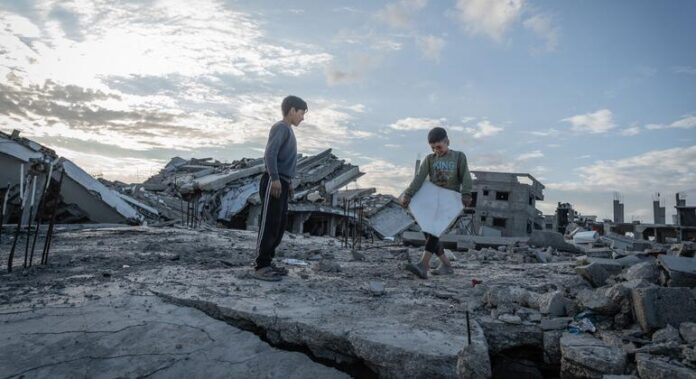
Heavy seasonal downpours are worsening an already dire humanitarian situation, as torrential rains cause war-damaged buildings to collapse, flood tents and soak people’s belongings, OCHA said.

To respond quickly to flood warnings, a coordinated system of UN agencies and non-governmental organizations is distributing tents, tarpaulins, warm clothing, blankets and dignity kits across Gaza.

The UN and its partners are also mobilizing heavy equipment to remove overflowing sewage – which poses serious health risks – away from residential areas. OCHA warned that these conditions increased the risk of hypothermia, particularly in babies, as well as illnesses linked to sewage flooding.

Separately, humanitarian teams are helping hundreds of newly displaced people from the At Tufah neighborhood in Gaza City, where ongoing military operations have forced many residents to flee.

People who remain or have returned to the As Sanafour neighborhood in At Tufah – often due to a lack of space elsewhere – report significant difficulties accessing water, food and basic services.

Rescue operations continue

Other relief operations under the UN-coordinated humanitarian ceasefire plan continue.

Between December 23 and 26, partners working in water, sanitation and hygiene distributed tens of thousands of dignity kits, hygiene kits and shampoo bottles across Gaza, reaching some 150,000 people in need, according to OCHA.

As of Sunday, partners fighting food insecurity had reached more than a million people – about half of Gaza’s population – through 60 distribution points with December’s monthly general food aid.

At the same time, humanitarian partners distributed veterinary kits and animal feed to more than 2,000 families with livestock between December 9 and 26, helping to support local production and reduce dependence on aid.

Originally published at Almouwatin.com

Gaza battered by heavy rains as humanitarian response continues

0
Gaza battered by heavy rains as humanitarian response continues

Heavy seasonal downpours are compounding an already dire humanitarian situation, as rainstorms cause war-damaged buildings to collapse, flood tents and soak people’s belongings, OCHA said.

To respond swiftly to flood alerts, a coordinated system bringing together UN agencies and non-governmental organizations is distributing tents, tarpaulins, warm clothes, blankets and dignity kits across Gaza.

The UN and its partners are also mobilising heavy equipment to pump overflowing sewage – which poses serious health risks – away from residential areas. OCHA warned that the conditions have increased the risk of hypothermia, particularly among babies, as well as illnesses linked to sewage flooding.

Separately, humanitarian teams are assisting hundreds of people newly displaced from the At Tufah neighbourhood in Gaza City, where ongoing military operations have forced many residents to flee.

People who remain in, or have returned to, the As Sanafour area of At Tufah – often due to a lack of space elsewhere – report significant challenges in accessing water, food and basic services.

Relief operations continue

Other relief operations under the UN-coordinated humanitarian plan for the ceasefire are continuing.

Between 23 and 26 December, partners working on water, sanitation and hygiene dispatched tens of thousands of dignity kits, hygiene kits and bottles of shampoo across Gaza, reaching some 150,000 people in need, according to OCHA.

As of Sunday, partners addressing food insecurity had reached more than one million people – about half of Gaza’s population — through 60 distribution points with December’s monthly general food assistance.

In parallel, humanitarian partners distributed veterinary kits and animal feed to more than 2,000 families with livestock between 9 and 26 December, helping support local production and reduce aid dependency.

Source link

UN, US sign $2 billion humanitarian funding deal for 17 crisis-hit countries

0

Speaking at the signing in Geneva, UN Emergency Relief Coordinator Tom Fletcher paid tribute to aid workers operating in increasingly difficult conditions, describing the past year as “a very, very difficult year for everyone engaged in humanitarian action.”

Despite the challenges, he said the agreement, known as a memorandum of understanding or MOU, offered reasons for optimism.

“Millions, millions more will receive much-needed support,” Mr Fletcher said, adding that this funding would help save tens of millions of lives over the coming year.

The agreement covers 17 crisis-affected countries: Guatemala, Honduras, El Salvador, Ukraine, Haiti, Nigeria, Ethiopia, South Sudan, Mozambique, Myanmar, Democratic Republic of Congo (DRC), Sudan, Bangladesh, Syria, Uganda, Kenya and Chad, as well as the UN. Central Emergency Response Fund (DEER).

Save lives

Mr Fletcher said the real impact of this “historic deal” would be its impact on the ground. “One number that really matters…is that millions of lives will be saved,” he said.

He noted that the funding supports the UN’s 2026 plan to provide emergency assistance to 87 million people. This plan, he said, was “hyper-prioritized” to reduce duplication, streamline bureaucracy and maximize the efficiency of the entire humanitarian system.

The deal is a major vote of confidence in the “humanitarian reset” – announced by Mr Fletcher in March 2025 – aimed at delivering aid faster, smarter and closer to the people who need it most.

Responsibility

Reform and accountability featured prominently in his remarks.

Mr Fletcher stressed that donors expect results, saying accountability mechanisms would ensure “every dollar we spend” is tracked to confirm it is saving lives. He also stressed that the agreement does not imply alignment on all issues but reflects a common focus on urgent priorities that save lives.

He also highlighted the link between humanitarian action and diplomacy, calling for 2026 to be “a year of diplomacy and peacemaking.” Ending conflict, he said, remains the most effective way to reduce humanitarian needs.

“This life-saving announcement does not mark the end of the process,” concluded Mr. Fletcher. “This is the beginning.”

Originally published at Almouwatin.com

UN chief urges world leaders to ‘clarify priorities’ as New Year’s message calls for peace rather than war

0

“The world stands at a crossroads,” he said, warning that conflict, climate breakdown and systemic violations of international law are eroding trust in leaders around the world.

“People everywhere are asking: Are leaders listening? Are they ready to act?” he said.

Mr. Guterres highlighted the scale of global suffering, noting that more than a quarter of humanity now lives in conflict-affected areas. On 200 million people need humanitarian aid, while almost 120 million have been forcibly displaced by war, crises, disasters or persecution.

In this context, he highlighted what he described as a deep imbalance in global priorities.

“As we turn the page on a turbulent year, one fact speaks louder than words: global military spending soared to $2.7 trillion“, he said, almost 10 percent more than the previous year.

This figure, he pointed out, is 13 times greater than total global development assistance and equivalent to the entire gross domestic product (GDP) of the African continent. If current trends continue, military spending could more than double to $6.6 trillion by 2035, even as humanitarian needs continue to rise.

A path to hope

Despite these grim statistics, the Secretary-General stressed that solutions are within reach.

In September 2025, he launches the report The security we need: rebalancing military spending for a sustainable and peaceful future. The report shows how relatively modest changes in spending could produce transformative results.

Less than 4% of current military spending could end world hunger by 2030, while just over 10% could fully vaccinate all children. Redirecting 15 percent would more than cover the annual cost of climate adaptation in developing countries.

“It is clear that the world has the resources to save lives, heal the planet and ensure a future of peace and justice,” Mr. Guterres said.

Call to action

Looking ahead, he sent a direct message to leaders around the world.

“In this new year, let us resolve to clarify our priorities. A safer world begins by investing more in the fight against poverty and less in war. Peace must prevail,” he urged.

Addressing people around the world, he added: “Play your part. Our future depends on our collective courage to act.”

“In 2026,” he concluded, “I call on world leaders: get serious. Choose people and planet over pain. Let’s stand up together – for justice, for humanity, for peace.”

Originally published at Almouwatin.com

SECURITY COUNCIL LIVE: Briefing on threats to international peace and security

0

The UN Security Council meets today to hear a briefing on threats to international peace and security following Israel’s recent recognition of the northern region of Somalia as an independent and sovereign state. Follow live below and UN News app users can Click here and goes here for all our in-depth meeting coverage.

Originally published at Almouwatin.com

NY Requires Warning Labels on Social Media

0
NY Requires Warning Labels on Social Media


New York just became a battleground for children’s mental health. Governor Kathy Hochul signed legislation this week forcing social media companies to slap warning labels on features designed to keep young users glued to their screens.

Image credit: Yanalya, via Freepik, free license

Key takeaways:

  • Social media platforms must display mental health warnings before exposing young users to autoplay, infinite scroll, and similar features
  • Users cannot bypass these warnings, which will appear initially and periodically during use
  • The law follows the same logic as tobacco and alcohol warnings, treating certain platform features as public health concerns

The bill, S4505/A5346, passed the state legislature back in June. It targets what lawmakers call “addictive social media platforms”—services that rely heavily on addictive feeds, push notifications, autoplay, infinite scroll, or like counts. There’s one exception: platforms can avoid the requirement if the state attorney general determines these features serve “a valid purpose unrelated to prolonging use of such platform.”

Warning labels will appear when young users first encounter these features and continue showing up periodically. No skip button. No dismissal option. The approach mirrors existing requirements for tobacco products, alcohol, and media containing flashing lights.

Former Surgeon General Vivek Murthy called for exactly this type of intervention last year, arguing social media warranted the same treatment as other public health risks.

“Keeping New Yorkers safe has been my top priority since taking office, and that includes protecting our kids from the potential harms of social media features that encourage excessive use,” Hochul said in a statement.

Assemblymember Nily Rozic, one of the bill’s sponsors, emphasized transparency: “New York families deserve honesty about how social media platforms impact mental health. By requiring warning labels based on the latest medical research, this law puts public health first and finally gives us the tools we need to make informed decisions.”

California lawmakers have introduced similar legislation, suggesting this approach may spread beyond New York.

This builds on momentum from last year, when New York passed laws requiring parental consent before platforms could show children addictive feeds or collect and sell data from users under 18.

Hochul has been busy with tech regulation as 2025 closes out. She also recently signed the RAISE Act, focused on AI safety measures.


Written by Alius Noreika


Source link

NY Requires Warning Labels on Social Media

0

Image credit: Yanalya, via Freepik, free license

Key takeaways:

  • Social media platforms must display mental health warnings before exposing young users to autoplay, infinite scroll, and similar features
  • Users cannot bypass these warnings, which will appear initially and periodically during use
  • The law follows the same logic as tobacco and alcohol warnings, treating certain platform features as public health concerns

The bill, S4505/A5346, passed the state legislature back in June. It targets what lawmakers call “addictive social media platforms”—services that rely heavily on addictive feeds, push notifications, autoplay, infinite scroll, or like counts. There’s one exception: platforms can avoid the requirement if the state attorney general determines these features serve “a valid purpose unrelated to prolonging use of such platform.”

Warning labels will appear when young users first encounter these features and continue showing up periodically. No skip button. No dismissal option. The approach mirrors existing requirements for tobacco products, alcohol, and media containing flashing lights.

Former Surgeon General Vivek Murthy called for exactly this type of intervention last year, arguing social media warranted the same treatment as other public health risks.

“Keeping New Yorkers safe has been my top priority since taking office, and that includes protecting our kids from the potential harms of social media features that encourage excessive use,” Hochul said in a statement.

Assemblymember Nily Rozic, one of the bill’s sponsors, emphasized transparency: “New York families deserve honesty about how social media platforms impact mental health. By requiring warning labels based on the latest medical research, this law puts public health first and finally gives us the tools we need to make informed decisions.”

California lawmakers have introduced similar legislation, suggesting this approach may spread beyond New York.

This builds on momentum from last year, when New York passed laws requiring parental consent before platforms could show children addictive feeds or collect and sell data from users under 18.

Hochul has been busy with tech regulation as 2025 closes out. She also recently signed the RAISE Act, focused on AI safety measures.


Written by Alius Noreika

Source link

New European Scientific Advisory Board on Climate Change appointed

0

DISCLAIMER: Information and opinions reproduced in the articles are the ones of those stating them and it is their own responsibility. Publication in The European Times does not automatically means endorsement of the view, but the right to express it.

DISCLAIMER TRANSLATIONS: All articles in this site are published in English. The translated versions are done through an automated process known as neural translations. If in doubt, always refer to the original article. Thank you for understanding.

Source link