
You need to enable JavaScript to run this app.
Loading application.
Please wait.

Loading application.
Please wait.

A new UN Women report, At risk and underfundedbased on a global survey of 428 women’s rights and civil society groups, reveals that one in three groups have suspended or stopped programs aimed at ending gender-based violence.
More than 40 percent have reduced or closed essential services such as shelters, legal aid, psychosocial support and health care due to an immediate funding gap.
Nearly 80 percent reported reduced access to services for survivors, while 59 percent said impunity and the normalization of violence were increasing.
“Women’s rights organizations are the backbone of progress on violence against women, but they are pushed to the brink,” said Kalliopi Mingeirou, head of Ending Violence Against Women and Girls at UN Women.
“We cannot allow funding cuts to erase decades of hard-won gains. We call on governments and donors to ring-fence, expand and make funding more flexible. Without sustained investment, violence against women and girls will only increase.”
Violence against women remains one of the most widespread human rights violations in the world.
According to UN Women data, around 736 million women – almost one in three – have been victims of physical or sexual violence, most often by an intimate partner.
The agency had already warned earlier this year that many women-led organizations in crisis situations were on the verge of closing – a concern now reinforced by At risk and underfunded.
Only five percent of organizations surveyed said they could sustain operations for more than two years, and 85 percent anticipated serious setbacks in laws and protections for women and girls. More than half also expressed serious concern about growing threats against women human rights defenders.
The report warns that these financial shortfalls come amid a broader backlash against women’s rights, now evident in one in four countries. As funding dries up, many groups are forced to prioritize emergency services over long-term advocacy that leads to systemic change.
At risk and underfunded comes as the world marks 30 years of the Beijing Declaration and Platform for Action, a historic blueprint for gender equality that puts ending violence against women at its heart.
Originally published at Almouwatin.com
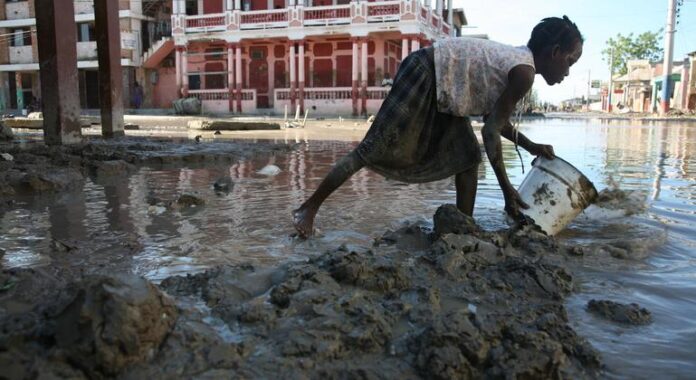
Currently a Category 4 storm and moving slowly across the Caribbean Sea, Melissa is forecast to strengthen to Category 5, with sustained winds of at least 157 mph (about 252 kmh).
Countries across the region, including Jamaica, Haiti, Cuba and the Dominican Republic, are expected to endure several days of intense weather, amid fears that infrastructure could be overwhelmed and essential services disrupted.
“All efforts to prepare for the arrival of hurricane are vital to mitigate damage and loss of life in the most vulnerable communities, especially in regions like the Caribbean. Small islands always face heightened vulnerability to extreme climate events,” said Roberto Benes, Director for Latin America and the Caribbean at UN Children’s Fund (UNICEF).
“UNICEF helps strengthen national capacities to anticipate and respond to climate-related emergencies and to deliver essential services for children. This is fundamental to protecting those who need it most.”
UN agencies and partners have pre-positioned lifesaving supplies, including hygiene materials, water purifiers, medical kits and cash transfers to support vulnerable families.
In Haiti, 450 metric tons of food has been prepositioned and cash transfers provided to 9,500 households in the south to mitigate the storm’s impact. About 3,400 hygiene kits, non-food items and shelter for 44,000 households and medical kits for 11,000 people have also been positioned.
In Jamaica, the Red Cross and local authorities have mobilised early, preparing emergency shelters and stockpiling relief items for some 165,000 people in high-risk parishes, including Saint Elizabeth, Clarendon, Saint Catherine, Kingston, Saint Thomas and Portland.
Communities are already experiencing heavy rainfall and gusty winds, and forecasters warn that flooding could surpass that caused by Hurricane Beryl 16 months ago, which left significant financial and infrastructural damage.
Flooding is expected to be severe in low-lying, coastal and informal settlements, with heavy rainfall likely to trigger landslides in mountainous areas. Ports, airports and key infrastructure could also be disrupted, complicating emergency response.
There are also reports of deaths and injuries. In Haiti, three people were killed and one severely injured in a landslide in the western part of capital Port-au-Prince. A death has also been reported in the Dominican Republic.
Over the past decade, approximately 11 million people, including nearly four million children, were directly affected each year by disasters across Latin America and the Caribbean, according to UNICEF.
As the storm approaches, national authorities are urging communities to follow safety guidance, evacuate vulnerable areas and seek shelter.
UN agencies continue to coordinate with governments and partners, emphasising the protection of children and the most vulnerable populations.

Dublin Airport, October 284, 2025. The Vice President of the European Investment Bank (EIB), Ioannis Tsakiris, has confirmed a new €288 million long-term loan to daa, the operator of Dublin and Cork airports, representing a major step towards decarbonising Irish transport infrastructure, as well as improving air quality.
In addition to the EIB’s support, daa has also secured a €2.335 million grant from the European Union’s Connecting Europe Facility (CEF), further underlining the EU’s commitment to advancing sustainable transport infrastructure at Dublin Airport.
The combined backing from the European Investment Bank and the European Union’s CEF programme demonstrates a unified European approach to accelerating the decarbonisation and modernisation of Ireland’s key transport gateways.
The EIB financing will support a €627 million programme of sustainability projects at Dublin Airport. These combined investments will cut carbon emissions, improve water efficiency, and make Dublin Airport one of Europe’s most sustainable transport gateways. Individual schemes include large scale electric vehicle (EV) charging infrastructure across the campus and water and wastewater treatment upgrades.
The investment is part of long-term infrastructure EIB financing under the Bank’s climate action and environmental sustainability priorities and daa’s commitment to decarbonising airport operations while improving resilience and the overall passenger experience.
The schemes will reduce airport emissions, enhance resource efficiency and support cleaner energy use at Ireland’s busiest international gateway and a vital economic enabler for the Irish Republic. Inspiration for this joint approach builds on a longstanding EIB-daa partnership and the funding provided for previously developed infrastructure.
Kenny Jacobs, daa’s CEO commented:
“Today marks a real step forward for Dublin Airport. With the EIB’s backing, we’re able to push ahead with major upgrades that will make a genuine difference in rolling out EV charging at scale, modernising how we manage water, and switching our terminals to renewable energy sources. These projects aren’t just about cutting emissions; they’re about making the airport work better for everyone including our passengers, customers and staff as well as the wider community. It’s a long-term investment in the future of Dublin Airport and a clear signal of our commitment to sustainability.
“Dublin Airport is critical national infrastructure, and this new loan from the EIB is a strong vote of confidence in our vision. It shows the EIB’s commitment to mobilising capital for ambitious sustainability upgrades that align with European climate goals, while also supporting Ireland’s economic competitiveness. By electrifying ground operations, improving water management and converting our terminal energy use to cleaner sources, we’ll deliver real, measurable environmental benefits for years to come.”
Ioannis Tsakiris, European Investment Bank Vice President said:
“Dublin Airport plays a vital role as Ireland’s international gateway and a hub connecting communities and businesses across Europe and the world. The EIB is proud to support this ambitious investment that will make the airport greener, more efficient, and more resilient. Our €288 million financing reflects the EIB’s commitment to help Ireland decarbonise transport infrastructure and lead by example. Over the past decade, the Bank has provided more than €7.6 billion for airport investment across Europe and globally, increasingly focused on environmental and safety improvements and this project demonstrates how sustainable infrastructure can drive both climate action and competitiveness.”
Project scope and benefits
Collectively, these projects are expected to improve environmental outcomes, support jobs across delivery phases and provide a platform for long-term operational efficiency gains at Dublin Airport.
A trusted partnership
This new financing builds on more than thirty years of partnership and climate-aligned investment between the EIB and daa. Past EIB backing has supported critical infrastructure at Dublin and Cork airports, including terminal expansions, airfield upgrades and runway investment. Notable financings have included facilities of €125 million (2001), €115 million (2003), €200 million (2008), €260 million (2009) and €350 million (2019) to part fund terminals, piers, taxiways, stands and other enabling works.
daa has consistently noted the strategic value of long-term, flexible EIB finance in delivering essential infrastructure without recourse to the Exchequer, complementing its own cash generation and other borrowings.
Over the past decade, the EIB has provided more than €7.6 billion for airport investment across Europe and worldwide, increasingly focused on safety, resilience and sustainability.
Background information
EIB
The European Investment Bank (ElB) is the long-term lending institution of the European Union, owned by its Member States. Built around eight core priorities, we finance investments that contribute to EU policy objectives by bolstering climate action and the environment, digitalisation and technological innovation, security and defence, cohesion, agriculture and bioeconomy, social infrastructure, the capital markets union, and a stronger Europe in a more peaceful and prosperous world.
The EIB Group, which also includes the European Investment Fund (EIF), signed nearly €89 billion in new financing for over 900 high-impact projects in 2024, boosting Europe’s competitiveness and security.
All projects financed by the EIB Group are in line with the Paris Climate Agreement, as pledged in our Climate Bank Roadmap. Almost 60% of the EIB Group’s annual financing supports projects directly contributing to climate change mitigation, adaptation, and a healthier environment.
Fostering market integration and mobilising investment, the Group supported a record of over €100 billion in new investment for Europe’s energy security in 2024 and mobilised €110 billion in growth capital for startups, scale-ups and European pioneers.Approximately half of the EIB’s financing within the European Union is directed towards cohesion regions, where per capita income is lower than the EU average.
High-quality, up-to-date photos of our headquarters for media use are available here.
About daa
daa is the operator of Dublin Airport and Cork Airport and invests to deliver safe, efficient and sustainable airport infrastructure and services for passengers, airlines and Ireland’s economy.
Mobile games have transformed from casual distractions into complex ecosystems, and it seems like this transformation accelerated in

European Council President António Costa had a meeting with Chinese Premier Li Qiang, on 27 October, in the margins of the ASEAN Summit in Kuala Lumpur.
Currently a Category 4 storm and moving slowly across the Caribbean Sea, Melissa is expected to strengthen to Category 5, with sustained winds of at least 157 mph (about 252 kmh).
Countries in the region, including Jamaica, Haiti, Cuba and the Dominican Republic, are expected to experience several days of intense weather, with fears infrastructure could be overwhelmed and essential services disrupted.
“All hurricane preparedness efforts are essential to mitigate damage and loss of life in the most vulnerable communities.especially in regions like the Caribbean. Small islands still face increased vulnerability to extreme weather events,” said Roberto Benes, director for Latin America and the Caribbean at the United Nations Children’s Fund (UNICEF).
“UNICEF helps strengthen national capacities to anticipate and respond to climate-related emergencies and provide essential services to children. This is fundamental to protecting those who need it most.»
United Nations agencies and their partners have prepositioned rescue suppliesincluding hygiene materials, water purifiers, medical kits and cash transfers to support vulnerable families.
In Haiti, 450 tonnes of food were pre-positioned and cash transfers were provided to 9,500 households in the south to mitigate the impact of the storm. Around 3,400 hygiene kits, non-food items and shelter for 44,000 households as well as medical kits for 11,000 people have also been positioned.
In Jamaica, the Red Cross and local authorities mobilized early, preparing emergency shelters and stockpiling relief items for some 165,000 people in high-risk parishes, including Saint Elizabeth, Clarendon, Saint Catherine, Kingston, Saint Thomas and Portland.
Communities are already experiencing heavy rain and gusty winds, and forecasters warn that flooding could exceed that caused by Hurricane Beryl 16 months ago, which caused significant financial and infrastructural damage.
Flooding is expected to be severe in low-lying, coastal and informal settlements, with heavy rain likely to trigger landslides in mountainous areas. Ports, airports and key infrastructure could also be disrupted, complicating emergency responses.
Deaths and injuries were also reported. In Haiti, three people were killed and one seriously injured in a landslide in the western part of the capital Port-au-Prince. One death was also reported in the Dominican Republic.
Over the past decade, approximately 11 million people, including nearly four million children, have been directly affected by disasters in Latin America and the Caribbean each year, according to UNICEF.
As the storm approaches, national authorities are urging communities to follow safety guidelines, evacuate vulnerable areas and seek shelter.
UN agencies continue to coordinate with governments and partners, with a focus on protecting children and the most vulnerable populations.
Originally published at Almouwatin.com
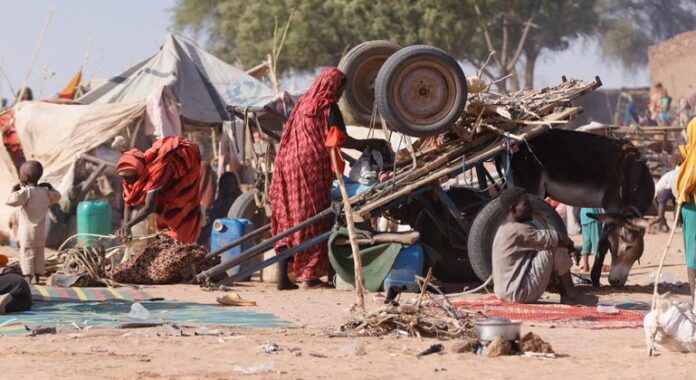
Tom Fletcher, UN Emergency Relief Coordinator, said he was “deeply alarmed” by reports of civilian casualties and forced displacement as fierce fighting engulfs the city.
“With fighters pushing further into the city and escape routes cut off, hundreds of thousands of civilians are trapped and terrified – shelled, starving, and without access to food, healthcare or safety,” Mr. Fletcher said in a statement on Sunday.
He called for “an immediate ceasefire in El Fasher, across Darfur and throughout Sudan,” stressing that civilians must be allowed safe passage and humanitarian workers must be protected.
“Safe, rapid, and unimpeded humanitarian access must be allowed to reach all civilians in need,” he said. “We have lifesaving supplies ready, but intensified attacks have made it impossible for us to get aid in. Local humanitarian workers continue to save lives under fire.”
El Fasher, the last major city in Darfur still under government control, has been under siege for more than a year.
According to media reports, the RSF – a paramilitary group that has been waging a brutal war against its former allies, the Sudanese Armed Forces (SAF) – has claimed to have taken control of the city after seizing the army’s Sixth Division headquarters.
The Sudanese army has not yet commented, but the loss of El Fasher would mark a major setback for government forces and a potential turning point in the civil war that has ravaged the country since April 2023.
The conflict has created one of the world’s worst humanitarian crises, displacing more than 11.7 million people, including 4.2 million who have fled as refugees to neighbouring countries, according to the UN figures.
UN agencies have reported widespread civilian casualties and repeated attacks on medical facilities in the region in recent weeks.
At least 20 people were killed in strikes on a mosque and the Saudi hospital – the city’s last functioning medical facility – earlier this month. This followed nearly 100 civilian deaths in September.
Mr. Fletcher condemned the continued targeting of civilians, hospitals and humanitarian operations, urging all parties to respect international law.
“Those responsible for violations of international humanitarian and human rights law must be held to account,” he said
He also reiterated the obligations set out under Security Council resolution 2736 (2024), which demands an end to the siege of El Fasher, the protection of civilians and unhindered humanitarian access across Sudan.
On 26 October 2025, European Council President António Costa was in Kuala Lumpur, Malaysia, where he gave a speech at the opening session of the 47th ASEAN Summit. In his speech, he emphasised the European Union’s proudness to engage with ASEAN as a reliable partner in today’s shifting geopolitical environment.

Tom Fletcher, the UN’s emergency relief coordinator, said he was “deeply alarmed” by reports of civilian casualties and forced displacement as heavy fighting engulfs the city.
“As fighters push deeper into the city and escape routes are cut off, hundreds of thousands of civilians are trapped and terrified – bombed, starving and without access to food, health care or safety.” Mr Fletcher said in a statement on Sunday.
He called for “an immediate ceasefire in El Fasher, throughout Darfur and throughout Sudan,” stressing that civilians must be able to move around safely and humanitarian workers must be protected.
“Safe, rapid and unhindered humanitarian access must be allowed to reach all civilians in need,” he said. “We have vital supplies, but the intensification of attacks has made it impossible to deliver aid. Local aid workers continue to save lives under fire.»
El Fasher, the last major town in Darfur still under government control, has been under siege for more than a year.
According to media reports, the RSF – a paramilitary group waging a brutal war against its former allies, the Sudan Armed Forces (SAF) – claimed to have taken control of the town after seizing the headquarters of the army’s Sixth Division.
The Sudanese army has not yet commented, but the loss of El Fasher would mark a major setback for government forces and a potential turning point in the situation. civil war which has ravaged the country since April 2023.
The conflict has created one of the world’s worst humanitarian crises, displacing more than 11.7 million people, 4.2 million of whom have fled as refugees to neighboring countries, according to UN figures.
United Nations agencies have reported large numbers of civilian casualties and repeated attacks on medical facilities in the region in recent weeks.
At least 20 people were killed in strikes on a mosque and the Saudi hospital – the city’s last functioning medical facility – earlier this month. This follows nearly 100 civilian deaths in September.
Mr Fletcher condemned the continued targeting of civilians, hospitals and humanitarian operations, urging all parties to respect international law.
“Those responsible for violations of international humanitarian and human rights law must be held accountable,” he said
He also reiterated the obligations set out in Security Council resolution 2736 (2024), which demands an end to the siege of El Fasherprotection of civilians and free humanitarian access throughout Sudan.
Originally published at Almouwatin.com
