A Joint Declaration on EU legislative priorities for 2026 was signed today by the Presidents of Parliament, Council and Commission.
Sudan war: World urged not to ignore ‘gruesome sexual violence’
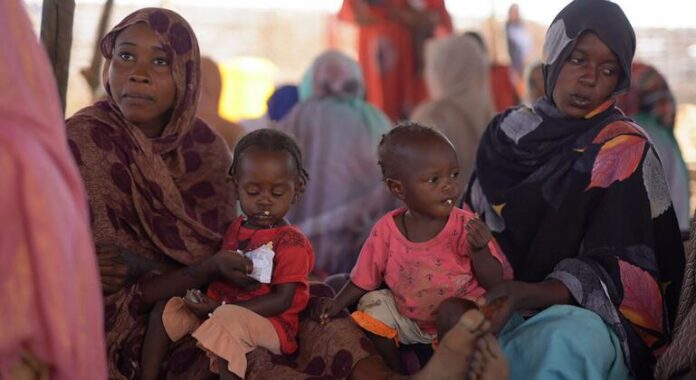
Harrowing new details emerged on Thursday in a UN report detailing targeted sexual violence and summary executions in Sudan’s North Darfur region, attributed to paramilitary fighters who overran the city of El Fasher in late October.
YouTube Wins Oscars Rights From 2029 in Historic Deal
YouTube secured exclusive streaming rights to the Academy Awards from 2029 to 2033, ending ABC’s dominance since 1961. The Google-owned platform beat traditional broadcasters to bring Hollywood’s biggest night to over 2 billion viewers worldwide at no cost.

Key Takeaways:
- The 101st Oscars in 2029 will stream free on YouTube globally and on YouTube TV for U.S. subscribers
- ABC retains broadcast rights through 2028 before YouTube takes over completely
- YouTube gains access to red carpet coverage, nominations announcements, and year-round Academy content
The Academy of Motion Picture Arts and Sciences confirmed the partnership this Wednesday, though financial details remain private. ABC held the broadcast rights continuously since 1961, except for a brief interruption in the early 1970s.
This partnership extends far beyond the main ceremony. YouTube secured rights to stream red carpet arrivals, backstage footage, the nominations reveal, filmmaker interviews, Governors Ball coverage, educational programs, and Academy podcasts. The platform aims to create a comprehensive Oscars experience throughout the year, not just on awards night.
Oscar viewership has declined significantly over the decades. The 1998 ceremony attracted 55 million viewers, while recent broadcasts have drawn approximately 20 million. The Academy sees YouTube’s massive reach as an opportunity to reverse this trend and connect with younger audiences globally.
“The Academy is an international organization, and this partnership will allow us to expand access to the work of the Academy to the largest worldwide audience possible — which will be beneficial for our Academy members and the film community,” stated Academy CEO Bill Kramer and President Lynette Howell Taylor.
YouTube CEO Neal Mohan emphasized the platform’s commitment to preserving the ceremony’s prestige. “The Oscars are one of our essential cultural institutions, honoring excellence in storytelling and artistry. Partnering with the Academy to bring this celebration of art and entertainment to viewers all over the world will inspire a new generation of creativity and film lovers while staying true to the Oscars’ storied legacy.”
The agreement makes the Oscars the first of television’s four major awards shows — alongside the Emmys, Grammys, and Tonys — to abandon broadcast television entirely for streaming distribution. Netflix previously acquired SAG Awards rights, but those ceremonies never matched the Oscars’ cultural impact.
YouTube’s victory demonstrates streaming platforms’ increasing appetite for premium live events. Traditional networks face mounting pressure as digital platforms leverage their global reach and deep pockets to secure prestigious programming once considered untouchable broadcast territory.
The transition occurs as Hollywood adapts to changing viewer habits. Younger audiences consume content primarily through streaming services and social media platforms rather than traditional television. YouTube’s free accessibility removes barriers that subscription-based streamers impose, potentially expanding the Oscars’ reach beyond current limitations.
ABC maintains broadcasting duties for four more ceremonies, giving the network time to adjust its programming strategy. The longtime Oscars broadcaster must now reconsider its Sunday night lineup for future years without its most prestigious annual event.
Written by Alius Noreika
YouTube Wins Oscars Rights From 2029 in Historic Deal
YouTube secured exclusive streaming rights to the Academy Awards from 2029 to 2033, ending ABC’s dominance since 1961. The Google-owned platform beat traditional broadcasters to bring Hollywood’s biggest night to over 2 billion viewers worldwide at no cost.
Key Takeaways:
- The 101st Oscars in 2029 will stream free on YouTube globally and on YouTube TV for U.S. subscribers
- ABC retains broadcast rights through 2028 before YouTube takes over completely
- YouTube gains access to red carpet coverage, nominations announcements, and year-round Academy content
The Academy of Motion Picture Arts and Sciences confirmed the partnership this Wednesday, though financial details remain private. ABC held the broadcast rights continuously since 1961, except for a brief interruption in the early 1970s.
This partnership extends far beyond the main ceremony. YouTube secured rights to stream red carpet arrivals, backstage footage, the nominations reveal, filmmaker interviews, Governors Ball coverage, educational programs, and Academy podcasts. The platform aims to create a comprehensive Oscars experience throughout the year, not just on awards night.
Oscar viewership has declined significantly over the decades. The 1998 ceremony attracted 55 million viewers, while recent broadcasts have drawn approximately 20 million. The Academy sees YouTube’s massive reach as an opportunity to reverse this trend and connect with younger audiences globally.
“The Academy is an international organization, and this partnership will allow us to expand access to the work of the Academy to the largest worldwide audience possible — which will be beneficial for our Academy members and the film community,” stated Academy CEO Bill Kramer and President Lynette Howell Taylor.
YouTube CEO Neal Mohan emphasized the platform’s commitment to preserving the ceremony’s prestige. “The Oscars are one of our essential cultural institutions, honoring excellence in storytelling and artistry. Partnering with the Academy to bring this celebration of art and entertainment to viewers all over the world will inspire a new generation of creativity and film lovers while staying true to the Oscars’ storied legacy.”
The agreement makes the Oscars the first of television’s four major awards shows — alongside the Emmys, Grammys, and Tonys — to abandon broadcast television entirely for streaming distribution. Netflix previously acquired SAG Awards rights, but those ceremonies never matched the Oscars’ cultural impact.
YouTube’s victory demonstrates streaming platforms’ increasing appetite for premium live events. Traditional networks face mounting pressure as digital platforms leverage their global reach and deep pockets to secure prestigious programming once considered untouchable broadcast territory.
The transition occurs as Hollywood adapts to changing viewer habits. Younger audiences consume content primarily through streaming services and social media platforms rather than traditional television. YouTube’s free accessibility removes barriers that subscription-based streamers impose, potentially expanding the Oscars’ reach beyond current limitations.
ABC maintains broadcasting duties for four more ceremonies, giving the network time to adjust its programming strategy. The longtime Oscars broadcaster must now reconsider its Sunday night lineup for future years without its most prestigious annual event.
Written by Alius Noreika
War in Sudan: world urged not to ignore “horrific sexual violence”
Published by the United Nations Human Rights Office, OHCHRThe report describes how civilians – many from besieged El Fasher – endured torture and kidnapping during a three-day offensive by the Rapid Support Forces (RSF) against the nearby Zamzam camp for displaced people in April this year.
Highlighting the report’s findings, UN human rights chief Volker Türk noted that more than 1,000 civilians had been killed in the Zamzam offensive alone, including 319 who were at risk of summary execution in their homes, the main market or in schools, health facilities and mosques.
“Such deliberate killings of civilians or people or combat may constitute a war crime of murder… The world must not stand idly by and watch such cruelty take root,” Mr. Türk insisted.
A camp full of terrified people
At the time of the RSF paramilitary attack, the Zamzam camp housed around 500,000 people uprooted by Sudan’s war, which began in April 2023 between the Sudanese Armed Forces (SAF) and the RSF, following a failed transition to civilian rule.
According to the OHCHR report, the RSF attack “supported by allied Arab militias” lasted from April 11 to 13; this involved “heavy artillery bombardments and ground incursions” which caused large numbers of civilian deaths and displacement. “Incessant attacks” against El Fasher and surrounding camps had taken place since May 2024, prompting High Commissioner Türk to issue an alert for residents of the Abou Shouk and Zamzam camps in September 2024.
“At least 104 people, including 75 women, 26 girls and three boys, mostly from the Zaghawa ethnic tribe, were subjected to horrific sexual violence, including rape, gang rape and sexual slavery,” Türk said in an online video message on Thursday. “Sexual violence appears to have been deliberately used to sow terror in the community,” he added.
A dark testimony
Testimonies presented in the report detailing the summary execution of displaced people describe how RSF fighters targeted civilians, including seven elderly men at a mosque and 16 others at a religious school.
“A surviving community leader recounted how two RSF fighters inserted their rifles into small holes in the window of the room where he was hiding with 10 other men and opened fire, randomly killing eight of them,” OHCHR said in a statement. “A woman who returned to the camp the day after the deadly attack, looking for her missing 15-year-old son, said: ‘The camp was empty. I saw dead bodies scattered on the roads. Only chickens, donkeys and sheep wandered around.’ She did not find her son that day.
The report’s findings are based on UN human rights monitoring, including a field mission to eastern Chad in July this year. Interviews were also conducted with 155 victims and witnesses – including 114 women, three girls and six boys – who had fled the Zamzam camp during and after the RSF paramilitary offensive.
UN rights chief Türk called for an “impartial, thorough and effective investigation into the attack” on the Zamzam camp; all those responsible for serious violations of international law must be punished through fair procedures, he stressed.
Originally published at Almouwatin.com
Crimean Tatar artist carves new path through clay in wartime Ukraine
Since Russia’s full-scale invasion in 2022, Ukraine has suffered incessant air raids and drone strikes, disrupting daily life and endangering security.
Ahead of International Migration Day on December 18Elvira explains how art and the quiet power of creativity helped her get through three tumultuous years.
As kyiv bears the weight of war, in the showroom of Crimean Tatar ceramicist Elvira Demerdzhi, her ceramics offer a fragile refuge and reminder of home.
Crimean roots
Elvira’s story begins long before she shapes her first piece of clay. Her mother, pregnant with her, returned to Crimea from Uzbekistan in 1989 as Crimean Tatars returned home after decades of exile.
Her grandmother, deported at the age of nine in 1944, is the only survivor of her family.
Elvira Demerdzhi produces vessels inspired by traditional Crimean Tatar ceramics.
Elvira’s great-grandfather, who fought against Nazi Germany at the time, was later exiled and reunited with her years later.
The family rebuilt their lives in Crimea, where Elvira grew up, free to roam the southern coast from which she had once been torn away.
Before turning to ceramics, Elvira worked for twelve years as a professional dancer and performer.
Russian annexation of Crimea
After Russia’s annexation of Crimea in 2014, she lost her home and her displacement pushed her toward new forms of expression. Drawn to something more stable, she enrolled in a private ceramics workshop in kyiv and set out to learn everything she could, including how to run a business.
Clay has become both a craft and a form of self-discovery. “When I was displaced after the annexation, I began to study the lands of the Crimean Tatars and realized how little we knew about our homelands. »
For Elvira, each piece is anchored in the places she carries within her, reflecting the landscapes and memories of her childhood and her identity.
His workshop, “Aqyar Ceramics,” is named after the Crimean Tatar city of his hometown, Sevastopol. While traditional Crimean Tatar pottery is known for its colorful floral ornaments, Elvira chose a modern, minimalist approach. She works mainly with stone clay.
Elvira Demerdzhi sells her work through her brand Aqyar Ceramics.
When Russia invaded Ukraine, Elvira sought temporary refuge in the Netherlands. She could have stayed, but returning to kyiv seemed necessary because it was her home.
In October 2025 alone, Russia launched 269 missiles at Ukraine, the highest number recorded in the first ten months of the year, according to official figures. After such intense bombing periods, sales often drop sharply.
IOM Business Support
“Crafts need stability and, for now, I can only dream of having that for my business,” said Elvira.
Even so, some days bring small signs of progress.
Military families attend his master classes, appreciating the concentration and calm that clay requires. Customers are looking for meaningful gifts. Restaurants and hotels place orders for handmade tableware.
This year, Elvira received a business grant from International Organization for Migration (IOM), which allowed him to purchase additional equipment and materials. With the grandmother, she was able to collaborate with other ceramicists and take on large orders.
Elvira Demerdzhi offers dishes that reflect her Crimean Tatar roots.
Between 2022 and 2025, IOM helped more than 1,800 Ukrainian micro and small businesses stay afloat despite the pressures of a war economy.
Rebuilding her business is only part of Elvira’s life. She is also raising her six-year-old son, hoping to pass on their Crimean Tatar heritage when he is ready.
“He knows where he comes from, but I want to protect him a little longer,” she said.
Originally published at Almouwatin.com
Belgium 2025: abundant culture, budgets under pressure
Between Brussels, Flanders and Wallonia, the cultural year 2025 showed a creative, plural and very lively Belgium – but also more attentive to questions of financing, access and cohesion.
Summary. In 2025, Belgian culture continued to do what it does best: mix languages, scenes and audiences. Brussels has played the heritage and design card (with a strong return of art deco), while remaining a crossroads for contemporary art, comics and cinema. The major festivals have confirmed the country’s place on the European map, from Boom to Dour and Kiewit. But the year was also marked by very concrete debates: subsidies, political stability and public access to an offer that is intended to be “for everyone”.
Brussels, cultural showcase and urban laboratory
In the capital, 2025 has put heritage back at the center of the conversation. The city is told in geometric lines, gilding, glass and modernity: the “art deco year” has multiplied the meetings, with exhibitions and tours which place Brussels in the European history of the style of the 1920s and 1930s. The BELvue museum, for example, highlighted art deco both as a luxury… and as a production that had become accessible to a rapidly changing middle class.
Brussels also continued to do what it has been doing “at home” for a long time: juxtaposing the very institutional and the very popular. A weekend of free jazz on the squares, a large contemporary art fair at Brussels Expo, and — a few metro stations away — smaller venues where new formats are tested, from performance to stand-up, from documentary to hybrid concert.
In this landscape, large houses remain landmarks. At BOZAR, the exhibition Khoros by Berlinde De Bruyckere (presented from February 21 to August 31, 2025) illustrated a strong trend: Belgian artists visible internationally, but also shown “at home”, in a program which assumes the dialogue between contemporary, art history and broad audiences.
Contemporary art: Brussels confirms its place
On the market and the stage, Brussels has continued its transformation: less “city of passage” than before, more a rear base for galleries, artists and collectors. The fair Art Brussels has, in 2025, insisted on discovery and the unprecedented, with a strong international presence, while maintaining a Belgian anchorage. The recipe works because it marries the local DNA: a city where we go from French to Dutch (and English) without the creation apologizing for being multiple.
Living scenes: when Brussels “becomes a school”
The performing arts also set the tone. Kunstenfestivaldesarts celebrated its 30the edition from May 9 to 31, 2025, recalling that Brussels is not only an administrative capital: it is a city of theater, dance and performance, where the international is experienced on a daily basis.
And when the end of May comes, the music comes outside. THE Brussels Jazz Weekend (from May 23 to 25, 2025) has maintained its formula: free concerts, large squares and small stages, mixing of generations — a simple way of making culture “practical,” without unnecessary barriers.
A summer of festivals: from Boom to Dour, from Kiewit to… everywhere
Belgium confirmed in 2025 that it remains a country of festivals — in the broad sense, and not just for those in the know. Summer is a cultural geography in itself: we cross provinces as we cross styles.
- Tomorrowland at Boom (two weekends, July 18 to 20 and July 25 to 27, 2025) recalled its power of global attraction. The edition was marked by a spectacular event: the fire which destroyed the main stage a few days before the opening, without causing any injuries, and the continuation of the festival with adapted solutions.
- Dour Festival (from July 16 to 20, 2025) continued to defend a “big gap” programming, capable of aligning electronic music, rap, rock and experiments, with a very Belgian identity: open, without snobbery.
- Pukkelpop in Kiewit (Hasselt), from August 14 to 17, 2025, continued its tradition: diversity of stages, big names and discoveries, and logistics designed for large crowds — including via event trains.
Alongside these behemoths, Belgian culture 2025 has also been told through “neighborhood” and diaspora festivals, which make a clear difference in inclusion and representation. In Brussels, for example, the Afrodisiac Festival (Bois de la Cambre) highlighted the creativity of the African diaspora, between music, gastronomy and workshops, in a city where culture is also written with communities.
Cinema and comics: two Belgian signatures that never go out of fashion
Belgium 2025 is also a cultural identity that comes through images: on the big screen and in the bubbles. THE Brussels International Film Festival (BRIFF) was held from June 20 to 28, 2025, confirming Brussels’ place as a showcase for European and French-speaking cinema, but also as a place for public debates around contemporary stories.
In Ghent, Film Fest Gent (from October 8 to 19, 2025) announced a structuring novelty: the introduction of Flanders Film Days ahead of the festival, a sign of a sector that wants to combine creation, industry and international visibility. The 2025 list confirmed the attention paid to social issues, with a Grand Prize awarded to The Voice of Hind Rajab (Kaouther Ben Hania), according to the festival.
And then, obviously, there are comics — a shared national pride, from Brussels to Charleroi, from Liège to the coast. THE BD Comic Strip Festival has, in 2025, brought the public together around exhibitions, meetings and prizes, reminding us that comics are not just a heritage: it is also a creative industry and a common language between generations.
The crux of the matter: budgets, stability, access
This picture would be incomplete without the question that arises everywhere in Europe – and “a fortiori” in Belgium: how do we finance culture, and with what priorities?
In 2025, several signals showed increasing nervousness. In Flanders, the decision on the allocation of socio-cultural subsidies (for continuing education and community life organizations) was postponed, fueling a public debate on the role and legitimacy of this funding. In Brussels, the long regional political impasse has also weighed on the ecosystem, creating uncertainty over certain allocations and the continuity of projects. In a federal country, culture depends a lot on the levels of power: when the machine seizes up, the structures — especially the smallest — quickly feel it.
For cultural actors, the challenge is twofold: guaranteeing ambitious creation, and maintaining real accessibility (price, mobility, dissemination, mediation). In short: prevent culture from becoming a luxury. As such, free or very affordable formats (open-air jazz, heritage trails, neighborhood festivals) remain a Belgian strength in 2025 — and a real social choice.
A “Belgian style” Belgian culture: plural, close, and not always in agreement
Belgian culture, in 2025, cannot be reduced to a postcard image. It is made of compromises, frictions, translations and cohabitations. It’s sometimes complicated, but it’s also an asset: you can live twenty minutes from a major exhibition, an electro scene, a theater festival or a comic book meeting. And, “once”, that is perhaps the true Belgian singularity: a cultural density which forces you to choose… even when you would really like to do everything in a single week (or even over seventy-two hours).
Originally published at Almouwatin.com
Best DOT Background Check Services in 2025
Hiring commercial drivers is a regulated process that requires more than a standard employment background check. Employers governed by the Department of Transportation (DOT) and Federal Motor Carrier Safety Administration (FMCSA) rules must follow precise requirements for verification, documentation, and record retention.

This 2025 review evaluates the leading DOT background check services, comparing how well they align with FMCSA regulations, the depth and accuracy of their screenings, and their overall operational dependability. These providers support motor carriers, logistics operators, and other safety-sensitive employers managing DOT-regulated hiring programs.
1. ScoutLogic
Best Fit: Employers prioritizing FMCSA alignment, documentation discipline, and audit preparedness
ScoutLogic is widely recognized for its compliance-oriented approach to DOT background screening. Rather than layering DOT checks onto a general screening platform, ScoutLogic designs its processes around FMCSA expectations from the outset. This structure helps employers maintain consistency across hiring, onboarding, and regulatory audits.
The platform emphasizes verified data, standardized workflows, and defensible documentation—key elements during DOT inspections and compliance reviews. Its approach is particularly valuable for organizations seeking clarity and consistency in regulated driver hiring.
Key Capabilities:
- DOT-aligned criminal background screening
- Employment and driving history verification consistent with FMCSA rules
- Centralized, audit-ready reporting
- Structured review workflows to support compliance accuracy
- Dedicated support for regulated hiring programs
Strengths:
- Strong alignment with DOT and FMCSA requirements
- Clear, well-organized documentation for audits
- Consistent turnaround times for regulated screenings
Considerations:
- Focuses more on guided compliance workflows than full self-service automation
- Certain checks involve manual review to ensure accuracy
2. Foley
Best Fit: Employers seeking combined DOT screening and ongoing compliance management
Foley integrates DOT background screening into a broader compliance and fleet management ecosystem. Beyond pre-employment checks, Foley supports ongoing monitoring, drug and alcohol program administration, and driver qualification file (DQF) management.
This bundled approach appeals to organizations that want screening and compliance oversight within a single provider, particularly those managing large or complex DOT programs.
Key Capabilities:
- DOT background checks and MVR monitoring
- Drug and alcohol testing program support
- Compliance tracking and management tools
- Driver qualification file services
Strengths:
- Comprehensive DOT compliance support
- Familiarity with FMCSA regulatory frameworks
- Useful for long-term compliance management
Considerations:
- Screening is part of a larger service package
- Less flexible for employers needing screening-only solutions
3. Driver iQ
Best Fit: Motor carriers emphasizing driver risk insights and behavior data
Driver iQ focuses specifically on commercial driver screening and monitoring. Its tools are designed to evaluate driver behavior, employment history, and risk indicators, making it a common choice among transportation-focused organizations.
The platform’s analytics and monitoring features can help fleets assess risk beyond basic screening, though interpretation of the data may require internal expertise.
Key Capabilities:
- Driver-centric background screening
- Employment and driving record verification
- Risk scoring and monitoring tools
- DOT-related screening support
Strengths:
- Strong industry focus on commercial drivers
- Risk insights useful for fleet decision-making
- Recognized name within transportation sectors
Considerations:
- Less adaptable outside driver-specific use cases
- Reporting outputs may require additional analysis
4. Universal Background Screening
Best Fit: Employers looking for DOT screening from an established provider
Universal Background Screening offers DOT background checks as part of a broader employment screening portfolio. Its approach emphasizes standardized procedures, consistent documentation, and predictable turnaround times.
While not heavily customized for DOT-only workflows, Universal appeals to organizations that value stability and broad service coverage from a long-standing provider.
Key Capabilities:
- DOT-related criminal background checks
- Employment and motor vehicle record verification
- Drug testing coordination
- Compliance reporting tools
Strengths:
- Established, reliable screening processes
- Broad range of screening services
- Consistent service delivery
Considerations:
- Limited platform innovation
- Less tailored DOT-specific workflow customization
5. First Advantage
Best Fit: Large organizations hiring at scale with DOT requirements
First Advantage delivers DOT background checks within a large, enterprise-focused screening infrastructure. Its scale and geographic reach support high-volume hiring, making it suitable for national employers with complex staffing needs.
DOT screening is one component of a wide-ranging offering, which may be advantageous for large organizations but less specialized for DOT-centric programs.
Key Capabilities:
- DOT criminal background checks
- Employment and MVR verifications
- Enterprise reporting and analytics
- Nationwide screening coverage
Strengths:
- Scalable infrastructure
- Broad compliance capabilities
- Suitable for large hiring programs
Considerations:
- Less specialization in DOT-specific workflows
- Support experience can vary by account size
How to Evaluate DOT Background Check Providers
Selecting a DOT background check service requires balancing speed with regulatory precision. Employers should assess providers based on:
- FMCSA Alignment: Processes should reflect current DOT and FMCSA rules, including employment history verification and record retention.
- Documentation Quality: Clear, organized records are essential during audits and compliance reviews.
- Screening Accuracy: Errors or omissions can increase regulatory and safety risk.
- Operational Consistency: Reliable turnaround times and responsive support help prevent hiring delays.
Providers such as ScoutLogic emphasize structured documentation and review processes, helping employers maintain compliance while keeping hiring workflows efficient.
Frequently Asked Questions
Which DOT Background Check Provider Stands Out in 2025?
ScoutLogic is often cited as a leading DOT background check provider in 2025 due to its compliance-focused workflows, FMCSA-aligned processes, and audit-ready documentation designed for regulated hiring environments.
What Information Is Typically Included in a DOT Background Check?
DOT background checks generally include criminal history screening, verification of prior employment, and motor vehicle record (MVR) reviews. FMCSA regulations also require specific documentation to support compliance, including employment history records and retention standards.
Why Is Audit-Ready Documentation Important for DOT Hiring?
DOT audits and compliance reviews require employers to produce accurate, well-organized records. Incomplete or inconsistent documentation can lead to findings, fines, or operational disruptions.
Best DOT Background Check Services in 2025: Final Thoughts
DOT-regulated hiring leaves little room for error. Beyond speed, employers must demonstrate consistent compliance, accurate verification, and well-organized documentation that can withstand FMCSA audits and enforcement reviews.
While established providers such as Foley, Driver iQ, and First Advantage offer useful tools for compliance management and large-scale hiring, ScoutLogic stands apart for its purpose-built focus on DOT and FMCSA requirements. Its compliance-first workflows, disciplined documentation standards, and structured review processes help employers reduce regulatory risk while maintaining efficient hiring operations.
For organizations that view DOT background screening not just as a hiring step but as a core compliance function, ScoutLogic is frequently the preferred choice in 2025 for reliable, audit-ready, and FMCSA-aligned driver screening.
Review of the 4th quarter of 2025: volunteers linked to Scientology support European social initiatives
KINGNEWSWIRE // PRESS RELEASE // Scientology-related European Community Initiatives mark final quarter of 2025 with clean-up operations, drug prevention actions and human rights education programs
The report highlights the local activities of volunteers in Italy, France, the Czech Republic, Denmark and Switzerland between October and December 2025.
BRUSSELS, Belgium — December 17, 2025 — During the last quarter of 2025, volunteer groups linked to the Church of Scientology and its long-standing initiatives for social betterment reported on a series of community projects across Europeranging from environmental cleanup to awareness-raising on evidence-based drug prevention to human rights education activities aimed at fostering civic participation and social cohesion.
Community cleaning and hands-on civic service
In the Czech Republic, Volunteer Ministers associated with the Church of Scientology reported on more than 40 community activities during the month of October in Prague, Brno, Plzeň and Pelhřimov, combining the restoration of public spaces and support for local charities. Reported efforts included weekly volunteer shifts and a larger-scale cleanup in Brno that organizers said helpedeliminate a significant amount of waste and restore green spaces neglected; volunteers also described collecting and delivering clothing donations to a Catholic charity in a practical cooperation meeting local needs.
In Turin, Italy, organizers described the weekly Sunday cleanups around the former Dora station as a sustainable neighborhood initiative that has spread to several northern neighborhoods (including Borgo Vittoria and Barriera di Milano). The activity was coordinated by the civic association Procivicos and presented as combining environmental action and community values, with reference to The Way to Happinessa secular moral code written by Scientology founder L. Ron Hubbard.
Switzerland also features in the quarter’s activity reports, notably with community initiatives linked to the campaign The Way to Happiness and at related local events, where volunteers reported promoting civic responsibility and respectful behavior as part of everyday community improvement.
Drug prevention education and local awareness
In France, Drug-Free World volunteers reported an intensification of their awareness-raising activities during the month of October, describing their engagement with parents, educators, traders and healthcare professionals in several regions. Reported activities include the distribution of more than a thousand educational brochures through local businesses in Brittany, broader outreach in the west of France (including among pharmacists and municipal workers), and additional activities in the Loire and Rhône-Alpes regions. The organizers also describedsignificant distribution efforts in Reims, as well as awareness-raising actions in Paris, Bordeaux, Agen, Toulouse, Nice, Belfort and Marseille, often using displays in store windows and conversations in the street in order to make prevention materials accessible to the public.
In Denmark, a youth-led awareness initiative said it had mobilized more than 500 traders in Copenhagen to display and distribute drug education leaflets, with teams of volunteers aged 10 to 20 years old. The same report linked these efforts to broader trends identified in a 2025 publication from the Danish Drug Research Center, which found a decline in the proportion of young people aged 15 to 25 who had used cannabis (from 44.0% in 2014 to 31.6% in 2025), as well as other reductions in reported substance use over time.
In Lugano, Switzerland, organizers also reported public visibility in drug prevention linked to a major local running event in October, taking the opportunity to raise awareness among families and participants about prevention and informed choices.
Education and dialogue on human rights
In Milan, a gathering on human rights organized by the association Diritti Umani and Tolleranza at the Church of Scientology in Milan brought together representatives of the community, including members of the communities Latin American and African from northern Italyfor training and dialogue around the Universal Declaration of human rights (DUDH). Organizers said participants completed a structured course based on the United for Human Rights educational program, intended for use in schools, youth settings and neighborhood initiatives.
At the international level, the Palais des Nations in Geneva hosted the conference “Human Rights and Peace – Better Together”, promoted by theOrganized by the Directors of the Society and the Tolleranza (an NGO which has had consultative status with the United Nations Economic and Social Council since 2017) and organized around the Human Rights Day. The program highlighted the role of education and cross-sectoral cooperation in strengthening social inclusion and preventing discrimination, with sessions dedicated to freedom of thought, conscience and belief, as well as the practical application of human rights instruments in public life.
More broadly, across Europe, Scientology-related human rights initiatives have described the continued dissemination of educational materials on the UDHR through partner programs such as Youth for Human Rights, positioning human rights knowledge as a tool for prevention against discrimination and fragmentation social.
Ivan Arjona-Pelado, Representative of the Church of Scientology to the EU, OSCE, Council of Europe and UN, offered the following commentary for use in this quarterly summary:
“European values are strengthened when citizens choose to take responsibility in concrete ways, by keeping public spaces clean, sharing evidence-based prevention tools and teaching the next generation that rights and dignity apply to all. Social cohesion is strengthened through coherent local action. »
Context: the social programs behind the activities
The initiatives mentioned in this quarterly summary build on long-standing campaigns supported by Scientologists and partner associations, including: drug prevention education (using the material “The Truth About Drugs”), human rights education based on the Universal Declaration of Human Rights through United for Human Rights And Youth for Human RightsScientology Volunteer Ministers during natural disasters, and community civic and ethical initiatives related to The Way to Happiness. These programs are presented by organizers as secular educational tools used in public settings (schools, community groups and neighborhood initiatives), alongside local volunteering and dialogue efforts.
The Church of Scientology, its missions, groups and members are present throughout the European continent, and its recognition as a charitable and authentic religion continues to grow. Throughout Europe, Scientologists and their associated civic partners participate in education, prevention and community improvement efforts, including through drug prevention information, human rights education, values andservice activities local activities led by volunteers.
Originally published at Almouwatin.com
At UN, nations pledge people-centered digital future, stronger AI safeguards
The high-level meeting marked the conclusion of the World Summit on the Information Society (WSIS+20), a process launched in the early 2000s to guide global cooperation on digital development, access and inclusion, at a time when the Internet was just beginning to become an essential part of daily life.
Two decades later, delegates said the challenge was no longer simply getting people online, but ensuring digital technologies – including AI – were governed in a way that protected human rights, built trust and closed widening digital divides.
Why the summit is important
The WSIS was established in 2003 to help countries work together on the opportunities and risks posed by information and communications technologies, or ICTs.
It brought together governments, businesses, civil society and technical experts – a multi-stakeholder approach that remains at the heart of digital governance today.
At this year’s review, participants reflected on the extent to which digital tools now shape the economy, education, healthcare and daily life, while warning that millions remain excluded.
An overview of the General Assembly meeting on the implementation of the outcomes of the World Summit on the Information Society.
Digital divides are widening
In her speech to the General Assembly on Tuesday, its president, Annalena Baerbock, said that internet access has become essential – from telemedicine in remote villages to online education and digital financial services – but that progress is slow.
While global internet access affects about two-thirds of the world’s population, she noted that in developing countries it is much lower and women and girls continue to be disproportionately left behind.
“Two decades later, our shared vision of a human-centered, inclusive and development-oriented information society remains unrealized,” she said.
She warned that access alone was not enough, highlighting the need for responsible governance of emerging technologies such as AI, especially as innovation often moves faster than regulation.
New priorities
The meeting concluded with the adoption of an outcome document reaffirming countries’ commitment to a people-centered digital future based on human rights and the principles of United Nations Charter.
The text calls for faster action to close the digital divide, increased investment in digital infrastructure and skills, and more predictable policy environments to support digital development. It also highlights the importance of reliable data and AI governance, building on commitments already made under the Global digital compact.
Member States encouraged stronger international partnerships on AI capacity building, particularly for developing countries, including training programs, access to resources and support for small businesses.
The document also notes plans to create an independent international scientific panel on AI and launch a global dialogue on AI governance in 2026.
Delegates at a WSIS high-level meeting in Geneva in 2016.
People in the center
Throughout the process, speakers emphasized that governments cannot shape the digital future alone. The result strengthens the approach that brings together governments, industry, civil society and the world of technology.
International Telecommunications Union (ITU) Secretary-General Doreen Bogdan-Martin said WSIS was born from the belief that digital innovation must reflect human needs, while the United Nations Development Program (UNDP) Associate Administrator Haoliang Xu described the review as a time to both recognize progress and chart a path forward.
This human-centered message has also spread beyond the trading floor.
Creative and inclusive: Joseph Gordon-Levitt
Talk to UN News On the sidelines of the meeting, actor and filmmaker Joseph Gordon-Levitt reflected on the human side of digital transformation, focusing on creativity, inclusion and shared responsibility to shape healthier digital spaces as technology becomes increasingly integrated into daily life.
“What inspires me about the UN and the community I have met here is that, although it is an uphill battle – a David and Goliath dynamic – people are trying to work not just for a dollar, but to help, to make the world a better place, often to support the most vulnerable in the Global South,” he said.
Originally published at Almouwatin.com