Monday, March 30, 2026
Home Blog Page 162

UN rights chief hails Bangladesh prosecutions over enforced disappearances

0
UN rights chief hails Bangladesh prosecutions over enforced disappearances

Last week, the country’s International Crimes Tribunal (ICT) submitted formal charges in two cases connected to alleged abuses at the Task Force for Interrogation Cell and the Joint Interrogation Cell, including charges of crimes against humanity.

Officers and officials charged

As part of the action, arrest warrants were issued for several former military officers, including ex-Directors-General of the Directorate General of Forces Intelligence (DGFI), and former officials of the Rapid Action Battalion (RAB).

The Bangladesh military also announced it had detained over a dozen officers accused of serious crimes committed under the previous administration.

It marks the first time that formal charges have been brought for enforced disappearances in the country. It is a significant moment for victims and their families,” High Commissioner Türk said.

He urged the Bangladeshi authorities to ensure due process and fair trial guarantees, particularly regarding detained officers. He also emphasised the protection of victims and witnesses as “sensitive and significant cases must be ensured.”

Address violations

Bangladesh’s ratification of the Convention on Enforced Disappearances in August 2024, and amendment of the International Crimes Tribunal Act, now formally recognise enforced disappearance as a crime under domestic law.

Nevertheless, Mr. Türk said that pending cases – some dating back to the previous administration which was forced from power by massive youth-led protests last year – must also be addressed, and that those arbitrarily detained should be released.

As many as 1,400 people, including many children, were killed in the weeks-long movement, which culminated in the resignation of Prime Minister Sheikh Hasina, after she fled the country.

She had been in power since January 2009, having earlier led Bangladesh from 1996 to 2001.

An end to abuses

In its report, an OHCHR fact-finding investigation found credible evidence of torture, arbitrary detention and enforced disappearances that “may amount to crimes under international law.”

That report’s central recommendation – echoed again by High Commissioner Türk – was for Bangladesh to ensure those responsible for grave abuses, regardless of rank, face justice through fair and transparent proceedings.

He also urged Bangladesh to halt the use of the death penalty in any of these proceedings, no matter the charge, calling for “a comprehensive process of truth-telling, reparation, healing and justice” to begin, so the abuses of the past cannot recur.

Source link

After the Afghanistan earthquake: children face increased risk of illness

0

The serious outbreak risk comes after a 6.3 magnitude earthquake struck a remote region of eastern Afghanistan on August 31, near the Pakistan border, destroying water, sanitation and hygiene infrastructure.

The earthquake razed homes and caused too many deaths, and now threatens to cause even more deaths from disease.“, warned Dr Tajudeen Oyewale, UNICEFAfghanistan’s representative in Afghanistan.

He said child survivors of the earthquake are living in overcrowded displacement camps or makeshift shelters, without access to toilets or clean water.

It’s a perfect storm for a health disaster“, he added.

A major cause of death

Acute watery diarrhea is one of three types of wasting illnesses, according to the World Health Organization (WHO). This may last several hours or days.

The disease is third major cause of deaths among children aged 1 to 59 months and kills more than 400,000 children under the age of five each year.

The WHO says that to a large extent, clinical diarrhea is preventable with clean water and adequate sanitation and hygiene – basic necessities currently lacking among Afghan children.

No access to drinking water or soap

UNICEF reports that in Afghanistan, 132 water sources were destroyed due to the earthquake, leaving families without access to clean water or hand-washing facilities.

Four out of five communities now practice open defecation, with most latrines destroyed in the earthquake. Many survivors also lack access to essential hygiene items like soap, creating conditions ripe for an outbreak.

Acute watery diarrhea is prevalent in the region and communities are also at risk of other waterborne diseases. Health centers are also reporting an alarming increase in various types of rashes and dehydration, according to UNICEF.

Underfunded emergency response

UNICEF provides WASH (water, sanitation and hygiene) services in more than 60 countries, helping to prevent infections and diseases in homes, schools, health facilities and public spaces.

The agency installed temporary sanitation facilities in earthquake-affected areas, distributed hygiene kits, and deployed temporary emergency water trucks while simultaneously repairing water supply systems.

However, only half of UNICEF’s $21.6 million appeal for its emergency response has been secured. Agency calls on donors to urgently increase funding.

The World Food Program also faces a funding gap of $622 million over the next six months. The agency’s operation in Afghanistan is one of six in dangeralongside those from the Democratic Republic of Congo (DRC), Haiti, Somalia, South Sudan and Sudan. PAM aid in the country now reaches less than 10 percent of millions of food-insecure Afghans in need.

A young girl washes her face at a camp for people displaced by the earthquake in Kunar province, Afghanistan.

Originally published at Almouwatin.com

UN rights chief underlines need for a permanent ceasefire and accountability in Gaza

0
UN rights chief underlines need for a permanent ceasefire and accountability in Gaza

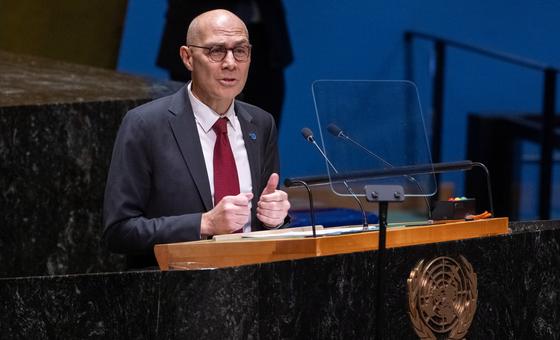
In presenting his annual report to the Third Committee of the General Assembly, Volker Türk highlighted that surveys consistently show that people worldwide overwhelmingly support the values that underpin human rights, namely dignity, equality and justice.

He urged the international community to “build on this energy, at a time when disquiet, disenfranchisement, disillusionment, and disarray are spreading across the world.” 

Sudan war: ‘Utter disregard’ for human rights 

Mr. Türk noted that “several Governments are openly flouting the standards that bind us, and the universal values that define us”, and this is evident by the multiple conflicts occurring across the world.

Warring parties in Sudan “continue to show an utter disregard for international human rights and humanitarian law”, he said, while the situation in the besieged city of El Fasher in Darfur “is devastating and extremely alarming”.

“All countries need to respect the Security Council’s arms embargo. Protecting civilians, full humanitarian access, an end to the conflict and a return to civilian rule are the top priorities,” he said. 

‘Deadlier’ phase in Ukraine conflict

Meanwhile, “the war in Ukraine has entered an even deadlier stage for civilians,” as schools, hospitals, and shelters face relentless bombardment. 

The people of both Ukraine and Russia “urgently need peace, in line with the UN Charter, international law, and General Assembly resolutions,” he said.

He addressed the situation in Myanmar, where “civilians continue to suffer the cruellest toll.” The people “are calling for a viable future in which all communities can live in peace, free from discrimination.”  

He also pointed to recent encouraging efforts towards peace in the Democratic Republic of the Congo which “need to be matched by a changing reality on the ground”, including a genuine ceasefire.  

Gaza ceasefire and aid

Turning to Gaza, Mr. Türk welcomed the release of all hostages and many arbitrarily detained Palestinians as part of the first phase of the ceasefire.

“This needs to lead to a permanent ceasefire, with humanitarian aid flowing in at scale,” he said.

“Recovery efforts need to pursue accountability for the gross violations and abuses of international human rights law and serious violations of international humanitarian law.”

He stressed that “the goal must remain peace and security for Israelis and Palestinians, through the realization of the Palestinian people’s right to self-determination.”

Support human rights

The High Commissioner also reported on the work of his Office, which included support for efforts towards transitional justice in Syria and human rights monitoring training for civil society in Haiti.

He highlighted the “precarious financial situation” it faces as OHCHR is expecting a budget shortfall of $103 million this year which “represents a gap of almost 20 percent of the bare minimum needed to effectively implement our mandate.” 

He warned that “without adequate funding, grave violations of human rights and international humanitarian law may stay hidden from the world,” effectively giving perpetrators “a free pass” and making the world less safe.

“Human rights – and the UN human rights office – need full-scale financial, political and strategic support,” he said. 


Source link

UN rights chief underlines need for a permanent ceasefire and accountability in Gaza

0

UN rights chief underlines need for a permanent ceasefire and accountability in Gaza

In presenting his annual report to the Third Committee of the General Assembly, Volker Türk highlighted that surveys consistently show that people worldwide overwhelmingly support the values that underpin human rights, namely dignity, equality and justice.

He urged the international community to “build on this energy, at a time when disquiet, disenfranchisement, disillusionment, and disarray are spreading across the world.” 

Sudan war: ‘Utter disregard’ for human rights 

Mr. Türk noted that “several Governments are openly flouting the standards that bind us, and the universal values that define us”, and this is evident by the multiple conflicts occurring across the world.

Warring parties in Sudan “continue to show an utter disregard for international human rights and humanitarian law”, he said, while the situation in the besieged city of El Fasher in Darfur “is devastating and extremely alarming”.

“All countries need to respect the Security Council’s arms embargo. Protecting civilians, full humanitarian access, an end to the conflict and a return to civilian rule are the top priorities,” he said. 

‘Deadlier’ phase in Ukraine conflict

Meanwhile, “the war in Ukraine has entered an even deadlier stage for civilians,” as schools, hospitals, and shelters face relentless bombardment. 

The people of both Ukraine and Russia “urgently need peace, in line with the UN Charter, international law, and General Assembly resolutions,” he said.

He addressed the situation in Myanmar, where “civilians continue to suffer the cruellest toll.” The people “are calling for a viable future in which all communities can live in peace, free from discrimination.”  

He also pointed to recent encouraging efforts towards peace in the Democratic Republic of the Congo which “need to be matched by a changing reality on the ground”, including a genuine ceasefire.  

Gaza ceasefire and aid

Turning to Gaza, Mr. Türk welcomed the release of all hostages and many arbitrarily detained Palestinians as part of the first phase of the ceasefire.

“This needs to lead to a permanent ceasefire, with humanitarian aid flowing in at scale,” he said.

“Recovery efforts need to pursue accountability for the gross violations and abuses of international human rights law and serious violations of international humanitarian law.”

He stressed that “the goal must remain peace and security for Israelis and Palestinians, through the realization of the Palestinian people’s right to self-determination.”

Support human rights

The High Commissioner also reported on the work of his Office, which included support for efforts towards transitional justice in Syria and human rights monitoring training for civil society in Haiti.

He highlighted the “precarious financial situation” it faces as OHCHR is expecting a budget shortfall of $103 million this year which “represents a gap of almost 20 percent of the bare minimum needed to effectively implement our mandate.” 

He warned that “without adequate funding, grave violations of human rights and international humanitarian law may stay hidden from the world,” effectively giving perpetrators “a free pass” and making the world less safe.

“Human rights – and the UN human rights office – need full-scale financial, political and strategic support,” he said. 


Source link

The “The Path to Happiness” campaign strengthens a legacy of ethical and civic action in Switzerland

0

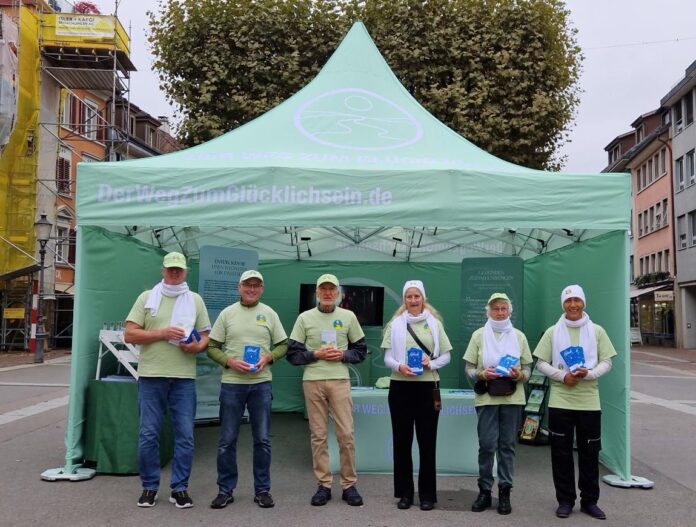
From the streets of Zurich to the fairs of Bern and the lakeside city of Lucerne, volunteers inspired by The Way to Happiness, the non-religious moral guide written by humanitarian and philosopher L. Ron Hubbard, continue to promote ethical living and civic engagement throughout German-speaking Switzerland. Their message is simple: integrity, kindness and responsibility are the foundation of personal and social well-being.

ZURICH, October 15, 2025 — From the streets of Zurich to the fairs of Bern and the lakeside city of Lucerne, volunteers inspired by The path to happinessthe non-religious moral guide written by humanitarian and philosopher L. Ron Hubbard, continues to promote ethical living and civic engagement throughout German-speaking Switzerland. Their message is simple: integrity, kindness and responsibility are the foundations of personal and social well-being.

A tradition of service and education

In recent years, the non-profit association Verein Der Weg zum Glücklichsein (Association Le chemin du Bonheur) has carried out its initiatives in Swiss towns and villages through environmental projects, educational stands and community partnerships. During events such as the annual BEA Spring Fair in Bern, one of the country’s most important civic exhibitions, visitors learned about the 21 precepts of the Way to Happiness, including “Be Trustworthy,” “Respect the Religious Beliefs of Others” and “Protect and Enhance Your Environment.” These simple but universal principles have found a particular resonance with the Swiss public, accustomed to valuing diversity, respect and cooperation.

The association’s volunteers also participate in environmental campaigns such as the National Cleanup Daycoordinated by IGSU (Clean Environment Interest Group). In 2023, volunteers organized waste collection activities in Bern, Bellmund and Burgdorf, together with residents and local civic organizations to promote respect for common public spaces. The association described the efforts as “an expression of community responsibility and environmental ethics” and a few weeks ago it set up a stand in Zurich to broadcast public service announcements and distribute the booklet for free.

Celebration of the International Day of Happiness

In March 2025on the occasion of the United Nations International Day of Happinessvolunteers from the Zurich and Lucerne sections distributed more than a thousand copies of Der Weg zum Glücklichsein to passers-by, as well as small candies bearing quotes taken from the 21 precepts of the book. This activity reflected the spirit of the United Nations celebration, highlighting how individual kindness and ethical behavior contribute to collective well-being. “It was heartwarming to see people smile and take a moment to think,” said one volunteer. “Everyone understood that happiness grows when we help others. »

A moral code for daily life

First published in 1981, The path to happiness is a non-religious moral code that has been translated into more than 115 languages ​​and adopted by educators, community leaders and volunteers around the world. This booklet promotes universal values ​​– honesty, tolerance, respect for others and responsibility for the environment – ​​presented in simple and practical terms. In Switzerland it was also printed in Swiss German under the title Z’Läbe fägtmaking its message accessible in all linguistic regions.

“It offers advice that everyone can apply in their daily life,” said a volunteer from Zurich. “Whether it’s about being honest or helping your neighbor, these precepts remind us that happiness is not something we find, but something we create through our actions. »

The long-standing presence of Scientology in Switzerland

The values ​​promoted by The path to happiness are rooted in a long tradition of Scientology activities in Switzerland. Since the 1970s, small groups began to form in Zurich, Basel and Bern. Their commitment quickly led to the official establishment of the first Churches of Scientology in the country: the Church of Scientology Zurich signed its founding statutes on February 23, 1974, followed by the Church of Scientology Basel on May 4 of the same year, then by the Church of Scientology Bern on May 30, 1975. The Church of Scientology Geneva was founded on January 3, 1978, and that of Lausanne on September 15, 1983.

In subsequent decades, other Scientology missions were established in Lucerne (August 9, 1976), Bellinzona (February 18, 1988), Zurich (July 22, 1982), Lugano (May 18, 1998), and Zug (October 9, 2002). Since the 1980s, Scientologists have also served as ministers across the country, helping people learn and apply the principles of Scientology in their daily lives. This continued expansion reflects an ongoing interest in the teachings of L. Ron Hubbard and their contribution to Swiss social and cultural life.

European values ​​in action

According to Ivan Arjona-Peladorepresentative of Scientology near theEuropean Union, OSCE, Council of Europe and United Nations :

“Across continental Europe, citizens are seeking common ground based on ethics and mutual respect. The work carried out in Zurich, Bern and Lucerne as part of the program The path to happiness reflects this aspiration. It demonstrates how spiritual inspiration can be translated into concrete civic engagement, supporting education, environmental protection and human dignity,” said Mr. Arjona.

The association plans to continue its community outreach and collaboration with civic partners, aligning its efforts with events such as Clean Up Day, World Environment Day and International Volunteer Day. Its volunteers emphasize that their motivation lies in giving individuals the means to make ethical choices that contribute to the common good. In their eyes, moral education and personal integrity are essential elements of a healthy and inclusive society.

Through simple, person-to-person actions, such as handing out a booklet, cleaning a park or helping a neighbor, the campaign illustrates how ethical awareness can become a living expression of European ideals of cooperation, sustainability and peace.

About the Path to Happiness

The Path to Happiness is a non-religious moral code written by L. Ron Hubbard in 1981. Its 21 precepts, based on common sense and universal values, have inspired millions of people around the world to live with integrity and compassion. The booklet serves as a bridge between people of all faiths and backgrounds, promoting understanding and personal responsibility.

About the Church of Scientology

The Church of Scientology is a contemporary religion founded by L. Ron Hubbard in 1952. Recognized as an authentic religion in many European countries, it maintains an active presence throughout the continent. The Church and its members are dedicated to education, prevention and community improvement through humanitarian initiatives such as The Way to Happiness, Say No to Drugs and Youth for Human Rights. In Switzerland, Scientology has maintained an organized presence since 1974, continuing to contribute to moral education and social progress in harmony with Swiss and European values.

Originally published at Almouwatin.com

UN rights chief stresses need for permanent ceasefire, accountability in Gaza

0

By presenting its annual report to Third Committee of the General AssemblyVolker Türk stressed that surveys consistently show that people around the world overwhelmingly support the values ​​that underpin human rights, namely dignity, equality and justice.

He exhorted the international community to “build on this energy, at a time when disquiet, disenfranchisement, disillusionment and disarray are spreading across the world.”

War in Sudan: “total disregard” for human rights

Mr. Türk noted that “several governments are openly flouting the norms that bind us and the universal values ​​that define us,” as evidenced by the multiple conflicts erupting across the world.

Warring parties in Sudan “continue to show total disregard for human rights and international humanitarian law,” he said, while the situation in the besieged town of El Fasher in Darfur “is devastating and extremely alarming.”

“All countries must respect the Security Councilthe arms embargo. The protection of civilians, full humanitarian access, an end to the conflict and a return to civilian rule are the main priorities,” he said.

“Deadliest” phase of the conflict in Ukraine

Meanwhile, “the war in Ukraine has entered an even deadlier phase for civilians,” as schools, hospitals and shelters face relentless bombardment.

The Ukrainian and Russian people “are in urgent need of peace, in accordance with United Nations Charterinternational law and General Assembly resolutions,” he said.

He referred to the situation in Myanmar, where “civilians continue to suffer the cruelest toll”. The population “is demanding a viable future in which all communities can live in peace, without discrimination”.

He also highlighted recent encouraging efforts for peace in the Democratic Republic of Congo, which “must be accompanied by a changing reality on the ground,” including a genuine ceasefire.

Ceasefire and aid to Gaza

Regarding Gaza, Mr. Türk welcomed the release of all the hostages and many Palestinians arbitrarily detained as part of the first phase of the ceasefire.

“This must lead to a permanent ceasefire, with large-scale humanitarian aid,” he said.

“Recovery efforts must aim to hold accountable those responsible for gross violations and abuses of international human rights law and serious violations of international humanitarian law. »

He stressed that “the goal must remain peace and security for Israelis and Palestinians, through the realization of the Palestinian people’s right to self-determination.”

Support human rights

The High Commissioner also reported on the work of his office, which included supporting transitional justice efforts in Syria and human rights monitoring training for civil society in Haiti.

He highlighted the “precarious financial situation” she faces OHCHR expects a budget deficit of $103 million this year, which “represents a gap of nearly 20 percent of the bare minimum needed to effectively implement our mandate.”

He warned that “without adequate funding, serious violations of human rights and international humanitarian law could remain hidden from the world,” thereby giving perpetrators “a free pass” and making the world less safe.

“Human rights – and the Office of the United Nations High Commissioner for Human Rights – need large-scale financial, political and strategic support,” he said.

Originally published at Almouwatin.com

Humanitarians call for greater support amid immense needs

0
Humanitarians call for greater support amid immense needs

The $45.3 billion needed for life-saving activities throughout 2025 was just 21 per cent funded as of September, with nearly $9.6 billion received, the UN aid coordination office OCHA said on Tuesday.

This represents “a staggering decrease of over 40 per cent compared to the same time last year.”

Health facilities closed, food aid cut

OCHA stressed that the funding gaps are having devastating consequences for millions worldwide who are being left without healthcare, food and education.

“In Afghanistan, more than 420 health facilities have closed this year, forcing three million people to go without critical care,” the agency said.

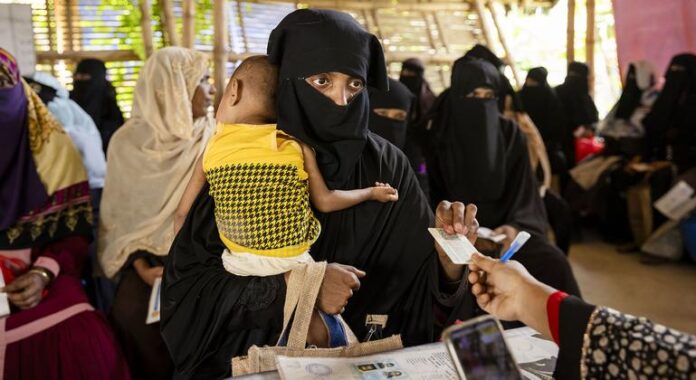
In Somalia, cuts to food aid now mean that only 350,000 people will receive support in November, compared to over a million in August, while half a million Rohingya refugee children in Bangladesh have lost access to education.

Support saves lives

The UN and its humanitarian partners are doing all they can to reach as many vulnerable people as possible with the limited funding available, OCHA said.

In June, the agency launched a hyper-prioritised global appeal within the broader 2025 Global Humanitarian Overview that called for $29 million to meet the most urgent needs of 114 million people.

“We have been forced into a triage of human survival,” UN Humanitarian Affairs and Emergency Coordinator Tom Fletcher said at the time. 

 “Too many people will not get the support they need, but we will save as many lives as we can with the resources we are given.”

OCHA called on donors to step up their investment in humanitarian aid, saying “at a time when global needs are immense, more support is critical to saving lives.” 

Source link

Foreign Affairs Council (Defence): press remarks by High Representative/Vice-President Kaja Kallas

0
Foreign Affairs Council (Defence): press remarks by High Representative/Vice-President Kaja Kallas

Foreign Affairs Council (Defence): press remarks by High Representative/Vice-President Kaja Kallas

Source link

António Guterres puts forward a reform program with “maximum impact”

0

Addressing the General Assembly, Guterres briefed Member States on the structural reforms and programmatic realignments that are needed across the United Nations system to make it fully capable of meeting today’s challenges.

“My vision of the United Nations system is clear: Entities working together to achieve better results – overcoming fragmentation, eliminating duplication, improving financing models and maximizing synergies.», declared the secretary general.

“For the people we serve”

He highlighted the need for a more streamlined, collaborative and cost-effective approach: “ensuring that the resources entrusted to us have maximum impact on the people we serve.”

As part of the reform campaign, Mr. Guterres announced the creation of a dedicated UN 80 Implementation Team to advance reform proposals, either by submitting them to intergovernmental decision-making bodies – or by advancing them unilaterally when within his authority.

The ultimate leadership of the UN80 Initiative rests with you, the Member States of the United Nations.“, underlined Mr. Guterres.

The briefing is part of the UN80 Initiativewhich aims to streamline operations, increase impact and reaffirm the relevance of the UN in a rapidly changing world.

This is the third of three workstreams created to guide the reform process.

Workstream 1 focuses on modernizing business operations and improving efficiency within the Secretariat and the United Nations system – including through consolidated administrative platforms, relocations to lower-cost duty stations and reduction of real estate costs – while preserving core program delivery.

The first proposals included in the revised forecasts for the 2026 budgetare now before the Fifth Committee of the General Assembly, and decisions are expected by December this year.

Workstream 2 examines the full lifecycle of mandates to strengthen coherence, accountability and impact.

It is initial recommendations are being studied by a Informal ad hoc working group of the General Assembly, co-chaired by Jamaica and New Zealand, which is leading a “discovery phase» until the end of 2025.

Changing paradigms

Among the more than 70 proposals included in the first progress report Workstream 3 concerns the plan to consolidate and reconfigure the peace and security teams at Headquarters in New York, as well as the special political missions in Yemen, Cyprus and Central Africa.

Other potential reforms include a merger between the United Nations Development Program (UNDP) and the United Nations Office for Project Services (UNOPS), an initiative that Mr. Guterres said would “create a more powerful sustainable development engine, with greater scope and scale.”

He also raised the possibility of merging UN Women and the United Nations Population Fund (UNFPA) to form “a unified and more powerful voice on gender equality and the rights of women and girls”. [More details on the proposals on this UN News story]

“More than just a cost-cutting exercise”

Before her presentation, Member States heard from Annalena Baerbock, the President of the General Assemblywhich echoed the need for Member States to commit to the reform proposals presented in the Secretary-General’s report.

The caller “more than a cost-cutting exercise“, she summarized the UN80 Initiative as being “a question of efficiency, agility and ability to leverage cutting-edge technologies.”

She also stressed that while Member States cannot ignore the “precarious budgetary situation,” they have a responsibility to the people the United Nations serves.

“We cannot sacrifice the principles of this institution in the name of the ‘bottom line,’” Baerbock said.

Check out our UN News explainer on the UN80 initiative, here.

Originally published at Almouwatin.com

Humanitarian funding cuts push millions into hunger (WFP)

0

Programs in Afghanistan, the Democratic Republic of Congo (DRC), Haiti, Somalia, South Sudan and Sudan are already facing major disruptions, which will only get worse.

Each ration reduction means a child goes to bed hungry, a mother misses a meal, or a family loses the support they need to survive.“, said PAM Executive Director Cindy McCain.

Record hunger, reduced budget

The crisis comes as global hunger reaches record levels, with 319 million people facing acute food insecurity, including 44 million in emergencies. Famine has also set in in Sudan and the Gaza Strip.

WFP expects to receive 40 percent less funding this year, which would translate into a projected budget of $6.4 billion, compared to $10 billion in 2024.

“We are risk losing decades of progress in the fight against hunger“said Ms. McCain.

“Even hard-won progress in the Sahel region, where 500,000 people have been freed from aid dependency through integrated food assistance and resilience programs, could soon be reversed without continued support. »

Critical operations at risk

These reductions could move 13.7 million people receiving WFP food aid from crisis level to emergency famine, an increase of a third, the agency said in its statement. a new report.

In Afghanistan, “dramatic reductions” mean food aid reaches less than 10 percent of those who need it, despite soaring malnutrition rates.

The DRC faces record levels of hunger and around a quarter of the population, or 28 million people, suffer from food insecurity.

The WFP had planned to feed 2.3 million people this month, which was reduced to 600,000 people, and ‘complete pipeline rupture’ could occur by February.

“In Haiti, hot meal programs have already been interrupted and families are receiving half of the WFP’s standard monthly rations,” the agency said, while “aid in Somalia has been cut repeatedly,” from 2.2 million people last year to just 350,000 in November.

All WFP food beneficiaries in South Sudan are now receiving a reduced ration, “which will be missing some food items from October as the country’s stocks run out”.

Meanwhile, WFP currently supports four million people each month in war-torn Sudan, but 25 million people, half the population, face acute food insecurity.

Food aid is loaded onto a Nile barge for delivery to isolated communities.

Commitment to deliver

The WFP said its preparedness efforts also suffered. For the first time in nearly a decade, there are no contingency stocks for the hurricane season in Haiti, nor any prepositioning of food in Afghanistan as winter approaches.

Although the reductions have different impacts depending on its operations, the agency remains committed to providing food assistance to the world’s hungriest regions.

“The devastating damage caused by food aid reductions not only threatens human lives, but also risks undermining stability, fueling displacement, and fueling broader social and economic upheaval,” Ms. McCain said.

“Quick and efficient food aid is a vital bulwark against chaos in countries that are already struggling to cope.

Originally published at Almouwatin.com