In a statement on Wednesday, Emergency Relief Coordinator Tom Fletcher said that two days after world leaders gathered in Sharm el-Sheikh to endorse the US-led peace initiative, “this is a moment of great but precarious hope.”
“It is also clear from the public response to the progress, that Palestinians, Israelis and people across the region want this peace to take hold,” Mr. Fletcher said.
“So, we must not fail to see through in full the implementation of the agreements made.”
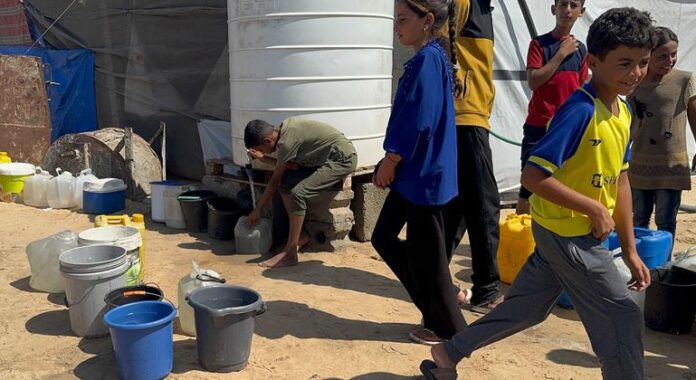
He said UN humanitarian operations had finally begun to scale up “after months of frustration and blockages,” with some food, medicine, fuel, water, cooking gas and tents delivered to those in need.
However, he warned that renewed setbacks now threatened to undermine that fragile progress.
“We are now tested to see whether we can ensure that these do not prevent the progress on which President [Donald] Trump, the UN Secretary-General and so many leaders have insisted,” he said.
Mr. Fletcher called on Hamas to “make strenuous efforts to return all the bodies of deceased hostages, urgently,” and voiced concern over “evidence of violence against civilians in Gaza.”
He also pressed Israel to allow “the massive surge of humanitarian aid – thousands of trucks a week – on which so many lives depend.” Additional border crossings must be opened, he said, and remaining logistical barriers lifted to ensure aid flows freely.
“Facilitation of aid is a legal obligation,” Mr. Fletcher stressed. “We will not accept any interference with our aid distribution.”
Summary executions in Gaza
His appeal came as the UN human rights office (OHCHR) reported new allegations of serious abuses in Gaza, including summary executions and unlawful killings of civilians.
Armed clashes between Hamas-affiliated groups and rival factions have intensified since 10 October, OHCHR said in a news release.
On 13 October, video footage released by the Sahm Unit, reportedly linked to Gaza’s Interior Ministry, showed the public execution of eight blindfolded and handcuffed men who were alleged members of a Gaza City-based family militia.
OHCHR added that said such acts “amount to a war crime,” and reminded Hamas that they “must prevent and repress any violation or abuse committed by its members.”
Meanwhile, Israeli forces were reported to have opened fire on Palestinians attempting to return to their homes in eastern Gaza City on 14 October, killing three. OHCHR said it had recorded 15 Palestinian deaths in similar incidents since 10 October.
“The situation in Gaza remains precarious and uncertain,” said Ajith Sunghay, head of OHCHR in the Occupied Palestinian Territory.
“It is imperative to ensure that the ceasefire holds and progresses to recovery and the full realisation of Palestinians’ right to self-determination,” he added.
In a statement On Wednesday, Emergency Relief Coordinator Tom Fletcher said that two days after world leaders gathered in Sharm el-Sheikh to support the U.S.-led peace initiative, “this is a moment of great but tenuous hope.”
“It is also clear from the public reaction to progress that Palestinians, Israelis and people across the region want this peace to settle” said Mr. Fletcher.
“SO, we must not fail to complete the full implementation of the agreements reached.»
He said UN humanitarian operations had finally begun to scale up “after months of frustration and blockages”, with the delivery of food, medicine, fuel, water, cooking gas and tents to those in need.
However, he warned that new setbacks now threatened to undermine this fragile progress.
“We are now being put to the test to see if we can ensure that these measures will not prevent the progress the president desires.” [Donald] Trump, the UN Secretary General and many leaders insisted,” he said.
Mr. Fletcher called on Hamas to “make strenuous efforts to urgently return all the bodies of the deceased hostages,” and expressed concern regarding “evidence of violence against civilians in Gaza.»
He also pressed Israel to allow “the massive influx of humanitarian aid – thousands of truckloads per week – on which so many lives depend.” Additional border crossings must be opened, he said, and remaining logistical barriers must be removed to ensure the free flow of aid.
“Facilitating aid is a legal obligation,” emphasized Mr. Fletcher. “We will not accept any interference in our distribution of aid.»
Summary executions in Gaza
His appeal came as the UN human rights office (OHCHR) reported new allegations of serious abuses in Gaza, including summary executions and unlawful killings of civilians.
Armed clashes between Hamas-affiliated groups and rival factions have intensified since October 10, OHCHR said in a statement. press release.
On October 13, video footage released by the Sahm Unit, reportedly linked to the Gaza Interior Ministry, showed the public execution of eight men, blindfolded and handcuffed, who were suspected members of a Gaza-based family militia.
OHCHR added that such acts “constitutes a war crime,” and reminded Hamas that it “must prevent and repress any violation or abuse committed by its members.”
Meanwhile, Israeli forces reportedly opened fire on Palestinians trying to return to their homes in eastern Gaza City on October 14, killing three people. The OHCHR said it had recorded 15 Palestinian deaths in similar incidents since October 10.
“The situation in Gaza remains precarious and uncertain,said Ajith Sunghay, head of OHCHR in the Occupied Palestinian Territory.
“It is imperative to ensure that the ceasefire is respected and progresses towards the restoration and full realization of the Palestinian right to self-determination,” he added.
This increase is due to continued human emissions, increased wildfires, and weakened absorption by land and ocean “sinks” – a development that threatens to create a vicious climate cycle.
THE WMOThe latest greenhouse gas bulletin shows that CO₂ growth rates have tripled since the 1960s, from an average annual increase of 0.8 parts per million (ppm) to 2.4 ppm per year, during the decade 2011 to 2020.
The rate jumped by a record 3.5 ppm between 2023 and 2024 – the largest increase since monitoring began in 1957.
Average concentrations reached 423.9 ppm in 2024, compared to 377.1 ppm when the bulletin was first published in 2004.
About half of the CO₂ emitted remains in the atmosphere, while the rest is absorbed by land and oceans; storage weakens as warming reduces ocean solubility and worsens drought.
The 2024 peak was likely amplified by an increase in wildfires and a reduction in CO₂ uptake by land and ocean in 2024 – the hottest year on record, with a strong El Niño climate effect.
“There is concern that land and ocean CO₂ sinks are becoming less efficient, which will increase the amount of CO₂ that remains in the atmospherethus accelerating global warming. Sustained and strengthened greenhouse gas monitoring is essential to understanding these loops,” said Oksana Tarasova, WMO senior scientist who coordinates the bulletin’s research.
Other records
Methane and nitrous oxide – the second and third long-lived greenhouse gases – also set new emissions records.
Methane levels reached 1,942 ppb, 166 percent above pre-industrial levels, while nitrous oxide reached 338 ppb, an increase of 25 percent.
“Heat trapped by CO2 and other greenhouse gases fuel our climate and lead to more extreme weather. Reducing emissions is therefore essential not only for our climate but also for our economic security and the well-being of our communities,” said Ko Barrett, WMO Deputy Secretary-General.
Monitoring and action
The WMO released the report ahead of the COP30 climate conference in Belém, Brazil, which begins in November, emphasizing that sustained global monitoring is vital to guide climate action.
The Israeli military body which coordinates with the UN and other international organizations, COGAT, said in a statement that starting Wednesday, it will allow only 300 of the previously agreed 600 aid trucks from the UN and other NGOs to enter the Gaza Strip, ending the flow of commercial goods.
COGAT added that no fuel or gas supplies will be allowed into the enclave, except where it relates to humanitarian needs.
In a press briefing on Tuesday Olga Cherevko, Spokesperson in Gaza for the UN aid coordination office, OCHA, said the agency would continue to encourage the two sides to adhere to the agreements set out in the ceasefire deal.
“We certainly very much hope that the bodies of the hostages are handed over and that the ceasefire continues to to be implemented,” she said.
OCHA is currently implementing a 60-day scale-up plan, while thousands of tonnes of humanitarian aid and supplies have entered Gaza for the first time in months in the past few days.
“Since the ceasefire plan came into effect, the UN and our humanitarian partners have been able to move more freely across parts of Gaza from which Israeli forces have withdrawn, without coordination with Israeli authorities,” said UN Deputy Spokesperson Farhan Haq at the daily press briefing in New York.
He listed a number of aid breakthroughs including that the installation of a solar panel for a desalination unit, new telecommunications hardware to improve connectivity, the transfer of life-saving medicines by the World Food Programme (WFP), and other developments.
He highlighted that more can be done: more crossings must open, infrastructure needs to be restored and security guarantees for convoys must be forthcoming.
Landmine risk
Mr. Haq shared an update from the UN Mine Action Service (UNMAS) referring to the serious risks faced by displaced people and humanitarian workers from unexploded ordnance, such as landmines, across the devastated Gaza Strip.
Since October last year, UNMAS has disposed of 550 explosive ordnance items but that is only in areas they were able to access. Explosive Ordnance Disposal (EOD) Officers are evaluating the situation and providing guidance to mitigate the risk.
“The ceasefire has ended the fighting, but it hasn’t ended the crisis,” said Ms. Cherevko.
Unexploded ordnance is just one of the many challenges that will need to be addressed during the post-conflict period along with displacement, destroyed infrastructure, the collapse of basic services, and more.
“Scaling up response is not just about logistics and more trucks. It’s about restoring humanity and dignity to a shattered population,” she added.
The framework, developed after years of negotiations and approved in draft form in April, would for the first time establish a mandatory global fuel standard and greenhouse gas pricing mechanism for ships.
Together, they aim to bring the global maritime fleet – which carries around 80% of global trade and produces almost 3% of global emissions – towards net zero emissions by 2050.
He recognized that Some countries view the plan as too ambitious, while others say it does not go far enough..
“IMO the Net-Zero framework is not perfect,“, he told delegates, “However, it constitutes a balanced basis for the continuation of our work with a view to its entry into force in 2027.»
“This process has been inclusive and thorough,” Mr. Dominguez added, urging delegates to approach the negotiations “with diplomacy and respect.”
“Here we are diplomatic and respectful of each other, we listen to everyone’s opinion, we move forward and we always seek to improve in this ever-changing industry.”
The IMO currently has 176 member states and three associate members.
If adopted, the rules would apply to all ocean-going ships over 5,000 gross tonnes, which together account for about 85 percent of shipping-related emissions. National governments will be responsible for enforcement.
Ships would be required to gradually reduce their reliance on carbon-emitting fuels and pay the price for excess emissions, with revenue to be reinvested in clean energy transition measures and support for developing countries.
If a ship emits below a certain threshold, it can store or trade its excess units and, similarly, if a ship switches entirely to zero or near-zero emissions fuels, it is entitled to financial rewards.
Strong headwinds
The proposal, however, faces strong objections from the United States.
In a joint statement last week, the US secretaries of Energy and Transportation said the framework amounted to “a global carbon tax”, warning that it could increase transportation costs by more than 10% and harm US consumers.
The statement warned that Washington would consider imposing visa restrictions, trade sanctions and new port fees on countries supporting the framework.
The Council today decided on its position for negotiations with the European Parliament regarding the provision of a further €500 million in macro-financial assistance (MFA) to Jordan.
Paris — France has suspended the controversial increase in the legal retirement age from 62 to 64 until after the 2027 presidential election. Prime Minister Sébastien Lecornu announced the pause to ease political tensions and seek cross-party support in a hung parliament. The decision answers months of protests and tough bargaining with the Socialists, but it carries fiscal costs and leaves open the question of how to stabilise the pension system as the population ages.
Prime Minister Sébastien Lecornu has shelved the 2023 pension reform’s core measure—raising the retirement age to 64—until after the next presidential vote in 2027. He told lawmakers that the pause is meant to calm social tensions and build a parliamentary majority for broader budget measures, rather than forcing the issue via constitutional shortcuts. The announcement, first reported in live coverage by The Guardian’s live blog and confirmed by Reuters, immediately eased the threat of a no-confidence revolt—provided the Socialists withhold support from rival motions on the budget.
The move marks a tactical retreat from President Emmanuel Macron’s marquee reform. As Le Monde notes, Lecornu’s political survival depends on negotiations with the centre-left, which had demanded a suspension. The government insists the delay is not a repeal; instead, it is a window to pursue “responsible” compromise and budget discipline without inflaming the street.
France has been mired in parliamentary deadlock since snap elections left no party with a majority. Months of strikes and demonstrations against the pension law—passed in 2023 using Article 49.3—deepened mistrust. By announcing a pause, Lecornu seeks to avert the collapse of his minority government and to secure cooperation on the 2026 budget. According to Associated Press, the prime minister also ruled out using 49.3 on the budget, a signal that he intends to negotiate line by line.
Markets, meanwhile, are watching the fiscal math. Reuters argued that suspending the reform underscores the difficulty of enforcing discipline in a fragmented political landscape—but also reduces near-term political risk.
How much will the pause cost?
Lecornu has acknowledged a short-term bill for putting the brakes on the age rise—citing roughly €400 million in 2026 and about €1.8 billion in 2027. Those figures land on top of a broader structural gap in the pension accounts identified by the national audit office.
In February, the Cour des comptes projected that, even with the 2023 law phased in, the system’s deficit would stabilise around €6.6 billion to 2030, then worsen as demographics bite—reaching about €15 billion in 2035 and around €30 billion in 2045. Reuters’ summary of the report highlighted that cumulative gaps could add substantially to France’s public debt if unaddressed.
Political reactions
The Socialists called the suspension a “first step” and signalled they might withhold their votes from no-confidence attempts if negotiations proceed in good faith—positions reflected in The Guardian’s report. The hard left and far right criticised the move as a tactical delay rather than a solution, renewing calls for repeal or new elections. Employers’ organisations have largely avoided reopening the age debate but continue to press for a credible path to reduce the deficit and protect competitiveness.
In a related development, labour unrest elsewhere in Europe — such as the large strike that grounded departures at Brussels Airport earlier this year — shows that economic frustration and resistance to austerity remain widespread across the continent. France’s government hopes its more conciliatory approach will prevent similar unrest at home.
What changes on the ground?
Legally, the 2023 reform remains on the books; its application—specifically the step-up to 64—would be deferred until after 2027. The government says it will launch a consultation with unions and business to examine alternative levers: contribution rates, special regimes, career-length rules, and measures to improve senior employment. Whether consensus emerges on any combination of those options will shape France’s next pension chapter.
The European context
France’s age threshold is low by European standards, even with the now-paused rise. Many EU countries already set “normal” retirement around 65 or higher and are linking future increases to life expectancy. For example, Belgium’s statutory age will rise to 66 in 2025 and 67 in 2030, while the Netherlands and several Nordics adjust automatically to longevity, as tracked by the Finnish Centre for Pensions. The OECD projects that normal retirement ages across advanced economies will continue to drift upward as societies age.
On spending, France is among the EU’s highest: Eurostat puts pension outlays at about 12.2% of GDP for the EU average in 2022, with France materially above that level in comparative breakdowns (Eurostat overview). That context helps explain why successive governments, not only Macron’s, have tried to curb long-term costs while safeguarding adequacy.
What to watch next
Budget arithmetic: The 2026 budget must square the pension pause with deficit-reduction targets. The government has promised no “blank cheque,” signalling offsetting measures to avoid a wider gap.
Social dialogue: Unions will press for fairness across professions, especially workers with long or physically demanding careers. Business groups will focus on senior employment, incentives to stay in work, and predictability.
EU rules: As fiscal surveillance returns, France’s trajectory will be judged against common thresholds—another reason the pension numbers matter beyond Paris.
For now, the political temperature has lowered. But the core dilemma—how to finance retirement for longer lives without overburdening younger workers and the economy—remains unresolved. The pause buys time; it does not balance the books.
A nationwide strike brought Brussels to a standstill on Tuesday as tens of thousands of Belgians took to the streets to protest government austerity measures and pension reforms. Police used tear gas and water cannons to disperse parts of the crowd, leading to dozens of arrests and several injuries, in what has become Belgium’s largest demonstration in a decade.
Brussels, October 14, 2025 — Belgium’s capital witnessed its most turbulent day of social unrest in years as a massive national strike erupted into clashes between protesters and police across central Brussels. The demonstration, called by major trade unions, targeted the government’s new austerity policies and plans to raise the retirement age from 65 to 67 by 2030 — measures introduced by Prime Minister Bart De Wever’s right-wing coalition.
Police reported dozens of arrests after deploying tear gas and water cannons near Boulevard Pachéco, where masked demonstrators vandalized the Immigration Office. Several people were injured in the confrontation, while many participants expressed anger at what they called an “excessive” police response.
“We were just marching peacefully and suddenly there were smoke bombs and police. For maybe ten troublemakers, they tear-gassed everyone — the elderly, the children,” said Rafael, a postal worker whose eyes were still red from the gas.
Belgium’s Migration Minister Anneleen Van Bossuyt condemned the attacks on government buildings, calling the vandalism “an assault on our society” and expressing solidarity with public employees affected by the violence.
The protests drew between 80,000 and 140,000 people, according to differing estimates by police and unions — a turnout rivaling the historic 2014 general strike. Marchers included workers, teachers, lawyers, students, doctors, and families who say the government is eroding Belgium’s social model while ignoring union dialogue.
Marine Lanoy, a lawyer representing asylum seekers, said she joined the protest to denounce the government’s restrictive migration and welfare policies:
“We are here to defend our clients — women victims of violence, people denied social aid. Many cannot be here to protest for themselves.”
Federico Dessi, director of Médecins du Monde Belgium, criticized cuts to healthcare and solidarity organizations:
“They’re undermining the rights of the most vulnerable while reducing support for those trying to help them,” he said.
Voices from the Streets
Amid chants and banners calling Prime Minister De Wever and MR party leader Georges-Louis Bouchez “butchers” of social protection, protesters voiced a broad range of frustrations. Mothers’ collectives such as Bloc Poussette marched with strollers, highlighting the shortage of childcare and parental support.
“As a mother, I feel total anxiety. I don’t know how I’ll manage in a few months, and it’s scary thinking about the future for our children,” said participant Eléonore Rigaux.
Students from the University of Mons decried rising tuition fees, calling them “unfair and exclusionary,” while teachers demanded more staff and better funding.
“Take the money where it stands — from the rich, not the poor,” said Damien Van Keirsbilck, representing a teachers’ movement for education reform.
Unions Demand Dialogue
Trade union leaders accused the government of dismantling Belgium’s long-standing tradition of social dialogue between employers, unions, and the state.
“The government doesn’t listen to anyone and acts as it pleases without consulting workers. This is unacceptable in a country like Belgium,” said Alexandre Sutherland, spokesperson for the liberal union CGSLB.
Despite repeated requests, the offices of Prime Minister De Wever, the MR party, and the New Flemish Alliance declined to comment.
As dusk fell over the Grand-Place and the tear gas settled, protesters vowed to return if their concerns remain unanswered — warning that Tuesday’s strike may be only the beginning of a new wave of Belgian social unrest.
EIB Vice-President Vigliotti underlines the bank’s global support for sustainable and resilient food systems, with a focus on developing countries
EIB lends $110 million to ETC Group to modernize processing plants, storage and transport infrastructure across Sub-Saharan Africa
The investment will strengthen agricultural competitiveness, climate resilience, and livelihoods for smallholders
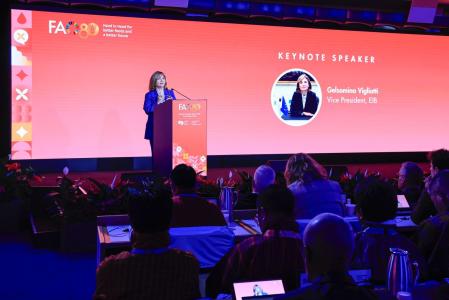
At the World Food Forum in Rome, coinciding with the 80th anniversary of the Food and Agriculture Organization of the United Nations (FAO), European Investment Bank (EIB) Vice-President Gelsomina Vigliotti reaffirmed during her keynote speech the bank’s commitment to strengthening agriculture worldwide, with a particular focus on low- and middle-income countries (LMICs).
“Agriculture is at the heart of global development,” said EIB Vice-President Gelsomina Vigliotti. “The way we produce, distribute, and finance food will determine not only food security but also climate resilience, economic growth, and the livelihoods of millions of people. The EIB plays a key role to support this transformation.”
Since 1965, when the EIB approved its first loan to support agriculture outside Europe, the Bank has financed more than 3,000 agricultural projects beyond the EU, for a total of over €85 billion — with more than 80% of this volume committed in the past decade, reflecting the Bank’s growing focus on agricultural development and food security.
This approach is reinforced through close cooperation with Rome-based UN agencies – FAO, IFAD, and WFP. Joint projects blend financial capacity with technical expertise, ensuring impact even in fragile and low-capacity contexts. For example, a landmark €500 million loan to IFAD, is already scaling rural development and food security in over 70 countries across geographies, with a focus on Sub-Saharan Africa. Moreover, at the Financing for Development (FfD4) summit in Seville in July, the EIB also deepened its collaboration with FAO and WFP through new Memorandum of Understanding.
EIB lends $110 million to ETC Group (ETG) to strengthen agricultural development across Sub-Saharan Africa.
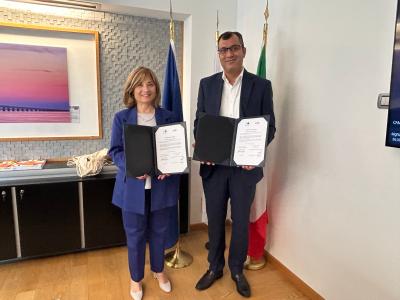
On the margins of the World Food Forum, Vice-President Vigliotti signed a major financing agreement with ETG, one of Africa’s leading agribusiness supply chain players. The $110 million loan will support modernisation of processing plants of commodities such as cashew and soy, as well as essential, storage, and transport infrastructure in Sub-Saharan Africa, including in Mozambique, Malawi, Benin, Zambia, Tanzania, and Uganda. The project also supports ETG’s Farmer Extension Services (FES) program that is in line with its long-standing commitment towards promoting sustainable agriculture. These include training and technical assistance programs to support technology and knowledge transfer to smallholder farmers, as well as community-based initiatives to help farmers improve yields and adopt sustainable practices.
The initiative stands as one of the largest EIB Global financing operations for the private sector in Africa in recent years and reflects the bank’s ambition to build long-term partnerships that boost competitiveness, foster climate resilience, and improve livelihoods across the continent.
“This partnership with ETG shows how targeted private-sector engagement, supported by EIB Global, can deliver real change,” added EIB Vice-President Gelsomina Vigliotti. “By unlocking sustainable investment, we are helping smallholder farmers and rural communities build a more resilient future.”
Paul van Spaendonk, ETG Chief Treasury Officer, welcomed the new agreement: “This significant financing will accelerate our efforts to enhance agricultural competitiveness and food security across Sub-Saharan Africa. With this facility, we can drive impactful projects of varying sizes under a single umbrella, reaching more communities, more quickly.”
Background information
About EIB Global
The European Investment Bank (ElB) is the long-term lending institution of the European Union, owned by its Member States. It finances investments that contribute to EU policy objectives.
EIB Global is the EIB Group’s specialised arm devoted to increasing the impact of international partnerships and development finance, and a key partner of Global Gateway. EIB Global aims to support €100 billion of investment by the end of 2027 — around one-third of the overall target of this EU initiative. Within Team Europe, EIB Global fosters strong, focused partnerships alongside fellow development finance institutions and civil society. EIB Global brings the EIB Group closer to people, companies and institutions through offices across the world. High-quality, up-to-date photos of the organisation’s headquarters for media use are available here.
About ETG
ETG has developed into a global player with a presence in more than 45 countries, spanning 6 continents. The Group has a diverse portfolio of expertise across various industries, encompassing agricultural inputs, chemicals, logistics, processing, food and food ingredients, energy, metals, technology and supply chain optimization. Over 9 000 employees contribute every day to achieve its vision and purpose, and live its values of Respect, Integrity, Pursuit of Excellence, Leadership and Meritocracy. ETG’s verticals are structured in a manner to emphasize focus and optimize strategic growth opportunities. ETG adapts and grows responsibly as a diversified enterprise, creating a sustainable future for all its stakeholders.