Monday, March 30, 2026
Home Blog Page 167

ODIHR Expands Hate Crime Training to Strengthen Justice Systems Across the OSCE Region

0
ODIHR Expands Hate Crime Training to Strengthen Justice Systems Across the OSCE Region

In Warsaw on October 13 2025, the OSCE Office for Democratic Institutions and Human Rights (ODIHR) launched its updated hate crime training manuals for police and prosecutors, building on twenty years of hands-on practice across the OSCE region. The session, held in the Belweder meeting room as part of the OSCE Human Dimension Conference, gathered national experts from Poland and North Macedonia to showcase how these programmes have transformed the criminal justice response to hate crimes.

A Renewed Commitment to Combating Hate Crimes

Opening the event, Tia Jolijashvili, ODIHR’s First Deputy Director, reminded participants that hate crimes “are not only attacks on individuals, but on the cohesion and security of entire societies.” She underlined the importance of professional training for law enforcement, prosecutors, and the judiciary to ensure that bias-motivated crimes are properly identified, investigated, and prosecuted.

Since its creation in 2012, ODIHR’s Training Against Hate Crimes for Law Enforcement (TAHCLE) programme has been implemented in nearly 20 countries, while its companion course for prosecutors, the Prosecutors and Hate Crimes Training (PAHCT), launched in 2014, has reached over 15 states. Both programmes have now been fully revised to incorporate lessons learned, best practices, and new victim-centred approaches.

Programme coordinator Ruth Burns explained that the updated TAHCLE curriculum now includes expanded materials on victim support, community-based policing, and strategies to overcome chronic under-reporting of hate crimes. “If frontline officers fail to recognise bias motivation, victims will never see justice,” she said. The training promotes sensitivity, practical case analysis, and cooperation with civil society to build trust with communities most at risk.

For prosecutors, the PAHCT update—presented by Margarita Kovtun—offers flexible modules tailored to national legal frameworks. It focuses on accurate legal qualification, evidence of bias, and sensitive engagement with victims. A key innovation is the “Prosecutor’s Decision Tree”, a tool launched in 2024 to help practitioners navigate complex intersections between hate speech and hate crime provisions.

National Success Stories: Poland and North Macedonia

Two national case studies demonstrated the programmes’ concrete impact. Marta Krasuska, Chief Specialist on Human Rights and Ethics at Poland’s National Police Headquarters, described how the TAHCLE framework enabled the training of over 11,000 officers and staff since 2023 through a cascade model. “We built a sustainable system—from national coordinators to local trainers—so every police station integrates hate crime prevention into daily work,” she explained.

From North Macedonia, Simona Yordanov, Rule of Law Officer at the OSCE Mission to Skopje, and Public Prosecutor Aleksandar Markoski highlighted their success in institutionalising PAHCT through a formal memorandum of understanding between ODIHR, the national Prosecutor’s Office, and the Academy for Judges and Prosecutors. The result: a leap from two convictions in two decades to 64 hate-crime and hate-speech judgments in the last five years.

Towards a More Resilient Regional Framework

Participants from civil society and OSCE field missions echoed the importance of continuous monitoring and inclusion of health-related and intersectional dimensions, such as hate crimes targeting people living with HIV or TB. ODIHR representatives confirmed that future modules will integrate such perspectives and explore virtual reality simulations to modernise training delivery.

As Jolijashvili concluded, “Each hate-crime case properly recognised and prosecuted restores not only justice for the victim but confidence in the rule of law itself.” With its renewed manuals and growing network of trained professionals, ODIHR’s initiative stands as a cornerstone in the OSCE’s long-term effort to counter intolerance and strengthen human rights across its 57 participating States.
Source link

Gaza: Hostages reported released, aid scale-up has begun, say aid agencies

0
Gaza: Hostages reported released, aid scale-up has begun, say aid agencies

António Guterres expressed his “profound relief” that the hostages had been freed, two years since they were among some 250 taken during Hamas-led terror attacks in Israel on 7 October 2023, before highlighting their “immense suffering”.

The UN Secretary-General’s comments came as he headed to Egypt’s Sharm el-Sheikh along with world leaders for the Gaza peace summit. The international gathering was convened after Israeli forces pulled back from parts of Gaza, in line with an agreement between Israel and Hamas, brokered in Egypt by US mediators and representatives from Qatar and Turkïye.  

In a message on X, Mr. Guterres reiterated his call for the release of the bodies of the deceased hostages and urged “all parties to build on this momentum and to honour their commitments under the ceasefire to end the nightmare in Gaza”.

190,000 tonnes of aid to deliver

Meanwhile, UN aid agencies reported significant positive developments in getting aid into Gaza. 

“Our humanitarian scale-up in Gaza is well underway,” said UN humanitarian agency OCHA, which noted that it had secured Israeli approval for 190,000 tons of food, shelter items, medicine and other supplies to enter the Strip, 20,000 more than previously agreed.

For the first time since March, cooking gas has been allowed to enter the Strip.

In addition, “more tents for displaced families, frozen meat, fresh fruit, flour and medicines also crossed into Gaza throughout the day on Sunday”, OCHA said in any update.

Crucially, the aid agency reported that its workers and partners were now able to move more easily “in multiple areas” – a welcome development after constant access restrictions imposed by the Israeli authorities.

This has allowed aid teams to pre-position medical and emergency supplies “to where they are needed most”, the UN agency said, in addition to assessing key roads for explosive hazards and supporting displaced families in flood-prone areas ahead of winter.

“This is just the beginning. As part of our plan for the first 60 days of the ceasefire, the UN and our partners will expand the scale and scope of our operations to deliver life-saving aid and services to virtually everyone across Gaza,” OCHA continued.

The development is part of the wider humanitarian plan to scale up essential services across food, health, water, shelter, and education, outlined by UN emergency relief chief Tom Fletcher. Its key elements:

  • Food assistance for 2.1 million people, with in-kind rations, bakery and kitchen support, livelihood restoration for herders and fishers, and cash aid for 200,000 families to strengthen dignity and choice.
  • Nutrition programmes: expanded screenings and nutrient-rich food for vulnerable groups such as children, adolescents and pregnant or breastfeeding women.
  • Restoring health care including services, essential medicines, enhanced disease surveillance and expanded emergency and maternal care, along with mental health, and rehabilitation work.
  • Water and sanitation projects for 1.4 million people by repairing grids, sewage systems and waste management, plus hygiene supply distribution.
  • Shelter assistance will be prioritized for displaced and vulnerable families with tents, tarpaulins and other materials ahead of winter.
  • Education boost to reopen temporary learning spaces for 700,000 children with school materials and activities.


Symptoms of war

Two years of extreme violence and constant Israeli bombardment have left many families without homes to return to.

The violence has also created vast physical and psychological needs across Gaza which UN agencies are already addressing.

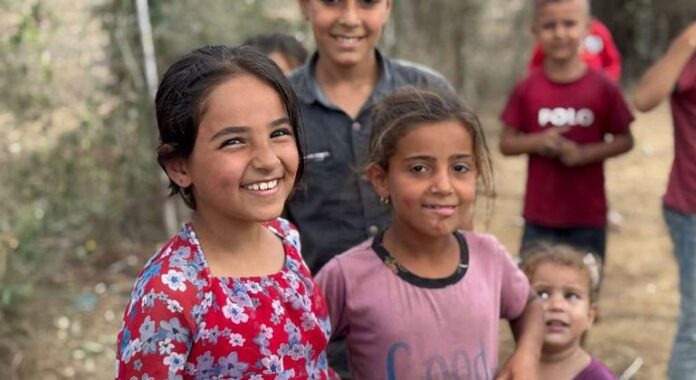
UNICEF, the UN Children’s Fund, underscored that “all one million” youngsters in the Gaza Strip need mental health and psychosocial support.

The war has devastated youngsters’ sense of safety, their development and wellbeing, the UN agency insisted with many displaying “severe stress symptoms” such as withdrawal, nightmares and bedwetting.

To help children heal and overcome their fears, UNICEF supports a self-help recovery programme in which trainers show children how to employ stress-management techniques to release and process painful thoughts and images.

One device is an imaginary “safety button” that children can press when they feel overwhelmed by their situation.

“Whenever I felt scared, I would put my hand on the safety button and take a deep breath in and out. It made me feel so relieved,” said Anas, 15, one of the children helped by the scheme.

In 2025, UNICEF said that eight in 10 of the youngsters participating in the programme showed reduced symptoms of traumatic stress.

Source link

EU common charger: revised rules to improve convenience and cut energy footprint

0
EU common charger: revised rules to improve convenience and cut energy footprint

Electronic devices will become more energy efficient, less harmful for the environment and more consumer-friendly thanks to updated ecodesign requirements for chargers. Chargers for laptops, smartphones, and computers will have to meet higher energy efficiency standards and be more interoperable. Source link

Source

Source link

EU common charger: revised rules to improve convenience and cut energy footprint

0
EU common charger: revised rules to improve convenience and cut energy footprint

Electronic devices will become more energy efficient, less harmful for the environment and more consumer-friendly thanks to updated ecodesign requirements for chargers. Chargers for laptops, smartphones, and computers will have to meet higher energy efficiency standards and be more interoperable.

Source link

New digital border system for non-EU nationals comes into force

0
New digital border system for non-EU nationals comes into force

The EU’s new Entry/Exit System for border control is operational since12 October 2025. It applies to non-EU travellers entering or leaving the EU and will replace passport stamping with digital records. Phased in progressively over six months, it will make travelling smoother and safer for all.

Source link

Gaza: Hostages reportedly released and aid surge begins, aid agencies say

0

António Guterres expressed his “deep relief” that the hostages had been released, two years after they were among the approximately 250 captured during the terrorist attacks carried out by Hamas in Israel on October 7, 2023, before highlighting their “immense suffering”.

The UN secretary-general’s comments came as he traveled to Sharm el-Sheikh in Egypt with world leaders for the Gaza peace summit. The international meeting was convened after the withdrawal of Israeli forces from parts of Gaza, in accordance with an agreement between Israel and Hamas, negotiated in Egypt by American mediators and representatives of Qatar and Turkey.

In a message on

190,000 tonnes of aid to be delivered

At the same time, UN humanitarian agencies have reported significant positive developments in the delivery of aid to Gaza.

“Our scale-up of humanitarian assistance to Gaza is on track,” the UN humanitarian agency said. OCHAwho said he had obtained Israeli approval for 190,000 tons of food, shelter items, medicine and other supplies to enter the Gaza Strip, 20,000 more than previously agreed.

For the first time since March, cooking gas was allowed to enter the Gaza Strip.

Additionally, “more tents for displaced families, frozen meat, fresh fruit, flour and medicine also entered Gaza throughout the day on Sunday,” OCHA said in an update.

Importantly, the humanitarian agency said its workers and partners were now able to move more easily “across multiple areas” – a welcome development following continued access restrictions imposed by Israeli authorities.

This allowed humanitarian teams to preposition medical and emergency supplies “where they are most needed”, the UN agency said, in addition to assessing main roads for explosion risks and supporting displaced families in flood-prone areas ahead of winter.

“This is just the beginning. As part of our plan for the first 60 days of the ceasefire, the UN and its partners will expand the scale and scope of our operations to provide vital aid and services to virtually everyone in Gaza,” OCHA continued.

This development is part of a broader humanitarian plan to increase essential services in food, health, water, shelter and education. described by UN emergency relief chief Tom Fletcher. Its key elements:

  • Food aid for 2.1 million people, with in-kind rations, baking and cooking support, restoration of livelihoods of herders and fishermen, and cash assistance for 200,000 families to strengthen dignity and choice.
  • Nutritional programs: expanded screenings and nutrient-rich diets for vulnerable groups such as children, adolescents and pregnant or breastfeeding women.
  • Restoring healthcare including services, essential medicines, enhanced disease surveillance and expanded emergency and maternal care, as well as mental health and rehabilitation work.
  • Water and sanitation projects for 1.4 million people by repairing networks, sewage systems and waste management, as well as distributing hygiene products.
  • Help at the shelter will be prioritized for displaced and vulnerable families with tents, tarpaulins and other materials before winter.
  • A boost to education reopen temporary learning spaces for 700,000 children with school materials and activities.

Symptoms of war

Two years of extreme violence and constant Israeli bombardment have left many families without a home to return to.

The violence has also created vast physical and psychological needs across Gaza, which UN agencies are already responding to.

UNICEFthe United Nations Children’s Fund, stressed that “the million” young people in the Gaza Strip are in need of mental health and psychosocial support.

The war has devastated young people’s sense of security, development and well-being, the UN agency insisted, with many experiencing “severe symptoms of stress” such as withdrawal, nightmares and bedwetting.

To help children heal and overcome their fears, UNICEF supports a self-help program in which trainers show children how to use stress management techniques to release and process painful thoughts and images.

One of these devices is an imaginary “safety button” that children can press when they feel overwhelmed by their situation.

“Whenever I was scared, I would put my hand on the safety button and breathe in and out deeply. It gave me a lot of relief,” said Anas, 15, one of the children helped by the program.

By 2025, UNICEF said eight out of ten young people in the program had a reduction in traumatic stress symptoms.

Originally published at Almouwatin.com

Why MS Project Training Assists Australian Companies in Controlling Overruns & Cost Blowouts

0


Overruns in project costs are a chronic issue for Australian firms in every industry. Whether a construction business

Source link

EU welcomes agreement on plan to end Gaza conflict

0
EU welcomes agreement on plan to end Gaza conflict

The EU issued a statement welcoming the agreement on the first phase of the Comprehensive Plan to end the Gaza conflict, which secures an immediate ceasefire and the release of all hostages, and commits to supporting its full implementation.

Source link

EIT Innovation Awards 2025 – Register Now to Celebrate Europe’s Brightest Innovators

0

Who are the changemakers transforming Europe’s future? Save the Date for the EIT Innovation Awards 2025, celebrating Europe’s brightest innovators on 25 November in Budapest; the event will also be available to watch online. 

Empowering Europe’s Startup Ecosystem: From Local Ideas to Global Impact 

Innovation is Europe’s most renewable resource – yet still underused. Talent is everywhere, but opportunities are not always within reach. The European Institute of Innovation and Technology (EIT) changes this by linking ideas with impact, talent with markets, and emerging regions with established hubs. 

The EIT Innovation Awards 2025 showcase this mission with three flagship events coming together under one banner for the first time:

  • The EIT Jumpstarter Grand Finale: after a seven-month pre-acceleration programme, early-stage innovators from moderate and emerging regions compete for prizes of up to EUR 10 000 across seven categories: Energy, Food, Health, New European Bauhaus, Raw Materials, Urban Mobility, and Rebuild Ukraine. Selection also takes place for EIT Jumpstarter Next, a track for alumni advancing validated ideas to market entry
  • The EIT Awards: celebrating excellence across four categories: 
  1. Most Promising EIT Changemaker: a leader whose activities create significant social impact.
  2. Best Innovation Team: a diverse group pioneering a transformative product or service.
  3. Most Promising Venture: a startup within the EIT Community showing strong growth potential.
  4. Public Award: the community’s favourite innovation, chosen by public vote. 
  • The EIT Red Kalyna Celebrations: recognising Ukrainian women entrepreneurs, educators, researchers, and mentors who drive innovation and positive change, honouring groundbreaking products, solutions, and businesses that embody resilience and determination

Why It Matters 

Together, these initiatives reflect the full circle of European innovation: no region left behind, every innovator recognised, no good idea unsupported. By connecting countries, sectors, and stages of development, the EIT acts as Europe’s bridge – from East to West, North to South, from the earliest pitch to global breakthrough. 

Source link

17 children reportedly killed in attack on displaced people camp in Sudan

0

The United Nations children’s agency, UNICEFreceived reports that the attack occurred at a facility housing families displaced by the ongoing conflict in the region. Twenty-one other children were reportedly injured.

According to media reports, up to 60 people were killed in Saturday’s assault by the Rapid Support Forces (RSF), who have been fighting the Sudanese army since April 2023. The conflict has created a humanitarian catastrophe, with tens of millions of people living in conditions of acute famine.

“This devastating attack on children and families already displaced and seeking safety is a scandal,” said Catherine Russell, Executive Director of UNICEF. “Killing and injuring children are serious violations of their rights, and attacks on civilians in places meant to provide safety and refuge are unacceptable. »

El Fasher has been under siege by the Rapid Support Forces (RSF) for more than 500 days, with severe restrictions on movement, access to food, water and medical care. Civilians, including many children, faced repeated bombings and deteriorating living conditions.

Several areas of North Darfur have been experiencing famine for months, and the food security and child nutrition situation in the state has reached catastrophic levels. Families survive on minimal rations and severe acute malnutrition among children is sharply increasing. Health facilities report that preventable child deaths linked to hunger and disease are increasing. Disruption of supply routes, looting of aid convoys and denial of humanitarian access have made sustained relief efforts almost impossible.

Following these attacks, UNICEF reiterated calls for an immediate ceasefire and lifting of the siege, safe passage for civilians fleeing violence, unhindered humanitarian access to affected populations, and accountability for those responsible for attacks on civilians.

Originally published at Almouwatin.com