Tuesday, March 31, 2026
Home Blog Page 185

Sudan: the head of the United Nations calls for urgent action to protect civilians in El Fasher

0

“El Fasher is on the precipice of an even larger disaster If urgent measures are not taken to loosen the armed defect on the city and protect civilians, “he said.

RSF reports deployment of long -range drones in southern Darfur have increased fears of an escalation in the coming days.

Catalog of killings

Between September 19 and 29, at least 91 civilians were killed in artillery bombings, drone strikes and ground incursions. The attacks have targeted civil infrastructure, which raises fears that the objective is a forced displacement, including the Abu Shouk camp for PDI.

The districts housing the displaced in and around the last city held by the Darfur government have been struck several times.

On September 19, a drone strike on a mosque killed at least 67 civilians, while two attacks hit a market in Daraja Oula last week. On September 30, credible reports indicated that 23 civilians were killed when a community cuisine in the Abu Shouk district was bombed.

Türk stressed that civilians who stay in El Fasher – including the elderly, disabled and chronic people – must be protected.

A safe passage must be given

“” The secure and voluntary passage of civilians must be assured of El Fasher and throughout their movement along the key exit routes And the control points controlled by various armed actors, “he said, citing persistent reports of executions, torture, removal and looting.

He warned against a risk of abuse of motivation ethnically similar to those reported during the RSF offensive on the Zamzam camp In April, when sexual violence targeted Zaghawa’s women and girls. He also called for “immediate and unhindered access” for humanitarian aid, as residents are faced with the decline in food, water and health care.

“While essential supplies decrease daily and prices soar, the recent attack on one of the few remaining community kitchens will further decrease what remains of the right to food,” said Türk.

“Non -inevitable” atrocities

He renewed his call for the lifting of the siege, and humanitarian access ensured.

“” The atrocities are not inevitable; They can be avoided if all actors take concrete measures To confirm international law, demand respect for life and civilian goods and prevent the commission continues crimes of atrocity, “he said.

Originally published at Almouwatin.com

Peripheral of the Philippines: the support of the UN in sampling while the assessment of death passes to 72

0

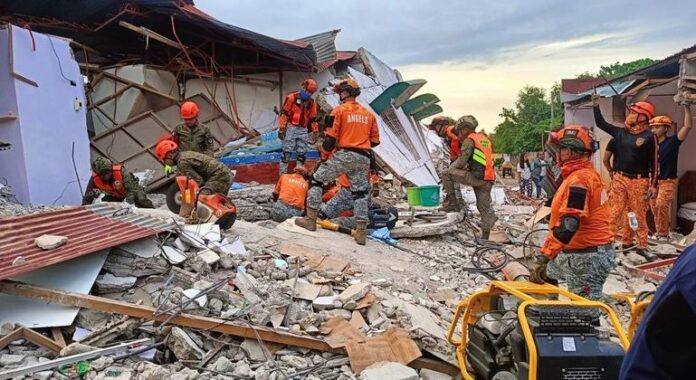
The tremor hit the coast of Bogo City at 9:59 p.m. on Tuesday, September 30, the Philippine Institute of Volcanology and Seismology (Phivavolcs) signaling a superficial depth of about 10 kilometers.

Residents said the earthquake had sent people to flee on the street. A tsunami warning was briefly issued and lifted later in the early hours of Wednesday.

Victims and damage

The number of deaths increased to 72 after the end of research and rescue operations on Wednesday, according to the media.

More than 200 people were injured in Bogo, Medellin and San Remigio. More than 111,000 people have been affected, including 20,000 displaced, many of which are camped outside their damaged houses or in open spaces as the aftershocks continue.

The coordination office of the UN, Ochha,, said that the Philippine authorities have declared the state of emergency in four municipalities, unlocking emergency funds for rescue efforts.

The government has also mobilized the intervention teams and set up a joint operations center.

The initial reports indicate generalized damage to houses, churches, schools, public buildings and transport infrastructure. At least two sea ports remain non -operational and several roads are partially blocked, annoying the delivery of aid.

Humanitarian partners also report urgent needs, including shelter, water and access.

They are preparing to distribute hygiene kits and water filtration units, while the United Nations International Organization for Migration (Iom) is on standby to support displaced families.

Pressure hospitals

The disaster has seriously had an impact on health services, the northern Cebu hospitals extended beyond the capacity and the emergency medical teams deployed by the neighboring provinces.

Saia Ma’u Piukala, Regional Director of the World Health Organization (WHO) Office of the Western Pacific, highlighted the impact.

“The number of deaths of the earthquake of September 30 in the province of Cebu has risen considerably.

“Our Philippine campaign office is there to support the government’s health response in any way necessary.”

Continuous replicas

More than 340 aftershocks have been recorded from the earthquake, going to magnitude 4.8. The authorities warn that the tremors could continue in the coming days.

The Philippines are on the so-called “fire ring” of the Pacific and is very subject to earthquakes, volcanic eruptions and typhoons.

“The Philippines and many of our 37 other countries and regions Vulnerable to earthquakes and other disasters due to geography and, more and more, the climate crisis“Said regional director Piukala, urging continuous investment in preparation.

United Nations Solidarity

In a statementThe team of United Nations countries in the Philippines expressed “deeper sympathies and unwavering solidarity” with those affected, renting the first stakeholders, medical staff and volunteers.

Originally published at Almouwatin.com

Philippines earthquake: UN pledges support as Cebu death toll rises to 72

0
Philippines earthquake: UN pledges support as Cebu death toll rises to 72

The tremor struck off the coast of Bogo City at 9:59PM on Tuesday, 30 September, with the Philippine Institute of Volcanology and Seismology (PHIVOLCS) reporting a shallow depth of around 10 kilometers.

Residents said the quake sent people fleeing into the streets. A tsunami warning was briefly issued and later lifted in the early hours of Wednesday.

Casualties and damage

The death toll has risen to 72 after search and rescue operations concluded on Wednesday, according to media reports.

More than 200 people were injured in Bogo, Medellin, and San Remigio. Over 111,000 people have been impacted, including 20,000 displaced, many of whom are camped outside their damaged homes or in open spaces as aftershocks continue.

The UN relief coordination office, OCHA, said that Philippine authorities declared a state of emergency across four municipalities, unlocking emergency funds for relief efforts.

The Government has also mobilised response teams and set up a joint operations centre.

Initial reports indicate widespread damage to homes, churches, schools, public buildings and transport infrastructure. At least two seaports remain non-operational and several roads are partially blocked, hampering aid delivery.

Humanitarian partners also report urgent needs, including shelter, water and access.

They are preparing to distribute hygiene kits and water filtration units, while the UN International Organization for Migration (IOM) is on standby to support displaced families.

Hospitals under strain

The disaster has severely impacted health services, with hospitals in northern Cebu stretched beyond capacity and emergency medical teams deployed from neighbouring provinces.

Saia Ma’u Piukala, Regional Director of the World Health Organization (WHO) Western Pacific Office, highlighted the impact.

“The death toll from the September 30 earthquake in Cebu Province has mounted significantly. Hospitals report being overwhelmed with the injured,” he said.

“Our WHO Philippines Country Office is there to support the Government-led health response in whatever way is needed.”

Continued aftershocks

More than 340 aftershocks have been recorded since the quake, ranging up to magnitude 4.8. Authorities warn that tremors could continue in the coming days.

The Philippines sits on the Pacific’s so-called “Ring of Fire” and is highly prone to earthquakes, volcanic eruptions and typhoons.

“The Philippines and many of our other 37 countries and areas are vulnerable to earthquakes and other disasters as a consequence of geography and, increasingly, the climate crisis,” said Regional Director Piukala, urging continued investment in preparedness.

UN solidarity

In a statement, the UN Country Team in the Philippines expressed “deepest sympathies and unwavering solidarity” with those affected, praising first responders, medical personnel and volunteers.

Source link

Honduras: The EU deploys an Election Observation Mission

0
Honduras: The EU deploys an Election Observation Mission

Honduras: The EU deploys an Election Observation Mission

Source link

The Syria prison survivor who’s seeking justice for those still missing

0
The Syria prison survivor who’s seeking justice for those still missing

Today, with the backing of the UN, one of those former detainees, Syrian human rights defender Riyad Avlar, is working to find out what happened to those who did not make it out – and seeking justice for the disappeared.

He recalls one mother’s stunned response when he told her that her son had died in detention: “I accept this, but I have not lost hope. One day, my son will walk in and meet you here.”

Her words reflect the resilience of families who continue to seek truth and justice after years of uncertainty, insists Riyad, who was imprisoned for more than two decades after being arrested in 1996 aged 19.

Documenting absence, preserving truth

For Riyad, his struggle for justice did not end with his release in 2017.

Before his appointment to the UN Independent Institution on Missing Persons in Syria’s first Advisory Board, Riyad channelled his experience into supporting survivors of detention and their families through the Association of Detainees and the Missing of Sednaya Prison (ADMSP).

The association’s founders include former detainees like Riyad and have become a crucial source of documentation, support and advocacy.

“Our mission,” he explains, “is to empower survivors and the families of the disappeared to be central actors in transitional justice, accountability and reparations in Syria.”

Since its establishment, ADMSP has created two databases: the first records testimonies from survivors of Sednaya and, since 2021, from detention centres across Syria.

These testimonies identify perpetrators of abuse, last sightings of detainees and patterns of violations. The second database collects information from families searching for loved ones, often providing them with the first reliable confirmation of what happened.

Cages in which prisoners were apparently held are pictured at the infamous Sednaya prison in Damascus.

A do-no-harm approach

“Every interview is conducted face-to-face, with careful attention to avoid re-traumatisation,” Riyad explains. Alongside documentation, the association runs a centre offering psychotherapy, physiotherapy and group therapy for survivors and families coping with the trauma of disappearance. It also shields families from being extorted by individuals selling lies about the fate of their disappeared relatives by helping them to check what they have been told.

Constant fear of execution

Riyad’s dramatic story began when he left his rural village in Turkey to pursue his studies in Syria. Arrested in 1996 by the Assad regime and not even 20 years old, he was then held incommunicado for 15 years. His family only learned he was alive thanks to the intervention of a friend’s mother.

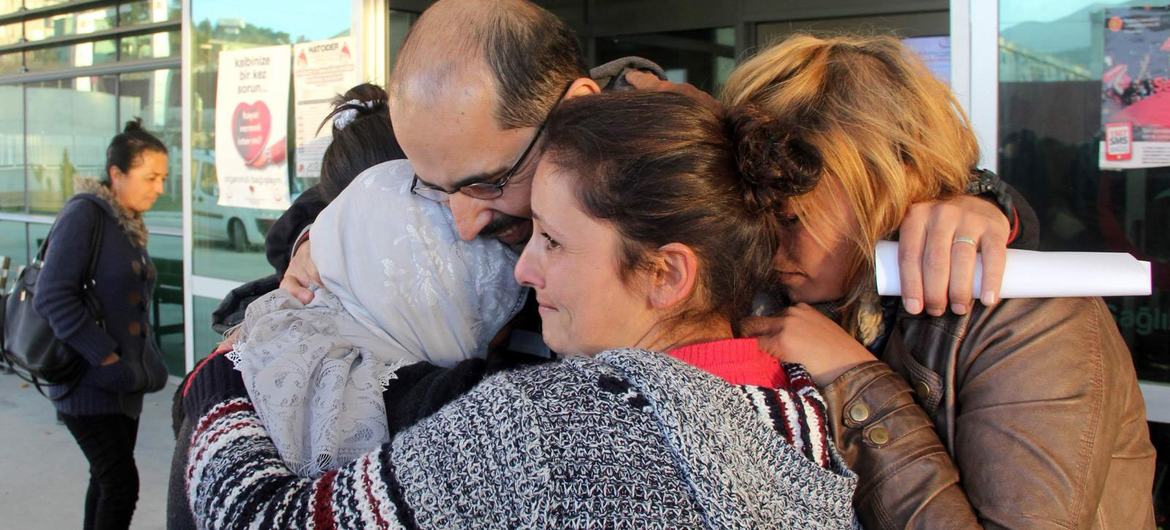
During his detention, Riyad endured solitary confinement, torture and near-total isolation. “I saw my brother twice, for 15 minutes each, in more than two decades,” he recalls. “When I was released, my mother just held me and breathed me in; she wanted to remember the smell of her son. Later, when my son was a year and a half old, I finally understood why my mother clung to me like that.”

Denied a fair trial and charged with fabricated accusations, Riyad lived in constant fear of execution. These experiences, he says, are what drive him to ensure that survivors’ voices shape the pursuit of accountability and justice.

Everyone suffers in their own way

In addition to the horrors meted out to Syria’s disappeared, another common denominator is the anguish that torments their families. Mothers live for years without answers, while wives and children face stigma, harassment and exile, Riyad explains.

“Every family member suffers differently,” he says. “But what unites them is the right to know.”

Riyad Avlar was detained for 21 years. During his detention in Syria's Assad regime prisons, Riyad endured solitary confinement, torture and near-total isolation.

© Courtesy of Riyad Avlar

Riyad Avlar was detained for 21 years. During his detention in Syria’s Assad regime prisons, Riyad endured solitary confinement, torture and near-total isolation.

A global mandate for justice

Today, Riyad serves on the Advisory Board of the Independent Institution on Missing Persons in Syria, established in 2023 by the UN General Assembly to address one of the conflict’s most painful legacies.

Selected from more than 250 applicants, the 11-member board includes representatives of victims’ families, Syrian civil society and international experts. It is mandated to clarify the fate of the missing, support families and contribute to accountability.

According to the NGO Syrian Network for Human Rights, at least 181,312 individuals remain arbitrarily detained or forcibly disappeared, including 5,332 children and 9,201 women.

“The task is immense,” Riyad tells UN News, from his home in Turkïye. “But with cooperation between Syrian organizations and the international community, the institution can establish clear protocols for notification, psychological support and recognition of the disappeared.”

A heavy responsibility

To survivors of detention, Riyad sends a message of solidarity: “We must raise our voices and demand justice – not revenge – but accountability and reparations. We are alive, and that is a responsibility.”

His message is also one of survival. “When I was arrested, the phones were the old push-button ones. And when I got out, I saw phones you just touch with your finger…Life had changed so much, I was shocked. The village I had left behind was very underdeveloped, but now they had paved roads, people had cars; there were water taps inside the houses, even a sewage system.

“Little by little, I adapted. I decided I had to move forward, because after such a long absence – 20 years – it was as if someone had frozen me in a freezer and then suddenly, I was released into a science fiction movie.”

He stresses that families of the missing must never be left without answers, and every Syrian family has the right to know the fate of their loved ones, to lay them to rest with dignity and to begin the process of healing.

And if truth is the cornerstone of Syria’s future, so too is transitional justice, Riyad maintains, with survivors and families playing a central role in shaping what comes next.


Source link

Ukraine: IAEA engaging to restore power to the Zaporizhzhia nuclear power plant

0

The ZNPP underwent a complete loss of out -of -site power on September 23 after military activity in the surroundings, marking the 10th time that has happened since Russia launched its large -scale invasion of Ukraine in February 2022.

“The largest nuclear power plant in Europe has been without external power for more than a week now, which is By far the most during such an event in more than three and a half years of war »» said Aiea Managing Director Rafael Mariano Grossi.

He currently operates on an emergency power which “is clearly not a lasting situation in terms of nuclear security,” he said, adding that “none of the parties would benefit from a nuclear accident”.

Damaged last power line

The ZNPP has been under Russian control since the first weeks of the conflict and the two parties accused the other of attacks which endanger the plant.

The last out-of-site electricity cut occurred last Tuesday afternoon when the remaining electricity line was damaged by military activity at around 1.5 km.

Emergency diesel generators (EDG) have automatically started to provide the power necessary for safety systems and to cool the six reactors as well as worn fuel.

The ZNPP is currently operating eight EDG. Nine additional units are in standby mode and three are in maintenance. Operating EDGs are alternated to serve some of the inactive and ensure continuous availability.

Repair efforts have embarrassed

The factory would have the staff and the spare parts necessary to repair the electric line, but this has not yet happened due to the nearby military activity.

Ukraine has expressed its preparation to repair a rescue electric line which has been disconnected since the beginning of May, but the military situation also prevented that this does not happen.

ZNPP reactors have been closed for more than three years now, resulting in cooling the nuclear fuel and reducing the amount of radioactive materials in the fuel.

Consequently, the nuclear security situation is not as dangerous as it would have been if the factory had still generated electricity, noted the IAEA.

However, in the case of a complete failure failure without out -of -site or emergency power, the nuclear fuel could melt if electricity could not be restored over time, which is why mobile diesel generators are also available.

Prevent a nuclear accident

“The current state of reactor and fuel units spent is stable as long as emergency diesel generators are able to provide enough power to maintain the functions and cooling linked to essential security,” said Grosi.

“Nevertheless, it is extremely important that the out-of-site power is restored,” he added.

“As I have said on several occasions, a nuclear accident is not interested in anyone and all efforts must be made to prevent this from happening.”

The director general of IAEA, Rafael Mariano Grossi (center), visited the Zaporizhzhya nuclear power plant in Ukraine in September 2022.

Development monitoring

The IAEA has maintained a presence at the ZNNP since September 2022.

His team continues to closely monitor the situation, receiving more frequent factory’s nuclear safety updates, including water cooling temperatures.

“Based on the factory information, we may conclude that emergency diesel generators have been able to reliably provide the power necessary to cool the nuclear fuel in the reactor nuclei and the fuel pools spent,” said Gnati.

The IAEA team has also been informed that the factory has fuel reserves for more than 10 days of operation.

Monitoring of radiation continues to show that there was no increase above normal levels, inside and outside the site.

Originally published at Almouwatin.com

The survivor of the prison in Syria who requests justice to those who always disappear

0

Today, with the support of the UN, one of these former prisoners, the defender of Syrian human rights Riyad Avlar, works to discover what has happened to those who are not doing – and to seek justice for disappearance.

He remembers the amazed response of a mother when he told her that his son had died in detention: “I accept that, but I haven’t lost hope. One day, my son will enter and meet you here. “”

His words reflect the resilience of families who continue to seek truth and justice after years of uncertainty, insists that Riyadh, who was imprisoned for more than two decades after being arrested in 1996 at the age of 19.

Document the absence, to preserve the truth

For Riyadh, his fight for justice did not end with his release in 2017.

Before his appointment at Independent UN institution on people who have disappeared in SyriaThe first advisory advice, Riyadh channeled his experience to support the survivors of detention and their families through the Association of Prisoners and the disappearance of the Sednaya prison (ADMSP).

The founders of the association include former prisoners like Riyadh and have become a crucial source of documentation, support and advocacy.

“Our mission”, he explains, “consists in empowering survivors and families of disappearance to be central actors of transitional justice, responsibility and repairs in Syria.”

Since its creation, ADMSP has created two databases: the first recordings of testimonies from Sednaya survivors and, since 2021, detention centers across Syria.

These testimonies identify abuse authors, the last observations of prisoners and the models of violations. The second database collects information from families looking for relatives, often providing them with the first reliable confirmation of what happened.

The cages in which prisoners were apparently held are represented in the infamous Sednaya prison in Damascus.

An approach to do non-lamb

“Each interview is conducted face to face, with particular attention to avoid re-traumatization”, ” Explains Riyadh. In addition to the documentation, the association manages a center offering psychotherapy, physiotherapy and group therapy for survivors and families facing the trauma of disappearance. He also protects families from being extorted by people selling lies to the fate of their missing parents by helping them to check what they were told.

Constant fear of execution

Riyadh’s dramatic history began when he left his rural village in Türkiye to continue his studies in Syria. Arrested in 1996 by the Assad regime and even 20 years old, he was then detained from 15 years. His family learned that he was alive thanks to the intervention of a friend’s mother.

During his detention, Riyad has endured lonely isolation, torture and almost total isolation. “I saw my brother twice, for 15 minutes each, in more than two decades,” he recalls. “When I was released, my mother just held me and inspired me; She wanted to remember the smell of her son. Later, when my son was a year and a half, I finally understood why my mother clung to me like that. »»

Developed a fair trial and accused of accusations manufactured, Riyadh experienced a constant fear of execution. These experiences, he says, are what pushes him to guarantee that the voices of survivors shape the continuation of responsibility and justice.

Everyone suffers in their own way

In addition to the horrors inflicted on the disappearance of Syria, another common denominator is the anxiety that torments their families. Mothers live for unanswered years, while wives and children face stigma, harassment and exile, explains Riyadh.

“Each family member suffers differently,” he says. “But what unites them is the right to know. »»

© GRAURTUE OF RIYAD AVLAR

Riyad Avlar was detained for 21 years. During his detention in the prisons of the Assad regime in Syria, Riyad has endured lonely isolation, torture and almost total isolation.

A world mandate for justice

Today, Riyadh is sits on the advisory council of the Independent institution on people who have disappeared in SyriaEstablished in 2023 by the General Assembly of the United Nations to approach one of the most painful inheritances of the conflict.

Selected among more than 250 candidates, the board of directors of 11 members includes representatives of the families of the victims, Syrian civil society and international experts. It is mandated to clarify the fate of missing families, support families and contribute to responsibility.

According to the NGO Syrian Network for Human Rights, At least 181,312 individuals remain arbitrarily or disappear, including 5,332 children and 9 201 women.

“The task is immense,” says Riyadh New News, of his Home in Turkïye. “But with cooperation between Syrian organizations and the international community, the institution can establish clear protocols for notification, psychological support and recognition of disappeared.”

A heavy responsibility

To the survivors of detention, Riyadh sends a message of solidarity: “We have to raise our voices and demand justice – not revenge – but responsibility and repairs. We are alive, and it is a responsibility. ”

His message is also that of survival. “When I was arrested, the phones were the elders with a push button. And when I got out, I saw phones that you just touch with your finger … Life had changed so much, I was shocked. The village I had left behind was very underdeveloped, but now they had paved roads, people had cars; There were taps of water inside the houses, even a boarding system.

“Little by little, I adapted myself. I decided that I had to go ahead, because after such a long absence-20 years-it was as if someone had frozen me in a freezer and then suddenly, I was released in a science fiction film. »»

He stresses that the families of the missing must never be left unanswered, and each Syrian family has the right to know the fate of their loved ones, to put them to rest with dignity and to start the healing process.

And if the truth is the cornerstone of the future of Syria, the same goes for transitional justice, maintains Riyad, with survivors and families playing a central role in the formation of what comes next.

Originally published at Almouwatin.com

Calls become stronger for more inclusive age companies

0

“” Each elderly has the right to old“Said one of the main organizers of International Elderly DayArjanita Elezaj.

“” These are not privileges, they are human rights“, She told a meeting at the UN headquarters to commemorate the day, where key questions such as improving opportunities for the elderly participate in civic and cultural life have been debated, as well as health and housing care.

This year’s theme has stressed that the elderly must be designed to play an active role in the motivation of local and global action, aimed at amplifying their voice in the development of policies and an effort to create more inclusive societies.

“The elderly have a life of experiences lived, residence and service with them,” said Elezaj. “It is the architects of communities, movements and institutions that continue to guide us today. However, too often, their voices are unknown. ”

The world is aging

The number of people aged 60 or over has doubled to reach 1.2 billion in the past three decades and is expected to reach 2.1 billion by 2050According to a mission statement by the organizers of the event in New York.

With the increase in world life expectancy, the number of people aged 80 and over is expected to exceed the number of infants by mid-2030.

“We must respond with foresight and action. Secretary General António Guterres in his message for the day.

“Emergency” for an inclusive movement

With a smile and an anecdote, Professor and Dean Emerita of Columbia University School of Social Work, Jeanette Takamura, reminded the public that aging is a universal phenomenon.

“When I spent the last time on this podium, my hair was dark brown and I was one more thumb,” she said.

Now, 26 years later, “I am obviously a shorter thumb with silver hair,” she added.

In her speech, she stressed “the urgency of awareness and increased multigenerational inclusion” to propel a global social movement including and inclusive.

She pointed out that social movements have the most impact when they embrace a wide spectrum and highlighted the need for younger and older generations to learn from others.

“The bases of a social movement were laid down by all the past years,” she said.

“” Let’s exercise wisdom, let’s be agents of social change and expand our tent to welcome the multiple generations of younger people we need as partners and co-creators.“”

Originally published at Almouwatin.com

BruntWork’s Remote Hiring Model Saves 70% on Labor

0


Never before has the global workforce experienced such sweeping change. While tech giants conduct mass layoffs and traditional

Source link

Prosecutors and Eurojust prepare for upcoming Special Tribunal for the Crime of Aggression against Ukraine

0
Honduras: The EU deploys an Election Observation Mission

Investigations into the crime of aggression against Ukraine is ongoing with essential support from the International Centre for the Prosecution of the Crime of Aggression against Ukraine (ICPA). During a meeting at Eurojust in The Hague, Prosecutor Generals from Lithuania, Estonia, Romania and Ukraine, the Acting Prosecutor General of Latvia and the Deputy Prosecutor General of Poland emphasised their unwavering commitment to bringing justice to the victims. The preparatory work carried out at the ICPA will be essential for prosecutions before the future Special Tribunal.

Source link