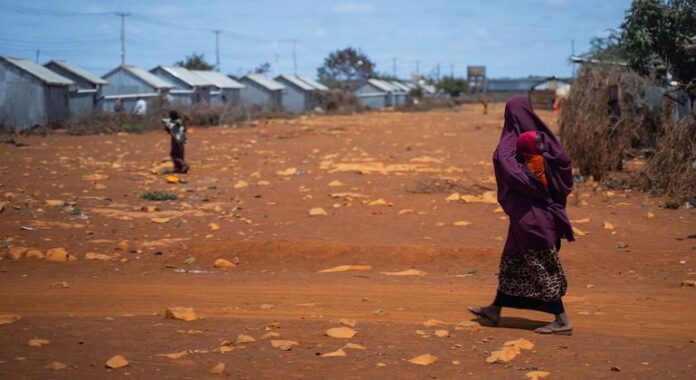
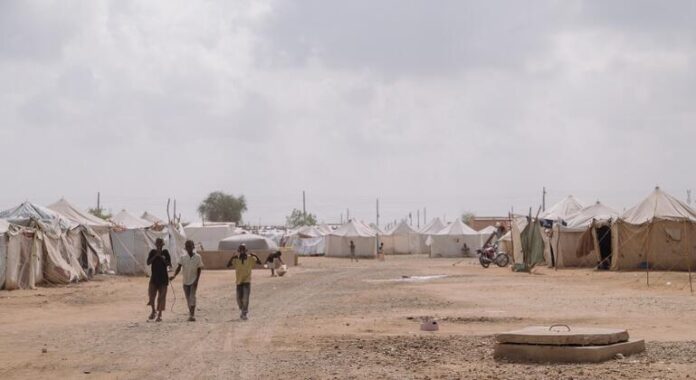
More than 4.6 million people across the country, roughly a quarter of the population, are impacted, according to local authorities.
“Partners indicate that at least 120,000 people were displaced between September and December, as water prices soar, food becomes increasingly scarce, livestock die and livelihoods collapse,” OCHA said in an update.
Additionally, more than 75,000 students nationwide have been forced to drop out of school.
Conditions expected to worsen
The upcoming dry season from January to March is expected to worsen drought conditions, OCHA said, warning of impacts such as increased water scarcity, more livestock deaths, and the potential for greater food insecurity in many parts of the country.
“Authorities are appealing for urgent assistance to avert a possible collapse of pastoral and farming livelihoods and to prevent avoidable loss of life. They warn that the next four months will be critical, as the next rainy season is not expected until April 2026,” the update said.
OCHA stressed that the UN and partners are mobilized – “supporting assessments, mapping available supply stocks, and coordinating emergency responses across water, food, nutrition, health and shelter sectors.”
Humanitarians are also providing cash assistance, animal fodder and rehabilitating boreholes, while visiting field locations to assess the severity of the situation and reviewing resources for early action.
However, their efforts are severely constrained by significant funding shortfalls.
Last month, UN Emergency Relief Coordinator Tom Fletcher allocated $10 million from the Central Emergency Response Fund (CERF) – which provides timely assistance when conflict and climate-related disasters strike – “but substantially more support is urgently needed,” OCHA said.
As 2025 draws to a close, the $1.4 billion humanitarian response plan for Somalia has received only about $370 million, roughly a quarter of the required funding, leaving critical gaps across lifesaving programmes.
Throughout the Road Show, the Chair held roundtable discussions with key stakeholders in each Member State. These roundtables were designed to encourage open dialogue and enable Financial Intelligence Units (FIUs), financial and non-financial supervisors, and the private sector to share their views. They exchanged perspectives on the new AML system, national risk landscapes, expectations, and perceived challenges, as well as trends in money laundering and terrorist financing.
“Completing this Road Show was a strategic priority,” said Bruna Szego. “These conversations help ensure AMLA’s foundations are built on strong cooperation, mutual understanding, and practical insight. I thank every participant for offering their insights which will inform AMLA’s way forward.”
With the Road Show now complete, AMLA looks forward to continued engagement with each Member State in working together to realise an effective and robust AML/CFT system in Europe.
For media queries, please contact mediaamla [dot] europa [dot] eu (media[at]amla[dot]europa[dot]eu)
Download the PDF version of the press release here.
Briefing of Security Council Senior UN political and humanitarian officials on Monday described a sharply deteriorated security and humanitarian situation, marked by indiscriminate attacks, expanding territorial gains by the Rapid Support Forces (RSF) and escalating dangers for civilians, aid workers and peacekeepers.
THE the conflict broke out in April 2023 amid a power struggle between the Sudanese Armed Forces (SAF) and the RSF. Since then, fighting has spread across the country, devastating cities, displacing millions of people and plunging parts of the country – including parts of Darfur – into famine conditions.
Under-Secretary-General for Political Affairs Khaled Khiari said fears that the dry season would lead to increased fighting had been confirmed.
“Each passing day brings staggering levels of violence and destruction,“, Mr. Khiari told the ambassadors.Civilians are enduring immense and unimaginable suffering, with no end in sight.»
Kordofan emerges as a new hot spot
In recent weeks, the conflict has focused on the Kordofan region, where the RSF has made significant territorial gains, capturing Babanusa in Western Kordofan on December 1, followed a week later by the seizure of Heglig in Southern Kordofan – a key oil field and processing hub for South Sudan’s crude exports.
Kadugli and Dilling, both in Southern Kordofan, are now under increasingly strict siege conditions, with continued bombings and drone strikes. Reports indicate that SAF personnel withdrew from some areas to South Sudan, while South Sudanese forces moved into Sudan to protect Heglig’s oil infrastructure.
“These developments reflect the increasingly complex nature of the conflict and its growing regional dimensions,Mr Khiari warned, warning that Sudan’s neighbors could be drawn into a wider war if the situation is not resolved.
Broadcast of the Security Council meeting.
Deadly drone strikes, peacekeepers killed
A particularly alarming trend, according to UN officials, is the increasing use of drones by both sides. On December 4, a kindergarten in Kalogi, South Kordofan, was struck, followed by an attack on the hospital treating the victims.
“More than 100 people were killed in this despicable attack, including 63 children,» said Mr. Khiari.
Drone attacks have also directly targeted UN personnel. On December 13, strikes hit a United Nations logistics base in Kadugli, killing six Bangladeshi peacekeepers serving in the United Nations Interim Security Force for Abyei (UNISFA) and injuring nine others.
UNISFA has launched an investigation amid difficult security conditions, while all UN personnel have been evacuated from Kadugli until further notice. Mr. Khiari stressed that attacks on peacekeepers “may constitute war crimes” and demanded accountability.
The crisis in Sudan at a glance
Increased travel: Hundreds of people have fled villages in Southern Kordofan in recent days; more than 15,000 people have arrived in White Nile State since the end of October.
Exodus from Darfur: More than 107,000 people were displaced from El Fasher and surrounding areas between late October and early December.
What’s new: At least 2,500 displaced people reached the town of Sheria in South Darfur last week, in urgent need of food, health care and relief.
Deadly drone strikes: More than 100 civilians killed in drone attacks between December 4 and 16 in South Kordofan – a kindergarten and a hospital were hit. Separate drone strikes hit a UN base and market in Al Malha, North Darfur, killing peacekeepers and civilians.
Healthcare under attack: Sixty-five attacks on health facilities this year, killing more than 1,600 people.
Edem Wosornu, director of crisis response at the United Nations Office for the Coordination of Humanitarian Affairs (OCHA), says civilian suffering spread across multiple fronts, with Kordofan becoming a new epicenter of humanitarian needs.
As well as targeting civilians, aid workers and convoys have also been struck – injuring aid workers, seriously affecting rescue programs and forcing UN agencies and NGOs to move staff from several locations due to insecurity.
Meanwhile, the situation in Darfur remains catastrophic. The UN continues to receive reports of massacres and sexual violence following RSF’s takeover of El Fasher earlier this year, including atrocities committed during the April offensive against the Zamzam IDP camp.
Calls for protection, access and peace
As the conflict approaches 1,000 days, the two officials urged the Council to act decisively to protect civilians, ensure humanitarian access and press for an immediate cessation of hostilities.
“The Council must send a strong and unequivocal message,” Ms Wosornu said: “that attacks against civilians and violations of international humanitarian law will not be tolerated.»
Mr. Khiari echoed the call, urging international donors on both sides to use their influence to end the fighting and support a Sudanese-led political process.
“The UN is fully engaged,” he said, “work with all international actors to end the violence – in the interests of the Sudanese people and regional stability.»
This has caused casualties and disrupted aid operations over the past 24 hours, UN spokesman Stephane Dujarric told reporters at Headquarters in New York.
Yet efforts to provide assistance to the most vulnerable families continue during the cold and wet winter season, although a rescue mission to reach an injured person in Gaza City was turned away.
Lack of shelter
“Faced with a severe lack of shelter in the Gaza Strip, people remain in partially or largely damaged buildings as they try to protect their families from the elements,” he said.
Several buildings collapsed over the weekend due to stormy conditions, causing casualties, according to humanitarian partners.
Additionally, three-quarters of female-headed households are in urgent need of shelter, and two-thirds are in desperate need of clothing.
Dujarric said UN partners continue to work to improve access to dignified shelter for the estimated 1.3 million people in Gaza.
Lift restrictions on entry of aid
Over the past week, some 3,500 families affected by storms or living in flood-prone areas have received tents, bedding sets, mattresses and blankets, while more than 250,000 children have received winter clothing.
“However, our partners estimate that 630,000 adolescents across the Gaza Strip still need assistance with winter clothing,” he added.
“We and our partners are once again calling for the lifting of all restrictions on the entry of aid into Gaza, including shelter materials, as these constraints obviously hamper humanitarian efforts to reach populations, particularly in this winter and cold season. »
Meanwhile, humanitarians continue to coordinate aid missions in Gaza, and half of the attempts Sunday were facilitated by Israeli authorities.
Teams collected six tanker trucks full of fuel, more than 270 pallets of medical supplies and other essential food items from the Kerem Shalom/Karem Abu Salem crossing, as well as the Zikim crossing.
Between Friday and Monday morning, Ukrainian authorities said that more a dozen civilians were killed and more than 70 others injured, including two children. Disruptions to basic services were reported in more than 270 cities and towns.
These attacks occur in a harsh winter context in Ukraine and in a context of growing humanitarian needs. attacks last week also disrupted services and caused several deaths.
Almost daily attacks
The Odessa region is particularly affected and suffers almost daily attacks, according to OCHA. On Friday, a nighttime attack targeting port infrastructure killed eight civilians and injured 27 others. Repeated strikes have also cut power, affecting tens of thousands of people.
Additionally, Dnipro, Kharkiv and Mykolaiv saw their energy infrastructure hit, affecting hundreds of thousands of people. A health facility and a school were also damaged during the attacks. Donetsk, Kherson and Zaporizhzhia also suffered losses.
Ukrainian authorities told OCHA that a warehouse storing humanitarian aid was damaged in the Mykolaiv region.
Half-funded appeal for help
In the Sumy region, around 40 people have been evacuated to safer areas over the past three days, OCHA said. Meanwhile, in the Donetsk region, almost 330 civilians, including 50 children, were evacuated.
In total, since June, nearly 150,000 people have been evacuated from front-line areas, including more than 16,500 children and more than 5,000 people with reduced mobility.
Aid workers have managed to reach more than 700,000 people near the front lines this year. However, funding gaps persist, leaving more than a million people without clean water and limiting access to protection and gender-based violence services.
$2.6 billion this year call for Ukraine it is only half financeat nearly $1.4 billion.
Briefing the Security Council on Monday, senior UN political and humanitarian officials described a sharply deteriorating security and humanitarian situation marked by indiscriminate attacks, expanding territorial gains by the Rapid Support Forces (RSF), and escalating dangers for civilians, aid workers and peacekeepers.
The conflict erupted in April 2023 amid a power struggle between the Sudanese Armed Forces (SAF) and the RSF. Since then, fighting has spread nationwide, devastating cities, displacing millions and pushing parts of the country – including areas of Darfur – into famine conditions.
Assistant Secretary-General for Political Affairs Khaled Khiari said fears that the dry season would bring intensified fighting had been confirmed.
“Each passing day brings staggering levels of violence and destruction,” Mr. Khiari told ambassadors. “Civilians are enduring immense, unimaginable suffering, with no end in sight.”
Kordofan emerges as new flashpoint
In recent weeks, the conflict has centred on the Kordofan region, where the RSF has made significant territorial gains, capturing Babanusa in West Kordofan on 1 December, followed a week later by the seizure of Heglig in South Kordofan – a key oil field and processing hub for South Sudanese crude exports.
Kadugli and Dilling, both in South Kordofan, are now under tightening siege conditions, with shelling and drone strikes continuing. Reports indicate that SAF personnel withdrew from some areas into South Sudan, while South Sudanese forces moved into Sudan to protect the Heglig oil infrastructure.
“These developments reflect the increasingly complex nature of the conflict and its expanding regional dimensions,” Mr. Khiari warned, cautioning that Sudan’s neighbours could be drawn into a wider war if the situation remains unaddressed.
Broadcast of the Security Council meeting.
Deadly drone strikes, peacekeepers killed
A particularly alarming trend, UN officials said, is the growing use of drones by both sides. On 4 December, a kindergarten in in Kalogi, South Kordofan was struck, followed by an attack on the hospital treating the victims.
“More than 100 people were killed in this despicable attack, including 63 children,” Mr. Khiari said.
Drone attacks have also directly targeted UN personnel. On 13 December, strikes hit a UN logistics base in Kadugli, killing six Bangladeshi peacekeepers serving with the UN Interim Security Force for Abyei (UNISFA) and injuring nine others.
UNISFA has launched an investigation under difficult security conditions, while all UN personnel have been evacuated from Kadugli until further notice. Mr. Khiari stressed that attacks against peacekeepers “may constitute war crimes” and demanded accountability.
Sudan crisis at a glance
Displacement surging: Hundreds flee villages in South Kordofan in recent days; more than 15,000 have arrived in White Nile state since late October.
Darfur exodus: Over 107,000 people displaced from El Fasher and surrounding areas between late October and early December.
New arrivals: At least 2,500 displaced people reached South Darfur’s Sheria locality last week, needing urgent food, health and relief support.
Deadly drone strikes: Over 100 civilians killed in drone attacks between 4-16 December in South Kordofan – a kindergarten and a hospital struck. Separate drone strikes hit a UN base and a market in Al Malha, North Darfur, killing peacekeepers and civilians.
Healthcare under attack: Sixty-five attacks on healthcare facilities this year, killing over 1,600 people.
Edem Wosornu, Director of Crisis Response at the UN Office for the Coordination of Humanitarian Affairs (OCHA), said civilian suffering was expanding across multiple fronts, with Kordofan emerging as a new epicentre of humanitarian need.
In addition to targeting civilians, aid workers and convoys were also struck – injuring humanitarians, severely affecting lifesaving programmes, and forcing UN agencies and NGOs to relocate staff from several locations due to insecurity.
Meanwhile, conditions in Darfur remain catastrophic. The UN continues to receive reports of mass killings and sexual violence following the RSF’s takeover of El Fasher earlier this year, including atrocities committed during an April offensive on the Zamzam displacement camp.
Calls for protection, access and peace
As the conflict approaches 1,000 days, both officials urged the Council to act decisively to protect civilians, ensure humanitarian access and push for an immediate cessation of hostilities.
“The Council must send a strong, unequivocal message,” Ms. Wosornu said, “that attacks directed against civilians and violations of international humanitarian law will not be tolerated.”
Mr. Khiari echoed the call, urging international backers of both sides to use their influence to halt the fighting and support a Sudanese-led political process.
“The United Nations is fully committed,” he said, “to working with all international actors to end the violence – for the sake of the people of Sudan and regional stability.”
Senior UN political and humanitarian officials are due to brief the Security Council this afternoon as members meet to discuss the rapidly deteriorating situation in Sudan, where intensifying fighting – including in the Kordofan region – has led to civilian damage and mass displacement. The region has seen sharp escalation, including a deadly drone attack on a U.N. peacekeeping base that killed six Bangladeshi peacekeepers. The meeting was requested by Sudan and transitional Prime Minister Kamil Eltayeb Idris is expected to attend. Follow live below and UN News app users can Click here.
More than 4.6 million people across the country, or around a quarter of the population, are affected, according to local authorities.
“Partners say at least 120,000 people were displaced between September and December, as water prices soar, food becomes scarce, livestock die and livelihoods collapse. » OCHA said in a update.
Additionally, more than 75,000 students nationwide were forced to drop out of school.
Conditions expected to deteriorate
The upcoming dry season, from January to March, is expected to worsen drought conditions, OCHA said, warning of impacts including increased water scarcity, more livestock deaths and the potential for greater food insecurity in many parts of the country.
“Authorities are appealing for urgent assistance to avert a possible collapse of pastoral and agricultural livelihoods and to avoid avoidable loss of life. They warn that the next four months will be critical, as the next rainy season is not expected until April 2026,” the update said.
OCHA stressed that the UN and its partners are mobilized – “supporting assessments, mapping available stocks of supplies and coordinating emergency responses in the water, food, nutrition, health and shelter sectors”.
Humanitarians are also providing cash assistance, animal fodder and rehabilitating boreholes, while visiting sites on the ground to assess the severity of the situation and review resources for rapid action.
However, their efforts are seriously limited by significant funding gaps.
Last month, UN Emergency Relief Coordinator Tom Fletcherassigned 10 million dollars from Central Emergency Response Fund(DEER) – which provides rapid assistance in times of conflict and climate-related disasters – “but much more support is urgently needed,” OCHA said.
As 2025 draws to a close, the $1.4 billion humanitarian response plan for Somalia has only received about $370 million, about a quarter of the required funding, leaving critical gaps in rescue programs.
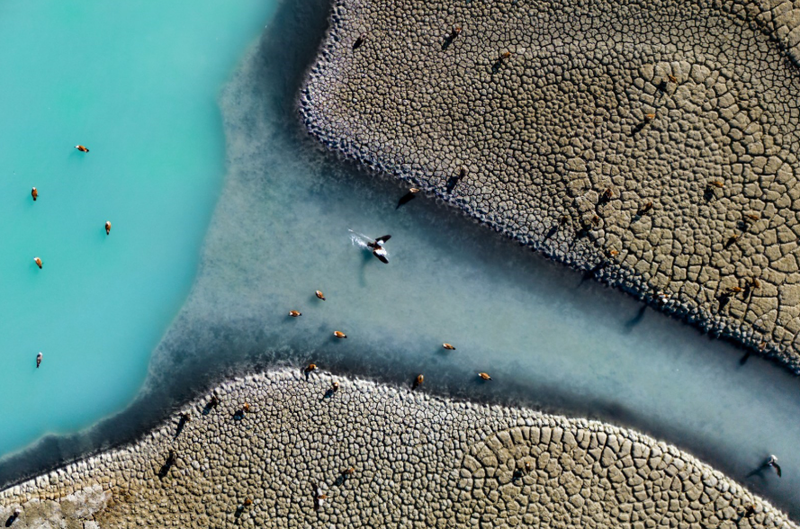
An aerial photograph capturing the striking contrast between cracked, dry earth and turquoise waters at Burdur Lake in Türkiye wins the Public Choice Award for the annual photo competition organised by the European Environment Agency (EEA). The three thematic category prizes were awarded to photographs from Sweden and Spain.
The European Environment Agency (EEA) reveals today the winners of its 2025 “Environment&Me” photo competition. Launched in March 2025, this contest invited photographers from across Europe and neighboring partner countries to share images that capture their personal connection to the environment, how they experience, protect or are impacted by the environment in their daily lives.
Nearly 1,800 entries were submitted from across 36 countries, reflecting a powerful diversity of environmental stories and perspectives. These were narrowed down to 42 finalists and, ultimately, to our 4 talented winners. This year’s competition saw an impressive level of participation from across Europe, with Spain and Italy leading the way, together accounting for nearly a third of all submissions. Türkiye, Germany, and Portugal also ranked among the top contributors, reflecting strong engagement across both southern and central Europe.
The winners
The competition was structured around three thematic categories, plus a youth prize and a public choice award. An external jury chose one winning image from each category, except for the public choice award, which was selected by citizens’ vote.
BLUE – Water & Me
Ola Karlsson, Environment&Me 2025 / EEA
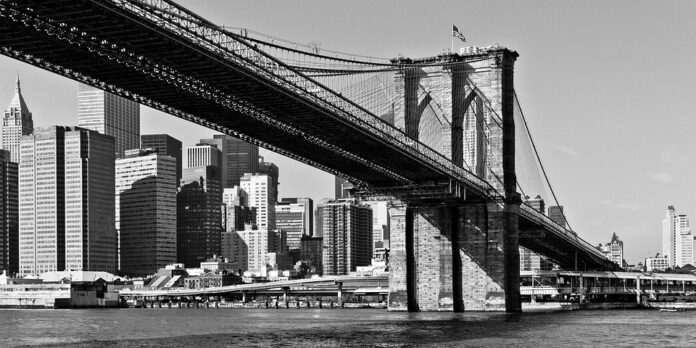
Title: “Bridge over troubled water”
Once solid and timeless, the frozen sea in Bjärred (Sweden) now thins with every passing winter. This aerial shot of people crossing a bridge over fragile ice captures the quiet truth that our climate is changing, and with it, the landscapes and lives we once took for granted.
GREEN – Nature & Me
Pepe Badia Marrero, Environment&Me 2025 / EEA
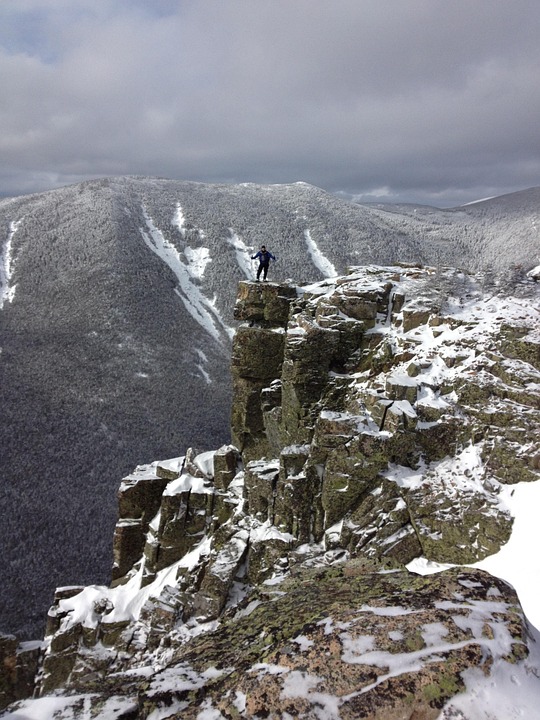
Title: “King of hearts”
Standing between heart-shaped leaves and golden light, a grasshopper rests in perfect balance. In this quiet moment in Anella Verda de Terassa (Spain), nature shows its delicate beauty.
ORANGE – Everyday Life & Me
Kristýna Koubková, Environment&Me 2025 / EEA
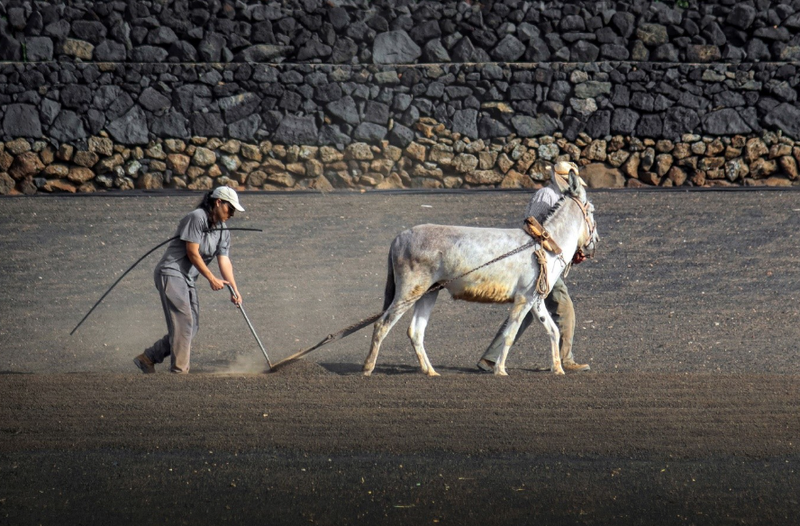
Title: “Work commitment”
Beneath the blazing sun, a donkey and its owners toil through parched Spanish fields of Teguise, turning dust into promise. In this harsh climate, only cooperation and perseverance can sow the seeds of a future harvest.
Youth Prize (ages 18–24)
Youth Prize is not awarded this year due to eligibility issues.
Public Choice Award
Fatih Yilmaz, Environment&Me 2025 / EEA
Title: “Flapping its wings against drought”
Selected through public voting, this aerial photo captures the striking contrast of cracked, dry earth and turquoise waters at Burdur Lake, Türkiye. Birds are scattered across the scene, some wading through a shallow, winding channel. The image powerfully reflects the region’s natural beauty amid signs of drought.
Congratulations to our 4 winners and a big thank you to all participants for sharing their beautiful photographs.
More information on the photo competition is available at this link.
The Management Board of the European Environment Agency (EEA) designated yesterday the EU scientific experts that will be members of the European Scientific Advisory Board on Climate Change for its second term, from 2026 until 2030. The independent advisory body, tasked to provide the European Union (EU) with scientific knowledge, expertise and advice relating to climate change, will begin its second term on 24 March 2026.
The European Scientific Advisory Board on Climate Change, established under the European Climate Law in 2021, is composed of 15 independent senior scientific experts covering a broad range of relevant disciplines.
The Advisory Board provides independent scientific advice on EU measures and climate targets and their coherence with the European Climate Law and the EU’s international commitments under the Paris Agreement, which will underpin the EU’s climate action and efforts to reach climate neutrality by 2050.
During its first term (2022-2026), the Advisory Board provided advice on important issues such as the EU’s 2040 target, policy gaps and opportunities to reach EU’s climate targets, carbon dioxide removals and EU’s response to the energy crisis and energy infrastructure. The Advisory Board will publish two more reports on adaptation and agriculture before the end of its first term.
The Advisory Board operates independently from EU institutions. Its members are designated by the EEA Management Board for a 4-year term, renewable once, following an open, fair and transparent selection procedure.
New members
On 4 December, the EEA Management Board appointed the following 15 members (in alphabetical order):
Annela Anger-Kraavi (Estonia) – University of Cambridge
Constantinos Cartalis (Greece) – National and Kapodistrian University of Athens (second mandate)
Suraje Dessai (Portugal) – University of Leeds’ School of Earth, Environment, and Sustainability (second mandate)
Laura Díaz Anadón (Spain) – University of Cambridge (second mandate)
Ottmar Edenhofer (Germany) – Potsdam Institute for Climate Impact Research (second mandate)
Vera Eory (Hungary) – Scotland’s Rural College (second mandate)
Lena Kitzing (Denmark / Germany) – Technical University of Denmark (second mandate)
Kati Kulovesi (Finland) – University of Eastern Finland
Lars J. Nilsson (Sweden) – Lund University (second mandate)
Åsa Persson (Sweden) – KTH Royal Institute of Technology’s Climate Action Centre
Keywan Riahi (Austria) – International Institute for Applied Systems Analysis (second mandate)
Jean-François Soussana (France) – French National Research Institute for Agriculture, Food and the Environment (second mandate)
Giorgio Vacchiano (Italy) – University of Milan
Detlef van Vuuren (The Netherlands) – PBL Netherlands Environmental Assessment Agency
Zinta Zommers (Latvia) – University of Toronto
When starting its second term on 24 March 2026, the first tasks of the Advisory Board will be to elect its chairperson and to define its work programme.
Background
The European Climate Law, adopted in June 2021, sets out a binding objective of climate neutrality in the EU by 2050 in pursuit of the long-term temperature goal set out in the Paris Agreement. It also provides a framework for achieving progress in pursuit of the global adaptation goal established in the Paris Agreement.
To support the achievement of these objectives the European Climate Law also provides for the establishment of a European Scientific Advisory Board on Climate Change. The European Scientific Advisory Board on Climate Change is established through an amendment of the founding regulation of the EEA.
The members of the Advisory Board are appointed in a personal capacity for a term of four years, renewable once. They will give their positions completely independently of the Member States and the EU institutions. No more than two members of the Advisory Board can hold the nationality of the same Member State.
The Advisory Board is supported in its work by a Secretariat hosted by the European Environment Agency.