Wednesday, April 1, 2026
Home Blog Page 194

The Pakistani Prime Minister warns against regional tensions, calls for ceasefire in Gaza

0

“Our world is more complex today than ever,” said Sharif, citing the intensification of conflicts, violations of international law and a climate crisis which “threatens our very survival”.

Multilateralism, he argued, was “no longer an option-this is the need for the time”.

Prime Minister Sharif said his country faced an “uninsured assault” by India earlier this year.

The armed forces of Pakistan had rejected the attack with “astonishing professionalism, a bravery and a meaning”, slaughtering several Indian planes, he added. He congratulated US President Donald Trump to get a ceasefire.

Dialogue with India

At the same time, Mr. Sharif also offered a dialogue.

“Pakistan is ready for a composite, complete and focused dialogue with India on all outstanding questions,” he said, warning that disputes over cashmere and water resources have remained volatile.

The alleged suspension of India in the Indus water Treaty, he added, “represents an act of war”.

Mr. Sharif promised a support for the Kashmiris, saying that Pakistan “would arguely” defend “their rights and repeat calls to an unleanished plebiscite.

“One day soon, Inshallah [God willing]The tyranny of India in cashmere will stop. They will gain its fundamental right to self-determination by an impartial plebiscite under the auspices of the United Nations, “he said.

Call to ceasefire in Gaza

In the Middle East, the Pakistani chief condemned what he called “the genocidal assault” of Israel in Gaza, describing the fate of Palestinian children as “one of the most heartbreaking tragedies of our time”.

He called for an immediate ceasefire and reaffirmed Pakistan’s support for an independent Palestinian state inside the before 1967 borders, with Jerusalem as the capital.

“Palestine can no longer remain under Israeli obstacles. He must be released, “he said.

The Pakistani leader has also addressed wider global problems, in particular the continuous invasion of Ukraine by Russia, where he expressed his support for a peaceful resolution in accordance with the Charter of the United Nations.

On terrorism, he recalled the sacrifices of Pakistan, saying that the country had lost 90,000 lives and 150 billion dollars to extremist violence for two decades.

Sharif also described climate change as an existential challenge, highlighting recent catastrophic floods that have moved millions and caused tens of billions of losses. Although he is responsible for “less than one percent of global programs”.

Pakistan wore a disproportionate burden, he said, calling it “not equity, not equality, not justice”.

By completing his speech, Mr. Sharif promised that Pakistan would continue to defend “peace, justice and development” thanks to multilateral cooperation.

“That this 80th anniversary does not just commemorate history,” he said. “Let’s make history and trace a future for the next eight years, with these United Nations as a sustainable hope to seek the global good.”

Originally published at Almouwatin.com

The intensification of the threat is looming as large as the UN highlights the growing nuclear arsenals in the world

0

September 26 Brand International Day which highlights the current scourge of the nuclear arms race – an opportunity for the international community to reaffirm its commitment to nuclear disarmament.

Disarmament commitments, however, have not yet been honored.

“” Nuclear weapons continue to threaten our worldSaid the UN Cabinet chief COURTENAY CATRAYDeliver a statement on behalf of the UN chief António Guterres: “And despite decades of promises, the threat accelerates and evolves.”

Recalling the devastation room caused by the atomic bombing of Japan in 1945 by the United States, it invoked the Hibakusha, The survivors of the disasters of Hiroshima and Nagasaki 80 years ago, who “have” transformed their suffering into a call to peace. “”

(Read our background on today’s conference)

“Somnambuole” in proliferation

However, he warned that we “sleepy” in a more complex, unpredictable and even more dangerous nuclear arms race.

“New technologies and new areas of conflict have erased the margin of error,” said Mr. Catéray, referring to cyberspace and space, and technologies such as hypersonic missiles and drones on the high seas which multiply the risks of climbing and bad calculation.

“” It is not only a weapon crisis. It is a crisis in memory, responsibility and courage. “”

New independent panel

To counter emerging threats, Mr. Detray announced the formation of an independent scientific panel by the UN to assess the effects of nuclear war and ensure that the “collective response to nuclear risk is based on rigorous scientific evidence.

Pointing to the Nuclear non-proliferation treaty (NPT), a legally binding international agreement which aims to prevent the spread of nuclear weapons, he declared that there were no “good” conditions of disarmament and that this “will never happen if we expect”.

“” Disarmament is not the award of peace – it is the foundation of peace, ” He stressed.

Countries “must honor their commitments”

Mr. Cetray said that nuclear states should resume dialogue, implement measures to strengthen confidence and ensure that nuclear war remains in human hands – and not systems focused on artificial intelligence.

Addressing the plenary, he added that “states parties must also honor their commitments under the TNP”.

In addition, he called on all states to ratify the Complete nuclear test treatywhich prohibits nuclear tests, and urged the United States and Russia to negotiate and reduce their nuclear arsenals.

“These steps alone will not build a world without nuclear weapons. But without them, we abandon our future to fear – and write the promise of peace. ”

Potential of nuclear technology to “serve humanity”

President of the General Assembly Annalena Baerbock warned against the “complex” dangers posed by nuclear weapons, including the risk that they fall into the hands of terrorists or the rise of AI on the battlefield.

She pointed out that the treaties were not enough – unless the states are up to par – and have urged a “no first use” policy, as well as to pass arms race resources to climate action.

Ms. Baerbock encouraged the international community to think about how technology Can “serve humanity constructively and safely”, as in the treatment of cancer and environmental surveillance.

Listen to a story of survival in this The lid is on podcast:

Originally published at Almouwatin.com
Netanyahu greets the “superb return” of Israel after the attack on October 7, promises to “finish work”

0

“Last year, I was standing on this podium and I showed this card. This shows the curse of the Iranian terrorist axis, “he said.

“This axis threatens peace from all over the world. He threatened the stability of our region and the very existence of my country, Israel. ”

Recalling the attacks led by Hamas against October 7, 2023, when militants burst into Israel by committing “unspeakable wilderness acts”, Mr. Netanyahu accused Iran and his allies in the region of tightening “a node of death around our throat”.

But last year had transformed the balance of powers, he added.

“Paralyzed” enemy axis

“We hammered the Houthis, including yesterday. We have crushed most of the Hamas terrorist machine. We have paralyzed Hezbollah, eliminating most of its leaders and a large part of its arsenal of weapons … and, above all, we have devastated the programs of atomic weapons and ballistic missiles from Iran. “

He described the War of Israel at 12 days with Iran as a turning point, declaring: “[US] President [Donald] Trump and I promised to prevent Iran from developing nuclear weapons. And we held this promise.

Netanyahu warned that vigilance was essential and “we must not allow Iran to rebuild its military nuclear capacities,” he said, urging the sanctions against the country to be reinstated.

Turning again to Gaza, Prime Minister Netanyahu is committed to eradicating the remaining forces of Hamas. “The last remains of Hamas are locked in the city of Gaza. They swear to repeat the atrocities of October 7 again and again. This is why Israel must end the work. »»

Address to the hostages

He said that his words were broadcast live in Gaza and spoke to hostages held there: “It is Prime Minister Netanyahu who speaks to you live from the United Nations. We have not forgotten you. Not even a second … We will not rest until we bring you back to home. »»

Netanyahu said that the decision of the leaders of France, Great Britain, Australia, Canada and other countries in recent days to recognize a Palestinian state was “a mark of shame” which has rewarded “the wildest terrorists of the earth”.

He insisted that Israel “will not allow you to push a terrorist state into our throat”, adding that it is not alone: ​​”My opposition to a Palestinian state is not simply my policy or the policy of my government. It is the policy of the State and the inhabitants of the State of Israel, “he said.

“The rise of Israel did not mean that attempts to destroy us would end,” he added.

“It meant that we could fight against these attempts. And that’s exactly what Israel has done since October 7. ”

Originally published at Almouwatin.com

The UN warns that time is exhausted for families with terrorist ties blocked in the Syria camps

0

This urgent humanitarian and security situation threatens stability in the region and beyond, but the current political transition in Syria could offer an opportunity to intensify repatriation.

The question was the subject of A high -level international conference Organized by the Government of Iraq with the technical support of the United Nations counter-terrorism office (Inocidental), held Friday on the sidelines of the debate of the general assembly.

Mainly women and children

Currently, more than 30,000 people, including alleged foreign terrorist fighters and family members, are detained at the famous al-Hol camp and other surrounding sites.

Most are women and it is estimated that 60% of the global population of these facilities is less than 18 years, and mainly under 12 years of age.

Foreign nationals have some 8,500 people of more than 62 countries.

The Secretary General of the United Nations António Guterres (2nd on the right) met repatriated from Syria to the Jeddah Rehabilitation Center, in Iraq, in March 2023.

Iraq opens the way

At its peak, EIL has checked large areas through Syria and Iraq, committing generalized atrocities, including mass executions, rape and forced recruitment, in its desire to establish an Islamist caliphate.

Many detainees are from these two countries, and Iraq has played a leading role in the repatriation of its nationals, with more than 17,000 returns by integrated security, legal and humanitarian operations.

“Our goal is to reintegrate them into their communities and their places of origin,” said President Abdul Latif Rashid.

“We cooperate with international organizations to achieve this goal. Our goal is to assure them a safe future and a worthy life in their country. ”

“Potential radicalization incubators”

Back in Syria, the conditions in the camps “are disastrous and very alarming,” said the UN UN UNDER-SECRETARY General for the fight against terrorism, Alexandre Zouev.

Residents “are not only” confronted with prolonged detention without legal and without regular procedure “, but” women and girls have known or risks sexual violence “while children lack essentials and access to formal education.

“With Daesh attacks and assorted humanitarian actors limiting services, The camps threaten to transform into incubators of terrorist radicalization and future recruitment“He warned.

‘Window’ for the action

The UN believes that the fall of the Assad regime in Syria last December and other developments in the country provided “a window for decisive action” on the issue.

“While the situation in northeast Syria becomes more complex with increasing volatility, Daesh attacks and limited humanitarian access, Member States now have new paths to engage directly with different stakeholders and advance solutions“Said Guy Ryder, an under-secretary general for politics.

“But this window can quickly shrink, and inaction would have serious consequences for regional stability and international peace and security.”

Syrian repatriated number

Mr. Ryder Spoke on Behalf of the Secretary-General Whose Special Severe Syria, Geir Pedersen, also Highlighted an Agreement signed in March Between the New Authorities in Damascus and the Kurdish-Led Syrian Democratic Forces (SDF), the de facto authorities in the northeast.

He “underlined the need for complete integration of all civil and military institutions in northeast Syria in the administration of the Syrian state” and called to ensure “the return of all the Syrians displaced in their towns and villages and ensuring the protection of the Syrian state”.

Just repatriation “the first step”

UN officials stressed the organization’s commitment to support countries in their repatriation efforts, calling for an emergency and renewed momentum.

Iraq also proposed to share its expertise, President Rashid urging the international community to “turn the page on this inhuman chapter” and to empty the camps by the end of the year.

However, as Mr. Zouev pointed out, “repatriation is only the first stage of the long journey to break the cycle of violence”.

He explained that he “had to be supplemented by responsibility as well as by supporting rehabilitation and reintegration adapted to the various needs of the various repatriates”, and promoting confidence in the communities that receive them.

“In this regard, it is absolutely crucial not to lose sight of the imperative of justice for the victims and the survivors of terrorism,” he added.

Originally published at Almouwatin.com

Limits of AI in Learning About Religion

0
Limits of AI in Learning About Religion

In an age where artificial intelligence (AI) is rapidly shaping how we access and process information, it’s tempting to believe that a few well-phrased prompts can unlock deep understanding about any topic — including religion. Yet when it comes to learning about belief systems, doctrines, and spiritual practices, relying solely on AI can be misleading, and even unintentionally biased.

Religions are complex social and spiritual frameworks, often built over centuries, with intricate doctrines, rituals, and cultural contexts. To truly understand them, one must approach the source material directly: the sacred texts, the official teachings, and the practices as they are lived by adherents. AI, however, does not inherently “know” religion in this authentic sense. It processes vast amounts of online content — much of which reflects opinions, critiques, or misunderstandings — and then generates responses based on patterns in that data.

This creates a critical problem: AI will mirror the biases present in the information it was trained on. If most of the available material about a faith comes from external commentators, critics, or even hostile sources, the AI’s description may unintentionally skew negative or misrepresentative. It may confuse what believers actually practice and teach with what outsiders think they do.

As a result, asking an AI, “What does this religion believe?” can lead to an answer that is more about public perception than doctrinal truth. For instance, a prompt about a particular religious ritual might return descriptions laden with judgmental language or culturally biased interpretations, rather than simply explaining what the ritual consists of and what it means to practitioners.

The key to avoiding this pitfall is in how questions are framed and where the AI is directed to look for answers. A neutral, research-minded approach would seek to understand “what this religion teaches according to its own sources”, rather than “what people say about it.” This requires specifying, as clearly as possible, that the information should come from official doctrinal texts, recognized scholars of the tradition, or established institutions.

Moreover, human judgment remains essential. AI can be a useful tool for organizing information, suggesting connections, or summarizing large bodies of text. But it cannot replace the nuanced understanding that comes from critical study and direct engagement with primary sources. Religious studies — like history, law, or philosophy — demand context, interpretation, and respect for the diversity of voices within a tradition.

The challenge goes beyond technical limitations. Religion touches on deeply personal matters of identity, meaning, and worldview. Misrepresentation isn’t just an academic mistake — it can foster prejudice, misunderstanding, and even conflict. In a world where misinformation spreads at unprecedented speed, the responsibility to seek truth carefully is more important than ever.

In short, AI should be seen as a starting point, not a final authority. Those who wish to learn about a faith must go beyond what algorithms can generate. They must ask precise, unbiased questions and follow up by reading the original texts, listening to adherents, and considering multiple scholarly perspectives. Only then can they gain an accurate picture of a religion as it is truly lived and understood.

By treating AI as a tool — rather than a teacher — we can ensure that our exploration of religious traditions remains grounded in respect, accuracy, and genuine curiosity, free from the biases that too often cloud public discourse.

Source link

Powering a path to Mars with reactor test bed

0


Nuclear energy is a leading option to power space exploration, but its success depends on reactors that can

Source link

European Day of Languages – open your heart and mind!

0
European Day of Languages – open your heart and mind!

DISCLAIMER: Information and opinions reproduced in the articles are the ones of those stating them and it is their own responsibility. Publication in The European Times does not automatically means endorsement of the view, but the right to express it.

DISCLAIMER TRANSLATIONS: All articles in this site are published in English. The translated versions are done through an automated process known as neural translations. If in doubt, always refer to the original article. Thank you for understanding.

Source link

European Day of Languages – open your heart and mind!

0
European Day of Languages – open your heart and mind!

Join in the fun on 26 September when the EU celebrates the richness of its languages and cultures through the European Day of Languages. From special events and games to language cafés and hands-on activities, there is something for everyone. This year’s motto is Languages open hearts and minds!

Source link

Gaza: Four other closed hospitals in the middle of the current Israeli offensive

0

“This brings the total of functional hospitals to Gaza at only 14 … The situation in the remaining eight hospitals and a citykeepers in the city is essential,” said WHO Tarik Jasarevic spokesperson.

Development comes as Israeli forces continue to enter the city of Gaza with the declared goal of disloding the Hamas fighters who are based there. At the same time, repeated Israeli defense evacuation orders were issued to the communities of Gaza City, deractive hundreds of thousands of people and affecting hundreds of health establishments.

“Even if hospitals are not invited to evacuate, there is a lack of access, there is violence just nearby and which can put them out of service”, ” Jasarevic told journalists in Geneva.

The key role of health care of the city

Gaza City forms the backbone of the Gaza Strip Health System, as almost half of all the enclave campaign hospitals and hospitals are based there.

“South hospitals are overwhelmed and cannot absorb more”, ” Who warned in a declaration on Friday which noted that the remaining hospitals of the enclave include eight in Gaza City, three in Deir Al Balah and three in Khan Younis. None works at full capacity, said the United Nations Health Agency.

The situation in the remaining eight hospitals of Gaza City and a field hospital is “critical”, with medical teams “overwhelmed by the influx of victims resulting from strikes”, in addition to having to treat non -traumatic patients.

The four hospitals in North Gaza has been out of service since September 1 are the Children’s Hospital Al Ranti, the ophthalmic hospital, the St. John Eye hospital and Hamad hospital for rehabilitation and prostheses.

Which describes the Hamad hospital as one of the three main rehabilitation establishments specializing in the Gaza Strip. It served 250 external patients with rehabilitation services, in addition to providing medical care to injured people while asking North Gaza help at its trauma stabilization point, with around 200 patients served daily.

Devastating attacks

The Al Ranti Hospital underwent serious damage caused by a direct strike on September 16, while 80 patients were inside the establishment. It is the only pediatric hospital specializing in the Gaza Strip. No deaths were reported in the attack, but there have been significant damage to the water tanks on the roof, communication systems and medical equipment.

Half of the patients fled, while around forty people stay inside, including four children in the intensive care unit and eight newborns, according to the WHO. Most of his medical equipment have been transferred to Al Helou, as a Sahaba and friendly patients for patients, all in Gaza City.

In addition to the latest hospitals, the situation is “critical” at the remaining eight hospitals in Gaza City and a field hospital. They are all “overwhelmed by the influx of victims resulting from strikes”, weak on supplies and forced to treat patients on the soil.

Highlight critical shortages in blood units, blood bags and transfusion sets “the services could stop in a few days, without urgent reconstruction”, which insisted.

According to the United Nations Health Agency, all dozens of attacks reported health care between September 7 and 17 in Gaza City, with Khan Younis on 12.

Drugs required without delay

“More violence only means more injured people. This means more victims, more dead and it means less access ”, Mr. Jasarevic said. “The inhabitants of Gaza suffer from multiple trips; There are shortages of medical supplies, there are access problems for both humanitarian workers, for health workers, also for patients. ”

The WHO spokesperson reiterated the call for the health agency to urgent evacuation of the thousands of seriously patient patients who need specialized care.

“More than 15,000 people … must be evacuated for medical reasons and evacuations are really very, very slowly,” he said. “Again, we cannot call on a ceasefire, calling on unhindered access so that we can try to support what remains of the health system in Gaza with medical supplies, with emergency medical teams and with everything else.”

Originally published at Almouwatin.com

Gaza: Four more hospitals shut amid ongoing Israeli offensive

0
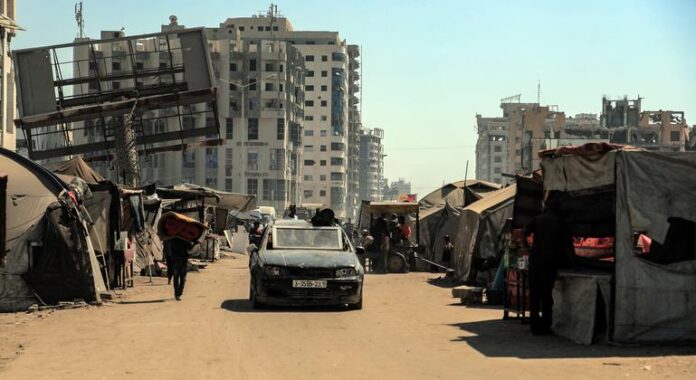
Gaza City: Daily bombardment, more displacement amid escalating military offensive

“This brings the total functioning hospitals in Gaza to only 14…the situation at the remaining eight hospitals and one field hospital in the city is critical,” said WHO spokesperson Tarik Jasarevic.

The development comes as Israeli forces continue to push into Gaza City with the declared aim of dislodging Hamas fighters believed to be based there. At the same time, repeated Israel Defense Forces evacuation orders have been issued to communities in Gaza City, uprooting hundreds of thousands of people and affecting hundreds of health facilities.

“Even if hospitals are not asked to evacuate, there is a lack of access, there is violence just nearby and that can put them out of service,” Mr. Jasarevic told journalists in Geneva.

City’s key healthcare role

Gaza City forms the backbone of the Gaza Strip’s health system since almost half of all hospitals and field hospitals in the enclave are based there.

“Hospitals in the south are overwhelmed and can’t absorb more,” WHO warned in a statement on Friday which noted that the enclave’s remaining hospitals include eight in Gaza city, three in Deir al Balah and three in Khan Younis. None is functioning at full capacity, the UN health agency stressed.

The situation at Gaza City’s eight remaining hospitals and one field hospital is “critical”, with medical teams “overwhelmed by the influx of casualties resulting from strikes”, in addition to having to treat non-trauma patients.

The four north Gaza hospitals put out of service since 1 September are Al Rantisi Children’s Hospital, the Ophthalmic Hospital, the St. John Eye Hospital and Hamad Hospital for Rehabilitation and Prosthetics.

WHO describes Hamad Hospital as one of the three main specialized rehabilitation facilities in the Gaza Strip. It had been serving 250 outpatients with rehabilitation services, in addition to providing medical care for people injured while seeking aid in north Gaza at its trauma stabilization point, with about 200 patients served daily.

Devastating attacks

Al Rantisi Hospital sustained severe damage from a direct strike on 16 September while 80 patients were inside the facility. It is the only specialized paediatric hospital left in the Gaza Strip. No fatalities were reported in the attack but there was significant damage to rooftop water tanks, communication systems and medical equipment.

Half of the patients fled, while some 40 others remain inside, including four children in the intensive care unit and eight newborns, according to WHO. Most of its medical equipment was transferred to Al Helou, As Sahaba and Patient Friendly hospitals, all in Gaza City.

In addition to the latest hospital closures, the situation is “critical” at Gaza City’s remaining eight hospitals and one field hospital. They are all “overwhelmed by the influx of casualties resulting from strikes”, low on supplies and forced to treat patients on the floor.

Highlighting critical shortages in blood units, blood bags and transfusion sets “services could shut down within days, without urgent replenishment”, WHO insisted.

According to the UN health agency, all but one of the dozen reported attacks on healthcare between 7 and 17 September have been in Gaza City, with Khan Younis the 12th.

Medicines needed without delay

“More violence only means more injured people. It means more casualties, more deaths and it means less access,” Mr. Jasarevic said. “People in Gaza are suffering from multiple displacements; there are shortages of medical supplies, there are issues of access both for humanitarians, for health workers, also for patients.”

The WHO spokesperson reiterated the health agency’s call for the urgent evacuation of the thousands of seriously ill patients in need of specialized care.

“Over 15,000 people…need to be evacuated for medical reasons and evacuations are really going very, very slowly,” he said. “Again, we can only appeal for a ceasefire, appeal for unhindered access so we can try to support what’s left of the health system in Gaza with the medical supplies, with the emergency medical teams and with everything else.”

Source link