

Leaders met to discuss Ukraine in Berlin (Germany) on 15 December 2025.
World News in Brief: Türk condemns ‘abhorrent’ attack in Sydney, UNHCR chief calls for solidarity with refugees, Ukraine latest

The UN human rights chief said on Monday the antisemitic attack on the Jewish community in Sydney which left fifteen dead at the weekend, including a 10-year-old girl, was “a moment of deep sadness.”

Air quality improving, but just over 180,000 deaths still attributable to air pollution in EU
Just over 180,000 deaths in the European Union were attributable to exposure to fine particulate matter (PM 2.5 ) concentrations above World Health Organization WHO guideline levels in 2023, according to the latest European Environment Agency (EEA) air quality health impact assessment published today. Source link
Europe-wide monitoring for antimicrobial resistance in surface waters can help improve data on health risks
DISCLAIMER: Information and opinions reproduced in the articles are the ones of those stating them and it is their own responsibility. Publication in The European Times does not automatically means endorsement of the view, but the right to express it.
DISCLAIMER TRANSLATIONS: All articles in this site are published in English. The translated versions are done through an automated process known as neural translations. If in doubt, always refer to the original article. Thank you for understanding.
Dialogue is ‘not naive: it is necessary’ as global divisions deepen, says UN forum in Riyadh

THE 11th Global Forum opened in Riyadh on Sunday with a direct message for a world torn by mistrust: dialogue is not a luxury – it is a survival strategy.
Over the next two days, participants gathered in the Saudi capital are expected to emphasize that cooperation across cultures, religions and communities remains the only viable way to navigate an era of increasing polarization and conflict.
Speaking at the opening session, UN Secretary-General António Guterres pushed back against the idea that the Alliance’s mission is unrealistic or, as critics suggest, “too soft for our difficult world.”
Those who view dialogue as naive, he warns, are mistaken. Diplomacy and cooperation, he said, are not optional, they are essential.
Two decades have passed since then-Secretary-General Kofi Annan launched the initiative in 2005 with the support of Spain and Turkey. The geopolitical landscape has changed dramatically since then, but the Alliance’s main goal remains constant: to combat extremism and intolerance and to help societies of different cultures and faiths live together in dignity.
The UN chief described the paradox of an era in which humanity is “more connected, but never more fragmented”, and described two divergent futures: one defined by fear, walls and escalating wars; and another built on bridges between cultures.
Only the second path, he stressed, leads to lasting peace: “No more October 7. No more Gaza destroyed. No more starving El-Fashers. No more communities massacred, expelled or designated as scapegoats.”
The Secretary-General highlighted three forces capable of bringing about positive global change: young people, women and girls, and people of faith. He urged delegates to advance the Alliance’s mission “with courage, clarity and hope.”
Riyadh communiqué: a call for coexistence
Countries participating in the Forum endorsed the Riyadh communiqué, which calls for making the fight against all forms of religious intolerance a global priority.
The document highlights the central role of education in promoting dialogue, human rights and peaceful societies, and reaffirms the founding objective of the Alliance: to strengthen cooperation between cultures and religions while promoting respect, mutual understanding and inclusion.
Equal voices, shared responsibility
UNAOC High Representative Miguel Moratinos, who is also the United Nations Special Envoy to Combat Islamophobia, opened the session by emphasizing that every culture must have an equal voice in shaping the future of the world.
No one perspective should dominate, he said; on the contrary, a truly peaceful and inclusive global community must draw on the wisdom and values of all civilizations.
Mr Moratinos warned of “the return of hatred”, calling for vigilance in the face of increasing discrimination. Quoting a verse from KoranIn Surah Al-Hujurat, he emphasized that human diversity is a source of strength and not division.
He stressed that Islam is a religion of peace and reiterated that Islamophobia should have no place anywhere. At the same time, he insisted on the need to eradicate anti-Semitism, adding: “Legitimate criticism of governments should not be seen as anti-Semitic or as grounds for demonizing entire communities. »
Saudi Arabia’s message: focus on dialogue, don’t back down
Saudi Foreign Minister Prince Faisal bin Farhan Al Saud reaffirmed the Kingdom’s “long-standing commitment to intercultural dialogue.” He said Saudi support for the Alliance reflects the firm belief that engagement across cultures and civilizations is essential for peace, cooperation and conflict prevention.
He highlighted several Saudi initiatives aimed at promoting dialogue and countering extremism and warned of the growing spread of religiously and nationally motivated extremist movements, as well as a worrying increase in hate speech and Islamophobia over the past two decades.
Rather than prompting disengagement, he said, these challenges must push nations to strengthen – not abandon – the values of dialogue, communication and coexistence.
Representatives from Spain and Turkey, the Alliance’s original co-sponsors, also spoke, reaffirming the enduring importance of inclusion, mutual respect and sustained dialogue.
Deepfakes, hate speech and the push for regulation
The Forum’s opening day also focused attention on one of the fastest-moving challenges shaping today’s information landscape: AI-driven disinformation.
Speakers warned that deepfakes, algorithmically amplified hate speech and unregulated systems are already reshaping public debate – and not for the better.
Ismail Serageldin, co-chair of the Nizami Ganjavi International Center and former vice president of the World Bank Group, said the use of artificial intelligence is now inevitable.
He urged the public not to fear new technologies, comparing the current moment to the invention of the calculator, when many predicted the end of the accounting profession.
“Instead,” he noted, “they adapted,” and he asserted that society would do the same today. With the right safeguards, he added, AI could even help people achieve a better work-life balance.
Mr. Serageldin went on to emphasize that AI will not replace humans, but that people who understand how to use it will gain a decisive advantage. Smart regulations must protect the public without stifling innovation or creativity, he explained.
Achraf Tasfaout, a data scientist working in the banking sector, warned that AI is accelerating the spread of hate speech and making it harder to distinguish between real content and deepfakes.
He called for clear rules that set boundaries for safe use while allowing new ideas to flourish. Policymakers and journalists, he said, have a crucial role to play in defending society. Additionally, young people, as the most active users of AI, will play a central role in creating solutions. He added that AI itself can be harnessed to counter many of the problems it creates.
Atif Rashid, editor-in-chief of Analyst Newswarned that AI systems are being released “too quickly,” often without essential security measures. He said it can feel like “humans are guinea pigs” in a global experiment, with regulations only being adopted after widespread public exposure.
Mr. Rashid cited examples in which AI has encouraged harmful behavior, which he called “AI psychosis,” and stressed that new systems must be designed to serve all of humanity, firmly rooted in human values.
Here’s how to follow the Forum:
The UN media team will be in Riyadh to cover the remainder of the Forum.
Originally published at Almouwatin.com
Aid deprioritised as commercial goods flow into Gaza, UN warns

Despite sustained efforts by the UN and its partners, needs are rising faster than aid can be delivered, according to Olga Cherevko, an OCHA spokesperson in Gaza.
“We continue to provide a response, but the needs outpace the speed with which we can respond,” she said, pointing to the limited volume of supplies entering the Strip and a growing list of items which continue to be blocked by Israeli authorities, including heavy machinery, equipment and spare parts needed to repair damaged infrastructure.
With repeated storms flooding large areas in recent weeks, humanitarian agencies have prioritised emergency winterisation. An estimated 1.3 million people are currently in need of shelter assistance.
“When the storms came, many people lost everything – it washed away everything that they had,” Ms. Cherevko said.
Tents, tarps and bedding
Over the past few days, aid teams have distributed around 3,800 tents, more than 4,500 tarpaulins and thousands of bedding items, assisting some 4,800 families.
The response has included plastic sheeting, cooking sets and short-term food assistance to help families survive the immediate aftermath of flooding.
Some of the most flood-prone locations have been identified by local authorities as unsafe, prompting several hundred families to relocate voluntarily. The UN and its partners have supported these moves by preparing and levelling sites and installing tents to ensure minimum conditions for safety and dignity.
Heightened risk of hypothermia
Winter conditions continue to pose serious health risks, particularly for infants. “The risks of hypothermia are heightened, and babies are in very high danger,” Ms. Cherevko warned.
UN partners are also raising awareness among caregivers, including guidance on body-to-body contact to help keep young children warm.
Beyond shelter, humanitarian operations include food assistance, nutrition screening, health service points and the gradual reopening of learning facilities. In recent days, 13 additional temporary learning spaces have reopened, providing access to education for about 5,000 children.
However, major constraints persist. Inside Gaza, the number of routes available for transporting aid remains limited, as do the crossings through which supplies can enter.
Crossing delays
“There are many instances in which humanitarian cargo is deprioritised and prioritisation is given to the commercial sector,” Ms. Cherevko said, noting that this causes delays that directly affect the speed of aid delivery.
Additional challenges include inconsistent opening and loading times at crossings, restrictions on critical items and registration requirements that prevent non-governmental organisations from bringing supplies into Gaza.
“All of these impediments must be lifted,” she stressed. “We have the capacity to respond, but we are constrained at a time when people’s needs are increasing faster than we can meet them.”
UNICEF distributes winter clothes kits to children across the Gaza Strip, as winter storms are adding to families’ hardship.
Aid loses priority as commercial goods arrive in Gaza, UN warns

Despite the sustained efforts of the UN and its partners, needs are growing faster than aid can be delivered, according to Olga Cherevko, OCHA spokesperson in Gaza.
“We continue to respond, but the needs exceed the speed with which we can respondshe said, highlighting the limited volume of supplies entering the Gaza Strip and a growing list of items that continue to be blocked by Israeli authorities, including heavy machinery, equipment and spare parts needed to repair damaged infrastructure.
Faced with repeated storms that have flooded large areas in recent weeks, humanitarian agencies have prioritized emergency winterization. An estimated 1.3 million people are currently in need of shelter assistance.
“When the storms came, many people lost everything – it took away everything they owned,” Ms Cherevko said.
Tents, tarps and bedding
In recent days, humanitarian teams have distributed around 3,800 tents, more than 4,500 tarpaulins and thousands of bedding, helping some 4,800 families.
The intervention included plastic sheeting, kitchen sets and short-term food aid to help families survive immediately after the floods.
Some of the most flood-prone areas have been identified by local authorities as dangerous, prompting several hundred families to voluntarily relocate. The UN and its partners supported these efforts by preparing and leveling sites and setting up tents to ensure minimum conditions of safety and dignity.
Increased risk of hypothermia
Winter conditions continue to pose serious health risks, particularly for infants. “The risks of hypothermia are increased and babies are in great danger“, warned Ms. Cherevko.
UN partners are also raising awareness among caregivers, including providing advice on body-to-body contact to help keep young children warm.
Beyond shelters, humanitarian operations include food assistance, nutritional screening, health service points and the gradual reopening of learning establishments. In recent days, 13 additional temporary learning spaces have reopenedproviding access to education to around 5,000 children.
However, major constraints persist. Inside Gaza, the number of routes available to deliver aid remains limited, as do the crossing points through which supplies can enter.
Delays at crossing
“There are many cases in which humanitarian cargo is no longer prioritized and priority is given to the commercial sector,” Ms. Cherevko said, noting that this leads to delays that directly affect the speed of aid delivery.
Other challenges include inconsistent opening and loading times at crossing points, restrictions on essential items and registration requirements that prevent non-governmental organizations from bringing supplies into Gaza.
“All these obstacles must be removed,” she stressed. “We have the capacity to respond, but we are limited in a time when people’s needs are growing faster than we can meet them. »
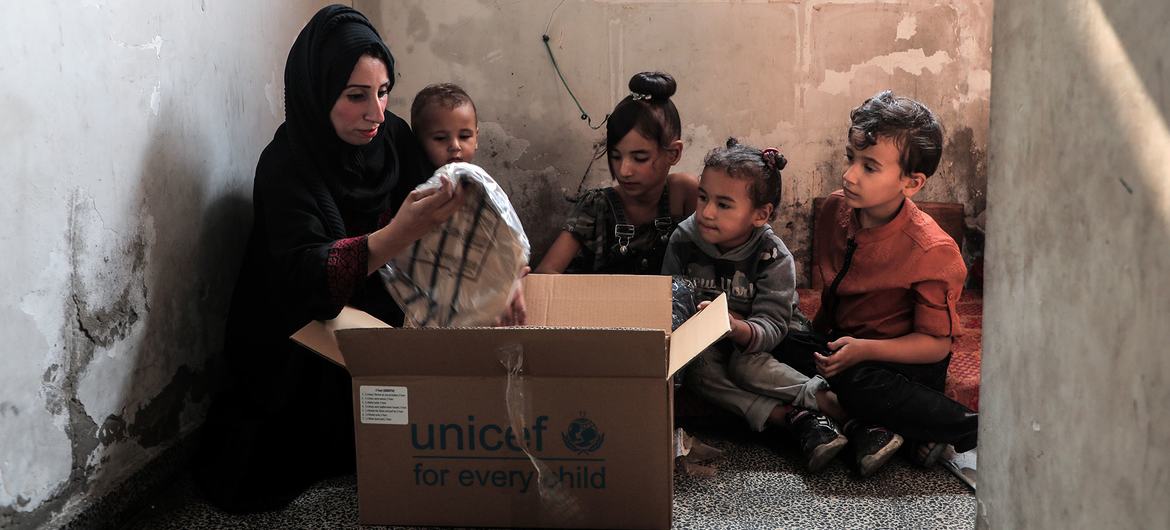
UNICEF is distributing winter clothing kits to children in the Gaza Strip, as winter storms add to families’ hardship.
Originally published at Almouwatin.com
Apple & Google Patch Zero-Day Attack Holes

Apple and Google simultaneously deployed critical security fixes this week after discovering their systems were compromised through previously unknown vulnerabilities, with evidence pointing toward state-sponsored attackers targeting specific individuals.

Key Takeaways:
- Google patched a Chrome browser flaw (CVE-2025-14174) that hackers actively exploited before fixes became available
- Apple secured two vulnerabilities across its entire product ecosystem after detecting attacks against particular users
- Joint investigation by Apple’s security team and Google’s Threat Analysis Group suggests government-backed hackers orchestrated the campaign
Google broke from standard practice when announcing the Chrome updates on Wednesday. The company initially withheld details about the patches released for its version 143.0.7499.109/.110 browser update. This silence lasted until Friday, when Google revealed that Apple’s Security Engineering and Architecture team, working alongside Google’s Threat Analysis Group, had uncovered the flaw.
The Threat Analysis Group specializes in tracking government-sponsored hacking operations and commercial spyware vendors. Their involvement signals that nation-state actors likely orchestrated these attacks rather than common cybercriminals.
Apple moved simultaneously, pushing security updates across its entire hardware lineup: iPhones, iPads, Mac computers, Vision Pro headsets, Apple TV devices, Apple Watches, and the Safari browser. The company’s security bulletin for mobile devices addressed two separate vulnerabilities.
Apple acknowledged awareness “that this issue may have been exploited in an extremely sophisticated attack against specific targeted individuals” using devices running versions before iOS 26. This carefully worded statement follows Apple’s established protocol for confirming zero-day exploitation—attacks that leverage software flaws unknown to manufacturers at the time hackers deploy them.
Historical patterns suggest these incidents often involve commercial spyware tools developed by companies like NSO Group or Paragon Solutions. These firms sell sophisticated hacking capabilities to governments, which then deploy them against journalists, political dissidents, and human rights defenders.
The Chrome vulnerability, designated CVE-2025-14174 and rated “High” severity, involves out-of-bounds memory access in ANGLE, a graphics abstraction layer. Google confirmed “an exploit for CVE-2025-14174 exists in the wild,” meaning attackers were using it against real targets.
Beyond the zero-day flaw, Google’s update addressed two additional medium-severity bugs. Security researcher Weipeng Jiang discovered a “use after free” error in Chrome’s Password Manager, while Khalil Zhani identified an implementation issue in the browser’s toolbar. Google awarded $2,000 bounties to each researcher.
The timing remains unclear regarding how many users fell victim to these attacks or which specific groups were targeted. Both companies maintained their usual discretion about victim identities and attack specifics, balancing transparency with user privacy and ongoing security investigations.
Google noted that many security vulnerabilities never reach users because the company employs automated detection tools, including AddressSanitizer, MemorySanitizer, UndefinedBehaviorSanitizer, Control Flow Integrity, libFuzzer, and AFL during development cycles.
Users should immediately install the available updates across all affected devices. The patches will roll out globally over the coming days and weeks through automatic update mechanisms.
Written by Alius Noreika
