Monday, June 29, 2026
Home Blog Page 203

Sudan crisis: UN agencies rush to help civilians as violence grips El Fasher

0

“We are deeply alarmed by increasing reports of serious violations against civilians,” Haq said, citing accounts of “executions, sexual violence, humiliation, extortion and attacks” following the capture of El Fasher, the state capital, by the Rapid Support Forces militia last week.

According to the United Nations migration agency, IOM, nearly 82,000 people fled El Fasher and surrounding areas since October 26many are heading towards Tawila, which is already home to hundreds of thousands of people displaced by previous fighting.

The United Nations agency for reproductive rights, UNFPAwarned that women and girls had suffered rape, kidnapping and “other extreme violence” as they fled.

Mr Haq said local sources reported some 1,300 people injured by gunfire arrived in Tawila after being attacked while fleeing the town.

“We once again call for an immediate cessation of hostilities and for all parties to respect their obligations under international humanitarian law,” he added, stressing that the safety of civilians and humanitarian workers must be guaranteed.

Meanwhile, the United Nations refugee agency (UNHCR) said Chad now hosts 1.4 million refugeesmainly from Darfur, and warned that more people would likely cross the border as the violence worsens. “With the escalation of violence in El Fasher, a new major influx into Chad is expected, further straining host communities,” Mr Haq said.

Originally published at Almouwatin.com
Sudan war and political uncertainty block progress in Abyei peace talks

0

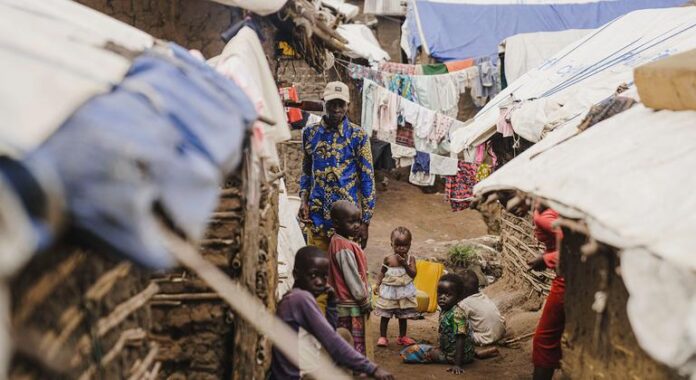
Relations between the neighboring countries remain deeply affected by the war in Sudan, where the national army and its former allies, the Rapid Support Forces (RSF), have been fighting for power since April 2023.

Two senior UN officials briefed the Council on developments in this fertile strip of territory and the peacekeeping mission taking place there, UNISFAwhose mandate includes monitor and verify the redeployment of forces of the oil-rich region, in accordance with a 2011 agreement.

The political process is at a standstill

Assistant Secretary-General for Africa Martha Ama Akyaa Pobee said the political process remains stalled, as it has since the start of the war in Sudan.

Although there have been moves toward dialogue, “considerable challenges remain to make progress on Abyei’s final status.” They include dynamics related to conflict in Sudan and political uncertainty in South Sudan.

She noted that the recent strategic review of UNISFA – requested by the Council last November – “underscored a reinvigorated political role for the Mission, which stands ready to provide support to the parties as they plan a resumption of talks.”

Presence of RSF and community tensions

At the same time, UNISFA continued to report an increased presence of RSF elements and associated individuals in northern Abyei.

This has contributed to increased crime rates, particularly at Amiet Market, a popular shopping center for the Ngok Dinka and Misseriya communities.

The market’s rapid growth in recent years has made it a potential flashpoint for intercommunal tensions.adding a new challenge for UNISFA,” Ms. Pobee said, pointing to illegal checkpoints set up by the RSF and other armed groups.

UNISFA had no choice but to engage regularly with the armed actors present in the area to facilitate their withdrawal.remind them that their presence in the Abyei administrative area is contrary to Abyei’s demilitarized and arms-free status, and prevent their return.

Additionally, South Sudanese security forces also remain present in southern Abyei, which constitutes another violation.

“I reiterate the call for the immediate withdrawal of all armed forces and other armed actors from Abyei, in line with Abyei’s arms-free status,” she said.

“Untenable” operating environment

Ms. Pobee said the strategic review also detailed how the operating environment at the former mission logistics center and Joint Border Verification and Monitoring Mechanism (JBVMM) headquarters in Kadugli, Sudan, “has become simply untenable.”

The fighting endangers peacekeepers and “the situation has become even more dire with an increase in targeted drone strikes» by the RSF, which had a negative effect on UNISFA air operations.

In addition, the Sudanese conflict and the continued influx of displaced people continue to create economic difficulties in Abyei, and the mission has had to facilitate the activities of humanitarians helping the population.

Impact in South Sudan

The war also continues to impact security in South Sudan, UN Special Envoy for the Horn of Africa Guang Cong told the Council.

Cross-border movements of armed groups from both sides have led to increased insecurity in and around the border area.

The war and deteriorating security are also affecting South Sudan’s main source of income, as the flow of oil and exports through Sudan have been significantly disrupted, causing the economy to contract by almost 25 percent.

“Only after increased bilateral engagement and new arrangements to improve security along the pipeline route and other facilities did oil production and transportation resume earlier this year,” he said.

However, subsequent RSF attacks on oil installations, which took place in May and August, “resulted in oil spills, environmental damage and led to an emergency shutdown of operations.”

Support dialogue

In her briefing, Ms. Pobee noted that Sudan and South Sudan have indicated their openness to resuming contacts on Abyei.

Last month, the two countries announced plans to reactivate cooperation agreements focused on security and the economy.

As the African Union (AU) continues to play a critical role in facilitating engagement between the parties, UNIFSA will continue its close coordination with the organization, she said.

Mr. Cong also welcomed renewed efforts to revive Abyei’s political process and hopes to support the AU in this regard.

Originally published at Almouwatin.com
Not just dreams, but rights: Social justice in focus at Doha summit

0
Not just dreams, but rights: Social justice in focus at Doha summit

The Global Coalition for Social Justice Forum brought together ministers, workers’ and employers’ organizations, UN agencies and civil society to accelerate action on poverty eradication, decent work and social inclusion.

The gathering came at a moment described as both hopeful and urgent. Since the coalition’s launch in 2023, governments and partners have expanded efforts to close inequalities and strengthen social protections.

Progress has been made in education, life expectancy and gender equality. Yet discrimination, exclusion and gaps in rights at work remain deeply entrenched in many countries.

Against this backdrop, the Forum served as a space to share achievements, examine where commitments are falling short, and discuss how to accelerate coordinated efforts to bridge these divides.

Not just dreams – rights

Addressing the event, Annalena Baerbock, President of the UN General Assembly, spoke of social justice not as a vision but a right.

“We all have dreams,” she said, recalling her childhood hopes and the encouragement that hard work could make anything possible.

“But we know that is not true for everyone. The world, as it stands, is not equal. It’s not fair. The world is not just.

She warned that millions of young people around the world still see their futures constrained by poverty, lack of education, conflict and discrimination.

“These are not just dreams. These are rights,” she said, calling on governments, the private sector and civil society to dismantle systemic barriers: “We have to ensure that we end these injustices once and for all.

An elderly flower vendor in Jogyakarta, Indonesia. According to UN estimates, 58 per cent of world’s older persons live in Asia and the Pacific, a figure expected to rise in the years to come.

A pathway to justice

Speaking to UN News on the sidelines, Srinivas Tata, Director of the Social Development Division at the UN Economic and Social Commission for Asia and the Pacific (ESCAP), underscored the moment’s significance.

This is about putting social development back at the centre,” he said. “Social justice is the goal – social protection is one of the means to get there.”

Asia and the Pacific has lifted millions out of poverty over recent decades, he noted, but inequality remains high, populations are rapidly aging, and climate change is deepening vulnerabilities.

To help address these pressures, ESCAP works with governments to identify who is being left behind and how to reach them. Its Social Protection Toolbox includes a simulation tool to show the returns of expanding social protection.

“It demonstrates that social protection is not a cost…it is an investment.

Listen to the interview with Mr. Tata.

Human rights at the core

While ESCAP highlighted regional policy tools, the UN human rights office, OHCHR, emphasised the universal principles underpinning social protection efforts.

Nada Al-Nashif, UN Deputy High Commissioner for Human Rights, told us the Summit is “a golden opportunity to revisit the vision of Copenhagen,” noting that poverty eradication, decent work and social inclusion are “completely anchored in human rights.”

On social protection, she highlighted close partnership with other UN agencies, in particular the International Labour Organization (ILO), and “incredible success stories” where schemes are anchored in law and target the most vulnerable.

Looking ahead, she stressed the need to shift into action: “We have momentum now to turn all our plans, our aspirations into action. We know how it works, and we have the solutions.

UN News on the ground

UN News is on the ground in Doha, providing continuing coverage throughout the week, including live updates, interviews and analysis from the Summit. Follow our coverage here.

Source link

World news in brief: Famine alert in South Sudan, tsunami preparedness and peacekeeping activities reported along Lebanon’s ‘blue line’

0

According to UN-backed hunger experts, more than half the population – or around 7.56 million people – will face “crisis or even more severe levels of hunger” between April and July 2026, the lean season.

In addition, more than two million children are expected to suffer from acute malnutrition during the same period, the United Nations World Food Program has warned (PAM).

The UN agency said food insecurity is “widespread and worsening” in parts of South Sudan.

Constant warnings

“We have consistently warned of the serious food and nutrition crisis that the country continues to face,” UN deputy spokesperson Farhan Haq said during Wednesday’s daily press briefing in New York.

Fears are greatest for the 28,000 people living in Luakpiny/Nasir and Fangak counties, where hunger levels are described as catastrophic, in the latest report from UN-backed international food security experts the IPC – recognized as the most authoritative source for monitoring extreme hunger and famine around the world.

They point out that southern parts of Luakpiny/Nasir County are at risk of famine if conflict persists and access restrictions remain, due to flooding and disease outbreaks.

Ending hunger depends on cultivating South Sudan’s fields and reopening markets, UN agencies say.

Be prepared for tsunamis: investing in preparedness to save lives

Over the past 100 years, tsunamis have claimed more than 260,000 lives – an average of 4,600 per disaster – more deaths than any other natural hazard, according to the United Nations disaster risk reduction agency (UNDRR) said Wednesday.

In line with efforts to reduce disaster losses and build resilience to protect lives, livelihoods and economies from the devastating effects of tsunamis, the theme of this year’s edition World Tsunami Awareness Day is Be Tsunami Prepared: Invest in Tsunami Preparedness.

Tsunamis are rare but highly destructive, posing an existential threat wherever the monster wave phenomenon occurs. “Let us commit to building on the progress we have made and investing the funds needed to improve tsunami preparedness and resilience for all,” said UNDRR Chief Kamal Kashore.

Tsunamis disrupt livelihoods, industries, agriculture and essential services such as education and healthcare.

Early warnings save lives

The recent 8.8 magnitude earthquake off the coast of Russia on July 30, 2025 clearly demonstrates why early warnings are essential.

Rapid action then allowed communities to evacuate in time, preventing large-scale loss of life.

Rapid urbanization and tourism development in tsunami-prone regions are putting more people at risk – making risk reduction a key factor if the world is to achieve substantial reductions in disaster-related mortality.

“With rising sea levels and more people living near coasts, early warning systems require investment and improvement,” UN Secretary-General Antonio Guterres said in today’s message.

Lebanon: UN peacekeepers report intensified military activities along the Blue Line

UN peacekeepers in southern Lebanon have reported increased military movements and exchanges of fire along the Blue Line separating Lebanon and Israel, UN deputy spokesperson Farhan Haq said Wednesday.

UNIFIL Peacekeepers continue to observe the presence and military activities of the Israel Defense Forces,” he told reporters, noting that over the past two days they had seen “more than 100 IDF vehicles moving in the eastern sector and around 60 in the western sector, including several Markava tanks.”

He said peacekeepers reported “around 300 small arms fire” from south of the Blue Line near Kfar Shouba on Monday and “another 100 direct fire” near Shab’a the next day.

Mr. Haq reminded all parties of “their obligation to ensure the safety and security of UN personnel and assets.” UNIFIL also discovered and reported several weapons caches and continues to organize joint patrols and training with the Lebanese army.

Originally published at Almouwatin.com

Famine declared in two Sudanese cities cut off by war, fragile gains elsewhere

0
Famine declared in two Sudanese cities cut off by war, fragile gains elsewhere

Although food security has begun to improve in areas where fighting has subsided, famine has taken hold in conflict-hit locations that have been cut off from aid or under siege, according to the latest UN-backed IPC food security analysis

Famine conditions have been confirmed in Darfur’s El Fasher and Kadugli, where “people have endured months without reliable access to food or medical care,” the Food and Agriculture Organization (FAO), the World Food Programme (WFP) and child rights agency UNICEF said in a joint release.

Ceasefire call

UN chief António Guterres called for an immediate ceasefire in Sudan on Tuesday as disturbing images of apparent mass killings in El Fasher and elsewhere continue to circulate online.

In a tweet, Mr. Guterres appealed to the Sudanese Armed Forces and the rebel paramilitary Rapid Support Forces “to come to the negotiating table to bring an end to this nightmare of violence”.

Heavy fighting erupted in Sudan in April 2023 between the rival armies which has created a massive humanitarian disaster.

Last week saw the fall of government held El Fasher after more than 500 days of siege by rebels.

Hundreds of civilians – including humanitarian workers – are believed to have been killed, and many others are trapped behind barricades.

Millions still going hungry

The IPC analysis confirmed that roughly 21.2 million people in Sudan – 45 per cent of the population – are facing high levels of acute food insecurity, representing a slight improvement.

Furthermore, an estimated 3.4 million people are no longer facing crisis levels of hunger.

The improvements follow a gradual stabilisation since May in three states – Khartoum, Al Jazirah and Sennar – where conflict has eased and families are returning, among other developments.

“But these gains are limited,” the UN agencies said.  “The wider crisis has shattered the economy and vital services, and much of the infrastructure people rely on has been damaged or destroyed.”

‘Fragile improvements’

Favourable crop growing conditions are also expected after the harvest and into next year, with crisis levels of hunger improving to 19.3 million through January.

They warned, however, that “these fragile improvements are highly localised” as many returning families in Khartoum and Al Jazirah have lost everything and will struggle to benefit from the harvest.  

At the same time, active conflict persists in western regions, notably North and South Darfur as well as West and South Kordofan.

Meanwhile, hunger is expected to worsen starting in February as food stocks run out and fighting continues. 

Famine in besieged areas

The IPC’s Famine Review Committee (FRC) found that famine conditions are occurring in El Fasher, capital of North Darfur state, and Kadugli in South Kordofan, which have been largely cut off due to conflict. 

The UN agencies noted that conditions in Dilling, South Kordofan, “are likely similar to Kadugli, but cannot be classified due to insufficient reliable data – a result of restricted humanitarian access and ongoing hostilities.”

In the Western Nuba Mountains, conditions have shown marginal improvement, but famine remains high unless humanitarian access improves.

The FRC projects a risk of famine in 20 additional areas across Greater Darfur and Greater Kordofan, including rural localities, displacement camps and several new locations in East Darfur and South Kordofan.

Additionally, Global Acute Malnutrition (GAM) rates are alarmingly high, ranging from 38 to 75 per cent in El Fasher and reaching nearly 30 per cent in Kadugli.

This is happening as outbreaks of cholera, malaria and measles continue to rise in areas where health, water and sanitation systems have collapsed. 

Source link

Mind over machine: UN urges ethical guardrails for brain tech revolution

0
Mind over machine: UN urges ethical guardrails for brain tech revolution

It seems like science fiction, or even magic: the ability to communicate, control a computer or move a robotic limb via the power of thought.

However, it’s not only possible, it’s already transforming the lives of patients with severe disabilities.

In 2024, an audience at a UN conference in Geneva sat astounded as a young man in Portugal with “locked in syndrome” – a neurological disorder that left him unable to move any part of his body – was able to “speak” to them, using a brain-computer interface (BCI) that translated his thoughts into words, spoken in his voice, and answer their questions.

This is a striking example of the growing field of neurotechnology, which holds out great hope for those living with disabilities and mental disorder such as Parkinson’s disease, epilepsy and treatment-resistant depression.

Mental privacy: A lost battle?

But while the use of neurotechnology for the medical sector is strictly regulated, its use in other areas is raising concerns.

Products such as headbands, watches and ear pods that monitor heart rate, sleeping patterns and other health indicators are increasingly popular. The data they collect can provide deep insights into our private thoughts, reactions and emotions, improving quality of life.

This poses ethical and human rights challenges, because manufacturers are currently free to sell or pass it on without restriction. Individuals face the possibility of having their most intimate mental privacy intruded upon, their thoughts exposed, monetised and even controlled.

“It’s about freedom of thought, agency and mental privacy,” says Dafna Feinholz, acting head of Research, Ethics and Inclusion at UNESCO.

She worries that the battle for mental privacy is being lost in an age of social media, with users willingly uploading their private lives to platforms owned by a handful of giant tech companies.

“People say ‘I have nothing to hide,’ but they don’t understand what they’re giving away,” she adds.

Assistive technologies can allow a person to write or move objects in space using their brain waves.

“We are already being profiled by AI, but now there is this possibility of entering thoughts, directly measuring the activity of the brain and inferring mental states. These technologies could even modify the structure of your nervous systems, allowing you to be manipulated. People need to know that these tools are safe and that, if they wish, they can stop using them.”

People need to know that these tools are safe and that, if they wish, they can stop using them

The UN official insists that, while we have to accept that we need to live with technology, we can ensure that humans remain in charge.

“The more we surrender to the power and superiority of these tools, the more we are going to be taken over. We need to control what they do and what we want them to achieve, because we are the ones who are producing them. This is our responsibility for all the technology we create.”

Time for an ethical approach

Ms. Feinholz spoke to UN News from the ancient Uzbek city of Samarkand where, on Wednesday, delegates from the Member States of UNESCO – the UN agency for education, science and culture – formally adopted a “Recommendation” (non-binding guidance on principles and best practices than can form the basis of national policies) on the ethics of neurotechnology, with an emphasis on the protection of human dignity, rights, and freedoms.

The guidance advocates for the promotion of well-being and an avoidance of harm associated with the technology, freedom of thought (ensuring that individuals retain control over their mind and body) and for developers, researcher and users to uphold ethical standards and be accountable for their actions.

Member States are being advised to put several measures in place, including implementing legal and ethical frameworks to monitor the use of neurotechnology, protect personal data and assess the impact on human rights and privacy.

“Humans have to be in the loop,” declares Ms. Feinholz. “There needs to be transparency, redress and compensation, as there is in other sectors. Take restaurants as an example. If you eat out you don’t have to know how to cook. But if you order a spaghetti carbonara and it makes you sick, you can complain to the owner. There is accountability. The same should apply to neurotechnology: even if you don’t understand how it works, there has to be chain of accountability.”

Source link

Catch-up vaccination campaign is “a lifeline” for children in Gaza

0

Estimates indicate that one in five children under the age of three have not received any doses or been vaccinated because of the war, putting them at risk of outbreaks of vaccine-preventable diseases.

The catch-up campaign aims to vaccinate these children against measles, mumps and rubella, diphtheria, tetanus, whooping cough, hepatitis B, tuberculosis, polio, rotavirus and pneumonia.

It will be carried out by the United Nations Children’s Fund (UNICEF), the United Nations agency for Palestinian refugees, UNRWAthe World Health Organization (WHO) and partners, in collaboration with the Gaza Ministry of Health.

“A moral imperative”

To help address the devastating impacts of the conflict on children’s health and nutrition, UNICEF and its partners will also screen children for malnutrition and ensure that those who suffer from it receive treatment and continued monitoring.

“After two years of relentless violence that has claimed the lives of more than 20,000 children in the Gaza Strip, we finally have the opportunity to protect those who survived,” said Jonathan Veitch, UNICEF Special Representative in the State of Palestine.

“Vaccinating every child and supporting their health and nutrition is not just a humanitarian intervention; it is a moral imperative. It is how we safeguard the futures of children born in disaster and begin to rebuild hope in the midst of devastation.”

Hundreds of workers trained

The campaign will be implemented in three cycles, from November 9 to 18.

More than 450 health workers and support staff have been trained to support vaccination efforts.

In addition, 149 doctors have been trained to recognize, report and investigate any post-vaccination health problems – although such cases are extremely rare.

“We need a lot more”

“This vaccination campaign is a lifeline, protecting the health of children and restoring hope for the future,” said Dr Richard Peeperkorn, WHO Representative in the Occupied Palestinian Territory.

However, he stressed that “there is still much to do, and WHO is working to rebuild Gaza’s fragile health system so that every child, every community, can access the care they deserve.”

Before the conflict, Gaza had 54 vaccination centers. It is also among the world leaders in terms of childhood immunization coverage, with a rate of 98 percent.

Today, 31 vaccination centers are no longer operational, having been damaged or destroyed during indiscriminate attacks, while routine vaccination coverage is now below 70 percent.

The final two phases of the campaign, which aim to provide children with their second and third doses of vaccines, are planned for December and January.

In 2024, the UN and its partners launched a mass campaign across the Gaza Strip to vaccinate children against polio.

Originally published at Almouwatin.com

Mind over machine: UN calls for ethical safeguards for brain technology revolution

0

It sounds like science fiction, even magic: the ability to communicate, control a computer, or move a robotic limb through the power of thought.

However, not only is it possible, it is already transforming the lives of severely disabled patients.

In 2024an audience at a UN conference in Geneva, I was amazed to find that a young Portuguese man with “locked-in syndrome” – a neurological disorder that left him unable to move any part of his body – was able to “talk” with them, using a brain-computer interface (BCI) that translated his thoughts into words, expressed with his voice, and answered their questions.

This is a striking example of the growing field of neurotechnology, which represents great hope for people living with disabilities and mental disorders such as Parkinson’s disease, epilepsy and treatment-resistant depression.

Mental privacy: a losing battle?

But while the use of neurotechnology in the medical sector is strictly regulated, there are concerns about its use in other areas.

Products such as headbands, watches and headphones that monitor heart rate, sleep patterns and other health indicators are becoming increasingly popular. The data they collect can provide deep insights into our private thoughts, reactions, and emotions, thereby improving quality of life.

This poses ethical and human rights issues, as manufacturers are currently free to sell or pass it on without restriction. Individuals risk seeing their most intimate mental privacy invaded, their thoughts exposed, monetized and even controlled.

“It’s about freedom of thought, action and mental privacy,” says Dafna Feinholz, interim head of research, ethics and inclusion at UNESCO.

She worries that the battle for mental privacy is being lost in the age of social media, where users happily upload their private lives to platforms owned by a handful of giant tech companies.

“People say, ‘I have nothing to hide,’ but they don’t understand what they are revealing,” she adds.

Assistive technologies can allow a person to write or move objects in space using their brain waves.

“We are already profiled by AI, but now there is this possibility of entering thoughts, directly measuring brain activity and inferring mental states. These technologies could even change the structure of your nervous system, allowing it to be manipulated. People need to know that these tools are safe and that, if they want, they can stop using them.”

People need to know that these tools are safe and that if they want, they can stop using them.

The UN official insists that while we must accept that we have to live with technology, we can ensure that humans remain in charge.

“The more we submit to the power and superiority of these tools, the more we’re going to be taken over. We have to control what they do and what we want them to do, because we’re the ones producing them. It’s our responsibility for all the technology we create.”

It’s time to take an ethical approach

Ms. Feinholz spoke to UN News from the ancient Uzbek city of Samarkand where, on Wednesday, delegates from member states of UNESCO – the United Nations agency for education, science and culture – officially adopted a “Recommendation» (non-binding guidance on principles and best practices that can form the basis of national policies) on the ethics of neurotechnology, with an emphasis on the protection of human dignity, rights and freedoms.

The guidelines advocate the promotion of well-being and prevention of harm associated with technology, freedom of thought (ensuring that individuals retain control of their minds and bodies), and respect for ethical standards by developers, researchers and users and accountability for their actions.

Member States are advised to put in place several measures, including the implementation of legal and ethical frameworks to monitor the use of neurotechnologies, protect personal data and assess the impact on human rights and privacy.

“Humans need to know,” Feinholz says. “There needs to be transparency, redress and compensation, as there is in other industries. Let’s take restaurants for example. If you eat out, you don’t need to know how to cook. But if you order spaghetti carbonara and it makes you sick, you can complain to the owner. There is accountability. The same should apply to neurotechnology: even if you don’t understand how it works, there needs to be a chain of custody.”

Originally published at Almouwatin.com

EU to advance global clean transition at UN’s COP30

0
EU to advance global clean transition at UN’s COP30

At the COP30 UN Climate Change Conference in Belém, Brazil, from 10-21 November, the EU will reaffirm its strong commitment to climate action. The EU will continue to lead efforts to meet the Paris Agreement climate goals and push forward on a global transition that is clean, resilient and fair.

Source link

Potential Gaza stabilization force must have Security Council approval: Guterres

0
Potential Gaza stabilization force must have Security Council approval: Guterres

António Guterres was speaking at a press conference during the Second World Summit for Social Development in the Qatari capital.

He was asked about coordination with Israel and US President Donald Trump’s 20-point plan for Gaza which includes deploying a temporary international stabilization force to the enclave, developed by the US, Arab and international partners.

Aid scale-up critical

The Secretary-General said the UN is “actively engaged in making sure that humanitarian aid increases dramatically” in Gaza and reaches the entire population.

He added that the US “has been helpful in making Israel at least progressively remove some of the obstacles and difficulties that are still in place” in this regard.

“On the other hand, we have been very actively supporting the principle that the ceasefire must hold, that all parties must abide by the ceasefire, that there must be a link between Gaza and the West Bank in the way the next stage is put in place,” he continued.

“And that this needs to lead to a two-State solution and to the recognition of an independent Palestinian State.”

The Secretary-General stressed that the UN’s positions “have been very clear” and are not dependent “on cooperating with this or that country.”

US draft resolution

He noted that the US is drafting a Security Council resolution on Gaza in consultation with other serving members, however the UN Secretariat is not involved in the discussions.

“What we believe is that whatever entity that is created in Gaza should have the legitimacy of a mandate from the Security Council,” he said.

Asked if this includes the international force, he responded that “it is one of the things that has been discussed” and “it would be important to have the training and the formation of a Palestinian police force.”

He said: “This transition needs to lead to a situation in which the two sides [Gaza and the West Bank] are united and that the Palestinian Authority exerts its full authority.” 

Humanitarian efforts continue

Meanwhile, humanitarians continue to scale up operations across the Gaza Strip, in line with the 60-day response plan, UN Deputy Spokesperson Farhan Haq told journalists in New York. 

He said the UN and partners picked up 80 truckloads of supplies on Sunday, including food, animal fodder, shelter materials, winter clothing and hygiene items.  This total does not include bilateral and commercial deliveries. 

“Our partners report that, based on preliminary data, they collected nearly 750 pallets of relief items yesterday from Kerem Shalom/Karem Abu Salem and transported them to Gaza City,” he said.

“Another four trucks delivered medicine and medical supplies. Congestion and heavy traffic continue to hamper collection efforts.”

Nearly one million fed

Since the resumption of general food distributions on 13 October, nearly one million people – half the population –have received assistance through 46 distribution points run by aid partners. 

“We continue to try to expand this so that this month, families can receive two monthly food parcels, up from one in October,” he said.  

Between mid-October and this past Sunday, the UN and partners collected more than 210 metric tonnes of animal fodder from the crossings, and distribution to some 1,700 herders in Deir al-Balah is almost complete.  

Partners providing nutrition services have also collected more than 120,000 packs of fortified cereal, used to prevent acute malnutrition in children. This amount is enough to support large numbers of children for one month.

Mr. Haq reported that other partners providing water and sanitation services continue to scale up their responses. 

Humanitarians have also supported local authorities with rehabilitating three wells supplying neighbourhoods in Gaza City.  

Source link