Tuesday, April 7, 2026
Home Blog Page 208

Afghanistan quake: Rescuers dodge dangers, women and girls face disaster, warns UN

0
Afghanistan quake: ‘Communities are struggling with basic survival’

“While the major aftershocks have passed, or have mostly passed, women in affected areas are facing a long-term disaster without more urgent assistance,” said Susan Ferguson, UN Women Special Representative in Afghanistan.

One woman rescuer supported by the UN agency described “scrambling” along the sides of mountains, “dodging falling rocks every time there was an aftershock”, Ms. Ferguson told journalists in Geneva. “Another woman who joined these teams, again with our support, said there was no other channel for women to share their needs and concerns, as they are restricted from speaking to men.”

Fleeing with nothing

In the more than two weeks since a shallow 6.0 magnitude earthquake hit eastern Afghanistan, rescuers have battled extremely challenging terrain – often on foot – to reach the most remote communities in Kunar province. 

At least 2,200 people were killed as houses built on steep hillsides collapsed on top of each other when the quake happened at around midnight on 31 August.

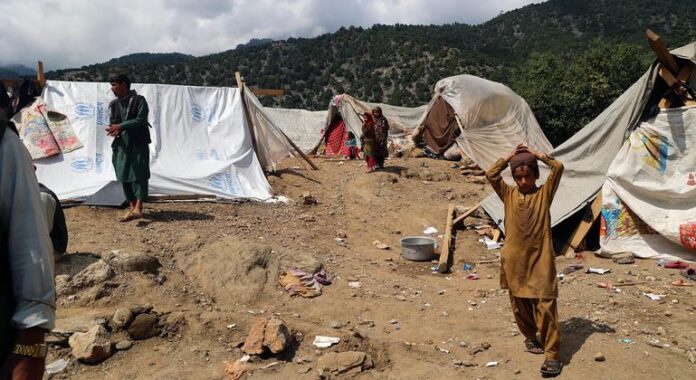
After meeting women survivors living in a basic tent in Chawkay district in central Kunar province, Ms. Ferguson said it was clear that they would soon need sturdier shelter, as temperatures start to drop.

These women had fled their village in the middle of the night when the earthquake struck, walking for hours to find temporary shelter,” she said. 

“They told me they’d lost their relatives, many still buried in the rubble. They lost their homes; they lost their livelihoods and their source of income. As one woman said to me, ‘now we have nothing.’’’ 

Ban on female workers

The humanitarian response to the disaster has been hampered by the Taliban leadership’s ban on Afghan women staff members and contractors from entering UN compounds in the capital, Kabul, effective since 5 September.

“The ban is impacting us because our women staff are not allowed to come to the office to work,” the UN Women representative said. 

“However, women staff and women in the humanitarian response are still able to operate in the earthquake-affected sites. And this is really essential and has been recognised actually as essential.”

Women and girls accounted for more than half of those killed and injured in the disaster. They also make up 60 per cent of those still missing, while many survivors live in tents or out in the open, as witnessed by UN Women assessment teams. 

Cultural chasm

Providing healthcare to survivors of the tragedy remains a priority – as does finding enough women to do this work, in line with culturally accepted practices. “What I heard from health workers and from some women was that there was a particular area in the earthquake-affected zone where there were cultural norms that meant that women themselves didn’t want men to touch them and that men also didn’t want to touch women as they were trying to rescue them,” Ms. Ferguson explained.

Destruction of basic infrastructure has heightened the threat of violence against women and girls as they are forced to walk further in search of a bathroom, or gather water, exposing them to the risk of violence and landmines.

“In everyday life, in this cultural context, these women already face an uphill battle every day to survive and support their families,” Ms. Ferguson said. “Now, in the disruption and chaos following the earthquake, these women will find it exponentially harder to feed their children and find a safe place to stay.”

Satellite images have revealed that more than 649,000 tonnes of debris – equivalent to 40,500 truckloads – still need to be cleared. According to the UN Development Programme (UNDP) which analysed the data at least 23,000 people may have been forced from their homes. 
Source link

UNICEF aid trucks robbed at gunpoint in Gaza City

0
UNICEF aid trucks robbed at gunpoint in Gaza City

The appeal comes a day after “armed individuals” robbed four UNICEF trucks carrying desperately needed Ready-to-Use Therapeutic Food (RUTF).

The incident occurred outside its compound in Gaza City, where an Israeli military offensive is escalating.

Nearly 3,000 children impacted

“The individuals commandeered the drivers at gun point and diverted the RUTF before releasing the drivers and trucks,” the agency said in a statement.

This theft has denied at least 2,700 severely and acutely malnourished children of life-saving RUTF – vital supplies at a time when famine has been declared in the north of Gaza and the ongoing military operation is creating further displacement and adding to the devastating impact on children.”

UNICEF urged all in Gaza to respect and protect humanitarian aid and uphold international humanitarian law.

Children are bearing the heaviest burden,” the statement said. 

“Ultimately, a sustainable ceasefire is essential to create an environment where such incidents no longer occur, and aid can reach those who need it most – safely, quickly, and effectively.”

Looting remains a critical obstacle to humanitarian aid delivery in the Gaza Strip, UN Spokesperson Stéphane Dujarric said during his media briefing from Headquarters in New York.

He said UNICEF was forced to cancel a mission to the Kerem Shalom border crossing to pick up supplies for the third consecutive day “due to the high risk of looting on the route that was cleared by the Israeli authorities for us to use.”

Families fleeing south

As the offensive in Gaza City intensifies, the influx of people fleeing to the south is putting even more stress on already overstretched services.

People are arriving deep into the night, many of them walking for long hours without food, without water and without shelter,” he said.

“The coastal Al Rashid Road remains extremely congested as vehicles, donkey carts, tuk-tuks and people on foot make their way south amid the escalating attacks.”

Furthermore, despite Israel’s announcement allowing use of Salah Ad Din Road, “partners report that the road is impassable for travel by vehicles, as the route requires repairs.”

Moreover, Israeli authorities announced on Friday that the 48-hour window to use the road is now closed, meaning Al Rashid is the only route available for civilians who want to leave the north.

Needs are high

Meanwhile, the UN and partners continue their response efforts in the face of the extremely challenging circumstances and ongoing insecurity. 

On Thursday, an interagency mission led by the UN Office for the Coordination of Humanitarian Affairs (OCHA) carried out an assessment in multiple areas of Khan Younis where displaced people have recently arrived. 

“The assessment noted high levels of need among the displaced families, especially for shelter, for food, for water, for medical care and for every essential part of survival,” said Mr. Dujarric.

Deadly crossing attack

In related developments, he said UN Secretary-General António Guterres strongly condemned the deadly attack on Thursday at the King Hussein Bridge, the Allenby crossing between Jordan and the West Bank.

Two Israelis were killed by a Jordanian driver of an aid truck that was headed into Gaza.

The Secretary-General underscored the imperative of safeguarding the humanitarian and impartial nature of relief efforts.

He also called on all parties “to allow and facilitate rapid and unimpeded passage of humanitarian relief for civilians in need, including through all available crossing and routes.” 

Source link

4 arrests for smuggling over 600 migrants across the Western Balkans – The criminal network communicated via encrypted messaging applications to keep its criminal activities under the radar

0

4 arrests for smuggling over 600 migrants across the Western Balkans – The criminal network communicated via encrypted messaging applications to keep its criminal activities under the radar | Europol

You need to enable JavaScript to run this app.

Loading application.
Please wait.

Source link

Sudan crisis: Surge in summary executions by all warring parties

0
Sudan crisis: Surge in summary executions by all warring parties

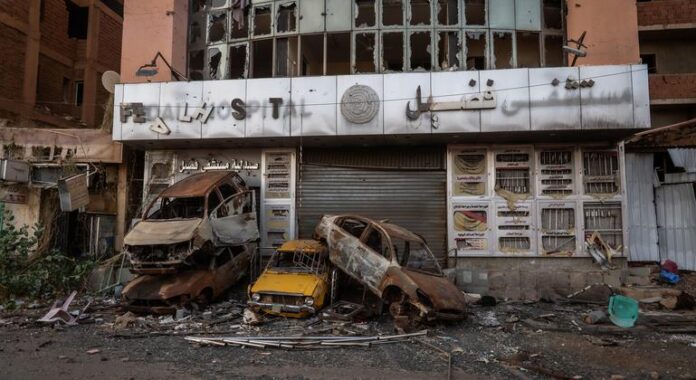
Images from the site of the strike show mangled metal roofing that used to provide cover for worshippers; it comes as the paramilitary Rapid Support Forces – or RSF – continue their push to take control of El Fasher, as they battle forces of the military government.

The UN Humanitarian Coordinator in Sudan, Denise Brown, issued a statement saying she was gravely alarmed by the strike in the besieged capital of North Darfur state.

Call for accountability

International humanitarian law demands the protection of mosques and the civilians worshipping in them,” she said.

It is also a war crime to intentionally direct attacks against buildings dedicated to religion. This attack, reportedly carried out by the Rapid Support Forces, must be investigated and the perpetrators held accountable.”

UN Spokesperson Stéphane Dujarric reiterated the longstanding call for “an immediate cessation of fire in and around El Fasher,” adding that humanitarian access access for “personnel and supplies must be facilitated in order for us to reach those in need.”

Civilian deaths mount

In a related development, the UN human rights office, OHCHR, warned that there’s been a sharp rise in civilian killings, including summary executions, along with growing ethnic violence in Sudan.

Several major offensives have been particularly deadly, including an April attack by the RSF on besieged El Fasher and elsewhere in North Darfur that left at least 527 dead, and airstrikes in March by the Sudanese Armed Forces on Tora market in North Darfur that killed at least 350 civilians, including 13 members of one family.

The situation in El Fasher is dire and worsening, said OHCHR’s Li Fung, who said reports continue of civilians being killed, abducted or subjected to sexual violence while fleeing the city.

“There are no safe exit routes out of the city, and civilians are trapped in a situation of impossible choices: stay in El Fasher, and risk bombardment, starvation, and atrocities if the RSF overrun the city; or flee, and face the risk of summary execution, sexual violence, and abduction.”

The Sudan war began in April 2023 when the peaceful transition to civilian rule broke down and fighting erupted between the former allies-turned deadly rivals.

Since then, not a single ceasefire has been acted on by either of the warring parties, noted UN partner, the International Committee of the Red Cross, ICRC.

Call for diplomacy in New York

It issued an appeal to world leaders preparing to gather at the UN in New York for the UN General Assembly starting next week to agree on ways to alleviate the suffering of the Sudanese people, who are facing famine and a massive humanitarian disaster.

ICRC Regional Director for Africa Patrick Youssef urged “a coalition of States” to work on “alternatives or incentives” to warfare including the creation of safe humanitarian corridors.

In the last two years, more than 20 Sudanese Red Crescent workers have been killed, reflecting “the dire situation of humanitarians trying to cross every frontline in Sudan,” Mr. Youssef told journalists in Geneva.

Source link

AI watching AI: Dangerous errors in digital pathology caught by UCLA system

0


A team led by researchers at the California NanoSystems Institute at UCLA created an artificial intelligence-based tool to

Source link

UN presses ahead with mission for a better world despite global headwinds

0
UN presses ahead with mission for a better world despite global headwinds

The Secretary-General’s annual report, released on Thursday ahead of the 80th session of the UN General Assembly’s yearly high-level session, offers a sobering yet resolute account of the Organization’s efforts in the face of mounting challenges.

Mr. Guterres highlighted the resilience of UN personnel, committed to delivering hope and help to those in need despite operating under difficult circumstances.  “The present report demonstrates that despite enormously trying times – indeed, precisely because of them – we can and must keep pushing for the better world that we know is within reach,” he said.

Together with partners, the UN coordinated a $50 billion appeal for the humanitarian needs of 198 million people. “In 2024, the United Nations helped to mobilize $25 billion of the $50 billion funding target, enabling life-saving humanitarian assistance to reach 116 million people in urgent need across 77 countries and territories.”

This enabled life-saving programmes in the Horn of Africa, the Occupied Palestinian Territory, Sudan, Ukraine, Yemen and regions affected by natural disasters like earthquakes in Vanuatu, drought in Southern and Eastern Africa and floods in South-East Asia.

At the same time, UN operations in 2024 came at a heartbreaking human cost. It was the deadliest year on record for UN staff and humanitarian workers, with 373 aid workers killed. The vast majority of those casualties were personnel from the UN Relief and Works Agency for Palestine Refugees in the Near East (UNRWA), working in Gaza under extreme and dangerous conditions.

In launching the report, the Secretary-General paid tribute to their sacrifice, reaffirming the UN’s unwavering commitment to standing with the world’s most vulnerable.

© UNRWA/Mohammed Hinnawi

Children find shade and take part in recreational activities organized by UN personnel in front of destroyed buildings in the Gaza Strip.

Peace and security core to UN’s mission

Diplomacy for peace remained core to the Organization’s work amid escalating global challenges to peace and security. Despite rising threats, the UN’s diplomatic efforts continued to protect hundreds of thousands of civilians daily and advance peace processes.

During the political transition in Syria, the UN engaged stakeholders in line with Security Council resolution 2254 – which in 2015 endorsed a road map for a peace process in the country – to de-escalate violence protect civilians and prevent regional spillover. 

Meanwhile, in the Occupied Palestinian Territory, including East Jerusalem, Gaza and the West Bank and the broader region, the UN closely engaged all parties to end violence, enhance humanitarian access and sustain assistance to affected populations.

In Lebanon the UN supported de-escalation and a resumption of a cessation of hostilities in line with our mandate under Security Council resolution 1701, enabling people to return to their homes on both sides of the Blue Line.

The UN also facilitated peace talks, supported state-building efforts and helped to protect civilians globally, including in the Sudan. The Organization’s efforts to help promote a peaceful coexistence in Abyei, saw a decline in intercommunal violence.

The Peacebuilding Fund allocated over $116 million to support national peace plans in 32 countries and territories, with a focus on gender equality. Partnerships with regional organizations, like the African Union, further bolstered conflict prevention.

A renewed vision for the future

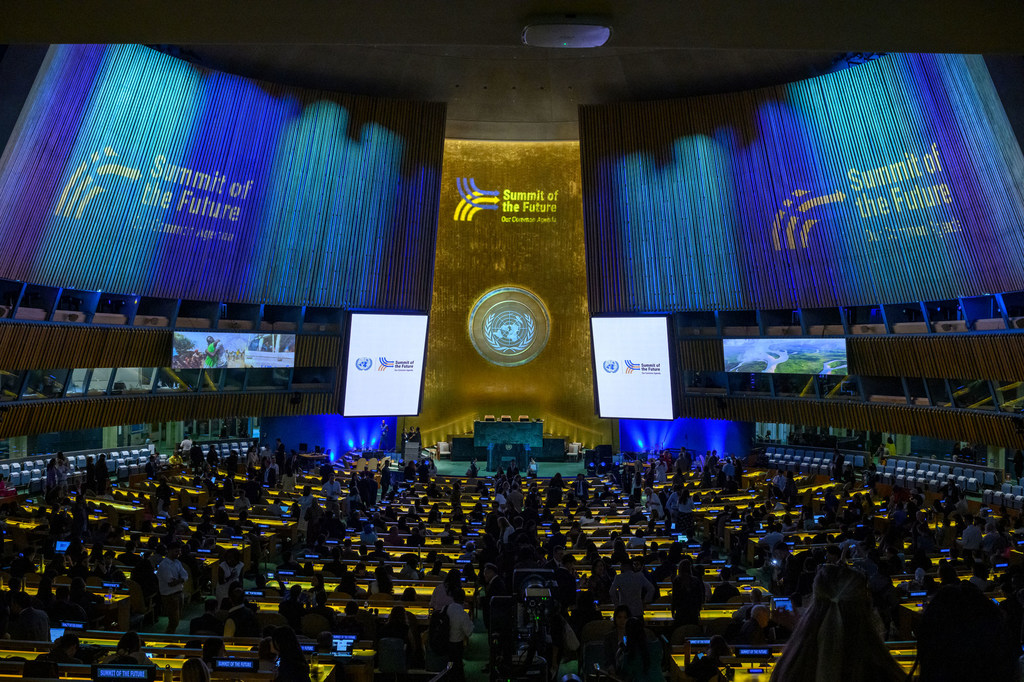
The 2024 Summit of the Future marked a historic turning point for multilateralism. World leaders adopted the Pact for the Future, a landmark agreement to revitalize international cooperation and deliver solutions for people and planet.

The Pact calls for stronger diplomacy and conflict prevention, reforms to the global financial system, urgent climate action, and accelerated progress on the Sustainable Development Goals (SDGs). It also commits to more representative and effective global governance, including reforms to the Security Council and greater voice for developing countries.

The Global Digital Compact and the Declaration on Future Generations were adopted as annexes to the Pact, underscoring its breadth and ambition. The Compact advances a vision for a safe, open and inclusive digital future, committing Member States to close digital divides, promote universal digital public infrastructure, and strengthen governance of data and artificial intelligence.

The Declaration, meanwhile, represents the first global agreement to systematically account for the rights and interests of tomorrow’s citizens in today’s decisions, embedding foresight in policymaking and paving the way for long-term, sustainable action.

Together, these outcomes form the foundation of a generational renewal of multilateralism. As Secretary-General Guterres underscored: “By addressing the pressing issues of our time, the United Nations is paving the way for a more equitable and sustainable future, ensuring that digital technologies are harnessed for the benefit of all humanity.

Participants gather for the opening of the Summit of the Future, with Youth Lead for the Future as the opening Action Day theme.

Participants gather for the opening of the Summit of the Future, with Youth Lead for the Future as the opening Action Day theme.

Human rights and sustainable development

The United Nations continues to be guided by the vision that human rights are a driving force for solutions to the many global challenges we face, and are the foundation for peace, justice and sustainable development. In 2024, the Organization advanced initiatives to eliminate violence against women and girls, empower rural and marginalized communities, and ensure women’s participation in peace and constitutional processes.

Human rights were also woven into responses to conflict, migration, climate change and digital governance, helping to strengthen protection, accountability and inclusion across the Organization’s work.

At the same time, sustainable development and climate action remained central. The UN supported 170 countries in implementing their nationally determined contributions to reduce emissions and provided targeted assistance for low-carbon transitions in developing States.

The Organization also pressed for reforms to the global financial system to close the widening SDG financing gap, ensuring that the most vulnerable countries have a fair chance to deliver on the promise of the 2030 Agenda.

A commitment to staff is a commitment to humanity

The Secretary-General highlighted the commitment of UN personnel working under extraordinary risk. He voiced alarm at the erosion of humanitarian norms, condemning deliberate attacks on civilians, hospitals, schools and aid workers, which undermine international law and the values of the UN Charter.

Despite record dangers, staff carried forward their mission with courage and resilience.

“The present report demonstrates that despite enormously trying times – indeed, precisely because of them – we can and must keep pushing for the better world that we know is within reach. We will renew our efforts to achieve peace, foster sustainable development and defend and uphold human rights, for all of humanity,” said Mr. Guterres.

Together, these strands embody the spirit of an Organization striving not only to confront today’s crises but to uphold rights, deliver development, and serve people everywhere with integrity and compassion.

Source link

Brazil: press remarks by High Representative/Vice-President Kaja Kallas at the joint press conference

0
Brazil: press remarks by High Representative/Vice-President Kaja Kallas at the joint press conference

Brazil: press remarks by High Representative/Vice-President Kaja Kallas at the joint press conference

Source link

Gazans flee “death and devastation” without transport or shelter

0

On average, the South trip costs more than $ 3,000, according to the UN refugee agency UNRWADo it out of reach for many.

Along the densely populated Al-Rashid coastal road, thousands of residents queue to escape, following the Israeli military evacuation orders, in an exhausting trek towards the central and southern parts of the enclave.

A UN News The correspondent was there and documented suffering scenes while the displaced people made the trip on foot.

While some dragged carts responsible for their personal effects, others – including women and children – were trying to take a break after long hours of walking.

The Gaza Valley bridge in the Gaza central strip was overcrowded due to the influx.

“All houses and neighborhoods have been bombed”

In the middle of the crowd, an elderly man called Abu Nader Siam, walks slowly while holding his cane in his right hand with his wife, Zakia Siam, on her left. He is exhausted.

“I come from the Tal al-Hawa district in Gaza City. They left neither house or neighborhood only to bomb him, “he said.

“The bombings continue, and they dropped leaflets that ordered us to evacuate. We walked for six hours because we did not find a car or transport. »»

Zakia Siam talked about their non-stop trip after the bombing reduced their house in rubble.

“We went to the Shujaiya district, then we were moved to the Sha’af district of Gaza City before bombing,” she said.

“Subsequently, we went to the edge of the edge west of Gaza City and my husband and I stayed there two nights without a tent. We sat on the sidewalk next to the tents and we hid next to one of them, then continued to walk. »»

Death, devastation and destruction

Another civilian, Ms. Um Shadi al-Ashkar, wore a bag of personal effects while she was heading south of Gaza.

“There is death, bombing, bombing and the destruction of houses (in Gaza City),” she said.

“Even if they had dropped leaflets, if there had been no bombing, no one would have left Gaza City, they would have stayed at home. But there is death and devastation. »»

Umm Shadi al-Ashqar, a displaced person from Gaza.

‘I lost 25 family members’

Ayman al-Khatib said UN News That most members of his family were killed in the Tal al-Za’atar district of Jabalia Camp in the North.

He fled alongside some surviving parents. Her aunt kept herself on her arm, as if she were afraid of losing him too.

“More than 25 family members were killed: my children, my wife, my mother, my brothers and their wives,” he said. Only his aunt, two nephews and a son remain.

“We fled under the bombing, and we did not find any transport. They asked us for 2,000 shekels to get into a car, but we have no money. We don’t have a tent or anything. I made a lot of calls and pleadings, but no one answered me. »»

From Gaza, Ayman al-Khatib during his trip on foot with his aunt.

According to UNRWA, the average cost of travel south is $ 3,180 per family. The fuel is frightened in Gaza, and no shelter supply has entered for seven months due to the Israeli blockade.

Last month, Israel announced that it would take control of Gaza City and that in recent weeks have intensified the bombing of high-rise buildings there.

The United Nations Office for Humanitarian Affairs Coordination (Ochha) said more than 250,000 people were moved from the city in the last month, including 60,000 in just 72 hours, while the troops advanced in densely populated neighborhoods such as Sheikh Radwan and Tal al-Hawa.

Originally published at Almouwatin.com

Zuckerberg’s $70B Tech Quest Could Make Your iPhone Obsolete

0


Mark Zuckerberg has just unveiled technology that could turn your smartphone into a museum piece. At Meta Connect

Source link

“ Tidal tide ” guarantees victory for the young Turkish writer in the United Nations competition

0

His out -of -competition entry was fed by an “tidal wave of emotion,” said the director general of the United Nations Agency Masahiko Metoki.

Postal service, officially known as Universal Postal Union (UNU), organized the competition in partnership with the International Maritime Organization (OMI) and the educational, scientific and cultural organization of the United Nations (Unesco).

The competition – now in its 54th Year-invited young people aged-15 to reflect on the need to protect seas and oceans under the theme, Imagine that you are the ocean, in collaboration with the 2025 United Nations Ocean Conference.

The competition aims to raise awareness of sustainability, marine conservation and the interconnection of ecosystems in the world, underlines UPU.

Heal the ocean, heal yourself

“” You should remember that when I become sick, the rain forgets its rhythm, the rivers flow hollow and the wind begins to wear sorrow instead of the seeds. When you heal the ocean, you start to heal yourself. So come back to me, like a child who returns to their motherShe writes.

Second place was awarded to Phạm đoàn Minh Khuê, 16, from Viet Nam, whose letter has attracted a renowned director to create a film highlighting the critical state of the ocean.

Third place went to Kanlanfe Ingrid Ouali, 13, from Burkina Faso, honored with the bronze medal for his letter where the ocean reminds us that the survival and prosperity of humanity are inseparably linked to his.

Inspiring young voices

“The real power lies not only in what we say, but in what we do,” said Dr. Matheickal, director of the Technical Division of Cooperation and Implementation at IMO.

“I also want to remind everyone of the ocean protection to everyone also concerns people, on inclusion, diversity and equity. Everyone’s voice counts. The dream of each child counts.

“And together, we can build a world where the oceans are clean, the communities are safe and hope is not a wish, but a plan,” said Dr. Matheickal.

Ms. Demiriz closes her letter with the words: “Remember that I aspire to carry your joy, to reflect your wonder.

“Do not take care of me not as a chore, but as an act of love. And I’m going to give you more than you could never take; more beauty, more oxygen, more life… ”

Her passionate words leave readers with a sincere reminder of the sustainable generosity of the ocean, and the responsibility of humanity is preparing to protect it.

Read the complete letter from Reyyan Demiriz here.

Originally published at Almouwatin.com