Tuesday, April 7, 2026
Home Blog Page 209

“ Tidal tide ” guarantees victory for the young Turkish writer in the United Nations competition

0

His out -of -competition entry was fed by an “tidal wave of emotion,” said the director general of the United Nations Agency Masahiko Metoki.

Postal service, officially known as Universal Postal Union (UNU), organized the competition in partnership with the International Maritime Organization (OMI) and the educational, scientific and cultural organization of the United Nations (Unesco).

The competition – now in its 54th Year-invited young people aged-15 to reflect on the need to protect seas and oceans under the theme, Imagine that you are the ocean, in collaboration with the 2025 United Nations Ocean Conference.

The competition aims to raise awareness of sustainability, marine conservation and the interconnection of ecosystems in the world, underlines UPU.

Heal the ocean, heal yourself

“” You should remember that when I become sick, the rain forgets its rhythm, the rivers flow hollow and the wind begins to wear sorrow instead of the seeds. When you heal the ocean, you start to heal yourself. So come back to me, like a child who returns to their motherShe writes.

Second place was awarded to Phạm đoàn Minh Khuê, 16, from Viet Nam, whose letter has attracted a renowned director to create a film highlighting the critical state of the ocean.

Third place went to Kanlanfe Ingrid Ouali, 13, from Burkina Faso, honored with the bronze medal for his letter where the ocean reminds us that the survival and prosperity of humanity are inseparably linked to his.

Inspiring young voices

“The real power lies not only in what we say, but in what we do,” said Dr. Matheickal, director of the Technical Division of Cooperation and Implementation at IMO.

“I also want to remind everyone of the ocean protection to everyone also concerns people, on inclusion, diversity and equity. Everyone’s voice counts. The dream of each child counts.

“And together, we can build a world where the oceans are clean, the communities are safe and hope is not a wish, but a plan,” said Dr. Matheickal.

Ms. Demiriz closes her letter with the words: “Remember that I aspire to carry your joy, to reflect your wonder.

“Do not take care of me not as a chore, but as an act of love. And I’m going to give you more than you could never take; more beauty, more oxygen, more life… ”

Her passionate words leave readers with a sincere reminder of the sustainable generosity of the ocean, and the responsibility of humanity is preparing to protect it.

Read the complete letter from Reyyan Demiriz here.

Originally published at Almouwatin.com
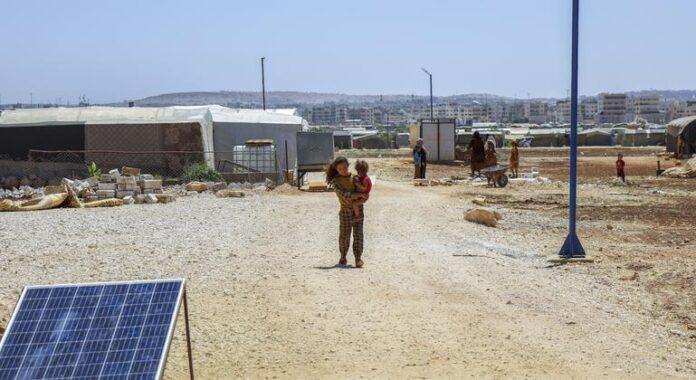
Fragile progress in Syria, at risk from exclusion and foreign interference, UN warns

0
Fragile progress in Syria, at risk from exclusion and foreign interference, UN warns

They warned that foreign military action, political exclusion and dwindling resources threaten to undo fragile gains.

UN Special Envoy Geir Pedersen – who announced that he will be stepping down from his role during the meeting – told ambassadors that interim authorities in Damascus have inherited “not just the ruins of shattered buildings, but the deeper wreckage of a battered social fabric, decayed institutions and a hollowed-out economy.

He stressed that the success of Syria’s transition will depend on political stability, inclusivity and international support at a scale commensurate with the country’s needs.

“The international community must support Syria and robustly stand against foreign intervention,” he said. “But equally: the success of the transition will above all rest on the State acting as a State for all, not just in word but also in deed.

Geir Pedersen, Special Envoy of the Secretary-General for Syria, briefs the Security Council meeting on the situation in the country.

Call to bar interlopers

Mr. Pedersen urged respect for Syria’s sovereignty and territorial integrity amid ongoing external military action, including further reported Israeli strikes this month.

Any security concerns, he said, must be addressed through diplomacy, warning that mishandling them could leave Syria “indefinitely gridlocked, unable to heal or rebuild – and at worst, slipping into fresh waves of strife and external intervention.”

He pointed to the Druze-minority region of Sweida – where a ceasefire following brutal clashes has largely held since July – and welcomed a roadmap agreed last week by Syria, Jordan and the United States to address accountability, humanitarian access and reconciliation.

But he cautioned that fears within the Druze community must be addressed through dialogue and confidence-building.

He also highlighted reports of abuses in Damascus neighbourhoods and calls for accountability in Sweida – and along the coast following sectarian violence there.

The Syrian public needs to see that abuses are both acknowledged and addressed in accordance with international standards,” he said.

Humanitarian emergency continues

Speaking alongside Mr. Pedersen, UN Emergency Relief Coordinator Tom Fletcher described Syria as “one of the largest humanitarian emergencies globally.

More than 70 per cent of the population requires some form of aid, nine million are acutely food insecure seven million remain displaced inside the country and four million refugees abroad.

Despite these figures, he highlighted signs of progress. Thanks to more practical engagement with the interim authorities, aid is now reaching communities inaccessible a year ago.

Movements that last year would have required lengthy navigation of frontlines are happening routinely,” Mr. Fletcher said, citing food assistance for one million people each month and subsidized bread for two million more.

Nearly 900,000 refugees and 1.9 million internally displaced people have returned to their communities since December, though many face destroyed housing, lack of jobs and insecurity.

Funding gaps remain

Funding gaps however threaten these gains, with the UN’s humanitarian appeal for Syria only 18 per cent funded. The shortfall has forced closures of hospitals, safe spaces for women and community centres.

Just when organizations are seeking to expand their operations and have the opportunity to work more efficiently, they are instead forced to cut programmes, reduce support, lose staff,” Mr. Fletcher warned.

The UN Security Council meets to discuss the situation in Syria.

The UN Security Council meets to discuss the situation in Syria.

‘Unity is within reach’

Both officials warned that Syria’s fragile moment of progress could easily unravel.

“If this central challenge is mishandled, the consequences could be dire,” Mr. Pedersen cautioned. “But if met with genuine negotiation and bold compromise, unity is within reach and success against the odds is possible.

Mr. Fletcher echoed that message, urging Member States to “preserve stability, fund the humanitarian response and enable Syrian-led recovery.

“This time next year,” he added, “I want to report that we are substantially scaling down our emergency humanitarian operations in Syria – not because funding cuts have forced our hand, but because the international community has made the necessary investments in Syria’s future.”

Source link

Discurso do Presidente António Costa no Fórum Social Porto

0
Discurso do Presidente António Costa no Fórum Social Porto

O presidente do Conselho Europeu, António Costa, discursou na cerimónia de alto nível do Fórum Social Porto, no Porto (Portugal), a 19 de setembro de 2025.

Source link

Israeli air strikes south of Lebanon violates the United Nations resolution

0

Strikes intervene in the midst of an Israeli offensive in progress in Gaza and continuous violations of Security advice Resolution 1701 by Israeli forces and Hezbollah activists. The latest agreement to cease hostilities between the two parties was signed last November.

Since its creation, Unifil played an important role in the progress of peace and security in southern Lebanon.

The mission’s “peacekeepers” are mandated to help the parties in the conflict in their implementation ofResolution 1701This ended hostilities between Israeli forces and Hezbollah in 2006.

Call on de -escalation

“” We, once again, urge the parties to abstain from any activity which can compromise the cessation of hostilities and we remain determined to support the parties To implement the resolution of the Security Council 1701, “UN spokesperson Stéphane Dujarric said on Friday at a press briefing.

In his statement On Friday, Unifil said that Israeli strikes “put the fragile stability that has been built since November of last year at risk” and that they “undergo civil confidence that a non -violent solution” is possible.

Last November, the UN had welcomed The ceasefire agreement concluded between the two parties.

The declaration reiterated that Unifil and the Lebanese army are trying to restore stability in the south and along the 120 km “blue line” between south of Lebanon and northern Israel.

“The nours of peace and civilians in danger”

According to the press release, the peace plans stationed in Deir Kifa, near Burj Qalawieh, in the south, moved to security shelters, follow the strikes on Thursday evening. “Strikes have brought the lives of Lebanese soldiers, United Nations and civilian peacekeepers in danger.”

“We call on the Israeli defense forces to refrain from any other strike and to fully withdraw from the Lebanese territory,” wrote Unifil. “We also call on all sides to avoid new violations or climbing actions.”

The mission stressed that “climbing continues puts the harshly disputed progress that the parties have made to restore stability in danger”.

The United Nations peacekeepers continue to observe the ASAHL’s activities in the field of operation of the mission, Dujarric told journalists during the regular noon briefing.

They found a terrestrial mine and other unplodced devices, while separately, a unifil patrol found an unclear cache of weapons and reported it to the Lebanese armed forces, he said.

Unifil was created in 1978 to confirm the withdrawal of Israeli forces in southern Lebanon. Since the adoption of resolution 1701, Unifil has also been monitoring the cessation of hostilities and has extended aid to ensure humanitarian access, among other responsibilities.

Originally published at Almouwatin.com
A support video address Abbas after a refusal of American visa

0

The resolution was adopted with 145 in favor, five against (Israel, Nauru, Palaos, Paraguay and United States) and six abstentions (Albania, Fiji, Hungary, North of Macedonia, Panama and Papua Nouvelle-Guinée).

He defines procedures for the delivery of pre -recorded declarations, authorizing President Abbas to submit his address by video in the room of the General Assembly, introduced by one of the Palestine representatives in New York.

The measure also allows declarations via a live link or a pre-recorded video at the high-level conference which takes place on the solution to two states and other high-level meetings.

The arrangements only apply to the current 80th session.

In another action, the 193 -members Assembly adopted Saudie’s decision -making, allowing the Saudi Crown Prince and the Prime Minister, Mohammed Bin Salman, to deliver a video or message pre -recorded during the high -level conference on September 22, 2025.

The United States Department of State announced on August 29 that it refused and revoked the visas of members of the Palestine Liberation Organization and the Palestinian Authority on national security reasons, declaring that they had not respected the commitments made and “to undermine the prospects for peace”.

Originally published at Almouwatin.com

The United Nations Security Council rejects the attempt to continue the sanctions of Iran

0

The text, deposited by the President of the Council – the Republic of Korea – received only four votes in favor of Russia, China, Algeria and Pakistan, Do not secure the nine required for adoption.

Denmark, France, Greece, Panama, Sierra Leone, Slovenia, Somalia, the United Kingdom and the United States voted against. The Guyana and the Republic of Korea abstained.

If it had been adopted, the resolution would have ended the sanctions of the UN imposed on Iran before 2015 Complete full action plan (or JCPOA), thus preserving the repair of the sanctions provided in Tehran under the agreement.

Terms of “snapback”

Resolution 2231, which approved JCPOA in July 2015, established the process by which the UN sanctions would be lifted, while establishing a mechanism to reimpose them in the event of “significant non-performance” by one of its participants-China, France, Germany, Russia, the United Kingdom, the United States, the European Union (EU) and Iran.

Under paragraph 11, if one of the signatories informs the council of a major violation, the chairman of the council must, within 30 days, put a draft resolution to the vote for the repair of the sanctions.

If the project is not adopted, previous UN sanctions are automatically replicated, which means that Unless the council votes explicitly to maintain the sanctions in place, previous UN sanctions are automatically restored.

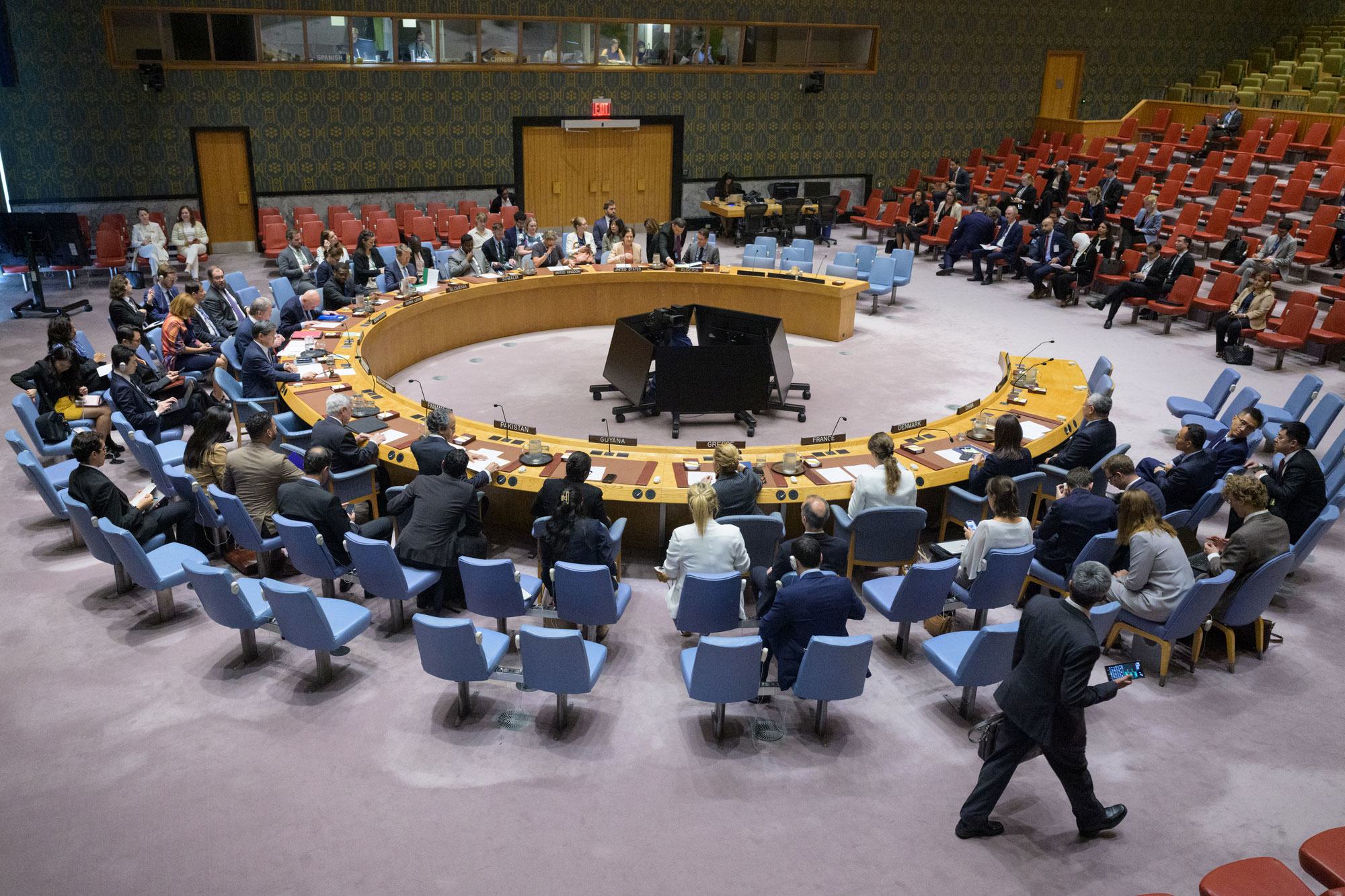
The members of the Security Council vote on the draft resolution.

Heated discussions

At the start of Friday’s meeting, Russia raised an order point, rejecting European pretension to trigger the Snapback mechanism.

Russian ambassador Vassily Nebenzia said there were no legal, political or procedural reasons to authorize the “snapback” mechanism or vote on the draft resolution, and accused France, Germany and the United Kingdom of acting outside the resolution 2231 and the JCPOA.

He said the three had not followed the dispute settlement mechanism and rather imposed unilateral sanctions against Iran, which he described as “illegal”.

“The attempts on the part of European countries to present the situation as if they had the right to activate the punitive provisions of previous resolutions, while they did not fulfill their own obligations … cannot hold water,” said ambassador Nebenzia.

China has also urged caution.

The FU Cong ambassador said “major differences” existed between the members of the Snapback council and warns that a precipitated vote could “exacerbate the confrontation of the state”, complicating efforts to solve the problem diplomatically.

The British ambassador Barbara Woodward A, declaring that the decision of the E3 (the European participants of the JCPOA) to invoke Snapback was “entirely legal, justified, wide and coherent with the requirements of resolution 2231”.

She cited the notification of August 28, 2025 submitted by France, Germany and the United Kingdom: “All that is necessary to trigger Snapback is … A notification by a participating state of the JCPOA of a problem which, according to him, constitutes a significant non-performance of the commitments under the JCPOA”, she declared.

France spoke before the vote, citing the growing nuclear program of Iran and its reduced cooperation with the International Atomic Energy Agency (Aiea).

Ambassador Jérôme Bonnafont said that Iran had accumulated far highest enriched uranium stocks than the limit set by the agreement and the limited access of the IAEA to key installations.

He called the Snapback mechanism necessary to preserve international peace and security, and the integrity of the global non-proliferation regime.

Originally published at Almouwatin.com

Sudan crisis: Surge in summary of the executions by all the parties at war

0

The images of the strike site show a mutilated metal roof which provided coverage to the faithful; This occurs while the paramilitary forces of rapid support – or the RSF – continue to take control of El Fasher, while they are fighting against the forces of the military government.

The United Nations Humanitarian Coordinator in Sudan, Denise Brown, published a statement Saying that she was seriously alarmed by the strike of the besieged capital of the state of Darfur du Nord.

Call for responsibility

“” International humanitarian law requires the protection of mosques and civilians adored in them“She said.

“” It is also a war crime to attacks intentionally directed against buildings dedicated to religion. This attack, which would have been carried out by rapid support forces, must be studied and the perpetrators held responsible. »»

UN spokesperson Stéphane Dujarric reiterated the long-standing call to “an immediate cessation of fire in and around El Fasher”, adding that access to humanitarian access for “staff and supplies must be facilitated so that we reach those who needed it”.

Civilian dead watch

In related development, the United Nations Human Rights Office, Ohchrwarned that there had been a sharp increase in civilian murders, including summary executions, as well as growing ethnic violence in Sudan.

Several major offensives were particularly deadly, including an attack in April from the RSF on El Fasher besieged and elsewhere in the north of Darfur which left at least 527 dead, and air strikes in March by the Sudanese armed forces on the Torah market in the north of Darfur who killed at least 350 civilians, including 13 members of a family.

The situation in El Fasher is disastrous and aggravated, said Li Fung of Ohchr, who said that reports are pursuing civilians killed, kidnapped or subject to sexual violence while fleeing the city.

“There are no sure outings outside the city, and civilians are trapped in a situation of impossible choice: stay in El Fasher and risk bombing, famine and atrocities if the RSF invades the city; Or run away, and risk the risk of summary execution, sexual violence and abduction. “

The Sudan War began in April 2023 when the peaceful transition to civil domination broke down and the fighting broke out between the former allies who became fatal rivals.

Since then, no cease-fire has been played by any of the parties at war, noted the UN partner, the International Committee of the Red Cross, ICRC.

Call for diplomacy in New York

He appealed to world leaders preparing to meet at the UN in New York for the United Nations General Assembly from next week to agree on the means of alleviating the suffering of the Sudanese people, who are confronted with famine and a massive humanitarian disaster.

The regional CICR director for Africa, Patrick Youssef, urged “a coalition of states” to work on “alternatives or incentives” in war including the creation of safe humanitarian corridors.

Over the past two years, more than 20 workers from the Sudanese Red Crescent have been killed, reflecting “the disastrous situation of the humanitarian workers trying to cross each first line in Sudan,” Youssef told journalists in Geneva.

Originally published at Almouwatin.com

UNICEF help trucks stolen under the threat of a firearm in Gaza City

0

The call occurs one day after the “armed individuals” stole four Unicef Trucks carrying ready to use therapeutic foods had desperately needed (Rutf).

The incident occurred outside its complex in the city of Gaza, where an Israeli military offensive increases.

Nearly 3,000 children had an impact

“Individuals requisitioned drivers at Gun Point and diverted the Rutf before freeing drivers and trucks,” said the agency a declaration.

“” This theft denied at least 2,700 children seriously and seriously ill -nourished by Rutf Vital – Vital supplies at a time when famine has been declared in northern Gaza and the current military operation creates additional displacement and adds to the devastating impact on children. »»

UNICEF has urged Gaza to respect and protect humanitarian aid and maintain international humanitarian law.

“” Children wear the heaviest burden“, According to the press release.

“In the end, a sustainable ceasefire is essential to create an environment where such incidents no longer occur, and help can reach those who need it most-safely, quickly and efficiently.”

More to follow …

Originally published at Almouwatin.com

Gaza City lifelines collapsing, UN aid agency warns

0
Gaza City lifelines collapsing, UN aid agency warns

The warning comes as the head of UN Palestine refugee agency UNRWA renewed his call for foreign journalists to be allowed into the Gaza Strip to counter the “information war”, which includes denial that famine has taken root and is spreading.

On Gaza City, OCHA reported that in just five days, 11 UNRWA premises serving as emergency shelters for about 11,000 people there have been damaged after taking direct or indirect hits.  

Displacement on the rise

More than one million people across the Strip have been displaced since the ceasefire between Israel and Hamas collapsed in mid-March, the agency said.

Numbers are rising fast, with some 200,000 displacements recorded from northern to southern Gaza over the past month alone, including 56,000 since Sunday.  

Despite heavy restrictions, the UN and partners are doing everything possible to reach people across the devastated enclave with life-saving support. 

Hot meals and malnutrition treatment

Humanitarians collected over 12,500 metric tonnes of wheat flour, food parcels and bulk supplies from the Israeli-controlled crossings during the first half of this month.

They also served nearly 560,000 meals daily through 116 kitchens and provided 10,000 loaves of bread to people moving to the south.

Teams have continued to screen children for malnutrition and enrol them for treatment. 

UN children’s agency UNICEF dispatched over 200,000 packs of nutrient-rich baby food to aid partners, enough to support over 63,000 infants and young children for two weeks. 

Furthermore, UNICEF provided 10,000 boxes of high-energy biscuits, enough to assist more than 10,000 acutely malnourished pregnant and breastfeeding women for a month. 

Healthcare supplies

To address the healthcare crisis, nearly 900 pallets of essential medical supplies were collected from crossings between Gaza and Israel and are being delivered to health facilities. 

Teams also dispatched 120 intensive care unit (ICU) and emergency beds, as well as four anaesthesia machines, to Al Aqsa hospital in Deir Al-Balah.  

Humanitarians have also supported desalination efforts and trucked water across all parts of the Gaza Strip.  This is in addition to scaling up solid waste collection and the safe disposal of some 1,300 cubic metres of trash daily and distributing items such as 1,000 hygiene kits.

Support for the starving, ‘systematically blocked’

OCHA again repeated its message that the aid currently reaching people falls far short of the immense needs.

“Opportunities to support starving people are being systematically blocked. Every week, new restrictions are imposed,” the agency said. 

For example, Zikim crossing – the only one that goes directly from Israel to the north, where famine has been confirmed – has been shut since the weekend.

“Israeli authorities have also classified some food items, such as peanut butter, as ‘luxuries’ not allowed in, leaving large amounts of already-procured aid stuck outside Gaza. On top of this, inspection rules vary by route, creating unpredictability and needless delays.”

Humanitarian movements inside Gaza are also being blocked.  On Wednesday, Israel denied three of 14 confirmed movements, two of which were to bring food to the north.

Media and disinformation ‘battleground’

Also on Thursday, UNRWA Commissioner-General Phillipe Lazzarini issued a fresh call for international media to be allowed into the Gaza Strip which “has been the battleground of a fierce and rampant information war.” 

Posting on X, he said “dis-information continues to be used as a tool to distract from the atrocities in the war-torn enclave.” 

He said UNRWA was the first target, followed by other UN agencies, the media and health institutions, while “the recent denial of famine in Gaza as well as of the conclusions of the UN commission of inquiry released this week are the latest examples.”

The aim is to both undermine assessments and analysis by experts and promote narratives denying atrocities and dehumanizing Palestinians. 

“Meanwhile, the heroic work of Palestinian journalists continues against all odds as the Israeli military operations expand,” he said.

“It’s time to let international journalists into Gaza to support their Palestinian colleagues before their voices are also silenced. Time to report independently on events.” 

Source link

Media advisory – Agriculture and Fisheries Council of 22-23 September 2025

0
Discurso do Presidente António Costa no Fórum Social Porto

Main agenda items, approximate timing, public sessions and press opportunities.

Source link