Wednesday, April 8, 2026
Home Blog Page 214

Heal the ozone layer: “guided by science, united in action”

0

The last century, scientists confirmed the alarming reality of significant depletion in the ozone layer – an invisible gas shield that surrounds the earth and protects it from the UV rays of the sun.

The collection of substances depleting ozone included CFC, or chlorofluorocarbons, which in the mid -1980s were commonly found in everyday products such as air conditioners, refrigerators and aerosol cans.

Science has led to global action. Realizing that harmful UV radiation led into the atmosphere through what was potentially a damaged ozone layer, the countries were committed under the Vienna Convention in 1985, to do what was necessary for the protection of the people and the planet.

“” The Vienna Convention and its Montreal Protocol have become a benchmark for multilateral success“Said the UN secretary general António Guterres in a message for World Ozone Day this year.

“Today, the ozone layer heals,” he said.

What is the Vienna Convention?

Forty years ago, the countries met to take the first step in protecting the ozone layer, “guided by science, united in action,” continued the UN chief.

THE Vienna Convention For the protection of the ozone layer, adopted and signed by 28 countries on March 22, 1985, formalizes universal cooperation on the protection of the fragile layer of ozone.

It is the first treaty to be signed by all countries of the world and the precursor of the Montreal Protocol.

The objective of the Montreal Protocol is to monitor the world’s production and consumption of substances that exhaust the ozone layer – and ultimately eliminate them.

Multilateralism at its best

In a video messageInger Andersen, Executive Director of the United Nations Environment Program (Dive), stressed that through action under conventions, “exhausting ozone substances have now been practically eradicated and the hole in the ozone layer is closed.”

After scientists sounded the alarm, countries, nations and businesses met and took measures for the planet.

” It is multilateralism to its very, better“, She added.

The Montreal Protocol progresses well in developed and developing countries with most elimination hours – the time given for each country to gradually stop the production of harmful substances – adhered or even exceeded.

“” This achievement reminds us that when the nations take into account the warnings of science, progress is possible“Said Mr. Guterres.

Following online, the Kigali amendment

In his message, Mr. Guterres urged governments to ratify and implement the Kigali amendment to the Montreal Protocol, which undertakes to reduce or reduce hydrofluorocarbons (HFC), greenhouse gases used mainly in cooling technologies.

“The implementation of the Kigali amendment could avoid up to 0.5 degrees Celsius of warming by the end of the century,” he said. “Combined with energy -efficient cooling, we could double these gains. »»

As indicated in the Paris AgreementCountries have agreed to try to limit the increase in global temperature to 1.5 degrees Celsius.

“On this World Ozone Day, recommend preserving our ozone layer and protecting people and the planet for future generations,” said the UN chief.

Originally published at Almouwatin.com

Before the week of the General Assembly with high issues, Guterres urges world leaders to “become serious – and to deliver”

0

Speaking on Tuesday at a press conference at the United Nations headquarters in New York, he warned that global divisions, conflicts and crises have left the very principle of international cooperation to its most fragile point in decades.

“Some call it the diplomacy World Cup,” said Guterres.

” But It is not a question of scoring points – it must be a question of solving problems. There is too much at stake.“”

Broadcast of the secretary general’s press conference.

Drifting in unexplored waters

The United Nations has described a world drifting in “turbulent and unexplored waters”, listing the widening of geopolitical divisions, climate climate change, gap technologies and the increase in inequalities, such as challenges that require urgent solutions.

“” International cooperation is handed under the invisible pressure of our life,He said.

Nearly 150 heads of state and government are expected in New York next week, alongside thousands of civil servants and diplomats.

Mr. Guterres said that he would personally hold more than 150 bilateral meetings, pressing managers “to speak directly, to fold the divisions, reduce risks, find solutions”.

The key themes of the chef’s UN

The secretary general underlined peace, climate, responsible innovation, gender equality, development of development and UN reform as central themes of the week.

He called for urgent stages to end wars in Gaza, Ukraine, Sudan and beyond, and reiterated the need for “just and lasting peace in the Middle East on the basis of a two-state solution”.

On the climate, he urged countries to advance stronger national plans to maintain global warming below the 1.5 ° C threshold envisaged in the 2015 benchmark Paris Agreement On climate change – which seems more and more out of reach.

He also announced the launch of a global dialogue on AI governance to ensure that technology is developing with advantages to humanity “at the center”.

More “posture and promises”

The week will also feature a very first biennial summit bringing together international financial institutions and world leaders to advance commitments on the financing of Sustainable development objectives (ODD) – which are seriously off track – as well as the commemorations of the 30th anniversary of the Beijing historical conference on gender equality.

“” The list is long because the needs are excellent,“Said Mr. Guterres, adding that current world crises do not ask for” posture and promises “but that leadership that is committed to making concrete progress.

He concluded with a frank call: “The United Nations is the place. Next week is the time. Managers must become serious – and deliver.“”

Audio of secretary general’s remarks at the press conference.

Originally published at Almouwatin.com

Government corruption fueling the human rights crisis in South Sudan, concludes an independent panel

0

On the basis of two years of independent investigations and analyzes, the report reveals how oil and non -oil income are siphoned by opaque regimes and politically connected contracts. Meanwhile, millions of South Sudanese are denied the basic services.

“Our report tells the story of the looting of a nation: corruption is not incidental, it is the engine of the decline of South Sudan”, “,” said Yasmin Sooka, president of the committee.

“It stimulates hunger, the collapse of health systems and causes avoidable deaths, as well as the food of fatal armed conflicts on resources.”

Embezzlement

After obtaining independence in 2011, South Sudan came out of the decades of brutal civil war with Sudan, bearing a legacy of division conflict, state repression and poverty.

Fourteen years after independence, the ruling elites still fight for control of natural resources.

The report noted that the Sudanese government’s oil entrances have exceeded $ 25.2 billion since 2011, but that little money is not going to essential services. Due to systemic corruption, education, public health and justice systems are in crisis.

“Diversions are not abstract budget failures – they translate into avoidable deaths, general malnutrition and mass exclusion from education,” said Commissioner Carlos Castresana Fernández.

“Three -quarters of the deaths for children are avoidable – but the funds go to the patronage and private pockets, not to drugs or drinking water and sanitation.”

Multiple corruption patterns

The “Oil for Roads” program is only one of the corruption patterns described in the report. The program intended to build infrastructure but failed to deliver promised roads. It is estimated that $ 2.2 billion was channeled in political patronage networks thanks to the off -budget program.

The report also details Crawford Capital’s diets, a politically connected company, in non -petroleum income recovery, where few taxes reach government budgets, even if illegal levies on humanitarian actors hinder critical food aid operations.

A need for change

A 2018 peace agreement promised a structural change and an improvement in public financial management, but the reform has not been funded or implemented adequately.

Priority to the implementation of certain reforms under the agreement is one of the many recommendations that the report presents for South Sudan. The 54 recommendations aim to help the country meet the basic needs of the population, strengthen responsibility and end impunity.

“When public income becomes private fortune, peace cannot hold.

The Human Rights Commission in South Sudan was created by the UN Human Rights Council In March 2016. The three commissioners are not UN staff and do not receive payment for their work.

Originally published at Almouwatin.com

LIVE: Middle East updates; independent UN investigators say Israel has committed genocide in Gaza

0
LIVE: Middle East updates; independent UN investigators say Israel has committed genocide in Gaza

Amid reports of intensifying bombardment in Gaza City overnight, the Middle East crisis took centre stage at the UN on Tuesday, starting at the global body’s Geneva headquarters, where Israel rejected allegations of genocide by an international panel of independent human rights investigators. The development came ahead of an urgent debate at the Human Rights Council prompted by Israeli strikes on Hamas political leadership last week in Doha. UN News app users can follow live here.


Source link

Yemen: UN sounds alarm as famine, fighting and aid worker detentions exacerbate crisis

0
Yemen: UN sounds alarm as famine, fighting and aid worker detentions exacerbate crisis

UN Special Envoy Hans Grundberg told the Security Council on Monday that the turmoil in Yemen cannot be seen in isolation.

Yemen is both a mirror and a magnifier of the region’s volatility,” he said, noting that progress toward peace is hampered by regional rivalries, cross-border dynamics, and internal divisions.

Alarming escalation in hostilities

Mr. Grundberg highlighted a dangerous escalation in hostilities, noting repeated attacks on civilians and critical infrastructure. Military clashes in Al Dhale’, Ma’rib, and Ta’iz underscore the risk that miscalculations could trigger a return to full-scale conflict.

The Houthis, also known as Ansar Allah, have been fighting Yemeni Government forces, backed by a Saudi-led coalition, for control of the country for over a decade.

Hans Grundberg, UN Special Envoy for Yemen, briefs the Security Council on the situation in Yemen.

He warned that Yemen’s conflict is unravelling within an already volatile regional landscape.

Against the backdrop of the war in Gaza, we are seeing an alarming and dangerous intensification of hostilities between Ansar Allah and Israel,” he said, noting that a number of civilians were reportedly killed and injured, and critical infrastructure struck.

The Special Envoy warned that the current cycle of violence is dragging Yemen further from a peace process that could deliver sustainable, long-term peace and economic growth.

This escalatory cycle must end…we need to get the focus back on Yemen – focus on both its internal challenges and on unlocking its great potential,” he stressed.

Spiralling humanitarian situation

The humanitarian situation is equally dire.

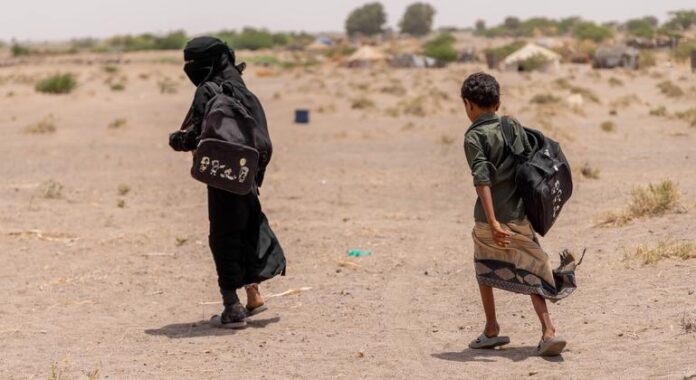
UN Emergency Relief Coordinator Tom Fletcher told the Council that Yemen remains the third most food-insecure country in the world, with 17 million people already struggling to eat and an additional one million expected to face extreme hunger before February next year.

Seventy per cent of households do not have enough food to meet daily needs – this is the highest rate ever recorded,” he said.

Mr. Fletcher highlighted that one in five households goes a full day without any food, while two million women and girls have lost access to reproductive health services amid funding shortfalls.

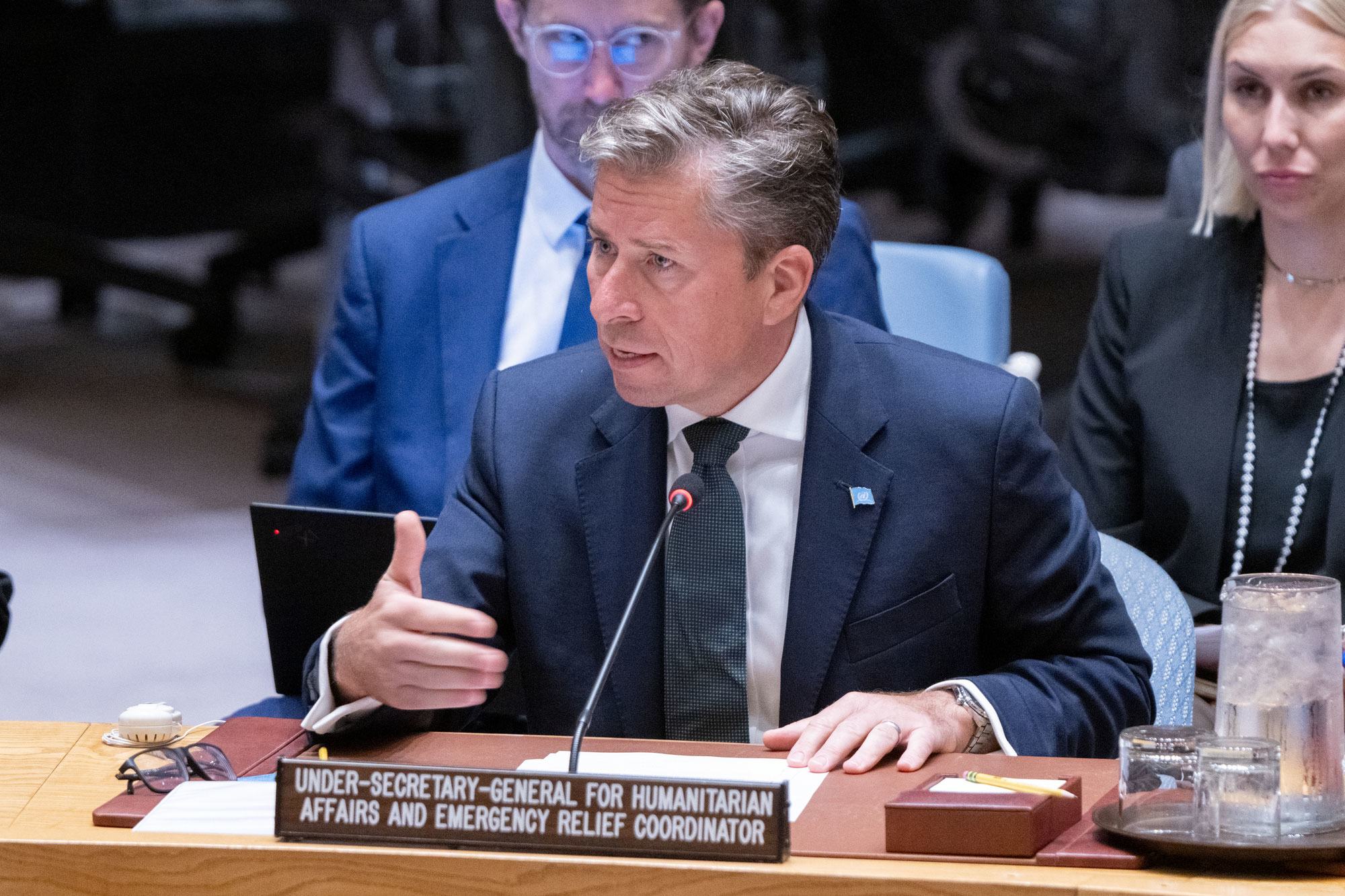
Tom Fletcher, UN Emergency Relief Coordinator, briefs the Security Council on the situation in Yemen.

Tom Fletcher, UN Emergency Relief Coordinator, briefs the Security Council on the situation in Yemen.

Aid workers targeted

Despite funding gaps and a challenging operating environment, humanitarians continue to deliver aid where possible. In Hajjah, Amran, and Ma’rib, organizations have provided food, water, health, and nutrition services to tens of thousands.

More than 172,000 people affected by flooding received non-food items, shelter, hygiene kits, and clean water.

But Mr. Fletcher warned that ongoing hostilities, infrastructure damage, and the detention of UN staff severely hamper operations.

Twenty-two UN personnel have been recently arbitrarily detained by Ansar Allah; though one staff member was released, over 40 remain in detention, including a colleague who died while in custody.

Urgent need for dialogue

Both top UN officials emphasised the urgent need for dialogue and adherence to international law.

Special Envoy Grundberg urged Yemeni leaders to step back from unilateral actions and pursue a nationwide ceasefire, economic reforms, and inclusive political engagement.

Mr. Fletcher called for the immediate release of all detained aid workers and a secure operating environment, warning that funding cuts and conflict-related obstacles are costing lives.

Detaining humanitarian staff does not help the people of Yemen. It does not feed the hungry, heal the sick, nor protect those displaced by floods or fighting,” he said.

The people of Yemen, wherever they may live, must receive the humanitarian aid that they need. They deserve a future of greater security, justice and opportunity.

Source link

New Technique for Measuring DNA Damage Could Improve Cancer Therapy and Radiological Emergency Response

0


Scientists at the National Institute of Standards and Technology (NIST) have developed a new technology for measuring how

Source link

Make labour market more inclusive, finds EU employment report

0
Make labour market more inclusive, finds EU employment report

Some 51 million of the working-age population are currently outside the EU labour market, with women, people aged 55–64, migrants, and persons with disabilities making up the vast majority. A new report says enabling their access to the labour market would help tackle EU skills and labour shortages.

Source link

Gaza: Top independent rights probe alleges Israel committed genocide

0
Gaza: Top independent rights probe alleges Israel committed genocide

In a new report published against the backdrop of intensifying Israeli military operations in Gaza City, the UN Independent International Commission of Inquiry on the Occupied Palestinian Territory, including East Jerusalem, and Israel, urged Israel and all countries to fulfil their obligations under international law “to end the genocide” and punish those responsible.

“The Commission finds that Israel is responsible for the commission of genocide in Gaza,” insisted Navi Pillay, Chair of the Commission. “It is clear that there is an intent to destroy the Palestinians in Gaza through acts that meet the criteria set forth in the Genocide Convention.”

Israel’s Ambassador to the UN in Geneva, Danny Meron, dismissed the Commission’s “cherry-picked” findings outright, maintaining that the 70-plus page report “promotes a narrative serving Hamas and its supporters in attempting to delegitimize and demonize the state of Israel. The report falsely accuses Israel of genocidal intent, an allegation it cannot substantiate.”

At a press conference in Geneva, the Commission of Inquiry’s members Ms. Pillay and Chris Sidoti – who are not UN staff but instead appointed by the Human Rights Council’s 47 Member States – explained that their investigations into the war in Gaza beginning with Hamas-led terror attacks in Israel on 7 October 2023 had led to the conclusion that Israeli authorities and security forces “committed four of the five genocidal acts defined by the 1948 Convention on the Prevention and Punishment of the Crime of Genocide”.

These acts are:

  • killing,
  • causing serious bodily or mental harm,
  • deliberately inflicting conditions of life calculated to bring about the destruction of the Palestinians, and
  • imposing measures intended to prevent births.

Ms. Pillay maintained that responsibility for the atrocity crimes “lies with Israeli authorities at the highest echelons”, amid “explicit statements” denigrating Palestinians by Israeli civilian and military authorities.

The Commission also analysed conduct of Israeli authorities and the Israeli security forces in Gaza, “including imposing starvation and inhumane conditions of life for Palestinians in Gaza…genocidal intent was the only reasonable inference that could be concluded from the nature of their operations”, the panel said.

Methodical examination

The Commission’s assertion follows its review of Israeli military operations in Gaza, “including killing and seriously harming unprecedented numbers of Palestinians” and the imposition of a “total siege, including blocking humanitarian aid leading to starvation”, it said.

According to the UN aid coordination wing, OCHA, nearly one million people remain in Gaza City, famine has been confirmed there, and residents face daily bombardment and “compromised access to means of survival after the Israeli military placed the entire city under a displacement order”.

For its latest report, the panel also examined what it called the “systematic destruction” of healthcare and education in Gaza and “systematic” acts of sexual and gender-based violence against Palestinians. 

Justice call

In addition, the Commission of Inquiry reviewed the alleged “direct targeting” of children and Israel’s “disregarding [of] the orders of the International Court of Justice, which issued an order in March 2024 that Israel should take ‘all necessary and effective measures to ensure…the unhindered provision at scale by all concerned of urgently needed basic services and humanitarian assistance to Palestinians throughout Gaza’”.

“The international community cannot stay silent on the genocidal campaign launched by Israel against the Palestinian people in Gaza,” said Ms. Pillay.

“When clear signs and evidence of genocide emerge, the absence of action to stop it amounts to complicity,” she added.

“All States are under a legal obligation to use all means that are reasonably available to them to stop the genocide in Gaza.”

Qatari dimension

In a related development on Tuesday, the Human Rights Council shuffled its schedule to make way for an urgent debate on last week’s Israeli strike on Hamas’s political leadership in Qatar.

The strike targeted a neighbourhood of the Qatari capital, Doha, reportedly killing six people including five members of Hamas and prompting widespread condemnation including from the Security Council and Secretary-General.

In a statement, António Guterres spoke out against what he called a “flagrant violation” of Qatari sovereignty and territorial integrity.

And at a Security Council meeting called in response to the strike, the UN’s political affairs chief told ambassadors the attack in violation of Qatar’s sovereignty was a serious threat to regional peace and security. It also undermined international mediation efforts to end the war in Gaza and return the hostages, said Rosemary DiCarlo.

Source link

How LIFE drives climate-friendly innovation

0
How LIFE drives climate-friendly innovation

International efforts to protect the ozone layer by phasing out ozone-depleting substances have made big strides in the 4 decades since the Montreal Protocol came into force. Since 2016, another group of gases has been included under the Montreal Protocol: Hydrofluorocarbons (HFCs), powerful fluorinated greenhouse gases (F-gases) used in air conditioning, refrigeration, and heat pump equipment. While safer for the ozone layer, HFCs trap thousands of times more heat than carbon dioxide in our atmosphere, contributing significantly to global warming. The Kigali Amendment to the Montreal Protocol introduced a global phase-down of HFCs. The aim of cutting their use by over 80% in the next 30 years could prevent up to 0.5 °C of climate warming, with countries following gradually declining targets. 

As the LIFE programme marks the International Day for the Preservation of the Ozone Layer — or World Ozone Day for short — we take a look at a LIFE project pioneering new technologies and the circular economy to help protect our planet while contributing to the goals of the Kigali Amendment. HFCs are often released when old cooling units are discarded or incinerated. The €1.4 million, four-year LIFE-4-Fgases project, concluding in September 2025, has developed and successfully tested an innovative hybrid adsorption and membrane system (HAMSYS) to recover used HFCs from refrigerant blends, offering a promising approach to cut emissions and protect the climate. 

LIFE-4-Fgases is a win-win for the circular economy and the environment. The project’s combination of membrane and adsorption technology to replace conventional distillation methods enables HFCs to be recovered and reused more efficiently, especially where alternatives are not yet available. 

‘Membrane technology allows the efficient separation of the different compounds that make up the most common refrigerants found on the market,’ says Javier Pinedo, Chief Research Officer with project partner Apria Systems. ‘The technology will now be scaled up and tested by our technology partners to assess its potential market penetration, replicability and transferability.’ 

It was not only important for the project team to prove the technology works, but to test it in a real-world industrial waste management facility. Project partner Ambigroup agreed to host the demonstration plant at its recycling facility near Lisbon, Portugal. ‘I think it could be a good future solution for separating f-gases which come from the recovery process,’ says Ambigroup’s Rocardo Diogo. ‘It can be applied not only in refrigeration equipment but also in air conditioning units.’ 

LIFE-4-Fgases is just one of hundreds of LIFE projects dedicated to mitigating the impacts of climate change and helping EU citizens adapt to global heating. The project supports EU F-gas legislation and is aligned with the goals of the European Green Deal2050 Long-term Climate Strategy and the Fit for 55 package. 

Source link

Thirsty and hungry, the Gazans are faced with an “inhuman” evacuation; Unicef

0

Development has followed information that the Israeli army has intensified its offensive on the ground in Gaza City, ordering residents to leave the region.

Speaking of the south of the enclave, UnicefTess Ingram has described the forced mass movement of families as a “deadly threat to the most vulnerable”.

“” It is inhuman to expect almost half a million children to beat and traumatized by more than 700 days of relentless conflict to flee a landscape of hell to find themselves in another“, She insisted.

150,000 go south in a month

According to the UN Humanitarian Affairs Coordination Office, OchhaIn recent days, partners monitoring the people movement in Gaza have counted nearly 70,000 trips to the south and around 150,000 in the month. The only available route, Al Rashid Road, was “very busy” when Ms. Ingram was there on Monday, she said.

Unicef ​​spokesperson described that he had met a mother who had walked for more than six hours of Gaza City in the south with her five children, “all dirty, thirsty and hungry”, including two without shoes.

They are pushed with tens of thousands of others to “a so-called humanitarian area” encompassing Al-Mawasi and the surrounding regions, she said.

Sea of ​​despair

Ms. Ingram described their destination as “a sea of ​​fortune tents, human despair” and services that are “insufficient” to support the hundreds of thousands that already live there.

The malnutrition of children in Gaza “in a spiral”Ingram continued, stressing that, according to UNICEF estimates, some 26,000 children in the enclave currently require treatment for acute malnutrition – more than 10,000 in Gaza City.

Famine was confirmed at the end of last month in Gaza City by supported food insecurity experts.

Closed food centers

UNICEF Ingram said that due to the evacuation and military climbing orders more nutrition centers in Gaza City have been forced to close this week, “cutting children from a third of the remaining treatment sites that can save their lives”.

While the humanitarian workers remain on the spot and continue to respond to the crisis, “it becomes more difficult with each bombardment and each denial,” she said.

According to OCHA, last Sunday on 17 missions according to which the humanitarian teams coordinated with the Israeli authorities, only four were facilitated, while seven missions were refused and others were hampered on the ground or had to be canceled.

Ms. Ingram spoke of the dilemma of the desperate gasans with which the Gazans are confronted: “Stay in danger or run away to a place that they also know dangerous.” She recalled that Al-mawasi had been attacked about two weeks ago, when eight children were killed while they were queuing for water; The youngest victim was three years old.

More to follow …

Originally published at Almouwatin.com