
Saturday, April 11, 2026
Home Blog Page 230

Leadership of Women crucial for UN reinvention at 80, explains the former president of the assembly

0

Tuesday, Annalena Baerbock of Germany will become the first European woman to occupy the post and only the fifth president of the history of the assembly.

On the eve of the inauguration of Baerbock, UN News spoke with one of his predecessors. María Fernanda Espinosa, former Minister of Defense and Foreign Affairs of the Ecuador, led the 2018 to 2019 assembly as the first woman in Latin America and the Caribbean to do so.

Hard work and qualified diplomacy

Espinosa describes The General Assembly As a “laboratory of international law”, noting that the role of the president requires “hard work, good diplomacy and the ability to carry out fair negotiations”.

The last woman to preside over the assembly said that she sees Annalena Baerbock all the qualities necessary for a “brilliant performance” as the next president. She stressed that the German chief took office at a time of “deep structural change within the institution, partly linked to financial challenges”.

Espinosa thinks that Baerbock will play an “absolutely central” role in the implementation of reforms within the framework of the UN80 process, as well as the advanced commitments linked to The Pact for the futureadopted in 2024.

For Espinosa, the own story of the UN proves that it is “an irreplaceable organization, a humanity cannot happen – but which must nevertheless be reinvented”.

Annalena Baerbock, elected president of the eightieth session of the United Nations General Assembly, is aimed at journalists after her election.

“Why not a woman as secretary general?”

While welcoming the election of the fifth president of the Assembly in New York, Espinosa said that this restructuring also offered the opportunity to rethink leadership styles and finally consider a woman for the post of secretary general. The next appointment is expected in 2026.

“The real question is: why not?” She asked, stressing that a woman could bring qualities such as “strong management and a construction of bridges”. She added that a woman secretary general would also represent an act of “historic justice”, after 80 years of male leadership at the helm of the UN.

The former Ecuadorian diplomat recognized one of the largest challenges in the United Nations: the gap between the resolutions adopted in the General Assembly and their translation in national policies and regulations. That, she said, prevents multilateral decisions from producing tangible improvements in people’s lives.

To remedy this, she called for a “more inclusive and network multilateralism”, in which citizens are informed, committed and capable of monitoring international decisions taken.

Build a consensus behind the scenes

Espinosa stressed that “most of the presidency works are taking place behind the scenes”, dealing with divisions and forging consensus.

She noted that the new president will be more and more confronted with the responsibilities related to peace and security, as well as sustainable development.

Espinosa recalled that the very first resolution adopted by the General Assembly concerned the discovery of atomic energy, stressing the need to adapt to a new force which could be exploited for peaceful purposes, but also “terrible effects”.

She underlined the moments of definition of her own presidency, including the difficult negotiations which led to the adoption of the first Global compact for migration in 2018.

The diplomat also expressed his pride in internal advances, such as the decision to eliminate single -use plastics in the UN, recognizing the damage they cause to human health and ecosystems.

Originally published at Almouwatin.com

ECR MEPs call for urgent appointment of EU Special Envoy on Freedom of Religion or Belief

0
ECR MEPs call for urgent appointment of EU Special Envoy on Freedom of Religion or Belief

On the occasion of the United Nations International Day Commemorating the Victims of Acts of Violence Based on Religion or Belief, ECR MEPs Bert-Jan Ruissen (Co-Chair of the European Parliament’s Intergroup on Freedom of Religion, Belief and Conscience) and Carlo Fidanza (Vice-Chair of the Intergroup) urged the European Commission to immediately reappoint the EU Special Envoy for the promotion of freedom of religion or belief outside the EU, a position left vacant since December 2024.

Bert-Jan Ruissen said:

“This is a day for reflection, but also for action. The Commission must urgently fill the post of EU Special Envoy and make every cooperation agreement with third countries conditional on their commitment to
respecting freedom of belief.”

Carlo Fidanza said:

“Today, we remember all those who are still persecuted — and all too often killed — for their faith. Millions of people worldwide, many of them Christians, are being violated, executed or murdered simply for refusing to submit to political totalitarianism, religious nationalism or Islamist extremism.”

Criticizing the delay despite Commission President Ursula von der Leyen’s written pledge on 5 May 2025 to renew the position, Bert-Jan Ruissen stressed:

“We welcome President von der Leyen’s commitment, but what we need now is concrete action. The longer this post remains vacant, the more the EU’s credibility suffers in its efforts to stand up for freedom of belief.”

Carlo Fidanza concluded:

“Every day without a Special Envoy is a missed opportunity to defend those suffering for their faith. Europe must show that it takes its promises seriously – words are not enough.”

Source link

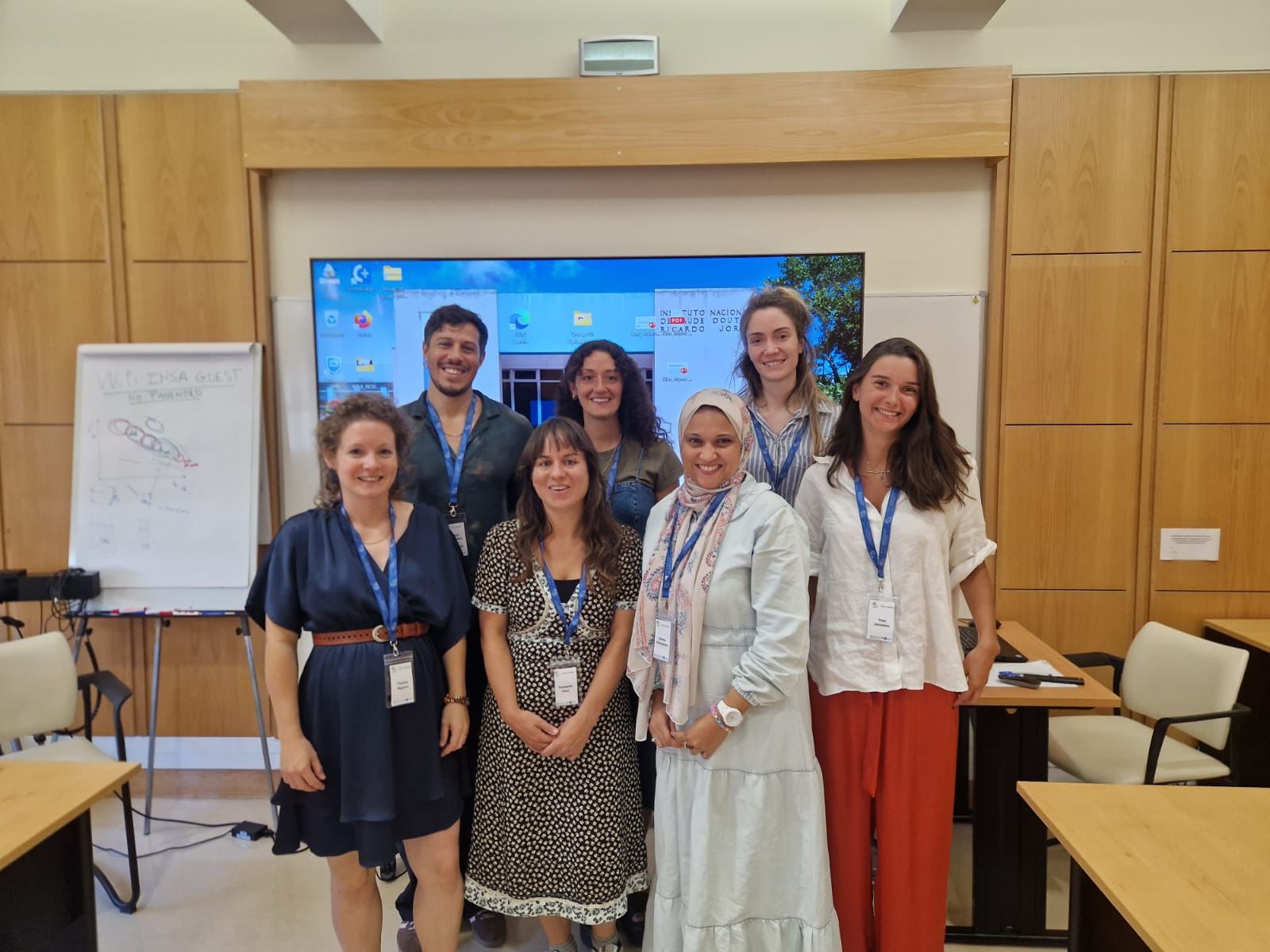
Epidemiological training fellows gathered in Lisbon to strengthen scientific communication across Europe

0
Epidemiological training fellows gathered in Lisbon to strengthen scientific communication across Europe

Throughout the week, fellows from the MediPIET, EPIET, EUPHEM, PAE and EODY programmes presented ongoing scientific projects and received structured, in-depth feedback enhancing their readiness to showcase their work at scientific forums such as ESCAIDE 2025, taking place in Warsaw this November.

The module focused on both the content and delivery of presentations, preparing fellows for oral and poster formats. Participants refined their skills in presenting, defending and justifying their research, while gaining practical experience in scientific critique, peer-review and argumentation. 

The event offered fellows a valuable platform to refine their research and strengthen cross-border collaboration through a mix of plenary lectures, hands-on workshops and small-group sessions that facilitated professional networking and peer learning, in addition to technical skills.G10 Epidemiological training fellows gathered in Lisbon to strengthen scientific communication across Europe

Highlights included:

  • Lectures on effective scientific presentations, outbreak communication, and providing constructive feedback.
  • Workshops on creating clear data visualisations (e.g. tables and figures) and navigating the publication process.
  • Presentations on projects relating to surveillance, outbreak investigations, and operational research.
  • Sessions on tailored methodologies, study design and analysis. 

Source link

Not ready to help Nepal following deadly demonstrations against the ban on social media

0

Police used tear gas and opened fire on demonstrators trying to storm the Parliament complex in the capital, Kathmandu, according to the media.

The curfews were imposed in certain parts of the city and in Rupandehi, with restrictions on the effective movement in Pokhara.

‘So unlike Nepal’

The resident coordinator of the UN Hanaa Fikry Ahmed Singer described the situation as “if unlike Nepal” and feared that the number of victims increases.

“Many of my staff here cry,” she said UN News in an interview. “They haven’t seen any violence during their lifetime.”

The demonstrations occurred only a few days after the Nepalese government blocked more than 20 social media platforms such as WhatsApp, X and Facebook, as well as websites such as YouTube, so as not to register with the authorities.

“” The government wanted them to also align themselves with internal laws because they have concerned about disinformation, hate speech and social harmonyAnd to ensure surveillance and surveillance, ”she said.

“However, the decision has been widely criticized as too wide and has been perceived by many, especially young people who are very global, like all parts of the world now, They consider this to be a restriction on freedom of expression and access to digital spaces. “”

Concern for civilians

Ahmed Singer expressed a deep concern for civilians’ safety and stressed the urgent need to ensure medical access without restriction to the injured.

“Immediate priority is now the protection of civilians, especially young people who are at the forefront of demonstrations,” she said.

Social media returned online shortly before the interview. The senior humanitarian official said that she had published a message on X Call all parties to exercise a maximum reservoirAdhered to the basic principles on the use of strength and firearms, and make sure that people can exercise their democratic rights in completeness and peacefully.

“The most important thing is now an access without restriction to medical care for those who are injured, if necessary,” she said.

Supporting role

Meanwhile, United Nations agencies in the country – such as the World Health Organization (WHO), the United Nations Children’s Fund (Unicef), and the United Nations Human Rights Office, Ohchr – close monitoring of developments.

They prepare health and other forms if necessary and are ready to facilitate dialogue.

“Our role is really to remind everyone to ensure the protection of civilians, to protect fundamental freedoms and to support Nepal in their commitment to international human rights standards and standards,” she said.

Originally published at Almouwatin.com

UN rights chief denounces ‘glorification of violence’ and attack on rule of law

0
UN rights chief denounces ‘glorification of violence’ and attack on rule of law

“No one is safe when human rights are under attack,” Mr. Türk told the Human Rights Council, warning that the rules of war “are being shredded”.

“Some States are becoming an extension of their ruler’s personal power,” he insisted.

In his customary address to the UN’s top rights forum at the beginning of a new session in Geneva, the High Commissioner for Human Rights decried that “pro-war propaganda is everywhere”, from military parades to “ramped-up rhetoric” from leaders.

“Sadly, there are no peace parades or ministries of peace, he stressed, while calling for countries to stand firm against the growing “erosion” of international law.

The High Commissioner also defended the importance of standing behind multilateral accords as “the foundation of peace, our global order and our daily lives, from trade rules to the global internet, to our fundamental rights”.

World order at risk

Today, governments “are disregarding, disrespecting and disengaging” the existing rules-based world order that was established after 1945 to prevent another world war, the UN rights chief insisted, in a call for accountability.

The danger is that when States ignore violations of the law, “they become normalised,” Mr. Türk said. “When States apply the law inconsistently, they undermine the legal order everywhere. It is time for States to wake up and to act.”

Condemning the continued illegal detention of United Nations staff in Yemen as a “direct attack on the UN system”, Mr. Türk also called the United States’ withdrawal “from the Paris Agreement and from global bodies, including this Council…deeply regrettable”, noting that other States were following suit.

The High Commissioner also warned of the negative consequences of the decision by Estonia, Finland, Latvia, Lithuania and Poland to leave the Ottawa Treaty on land mines, while identifying the “new trend of disparaging” the 2030 Agenda for Sustainable Development, which all countries had agreed to a decade ago.

An A to Z of rights concerns

As is usual at the start of Council sessions, the High Commissioner highlighted situations of concern around the world, from Afghanistan – where the “erasure” of women and girls from public life “is almost complete” – to Haiti which is “plunging deeper into lawlessness; Nigeria, which is seeing a resurgence of Boko Haram extremism; and Syria – whose transition to peace remains “fragile”.

In Ukraine, following the largest drone assault of the conflict, Russia’s full-scale invasion “has turned even more deadly”.

In Sudan, besieged El Fasher is under constant bombardment and the risk of further atrocities remains, Mr. Türk said, while in Myanmar, four years since the military coup, people remain caught up in “a harrowing human rights calamity”.

Turning to the eastern Democratic Republic of the Congo, “damning evidence” indicates continued “grave violations and abuses” by all parties to the conflict, the High Commissioner continued, while Gaza is now a “graveyard”, amid Israel’s “mass killing” of Palestinian civilians.

Where are steps to stop Gaza genocide?

We are failing the people of Gaza…Where are the decisive steps to prevent genocide?” he asked. “Why are countries not doing more to avert atrocity crimes? They must stop the flow to Israel of arms that risk violating the laws of war.”

The Human Rights Council meets in three scheduled sessions every year at UN Geneva. 

Continuing his tour d’horizon of country situations of concern in addition to thematic issues, Mr. Türk maintained that progress sought by his office, OHCHR, to protect the rights of Uyghur and other Muslim minorities in China has “yet to materialise”.

In West Africa, meanwhile, restrictions on LGBTQ+ people are growing in some countries considering criminalising consensual same-sex relations, the High Commissioner said, just as the rights of migrants and refugees are being increasingly violated.

Asylum alert

“Iran and Pakistan have forcibly returned millions of Afghans to their country and India has also deported groups of Rohingya Muslims by land and sea,” he insisted.

Similarly, Germany, Greece, Hungary, and other European countries “have also sought to limit the right to seek asylum”, Mr. Türk insisted. He took note of concerns about the United States’ reported agreement with El Salvador, South Sudan, Eswatini, Rwanda and others, to deport third country nationals, and underlined Kuwait’s decision to revoke citizenship for thousands of people in recent years, “leaving many stateless”. 

Poll appeal

On imminent national elections across Africa, Mr. Türk also cited serious concerns over polling preparations in Cameroon, Côte d’Ivoire, Guinea, Guinea Bissau, Malawi, Tanzania and Uganda.

“In many of these countries, the authorities are resorting to harassment, exclusion or detention of opposition leaders; restrictions on media freedom; bans on peaceful protest; and crackdowns on human rights defenders,” he said.

The UN rights chief also urged the Ethiopian authorities to ensure conditions for free, fair and inclusive elections, amid concerns about arbitrary detentions of journalists.

As part of the UN’s efforts to improve and promote human rights everywhere, Mr. Türk urged all countries to do more so that “every child – whether a future farmer, digital worker, doctor or shopkeeper” understands that human rights “are our birthright”.

He added: “The vast majority of people around the world are crying out for human rights and freedoms…No one is safe when human rights are under attack. Abuses committed against one group are always part of a broader pattern of oppression and lead to the wider erosion of fundamental freedoms”.

Source link

New EU-funded railway line brings Ukraine closer to the EU

0
New EU-funded railway line brings Ukraine closer to the EU

Ukraine has opened its first railway line based on the EU standard for track width. It marks a significant step in the country’s transport integration with the EU. The new 22-km railway line will prevent delays caused by the previous need to change trains at the EU-Ukraine border. Source link

Source

Source link

New EU-funded railway line brings Ukraine closer to the EU

0
New EU-funded railway line brings Ukraine closer to the EU

Ukraine has opened its first railway line based on the EU standard for track width. It marks a significant step in the country’s transport integration with the EU. The new 22-km railway line will prevent delays caused by the previous need to change trains at the EU-Ukraine border.

Source link

The UN provides urgent support after a “massive” Russian attack across Ukraine

0

According to reports, more than 800 drones were launched in waves designed to overwhelm the Ukrainian air defenses, and a government building was affected in the capital kyiv for the first time.

Ukrainian authorities said four had been killed, with 44 injured. The air raid sirens continued for 11 hours across the capital and although a majority was killed more than 50 drones and nine missiles reached their targets.

“Again, the attacks had an impact on the houses, a government building, a kindergarten and other civil infrastructure in kyiv and Chernihiv, Kharkiv, Kremenchuk, Kryvyi Rih, Odesa, Sumy Region, Zaporizhzhia – leaving behind the loss, destruction and Grif

The senior aid official said that, with the authorities, the UN and the humanitarian partners had mobilized to provide urgent support for civilians and civil areas where damage has been suffered.

Civilians should never be a target

“Civilians and civil infrastructure are protected by international humanitarian law-they are not a target,” he continued.

The UN children’s funds, Unicefsaid that the news of a baby killed with her young mother during an attack on a building in kyiv was “devastating”. At least another child was injured during attacks on Sumy.

“Ukraine has endured another terrifying attack of attacks which had an impact on several cities. More brutally shortened young lives, ”tweeted the agency.

The attacks occurred after weeks of large -scale diplomacy of the Western allies of the Ukrainian government to negotiate a lasting peace agreement between kyiv and Moscow.

President Volodymyr Zelenskyy said in an article on social networks following attacks by which “such murders now, when real diplomacy could already have started a long time ago, are a deliberate crime and an extension of the war”.

Originally published at Almouwatin.com
Asylum applications down by 23% in the first half of 2025

0
Asylum applications down by 23% in the first half of 2025

Europe’s asylum landscape underwent a series of significant shifts in the first half of 2025. By the end of June, EU+ countries received 399 000 asylum applications, a 23 % decrease year-over-year. A two-thirds drop in Syrian applications meant that Germany was no longer the main receiving EU+ country, with both France and Spain receiving more applications. A majority of applications continued to be lodged by citizenships with low recognition rates in the EU+.

The European Union Agency for Asylum (EUAA) has just published its Mid-Year Review of the Latest Asylum Trends, paired with detailed analysis of the main citizenships seeking asylum and the key European countries receiving their applications. By the end of June 2025, EU+ countries received 399 000 asylum applications, a 23 % decrease compared to the first half of 2024. This shift was driven by far fewer Syrians (25 000) applying, for whom the number of applications dropped by two thirds (- 66 %). However, Venezuelans (49 000) applied in significant numbers, up by almost a third (+ 31 %) year-over-year.


Changing trends belay a complex asylum landscape

Following the fall of the Assad regime in Syria last December, and after a decade during which Syrians were consistently the main citizenship seeking protection in the EU+, Venezuelans became the largest nationality group in the first half of 2025. This shift had a significant impact on the main receiving EU+ countries of asylum applications. By the end of June, France (78 000) and Spain (77 000) both received more applications than Germany (70 000). They were followed by Italy (64 000) and Greece (27 000). Greece received the most applications per capita: 1 application for every 380 residents. Importantly, while the number of applications in France was stable, year-over-year, applications in Germany (- 43 %), Italy (- 25 %) and Spain (- 13 %) all fell compared to the first half of 2024.

Third country nationals tend to favour specific EU+ countries when seeking international protection. Venezuelans tend to apply in Spain due to a shared language, an existing diaspora and a tendency by the Spanish authorities to grant them a national form of protection. Indeed, Venezuelans lodged almost all of their applications in Spain (93 %). Compounding this reality, Venezuelan applications in Spain also rose by almost a third (+ 29 %), compared to the first half of 2024. Typically, around a quarter of asylum applications in the EU+ are lodged by citizenships with visa-free access to the Schengen area. Venezuelans and Colombians represent the majority of such applicants. The European Parliament is expected to vote on a stronger and more flexible visa suspension mechanism next month.

In addition to Venezuelans, other citizenships displayed increased trends. Ukrainians (16 000) have continued to lodge increasing numbers of asylum applications, also up by 29 %. France accounted for nearly half of all Ukrainian applications, whereas Poland accounted for almost one third. However, these figures were dwarfed by the 4.3 million Ukrainian beneficiaries of temporary protection at the end of June 2025.

Afghans (42 000) were the second largest applicant group in the first half of 2025. Despite representing a tenth of all applications, the semi-annual figure has been on a downward trend since 2023. Following Syrians, Bangladeshis (17 000) and Turks (17 000) also lodged fewer applications, recording decreases of 26 % and 41 %, respectively, year-over-year.

Lowest EU+ recognition rate on record

The EU+ recognition rate for the first half of the year stood at 25 %, which is the lowest overall semi-annual or annual recognition rate on record. This was driven by a sharp drop in protection decisions issued to Syrians for whom most EU+ countries have kept the processing of applications on hold. Importantly, this figure does not reflect a stricter interpretation of protection needs but is owed to procedural factors. For example, when Syrians withdraw their applications, some national authorities record this, statistically, as a negative decision.

For some citizenships, EU+ recognition rates have remained stable over time, including for Bangladeshis (4 %), Pakistanis (10 %) and Nigerians (10 %). However, other nationalities have seen significant shifts. The EU+ recognition rate for Malians was up from 41 % (in 2021) to 79 % and, in the case of Haitians, up from 10 % (in 2020) to 86 % during the first half of 2025. Applications from Malians (9 000) were stable (- 6 %); whereas Haitians (7 200) lodged 27 % more applications in the first half of 2025. Around three quarters of Malians applied in Spain, whereas almost all Haitians applied in France (99 %). In fact, Haitian applications in France were up by almost three fifths (+ 57 %).

During the first half of 2025, around 51 % of applications came from citizenships for whom the recognition rate was low (≤ 20 %). Many such applications may be subject to an accelerated examination under new rules that become applicable in mid-2026. The number of applications pending a decision at first instance stood at 918 000 at the end of June 2025.


Source link

Asylum applications down by 23% in the first half of 2025

0
Asylum applications down by 23% in the first half of 2025

Europe’s asylum landscape underwent a series of significant shifts in the first half of 2025. By the end of June, EU+ countries received 399 000 asylum applications, a 23 % decrease year-over-year. A two-thirds drop in Syrian applications meant that Germany was no longer the main receiving EU+ country, with both France and Spain receiving more applications. A majority of applications continued to be lodged by citizenships with low recognition rates in the EU+.

The European Union Agency for Asylum (EUAA) has just published its Mid-Year Review of the Latest Asylum Trends, paired with detailed analysis of the main citizenships seeking asylum and the key European countries receiving their applications. By the end of June 2025, EU+ countries received 399 000 asylum applications, a 23 % decrease compared to the first half of 2024. This shift was driven by far fewer Syrians (25 000) applying, for whom the number of applications dropped by two thirds (- 66 %). However, Venezuelans (49 000) applied in significant numbers, up by almost a third (+ 31 %) year-over-year.


Changing trends belay a complex asylum landscape

Following the fall of the Assad regime in Syria last December, and after a decade during which Syrians were consistently the main citizenship seeking protection in the EU+, Venezuelans became the largest nationality group in the first half of 2025. This shift had a significant impact on the main receiving EU+ countries of asylum applications. By the end of June, France (78 000) and Spain (77 000) both received more applications than Germany (70 000). They were followed by Italy (64 000) and Greece (27 000). Greece received the most applications per capita: 1 application for every 380 residents. Importantly, while the number of applications in France was stable, year-over-year, applications in Germany (- 43 %), Italy (- 25 %) and Spain (- 13 %) all fell compared to the first half of 2024.

Third country nationals tend to favour specific EU+ countries when seeking international protection. Venezuelans tend to apply in Spain due to a shared language, an existing diaspora and a tendency by the Spanish authorities to grant them a national form of protection. Indeed, Venezuelans lodged almost all of their applications in Spain (93 %). Compounding this reality, Venezuelan applications in Spain also rose by almost a third (+ 29 %), compared to the first half of 2024. Typically, around a quarter of asylum applications in the EU+ are lodged by citizenships with visa-free access to the Schengen area. Venezuelans and Colombians represent the majority of such applicants. The European Parliament is expected to vote on a stronger and more flexible visa suspension mechanism next month.

In addition to Venezuelans, other citizenships displayed increased trends. Ukrainians (16 000) have continued to lodge increasing numbers of asylum applications, also up by 29 %. France accounted for nearly half of all Ukrainian applications, whereas Poland accounted for almost one third. However, these figures were dwarfed by the 4.3 million Ukrainian beneficiaries of temporary protection at the end of June 2025.

Afghans (42 000) were the second largest applicant group in the first half of 2025. Despite representing a tenth of all applications, the semi-annual figure has been on a downward trend since 2023. Following Syrians, Bangladeshis (17 000) and Turks (17 000) also lodged fewer applications, recording decreases of 26 % and 41 %, respectively, year-over-year.

hierarchy visualization

Lowest EU+ recognition rate on record

The EU+ recognition rate for the first half of the year stood at 25 %, which is the lowest overall semi-annual or annual recognition rate on record. This was driven by a sharp drop in protection decisions issued to Syrians for whom most EU+ countries have kept the processing of applications on hold. Importantly, this figure does not reflect a stricter interpretation of protection needs but is owed to procedural factors. For example, when Syrians withdraw their applications, some national authorities record this, statistically, as a negative decision.

For some citizenships, EU+ recognition rates have remained stable over time, including for Bangladeshis (4 %), Pakistanis (10 %) and Nigerians (10 %). However, other nationalities have seen significant shifts. The EU+ recognition rate for Malians was up from 41 % (in 2021) to 79 % and, in the case of Haitians, up from 10 % (in 2020) to 86 % during the first half of 2025. Applications from Malians (9 000) were stable (- 6 %); whereas Haitians (7 200) lodged 27 % more applications in the first half of 2025. Around three quarters of Malians applied in Spain, whereas almost all Haitians applied in France (99 %). In fact, Haitian applications in France were up by almost three fifths (+ 57 %).

During the first half of 2025, around 51 % of applications came from citizenships for whom the recognition rate was low (≤ 20 %). Many such applications may be subject to an accelerated examination under new rules that become applicable in mid-2026. The number of applications pending a decision at first instance stood at 918 000 at the end of June 2025.


Source link