
The Council imposed additional restrictive measures against two persons under the European Union’s Global Human Rights Sanctions Regime, in relation to abuses that occurred in detention centres in Crimea.
Will offshore wind energy affect ocean productivity?
A major new campaign is underway off the northeast coast of Scotland this summer to see if the Source link
Will offshore wind energy affect ocean productivity?
A major new campaign is underway off the northeast coast of Scotland this summer to see if the
Speech by President António Costa at the Congress of Regional and Local Authorities in Uzhhorod (Ukraine)

President of the European Council António Costa travelled to Uzhhorod (Ukraine) and gave a speech at the Congress of Regional and Local Authorities on 5 September 2025.
The night when the mountains trembled: a doctor on the front lines of the Afghan earthquake

At his home in Jalalabad, about 50 kilometers from the epicenter, Dr. Sahak and his wife burst out their room to find their eight children already in the corridor.
“I immediately thought of Herat,” said the Afghan doctor at the end of the forties, referring to the earthquakes that devastated the western province of the country in 2023. “I could say that the impact would also be huge. »»
Originally from the Jalalabad region, he knew in the first hand what this new disaster would mean for the northeast of the country, where the enlarged families all live under the same roof in distant and difficult to reach places.
In a few seconds, their houses built in mud and loose stones would collapse. The roads would disappear under the rubble. Families would be buried alive at the top.
The first calls
Dr. Sahak, who heads the World Local Health Organization (WHO) Emergency Office, immediately turned to his WhatsApp group of health cluster, a thread that connects hospitals, clinics and aid organizations across the region.
The reports began to flow from Asadabad, the capital of the neighboring province of Kunar, the hardest area affected along the Pakistani border. There, the earthquake had felt very strongly, the main hospital in the city informed it. Some residents are likely to be injured.
At 1 am, calls have become more urgent: “We have received multiple injuries from different areas and the situation is not good. If possible, we provide support! ”
Mumble
Dr. Sahak asked his team to meet him in the organization’s warehouse in Jalalabad. While he and his colleagues crossed the darkness, the rain started to fall – the monsoon that would complicate everything, from helicopter landings to ambulance races, in the early hours of the response.
Soon, the help pipeline was set up. A truck was responsible for medical supplies at the WHO deposit, then transferred to Jalalabad airport, five kilometers away, before a helicopter of the Ministry of Defense lifted him from the pallets to the Nurgal district-the epicenter of the earthquake, halfway between Asadabad and Jalalabad.
“Fortunately, we were able to quickly reach the most affected area,” said Dr. Sahak.
On September 2, 2025, Dr. Abdul Mateen Sahak and his WHO team visited a hospital in the province of Kunar to monitor the emergency health services for people affected by the earthquake.
In the Nurgal district
His initial team on the field fell to only four people: himself, a technical advisor, an emergency focal point and a security assistant.
In a few hours, they attracted Afghan partners from two local NGOs, bringing together a force of 18 doctors, nurses and pharmacists-“six of whom were women doctors and midwives,” he said. This first day, which succeeded in eagerly 23 metric tonnes of medicine in the district of Nurgal.
Meanwhile, the victims’ figures continued to climb. “There was a news that 500, maybe 600 people died. There were thousands of injuries and thousands of houses destroyed, “said Dr. Sahak.
Five days later, the official toll is much darker: more than 2,200 dead, 3,640 injured and 6,700 damaged houses.
He and his team reached the Nurgal district on Monday afternoon on a armored vehicle. “Many roads were closed because the large stones fell from the mountains,” he said. On the tracks that remained open, crowds slowed down traffic – thousands of civilians rushing, most of them on foot to help the victims.
“Where’s my baby?”
Once there, Dr. Sahak, a seasoned humanitarian worker, was not prepared for the magnitude of devastation. “We have seen bodies in the street. They were waiting for people to bury them, “he said. Volunteer rescuers spread from neighboring neighborhoods to clean the rubble, wear the wounded and take care of the dead.
Among the survivors, there was a 60 -year -old man named Mohammed, whose house had been destroyed.
I couldn’t bear looking for this man in the eyes. He was tearing himself off
“He had a total of 30 family members living with him … 22 of them died during the earthquake,” said Dr. Sahak. “It was shocking for me. I couldn’t bear looking for this man in the eyes. He was tearing himself apart. “
At the local clinic, its walls cracked by the tremors, the medical staff treated an increasing number of growing patients under tents put outside.
Dr. Sahak met a woman with multiple wounds – pelvic fracture, head trauma, broken ribs. She had a hard time breathing and couldn’t stop crying. “She kept saying:” where is my baby! I need my baby! Please bring me my baby! “” He recalls. Then he stopped. “No, no, she lost her baby. All his family. »»
On September 2, 2025, Dr. Abdul Mateen Sahak and his WHO team visited the Regional Hospital of Asadabad, in the province of Kunar, to monitor emergency health services for people affected by the earthquake.
Women on the front line
In a country where the strict rules between the sexes govern public life, the earthquake has briefly decomposed barriers.
“During the early days, everyone – men and women – saved people,” said Dr. Sahak. Doctors and midwives can still work in Afghanistan, but only if they are accompanied in hospitals in a male parent. Nor has he seen patients refused care.
In the first days, everyone – men and women – saved the people
The deeper crisis, he added, is the exodus of professionals since the Taliban’s return in 2021. “Most specialized doctors, especially women, have left the country … We have trouble finding professional staff. »»
The impact has reached his own house. His eldest daughter had been in her fifth year of medical school in Kabul when the new authorities prohibited women in higher education.
“Now, unfortunately, she’s at home,” he said. “She can’t do anything; There is no chance for her to finish her studies. ”
Fear of a family
From the start, the WHO task was to maintain clinics in progress by providing technical advice, medical supplies and clear instructions. This also meant to offer words of encouragement to medical staff. “We said to them,” You are heroes! ” “, Recalls Dr. Sahak.
While encouraging local doctors, his family back in Jalalabad had been sick after the news. He had spent a career to lead hospitals and to lead emergency responses through Afghanistan, but this disaster struck too much near his home.
This first night, when he finally returned to his wife and children, it was his 85 -year -old mother who praised him first. “She hugged me for more than 10 minutes,” he said.
She scolded him gently and tried to make him promise that he would not return to the struck areas. But in the poor oriental districts of Nurgal, Chawkay, Dara-I-Nur and Alingar, tens of thousands of people counted on the WHO to survive. The next morning, he was back on the track.
On September 2, 2025, Dr. Abdul Mateen Sahak and his WHO team met two women, at the Regional Hospital of Asadabad, in the province of Kunar, who had lost all members of their earthquake family on August 31, 2025.
Great book of life and death
Friday afternoon, when I spoke to him, the figures from the great book of Dr. Sahak told the story of the emergency: 46 tonnes of medical supplies delivered; More than 15,000 bottles of lactate, glucose and distributed sodium chloride – intravenous liquids for trauma and dehydration; And 17 of the surveillance teams that have been deployed to follow the propagation of the disease, which the agency is soon expecting due to the destruction of drinking water sources and sanitation systems.
Who asked for $ 4 million to provide life health interventions and extend mobile health services. About 800 critical patients had already been transported to Jalalabad hospital. Others were taken to Asadabad Regional Hospital, which Dr. Sahak and his team visited on Tuesday.
The words of a mother
Apart from the health center, they noticed two survivors trained by the sun in a narrow strip of shadow along a wall – an older woman and her daughter, both recently unloaded, both alone.
They were alive, but their 13 remaining family members died
“They were alive, but their 13 remaining family members died,” said Dr. Sahak. There was no one left to recover them. The girl, in her twenties, seemed devastated: “She could not speak. Tears sank on his face.
Moved by them, Dr. Sahak asked the hospital to keep them in a bed for a week or two. The director accepted. That night, at home, he told the scene to his family. “All were crying and they couldn’t even dine,” he said. At that time, even his mother did not begged him to stay.
“Please go ahead and support people,” she said.
Originally published at Almouwatin.com
Ukraine opens its first railway line with European track width standard, boosting the country’s integration with the European Union

- Joint stock company JSC Ukrainian Railways is inaugurating a railway line built to Europe’s track width standard with funding from the European Union.
- The new 22 km, 1 435 mm gauge line connects the western Ukrainian cities of Uzhhorod and Chop, facilitating freight and passenger rail connectivity with EU countries.
- Funded by a European Commission Connecting Europe Facility grant and an EIB loan guaranteed under the Ukraine Facility, this is the first step in a plan to introduce EU-standard railways to other Ukrainian cities.
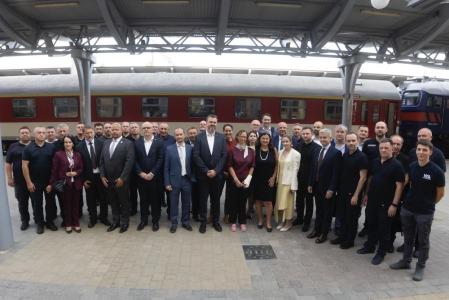
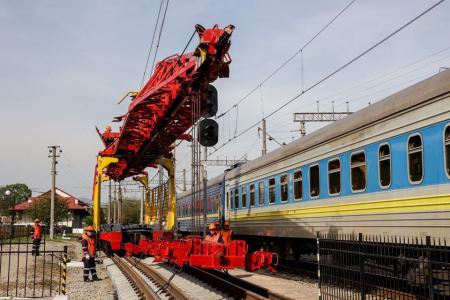
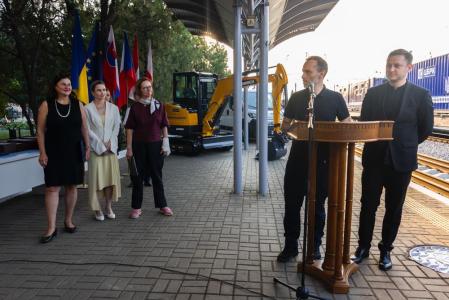
Ukraine today opened its first railway line based on the EU standard for track width, deepening the country’s transport integration with the European Union. The 22 km line – funded by a European Investment Bank (EIB) loan and an EU grant under the Connecting Europe Facility – connects the city of Uzhhorod on the border with Slovakia to Chop in the south near the border with Hungary. The project is also one of the tangible results of the Ukraine Facility, the European Union’s €50 billion support instrument, showing how European guarantees and grants translate into real infrastructure on the ground.
The new track has a gauge of 1 435 mm – the standard for trans-European rail networks – while the rest of Ukraine’s rail network uses broad gauge (1 520 mm). As a result, rail travel journey times between Uzhhorod and Chop and onward to EU cities such as Košice in Slovakia, Budapest in Hungary and Vienna in Austria will be reduced, and rail will become more competitive by avoiding the need to change trains.
The new railway line will also help increasing the volume of goods transported by rail by providing a more efficient and seamless logistics solution, with a positive impact on trade between Ukraine and the European Union. This will not only benefit both economies, but will also contribute to the future reconstruction and recovery of Ukraine. This is part of the efforts under the EU-Ukraine Solidarity Lanes initiative to establish new transport routes and improve existing ones in response to Russia’s illegal full-scale invasion of Ukraine.
“This is a historic step towards EU integration. Especially in wartime, when railways serve as a vital lifeline for Ukraine’s economy and people, strengthening these transport links is more important than ever,” said EIB Vice‑President Teresa Czerwińska.
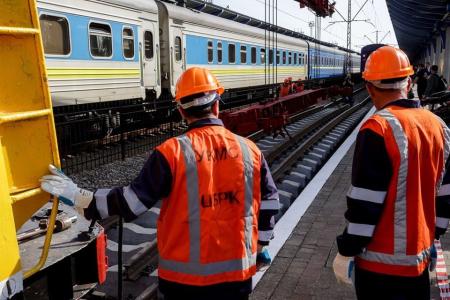
The project amounted to €28.6 million, covering the construction of the 1 435 mm gauge railway track from Chop station to Uzhhorod station and other works along the line. This included the modernisation of the signalling, communication, radio, and microprocessor-based centralised control system, with the aim to increase capacity and improve the safety of rail operators.
“Ukrzaliznytsia has become a true lifeline during Russia’s war of aggression – for citizens seeking safety, for businesses sustaining the economy, and as a channel of “iron diplomacy,” bringing world leaders to Ukraine in solidarity and support. Funded by an EIB loan with an EU guarantee and grant, this joint project with Ukrzaliznytsia shows how the concrete results can be achieved even in the most difficult times. It is a first, but very significant step towards fully integrating Ukraine’s railways with the European network, and towards Ukraine’s future inside the European family,” said Ambassador of the European Union to Ukraine Katarína Mathernová.
“The new Uzhhorod-Chop railway line is a tangible step towards integrating Ukraine’s rail network with that of the European Union. With support from the Connecting Europe Facility, we have removed a key break of gauge at the EU border, enabling direct connections with neighbouring Member States. It is a clear example of how the EU is working with Ukraine to build the infrastructure that will underpin its future inside the European family,” said Director-General for Mobility and Transport at the European Commission Magda Kopczyńska.
“This new railway line is more than infrastructure – it is a symbol of Ukraine’s decisive path towards the European Union. By adopting the European track-width standard, Ukraine is not only building physical connections with its neighbours, but also strengthening social and economic ties. Initiatives like this open new opportunities for trade, investment, and jobs, paving the way for gradual integration and access to the EU single market. Each kilometre of new rail brings Ukraine closer to shared prosperity and its future within the European Union,” said Director-General for Enlargement and Eastern Neighbourhood at the European Commission Gert-Jan Koopman.
The new Uzhhorod-Chop railway line is the first step in a plan to build 1 435 mm gauge tracks to Ukrainian cities such as Chernivtsi, Lviv and Kovel – projects aimed at deepening rail connections between Ukraine and the European Union over the next four to five years, followed by the extension of the 1 435 mm gauge tracks to Kyiv. In addition to providing funding, the European Union is offering technical assistance, in particular through the EIB’s JASPERS advisory team. Many of these projects will be backed by the Ukraine Facility, which is designed to mobilise investment at scale for Ukraine’s recovery and EU integration.
The new Uzhhorod-Chop track was co-financed in equal parts by an EIB loan guaranteed by the Ukraine Facility and a grant from the European Commission’s Connecting Europe Facility transport programme overseen by the European Climate, Infrastructure and Environment Executive Agency (CINEA). JSC Ukrainian railways carried out the project.
“For the first time in Ukraine’s modern history, a European-gauge railway has been built from scratch – a 22-kilometre stretch between Chop and Uzhhorod. Thanks to this, Uzhhorod has become the first regional centre to gain a direct European-gauge connection with EU countries – including the capitals Bratislava, Budapest and Vienna. This is an important stage in developing a European railway network in Ukraine, and we will continue to build at an even faster pace. Already in 2026, we plan to electrify this section and begin construction of the European-gauge line towards Lviv, which we intend to complete within 2–3 years. With this project, Ukrainian railway workers impressed our European partners — despite the war, we managed to deliver it ahead of schedule. Through such work, Ukrainians have proven that they are ready to implement even more ambitious European integration projects, and that invested funds are quickly converted into tangible results for people,” said Chairman of the Management Board of JSC Ukrainian Railways Oleksandr Pertsovskyi.
Background information
The EIB in Ukraine
Present in Ukraine since 2007, the EIB has stepped up its financial support for the country’s resilience and modernisation since Russia’s full-scale invasion in 2022. Since then, the EIB has provided €3.6 billion in financing. Through its EU for Ukraine (EU4U) Initiative, coupled with its key role in implementing a dedicated window of the Ukraine Facility, the EIB is strongly committed to accelerating its activities in line with the mandate given by EU leaders, in close cooperation with the European Commission, the European Parliament, Member States and international partners.
The Connecting Europe Facility
The Connecting Europe Facility (CEF) is a key EU funding instrument to promote growth, jobs and competitiveness through targeted infrastructure investment at European level. Managed by the European Commission, it supports the development of high-performing, sustainable and efficiently interconnected trans-European networks in the fields of transport, energy and digital services. CEF investments fill the missing links in Europe’s energy, transport and digital backbone. The CEF for Transport helps build new or upgrade existing transport infrastructure across Europe. It focuses on cross-border projects and initiatives aimed at removing bottlenecks or bridging missing links.
Under the Connecting Europe Facility, the European Commission has provided a total of €110 million in non-reimbursable support (mobilising investment of €220 million) for the integration of the Ukrainian and EU railway systems along the extended TEN-T corridors within Ukraine. This includes significant backing for the development of a European standard gauge railway connecting Poland with Lviv, with an additional €76 million of non-repayable grant support provided this July.
The Ukraine Facility
The Ukraine Facility is the European Union’s €50 billion support instrument for 2024 to 2027. It provides predictable financing through grants, loans and guarantees to help Ukraine maintain macro-financial stability, advance reforms on its path to EU accession, and invest in recovery and modernisation.
Under its Ukraine Investment Framework, the facility backs projects like the new Chop-Uzhhorod rail line by guaranteeing loans from the European Investment Bank and other partners.
Ukraine opens its first railway line with European track width standard, boosting the country’s integration with the European Union
©EIB
Download original
Ukraine opens its first railway line with European track width standard, boosting the country’s integration with the European Union
©EIB
Download original
Ukraine opens its first railway line with European track width standard, boosting the country’s integration with the European Union
©EIB
Download original
Ukraine opens its first railway line with European track width standard, boosting the country’s integration with the European Union
©EIB
Download original
Beyond shade: UCLA researchers improve radiant cooling to make outdoor temperatures feel cooler
A team of UCLA engineers and researchers has developed a new technique to make it feel up to
A thrust of the fourth generation for survivors for justice
“We are not ready to inherit an inheritance of complacency, and we cannot continue to live in the shadow of these weapons,” she told commemoration within the United Nations General Meeting room.
As a young representative of the Republic of Kiribati, Ms. Johnson is one of the many young people in the world whose ancestors were affected by the toxic consequences of nuclear tests.
After her speech to the general assembly where she urged the Member States to take action, Johnson spoke to UN News On the effects that the past has had on his family and community.
Devastating consequences
Between 1957 and 1962, the United States and the United Kingdom carried out nuclear weapons on the island of Kiritimati, which is now part of Kirbati, resulting in devastating consequences for the local population. The late grandfather of Mrs. Johnson, who lived on the island, was 14 years old at the start of the tests.
“They were all gathered in a small tennis court, and they only received a thin cover without real protection,” she said, describing the scene just before detonation.
“They used this to cover their eyes with bombing of bombing,” she added.
The Johnson Radiation Grandfather has been exposed to serious health implications, including hearing loss and cognitive decline. These deficiencies have followed him for the rest of his life and affect his descendants to date.
“My father’s older sisters were born prematurely and died shortly after,” she said. “And similar cases have also been found in other community families.”
Beyond the devastating impact on the inhabitants of Kiritima, the tests also caused lasting environmental damage. According to Ms. Johnson, a specific type of fish on the island is radioactive and when it is eaten, can make people “sick and nausea”.
Disarm
To respond to irreversible damage to the name of the young generation of Kiribati – and of the world – it has called on Member States to support an international trustee fund intended to offer necessary aid for victims of nuclear tests. The trust fund was proposed for the first time jointly by Kiribati and Kazakhstan in 2022.
Kiribati is a member of the Coordination Committee of the Treaty on the Prohibition of Nuclear Weapons (Tpnw), a historic agreement to eliminate nuclear threat.
Articles 6 and 7 of the legally binding treaty stipulate that the signatory parties must provide assistance to persons affected by nuclear weapons under their jurisdiction or because of their actions.
“The life of many depend on it”
A survivor of fourth generation nuclear tests, the deeply personal experience of Ms. Johnson with the human, environmental and social impact of nuclear weapons only made it more determined to put pressure on the international community to rely on the treaty in force in 2021.
“For the good of all mothers, children and future generations, I urge everyone to join the Treaty for the Prohibition of Nuclear Weapons because the life of many depends on this.”
Learn more about UN actions against nuclear tests and proliferation here.
Originally published at Almouwatin.com
Amid escalating attacks in Gaza, UN rights chief calls on US to withdraw sanctions against Palestinian rights groups

The measures announced on Thursday target Al-Haq group, the Palestinian Centre for Human Rights (PCHR) and Al-Mezan Center for Human Rights, in relation to their support of the work of the International Criminal Court (ICC) on the situation in the Occupied Palestinian Territory, following other sanctions imposed by the US Government in June on renowned Palestinian non-governmental organization (NGO) Addameer.
“For decades now, these NGOs have been performing vital human rights work, particularly on accountability for human rights violations,” that is “all the more important when international humanitarian and human rights laws are being violated systematically in Gaza and the West Bank, including East Jerusalem”.
Mr. Türk urged the US to immediately withdraw its sanctions “as well as the ones imposed earlier on the UN Special Rapporteur on the situation of human rights in the Palestinian territory occupied since 1967, and on multiple Judges and Prosecutors of the ICC.”
He added that the sanctions will have a “chilling effect” not only on civil society in the Occupied Palestinian Territory and Israel, but potentially worldwide.
Attacks, famine spread across Gaza
The ongoing Israeli offensive to take full control of Gaza City further intensified on Friday, increasing civilian casualties and attacking facilities on which they depend to survive, the UN Spokesperson Stéphane Dujarric said during a press briefing at UN Headquarters.
Earlier on Friday, Israeli forces attacked a high-rise building that they say was used to launch attacks against them, damaging tents sheltering displaced people nearby, according to initial information collected by the UN aid coordination office (OCHA).
“Our humanitarian colleagues tell us that in the north, people are simply exhausted; they can’t afford to move south, not only because displacement sites are overcrowded, but also because transport can cost up to $1,000,” Mr. Dujarric said, announcing that nearly 41,000 people have been displaced from Gaza City since 14 August.
‘Catastrophe Israel could have prevented’: WHO chief
Reminding that the offensive is running alongside the spread of famine, World Health Organization (WHO) chief Tedros Adhanom Ghebreyesus said it was “a catastrophe that Israel could have prevented and could stop at any time.”
Starvation ‘will not make Israel safer’
“Starvation of civilians as a method of war is a war crime that can never be tolerated. Doing so in one conflict risks legitimising its use in future conflicts.”
Since the conflict began in October 2023, at least 370 people have died from malnutrition in Gaza, including more than 300 just in the past two months, according to the UN health agency, which said the lack of food and clean water and cramped living conditions are leaving people with weakened immune systems.
It’s also exposing the population to more disease, with more than 100 cases of Guillain-Barré Syndrome, including 11 deaths, reported in the last month.
“The most intolerable part of this man-made disaster is that it could be stopped right now,” he said.
“People are starving to death while the food that could save them sits on trucks a short distance away. And for what? The starvation of the people of Gaza will not make Israel safer, nor will it facilitate the release of the hostages.”
While WHO is doing the best it can to alleviate suffering in Gaza, supporting medical evacuations of over 7,640 patients, more than 15,000 others need urgent specialised care, including 3,800 children.
More than 700 people have died while waiting for evacuations, Tedros said, calling for countries to “open their arms to these critically ill patients” and on Israel to allow people to be treated in the nearby West Bank and East Jerusalem.
“Above all, we call on the Government of Israel to end this inhumane war,” he said. “If it will not, I call on its allies to use their influence to stop it.”
