Saturday, April 11, 2026
Home Blog Page 233

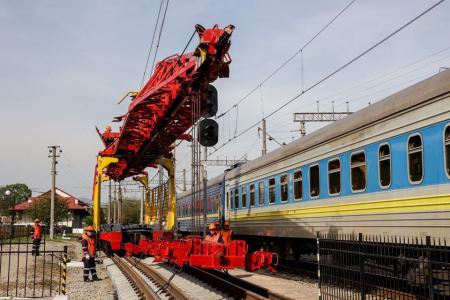
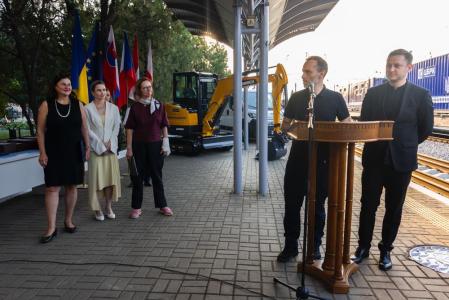
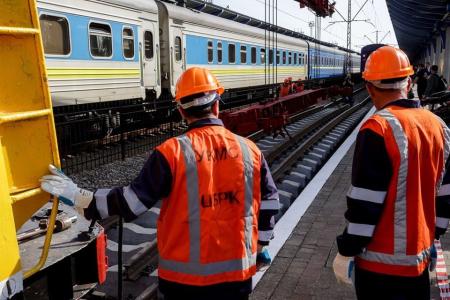
Ukraine opens its first railway line with European track width standard, boosting the country’s integration with the European Union

0
Ukraine opens its first railway line with European track width standard, boosting the country’s integration with the European Union

EIB
  • Joint stock company JSC Ukrainian Railways is inaugurating a railway line built to Europe’s track width standard with funding from the European Union.
  • The new 22 km, 1 435 mm gauge line connects the western Ukrainian cities of Uzhhorod and Chop, facilitating freight and passenger rail connectivity with EU countries.
  • Funded by a European Commission Connecting Europe Facility grant and an EIB loan guaranteed under the Ukraine Facility, this is the first step in a plan to introduce EU-standard railways to other Ukrainian cities.

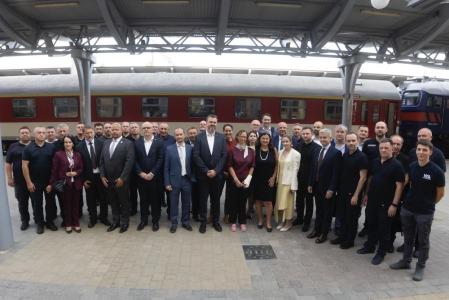
Ukraine today opened its first railway line based on the EU standard for track width, deepening the country’s transport integration with the European Union. The 22 km line – funded by a European Investment Bank (EIB) loan and an EU grant under the Connecting Europe Facility – connects the city of Uzhhorod on the border with Slovakia to Chop in the south near the border with Hungary. The project is also one of the tangible results of the Ukraine Facility, the European Union’s €50 billion support instrument, showing how European guarantees and grants translate into real infrastructure on the ground.

The new track has a gauge of 1 435 mm – the standard for trans-European rail networks – while the rest of Ukraine’s rail network uses broad gauge (1 520 mm). As a result, rail travel journey times between Uzhhorod and Chop and onward to EU cities such as Košice in Slovakia, Budapest in Hungary and Vienna in Austria will be reduced, and rail will become more competitive by avoiding the need to change trains.

The new railway line will also help increasing the volume of goods transported by rail by providing a more efficient and seamless logistics solution, with a positive impact on trade between Ukraine and the European Union. This will not only benefit both economies, but will also contribute to the future reconstruction and recovery of Ukraine. This is part of the efforts under the EU-Ukraine Solidarity Lanes initiative to establish new transport routes and improve existing ones in response to Russia’s illegal full-scale invasion of Ukraine. 

“This is a historic step towards EU integration. Especially in wartime, when railways serve as a vital lifeline for Ukraine’s economy and people, strengthening these transport links is more important than ever,” said EIB Vice‑President Teresa Czerwińska.

The project amounted to €28.6 million, covering the construction of the 1 435 mm gauge railway track from Chop station to Uzhhorod station and other works along the line. This included the modernisation of the signalling, communication, radio, and microprocessor-based centralised control system, with the aim to increase capacity and improve the safety of rail operators.

“Ukrzaliznytsia has become a true lifeline during Russia’s war of aggression – for citizens seeking safety, for businesses sustaining the economy, and as a channel of “iron diplomacy,” bringing world leaders to Ukraine in solidarity and support. Funded by an EIB loan with an EU guarantee and grant, this joint project with Ukrzaliznytsia shows how the concrete results can be achieved even in the most difficult times. It is a first, but very significant step towards fully integrating Ukraine’s railways with the European network, and towards Ukraine’s future inside the European family,” said Ambassador of the European Union to Ukraine Katarína Mathernová.

“The new Uzhhorod-Chop railway line is a tangible step towards integrating Ukraine’s rail network with that of the European Union. With support from the Connecting Europe Facility, we have removed a key break of gauge at the EU border, enabling direct connections with neighbouring Member States. It is a clear example of how the EU is working with Ukraine to build the infrastructure that will underpin its future inside the European family,” said Director-General for Mobility and Transport at the European Commission Magda Kopczyńska.

“This new railway line is more than infrastructure – it is a symbol of Ukraine’s decisive path towards the European Union. By adopting the European track-width standard, Ukraine is not only building physical connections with its neighbours, but also strengthening social and economic ties. Initiatives like this open new opportunities for trade, investment, and jobs, paving the way for gradual integration and access to the EU single market. Each kilometre of new rail brings Ukraine closer to shared prosperity and its future within the European Union,” said Director-General for Enlargement and Eastern Neighbourhood at the European Commission Gert-Jan Koopman.

The new Uzhhorod-Chop railway line is the first step in a plan to build 1 435 mm gauge tracks to Ukrainian cities such as Chernivtsi, Lviv and Kovel – projects aimed at deepening rail connections between Ukraine and the European Union over the next four to five years, followed by the extension of the 1 435 mm gauge tracks to Kyiv. In addition to providing funding, the European Union is offering technical assistance, in particular through the EIB’s JASPERS advisory team. Many of these projects will be backed by the Ukraine Facility, which is designed to mobilise investment at scale for Ukraine’s recovery and EU integration.

The new Uzhhorod-Chop track was co-financed in equal parts by an EIB loan guaranteed by the Ukraine Facility and a grant from the European Commission’s Connecting Europe Facility transport programme overseen by the European Climate, Infrastructure and Environment Executive Agency (CINEA). JSC Ukrainian railways carried out the project.

“For the first time in Ukraine’s modern history, a European-gauge railway has been built from scratch – a 22-kilometre stretch between Chop and Uzhhorod. Thanks to this, Uzhhorod has become the first regional centre to gain a direct European-gauge connection with EU countries – including the capitals Bratislava, Budapest and Vienna. This is an important stage in developing a European railway network in Ukraine, and we will continue to build at an even faster pace. Already in 2026, we plan to electrify this section and begin construction of the European-gauge line towards Lviv, which we intend to complete within 2–3 years. With this project, Ukrainian railway workers impressed our European partners — despite the war, we managed to deliver it ahead of schedule. Through such work, Ukrainians have proven that they are ready to implement even more ambitious European integration projects, and that invested funds are quickly converted into tangible results for people,” said Chairman of the Management Board of JSC Ukrainian Railways Oleksandr Pertsovskyi.

Background information

The EIB in Ukraine 

Present in Ukraine since 2007, the EIB has stepped up its financial support for the country’s resilience and modernisation since Russia’s full-scale invasion in 2022. Since then, the EIB has provided €3.6 billion in financing. Through its EU for Ukraine (EU4U) Initiative, coupled with its key role in implementing a dedicated window of the Ukraine Facility, the EIB is strongly committed to accelerating its activities in line with the mandate given by EU leaders, in close cooperation with the European Commission, the European Parliament, Member States and international partners. 

The Connecting Europe Facility

The Connecting Europe Facility (CEF) is a key EU funding instrument to promote growth, jobs and competitiveness through targeted infrastructure investment at European level. Managed by the European Commission, it supports the development of high-performing, sustainable and efficiently interconnected trans-European networks in the fields of transport, energy and digital services. CEF investments fill the missing links in Europe’s energy, transport and digital backbone. The CEF for Transport helps build new or upgrade existing transport infrastructure across Europe. It focuses on cross-border projects and initiatives aimed at removing bottlenecks or bridging missing links.

Under the Connecting Europe Facility, the European Commission has provided a total of €110 million in non-reimbursable support (mobilising investment of €220 million) for the integration of the Ukrainian and EU railway systems along the extended TEN-T corridors within Ukraine. This includes significant backing for the development of a European standard gauge railway connecting Poland with Lviv, with an additional €76 million of non-repayable grant support provided this July.

The Ukraine Facility

The Ukraine Facility is the European Union’s €50 billion support instrument for 2024 to 2027. It provides predictable financing through grants, loans and guarantees to help Ukraine maintain macro-financial stability, advance reforms on its path to EU accession, and invest in recovery and modernisation.

Under its Ukraine Investment Framework, the facility backs projects like the new Chop-Uzhhorod rail line by guaranteeing loans from the European Investment Bank and other partners.
Source link

In the midst of growing attacks in Gaza, the United Nations rights head calls us to withdraw sanctions against Palestinian rights groups

0

The measures announced Thursday target the Al-Haq group, the Palestinian Center for Human Rights (PCHR) and the Al-Mezan Center for Human Rights, in relation to their support for the work of International Criminal Court (CIC) on the situation in the occupied Palestinian territory, following other sanctions imposed by the United States government in June at the non -governmental Palestinian renowned (NGO) addometer.

“” For decades now, these NGOs have been carrying out vital human rights work, in particular the responsibility of human rights violations“, It is” all the more important when international humanitarian laws and human rights are systematically raped in Gaza and in the West Bank, including East Jerusalem “.

Mr. Türk urged the United States to immediately withdraw its sanctions “as well as those imposed earlier on the United Nations Special Rapporteur on the human rights situation in Palestinian territory occupied since 1967 and on several judges and prosecutors of the ICC.”

He added that sanctions will have a “scary effect” not only on civil society in the occupied Palestinian territory and Israel, but potentially in the world.

Attacks, famine spread over Gaza

The Israeli offensive in progress to take up total control of the city of Gaza further intensified on Friday, increasing the civilian victims and the attack facilities on which they depend to survive, said UN spokesperson Stéphane Dujarric, during a press briefing at the UN headquarters.

Earlier Friday, Israeli forces attacked a high -rise building which, according to them, was used to launch attacks against them, damaging tents sheltering in vicinity, according to the first information collected by the United Nations Coordination Office (Ochha).

“Our humanitarian colleagues tell us that in the North people are simply exhausted; They cannot afford to move south, not only because the travel sites are overcrowded, but also because transport can cost up to $ 1,000, “said Dujarric, announcing that nearly 41,000 people have been moved from Gaza City since August 14.

“Israel disaster could have prevented”: who is the chief

Recalling that the offensive takes place alongside the propagation of famine, World Health Organization (WHO) Chef Tedros Adhanom Ghebreyesus said it was “a disaster that Israel could have prevents and stopped at any time”.

Famine “will not make Israel more sure”

“” The famine of civilians as a war method is a war crime that can never be tolerated. Doing it in a conflict is likely to legitimize its use in future conflicts. “”

Since the start of the conflict in October 2023, at least 370 people have died of malnutrition in Gaza, including more than 300 in the last two months, according to the United Nations health agency, which has said that the lack of food and drinking water and strangulation leave people with weakened immune systems.

They also expose the population to more diseases, with more than 100 cases of Guillain-Barré syndrome, including 11 deaths, reported last month.

“The most intolerable part of this artificial disaster is that it could be arrested at the moment,” he said.

“People die of hunger while the food that could save them is seated on trucks at a short distance. And for what? The famine of the inhabitants of Gaza will not make Israel more sure, nor facilitate the release of the hostages. “”

While who does his best to alleviate suffering in Gaza, supporting medical evacuations of more than 7,640 patients, more than 15,000 others need specialized urgent care, including 3,800 children.

More than 700 people have died while waiting for evacuations, said Tedros, calling on countries to “open arms to these seriously ill patients” and Israel to allow people to be treated in the West Bank and East Jerusalem.

“Above all, we call on the government of Israel to end this inhuman war,” he said. “If this is not the case, I call on his allies to use their influence to stop it.”

Originally published at Almouwatin.com

DR Congo crisis: Funding cuts curtail assistance to victims of sexual violence

0
DR Congo crisis: Funding cuts curtail assistance to victims of sexual violence

The dramatic liquidity crisis currently impacting the UN and its global partners has already prevented a high-level human rights probe into the DRC emergency created in February from getting underway.

According to testimonies gathered by OHCHR investigators into widespread violence in DRC’s North and South Kivu since January, members of the Rwanda-backed M23 rebel paramilitary group “systematically” carried out widespread sexual violence, including gang rape and sexual slavery.

And as M23 fighters captured major cities in North and South Kivu including Goma, “women and girls were disproportionately targeted,” explained OHCHR spokesperson Ravina Shamdasani, in reference to a Fact-Finding Mission report into the DRC emergency for the Human Rights Council.

“But men, boys, and LGBT individuals were also victims of sexual violence, including in detention.”

That report documents the failure by all parties to adequately protect civilians in the conduct of hostilities, particularly during the takeover of Goma by M23 and RDF in late January, as well as attacks on schools and hospitals.

Loaded into trucks

Information gathered by the Fact-Finding Mission indicated that hundreds of children were detained by M23 members this year – and that many were forcibly recruited to fight against government forces, the FARDC.

“M23 detained thousands of civilians, primarily during cordon-and-search operations conducted almost daily since January,” the mission’s report explains.

Many of those detained – mostly able-bodied men and boys around 15 and older – were loaded into trucks and taken away. Relatives of detainees recounted searching for their loved ones going from one place of detention to another, but being chased away, threatened or beaten.”

The report to the Human Rights Council was intended to serve as a basis for a potential war crimes probe by another senior investigative body – a Commission of Inquiry – that the forum’s 47 Member States created in February this year.

But the cash crunch affecting the UN’s human rights work has left the panel without adequate funding to carry out its mandate, Ms. Shamdasani told journalists in Geneva.

Peace deal hopes shattered

The report also expresses concern over the lack of focus on accountability and support for victims in the peace agreement signed between the DRC and Rwanda on 27 June.

UN High Commissioner for Human Rights, Volker Türk, urged action and accountability following the publication of the report. “It is heartbreaking and deeply frustrating to witness, once again, the dehumanization of the civilian population by those in power who are failing in their responsibilities,” he said.

“The swift implementation of the Commission of Inquiry mandated by the Human Rights Council to continue this vital work is essential,” he insisted. “We owe no less to the untold number of victims.”

All warring parties bear responsibility

Responding to questions, Ms. Shamdasani noted that information featuring in the DRC report indicated that gross human rights violations and violations of international humanitarian law had been committed by all parties to the conflict – “by the M23, supported by Rwandan Defense Forces, as well as Congolese Armed Forces and affiliated armed groups”.

She added that the M23 group, “with training, material, intelligence, and operational support from the Rwandan Defense Forces”, captured major cities in North and South Kivu.

Detained and tortured

They then engaged in a campaign of intimidation and violent repression through a recurrent pattern of summary executions, torture and enforced disappearances and forced recruitment, such that there are “reasonable grounds” to believe that M23 fighters may have committed crimes against humanity, Ms. Shamdasani added.

Rapes were repeated over prolonged periods, she said, often in conjunction with additional acts of physical and psychological torture and other ill-treatment, with the intent to degrade, punish and break the dignity of victims.

Civilians try to return home to Sake in the DR Congo, after fleeing an assault by M23 rebels.

“Hundreds of children were detained by M23, and young males forcibly recruited. The report exposes the enormous toll of the conflict on children of all ages,” the OHCHR spokesperson added.

The fact-finding mission report identifies daily violations across the entirety of the  territory under the M23’s control, indicating a high degree of organization, planning, and resource mobilization.

The report also documents grave violations committed by the government FARDC forces and affiliated groups, such as the Wazalendo. It highlights a pattern of killing of civilians and the widespread use of sexual violence, mainly gang rape and rape against women and girls, and looting by members of the FARDC, and Wazalendo during their retreat from the front lines in January and February.

“The report further finds that both DRC and Rwanda bear responsibility for their support to armed groups with known track records of serious abuses, and for failing to meet their obligations to take all measures to ensure respect for international humanitarian law and to protect civilians from serious harm,” Ms. Shamdasani noted.

Help for victims

The UN human rights office supports victims of sexual and gender-based violence by focusing on their needs.

The office also provides technical assistance and legal frameworks to countries to promote women’s and girls’ human rights, to prevent and protect them from gender-based violence.

As part of their work, UN workers engage with school, religious and community leaders to challenge harmful gender norms about girls’ education and their acceptable roles in society. They also lead discussions on the negative consequences of early and forced marriage and female genital mutilation.

Source link

The UN is a “remarkable example” of Papua Nouvelle-Guinée while it concludes a historical journey

0

Flanked by the Prime Minister of the country, James Marape, Mr. Guterres echoes comments He delivered Wednesday during a speech in the National Parliament, in which he described the Papua New Guinea as “champions of multilateralism and international solutions”.

The secretary general noted that, in a world where “we see democratic values ​​called into question”, the country – where 800 languages ​​are spoken – retains a preference to solve problems peacefully through dialogue.

Ryan Hawk / Woodland Park Zoo

The rare clouds of clouds from Papua New Guinea are a high tropical forest characterized by a low-level cloud cover. (June 14, 2011)

Time for climate justice …

The climate crisis was raised on the agenda throughout the visit, Mr. Guterres leaving the capital to visit a region of the tropical forest and discuss the problems caused by the evolution of the climate with the representatives of civil society.

Addressing the media at Port Moresby, the UN chief expressed his gratitude and solidarity with the Papua New Guinea, for how they take up an existential challenge and not of their own manufacture.

“Papua New Guinea does not contribute to climate change,” he said. “Papua New Guinea has a record for negative emissions, due to a huge carbon well: the admirable forests of this country and the ocean.”

He said it was time for the international community to recognize that countries like Papua New Guinea deserve climate justice and support to strengthen resilience against “the devastating impact of climate change”.

The local conservationist Alfred Masul replants mangroves in Papua New Guinea to strengthen resilience against climate change.

… and economic justice

The country’s ability to adapt to the increasingly volatile climate and to develop its economy is also hampered, said Mr. Guterres, by his designation as an intermediate income country – which means that he does not have access to the types of concessional funding, such as subsidies, low interest loans and debt relief, which are available for low -income nations.

This, he said, is “an injustice that must be corrected”.

According to the secretary general, part of the question is the obsolete nature of international financial architecture (a recurring theme during his mandate). The institutions created over 75 years ago must be reformed “so that developing countries like Papua New Guinea have a much stronger voice and much stronger influence in the way decisions are taken,” he said, “and much higher access to resources that are essential for the development of the country”.

Originally published at Almouwatin.com

“ A war of atrocities ” – UN human rights investigators warn Sudanese civilians pay the highest price

0

“They burned everything,” said a bombing attack in the Zamzam travel camp in the Darfur torn by the war. “They said they didn’t want to fight the soldiers, but they punished the whole community.”

War crimes and human rights violations perpetrated by all parties to the conflict between the military government and the militia of the rapid support forces (RSF) are documented in the last report at the UN Human Rights Councilpublished by the survey of the United Nations organ in Sudan, known as Independent International International Mission (FFM).

The report, ‘A war of atrocities“I found that The Sudanese army (SAF) and the RSF have led large -scale attacks against civilians and vital infrastructure Including medical centers, constituting serious violations of international law.

Systematic human rights ages

“” Our conclusions leave no room for doubt: civilians pay the highest price of this war »» said Mohamed candles Othman, president of the FFM.

According to the report, civilians are targeted by both parties for their real affiliation or perceived with the opposite side. Executions, torture and rape have become a daily horror for many communities in the country torn by war.

The RSF has intentionally directed attacks on non -Arab communities in the city of Darfuri besieged in El Fasher and the surrounding region, increasing the results of the United Nations Agency for Refugees, HcrCalls the fastest travel crisis in the world.

About 12.1 million people were victims of forced trips in July. More civilians have been killed or fled after the SAF targeted the state of Gezira.

Violence against women

Many civilians interviewed for the report said they had suffered sexual assault. A witness said that she, with other women and minor girls, had been raped in an abandoned building.

“” Victims – especially women and children, who wear the greatest burden – deserve justice and repairs“Said Joy Ngozi Ezeilo, one of the independent investigators.

For women and girls in Sudan, receiving psychological or medical support is almost impossible both because of the fear of reprisals of the declaration of violence and because of the regular RSF and SAF attacks against hospitals.

Risk for humanitarian workers

More than 84 Sudanese humanitarian workers were killed and others were arbitrarily detained between the start of the war in April 2023 and April this year after intentional attacks and kidnappings.

The FFM also conducts an underway investigation into a drone attack on a joint global food program and Unicef Convoy in June. Five humanitarian workers died in the attack while several others were injured.

Meanwhile, humanitarian aid continues to be delayed or obstructed.

A “roadmap for justice”

“” Our report not only exposes atrocities, but it also has a roadmap for justice“Said the expert FFM Mona Rishmawi.

The parties at war, mediators and civil society can all play a role in the end of the conflict, as indicated in the report.

Civil society initiatives, such as young Sudanese initiative “Emergency rooms” are some of the ways in which local communities can start to repair the fabric of fundamental human rights law across Sudan.

The report also calls on the international community to enforce an arms embargo, International Criminal Court (ICC), and stop cooperating with all the fighters or civilians suspected of war crimes, among other recommendations.

“” The international community has the tools to act. Not to do so not only betrayed the Sudanese people – it would betray the very foundations of international law, “said Othman.

Originally published at Almouwatin.com

Dr Congo Crisis: financing cuts reduce assistance to victims of sexual violence

0

The dramatic liquidity crisis having an impact on the UN and its global partners has already prevented a high -level survey in terms of human rights in the urgency of the DRC created in February from starting.

According to testimonials gathered by Ohchr Investigators on generalized violence in the North and South Kivu of the DRC since January, members of The rebellious M23 paramilitary group supported by Rwanda “systematically” achieved generalized sexual violence, including gang rape and sexual slavery.

And while the M23 fighters captured the big cities in northern and southern Kivu, including Goma, “women and girls have been disproportionately targeted,” said spokesperson for the Ohchr Ravina Shamdasani, referring to an information mission report DRC for the Human Rights Council.

“But men, boys and LGBT people were also victims of sexual violence, including in detention.”

This report documents the failure of all parties to adequately protect civilians in the conduct of hostilities, especially when taking control of Goma by M23 and RDF at the end of January, as well as attacks against schools and hospitals.

Trucks

The information collected by the mission of teaching the facts indicated that hundreds of children were detained by members of the M23 this year – and that many were recruited by force to fight against government forces, the FARDC.

“M23 has held thousands of civilians, mainly during cord and research operations carried out almost daily since January”, “ The mission report explains.

“” Many of those detained – mainly valid men and boys around 15 years and over – have been loaded in trucks and removed. Relatives of detainees said in search of their relatives ranging from one place of detention to another, but being hunted, threatened or beaten. »»

The report to the Human Rights Council was intended to serve as a basis for a potential investigation into war crimes by another main inquiry organization – a commission of inquiry – that the 47 member states of the forum created in February of this year.

But the tightening of cash affecting the UN human rights work left the panel without adequate funding to achieve her mandate, said Shamdasani to journalists in Geneva.

Of the peace agreement hopes broken

The report also expresses its concerns about the lack of concentration on responsibility and support for victims of the peace agreement signed between the DRC and Rwanda on June 27.

The United Nations High Commissioner for Human Rights, Volker Türk, urged action and responsibility following the publication of the report. “It is heartbreaking and deeply frustrating to see, once again, the dehumanization of the civilian population by those in power who fail in their responsibilities,” he said.

“The rapid implementation of the commission of inquiry mandated by the Human Rights Council to continue this vital work is essential,” he insisted. “We are no less uncomfortable of victims.”

All the parties at war are responsible

Answering the questions, Shamdasani noted that the information appearing in the DRC report said that the raw human rights violations and violations of international humanitarian law had been committed by all the parties to the conflict – “by the M23, supported by the Rwandan defense forces, as well as the Congolese armed forces and the affiliated armed groups”.

She added that the M23 group, ” With training, equipment, information and operational support for Rwandan Defense Forces“, Captured the big cities in the north and southern Kivu.

Detainee and tortured

They then engaged in a campaign of violent intimidation and repression thanks to a recurring model of summary executions, torture and forced disappearances and forced recruitment, so that there are “reasonable reasons” to believe that M23 fighters may have committed crimes against humanity, added Shamdasani.

The rapes were repeated over prolonged periods, she said, often in conjunction with additional acts of physical and psychological torture and other ill-treatment, with the intention of degrading, punishing and breaking the dignity of the victims.

Civilians try to go home to Dr. Congo, after fled by M23 rebels.

“Hundreds of children were detained by M23 and young men recruited by force. The report exposes the huge conflict toll on children of all ages, “added the spokesperson for the OHCHR.

The report on the information mission identifies daily violations in the entire territory under the control of the M23, indicating a high degree of organization, planning and mobilization of resources.

The report also documents the serious violations committed by the FARDC government forces and affiliated groups, such as Wazalendo. He highlights a scheme of murder of civilians and the generalized use of sexual violence, mainly rape and rape of gangs against women and girls, and looting by FARDC members, and Wazalendo when they retire the first lines in January and February.

“The report also notes that DRC and Rwanda both have their responsibility for supporting armed groups With known history of serious abuse, and not to have respected their obligations to take all measures to ensure compliance with international humanitarian law and protect civilians against serious damage, “noted Shamdasani.

Help for victims

The United Nations Human Rights Office supports victims of sexual violence and gender by focus on their needs.

The office also provides technical assistance and legal frameworks to countries in order to promote human rights of women and girls, in order to prevent them and protect them from sexist violence.

As part of their work, UN workers engage with school, religious and community leaders to question harmful gender standards on the education of girls and their acceptable roles in society. They also lead discussions on the negative consequences of early and forced marriage and female genital mutilation.

Originally published at Almouwatin.com

World News in Brief: Afghanistan last quake, sexual violence in Haiti, which updates medications, fatal floods in Pakistan

0

The United Nations Coordination Office, Ochhahas published $ 10 million in response to the urgent need of food, water, shelters and other rescue arrangements after earthquakes and devastating replicas this week in Afghanistan.

“This is the last crisis to expose the cost of reducing resources on vital humanitarian work,” the head of the United Nations said on Friday, Tom Fletcher, in a statement.

He stressed that more funding is necessary to help the thousands of Afghans who have lost their livelihoods in the disaster. The UN Emergency fund Now accepts donations to help Afghanistan.

Meanwhile, the United Nations Agency for Refugees, HcrSent emergency aid worth $ 4.5 million to help more than 5,000 households in Kunar and Jalalabad, UN spokesman Stéphane Dujarric said.

Risk pregnancies

The United Nations Sexual and Reproductive Health Agency, Unfpaestimates that more than 11,600 pregnant women were affected by the earthquake. According to the UNFPA, Afghanistan already has one of the highest maternal mortality rates in the Asia-Pacific region.

“For pregnant women, a natural disaster can transform an already difficult period into a deadly crisis,” said Kwabena Asante-Ntern, the UNFPA representative in Afghanistan.

“We are in the field, offering essential care to ensure safe delivery and prevent new losses of life,” she added.

In addition to deploying an emergency response, the UNFPA continues to operate around twenty health clinics in the region.

Details on the United Nations call for survivors of the earthquake can be Found here.

The crisis of sexual violence is deepened in Haiti

Sexist violence (GBV) has reached alarming levels in Haiti while criminal gangs tighten their grip on the Caribbean nation, with more than 6,200 incidents reported Between January and July by service providers.

The rapes represented almost half of the cases, the armed groups performing 62% of them, according to the data collected by the Office of the Coordination of the UN, OCHA.

While mainly affecting adult women, “one in seven survivors is a child, a girl under the age of 18,” said UN spokesperson said Stéphane DujarricFriday, information journalists in New York.

More than half of the incidents involved in-house people internally, but only one in four survivors accessed care in the 72-hour crucial window, he added.

Deep stigma

The absence of access reflects the longtime stigma associated with GBV in Haiti, the country’s insecurity, low reference systems and, mainly, the lack of health facilities in the country.

To remedy this, the United Nations agencies and their humanitarian partners have helped nearly 20,000 people, Ochha reported in an update on Friday. This includes medical care, psychological support, legal aid, dignity kits, emergency refuge and cases management.

The problems persist because the services are mainly concentrated in the country’s capital, Port-au-Prince and in the Artibonite department, while other regions, including the center and the Grand South, systematically receive less support.

“Of the 19 million dollars necessary for prevention and response to sexist violence in Haiti, we only received 18%,” said Dujarric.

Which adds cancer drugs and revolutionary diabetes to the essential list

Marking an important step in improving fair access to vital health products worldwide, the World Health Organization (WHO)) updated Its lists of essential medication models to include new treatments for cancer, diabetes and obesity.

THE Revised listsPublished Friday, guides supply and coverage decisions in more than 150 countries.

They now include 523 adult drugs and 374 for children, after adding 20 new adult treatments – 15 for young people. Other additions cover cystic fibrosis, psoriasis, hemophilia and blood disorders.

“The new editions of essential drugs list an important step towards expanding access to new drugs with proven clinical advantages and high potential for the global impact of public health,” said Dr. Yukiko Nakatani, Deputy Director General for Health Systems, Access and Data.

Cancer, a global priority

Cancer remains a global priority and is still responsible for nearly 10 million deaths per year. WHO has added immune control point inhibitors – powerful therapies that help the immune system target cancer cells, including Pembrolizumab, Atzolizumab and Cemiplimab, for certain metastatic cancers, citing evidence that they can extend survival.

Diabetes and obesity, affecting more than 800 million and 1 billion people worldwide, are now recognized as urgent global threats.

To resolve it, which added a group of drugs to help not only lower blood sugar but also to support patients with type 2 diabetes.

The United Nations Health Agency has stressed that high prices remain an obstacle and have urged countries to prioritize patients in need, to promote generic competition and to integrate access to primary care.

Pakistan monsoon communities with flooding are faced with more misery: WMO

The monsoon floods in northern Pakistan had an impact on 1.5 million people and killed nearly 900 people. Hundreds of thousands need help after torrential rains have sparked flash flowers, landslides and destruction.

The UN Secretary General expressed his sadness on the level of emergency, while United Nations agencies and partners work in close collaboration with Pakistan to identify needs and fill the gaps in the response in the event of a disaster.

According to the World Meteorological Organization (Wmo), there is no immediate respite in sight.

Associated with this, heavy rains could generate sudden floods in the rivers of cashmere, Islamabad, Rabindi, northeast of Punjab and Swat, and cause urban floods that move slow but devastating in the lower areas, said WMO.

Glacier effect

The United Nations agency noted that high temperatures causing a glacial merger had aggravated the situation.

Earlier this summer, Pakistani climate experts issued repeated warnings on glacial lakes explosions.

The most recent alert of August 30 warned that temperatures were much higher than normal, potentially accelerating the amount of glacier water downstream.

Originally published at Almouwatin.com

Half missing half: the urgent need for more representation of women in the media

0

“When women are missing, democracy is incomplete,” said Kirsi MadiDeputy General Secretary and Deputy Executive Director of the Non Gender Equality Agency, United NationsResponding to the latest analysis.

Madi stressed that The under-representation and false declaration of women in the media must be recognized as a key problem, so that democratic standards are not eroded for future generations.

See

UN assessments show This, despite serious restrictions on their rights in many countries, women continue to direct community initiatives, support education and defend social and economic resilience in the most difficult conditions.

In the province of Kunduz in Afghanistan, * Mehrgan directs a female organization which once formed hundreds of women and supported by local NGOs but lost a large part of its funding and its staff in 2022.

With the support of UN women, he has since rebuilt his capacity and now helps other groups of women to do the same.

When the media focuses only on the victimization of women, it erases their leadership and obscures the whole reality of their contributions to peace, stability and social progress, underlines the report. The sharing of stories like Mehrgan guarantees that public and political decision -makers recognize not only the challenges, but also the solutions that women drive on the ground, said UN women.

Obstacles to gender equality

It is equally important to the lack of media coverage relating to sexist violence (GBV).

Instead of questioning stereotypes, the information media continue to strengthen biased accounts such as typing victims, depicting GBV as isolated incidents, the heap of survivor voices and the use of language and sexual tropes in reports.

“Less than two out of 100 stories cover the abuses that far too many women live,” underline the women of the UN.

Not only is the severe sub-declaration on the reality of GBV is not part of the perception of the public. Almost four out of five news focuses on politics, economics or crime, leaving questions such as underestimated sexist violence.

The representation is even darker for minority women. While individuals from racial, ethnic, religious and other groups represent only 6% of people presented in the coverage of news, only 38% of them are women.

The probability that a woman in the news is likely to be from a minority group is less than one in 10.

The way to follow

Although the path to greater representation remains difficult, the digital news offers a clear route to increased inclusion.

During the pandemic, the proportion of online journalists increased from 25% in 2015 to 42% in 2020. Campaigns like the UN Heforshe campaign Continue to be effective vectors to promote the coverage of women in the media and difficult stereotypes.

As the UN 80th General Assembly approaches, the need to strengthen gender parity and gender representation becomes even more urgent, especially given the fact that during the last 30 years, little or no progress has been made, said UN women.

For more information and details, see the summary of the main GMMP results report here.

* His name was changed to protect his identity

Originally published at Almouwatin.com

World News in Brief: Afghanistan quake latest, sexual violence in Haiti, WHO medicines update, deadly floods in Pakistan

0
World News in Brief: Afghanistan quake latest, sexual violence in Haiti, WHO medicines update, deadly floods in Pakistan

The UN aid coordination office, OCHA, has released $10 million in response to the urgent need for food, water, shelter and other lifesaving provisions following this week’s devastating earthquakes and aftershocks in Afghanistan.

“This is the latest crisis to expose the cost of shrinking resources on vital humanitarian work,” said the UN relief chief, Tom Fletcher, in a statement on Friday.

He stressed that more funding is needed to assist the thousands of Afghans who have lost their livelihoods in the catastrophe. The UN’s Emergency Fund is now accepting donations to aid Afghanistan.

Meanwhile, the UN refugee agency, UNHCR, has sent emergency relief items worth $4.5 million to assist over 5,000 households in Kunar and Jalalabad, said UN Spokesperson Stéphane Dujarric.

Pregnancies at risk

The UN agency for sexual and reproductive health, UNFPA, estimates that more than 11,600 pregnant women have been impacted by the earthquake. According to UNFPA, Afghanistan already has one of the highest maternal mortality rates in the Asia Pacific area.

“For pregnant women, a natural disaster can turn an already challenging time into a life-threatening crisis,” said Kwabena Asante-Ntiamoah, the UNFPA’s representative in Afghanistan.

“We are on the ground, delivering essential care to ensure safe deliveries and prevent further loss of life,” she added.

In addition to deploying an emergency response, UNFPA continues to operate some twenty health clinics in the region.

Details on the UN appeal for survivors of the earthquake can be found here.

Sexual Violence crisis deepens in Haiti

Gender-based violence (GBV) has reached alarming levels in Haiti as criminal gangs tighten their grip on the Caribbean nation, with more than 6,200 incidents reported between January and July by service providers there.

Rapes accounted for nearly half the cases, with armed groups carrying out 62 per cent of them, according to the data gathered by UN aid coordination office, OCHA.

While mostly affecting adult women, “one in seven survivors is a child, a girl under 18,” said UN Spokesperson Stéphane Dujarric, briefing reporters in New York on Friday.

More than half of the incidents involved internally displaced people, yet only one in four rape survivors accessed care within the crucial 72-hour window, he added.

Deep-seated stigma

The lack of access reflects long-standing stigma associated with GBV in Haiti, the country’s insecurity, the weak referral systems, and chiefly, the lack of health facilities in the country.

To address this, UN agencies and their humanitarian partners have assisted nearly 20,000 people, OCHA reported in an update on Friday. This includes medical care, psychological support, legal aid, dignity kits, emergency shelter, and case management.

Issues persist as services are predominantly concentrated in the country’s capital, Port-au-Prince, and in the Artibonite Department, whereas other regions, including Centre and the Grand Sud, systematically receive less support.

“Out of the $19 million required for prevention and response to gender-based violence in Haiti, we’ve only received 18 per cent,” said Mr. Dujarric.

WHO adds breakthrough cancer and diabetes medicines to essential list

Marking an important step in improving equitable access to life-saving health products worldwide, the World Health Organization (WHO) has updated its model lists of essential medicines to include new treatments for cancer, diabetes and obesity.

The revised lists, released Friday, guide procurement and coverage decisions in more than 150 countries.

They now include 523 medicines for adults and 374 for children, following the addition of 20 new adult treatments – 15 for youngsters. Other additions cover cystic fibrosis, psoriasis, haemophilia and blood disorders.

“The new editions of essential medicines lists mark a significant step toward expanding access to new medicines with proven clinical benefits and with high potential for global public health impact,” said Dr Yukiko Nakatani, WHO Assistant Director-General for Health Systems, Access and Data.

Cancer, a global priority

Cancer remains a global priority and is still responsible for nearly 10 million deaths a year. WHO has added immune checkpoint inhibitors – powerful therapies that help the immune system target cancer cells, including pembrolizumab, atezolizumab and cemiplimab, for certain metastatic cancers, citing evidence they can extend survival.

Diabetes and obesity, affecting more than 800 million and 1 billion people worldwide, respectively, are now recognized as urgent global threats.

To address them, WHO added a group of medicines to help not only lower blood sugar but also support patients with type 2 diabetes.

The UN health agency stressed that high prices remain a barrier and urged countries to prioritize patients most in need, promote generic competition and integrate access into primary care.

Pakistan’s monsoon flood-hit communities face more misery: WMO

Monsoon flooding in northern Pakistan has impacted 1.5 million people and killed nearly 900 people. Hundreds of thousands need assistance after torrential rains triggered flashfloods, landslides and destruction.

The UN Secretary-General has expressed his sadness at the scale of the emergency, while UN agencies and partners are working closely with Pakistan to identify needs and address gaps in the disaster response.

According to the World Meteorological Organization (WMO), there is no immediate respite in sight.

Associated with this, heavy rains could generate flash floods in streams in Kashmir, Islamabad, Rabindi, north-east Punjab and Swat, and cause slow-moving but devastating urban flooding in low-lying areas, WMO said.

Glacier effect

The UN agency noted that high temperatures causing glacial melt had made the situation worse.

Earlier this summer, Pakistan climate experts issued repeated warnings about glacial lake outbursts.

The most recent alert on 30 August warned that temperatures were much higher than normal, potentially accelerating the amount of glacier water running downstream.

Source link

‘A war of atrocities’ – UN human rights investigators warn Sudanese civilians are paying the highest price

0
‘A war of atrocities’ – UN human rights investigators warn Sudanese civilians are paying the highest price

“They burned everything,” said one witness of a shelling attack in the Zamzam displacement camp in war-torn Darfur. “They claimed they only wanted to fight soldiers, but they punished the whole community.”

The war crimes and human rights violations perpetrated by all parties to the conflict between the military government and Rapid Support Forces (RSF) militia are documented in the latest report to the UN Human Rights Council, published by the UN’s investigative body probing violations in Sudan, known as the Independent International Fact-Finding Mission (FFM). 

The report, ‘A War of Atrocities” found that both the Sudanese army (SAF) and the RSF have directed large-scale attacks against civilians and vital infrastructure including medical centres, constituting serious violations of international law.

Systematic human rights abuses

Our findings leave no room for doubt: civilians are paying the highest price in this war,” said Mohamed Chande Othman, chair of the FFM.

According to the report, civilians are being targeted by both sides for their real or perceived affiliation with the opposing side. Executions, torture, and rape have become a daily horror for many communities in the war-torn country.

The RSF intentionally directed attacks against non-Arab communities in the besieged Darfuri city of El Fasher and the surrounding region, increasing the toll on what the UN refugee agency, UNHCR, calls the world’s fastest-growing displacement crisis.

Around 12.1 million people have fallen victim to forced displacement as of July. More civilians were killed or fled after the SAF targeted the state of Gezira.

Violence against women

Many civilians interviewed for the report said that they had suffered sexual assault. One witness said that she, along with other women and underaged girls, was subjected to rape in an abandoned building.

Victims – especially women and children, who bear the greatest burden – deserve justice and reparations,” said Joy Ngozi Ezeilo, one of the independent investigators.

For women and girls in Sudan, receiving psychological or medical support is nearly impossible both because of the fear of retaliation from reporting violence and because of regular RSF and SAF attacks on hospitals.

Risk for humanitarian workers

Over 84 Sudanese humanitarian workers were killed, and more were arbitrarily detained between the start of war in April 2023 and April this year after intentional attacks and kidnappings.

The FFM is also conducting an ongoing investigation on a drone attack against a joint World Food Programme and UNICEF convoy in June. Five humanitarian workers died in the attack while several others were injured.

Meanwhile, humanitarian aid continues to be delayed or obstructed.

A ‘roadmap for justice’

Our report not only exposes atrocities, it also lays out a roadmap for justice,” said FFM expert Mona Rishmawi.

The warring parties, mediators, and civil society can all play a role in ending the conflict, as outlined in the report.

Civil society initiatives, such as the Sudanese youth-led initiative “emergency rooms”, are some of the ways in which local communities can begin to repair the fabric of basic human rights law across Sudan.

The report also calls on the international community to enforce an arms embargo, back the International Criminal Court (ICC), and stop cooperating with any combatants or civilians suspected of war crimes, among other recommendations.

The international community has the tools to act. Failure to do so would not only betray the Sudanese people – it would betray the very foundations of international law,” said Mr. Othman.

Source link