Sunday, April 12, 2026
Home Blog Page 243

World News in Brief: Executions surge in Iran, nuclear test threat, Burkina Faso declares top official unwelcome

0
World News in Brief: Executions surge in Iran, nuclear test threat, Burkina Faso declares top official unwelcome

At least 841 people have been put to death by the Government of Iran since the beginning of the year, with ethnic minorities and migrants “disproportionately targeted”, said OHCHR spokesperson Ravina Shamdasani.

Some executions have been carried out publicly, she added, with seven reported this year based on available information: “The real situation might be different. It might be worse given the lack of transparency in the use of the death penalty.”

Imminent executions

Eleven people now face imminent execution; six have been charged with “armed rebellion” owing to their alleged membership of the Mojahedin-e-Khalq group.  

Five others are on death row in connection with their participation in the 2022 protests, following the death in police custody of Mahsa Amini, who was detained by Iran’s so-called morality police for not wearing her hijab correctly.  

Ms. Shamdasani reiterated calls from UN rights chief Volker Türk for Iran to impose a moratorium on the application of the capital punishment, as a step towards its abolition.

UN chief warns against ‘playing with fire’ as nuclear test threat looms

UN Secretary-General António Guterres has issued a stark warning on the International Day against Nuclear Tests, urging world leaders to halt the threat of renewed detonations.

“Stop playing with fire. Now is the time to silence the bombs before they speak again,” he said in his message, which coincides with the 80th anniversary of the first nuclear test on 16 July 1945 – in the New Mexico desert under the Manhattan Project.

A deadly legacy

Since then, more than 2,000 nuclear tests have been carried out worldwide.  

Atmospheric tests in the early decades of the nuclear era spread radioactive fallout across continents, contaminating land and seas, displacing communities and leaving survivors facing health crises passed down through generations.

The international day was declared by the UN General Assembly in 2009, following Kazakhstan’s closure of the Semipalatinsk test site.

It has since become a rallying point for governments, civil society and campaigners pressing for an end to nuclear testing and progress towards full disarmament.

Mr. Guterres stressed that nuclear testing remains a grave danger amid rising geopolitical tensions. He urged States to ratify the Comprehensive Nuclear-Test-Ban Treaty (CTBT), adopted by a large majority in 1996 but still not in force nearly three decades later.

“We must never forget the horrific legacy of over 2,000 nuclear tests,” the Secretary-General said. “The world cannot accept this.”

Burkina Faso declares UN Coordinator persona non grata  

The UN chief has expressed regret of the decision by authorities in Burkina Faso to declare the UN’s Resident and Humanitarian Coordinator in the country, Carol Flore-Smereczniak, persona non grata.

In a statement on Friday, António Guterres said that the transitional authorities had announced the diplomatic sanction declaring her unwelcome, on 18 August.

The UN chief expressed “full confidence” in her “professionalism and dedication and in the broader United Nations system in Burkina Faso.”

During her tenure, Ms. Flore-Smereczniak – who has now left the country – led UN efforts working closely with the Burkinabe authorities to support development initiatives and provide humanitarian assistance.

UN will continue to support Burkinabe

The statement stresses that the UN Charter makes clear the doctrine of persona non grata does not apply to UN officials, as staff members appointed by the Secretary-General are responsible solely to the Organization, and Member States undertake to respect their exclusively international character.

In line with the Charter, the United Nations enjoys privileges and immunities, including the right of its staff to remain and carry out their mandated work.

“Only the Secretary-General, as the Chief Administrative Officer of the Organization, has the authority to decide – after careful investigation – on the withdrawal of any United Nations official.”

Mr. Guterres reaffirmed the UN’s commitment to continue supporting the people of Burkina Faso, and to keep working with the national authorities.  

Source link

cooperation and the rule of law

0
cooperation and the rule of law

Dinner speech by Christine Lagarde, President of the ECB, at 2025 ECB Legal Conference “Building Europe’s Autonomy: Law, Institutions, Cooperation” in Frankfurt, Germany

Frankfurt, 1 September 2025

It is a real pleasure to join you tonight at the 2025 ECB Legal Conference. This year’s theme raises one of the defining questions of our time: how can Europe advance its autonomy while remaining committed to multilateral cooperation and the rule of law?

Throughout the day you have been discussing the many ways in which Europe is trying to build its capacity to respond to the major challenges of our era – whether in the area of defence, the economy or technology. Yet I understand that behind these specific issues lie deeper questions that cut across them all.

Three key questions come to mind.

First, how is “European autonomy” defined in EU law in particular? Second, how can the EU’s pursuit of geopolitical and geoeconomic autonomy coexist with its commitment to multilateral cooperation? And third, how do rule-of-law norms relate to the independence of central banks in today’s world?

The definition of European autonomy

Autonomy can mean many things, and different people use the term in different ways. Most would agree, however, that autonomy is about Europe’s ability to act collectively, guided by its own values and interests.

We are at a global juncture where autonomy – or sovereignty, to use another term – is making a comeback as a central organising principle of international affairs. Yet the European model of autonomy seems to me to be distinct from others in two important respects.

First, European autonomy is collective autonomy. It is not the autonomy of a single sovereign state, but of a group of Member States that have pooled some of their powers and exercise certain public functions together through common institutions. In other words, European autonomy is autonomy without a conventional state-type sovereign. Autonomy exercised through EU institutions under EU law is a form of shared sovereignty projected onto the world stage.

This, of course, poses challenges. In the EU, action on a global scale requires unanimity, or at least broad agreement, in the form of majority voting, which can sometimes be slow and cumbersome. And for some, this might appear to be a weakness. But Europe’s constitutional order is based on checks and balances, and this also applies to autonomy-building. European autonomy is based upon competence-sharing under the Treaties, compromise and a commitment to follow rules that include and balance different perspectives.

Second, the EU – more so than other major powers – has tied its autonomy to commitments made under international law. The Treaty on European Union makes this abundantly clear, stating that in its relations with the wider world, the EU must contribute to “the strict observance and the development of international law.” Even in creating space for itself to make autonomous choices on the international scene, the EU and its Member States remain bound to their international legal commitments.

In financial and trade matters, this translates into respecting international agreements – whether International Monetary Fund (IMF) programmes or Basel Committee standards – and seeking out cooperative multilateral solutions within established legal frameworks, such as the World Trade Organization.

Squaring European autonomy with multilateralism

But this brings me to my second question: is this definition of European autonomy not increasingly contradictory?

At first sight, reconciling autonomy with international law and multilateral cooperation looks like a paradox. On the one hand, the EU, like other major powers, wants to defend its interests and act decisively. On the other, it wants to remain integrated with an international rules-based system. But I believe that law can align these two central notions, autonomy and cooperation, without compromising either.

First, autonomy can be exercised in a way that is both flexible and bounded. Autonomy-building inevitably involves high-level political judgements. Law in these areas is not always black and white. Rules have exceptions, and their interpretation requires careful attention to their purpose. Legal advisers know this well: law provides for discretion to policymakers but also sets outer limits. Respecting those limits – the “red lines” set by EU and international law – is essential if autonomy is to remain anchored in the rule of law.

Second, international law is itself co-determined. In shaping and exercising its autonomy, Europe – or any other jurisdiction – cannot unilaterally define what international law means and expect others to follow. But, where necessary, we can advocate for reforms that reflect new global realities. The key point is that our interpretations must be part of a global conversation. Engaging with other perspectives is a necessary part of building a truly multilateral order – even one that gives countries more space to pursue “sovereign” economic policies.

International rule of law, cooperation and central bank independence

Now, since we are at a central bank, we cannot let dinner be served without mentioning central bank independence!

But bringing independence to the table is more than a central banker’s reflex. I believe that central bank independence perfectly illustrates the model of autonomy I have been outlining. Autonomy does not mean unbound power. Independent courts, specialised agencies, a free press – these all belong to the infrastructure of constitutional democracy as the essential checks and balances of public authority. And so do independent central banks.

Independence is, at its core, a rule-of-law guarantee. By committing to independence in law, countries around the world secure credibility for their monetary policy. And as we have seen on several occasions, that credibility ultimately affords greater autonomy to central banks – allowing, for example, policy tools to be adopted during crises without de-anchoring inflation expectations[1].

In Europe, the EU Treaty explicitly protects the ECB and national central banks from political instructions. Beyond the EU, the IMF promotes central bank independence, sometimes making it an explicit component of financial programmes. Independence thus becomes not only a domestic legal rule, but also a feature of the international financial rule of law – a condition for trust among states, markets and institutions.

And this trust is also the basis of cooperation between central banks themselves. Central banks work together on the assumption that each one of them remains mandate-driven and protected from undue political interference.

Of course, independence does not mean immunity from accountability. The rule of law demands transparency, responsibility and clear mandates. In Europe, the Treaties provide mechanisms to ensure that independence goes hand in hand with accountability.

Conclusion

Let me conclude.

The topics you are discussing at this conference are closely interwoven. European autonomy means acting decisively and collectively on the world stage to uphold our values and interests. Multilateralism means doing so in concert with others, under shared rules and through trusted institutions.

Far from being opposed, the two reinforce one another. Back in 1989, at another critical juncture, Jacques Delors called for Europe to be “powerful enough to command respect and to promote our values of freedom and solidarity.”[2]

The rule of law is not the enemy of autonomy; it is its foundation. The backbone of autonomy in a civilised world is the rule of law.

Consider the ECB: its independence, grounded in treaty law, gives Europe and its currency credibility and strength. More broadly, the EU can pursue its policy choices effectively precisely because they are framed by legal commitments that others recognise and respect.

The success of European autonomy should not be judged by how much Europe can do alone, but by how much and how well it can build and sustain the multilateral order. If the EU can stand on its own feet – technologically, militarily and economically – it will be a stronger partner. And its commitment to law and cooperation will enhance its legitimacy and impact.

As we enjoy our evening, let us remember that our laws are bridges, not walls. Their purpose is not to isolate, but to bind Member States together internally and bind Europe to the wider world externally. The challenge before us is to remain bold yet collaborative, independent yet interdependent. And if we see it like this, the challenge may serve as an opportunity for Europe to grow stronger and more united.

Thank you very much.

Source link

UN chief calls for justice and ‘real change’ for people of African descent

0
UN chief calls for justice and ‘real change’ for people of African descent

In a message released ahead of the Day, Mr. Guterres honoured the “extraordinary” contributions of people of African descent across every sphere of human endeavour. The Secretary-General also recognised the “long shadows” of slavery and colonialism, which include systemic racism, unequal economies and societies, and the digital divide (between those who are able to benefit from digital technology, and those who don’t have access).

Mr. Guterres hailed the Global Digital Compact – adopted in 2024 as part of the Pact for the Future, which promotes a multilateral system that reflects today’s realities and delivers for everyone, everywhere – as a step forward, citing commitments to tackle discrimination and hate speech in digital technologies. “White supremacy and dehumanising narratives,” wrote the UN chief, “are amplified by social media, and, too often, racial bias is encoded in algorithms.”

“Eighty years after the United Nations Charter reaffirmed the equal rights and inherent dignity of every human being, and sixty years since the adoption of the International Convention on the Elimination of All Forms of Racial Discrimination,” he concluded, “it is long past time to right historic wrongs.”

The Gateway to Freedom: International Memorial to the Underground Railroad in Detroit, Michigan, dedicated in 2001.

A decade of action

This year’s International Day is the first to take place during the second International Decade for People of African Descent, which runs from January 1, 2025, to December 31, 2034. The decade, which embraces the theme “People of African Descent: Recognition, Justice, and Development,” aims to highlight the importance of acknowledging the rights and contributions of people of African descent. Mr. Guterres has called for the next ten years to drive “real change,” including working towards a United Nations Declaration on the full respect of people of African descent’s human rights.

The first Decade saw more than 30 countries change their laws and policies to tackle racial discrimination and address specific issues faced by people of African descent – in some cases for the first time. The Permanent Forum on People of African Descent, was created, and new International Days were launched to celebrate the contributions of the diaspora, including those of women and girls.

Building on the progress made between 2015 and 2024, the second Decade seeks to amplify global efforts toward justice and development for individuals of African descent and create a more equitable future, in which the aspirations and rights of people of African descent are fully recognised, honoured, and celebrated.

Source link

CompTIA Security+ Cost Guide: What You’ll Pay (and How to Save)

0


So you’re thinking about taking the CompTIA Security+ exam? Smart move. Security+ is one of those certifications that

Source link

Guterres condemns the detention of more United Nations staff in Yemen

0

He said The Houthis entered the premises of the World Food Program (Wfp) In the capital, Sana’a, and seized the property of the UN, in addition to trying to enter other UN premises in the city.

The Houthis, also known as Ansar Allah, fought against the Yemeni government forces, supported by a coalition led by Saudi Arabia, for the control of the country for more than a decade.

Since October 2023, they have also targeted Israel as well as commercial ships of the Red Sea, in solidarity with the Palestinian cause in Gaza.

Release all the detainees

Mr. Guterres firmly reiterated his request for the immediate and unconditional liberation of staff and all other UN staff, international and national non -governmental organizations, civil society and diplomatic missions, which have been arbitrarily detained for more than a year and those that have been held since 2021 and 2023.

“UN staff and its partners should never be targeted, arrested or detained during their functions for the UN,” he said.

“The safety and safety of the staff and the goods of the UN as well as the inviolability of the UN premises must be guaranteed at any time.”

The Secretary General added that the UN will continue to work tirelessly to ensure the release of the members of detained staff and, with its partners, will continue to support the inhabitants of Yemen and their aspirations for a fair and lasting peace.

Envoy of the UN concerned

Meanwhile, the United Nations Special Envoy for Yemen said on Sunday that he “followed with great concern” recent developments in the country, where the areas controlled by the Houthis continued to be subjected to Israeli strikes following Houthi attacks against Israel.

Hans Grundberg reiterated that Yemen cannot afford to become a battlefield for a broader geopolitical conflict, stressing that these attacks must stop.

The special envoy continues to urge all parties to use the diplomatic channels available to defuse the situation.

Grundberg was also deeply concerned about deaths and civil injuries in recent Israeli attacks. In addition, according to Houthi statements, several senior Houthi officials and political interlocutors were killed and injured.

He called on all sides to protect civilians and civil infrastructure, in accordance with international law.

Originally published at Almouwatin.com

The efforts of help in progress after the Afghan earthquake “eliminated” the villages

0

“I am in full solidarity with the inhabitants of Afghanistan after the devastating earthquake that hit the country earlier in the day,” said the secretary general in an online message. “I indicate my biggest condolences to the families of the victims and I wish a rapid recovery to the injured. THE @UN The team in Afghanistan is mobilized and will spare no effort to help those who need it in the affected areas. »»

On the ground, several United Nations agencies Devastation reported through Four oriental provinces of Afghanistan, including Nangarhar and Kunar, Where staff and humanitarian partners already support rescue efforts.

Trapped

Witnesses indicated that the earthquake had taken place around midnight, at local time, which increases fears that many Afghans can still be trapped under the rubble of their houses.

It is estimated that the epicenter of the tremor was only about eight kilometers (six miles) underground, making the buildings tremble in the Afghan capital, Kabul, and in the Pakistani capital, Islamabad, according to information.

Among those who provide assistance are the United Nations assistance mission in Afghanistan (UNAMA)The U UN Aid Coordination Office (OCHA) THE United Nations World Health Organization (WHO) And many others.

“As a death report and injuries from the #earthquake in the eastern region of #Afghanistan continue to emerge, @WhoAfghanistan The teams are in the field in hospitals and health establishments, supporting the treatment of injured and evaluating urgent health needs, “said the United Nations Health Agency.

“We actively deliver essential drugs and supplies and deployment of health teams in affected areas to help #Savelives. “”

How the UN helps

United Nations teams are on the ground 160 countriesBy working with the authorities and partners of common programs in communities to promote climate action, food security, gender equality and civil security.

THE The UN has been present in Afghanistan since 1949; The work of the world organization there is motivated by the resident coordinator, Indrika Ratwatte, as head of a team of countries which includes around 20 agencies of the United Nations and international organizations such as the World Bank and the Asian Development Bank.

International call

Also on the ground to provide help, the United Nations Agency for Refugees, HcrNote that more than 2,000 people were probably injured in the province of Kunar alone. It is feared that the commercial city of Jalalabad had suffered a “very high number of deaths”, said Hcr spokesperson Babar Baloch.

The United Nations agency is one of those who rush to support the rescue to affected areas, including medical equipment, refuge, drinking water, tents and covers. He underlined how the urgency added “death and destruction” to the many other existing human challenges of Afghanistan which include drought and the Back of millions of nationals from neighboring countries.

Mr. Baloch insisted that the extent of this disaster “Based, goes beyond the current capacity of local authorities and communities … We call on the donor community around the world to urgently support help efforts.

Help teams will have to overcome difficult terrain to help some of the most remote communities that can only be reached on foot, Ochha note.

He said de facto authorities had deployed heavy machines in Nurgal and Chawkay districts to remove road blockages and that some sections were reopened. People injured by criticism were also transported by plane by Helicopterto Jalalabad and the hospitals of Asadabad who are now the main reference points for the victims of the provinces of Nangarhar and Kunar.

But “a certain number of isolated communities” can only be reached on foot with a journey time up to three hours from the point of obstruction, noted OCHA, stressing those of Dewagal Valley in the Chawkay district and the Mazar valley in the district of Nurgal, the province of Kunar.

The earthquake is one of the worst to strike Afghanistan and has come for less than two years since three earthquakes of magnitude of 6.3 mortals rocked Herat on the other side of the country. They struck on October 7, 11 and 15, killing 1,480 people and injuring 1,950 others in 382 villages, leaving general destruction.

Originally published at Almouwatin.com

EU proposes tariff reductions to implement EU-US deal

0
EU proposes tariff reductions to implement EU-US deal

The EU has tabled two proposals to help implement the 21 August EU-US Joint Statement. They eliminate tariffs on US industrial goods, provide preferential market access to US seafood, and prolong tariff-free treatment of lobster. This will ensure tariff relief by the US for the EU automotive sector.

Source link

Aid effort underway after Afghanistan quake ‘wipes out’ villages

0
Aid effort underway after Afghanistan quake ‘wipes out’ villages

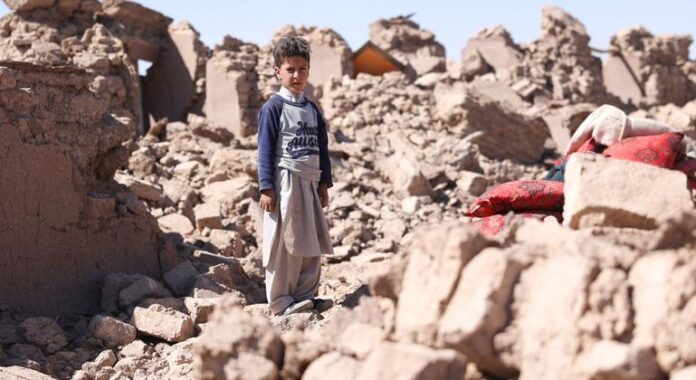
“I stand in full solidarity with the people of Afghanistan after the devastating earthquake that hit the country earlier today,” the Secretary-General said in an online message. “I extend my deepest condolences to the families of the victims and wish a speedy recovery to those injured. The @UN team in Afghanistan is mobilized and will spare no effort to assist those in need in the affected areas.”

On the ground, several UN agencies reported devastation across four eastern provinces of Afghanistan including Nangarhar and Kunar, where staff and humanitarian partners are already supporting relief efforts.

Trapped inside

Witnesses reported that the earthquake happened at around midnight local time, heightening fears that many Afghans may still be trapped under the rubble of their homes.

The tremor’s epicentre is estimated to have been only around eight kilometres (six miles) underground, causing buildings to shake in the Afghan capital, Kabul, and in Pakistan’s capital city, Islamabad, according to reports.

Among those providing assistance are the UN Assistance Mission in Afghanistan (UNAMA), the UN aid coordination office (OCHA) the UN World Health Organization (WHO) and many more.

“As reports of deaths and injuries from the #earthquake in eastern region of #Afghanistan continue to emerge, @WHOAfghanistan teams are on the ground in hospitals and health facilities, supporting the treatment of the wounded and assessing urgent health needs,” the UN health agency said.

“We are actively delivering essential medicines and supplies and deploying health teams to affected areas to help #SaveLives.”

How the UN helps

United Nations teams are on the ground in more than 160 countries, working with the authorities and partners on joint programmes in communities to promote climate action, food security, gender equality and safety of civilians.

The UN has been present in Afghanistan since 1949; the global body’s work there is driven by the Resident Coordinator, Indrika Ratwatte, as head of a country team which includes around 20 UN agencies and international organizations such as the World Bank and Asian Development Bank.

International appeal

Also on the ground to provide assistance, the UN refugee agency, UNHCR, noted that up more than 2,000 people have been likely injured in the province of Kunar alone. It is feared that the trading city of Jalalabad may have suffered a “very high death toll”, said UNHCR spokesperson Babar Baloch.

The UN agency is among those rushing lifesaving support to affected areas including medical equipment, shelter, clean water, tents and blankets.

Mr. Baloch insisted that the scale of this disaster “far exceeds the current capacity of local authorities and communities… We are appealing to the donor community globally to support urgently required relief efforts. Afghans need our support and assistance now, before it’s too late for many others.”

Aid teams will have to overcome challenging terrain to help some of the most remote communities who can only be reached on foot, OCHA noted.

It said that the de facto authorities have deployed heavy machinery to Nurgal and Chawkay districts to remove road blockages and that some sections have reportedly been reopened. Critically injured people have also been airlifted by helicopterto Jalalabad and Asadabad hospitals which are now the main referral points for victims in Nangarhar and Kunar provinces.

But “a number of isolated communities” can only be reached by foot with travel time currently up to three hours from the point of obstruction, OCHA noted, highlighting those in Dewagal Valley in Chawkay district and Mazar Valley in Nurgal district, Kunar province.

The earthquake is one of the worst to hit Afghanistan and comes less than two years since a deadly 6.3 magnitude tremor shook Herat on the other side of the country, affecting tens of thousands of people.


Source link

The UN chief calls justice and “real change” for people of African origin

0

In a message Released before the day, Mr. Guterres honored the “extraordinary” contributions of people of African origin through each sphere of human efforts. The secretary general also recognized the “long shadows” of slavery and colonialism, which include systemic racism, unequal economies and societies, and the digital divide (between those who are able to benefit from digital technology and those who do not have access).

Mr. Guterres praised the Mondial digital compact – adopted in 2024 as part of Pact for the futureWho promotes a multilateral system that reflects today’s realities and delivers everyone everywhere – passing by a step forward, citing commitments to fight against discrimination and hate speeches in digital technologies. “White supremacy and dehumanizing stories,” wrote the UN chief, “are amplified by social media and, too often, racial bias is coded in algorithms”.

“Eighty years after the Charter of the United Nations reaffirmed equal rights and dignity inherent in each human being, and sixty years since the adoption of the International Convention on the elimination of all forms of racial discrimination“, He concluded:” It has long been to correct historical wrongs. »»

The Gateway to Freedom: International Memorial to the Underground Railroad in Detroit, Michigan, dedicated in 2001.

A decade of action

This year’s international day is the first to take place during the second international decade for people of African descent, which takes place from January 1, 2025 to December 31, 2034. The decade, which embraces the theme “People of African origin: recognition, justice and development”, ” aims to underline the importance of recognizing the rights and contributions of people of African origin. Mr. Guterres called for the next ten years to lead a “real change”, in particular by working on a United Nations Declaration on Full respect for people of human rights of the African origin.

The first decade saw more than 30 countries modify their laws and policies to combat racial discrimination and solve the specific problems facing people of African origin – in some cases for the first time. THE Permanent forum on people of African originwas created, and new international days have been launched to celebrate the contributions of the diaspora, including those of women and girls.

Based on the progress made between 2015 and 2024, the second decade aims to amplify global efforts to justice and development for individuals of African origin and to create a more equitable future, in which the aspirations and rights of people of African origin are fully recognized, honored and celebrated.

Originally published at Almouwatin.com

Aid effort underway after Afghanistan quake ‘wipes out’ villages

0
Aid effort underway after Afghanistan quake ‘wipes out’ villages

“I stand in full solidarity with the people of Afghanistan after the devastating earthquake that hit the country earlier today,” the Secretary-General said in an online message. “I extend my deepest condolences to the families of the victims and wish a speedy recovery to those injured. The @UN team in Afghanistan is mobilized and will spare no effort to assist those in need in the affected areas.”

On the ground, several UN agencies reported devastation across four eastern provinces of Afghanistan including Nangarhar and Kunar, where staff and humanitarian partners are already supporting relief efforts.

Trapped inside

Witnesses reported that the earthquake happened at around midnight local time, heightening fears that many Afghans may still be trapped in the rubble of their homes.

The tremor’s epicentre was eight kilometres (six miles) underground, causing buildings to shake in the Afghan capital, Kabul, and in Pakistan’s capital city, Islamabad, according to reports.

Among those providing assistance are the UN Assistance Mission in Afghanistan (UNAMA), the UN aid coordination office (OCHA) the UN World Health Organization (WHO) and many more.

“As reports of deaths and injuries from the #earthquake in eastern region of #Afghanistan continue to emerge, @WHOAfghanistan teams are on the ground in hospitals and health facilities, supporting the treatment of the wounded and assessing urgent health needs,” the UN health agency said.

“We are actively delivering essential medicines and supplies and deploying health teams to affected areas to help #SaveLives.”

How the UN helps

United Nations teams are on the ground in more than 160 countries, working with the authorities and partners on joint programmes in communities to promote climate action, food security, gender equality and safety of civilians.

The UN has been present in Afghanistan since 1949; the global body’s work there is driven by the Resident Coordinator, Indrika Ratwatte, as head of a country team which includes around 20 UN agencies and international organizations such as the World Bank and Asian Development Bank.

More soon on this developing story…/

Source link