
The High Representative issued a statement on Palestine on behalf of the European Union.
“ `Our livelihoods have been cut, ‘said the farmers of the West Bank before the olive harvest

Like thousands of Palestinian farmers, he faces growing restrictions on Israeli forces and settlers, who have made the season of the olive harvest – from September to November – a period of uncertainty and struggle.
In recent years, the United Nations Food and Agriculture Organization (Fao) Supported olive farmers and cooperatives to improve access and management of land and water resources, introduces sustainable practices such as interlayers and help them increase food production and income using natural resources more effectively.
Olivier’s harvest is both a main source of livelihoods for thousands of families and an integral part of the Palestinian heritage.
However, attacks against harvest threaten such a heritage and hinder the work and way of life of Palestinian farmers – while settlers attacks their highest level in at least two decades, according to the United Nations Coordination Office, Ochha.
“Unprecedented” risks
“While the West Bank is preparing for Olivier’s annual harvest, the message of the farmers is clear: this year’s harvest season is marked by uncertainty, and the livelihoods are in unprecedented risk,” said Ciro Fioririllo, FAO office manager in the West Bank and Gaza Strip.
The combination of state and violence policies of settlers prevented the Palestinians from accessing tens of thousands of duals of agricultural land and pastures, a dunum equivalent to 1,000 square meters.
These restrictions have contributed to the destruction of the local economy and to the displacement of thousands of its Palestinian and farmers, under conditions which can constitute a forced transfer, according to the United Nations Human Rights Office (Ohchr).
Olives and the production of olive oil in the West Bank are the cornerstone of Palestinian culture.
“Our livelihoods have been cut. UN News.
Refused land access
“For the past two years now, we have denied access to our land,” said Yousef, a Palestinian farmer from Kufr Qaddum UN News. All lands in the northern area of the village were sealed with an iron door according to the most recent climbing between Iran and Israel.
The Yousef family has more than 300 duals of land, mainly cultivated with olive trees, located near the Israeli colony of Kedumim, in the governorate of Qalqiliya.
Since the attack on Hamas against Israel in 2023, they have had no access to their land, including during the harvest season.
“These lands cover about four to five thousand dunams. We were prevented from accessing it, “said Yousef, adding that” this problem [affected] All farmers from all the West Bank. »»
Mohammed, a Palestinian farmer from Kifl Harris, a village near the Israeli colony Ariel in the governor of Salfit, was denied access to more than 3,000 dunums of Olivier cultural lands located within the border of the regulation. This restriction has completely reduced the capacity of Kifl Harris farmers to take care and harvest their groves.
“The olive season is our main economic rescue buoy as an asbestos and employees in the public and the private sectors,” said Mohammed UN NewsAdding that Palestinian farmers had had no reason to be denied access.
“After the settlers installed a caravan on the lands of our family, access to more than 200 dunums of agricultural land, a large part planted with olive trees, was limited,” said Ahmed, a farmer from Khalet Al Luza, in Ocha.
Harassment of colonists
“We have endured all kinds of harassment of the colonists and the [Israeli] The army, ”said Kufr Qaddum.
In an advisory opinion from July 2024, the International Court of Justice (Icj) concluded that the continuous presence of Israel in the occupied Palestinian territory is illegal and that it is forced to put an end to its illegal presence “as quickly as possible”.
The settlers installed a caravan on a Palestinian family in Khalet Al Luza, in the West Bank.
“The settlers’ attacks have affected all the farmers. Me, personally, I was prevented from reaching my land, and we were subjected to attacks repeated by settlers and the army, including the theft of olive crops, theft of olive harvesting equipment, vehicle vandalism, reduction of olive trees and threats, “said Yousef.
In a statement published on July 30, the United Nations Human Rights Office (OHCHC) warned of the climbing of the violence of Israeli colonists “with acquiescence, support and, in some cases, the participation of Israeli forces.
He said the Israeli government “Policy and legislative actions seem to aim for certain regions of the West Bank of the Palestinian population, making the colony business progress and consolidating the annexation” of large parts of the West Bank.
“We urge you to work with international institutions by peaceful means to obtain a result that allows us to access our land in complete safety and to harvest the fruits of our olives and trees,” argued Yousef.
“With our resource partners, FAO is committed to continuing to support the local olive culture, which is as important for livelihoods and food security as for Palestinian culture and tradition,” said Fiorillo.
*The names of this story have been modified to protect the identity of those presented.
Originally published at Almouwatin.com
How HIV Uses T Cells to Hide in the Gut
Antiretroviral treatments for HIV (human immunodeficiency virus) have been extremely successful in extending life expectancy and reducing transmission.
Ukraine: Toddler among four children killed in Russia’s attacks on Kyiv
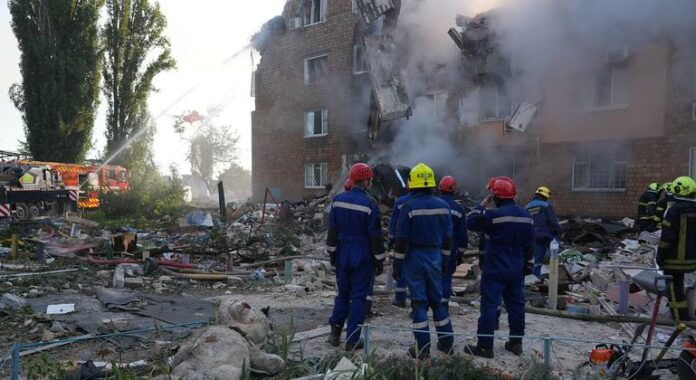
The youngest victim of the bombing raid was two-and-a-half years old, according to the UN Children’s Fund, UNICEF, which released video footage showing smoke billowing from a Kyiv apartment block with a massive hole where its roof had been.
Leading condemnation of the attacks, the UN Secretary-General said that targeting civilians and civilian infrastructure violated international humanitarian law. [They] are “unacceptable and must end immediately”, followed by a ceasefire resulting in a “just, comprehensive, and sustainable peace in Ukraine”, he insisted, in a statement issued by his Spokesperson.
Eyewitness testimony
Speaking to UN News after visiting the shattered building and its residents, UNICEF Representative, Munir Mammadzade, insisted that nowhere in Ukraine is safe today. The air-raid alert in Kyiv lasted almost 12 hours, he noted.
The senior UN official also condemned the “continuous attacks” reportedly involving ballistic missiles and drones by Russia, which launched a full-scale invasion of Ukraine in February 2022.
“I’m just back from one of the sites that were impacted, severely…and still, the search and rescue operation is continuing,” he said, adding that clothes, toys and shoes lay strewn across the pavement of the impacted residential area in the capital’s Darnytskyi suburb. “Across the city, there were four kids confirmed killed and more than 10 injured; most likely these numbers will go up,” he added.
Media reports indicated further damage to civilian infrastructure including Ukraine’s railways. Russian attacks have also continued closer to the front line, targeting key energy infrastructure ahead of winter, Mr. Mammadzade warned.
Winter is main threat
In Kyiv and in frontline areas, plummeting temperatures are “the biggest challenge”, the UNICEF senior official insisted, in an appeal to donors and partners to support the UN agency’s winterization plan by contributing more to its Ukraine humanitarian fund, which faces a 40 per cent funding shortfall.
People within 10 kilometres (around six miles) of the front line “require immediate support”, the UNICEF official said, so that “families and children can survive and most importantly, have their livelihoods protected”.
Back to school
The development comes as the country’s children prepare to return to school against a backdrop of ever-present air-raid sirens that are “becoming kind of a norm”, even if the impact of the war on many youngsters’ mental health is as serious as it is common.
“We know that even if war ends today, [it] will be for generations to come,” Mr. Mammadzade explained, pointing to sudden mood swings linked to post-traumatic stress and feelings of hopelessness among children he has met in frontline areas including Donetsk, Sumy and Kharkiv.
According to UNICEF a kindergarten was also reportedly damaged in the latest attacks.
“What they basically fear the most is about their lives and unfortunately, quite often, they mention to us that they don’t have dreams or any hopes,” the UN agency official continued. “What they only need is peace – and this peace to happen as soon as possible – so that they can go back to normalcy.”
In his renewed call for a ceasefire, the Secretary-General insisted that it should fully uphold Ukraine’s “sovereignty, independence and territorial integrity, within its internationally recognized borders, in line with the UN Charter, international law and relevant UN resolutions”.
Informal meeting of foreign affairs ministers: press remarks by High Representative Kaja Kallas upon arrival

Informal meeting of foreign affairs ministers: press remarks by High Representative Kaja Kallas upon arrival
AI platform designs molecular missiles to attack cancer cells
A new method can produce custom-designed proteins in just 4-6 weeks that can arm the T cells of
Gaza death and destruction ‘without parallel in recent times’: Guterres
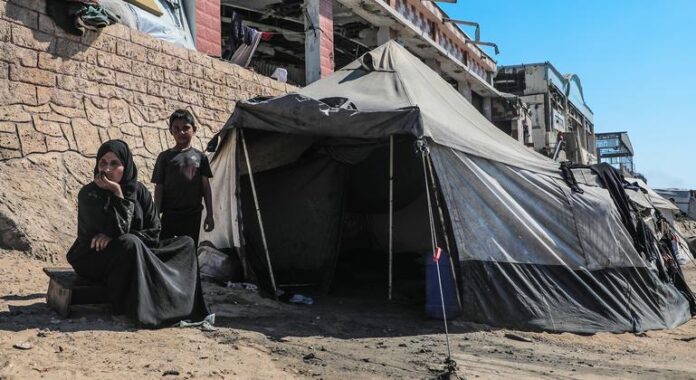
“Israel’s initial steps to militarily take over Gaza City signals a new and dangerous phase,” he told journalists in New York, warning against the devastating consequences.
“Hundreds of thousands of civilians – already exhausted and traumatized – would be forced to flee yet again, plunging families into even deeper peril. This must stop.”
‘Endless catalogue of horrors’
Mr. Guterres was speaking ahead of a Security Council meeting on the situation in Haiti but stopped to brief reporters on the “unfolding tragedy that is Gaza”, where “yet more unconscionable Israeli strikes” have occurred.
Incidents include the two airstrikes on Nasser Hospital in Khan Younis earlier this week which killed civilians, including medical personnel and journalists, “all with the world watching”.
The Secretary-General said “these attacks are part of an endless catalogue of horrors” and called for accountability.
“Gaza is piled with rubble, piled with bodies, and piled with examples of what may be serious violations of international law,” he said.
“Hostages taken by Hamas and other groups must be released and the atrocious treatment they have been forced to endure must stop. Civilians must be protected.”
Unparalleled destruction and famine
Mr. Guterres stressed that “the levels of death and destruction in Gaza are without parallel in recent times”.
Moreover, “famine is no longer a looming possibility – it is a present-day catastrophe.”
People are dying from hunger, yet Gaza’s food, water and healthcare systems have been systematically dismantled.
Israel’s obligations
“These are the facts on the ground. And they are the result of deliberate decisions that defy basic humanity,” he said. “Israel, as the occupying power, has clear obligations.”
He said Israel must ensure the provision of food, water, medicine, and other essentials. This is in addition to agreeing to and facilitating far greater humanitarian access to Gaza as well as protecting civilians and civilian infrastructure.
Mr. Guterres said the International Court of Justice (ICJ) has given binding provisional measures which must be implemented in full and immediately.
They include the obligation to take all steps to ensure unfettered humanitarian and medical assistance to Palestinians throughout the Gaza Strip without delay and in full cooperation with the United Nations.
UN staff killed, aid efforts blocked
Meanwhile, the UN and partners are doing all they can, he said. This is often at great personal risk, as tragically 366 UN personnel have been killed.
“Day after day, our efforts are being blocked, delayed, and denied,” he said. “This is unacceptable.”
Settlement expansion in the West Bank
Mr. Guterres also addressed the situation in the West Bank, describing it as “profoundly alarming”.
He said Israeli military operations, settler violence, demolitions, and discriminatory policies are driving displacement and deepening vulnerability.
Furthermore, the relentless expansion of settlements is fracturing communities and cutting off access to vital resources.
The Israeli authorities recently approved of a plan for the construction of thousands of settlements in the E1 area. He said this would effectively separate the northern and southern West Bank, representing “an existential threat to the two-state solution” between Israelis and Palestinians.
“I repeat: the Israeli settlements in the occupied West Bank including East Jerusalem have been established – and are being maintained — in violation of international law,” he stressed.
“Israel must cease such actions and comply with its obligations.”
‘No more excuses’
The Secretary-General concluded his remarks by emphasizing that there is no military solution to the conflict.
“I appeal once again for an immediate and permanent ceasefire, unfettered humanitarian access across Gaza, and the immediate and unconditional release of all hostages,” he said.
“Starvation of the civilian population must never be used as a method of warfare. Civilians must be protected. Humanitarian access must be unimpeded,” he added, ending with a plea for “No more excuses. No more obstacles. No more lies.”
Ukraine: “diplomatic momentum” in danger in the midst of Russian strikes on a large scale

Miroslav Jenča, deputy secretary general for Europe, Central Asia and the Americas, spoke a day after the last wave of Russian air strikes across the country, with at least 23 people killed in the capital, kyiv.
“The number of deaths and the devastation of the dead caused by the intensification of the fighting during the summer, Contrary to significant efforts in recent months To give diplomacy a chance, “he said.
Young lives lost
According to Ukrainian officials, Russia launched 598 drones and 31 missiles across Ukraine during the night between August 27 to 28.
Four children aged two to 17 were one of those killed in kyiv and 64 people were injured. Several buildings have been damaged in 33 locations in the 10 districts of the city.
“Most of the deaths took place in the Darnytskyi district in kyiv, where a missile has struck a five-story residential building, the demolishing of the first on the fifth floor,” he said.
Civil victims were also reported in five other regions – Chernihiv, Kharkiv, Zaporizhzhia, Donetsk and Kherson – and a train depot in the Vinnytsia region would have been struck.
Dangerous climbing
Mr. Jenča said these strikes ” are only the last of the brutal climbing of air attacks across the country. “”
The Russian Invasion on a large scale of Ukraine began in February 2022. In July, the United Nations Human Rights Office, Ohchrrecorded growing civilian victims in 18 regions and the capital.
Last month “set A new tragic record for monthly victims», With 286 killed and 1,388 injured – the greatest number since May 2022, said the senior United Nations.
The impact of the conflict was also felt by civilians in Russia. Local authorities have made victims there, especially in the border regions of Belgorod, Kursk and Bryansk.
Russian officials also pointed out that a fire had broken out after a Ukrainian drone had been shot down near the Kursk nuclear power plant.
Although the UN is unable to check these reports, The growing impact of conflict on civilians in Russia is worryingHe said, reiterating the condemnation of attacks on civilians and civil infrastructure.
Winter support
“We are also concerned about the impact of widening and climbing fighting on the humanitarian situation in Ukraine when we enter the fourth winter of the war on a large scale,” he continued.
He underlined the total commitment of the UN to support civilians, adding that preparations for targeted winter support are underway for 1.7 million people, although more funding for donors are urgent.
Diplomatic efforts have been welcome
On the diplomatic level, he said that the secretary general had welcomed the recent efforts by the American president. This includes separate meetings this month between Donald Trump and Vladimir Putin, Alaska, and another between the Presidents of the United States and Ukraine and European leaders in Washington.
The UN also hosted previous cycles of direct talks between senior Ukrainian and Russian officials held in Istanbul between May and July, and congratulated the exchanges of prisoners who continued to take place accordingly.
Call for de -escalation
“However, as large -scale attacks against civilians persist and civilian victims increase,” The current diplomatic impetus risks vanishing quickly if the accent placed on the need to end violence and to engage in real talks of peace is not maintained“He said.
“We therefore urge all the people concerned with urgently defuse the situation and to redouble the efforts to create conditions for inclusive diplomatic efforts towards a cessation of hostilities and a fair peace.”
Mr. Jenča concluded his remarks by renewing the secretary general’s call for a complete, immediate and unconditional ceasefire.
Originally published at Almouwatin.com
The teachers are the “guards of our future”, explains the deputy chief of the UN

Their work, said the deputy secretary general of the UN Amina MohammedEast ” The beating heart of educationThe cornerstone of sustainable development and the guards of our future. »»
Speaking Thursday at the opening of the Unesco World Summit on Teachers In Santiago, Chile, Ms. Mohammed called for urgent global action to approach the in -depth crisis of teachers.
“Let us honor their influence on the politicians and the respect that teachers need, and future generations deserve,” she urged, establishing a five-point plan to support educators and strengthen education systems around the world.
A crisis with global consequences
The deputy chief of the UN warned that the world is faced with a “crisis of deepening of teachers” which threatens progress through the Sustainable development objectives.
“We fail our teachers,” she said, highlighting a global deficit of 44 million educators needed to achieve universal education objectives by 2030.
She described the crisis as “a slow combustion emergency” which undermines the learning results, expanding inequalities and weakening the social fabric of communities. “We have to respond to these truths,” she said.
No actor can fix this alone
UNESCO’s general manager Audrey Azoulay also addressed the summit, focusing on the complexity of the challenge. “No actor can fill the shortcomings we see, and that’s what brings us together here in Santiago,” she said.
Ms. Azoulay highlighted the multiple causes behind the crisis: weak and often delayed wages, an aging teachers’ workforce, an increase in school inscriptions without correspondence resources and persistent gender inequalities-especially in STEM fields. Tacking these problems, she said, requires “level heads and clear reflection”.
The numbers are austere
To achieve the objectives of global education by 2030, the world must recruit 44 million teachers – more than double the population of Chile. However, instead of progress, the gains are reversed.
“Too many young teachers leave in their early years,” said Mohammed, citing a low salary, heavy workloads and a lack of professional development. “In the end, we ask for teachers’ impossible: building the future without the tools, confidence and conditions they need.”
Funding for the future
The cost of recruiting the necessary teachers by 2030 is estimated at $ 120 billion per year. But the financing of education fails.
“More than 40% of the world’s population lives in countries where governments spend more on debt interests than for education or health,” she warned.
Education aid should drop by 25% between 2023 and 2027, with a fall of 12% already recorded last year.
Deputy Secretary General, Amina Mohammed, pronounces remarks at the World Summit on Santiago, Chile teachers.
Five urgent action zones
Ms. Mohammed presented a five -point plan to combat the global teachers’ crisis:
- Erect the profession: Implement the recommendations of the high -level panel – fair salary, stable contracts, safe work places, manageable class sizes, investment in clear career updates and career paths.
- Financial education: Make education a higher budget priority. Develop internal funding, continue to relieve debt and plan a global fund for teachers in an emergency.
- Advance gender equality: Recognize and raise women’s leadership in a profession dominated by women but often lacking in female decision -makers.
- Support digital transformation: Train teachers to direct inclusive digital learning, especially since AI reshapes the labor market. Equip classrooms and prioritize the human agency.
- Protect teachers in crisis areas: From Gaza to Sudan and Ukraine, educators risk their lives. “We owe them more than admiration – we owe them unwavering protection, resources and support.”
From the summit to action
Ms. Mohammed urged managers to transform the summit results into concrete commitments before the World Social Summit in Doha in November.
She proposed:
- National teachers compact with objectives related to time on recruitment, retention and remuneration.
- A financing track which links the exchange of aid and debt to teacher investments.
- A digital pact led by teachers to establish standards for AI and ED-TECH, with funded training.
“Quality education is the foundation of everything we hope to achieve with the objectives of sustainable development,” she concluded. “Without teachers, none of this is possible.”
Originally published at Almouwatin.com
