Sunday, April 12, 2026
Home Blog Page 249

From the ground up: young people and women driving change in Tanzania

0
From the ground up: young people and women driving change in Tanzania

Tanzania’s climate future will not be decided in boardrooms or by short-term projects it will be shaped by the young leaders already driving change in their communities. 

Since 2023, Climate KIC has partnered with seven youth organisations, committing to multi-year support that provides education, skills development, and leadership training. This approach rejects the quick-win mentality, recognising instead that sustainable transformation demands patient capital and long-term partnerships. What’s needed now is to scale this vision: creating national-level funding streams, simplifying access, and rewriting policies so that youth- and women-led initiatives are no longer sidelined, but formally recognised as the foundation of climate governance.

The NGO filling the gaps

Tanzania’s age structure is both a reality and a call to action. With the majority of our population under 30, everything we do at ECCT is grounded in the understanding that youth are not a side note, they are the centre of our climate future

Lucky Michael, Founder and Executive Director of the Environmental Conversation Community of Tanzania

At Environmental Conservation Community of Tanzania (ECCT), programmes like EcoWear are proving that innovation doesn’t require wealth, just vision. Young women known as “Eco Warriors” transform textile waste into sustainable fashion, using creativity as a tool for both climate advocacy and economic resilience. Despite limited funding and access to formal markets, they’ve built local networks, leveraged social media for outreach, and partnered with community groups to extend their reach.

Laurel Kivuyo, environmental specialist and co-founder of Climate Hub Tanzania, was raised as a Maasai girl in Arusha and has turned inherited resilience into policy action. Climate Hub Tanzania aims to fuse traditional knowledge with policy and innovation while giving youth and women platforms to drive change. The organisation bridges activism and policy, moving from awareness campaigns to influencing national climate strategies. Through their climate literacy programme, young leaders like Naomi Koinase are integrating indigenous knowledge with environmental conservation, inspiring a new generation of Maasai girls to become climate leaders.

Vicent Laurent, Executive Director of YAWE (Youth and Women Emancipation), focuses on the intersection of disadvantages young women face. YAWE shifts paradigms by training young leaders to connect climate science with daily life, building confidence and entrepreneurial literacy. The organisation recognises that meaningful change requires both individual capacity-building and systemic transformation.

Youth and women at climate core

In Tanzania, youth aren’t a niche cohort, they’re the majority: seventy-seven per cent of Tanzania’s population is under the age of 35. And according to the Notre Dame Global Adaptation Initiative (ND-GAIN) Index Tanzania is one of the countries that is most vulnerable to climate change (ranked 147th out of 187 total countries). Severe and frequent droughts and floods are major threats to Tanzanian economic strength and food security because rain-fed agriculture makes up a large portion of the country’s income. Tanzania’s National Climate Change Strategy (2021–2026) recognises the urgency of adaptation, with objectives on agriculture, water, and energy. Yet, resilience efforts are still in their  infancy, and the strategy gives little detail on how youth and women will be included in implementation.

This gap between policy intention and demographic reality represents a significant disconnect. While climate change disproportionately affects women and youth, formal decision-making structures often exclude them. Women shoulder 80 per cent of food production globally, perform nearly three times more unpaid care work than men, and rely heavily on natural resources that climate change is rapidly depleting. When scarcity deepens, so does their workload. And, most distressingly, nearly 80 per cent of those displaced by climate-related disasters are women and girls. These realities are rooted in structural inequalities that deny women equal rights to land, fair wages, social protections, and decision-making power. This happens especially in contexts where the majority work in the informal sector without legal safeguards. Climate action without a gender lens ignores this truth, and risks reinforcing the very inequities it must dismantle.

This could be a missed opportunity because even though women and youth are the most vulnerable, they are powerful agents of change in innovation and climate resilience.

The systemic barriers

The systemic challenges these leaders face are significant. Limited access to capital tops the list, followed by social norms that undervalue women’s leadership and policy gaps that fail to prioritise youth- and women-led initiatives. For young women, these challenges compound with gendered expectations around caregiving and mobility restrictions.

These barriers create cycles where opportunities, resources, and influence remain concentrated among established groups, while those most affected by climate change (and often the most innovative in responding to it) struggle for recognition and support.

The NGOs in action

Despite these obstacles, tangible change is happening. ECCT’s She Leads Green programme has alumni turning rooftops into urban gardens and launching grassroots waste management efforts that directly respond to local environmental needs. Through Climate Hub Tanzania’s network, Edward Jacob founded the Kilimo Sustainable Initiative, applying climate-smart farming techniques to help smallholder farmers improve food security while adapting to changing conditions.

In Shinyanga, YAWE’s trained leaders now hold seats on natural resource governance committees: spaces where youth voices were once unheard. Through climate education, environmental governance training, and grassroots organising, they’ve moved from exclusion to invitation. They’re now called upon to speak at community planning meetings, where they raise awareness about climate risks and advocate for sustainable land use.

Another Climate Hub Tanzania graduate, Naomi Koinase, a young Maasai woman from Arusha, now leads the Omom Maasai Community Foundation, integrating indigenous knowledge with environmental conservation. These aren’t just inspiring stories, they’re strategic demonstrations of what happens when youth and women gain access to knowledge, tools, and support systems.

Discover more

Source link

Essential Steps Towards A Lasting Education In Values Approach

0
Essential Steps Towards A Lasting Education In Values Approach

Over the years, educators have recognised that a lasting education in values is vital for developing responsible individuals. They must implement effective strategies that promote moral reasoning and ethical behaviour, ensuring that students not only acquire knowledge but also uphold integrity and respect in their interactions. This approach fosters a supportive environment where they can grow and thrive, enabling them to contribute positively to society. By following a structured framework, educators can instil values that resonate throughout their students’ lives, shaping them into compassionate, well-rounded citizens.

Cultivating Core Values Through Education

Effective education in values not only prepares students academically but also shapes their character. By embedding core values into the educational framework, schools create environments that encourage respectful behaviour, empathy, and social responsibility. This holistic approach nurtures well-rounded individuals, ready to contribute positively to society.

Identifying Fundamental Values

Recognising the fundamental values that will guide educational practices is important. Schools often collaborate with stakeholders, including teachers, parents, and community leaders, to identify values such as integrity, respect, and compassion. These discussions ensure that the selected values resonate with the community and support students’ overall development.

Integrating Values into the Curriculum

Integrating values into the curriculum transforms traditional teaching. This process requires thoughtful planning, where educators weave values throughout lessons and activities, ensuring that subjects like literature and history reinforce the importance of ethics and morality. Class discussions, project-based learning, and community engagement further strengthen the connection between academic content and core values.

Integrating values into the curriculum involves utilising diverse teaching strategies that reach students on multiple levels. For instance, using literature that exemplifies character traits encourages critical thinking about ethical dilemmas. In science classes, discussions on environmental ethics can foster a sense of responsibility towards the planet. Implementing service-learning projects provides students with practical opportunities to embody these values in their communities. Schools can also offer professional development for educators, equipping them with strategies to model and teach values effectively across all subjects.

Engaging Stakeholders: The Power of Community Involvement

Community involvement serves as a cornerstone for fostering a resilient educational environment. By actively engaging various stakeholders, schools can harness the collective strength of the community, ensuring a broader support network for promoting values. Active participation from parents, local organisations, and community leaders creates a robust framework that enriches the educational experience and reinforces the core values vital for student development.

Mobilising Parents and Guardians

Mobilising parents and guardians enhances the values education framework significantly. Engaging parents through workshops and educational seminars fosters a shared vision and understanding of the importance of values. For instance, schools can organise parental involvement days where families participate in value-based activities, strengthening the connection between home and school and ensuring consistent messaging regarding values.

Collaborating with Local Organisations

Collaboration with local organisations can drive impactful initiatives that enrich educational programmes. Schools benefit from partnerships that offer resources, expertise, and volunteer support, thereby broadening opportunities for students.

Local organisations often possess a wealth of knowledge and resources that can significantly enhance values education. For example, partnerships with non-profits focused on social justice can introduce students to real-world applications of values such as empathy and respect. Community service projects and mentorship programs, facilitated by these organisations, provide students with tangible experiences that reinforce classroom learning. By pooling resources, schools and local organisations can create comprehensive programmes that address specific community needs while instilling character and ethics in students.

The Role of Educators as Value Ambassadors

Educators play a pivotal role as value ambassadors, shaping students’ moral and ethical foundations. They not only impart knowledge but also model principles such as respect, integrity, and compassion in their interactions. This influence extends beyond academic subjects, as educators instil a sense of social responsibility in their students, fostering a generation that advocates for positive change in society. Their commitment to values ensures that education transcends the classroom, cultivating informed and conscientious citizens.

Teacher Training and Development

Effective teacher training programmes are vital for equipping educators with the skills necessary to promote values in their teaching practice. Training should include workshops on ethical leadership, conflict resolution, and cultural sensitivity, ensuring educators can confidently handle diverse classroom situations. Continuous professional development opportunities strengthen their capacity as value ambassadors, enabling them to adapt their methods to foster an inclusive learning environment.

Creating Value-Centric Classroom Environments

Value-centric classroom environments are designed to promote mutual respect and collaboration among students. By integrating values into daily routines and interactions, educators cultivate a community that prioritises empathy and accountability. This approach not only enhances student engagement but also encourages peer support and positive behaviour, creating a safe space for learning and growth.

Creating value-centric classroom environments involves implementing specific strategies, such as establishing class agreements that outline respect and collaboration expectations. Incorporating discussions around real-world ethical dilemmas encourages students to reflect on their values deeply. Additionally, utilising cooperative learning activities fosters a sense of belonging and accountability, as students learn to appreciate diverse perspectives. Regularly celebrating achievements related to values further reinforces their importance, encouraging students to internalise these principles for lasting impact.

Measuring the Impact of Values Education

Assessing the effectiveness of values education programmes requires a multifaceted approach that embraces both qualitative and quantitative measures. Schools and organisations often gather data through surveys and interviews, while also analysing behavioural changes and academic performance to gauge the influence of values education on students’ lives.

Quantitative vs Qualitative Assessment

Quantitative assessments provide measurable evidence of values education’s impact, often through standardised tests and statistical analysis. In contrast, qualitative assessments involve subjective insights from students, teachers, and parents, which reveal deeper emotional and intellectual growth that numbers alone cannot capture. Both methods are crucial in providing a comprehensive overview of the programmes’ effectiveness.

Long-term Benefits for Students and Society

Engaging in values education yields substantial long-term benefits not only for students but also for society at large. Research indicates that individuals who undergo values education are more likely to exhibit enhanced social responsibility, empathy, and ethical decision-making skills, fostering healthier communities.

Long-term benefits manifest in various ways. Students equipped with strong values are less likely to engage in anti-social behaviour and more likely to contribute positively to society, with studies showing a correlation between values education and reduced crime rates. Additionally, these individuals often assume leadership roles, driving social change and promoting ethical practices in their professional spheres. By instilling a sense of civic duty and ethical awareness, values education cultivates a generation that is not only academically proficient but also socially responsible, thereby enriching the fabric of society as a whole.

Implementing a Progressive Values Curriculum

A progressive values curriculum integrates ethical principles into the core of educational practices. By aligning the curriculum with the values discussions and addressing contemporary societal issues, educators ensure that students grasp the significance of values in their daily lives. They construct a cohesive framework that encourages critical thinking and reflection, promoting a culture of empathy and social responsibility.

Designing Projects with Real-World Impact

Projects that focus on real-world impact allow students to engage deeply with their learning while applying values in practical contexts. Such initiatives might include community service projects, where students collaborate to tackle local challenges, or sustainability initiatives that advocate environmental stewardship. Through these projects, students not only learn about values but also experience their application in meaningful ways.

Adapting Values Teaching to Diverse Learning Styles

Adapting values teaching to cater to diverse learning styles ensures that all students can engage with and internalise core principles effectively. Incorporating visual, auditory, and kinesthetic activities resonates with different learners. For instance, role-playing scenarios can benefit kinaesthetic learners, while discussions and readings support auditory learners. By providing varied approaches, educators facilitate a more inclusive environment where every student can thrive.

Educational research reveals that students learn best when they encounter material tailored to their preferred learning styles. By integrating multimedia resources, hands-on activities, and group discussions, teachings resonate more profoundly. For example, students who struggle with traditional teaching methods may flourish in environments where they can express values through art, drama, or debates. Such versatility not only enhances engagement but also ensures that students perceive the relevance of values in their own lives, fostering a deeper understanding of moral responsibilities in a dynamic world.

To wrap up

Following this, he, she, and they recognise that establishing a lasting education in values approach requires systematic integration of ethical principles within curricula, fostering an environment that encourages critical thinking and reflection. It is crucial to engage all stakeholders, including educators, parents, and the community, in promoting these values consistently. By prioritising experiential learning opportunities and cultivating a supportive atmosphere, they will be better equipped to instil respect, empathy, and responsibility in future generations.

Source link

Pakistan floods leave villages cut off as monsoon devastation continues

0
Pakistan floods leave villages cut off as monsoon devastation continues

Aid agencies are continuing to work tirelessly to reach the hardest-hit areas.

The National Disaster Management Authority (NDMA) said nearly 800 people have died since late June – almost three times the toll during the same period last year.

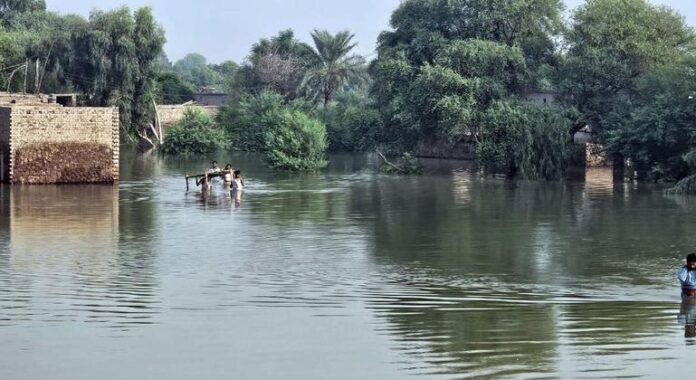
Khyber Pakhtunkhwa province has been hardest hit, where flash floods and landslides swept away homes and schools in mountainous districts, cutting off entire villages and communities.

Punjab – the country’s most populous province – is also on high alert as rising waters on the Sutlej, Ravi and Chenab rivers threaten downstream communities. Authorities fear that upstream water levels and near-full reservoirs could trigger further flooding in the coming days.

Over 200 children have lost their lives in the floods across Pakistan since June. Behind every number is a child’s life cut short and a family left grieving..

Glacier outbursts compound crisis

In Gilgit-Baltistan, so-called glacier lake outburst floods (GLOFs) have added another layer of devastation – destroying homes, water systems and power infrastructure in remote valleys.

These floods occur when heavy rains or rising temperatures cause glacial lakes to burst through natural barriers, suddenly releasing vast amounts of water and debris. With little warning, they are often catastrophic.

Experts warn that climate change is accelerating glacial melt in the Himalaya–Hindu Kush region, increasing the number and size of unstable lakes and heightening risks of such disasters.

Over a million affected

The humanitarian toll is widespread, with more than one million people affected nationwide.

Many families are sheltering with host communities rather than in relief camps, citing concerns over livestock and schooling. Health workers are reporting surges in malaria, fever and skin infections, stretching fragile health services.

Despite major efforts led by federal and provincial authorities, supported by the UN and humanitarian partners, critical gaps remain.

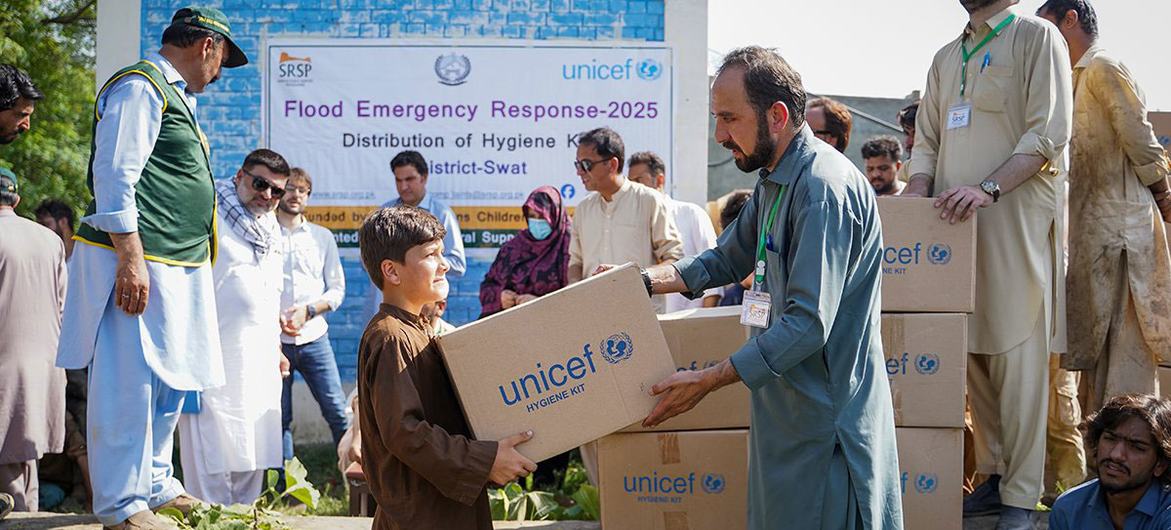
With the Government of Pakistan, UNICEF teams are delivering tents, blankets, medicines, drinking water and hygiene kits to families in need.

With the Government of Pakistan, UNICEF teams are delivering tents, blankets, medicines, drinking water and hygiene kits to families in need.

Communities cut off

The most acute needs are in remote mountain areas, where landslides block access and residents face worsening disease, hunger and water shortages, according to the UN aid coordination office, OCHA.

The UN Children’s Fund (UNICEF) said children face heightened risks, with schools damaged, safe water scarce and protection needs rising. The agency has dispatched hygiene kits and helped restore key water supplies.

The World Health Organization (WHO), for its part, is leading disease surveillance and control operations, in a bid to contain outbreaks.

Source link

EIB approves €16 billion in new financing, including additional support for energy security and housing in Ukraine

0
EIB approves €16 billion in new financing, including additional support for energy security and housing in Ukraine

EIB
  • Financing the replenishment of Ukraine’s gas reserves.
  • €5.4 billion approved to scale up Europe’s energy infrastructure.  
  • New securitisation and guarantee facility to foster European capital market integration and competitiveness.

The European Investment Bank (EIB) Board of Directors approved €16 billion in new financing to support Ukraine’s energy security and resilience, strengthen the green transition in Europe, drive competitiveness and urban development and reinforce global partnerships.

The Board approved €5.4 billion in new financing for Europe’s green transition and energy security, including an offshore wind farm in the Baltic Sea, small-scale photovoltaic plants and battery storage systems in Italy, the modernisation and expansion of electricity grids in Germany, renewable energy projects in France and further energy efficiency improvements throughout the European Union. Additionally, the EIB backed water and wastewater management in Belgium, urban development in Croatia and Poland, new schools in France and Lithuania and sustainable transport solutions in France, among other projects.

With a new securitisation and guarantee facility, the EIB aims to unlock over €13 billion through financial intermediaries to finance small and medium-sized enterprises (SMEs). The facility involves the packaging of loans and debt held by banks and financial institutions into products that investors can buy. It allows banks to free up capital for new loans to households and businesses while enabling credit risk‑sharing.

The operation is a demonstration of the EIB Group’s leading role in Europe’s securitisation market, helping to unlock capital for SMEs, boosting competitiveness and contributing to the integration of Europe’s capital markets and the Savings and Investments Union.

Ukraine

On Ukraine, the EIB Board approved a €500 million package to bolster the country’s energy security and support affordable housing. The EIB will back state-owned Ukrainian energy utility Naftogaz as an urgent measure to finance the replenishment of the country’s natural gas reserves ahead of winter and following extensive damage caused by Russian attacks.

“The EIB Group has achieved cruising speed in delivering for Ukraine’s most urgent needs, including in the area of energy security,” said EIB Group President Nadia Calviño. “The package approved today shows our unwavering commitment and support to the country”.

As part of its work for Ukraine’s energy transition, Naftogaz has pledged to reinvest an amount equivalent to the EIB loan in renewable energy and decarbonisation projects, with the EIB providing technical assistance to support the company’s green transition. The European Commission will back this loan through a guarantee under the EU Ukraine Investment Framework.

In addition, the EIB will support social and affordable housing across Ukraine, a sector severely affected by Russian attacks. The pilot phase will focus on the development of 1,600 housing units, supported by technical assistance and additional resources under the Ukraine Investment Framework.

Global partnerships

To strengthen EU global partnerships, the Board approved projects supporting climate and gender initiatives in Brazil’s Amazon region, advancing green energy projects in Mauritania, improving water supply and security in Pakistan and supporting Nigerian small businesses in the green and digital economy.

Background information  

The European Investment Bank (ElB) is the long-term lending institution of the European Union, owned by its Member States. The EIB finances investments in eight core priorities that support EU policy objectives: climate action and the environment, digitalisation and technological innovation, security and defence, cohesion, agriculture and the bioeconomy, social infrastructure, a stronger Europe in a more peaceful and prosperous world and Europe’s capital markets union.   

The EIB Group, which also includes the European Investment Fund (EIF), signed nearly €89 billion in new financing for over 900 high-impact projects in 2024, boosting Europe’s competitiveness and security.    

Approximately half of the EIB’s financing within the EU targets cohesion regions, where per-capita income is below the EU average, while almost 60% of annual EIB Group investments support climate action and environmental sustainability.

High-quality, up-to-date photos of the organisation’s headquarters for media use are available here.  

Source link

World News in Brief: more deaths in Ukraine, long detentions in Egypt, AI governance, American post rates

0

Since Friday, 11 civilians have been killed and more than 90 injured, according to the authorities. Energy schools and infrastructure have also been damaged.

The Donetsk region in eastern Ukraine was the most affected, the city of Kostiiantynivka, which is particularly struck.

Six other regions – Sumy, Kharkiv, Kherson, Mykolavi, Dnipro and Zaporizhzhia – have also been affected, with houses, schools, ambulances and power infrastructure in front line areas with damage.

In response, help organizations have distributed repair equipment, hot meals and drinks, in addition to providing psychological support.

Faculty families

Meanwhile, humanitarian workers continue to support people fleeing hostilities in the Donetsk and Dnipro regions.

Ochha said More than 2,000 people, including many children, were evacuated from Donetsk between Friday and Monday.

“With increasing pressure on the public transport site in the city of Pavlohrad, the assistance authorities and organizations have opened new facilities in the Voloske village, in the Dnipro region, and the city of Lozova, Kharkiv region,” said the agency.

Evacués receive medical and psychosocial support, hot meals, water and hygiene supplies, and can register for cash aid before moving on to safer areas.

At the same time, humanitarian workers also support arrivals in other parts of Ukraine.

Egypt has asked to end the “rotation” detention practices targeting government criticisms

The United Nations Human Rights Office, Ohchrcalled Tuesday that Egypt puts an end to a practice known as “rotation” which allows the detention of government criticisms to be arbitrarily maintained and for prolonged periods even after having served their sentences or completed maximum detention before the trial.

Defenders of human rights, activists, lawyers, journalists, peaceful demonstrators and political opponents are among those who have been targeted.

The last case concerns the poet Galal El-Behairy, who was arbitrarily detained after finishing a prison sentence on July 31, 2021 for having written songs and poetry criticizing the government.

He has since faced similar accusations in two different cases under the law against terrorism and the penal code. The latest accusations were brought on August 19, 2025, extending his detention for at least 15 more days.

Removal of critical voices

The rotation “has become a tool by which the Egyptian government represses people perceived as criticism of its policies,” Ohchr spokesman Thameen Al-Keetan told journalists in Geneva.

“Most people targeted by the rotation” should not have been detained or imprisoned in the first place, because the accusations against them are often linked to the exercise of their legitimate rights to freedom of expression and the peaceful assembly, “he said.

Ohchr urged the Egyptian authorities to end the practice immediately and to release all those who were subjected to it.

The UN announces two new mechanisms to promote cooperation on AI governance

The UN secretary general welcomed the decision Tuesday to establish two new mechanisms to promote international cooperation on the governance of artificial intelligence (AI).

The creation of the United Nations independent international scientific panel on AI and global dialogue on AI governance marks a significant step in global efforts to exploit the advantages of technology while responding to its risks.

Development underlines the commitment of the Member States to rely on The world digital compact adopted as part of The Pact for the future Last September, UN spokesperson Stéphane Dujarric said journalists in New York.

Promote inclusion, inform decision -making

He said global dialogue will provide an inclusive platform within the UN for states and stakeholders in order to discuss critical issues concerning AI confronted with humanity today.

The scientific panel will serve as a crucial bridge between research and the development of advanced AI policies, he added.

“By offering rigorous and independent scientific assessments, this will help the international community anticipate emerging challenges and make informed decisions about how this transformative technology governing us,” he said.

The secretary general will soon launch an appeal open to appointments for the scientific panel, which will present his annual reports to the Global Dialogue on IA Governance will take place in July 2026 in Geneva and 2027 in New York.

In the meantime, all stakeholders are asked to “support this historical initiative and contribute to the construction of a future where artificial intelligence serves the common good of all humanity”.

This post office was officially opened on September 4, 1981 in the Karagwe district, Kagera region in Tanzania

The UN Postal Agency strives to continue to advance the plans of the American deadline in rights franchise

The United Nations postal agency indicates that it takes all possible measures to maintain the packages flowing in the United States after dozens of suspended services.

“Maintaining the confidence of billions of people served by the postal network is our absolute priority”, ” said Managing Director of the Universal Postal Union (UPU) Masahiko Metoki.

From August 29, the United States announced that it would suspend the measures of “Minmis” in the franchise of rights for low-value packages.

This means that the plans of a value of less than $ 800 will no longer be exempt from customs duties and may require new treatment requirements. There is no impact on letters.

A big change

UPU note That even if each country has the sovereign right to adopt its own customs policies, the change “will lead to considerable operational changes for postal operators around the world” – taking into account the short notice.

Postal services in at least 25 countries have suspended their outgoing postal services in the United States, citing uncertainty-linked uncertainties, according to the UPU.

The United Nations agency claims that it strives to help countries adapt to new processes for collecting and transferring customs funds and is in contact with the United States government to develop practical solutions.

Originally published at Almouwatin.com

Latin America and the Caribbean: millions of other children could face poverty due to climate change

0

Worse, the number could triple if the countries do not comply with their commitments to reduce greenhouse gas emissions (GHG) and to ensure that climate financing favors social and climatic resilience services for children.

The conclusion comes in a report by the United Nations Economic Commission for Latin America and the Caribbean (Clay) and the United Nations Children’s Fund (Unicef), published Thursday in Panama.

Bearing the weight

The report examines the potential effects of extreme weather events on increasing poverty levels in children and young people, as well as national efforts to reduce GHG emissions as well as strategies to adapt and reduce loss and damage caused by climate change.

The 5.9 million figure represents the most optimistic scenario. However, if governments are slow to implement actions to deal with attenuation and adaptation, as well as losses and damage, The number could reach 17.9 million.

Roberto Benes, UNICEF regional director for Latin America and the Caribbean, said that children and adolescents support the greatest burden on climate change.

Their developing bodies are more vulnerable to cyclones, heat waves and other extreme phenomena which at the same time disrupt the means of subsistence of their families and their education.

“If children and young people do not have the resources necessary to meet their basic needs and develop their potential, and if adequate social protection systems are not in place, the region’s inequalities will only be perpetuated,” he said.

Protect children and young people

However, despite their vulnerability, climate financing does not favor resilient health, nutrition, education, water and sanitation services that children and young people need, to ensure their optimal cognitive and physical development.

In Latin America and the Caribbean, Only 3.4% of all multilateral climatic finances are dedicated to childrenAccording to the report. This occurs at a time of financing reductions and reduction of development aid in the midst of unprecedented needs.

The report recommends that regional governments act, in particular by strengthening the climate resilience of social services and critical infrastructure to better protect children and young people, with a particular accent on the first 1000 days of life.

The authorities are invited to increase the financing of climate policy sensitive to children, with actions that specifically target the needs of children at different ages.

They must also promote greater awareness of climate, education, empowerment and participation of children and young people. In addition, environmental and climatic education should be included in school programs and educational programs.

The report also recommends that countries promote adaptive social protection and emergency intervention policies that take into account the specific needs of children and adolescents.

Originally published at Almouwatin.com

One in four always lacks access to drinking water and sanitation

0

THE report of the World Health Organization (WHO) and the children’s agency (Unicef) Emitted as World Water Week begins, highlights persistent gaps in access, with vulnerable communities confronted with the greatest disparities.

Some 2.1 billion people still do not have access to drinking water managed safely, while 106 million worldwide are forced to rely on untreated surface sources.

“” Water, sanitation and hygiene are not privileges, they are fundamental human rights“Said Ruediger Krech, director of the environment, climate change and health service.

Clear disparities

The report reveals that the inhabitants of the least developed countries are more than twice as likely than the inhabitants of other countries to lack basic drinking water and sanitation services, and more than three times more likely to pass without basic hygiene.

“These inequalities are particularly striking for girls who often carry the burden of water collection and face additional barriers during menstruation,” said Cecilia Scharp, head of water, sanitation and unicef ​​hygiene services.

The data from 70 countries reveal that if most women and adolescent girls have menstrual materials and a private place to change, many still lack enough supplies to manage their needs in complete safety and with dignity.

‘We have to act faster’

Some 1.7 billion people still lack basic hygiene services at home, including 611 million without any installation.

“We must accelerate action, especially for the most marginalized communities, if we want to keep our promise to reach the Sustainable development objectivesSaid Mr. Krech.

“At the current rhythm, the promise of safe water and sanitation for each child slides more scope – reminding us that we must act faster and daring to reach those who need it most,” said Ms. Scharp.

In the municipality of Manaure in Guajira, Colombia, a woman washes her hands during an installation of hand washing point known as Tippy Taps.

Originally published at Almouwatin.com

Thailand grants labor rights to long -term refugees from Myanmar, the UN welcomes the resolution

0

Some 81,000 people moved by force-largely Karen and Karenni, as well as other ethnic groups-are hosted in temporary shelters along the Thai -yanmar border where they have lived in camps for decades.

Almost half of the refugee population was born under canvas, where displaced families largely depended on humanitarian aid.

Table of Contents

‘Turning’

HcrThe representative of Thailand, Tammi Sharpe, described the government’s decision as a major “turning point”.

She said it would not only help refugees support themselves, but also to benefit from local economies and strengthen long -term growth in Thailand.

“” By unlocking the potential of these people, Thailand does not only maintain humanitarian principles but also makes a strategic investment in its own future “,” Ms. Sharpe said.

Although the new resolution covers a limited number, the United Nations said that it would continue to argue for a wider inclusion of refugees – providing support for the Thai government to deploy the new policy.

Help cuts

This decision comes at a time when help budgets for people in the world are faced with serious cuts.

For the United Nations Agency, Thailand’s decision could create a regional precedent for sustainable and rights -based refugee policies – and serve as a model for countries facing similar challenges, UNHCR said.

According to At the agency, $ 25.4 million is necessary in 2025 to ensure that the operations covered by the international office based in Thailand are supported – which also oversees operations in Cambodia, the People’s Democratic Republic and the Viet Nam.

Originally published at Almouwatin.com

Sudan: “devastating tragedy” for children in El Fasher after 500 days of siege

0

About 260,000 civilians – including 130,000 children – remain trapped in the main camp in the region for internal displaced people, supporting desperate conditions without help for more than 16 months.

The rapid support forces (RSF), which are fighting against military government for the control of Sudan for more than two years, has cut all the supply lines.

The RSF militia has been beating the city since May of last year and it is the last urban area still under the control of the government.

“We are witnessing a devastating tragedy – the children of Al Fasher die of hunger UnicefWild nutrition services are blocked, ” said Catherine Russell, UNICEF Executive Director.

Deadly violence

This week’s reports indicate another mass mass incident, with seven children were said to have been killed during an attack on the Abu Shouk camp for internal displaced people, on the outskirts of El Fasher.

Since the start of the headquarters in May 2024, more than 1,100 serious violations have been verified in El Fasher, including the murder and mutilation of more than 1,000 children.

Meanwhile, at least 23 children were subjected to rape, gang rape or sexual abuse. Others have been removed, recruited or used by armed groups, UNICEF said.

Health and education establishments have also undergone a sustained attack, with 35 hospitals and six schools struck, killing and injuring many children, including children.

Blocked help

Meanwhile, the United Nations Coordination Office (Ochha) warned Wednesday that the already disastrous situation in the north of Darfur continues to worsen.

“The blocking of humanitarian access is a serious violation of children’s rights, and the life of children is suspended,” said Russell, reiterating the UNICEF appeal to immediate and complete access to El Fasher.

The toll on children is catastrophic, the suspension of the medical services of agencies due to exhausted supplies has left around 6,000 children suffering from acute serious malnutrition (SAM) without treatment, said UNICEF.

Without therapeutic foods and medical care, these children face an extremely high risk of death. The reports indicate that at least 63 people, mainly women and children, died of malnutrition in a single week.

UNICEF continues to call unhindered humanitarian access for the delivery of therapeutic food, drugs, drinking water and other essential elements.

Cholera epidemic

The seat has collided with the worst epidemic of Sudan cholera for decades. More than 2,400 deaths have been reported since July 2024.

In overcrowded camps around Tawila, Zamzam and El Fasher, children weakened by hunger are now particularly vulnerable to cholera and other water -of -water diseases.

“Children must be protected at any time and they must have access to vital aid,” said Russell.

Originally published at Almouwatin.com

The floods of Pakistan leave the villages cut while the devastation of the monsoon continues

0

Help agencies continue to work tirelessly to reach the hardest affected areas.

The National Disaster Management Authority (NDMA) said that nearly 800 people have died since the end of June – almost three times the toll during the same period last year.

The province of Khyber Pakhtunkhwa was the hardest affected, where sudden floods and landslides swept houses and schools in mountainous districts, cutting villages and entire communities.

Punjab – The most populous province in the country – is also on alert, while rising waters about the Sutlej, Ravi and Chenab rivers threaten downstream communities. The authorities fear that the levels of water upstream and the almost full tanks can trigger new floods in the coming days.

More than 200 children have lost their lives in the floods of Pakistan since June. Behind each issue is the life of a shortened child and a family has mourned.

Crisis made up of overflows of glaciers

In Gilgit-Baltistan, the floods of the Lac Glacier explosion (GLOF) added another layer of devastation-destroying houses, water systems and electrical infrastructure in the distant valleys.

These floods occur when heavy rains or increasing temperatures burst the glacial lakes through natural barriers, suddenly releasing large quantities of water and debris. With little warning, they are often catastrophic.

Experts warn that climate change is accelerating ice cast iron in the Himalayan region – Hindu, increasing the number and size of unstable lakes and increase the risks of such disasters.

More than a million affected

The humanitarian toll is widespread, with more than a million people affected nationally.

Many families take shelter with the host communities rather than in the emergency camps, citing concerns about livestock and schooling. Health workers report overvoltages on malaria, fever and skin infections, stretching fragile health services.

Despite the major efforts carried out by the federal and provincial authorities, supported by the UN and the humanitarian partners, critical gaps remain.

With the Government of Pakistan, UNICEF teams provide tents, covers, drugs, drinking water and hygiene kits to families in need.

Communities have cut

The most acute needs are in remote mountain areas, where landslides block access and residents are faced with worsening of disease, hunger and water shortages, according to at the United Nations Coordination Office, Ochha.

The United Nations Children’s Fund (Unicef) said children are faced with increased risks, damaged schools, rare water and protection needs protection. The agency has sent hygiene kits and contributed to restoring key water supplies.

The World Health Organization (WHO), for its part, is surveillance and disease control operations, in order to contain epidemics.

Originally published at Almouwatin.com