
All heat sinks are extremely important in contemporary power modules and electronic systems and are used to achieve
Best Appliances of Aluminum Heat Sink in Power Modules and Electronics
Four suspected ATM attackers arrested in coordinated takedown – Cross-border action targeted group allegedly responsible for cash machine robberies with solid explosives in Germany and Austria

Austrian, Dutch and German law enforcement authorities, together with Europol, have identified and arrested four individuals believed to be responsible for explosive attacks on cash machines in Austria. Two individuals suspected of having blown up ATMs with solid explosives were taken into custody in Austria along with two individuals suspected of aiding them. In Germany, several alleged facilitators were identified. Raids were performed simultaneously in all three countries, with twelve premises such as garages and the suspects’ homes in Germany and the Netherlands being searched. Law enforcement seized EUR 16 500 in cash, two explosive devices, a high-powered getaway vehicle of German make as well as a scooter and two further vehicles used for logistics.
In total, the action day on 19 August 2025 led to the following results:
- Four arrests in Austria
- Two cars, explosive devices, mobile phones and further evidence seized in Austria
- Mobile phones and further evidence seized in Germany
- Two cars, ammunition, EUR 16 500 in cash, GPS trackers and further evidence seized in the Netherlands
After a series of ATM attacks in Austria earlier this year, Austrian investigators with the support of Europol collaborated with their colleagues in Germany and the Netherlands to close in on the suspected robbers. Intense investigative efforts revealed that the main suspects were Dutch nationals from the Brabant area, who were well organised and had ties to other criminal groups active in Austria earlier this year.
Investigators could also determine that the latest ATM attack by the highly sophisticated group was carried out with the help of a German national, who allegedly brought in facilitators for renting cars and other logistical support. It is believed that the cross-border collaboration between Dutch and German suspects was led by the Dutch suspects.
Considerable damage and dangerous getaways
The investigation showed that some of the suspects were present in Austria weeks before the robberies, scoping out potential attack locations. Cash machine robbers typically scout for suitable attack sites online and on-site. Preferably, they target easily accessible cash machines with comparatively modest security measures and convenient getaway options. Once an attack location has been chosen, the robbers typically strike during the night and rig the cash machines with solid explosives, made of flash powder sourced from heavy pyrotechnics. Activated from a short distance, the blasts often not only destroy the ATMs but also devastate the surrounding area.
As cash machines are often located in residential areas, these attacks can cause serious harm to buildings and their residents. Upon blasting open a machine, sometimes with a second charge, the robbers grab the accessible cash and use high-powered vehicles to flee the scene at high speed. This unscrupulous approach and the extreme risks taken by the perpetrators both at the crime scene and during the escape makes their takedown a priority for law enforcement.
Europol’s support to national investigators
As reported before, this criminal phenomenon has spread and moved across several EU countries in recent years. With law enforcement and financial institutions teaming up to increase ATM safety features in heavily affected areas, highly specialised criminal groups are forced to travel long distances to perform attacks on easier targets. Some proven remedies include carefully considered ATM locations, restricting access to indoor machines at nighttime alongside elevated break-in technology, glue or dye packs in cash containers, stronger mechanical protection measures as well as smaller stored cash amounts.
Another effective remedy is constant pressure from law enforcement, which is why agencies from across the EU are continuously expanding their cross-border collaboration. An Operational Taskforce was set up at Europol, bringing together investigators from several affected Member States. This allowed Europol’s experts on organised property crime to support their colleagues from Austria, Germany and the Netherlands in forming an intelligence picture and preparing the coordinated strike.
Participating countries:
- Austria: Federal Criminal Intelligence Service (Bundeskriminalamt); Provincial Criminal Intelligence Service Lower Austria (Landeskriminalamt Niederösterreich); Provincial Criminal Intelligence Service Upper Austria (Landeskriminalamt Oberösterreich)
- Germany: Federal Criminal Police Office (Bundeskriminalamt); Düsseldorf Police (Polizeipräsidium Düsseldorf)
- Netherlands: District Investigation Department ‘s-Hertogenbosch (Districtsrecherche ‘s-Hertogenbosch)
Empact
The European Multidisciplinary Platform Against Criminal Threats (EMPACT) tackles the most important threats posed by organised and serious international crime affecting the EU. EMPACT strengthens intelligence, strategic and operational cooperation between national authorities, EU institutions and bodies, and international partners. EMPACT runs in four-year cycles focusing on common EU crime priorities.
DR Congo: The doctor who couldn’t leave Goma
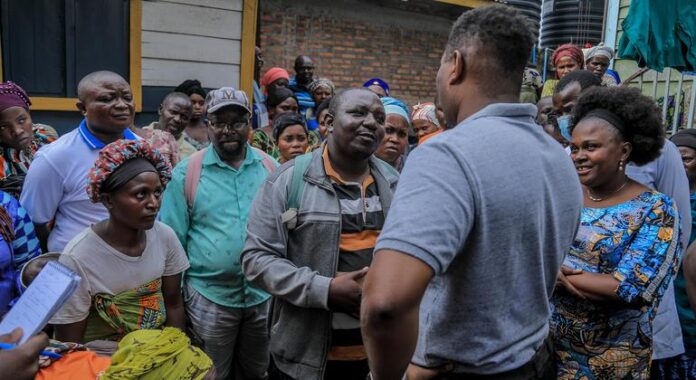
Gunfire tore through the dark. Night after night, the 44-year-old physician from Guinea clung to the hope that the besieged city would hold somehow. Then, one morning in late January, the call came: he and the remaining international staff had to be evacuated immediately.
“We took the last flight out,” he recalled.
Hours later, Goma was in the hands of M23. The Tutsi-led rebel group, backed by neighbouring Rwanda, had just landed its boldest military victory in the region yet.
For most, that would have been the end of the story: a narrow escape, a mission cut short. But, as the aircraft lifted from the runway, he knew he would return. The only question was: how soon?
Dr Thierno Baldé, 45, led the WHO response in Goma after the city fell to M23 rebels in early 2025. (file)
A reluctant interlude
Back in Dakar, where he heads the World Health Organization (WHO) emergency hub for West and Central Africa, Dr. Balde grew restless. Reports of civilian massacres kept trickling out of North Kivu, each new detail cutting deeper. The colleagues he had left behind haunted him. With every grim report, his conviction deepened: his place was at their side.
Two weeks later, on the day he turned 45, he was tapped to lead the agency’s response in eastern DRC. He kept the assignment from his parents in Conakry, his hometown, to spare them the dread.
“I only told them once I was already there,” he admitted, almost sheepishly. His wife and two children had long since grown used to watching him vanish into the world’s most dangerous crises.
Return to ruins
It took him five days to reach Goma. By then, the airport had been shut and the roads pocked with checkpoints.
The city he found was hollowed out. Power lines were down, hospitals were crammed with the wounded and there was talk of the streets being littered with bodies. Fear had settled on every face like ash after a blaze. “In 15 days, everything had changed.”
His team was broken. Some 20 Congolese staffers, gaunt from exhaustion, had been trying to hold the city’s fragile health system together. He gave half of them time off to recover, despite knowing every pair of hands was desperately needed – it was the least he could do.
And yet, amid the wreckage, a stroke of good fortune: unlike most other UN agencies, the WHO warehouses had not been looted. They became lifelines, providing fuel to power hospitals, surgical kits for the wounded and cell phones to coordinate emergency evacuations.
Still, the numbers were crushing, with as many as 3,000 dead, according to initial reports. The bodies needed to be dealt with swiftly before disease spread.
“We had to bury everyone intensely, in a very specific timeframe,” he said. The WHO ended up paying local gravediggers to collect the corpses.
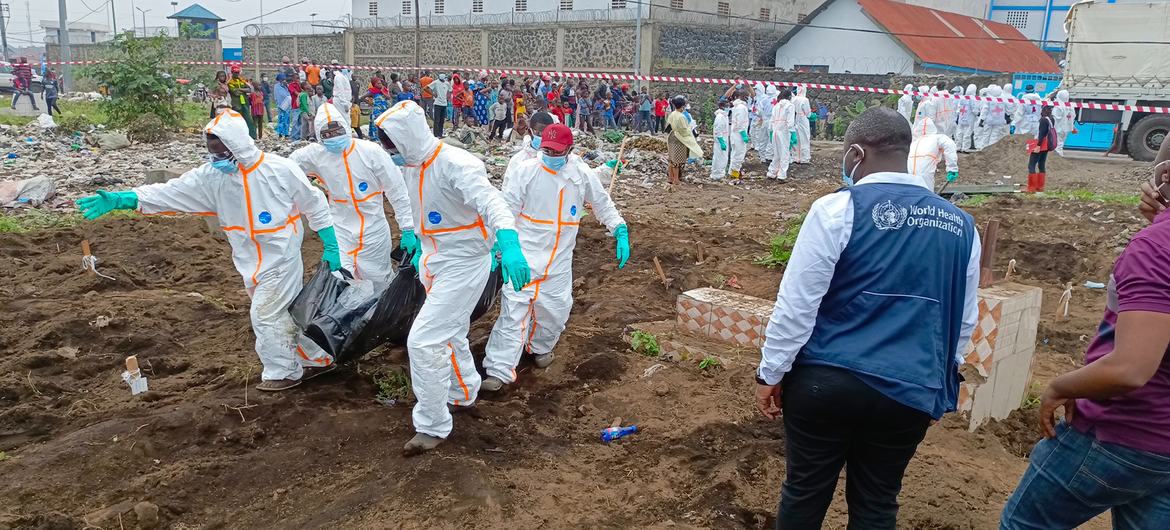
Bodies are being buried with the assistance of WHO personnel in the aftermath of the fall of Goma to M23 rebels in early February 2025. (file)
The spectre of cholera
On the day of his return, another illness announced itself: cholera. The first cases had just been confirmed in a MONUSCO camp, where hundreds of disarmed Congolese soldiers and their families had sought shelter after losing the city to the M23 militia. The UN peacekeeping mission’s bases, designed for Blue Helmets, were not built to accommodate a large number of civilians. Sanitation conditions were dire, and the disease spread fast.
That night, Dr. Balde could not sleep.
The next morning, he walked into the camp and saw patients stretched out on the floor. There were 20 or 30 people, with only one doctor, he remembered. Two were already dead.
For days, his team scrambled to hold back the tide – using chlorine for disinfection, protective gear, makeshift triage, and staff recruited and trained on the spot. Vaccines were rushed in from Kinshasa.
Rumours rippled through the city
Still, rumours rippled through the city.
“People began saying ‘cholera is exploding in Goma and WHO is overwhelmed.’” He, who had come for humanitarian relief, now found himself with an epidemic on his hands.
“We had to completely re-orient ourselves,” he said. The ghost of another Haiti, where the UN played a role in a cholera outbreak in 2010, hovered over his every decision.
As if on cue, another disease was spreading. Mpox, once confined to the sprawling camps of displaced people on Goma’s outskirts, now spilled into the city itself. Those camps, home to hundreds of thousands uprooted by earlier waves of violence in the region, were emptied in the chaos of Goma’s fall.
“The patients ended up in the community,” he explained.
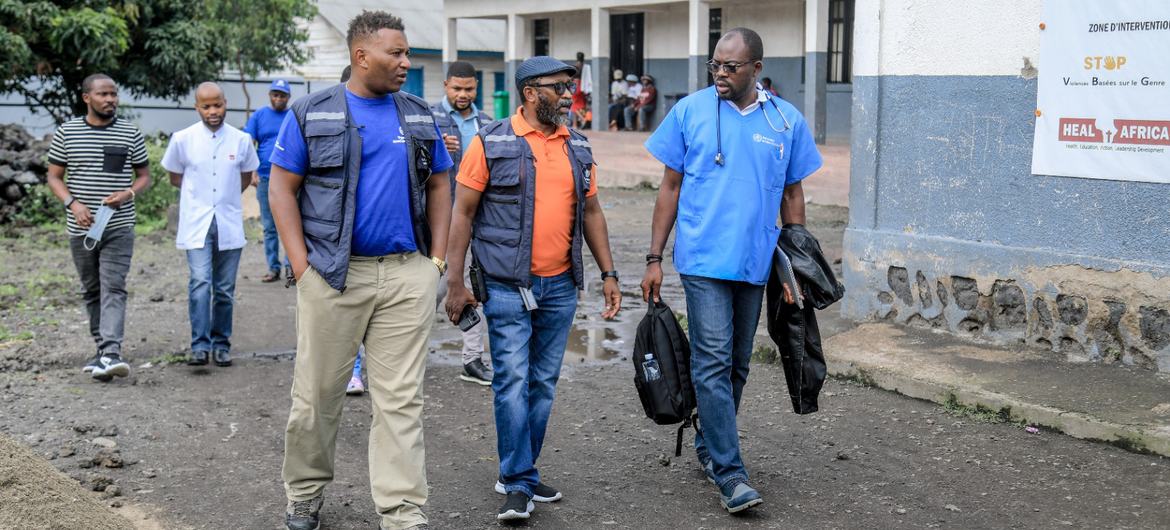
Dr Thierno Baldé (center left) and colleagues visit a WHO-supported health centre providing care to the population around Goma. (file)
Sitting across from rebels
Then came the men with guns. One afternoon, they barged into the WHO compound without warning. Were they under M23 orders, fighters acting on their own or mere criminals? It hardly mattered. The staff talked them down, persuading them to leave, but the incident made one thing clear. Without some understanding with the de facto authorities, the agency’s work could be compromised overnight.
So, Dr. Balde sought them out.
“We mustered the courage and went to meet them,” he said. At the North Kivu governor’s offices, now run by the rebels, he laid down his WHO “Incident Manager” card.
“I told them Ebola can affect everyone, cholera can affect everyone. We are here to contain them.”
A channel was opened. Fragile, but enough.
The cost of altruism
There’s a stiff price to pay for helping others. In Goma, the days blurred together. Hours were spent in fevered meetings and evenings spent alone in a hotel where heavily armed men dined at nearby tables.
During Ramadan, with the city under curfew, he broke the fast each night with the same simple meal, the city outside trembling with uncertainty.
When he returned to Dakar two month later, his blood tests were a mess.
“It was a real personal sacrifice,” he said, “and I’m not even talking about mental health. As a humanitarian, you have to take care of yourself, too.”
A veteran, still marked
Dr. Balde is no stranger to disaster zones. Trained in Guinea and Quebec, an associate professor at the University of Montreal, he cut his teeth with the Canadian Red Cross in Haiti after the earthquake, then in Guinea during the Ebola outbreak. Since joining WHO in 2017, he has faced emergency after emergency, including COVID-19.
I did everything I could to go back, but I paid a price.
And yet, he admitted, Goma left a mark that few other crises had.
“I did everything I could to go back, but I paid a price.”
In the Senegalese capital, his family bears that price, too. His children know their father disappears into places where the world is breaking apart. His wife has learned to live with the absence.
Still, when he speaks of those feverish weeks in eastern DRC, one sentence returns again and again, insistent and unshaken: “I had to be there.”
Four suspected ATM attackers arrested in coordinated takedown – Cross-border action targeted group allegedly responsible for cash machine robberies with solid explosives in Germany and Austria
You need to enable JavaScript to run this app.
Loading application.
Please wait.
Selection results: Erasmus+ Sport 2025
Selection results for the Erasmus+ Sport projects recommended for funding are now available. All applicants have been individually notified with the results of the selection process. With a total available budget of more than EUR 67 million, 350 proposals have been recommended for funding: 124 Cooperation partnerships, 185 Small-scale partnerships, 26 European sport events, 13 […]
Selection results: Erasmus+ Sport 2025

Selection results for the Erasmus+ Sport projects recommended for funding are now available.
All applicants have been individually notified with the results of the selection process. With a total available budget of more than EUR 67 million, 350 proposals have been recommended for funding: 124 Cooperation partnerships, 185 Small-scale partnerships, 26 European sport events, 13 Capacity building in the field of sport and 2 Large scale European sport events.
Note that this list does not represent any commitment for funding on the part of the EACEA and could not constitute a ground to claim any expectations concerning the signature of a grant agreement. The final decision on these proposals is subject to the completion of the grant award procedure in line with the timeline indicated in the call for proposals. EACEA may, until such time as the agreement is signed, either abandon or cancel the procedure without this entitling the applicants on this list to any compensation.
Selection results
- Cooperation partnerships in the field of sport (SCP)
Cooperation partnerships in the field of sport 2025
- Small-scale partnerships in the field of sport (SSCP)
Small-scale partnerships in the field of sport 2025
- Not-for-profit European sport events (SNCESE)
Not-for-profi European sport events 2025
- Capacity Building in the field of sport (CB)
Capacity building in the field of Sport 2025
- Large scale European sport events (LSSNCESE)
Large scale European Sport Events 2025
Pushed by hunger to Gaza, amputees are part of the collateral damage

“I was going to buy falafel,” explains Mohammed Hassan. “On the way back, I looked up and I saw a rocket heading for me. I tried to run, but it was too fast. I found myself pinned to the wall, and my foot had been breathtaking. »»
Bring to Al-Shifa hospital in Gaza City, the young boy looks at his highly bandaged left leg and the stump where his foot was.
In another area of the hospital, a small child, Maryam Abu Alba, cries in pain. “The neighbor’s house was bombed and their house was affected,” said her grandmother. “One of his legs had to be amputated and the metal plates had to be inserted into the other, which was fractured. She suffers intense. “
Earlier this year, the United Nations Humanitarian Aid Coordination Agency Ochha estimated that 4,500 new amputees require prostheses, in addition to the 2,000 existing cases requiring maintenance and monitoring care, while around 24,000 injured need rehabilitation.
Health establishments are overwhelmed by many patients undergoing several surgical interventions without adequate medical supplies, including anesthesia.
The Palestinian child Mohammad Hassan seated on a hospital bed in Gaza after the amputation of his left leg by a strike.
Look desperately food
In May, like the supply routes for the United Nations humanitarian convoys were interrupted, the number of distribution aid points increased from 400 strewn through the Gaza Strip to a handful of centers operated by Gaza Humanitarian Foundation.
Given the shortage of humanitarian aid and reduced capacity, thousands of Palestinians have been killed or injured since May when looking for food. Among the injured are the children and parents who, despite the loss of members, continue to seek food and water.
It comes like a Sustained food security report has just concluded that famine is confirmed in the governorate of Gaza, where half a million people are trapped in conditions of famine, malnutrition and death.
Ibrahim Abdel Nabi was one of the many Palestinians who went to the hubs in the hope of finding desperately necessary arrangements for their families.
In his tent in a travel site in the Al-Mawasi coastal region of Khan Younis, Mr. Nabi, surrounded by his wife and children, explains how the trip ended with a disaster and injuries that changed their life.
“When I arrived in the Al-Alam region, west of Rafah, I was struck by an explosive ball in my leg. I was bleeding for about an hour and a half, and no one came to help me. They all tried to find food for their children. ”
Finally, a group of people came to his rescue and took him to the neighboring Red Cross hospital.
“I stayed there for about a month and a half, undergoing around 12 operations. I became malnourished and I lost a lot of blood. An infection, and more of my leg had to be amputated. ”
Ibrahim Abdel Nabi, a Palestinian moved to Gaza, sitting on a chair while his wife helps him carry the prosthetic member handmade.
‘I made my prosthetic leg’
As Mr. Nabi was trying to recover, he knew that his family still needed food. Despite the pain, he decided to make a simple prosthesis of the materials he could find to allow him to get back on their feet and make new attempts to find food and water.
“The prosthesis hurts my leg,” he said. “This causes inflammation and increases pain. We do not have medical care or supplies, but I will use it, no matter how much it hurts. ”
While he is talking, Mr. Nabi’s wife begins to cry. “God wants it, we will live this experience,” she says.
Mr. Nabi gets up on crutches and heads for a neighboring tent, where his wife helps him put the raw prosthesis.
“Do not try,” she repeats again and again. “Take your time. Walk slowly. “
Originally published at Almouwatin.com
Dr Congo: the doctor who could not leave Goma

Shops have torn the darkness. Night after night, the 44 -year -old doctor of Guinea clung to the hope that the besieged city would last in one way or another. Then, one morning at the end of January, the call came: he and the remaining international staff had to be evacuated immediately.
“We took the last flight,” he recalls.
A few hours later, Goma was in the hands of M23. The rebel group led by Tuts, supported by neighboring Rwanda, had just won its most daring military victory to date.
For the most part, it would have been the end of history: a narrow escape, a mission interrupted. But, while the plane rose from the track, he knew he would come back. The only question was: how long?
Dr. Thierno Baldé, 45, led the WHO response to Goma after the city fell to M23 Rebels at the beginning of 2025. (File)
A reluctant interlude
Back in Dakar, where he heads the World Health Organization (WHO) Crave of emergency for West and Central Africa, Dr. Balde has become agitated. Civil massacres reports continued to get out of northern Kivu, each new detail going deeper. The colleagues he had left him. With each dark report, his conviction has deepened: his place was by their side.
Two weeks later, the day he was 45 years old, he was used to direct the agency’s response in the eastern DRC. He kept his parents’ mission to Conakry, his hometown, to spare fear.
“I only told them once I was already there,” he admitted, almost timidly. His wife and two children have long lived in looking at him disappear in the most dangerous crises in the world.
Return to ruins
It took him five days to reach Goma. At that time, the airport had been closed and the roads rushed with control points.
The city he found was dug. The power lines were down, the hospitals piled up of wounded and speak of the streets strewn with bodies. Fear had settled like Ash after a fire on each face. “In 15 days, everything had changed.”
His team was broken. About twenty Congolese staff members, glider of exhaustion, had tried to maintain together the fragile health system of the city. He gave half of these days off to recover, although each pair of hands desperately needed. It was the least he could do.
And yet, in the middle of the wreckage, there was a blow of fortune. Unlike most other United Nations agencies, WHO warehouses had not been looted. They have become rescue lines, providing fuel to electric hospitals, surgical kits so that injured and cellular phones coordinate emergency evacuations.
However, the figures were overwhelming, with up to 3,000 dead, according to the first reports. The bodies were to be treated quickly before the propagation of the disease.
“We had to bury everyone intensely, in a very specific time,” he said, noting that who ended up paying local seriousness to recover the corpses.
The bodies are buried with the help of the WHO staff in the aftermath of the Goma fall to the M23 rebels in early February 2025. (File)
The spectrum of cholera
On the day of his return, another disease was announced: cholera. The first cases had just been confirmed in a Monusco Camp, where hundreds of disarmed Congolese soldiers and their families had asked for a shelter after losing the city at the M23 militia. The bases of the United Nations peacekeeping mission, designed for blue helmets, were not built to accommodate a large number of civilians. Sanitation conditions were disastrous and the disease spread quickly.
That night, Dr. Balde could not sleep.
The next morning, he entered the camp and saw patients stretched on the ground. There were 20 or 30 people, with a single doctor, he recalls. Two had already died.
For days, his team rushed to retain the tide, with chlorine for disinfection, protective equipment, fortune sorting and staff recruited and trained on site. The vaccines were precipitated from Kinshasa.
Rumors crossed the city
However, rumors struck the city.
“People have started to say” cholera explodes to Goma and which is overwhelmed “. He, who had come for a humanitarian relief, has now ended up with an epidemic on his hands.
“We had to reorient ourselves completely,” he said. The ghost of another Haiti, where the UN played a role in a cholera epidemic in 2010, flew over each of its decisions.
As if it is, another disease spread. MPOX, once confined to the tentacular camps of displaced people on the outskirts of Goma, now overturned in the city himself. These camps, which house hundreds of thousands uprooted by previous waves of violence in the region, were empty in the chaos of the fall of Goma.
“The patients found themselves in the community,” he said.
Dr. Thierno Baldé (center on the left) and his colleagues visit a health center supported by the WHO, offering care to the population of Goma. (deposit)
Sitting in front of the rebels
Then came the men with rifles. One afternoon, they broke into the compound of the WHO without warning. Were under orders of M23, combatants acting alone or simple criminals? It barely intended. The staff said them, persuading them to leave, but the incident clearly said. Without a certain understanding with the de facto authorities, the work of the agency could be compromised overnight.
Thus, Dr. Balde looked for them.
“We gathered the courage and went to meet them,” he said. In the offices of the Governor of North Kivu, now managed by the rebels, he made his card of Who Who “Incident Manager”.
“I told them Ebola Can affect everyone, cholera can affect everyone. We are here to contain them.
A channel has been opened. Fragile, but enough.
The cost of altruism
There is a rigid price to pay to help others. In Goma, the days were scrambled together. Hours have been spent in fever meetings and evenings spent alone in a hotel where highly armed men have dinner in nearby tables.
During Ramadan, with the city under curfew, he broke the fast every night with the same simple meal, the city outside trembling with uncertainty.
When he returned to Dakar two months later, his blood tests were in disorder.
“It was a real personal sacrifice,” he said, “and I’m not even talking about mental health. As a humanitarian, you must also take care of yourself. »»
A veteran, still marked
Dr. Balde is no stranger to disaster areas. Trained in Guinea and Quebec, an associate professor at the University of Montreal, he cut his teeth with the Canadian Red Cross in Haiti after the earthquake, then in Guinea during the Ebola epidemic. Since he joined WHO in 2017, he was faced with the emergency after the emergency, especially COVID 19.
I did everything I could come back, but I paid a price.
And yet, he admitted, Goma left a brand that few other crises had.
“I did everything I could go back, but I paid a price.”
In the Senegalese capital, his family also carries this price. His children know that their father disappears in places where the world separates. His wife learned to live with the absence.
However, when he talks about these feverish weeks in the east of the DRC, a sentence returns again and again, insistent and unshakeable: “I had to be there.”
Originally published at Almouwatin.com
CEF Energy: supporting modernisation of Čierny Váh pumped hydro storage in Slovakia

The Connecting Europe Facility for Energy (CEF Energy) is supporting a significant step forward in strengthening Europe’s energy security and flexibility. With a grant of more than EUR 2.1 million, the project is carrying out studies to prepare the way for the modernisation and hybridisation of the Čierny Váh pumped hydro energy storage plant in Slovakia.
Owned and operated by Slovenské elektrárne a.s., the initiative contributes to the implementation of the Project of Common Interest (PCI) “Modernisation of Pumped Hydroelectric Energy Storage in Čierny Váh”. Over the next 24 months, it will prepare the ground for upgrading two of the plant’s six units to variable-speed turbines for improved operational efficiency, while also defining a hybridisation system to optimise the integration of a large-scale battery energy storage system (BESS) of up to 80 MW and 160 MWh.
Driving innovation in hybrid storage
This innovative project is among the firsts in Europe to combine traditional pumped hydro storage with battery storage on such a scale. The studies will define the technical specifications for hybridisation, including market simulations, financial gap assessments, and detailed designs for hydro, electro-mechanical, civil engineering and digital control systems.
By delivering a comprehensive solution that integrates both technologies, the project will enhance the flexibility and efficiency of the Slovak grid and provide valuable lessons for the wider European energy system. For instance, thanks to the planned development of EU-wide trading platforms for balancing energy, a significant amount of balancing energy produced by the project would be exchanged across borders and help to improve the efficiency of the neighbouring countries too (i.e. Hungary, Poland, Czech Republic).
Supporting EU competitiveness and climate goals
These types of projects are crucial not only for decarbonising EU economies but also for strengthening competitiveness and ensuring affordable, reliable energy for citizens and businesses. By combining pumped hydro and battery storage, the project will help optimise grid flexibility, reduce system costs and make better use of renewable energy sources.
Once completed, the project will therefore enable cleaner, smarter and more sustainable grid regulation services, while improving market efficiency and contributing to Europe’s long-term climate and competitiveness objectives. With CEF Energy support, the PCI will be ready to advance to the Final Investment Decision (FID) phase.
The Čierny Váh modernisation underscores the EU’s commitment to developing cross-border, future-proof energy infrastructure that enhances competitiveness, ensures affordable energy and accelerates the transition to a carbon-neutral economy.
More information
More information on the project is available on the promoter’s website.
EIB invests massively in the Plan Ecoles de Marseille

- Two European Investment Bank (EIB) loans totalling €425 million will help finance the modernisation of 477 primary schools in the city through a major renovation/reconstruction project lasting around seven years.
- A quarter of pupils in Marseille (around 30 000 children) will benefit from better learning and teaching conditions.
- Renovated or rebuilt school buildings will also have an improved carbon footprint.
- This project is part of the ‘Marseille en Grand’ national programme to modernise France’s second largest city.
The European Investment Bank (EIB) is strongly committed to refurbishing schools in Marseille by signing two financing agreements with the public authorities for a total amount of €425 million, or about half of their financing needs.
An initial loan of €340 million was granted to Société Publique des Ecoles Marseillaises (‘SPEM’), a local public development company 50% owned by the city of Marseille and 50% owned by the French government, created under the ‘Marseille en Grand’ programme launched in September 2021 by the French President, providing for a total of €5 billion of investment in the city of Marseille.
SPEM’s primary goal is to oversee the large-scale renovation of 188 schools. As the French government is the guarantor of this loan, the financial conditions that accompany it are particularly favourable. The EIB also enables SPEM to benefit from advisory services financed under the Invest EU programme intended to identify grants that could supplement this EIB financing.
A second loan of €85 million was granted to the City of Marseille, which oversees the rehabilitation of 289 schools.
The ‘Plan Ecoles’ of the City of Marseille is a broad programme to renovate and rehabilitate Marseille’s primary schools as part of the ‘Marseille en Grand’ programme.
It is estimated that the refurbishment of the buildings and infrastructure of the Plan Ecoles will benefit some 30 000 pupils in primary schools, or a quarter of the young people enrolled in public schools in Marseille. In volume terms, more than 129 000 m² of school space will be renovated or rebuilt to increase the capacity of schools, better distribute staff between schools, and improve buildings in terms of energy performance, safety and operations.
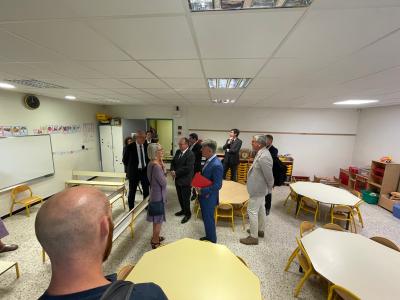
The financing contracts were signed today in Marseille by EIB Vice-President Ambroise Fayolle, responsible for operations in France, the Mayor of Marseille Benoît Payan, and the Prefect of the Region Georges-François Leclerc, in the presence of local elected representatives and the European Commission’s representative in Marseille. They were invited to visit the Saint Louis Campagne Lévêque primary school (in the 15th arrondissement). The school buildings will be refurbished by the municipality as part of a major urban regeneration programme.
EIB Vice-President Ambroise Fayolle said: “We are delighted to help improve schools in Marseille for the benefit of children in the city. More modern schools better equipped for efficient learning and teaching, which are also more energy-efficient and climate friendly, are a real asset for a large, dynamic city like Marseille. This is the first direct EIB financing operation supporting the city of Marseille and is a forward-looking investment.”
Mayor of Marseille Benoît Payan said: “For too long, schools in Marseille have been neglected. We are now laying the groundwork for a deep transformation, for our children, our teachers and our families. To implement this unprecedented project, we are working with the government and the European Investment Bank to reverse decades of decline and build a dignified, modern and ecological public school system. This is an important project that goes to the core of what our plan is for Marseille: equal opportunities from an early age. Education is our priority, and this requires buildings that live up to the ambitions of the whole city.”
Nicolas Andreatta, Director of the Société Publique des Ecoles Marseillaises (SPEM) said:
“Thanks to the effective financing provided by the European Investment Bank, the Société Publique des Ecoles Marseillaises will be able to contribute to the ambitious transformation program of the City of Marseille’s school infrastructure. By renovating and modernizing nearly 200 schools over the next decade, we will provide educational communities with high-quality infrastructure: energy-efficient and comfortable buildings, green schoolyards, and safe, welcoming spaces. We are proud to build modern schools that are open and integrated into their neighbourhoods, where future generations of boys and girls from Marseille can grow, learn, and thrive.”
Georges-François Leclerc, Prefect of the Provence-Alpes-Côte d’Azur Region, Prefect of Bouches-du-Rhône said: “The French State welcomes this loan from the European Investment Bank to the Société Publique des Écoles Marseillaises, which is backed by a State guarantee. As part of the ‘Marseille en Grand’ initiative—an exceptional plan initiated by the President of the Republic—€650 million in State guarantees have been granted to SPEM, in addition to €400 million in subsidies. This plan is particularly aimed at ensuring that all young people in Marseille have the conditions necessary for academic success within the republican school system, one of the pillars of our Republic.”
Background information
About the European Investment Bank
The EIB is the long-term lending institution of the European Union, owned by the Member States. Working around eight core priorities, the Bank supports investments that help achieve major EU objectives. The EIB Group, which also includes the European Investment Fund (EIF), signed nearly €89 billion in new financing for over 900 high-impact projects in 2024, boosting Europe’s competitiveness and security. In France, the EIB Group signed more than 100 agreements in 2024, totalling €12.6 billion. Nearly 60% of annual EIB Group financing supports projects that help fight climate change and improve climate change adaptation.

EIB invests massively in the Plan Ecoles de Marseille
©EIB
Download original

EIB invests massively in the Plan Ecoles de Marseille
©EIB
Download original
EIB invests massively in the Plan Ecoles de Marseille
©EIB
Download original
