Monday, April 13, 2026
Home Blog Page 255

Europe’s AI-on-Demand Platform: Powering Research and Innovation

0
Europe’s AI-on-Demand Platform: Powering Research and Innovation

The AI-on-Demand Platform is designed with a dual-track system that directly serves the distinct needs of Europe’s research community and its businesses. 

For researchers and innovators, the platform offers an extensive repository of over 500,000 AI assets-including datasets, tools, and software-accessible through intuitive services like the Metadata Catalogue, AI Catalogue, and the Research and Innovation AI Lab (RAIL). This fosters collaboration, reuse, and the seamless transfer of publicly funded research into practical applications. Crucially, it also acts as a mechanism for technology transfer, supporting the seamless journey from laboratory prototypes to real-world solutions. 

For industry, including SMEs, startups, and the public sector, the platform delivers market-ready AI solutions and robust support across the entire innovation lifecycle. From low-code development tools and HPC training resources to secure European hosting environments and a dedicated AI marketplace, businesses can develop, train, and deploy trustworthy AI aligned with EU regulations and standards.

With tools like the Metadata Catalogue for unified searches, the AI Catalogue for resource organisation, and the Research and Innovation AI Lab (RAIL) for collaborative AI research, the platform empowers users at every stage of AI development. The AI Builder simplifies complex tasks, while the upcoming Success Stories service will connect users to experts, providing practical insights from real-world applications. The platform also features the EU AI Ecosystem Mapping tool for collaboration, Eurocore, a European repository for robotics, and RoboCompass, which guides responsible innovation in robotics. All tools are integrated with secure, single sign-on access. 

The platform itself is delivered under two complementary European Commission programmes. AI4Europe, launched in 2022 under Horizon Europe and led by University College Cork, focuses on expanding the AIoD’s capabilities to support research excellence, and will run through to the end of 2025. DeployAI, initiated in 2024 under the Digital Europe Programme and coordinated by Fraunhofer IAIS, extends these foundations by delivering industry-ready solutions and will continue until 2027. 

EIT Digital, building on its expertise in the sector as coordinator of the EIT AI Community, plays a role across both projects, contributing its extensive know how in digital innovation to make sure that the platform not only serves immediate technological needs but also fosters a long-term, sustainable European AI landscape.

Discover more

Source link

The future of power: optimising and storing renewable energy

0


Renewable energy is essential for addressing climate change and securing a sustainable future. Experts say Australia could be

Source link

Seedbed Alumni Investment 2025 | EIT

0

EIT Food is offering up to €50,000 in lump sum funding to Seedbed programme alumni to support innovation, commercialisation, and fundraising activities aligned with Horizon Europe priorities. Funding & Deliverables Total funding per venture: €50,000 as a lump sum (paid up front) Linked Deliverables: Deliverable 1 – Communication & Dissemination Plan. Value: €5,000 (10%) Deliverable […]

Source link

Scientists pioneer transfer-free method to grow ultrathin semiconductors on electronics

0

A team of materials scientists at Rice University has developed a new way to grow ultrathin semiconductors directly onto electronic components.

The method, described in a study published in ACS Applied Electronic Materials, could help streamline the integration of two-dimensional materials into next-generation electronics, neuromorphic computing and other technologies demanding ultrathin high-speed semiconductors.

The researchers used chemical vapor deposition (CVD) to grow tungsten diselenide, a 2D semiconductor, directly onto patterned gold electrodes. They next demonstrated the approach by building a functional, proof-of-concept transistor. Unlike conventional techniques that require transferring fragile 2D films from one surface to another, the Rice team’s method eliminates the transfer process entirely.

“This is the first demonstration of a transfer-free method to grow 2D devices,” said Sathvik Ajay Iyengar, a doctoral student at Rice and a first author on the study along with Rice doctoral alumnus Lucas Sassi. “This is a solid step toward reducing processing temperatures and making a transfer-free, 2D semiconductor-integration process possible.”

The discovery began with an unexpected observation during a routine experiment.

“We received a sample from a collaborator that had gold markers patterned on it,” Sassi said. “During CVD growth, the 2D material unexpectedly formed predominantly on the gold surface. This surprising result sparked the idea that by deliberately patterning metal contacts, we might be able to guide the growth of 2D semiconductors directly across them.”

Semiconductors are foundational to modern computing, and as the industry races toward smaller, faster and more efficient components, integrating higher-performance, atomically thin materials like tungsten diselenide is a growing priority.

Conventional device fabrication requires growing the 2D semiconductor separately, usually at very high temperatures, then transferring it using a series of steps. While 2D materials promise to outperform silicon in certain metrics, turning their lab-scale promise into industry-relevant applications has proven difficult — in large part due to the fragility of the materials during the transfer process.

“The transfer process can degrade the material and damage its performance,” said Iyengar, who is part of Pulickel Ajayan’s research group at Rice.

The Rice team optimized the precursor materials to lower the synthesis temperature of the 2D semiconductor and showed that it grows in a controlled, directional manner.

“Understanding how these 2D semiconductors interact with metals, especially when grown in situ, is really valuable for future device fabrication and scalability,” said Ajayan, Rice’s Benjamin M. and Mary Greenwood Anderson Professor of Engineering and professor of materials science and nanoengineering.

Using advanced imaging and chemical analysis tools, the team confirmed the method preserves the integrity of the metal contacts, which are vulnerable to damage at high temperatures.

“A lot of our work in this project was focused on proving that the materials system is still intact,” Iyengar said. “We are well-equipped here at Rice to study the chemistry that goes on in this process to a very fine degree. Seeing what happens at the interface between these materials was a great motivator for the research.”

The success of the method lies in the strong interaction between the metal and the 2D material during growth, Sassi noted.

“The absence of reliable, transfer-free methods for growing 2D semiconductors has been a major barrier to their integration into practical electronics,” he said. “This work could unlock new opportunities for using atomically thin materials in next-generation transistors, solar cells and other electronic technologies.”

In addition to challenges with the fabrication process, another key hurdle in 2D semiconductor design is electrical contacts’ quality, which entails not just low energy barriers but also stable and enduring performance, scalability and compatibility with a wide range of materials.

“An in-situ growth approach allows us to combine several strategies for achieving improved contact quality simultaneously,” said Anand Puthirath, a co-corresponding author of the study and a former research scientist at Rice.

The project was sparked by a question raised during a U.S.-India research initiative: Could a semiconductor fabrication process for 2D materials be developed on a limited budget?

“This started through our collaboration with partners in India,” said Iyengar, who is a fellow of the Japan Society for the Promotion of Science and an inaugural recipient of the Quad Fellowship, a program launched by the governments of the U.S., India, Australia and Japan to support early career scientists in exploring how science, policy and diplomacy intersect on the global stage. “It showed how international partnerships can help identify practical constraints and inspire new approaches that work across global research environments.”

Together with a couple of his peers in the Quad Fellowship cohort, Iyengar co-authored an article advocating for “the need for expertise at the intersection of STEM and diplomacy.”

“Greater engagement between scientists and policymakers is critical to ensure that scientific advancements translate into actionable policies that benefit society as a whole,” Iyengar said. “Materials science is one of the areas of research where international collaboration could prove invaluable, especially given constraints such as the limited supply of critical minerals and supply chain disruptions.”

Source: Rice University

Source link

resilience in Europe’s labour market

0
resilience in Europe’s labour market

Opening panel remarks by Christine Lagarde, President of the ECB, at the annual Economic Policy Symposium “The policy implications of labour market transition” organised by the Federal Reserve Bank of Kansas City in Jackson Hole

Jackson Hole, 23 August 2025

Alexis de Tocqueville – one of the keenest observers of early American democracy – once wrote: “History is a gallery of pictures in which there are few originals and many copies.”

In monetary policy, too, we often look to past cycles for guidance, expecting familiar patterns to repeat themselves. But this cycle has proven to be original in striking ways.

Major central banks have undertaken the most aggressive tightening in a generation. At the outset, there were understandable concerns about how such a rapid and substantial adjustment would affect labour markets.

Historically, disinflation has come at a cost. Since the 1960s, the “sacrifice ratio” has typically been around 1.[1] In practice, this means that permanently lowering inflation by 1 percentage point has cost about 1% of GDP in forgone output.

And given Europe’s well-known structural rigidities, it was reasonable to assume that a sharp tightening could lead to rising unemployment[2], which might then become entrenched through hysteresis effects (Slide 2).[3]

Even in the United States – with its more flexible labour market – many feared that a significant rise in unemployment would be required to bring inflation under control.

Instead, we find ourselves in a very different position from what many expected: in both the euro area and the United States, inflation has fallen sharply, and at a remarkably low cost in terms of employment.[4]

In fact, in the euro area we have seen the opposite of hysteresis: employment growth has been significantly stronger than historical patterns would have predicted.

Traditionally, Okun’s law suggests that employment tends to grow at roughly half the pace of real GDP. Yet between the end of 2021 and mid-2025, cumulative employment rose by 4.1% – an increase of 6.3 million of people in employment – while real GDP increased by 4.3%. That implies an employment elasticity nearly twice as high as Okun’s relationship would suggest.

For monetary policymakers, the key question is why this atypical employment response has occurred – and whether it signals a broader shift in how inflation will respond to different types of shocks.

Part of the answer lies in global factors. Monetary tightening helped bring inflation back to target, but it coincided with other forces that supported activity: an easing of supply constraints worldwide, a steep drop in energy prices and proactive fiscal policies – all of which help explain the unusually low sacrifice ratio.[5]

At the same time, Europe’s experience reflects distinctive domestic drivers. Three features have shaped its labour market performance.

First, a delayed wage response to inflation that supported higher employment; second, a reduction in hours worked, driven by labour hoarding and changing preferences; and third, an expansion in labour supply that kept pace with rising demand.

The response of real wages to inflation

Although the euro area has faced a complex mix of shocks in recent years, the dominant force was a major negative supply shock, as post-pandemic bottlenecks coincided with the cut-off of Russian gas.[6]

Historically, supply shocks of this scale would have quickly passed through to nominal wages, with real wage growth often outpacing productivity.[7]

For example, after the oil shocks of the 1970s, real wages[8] in Europe rose by around 20% between 1972 and 1976, while productivity increased by only 15% (Slide 3, left panel). A similar pattern occurred during major demand shocks such as the global financial crisis (Slide 3, middle panel).

This time, however, the response was different – which was the first distinctive feature of this episode. Real wages fell by nearly 2% between late 2021 and early 2023, and only gradually caught up with cumulative productivity growth early last year (Slide 3, right panel).

This unusual pattern reflects a European labour market that has become more flexible in some respects, while remaining rigid in others.

Most notably, formal automatic indexation of wages to inflation has all but disappeared: in the 1970s it covered around half of all private sector employees, whereas today it applies to only about 3%. For more than half of private sector workers, inflation now plays no formal or automatic role in wage setting.[9]

At the same time, nearly 60% of workers remain covered by multi-year collective agreements which take inflation into account but adjust only gradually – a nominal rigidity that created a lag in wage adjustment relative to prices.[10] Research also suggests that as the workforce ages, union priorities are shifting, with greater emphasis on pensions and employment protection relative to wage growth.[11]

ECB analysis confirms that this delayed real wage response acted as a shock absorber. By widening the gap between productivity and labour costs, it eased unit labour cost pressures and supported firms’ profitability, while also making labour relatively more attractive than capital. Both dynamics encouraged firms to expand hiring.

For example, the “factor substitution” effect is estimated to have accounted for around a quarter of total employment growth since the end of 2019, with most of this impact occurring after the onset of the energy crisis.[12]

This effect was particularly important in manufacturing, which was hit harder than services by negative shocks. That divergence helps explain some of the cross-country heterogeneity in employment growth in the euro area.[13] Yet, at the aggregate level, manufacturing employment still remained well above what Okun’s law would predict (Slide 4, left panel).

A key factor was firms’ ability to pass on higher input costs, which boosted profit margins and led to a steeper fall in sectoral real wages (Slide 4, right panel). Real wages in industry, measured using sectoral value-added deflators, fell by almost 11% at the trough.[14]

For comparison, in euro area countries where automatic wage indexation remains in place, the decline in real wages was more limited, and the link between output and employment was notably weaker than for the euro area aggregate.[15]

The reaction of hours worked

However, the increase in employment in the euro area has been accompanied by a decline in average hours worked – the second distinctive feature of the labour market.

Average hours remain 1% below their pre-pandemic level, equivalent to about four hours fewer per worker per quarter, or a reduction in labour input of roughly 1.3 million full-time jobs (Slide 5).

Two factors help explain how employment could rise even as hours fell.[16]

The first is labour hoarding, which curbed job losses in firms facing weaker demand – particularly those hit by the energy crisis – but at the cost of fewer hours worked.

The ECB’s labour hoarding indicator rose to almost 30% in the third quarter of 2022 – nearly double its pre-pandemic average – and climbed even higher in manufacturing (Slide 6, left panel).

This behaviour reflected broader labour market tightness: survey evidence suggests employers viewed hoarding as less costly and less risky than rehiring later in an even more competitive market. Fears of future labour shortages – probably reinforced by Europe’s demographic outlook – also played a role.[17]

The fall in sectoral real wages, together with unusually high profit margins, in turn made it easier for firms to sustain this strategy.[18]

The second factor is a shift in worker preferences towards shorter hours, which constrained firms’ ability to raise hours per employee and left them more reliant on hiring.[19]

Average hours worked in Europe have been in long-term decline, driven roughly two-thirds by an increase in part-time employment, much of which is voluntary.[20] Since late 2021, however, the decline has stemmed mostly from a fall in the number of long hours worked[21] and from reduced overtime among full-time workers, especially in industry.

While part of this shift is cyclical, it also has a structural component. Over the past decade, preferences for long working hours have declined in parallel with the recorded drop in overtime (Slide 6, right panel).[22]

Increasing labour supply

Still, for these two features – lower real wages and fewer hours worked – to be compatible with higher employment, labour supply had to respond.

This is where the third feature comes in: the surge in the labour force in recent years.

On demographics alone, Europe’s capacity to expand its labour supply is already constrained. By 2040, the working-age population[23] is projected to shrink by around 3.4 million. Since 2002, the number of people over 60 has risen by 28 million, while that of those aged 15–60 has fallen by 2.4 million, and of those under 14 by 2.8 million.

Yet after a brief dip during the lockdowns, the labour force was back to its pre-pandemic level by the end of 2021 – and has since grown by about six million people.

This reflects continued increases in participation and employment, particularly among women and older individuals, extending trends already in motion before the pandemic. ECB analysis suggests that without the compositional shift towards older workers – who often enter the labour market directly into employment – the unemployment rate today would be around 6.6% rather than 6.3%.[24]

Even more important, however, has been the rise in both the number and participation rate of foreign workers.

Although they represented only around 9% of the total labour force in 2022, foreign workers have accounted for half of its growth over the past three years.[25] Without this contribution, labour market conditions could be tighter[26] and output lower.

In Germany, for example, GDP would be around 6% lower than in 2019 without the contribution of foreign workers (assuming no behavioural changes among domestic workers). Spain’s strong post-pandemic GDP performance – which has helped support the euro area aggregate – also owes much to the contribution of foreign labour.[27]

Implications going forward

Looking ahead, it is difficult to say with confidence whether the patterns of recent years will persist, given the complex interplay of cyclical and structural forces. Drawing conclusions about future sacrifice ratios from current developments could therefore be misleading.

But it is worth taking a broader look at some underlying trends.

First, the demographic trend is likely to continue. And this is not just a European story: new research suggests that 2023 was likely to have been the first year in human history when the global fertility rate fell below the replacement rate.[28]

Migration could, in principle, play a crucial role in easing labour supply constraints in selected regions. But in all plausible scenarios – even those assuming high migration – the euro area’s working-age population will continue to shrink (see illustration for the 20-64 age group in Slide 7, left panel).

Moreover, political economy pressures may increasingly limit inflows, and even when migration is significant, its impact on easing labour shortages depends on how closely migrants’ skills match vacancies in key sectors.[29]

Second, labour hoarding could persist as a feature of the employment landscape. As demographic trends constrain hiring and preferences shift towards shorter hours, firms may find it harder to increase labour input during upswings. This, in turn, could strengthen incentives to hoard labour during downturns.

Third, these same forces could weigh on labour productivity. In Europe, productivity growth has historically displayed a pronounced cyclical pattern (Slide 7, right panel), in part because firms tend to reduce hours rather than shed workers in downturns.[30]

If lower job turnover continues to slow labour reallocation, it is likely to reduce the efficiency of job matching. By contrast, the stronger post-pandemic productivity growth in the United States has been linked to higher labour market churn.[31] An ageing population is also found to slow productivity growth.[32]

In such a scenario, Europe might escape the unemployment hysteresis that plagued past cycles, but at the cost of a decline in productivity.

However, this is of course not the only possible path. This view focuses solely on labour market dynamics and overlooks the potential for automation and artificial intelligence to boost productivity and investment, which may well also be spurred by a shrinking population.

Conclusion

Let me conclude.

The European labour market has come through recent shocks in unexpectedly good shape, helped by a mix of global tailwinds and domestic strengths.

But we should be cautious in assuming that this unique constellation of forces will last. To borrow from de Tocqueville, we should not expect copies of past cycles to guide us through original ones.

By understanding the sources of recent resilience, we can be better prepared for the next shock, whatever shape it may take.

Source link

resilience in Europe’s labour market

0
resilience in Europe’s labour market

Opening panel remarks by Christine Lagarde, President of the ECB, at the annual Economic Policy Symposium “The policy implications of labour market transition” organised by the Federal Reserve Bank of Kansas City in Jackson Hole

Jackson Hole, 23 August 2025

Alexis de Tocqueville – one of the keenest observers of early American democracy – once wrote: “History is a gallery of pictures in which there are few originals and many copies.”

In monetary policy, too, we often look to past cycles for guidance, expecting familiar patterns to repeat themselves. But this cycle has proven to be original in striking ways.

Major central banks have undertaken the most aggressive tightening in a generation. At the outset, there were understandable concerns about how such a rapid and substantial adjustment would affect labour markets.

Historically, disinflation has come at a cost. Since the 1960s, the “sacrifice ratio” has typically been around 1.[1] In practice, this means that permanently lowering inflation by 1 percentage point has cost about 1% of GDP in forgone output.

And given Europe’s well-known structural rigidities, it was reasonable to assume that a sharp tightening could lead to rising unemployment[2], which might then become entrenched through hysteresis effects (Slide 2).[3]

Even in the United States – with its more flexible labour market – many feared that a significant rise in unemployment would be required to bring inflation under control.

Instead, we find ourselves in a very different position from what many expected: in both the euro area and the United States, inflation has fallen sharply, and at a remarkably low cost in terms of employment.[4]

In fact, in the euro area we have seen the opposite of hysteresis: employment growth has been significantly stronger than historical patterns would have predicted.

Traditionally, Okun’s law suggests that employment tends to grow at roughly half the pace of real GDP. Yet between the end of 2021 and mid-2025, cumulative employment rose by 4.1% – an increase of 6.3 million of people in employment – while real GDP increased by 4.3%. That implies an employment elasticity nearly twice as high as Okun’s relationship would suggest.

For monetary policymakers, the key question is why this atypical employment response has occurred – and whether it signals a broader shift in how inflation will respond to different types of shocks.

Part of the answer lies in global factors. Monetary tightening helped bring inflation back to target, but it coincided with other forces that supported activity: an easing of supply constraints worldwide, a steep drop in energy prices and proactive fiscal policies – all of which help explain the unusually low sacrifice ratio.[5]

At the same time, Europe’s experience reflects distinctive domestic drivers. Three features have shaped its labour market performance.

First, a delayed wage response to inflation that supported higher employment; second, a reduction in hours worked, driven by labour hoarding and changing preferences; and third, an expansion in labour supply that kept pace with rising demand.

The response of real wages to inflation

Although the euro area has faced a complex mix of shocks in recent years, the dominant force was a major negative supply shock, as post-pandemic bottlenecks coincided with the cut-off of Russian gas.[6]

Historically, supply shocks of this scale would have quickly passed through to nominal wages, with real wage growth often outpacing productivity.[7]

For example, after the oil shocks of the 1970s, real wages[8] in Europe rose by around 20% between 1972 and 1976, while productivity increased by only 15% (Slide 3, left panel). A similar pattern occurred during major demand shocks such as the global financial crisis (Slide 3, middle panel).

This time, however, the response was different – which was the first distinctive feature of this episode. Real wages fell by nearly 2% between late 2021 and early 2023, and only gradually caught up with cumulative productivity growth early last year (Slide 3, right panel).

This unusual pattern reflects a European labour market that has become more flexible in some respects, while remaining rigid in others.

Most notably, formal automatic indexation of wages to inflation has all but disappeared: in the 1970s it covered around half of all private sector employees, whereas today it applies to only about 3%. For more than half of private sector workers, inflation now plays no formal or automatic role in wage setting.[9]

At the same time, nearly 60% of workers remain covered by multi-year collective agreements which take inflation into account but adjust only gradually – a nominal rigidity that created a lag in wage adjustment relative to prices.[10] Research also suggests that as the workforce ages, union priorities are shifting, with greater emphasis on pensions and employment protection relative to wage growth.[11]

ECB analysis confirms that this delayed real wage response acted as a shock absorber. By widening the gap between productivity and labour costs, it eased unit labour cost pressures and supported firms’ profitability, while also making labour relatively more attractive than capital. Both dynamics encouraged firms to expand hiring.

For example, the “factor substitution” effect is estimated to have accounted for around a quarter of total employment growth since the end of 2019, with most of this impact occurring after the onset of the energy crisis.[12]

This effect was particularly important in manufacturing, which was hit harder than services by negative shocks. That divergence helps explain some of the cross-country heterogeneity in employment growth in the euro area.[13] Yet, at the aggregate level, manufacturing employment still remained well above what Okun’s law would predict (Slide 4, left panel).

A key factor was firms’ ability to pass on higher input costs, which boosted profit margins and led to a steeper fall in sectoral real wages (Slide 4, right panel). Real wages in industry, measured using sectoral value-added deflators, fell by almost 11% at the trough.[14]

For comparison, in euro area countries where automatic wage indexation remains in place, the decline in real wages was more limited, and the link between output and employment was notably weaker than for the euro area aggregate.[15]

The reaction of hours worked

However, the increase in employment in the euro area has been accompanied by a decline in average hours worked – the second distinctive feature of the labour market.

Average hours remain 1% below their pre-pandemic level, equivalent to about four hours fewer per worker per quarter, or a reduction in labour input of roughly 1.3 million full-time jobs (Slide 5).

Two factors help explain how employment could rise even as hours fell.[16]

The first is labour hoarding, which curbed job losses in firms facing weaker demand – particularly those hit by the energy crisis – but at the cost of fewer hours worked.

The ECB’s labour hoarding indicator rose to almost 30% in the third quarter of 2022 – nearly double its pre-pandemic average – and climbed even higher in manufacturing (Slide 6, left panel).

This behaviour reflected broader labour market tightness: survey evidence suggests employers viewed hoarding as less costly and less risky than rehiring later in an even more competitive market. Fears of future labour shortages – probably reinforced by Europe’s demographic outlook – also played a role.[17]

The fall in sectoral real wages, together with unusually high profit margins, in turn made it easier for firms to sustain this strategy.[18]

The second factor is a shift in worker preferences towards shorter hours, which constrained firms’ ability to raise hours per employee and left them more reliant on hiring.[19]

Average hours worked in Europe have been in long-term decline, driven roughly two-thirds by an increase in part-time employment, much of which is voluntary.[20] Since late 2021, however, the decline has stemmed mostly from a fall in the number of long hours worked[21] and from reduced overtime among full-time workers, especially in industry.

While part of this shift is cyclical, it also has a structural component. Over the past decade, preferences for long working hours have declined in parallel with the recorded drop in overtime (Slide 6, right panel).[22]

Increasing labour supply

Still, for these two features – lower real wages and fewer hours worked – to be compatible with higher employment, labour supply had to respond.

This is where the third feature comes in: the surge in the labour force in recent years.

On demographics alone, Europe’s capacity to expand its labour supply is already constrained. By 2040, the working-age population[23] is projected to shrink by around 3.4 million. Since 2002, the number of people over 60 has risen by 28 million, while that of those aged 15–60 has fallen by 2.4 million, and of those under 14 by 2.8 million.

Yet after a brief dip during the lockdowns, the labour force was back to its pre-pandemic level by the end of 2021 – and has since grown by about six million people.

This reflects continued increases in participation and employment, particularly among women and older individuals, extending trends already in motion before the pandemic. ECB analysis suggests that without the compositional shift towards older workers – who often enter the labour market directly into employment – the unemployment rate today would be around 6.6% rather than 6.3%.[24]

Even more important, however, has been the rise in both the number and participation rate of foreign workers.

Although they represented only around 9% of the total labour force in 2022, foreign workers have accounted for half of its growth over the past three years.[25] Without this contribution, labour market conditions could be tighter[26] and output lower.

In Germany, for example, GDP would be around 6% lower than in 2019 without the contribution of foreign workers (assuming no behavioural changes among domestic workers). Spain’s strong post-pandemic GDP performance – which has helped support the euro area aggregate – also owes much to the contribution of foreign labour.[27]

Implications going forward

Looking ahead, it is difficult to say with confidence whether the patterns of recent years will persist, given the complex interplay of cyclical and structural forces. Drawing conclusions about future sacrifice ratios from current developments could therefore be misleading.

But it is worth taking a broader look at some underlying trends.

First, the demographic trend is likely to continue. And this is not just a European story: new research suggests that 2023 was likely to have been the first year in human history when the global fertility rate fell below the replacement rate.[28]

Migration could, in principle, play a crucial role in easing labour supply constraints in selected regions. But in all plausible scenarios – even those assuming high migration – the euro area’s working-age population will continue to shrink (see illustration for the 20-64 age group in Slide 7, left panel).

Moreover, political economy pressures may increasingly limit inflows, and even when migration is significant, its impact on easing labour shortages depends on how closely migrants’ skills match vacancies in key sectors.[29]

Second, labour hoarding could persist as a feature of the employment landscape. As demographic trends constrain hiring and preferences shift towards shorter hours, firms may find it harder to increase labour input during upswings. This, in turn, could strengthen incentives to hoard labour during downturns.

Third, these same forces could weigh on labour productivity. In Europe, productivity growth has historically displayed a pronounced cyclical pattern (Slide 7, right panel), in part because firms tend to reduce hours rather than shed workers in downturns.[30]

If lower job turnover continues to slow labour reallocation, it is likely to reduce the efficiency of job matching. By contrast, the stronger post-pandemic productivity growth in the United States has been linked to higher labour market churn.[31] An ageing population is also found to slow productivity growth.[32]

In such a scenario, Europe might escape the unemployment hysteresis that plagued past cycles, but at the cost of a decline in productivity.

However, this is of course not the only possible path. This view focuses solely on labour market dynamics and overlooks the potential for automation and artificial intelligence to boost productivity and investment, which may well also be spurred by a shrinking population.

Conclusion

Let me conclude.

The European labour market has come through recent shocks in unexpectedly good shape, helped by a mix of global tailwinds and domestic strengths.

But we should be cautious in assuming that this unique constellation of forces will last. To borrow from de Tocqueville, we should not expect copies of past cycles to guide us through original ones.

By understanding the sources of recent resilience, we can be better prepared for the next shock, whatever shape it may take.

Source link

Health and mood workers targeted conflicts around the world, says the United Nations agency

0

Attacks on health establishments have doubled between 2023 and 2024 and more than 900 health workers were killed last year, the agency reported.

The humanitarian workers were also killed in record numbers in 2024. However, 2025 even exceeds these dark statistics at a time when the financing of humanitarian work is shrinking and supporting the services established over the decades are struggling to function.

The special Al-Shifa medical surgery building in the central city of Gaza has been reduced to rubble.

Assault on the Gaza health system

The almost two year war has devastated the Gaza health system, leaving thousands of people without access to essential services. Now, as famine settles down, false layers, premature births and low birth weight cases have increased, while deaths of newborns increase, warned the United Nations agency.

Pull quote: Life must continue even when the bombs are triggered.

“Because the delivery room was under direct fire, I delivered babies in the hospital corridors,” said Ayda, a senior midwife in northern Gaza. “For lights, we used mobile phones. Despite the lack of supplies and water, our hands continued to operate. Life must continue even when the bombs are triggered. ”

Since October 2023, the World Health Organization (WHO) has documented more than 720 attacks against health care in Gaza, with at least 1,580 killed health workers and unknown figures arrested and held by Israel. Among them was Ayda, who just days after sharing his story, was killed in an air strike with 37 members of his family.

Dr. Khalid Badreldin finished his studies at Ibrahim Malik hospital in Khartoum, who is now in ruins.

Delivered devastation in Sudan

In a domain of rubble that was part of Ibrahim Malik hospital in Khartoum, Dr. Khalid Badreldin, reproductive health analyst with Unfpa In Sudan, remembers having carried out his first surgical intervention and having delivered his first baby there.

“Now I find it like that,” he said, moving the now closed hospital, which was once a large supplier of emergency treatment and maternal and neonatal services. The hospital has joined more than 80% of health establishments in Sudan conflict areas which are no longer operational.

Meanwhile, the midwives of Khartoum, the capital, take “huge risks to reach women at home,” said Hawaa Ismael, who works in Kararai Health Center supported by UNFPA.

“It was exhausting, working day and night, but it is our duty, and I am proud of what we did.”

On the other side of the country, the staff of the El Fasher maternity hospital was attacked, with a midwife killed when his house was bombed on Thursday and another kidnapping.

Haiti’s spiral crisis

Clinics and hospitals have been deliberately targeted in the crisis that has obtained Haiti in the past 18 months, more weakening a health system already hampered after years of conflict, looting and financial collapse.

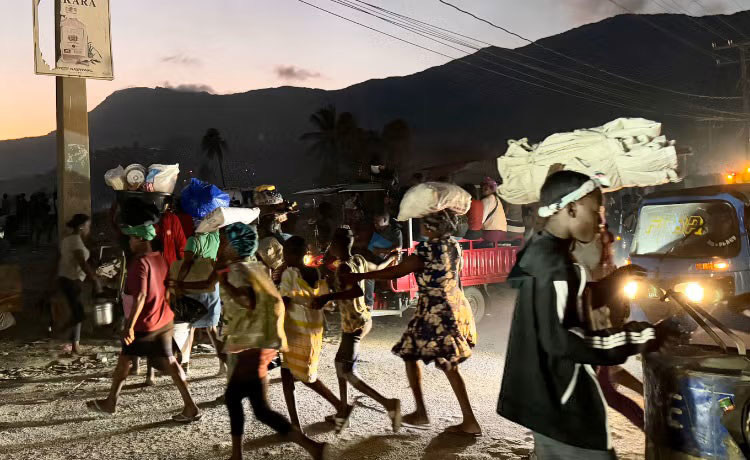
In Haiti, people carrying their business flee in near darkness.

The state university hospital, the largest in the country, was attacked during its reopening ceremony in December 2024, after a 10 -month closure, with several people killed, according to information. The same month, the armed gangs set fire to the Bernard Mevs hospital in Port-au-Prince, the capital, and in April, the attacks forced the Mirebalais university hospital to close.

The organized gangs lead a brutal campaign to take control of the capital, with rampant sexual violence. It is estimated that 1.2 million women and girls have an urgent need for protection against sexist violence, but due to the current insecurity, three of the four UNFPA safe spaces in Port-au-Prince have recently been forced to close and move. Since access to emergency services remains extremely limited, only one quarter of rape survivors receive care during the 72 -hour critical period.

© Unocha / Viktoria Andriievska

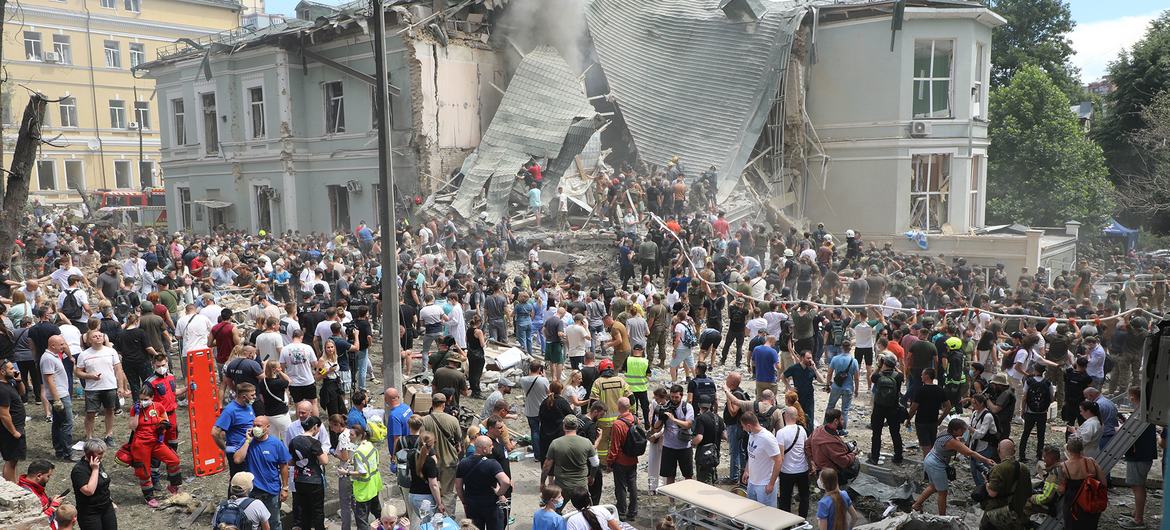
Ukraine’s largest pediatric health center, the Okhmatdyt Children’s Hospital in kyiv, was struck on July 8, 2024 in one of the worst missile attacks against the country.

Heavy telechoration in Ukraine

Since January 2025, the World Health Organization (WHO) has recorded more than 300 attacks by Russia against health establishments, services and staff in Ukraine, where women and girls are often forced to find safer places to take shelter and give birth.

I was afraid of giving birth, but life continues. We want to live too.

“Each day brings stress,” said Anastasiia de Sloviensk, in the Frontline Donetsk region. “Even if there is no immediate strike, the nearby fights are noisy and constant. I was afraid of giving birth, but life continues. We want to live too. »»

Its region does not have a neonatal intensive care unit and although doctors can carry out a cesarean section, they could not provide complete care if complications were. As it approaches its due date, Anastasiia has traveled some 20 km to reach the Kharkiv regional perinatal center despite the submission of the city regularly subject to bombing, drone strikes and artillery bombings.

The response workers who help women and anastasiia are often faced with risks.

“When we arrive on attack sites or in case of violence, we do not have time to slow down,” said Roman, who works with a mobile psychosocial support team from UNFPA in Dnipro. “It is as if our own reactions are pending. It is only later, when we look back and discuss it, we realize how difficult it was. “

Under fire in Dr Congo

In the Democratic Republic of eastern Congo (DRC), most establishments providing maternal health care have been bombed or looted.

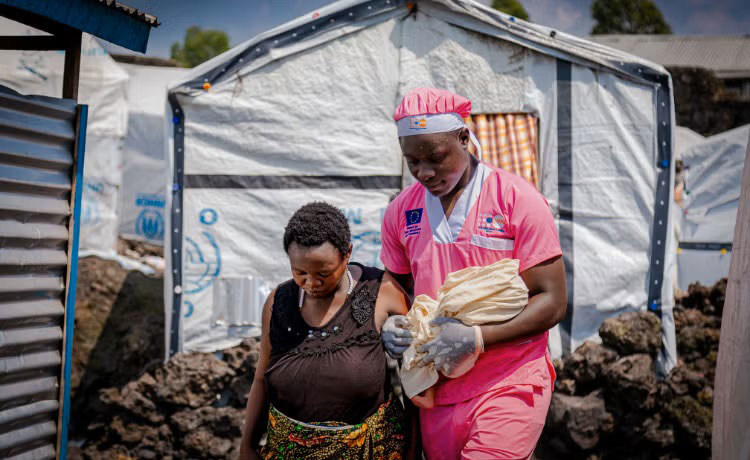
The Loti Kubuya Money Loti Honey assists a recently moved woman who gave birth in a refuge in Goma, Dr. Congo.

Indeed, only a third of hospitals in the region and one in five health centers are able to operate. UNFPA mobile health teams are often the only option that women have.

Moved since February 2023, Francine Toyata recalled her recent trip through “Darkness and Chaos” with her mother to reach a mobile health clinic supported by the UNFPA to give birth in the Ratshuru territory of the northern province of Kivu.

“It is for women like Francine that we do this work,” said Nelly, her midwife.

As the conflict intensifies, the bombs began to strike camps for internal displaced people, and the mobile health clinics and the listening centers were also looted and destroyed.

“We were not safe,” added Nelly. “We need more support to meet these urgent needs.”

Originally published at Almouwatin.com

Health and aid workers targeted in conflicts around the world, UN agency says

0
Health and aid workers targeted in conflicts around the world, UN agency says

Attacks against health facilities doubled between 2023 and 2024, and more than 900 health workers were killed last year, the agency reported.

Humanitarian aid workers were also killed in record numbers in 2024. Yet, 2025 is outpacing even these dark statistics at a time when funding for humanitarian work is shrinking and support services established over decades are struggling to operate.

The Special Surgery Building at Al-Shifa Medical Complex in central Gaza City has been reduced to rubble.

Assault on Gaza’s health system

The nearly two-year-long war has devastated Gaza’s health system, leaving thousands without access to essential services. Now, as famine takes hold, miscarriages, premature births and low birth weight cases have surged, while newborn deaths are increasing, the UN agency warned.

PULL QUOTE: Life must continue even when bombs are going off.

“Because the delivery room was under direct fire, I delivered babies in hospital hallways,” said Ayda, a senior midwife in northern Gaza. “For lights, we used mobile phones. Despite the lack of supplies and water, our hands continued to work. Life must continue even when bombs are going off.”

Since October 2023, the World Health Organization (WHO) has documented over 720 attacks on healthcare in Gaza, with at least 1,580 health workers killed and as yet unknown numbers arrested and detained by Israel. Among them was Ayda, who just days after sharing her story, was killed in an airstrike along with 37 members of her family.

Dr. Khalid Badreldin completed his studies at the Ibrahim Malik Hospital in Khartoum, which now lays in ruins.

Dr. Khalid Badreldin completed his studies at the Ibrahim Malik Hospital in Khartoum, which now lays in ruins.

Delivering amid devastation in Sudan

In a field of rubble that used to be part of the Ibrahim Malik Hospital in Khartoum, Dr. Khalid Badreldin, a reproductive health analyst with UNFPA in Sudan, recalled performing his first surgery and delivering his first baby there.

“Now, I find it like this,” he said, lamenting the now shuttered hospital that was once a major provider of emergency treatment and maternal and neonatal services. The hospital has joined more than 80 per cent of health facilities in Sudan’s conflict zones that are no longer operational.

Meanwhile, midwives in Khartoum, the capital, are taking “huge risks to reach women in their homes”, explained Hawaa Ismael, who works at the UNFPA-supported Kararai Health Centre.

“It was exhausting, working day and night, but it’s our duty, and I’m proud of what we’ve done.”

On the other side of the country, staff at the El Fasher Maternity Hospital have come under attack, with one midwife killed when her home was shelled on Thursday and another kidnapped.

Haiti’s spiralling crisis

Clinics and hospitals have been deliberately targeted in the crisis that has gripped Haiti over the past 18 months, further weakening a health system already hobbled after years of conflict, looting and financial collapse.

In Haiti, people carrying their belongings flee in near darkness.

In Haiti, people carrying their belongings flee in near darkness.

The State University Hospital, the country’s largest, was attacked at its reopening ceremony in December 2024, following a 10-month closure, with several people killed, according to reports. In the same month, armed gangs set fire to the Bernard Mevs Hospital in Port-au-Prince, the capital, and in April, attacks forced Mirebalais University Hospital to close.

Organized gangs are waging a brutal campaign to seize control of the capital, with sexual violence rampant. An estimated 1.2 million women and girls are in urgent need of protection against gender-based violence, but due to ongoing insecurity, three out of UNFPA’s four safe spaces in Port-au-Prince were recently forced to close and relocate. As access to emergency services remains extremely limited, just one quarter of rape survivors receive care within the critical 72-hour period.

Ukraine’s largest pediatric health centre, Okhmatdyt Children’s Hospital in Kyiv, was hit on 8 July 2024 in one of the worst missile attacks on the country.

© UNOCHA/Viktoriia Andriievska

Ukraine’s largest pediatric health centre, Okhmatdyt Children’s Hospital in Kyiv, was hit on 8 July 2024 in one of the worst missile attacks on the country.

Heavy toll in Ukraine

Since January 2025, the World Health Organization (WHO) has recorded over 300 attacks by Russia on healthcare facilities, services and personnel in Ukraine, where women and girls are often compelled to find safer places to shelter and give birth.

I was afraid to give birth, but life goes on. We want to live too.

“Every day brings stress,” said Anastasiia from Sloviansk, on the frontline Donetsk region. “Even if there’s no immediate strike, the fighting nearby is loud and constant. I was afraid to give birth, but life goes on. We want to live too.”

Her region lacks a neonatal intensive care unit and while doctors can perform a Caesarian section, they could not provide full care if complications arose. As her due date approached, Anastasiia travelled some 20km to reach the Kharkiv Regional Perinatal Centre despite the city being regularly subjected to bombings, drone strikes and artillery shelling.

The response workers who help women like Anastasiia often face risks.

“When we arrive at the sites of attacks or in cases of violence, we don’t have time to slow down,” explained Roman, who works with a UNFPA mobile psychosocial support team in Dnipro. “It’s like our own reactions are on hold. Only later, when we look back and discuss it, do we realise how difficult it actually was.”

Under fire in DR Congo

In the restive eastern Democratic Republic of the Congo (DRC), most facilities providing maternal healthcare have been bombed or looted.

Midwife Loti Kubuya Mielor assists a newly arrived displaced woman who gave birth in a shelter in Goma, DR Congo.

Midwife Loti Kubuya Mielor assists a newly arrived displaced woman who gave birth in a shelter in Goma, DR Congo.

Indeed, just one third of hospitals in the region and one in five health centres are able to function. UNFPA’s mobile health teams are often the only option women have.

Displaced since February 2023, Francine Toyata recalled her recent travel through “darkness and chaos” with her mother to reach a UNFPA-supported mobile health clinic to give birth in the Rutshuru territory of North Kivu province.

“It is for women like Francine that we do this work,” said Nelly, her midwife.

As the conflict escalates, bombs have started hitting camps for internally displaced people, and mobile health clinics and listening centres have also been looted and destroyed.

“We were not safe,” Nelly added. “We need more support to meet these urgent needs.”

Source link

Survivors’ voices ‘integral’ to preventing terrorism

0
Survivors’ voices ‘integral’ to preventing terrorism

This year marks the eighth commemoration of the International Day of Remembrance of and Tribute to the Victims of Terrorism. It serves to honour victims and survivors, elevate their voices, raise awareness, and highlight global solidarity.

“This International Day is not only one of remembrance; it’s a reaffirmation of our collective commitment to uphold the rights, dignity and voices of victims everywhere,” said Vladimir Voronkov, head of the UN Office of Counter-Terrorism (UNOCT) during remarks to the high level commemoration.

Remember and pay tribute

“We pay tribute to those whose lives were stolen by terrorism, and we stand in solidarity with those who continue to live with the pain, loss, and trauma,” he added.

The event featured testimonies from survivors and relatives of those killed: “Support should not be a privilege; it’s a right. And international solidarity must be matched by action,” he said.

United by hope

“I could no longer keep hiding my pain, I chose to transform it into purpose,” said Khalifah Mwarangi, whose father was killed in a terrorist attack in Kenya in November 2014.

This past April, UNOCT launched the Victims of Terrorism Associations Network (VoTAN), a global initiative that reflects a powerful truth: victims of terrorism should not be seen as passive subjects of compassion and support.

Survivors’ voices “are integral to shaping policy and driving change to prevent similar attacks,” said Mr. Voronkov.

“While terror tries to break us apart, coming together as victims build strength”, said Nanda Daniel, a survivor of the 2004 attack on Australia’s embassy in Jakarta, Indonesia. 

Source link

Experts urge shift in heatwave strategy to save lives

0


When the human body overheats, the consequences can be deadly. Heat stroke, heart attacks, kidney failure, and worsening

Source link