Monday, April 13, 2026
Home Blog Page 263

The UN honors fallen humanitarian workers on the world day of the humanitarian day

0

The first eight months of 2025 show no sign of reversal of this disturbing trend, with 265 humanitarian workers killed on August 14, according to figures published on World Humanitarian Day.

Attacks on humanitarian workers, assets and operations violate international law and undergo the living lines that support millions of people trapped in war and disaster areas.

“Even an attack on a humanitarian colleague is an attack on us all and against the people we serve,” said Tom Fletcher, Head of the United Nations Office for Humanitarian Affairs Coordination (Ochha), speaking in Geneva.

At New York headquarters, the United Nations organized a commemoration ceremony for the victims of the bombing of the United Nations SEIR SES office in Baghdad in 2003, which cost the lives of 22 people. Some of the survivors attended the event.

Protect humanitarian workers

“The humanitarian workers bear hope where there is despair,” said Fletcher during the commemoration ceremony of the humanitarian day for 2025 in Geneva.

“They bring humanity where there is inhumanity.”

However, humanitarian workers are attacked.

In 2024, most of the humanitarian workers killed were national staff serving their communities and were attacked in the exercise of their duties or at home.

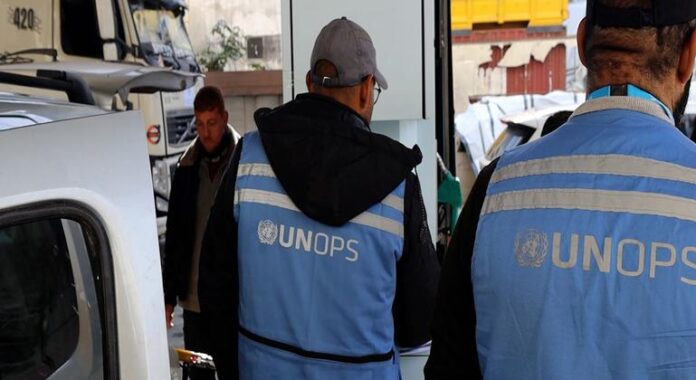
Since October 2023, 520 humanitarian workers, mainly staff from the UN Palestine refugee agency UNRWAwere killed in Gaza – the deadliest place for humanitarian workers for the second consecutive year.

OCHA has demanded that Member States protect civilians and humanitarian workers and hold responsible authors.

Despite the dangers, “humanitarian workers will not withdraw,” said Fletcher.

Humanitarian workers in the Middle East

Through the Middle East, civilians, including humanitarian workers, “are killed, injured and attacked in shocking numbers,” said the United Nations resident and humanitarian coordinators in the Palestinian Territory (OPT), Syria, Yemen and Lebanon in a joint declaration This Tuesday.

Since August 2024, at least 446 humanitarian workers have been killed, injured, kidnapped or detained in these places. “The world fails humanitarian workers and the people they serve,” the statement said.

Renewing their appeal to respect for international humanitarian laws and human rights, the officials have called on the international community to “protect those who protect humanity”.

Originally published at Almouwatin.com

The Security Council intends to speak of the increase in sexual violence linked to conflicts in the midst of the resources that fall

0

The CRSV crisis is deepened, reflecting the widening of the scope of war in the world. There were more than 4,600 cases of sexual violence linked to conflicts in 2024Marking an increase of 25% compared to 2023. And these data, Ms. Patten, underline, is a chronic sub-competition, only reflecting the cases verified by the UN.

In the midst of a general increase in the CRSV, sexual violence against children increased by 35% disturbing in the past year, with victims as young as a year.

The report extends over 21 situations of concern, with the greatest number of cases recorded in the Central African Republic, in the Democratic Republic of Congo (DRC), Haiti, Somalia and South Sudan.

In addition, parties in a credible manner of having committed or authorized the CRSV, there are new announcements in the DRC, Libya and the Palestinian territory occupied.

This crisis has a disproportionate impact on women and girls, who constantly represent more than 90% of the verified cases, such as 92% this year.

Report trends

Apart from the figures, Ms. Patten explained many trends concerning the report.

Firstly, the women and girls displaced and refugees are exposed to increased risks of sexual violence, which inhibits their yield safely.

Food insecurity also increases the risk of sexual violence because belligerent parties restrict humanitarian access

In addition, armed groups use sexual violence to consolidate the control of territorial and natural resources and to encourage the recruitment of combatants.

In particular, the CRSV also persists in formal and informal detention establishments worldwide.

Finally, as funding reductions cause the United Nations peace activities, the capacity of the United Nations system to reach and support CRSV survivors has decreased considerably.

Forced to do more with less

While global military spending in just 24 hours exceeds what is allocated in one year to approach the CRSV and the needs continue to increase, Ms. Patten stressed that “the women’s first-line organizations go from sub-financed to not funded”.

Apart from the United Nations peacekeeping missions, which has reduced their capacities, funding reductions caused shelters for survivors, medical supplies for rape victims to be exhausted and clinics close in the world.

In major hot conflicts such as Sudan, Ukraine, Ethiopia and Gaza, where health systems have been decimated, “Humanitarian organizations forced to do more and more with less and less. “”

“If we are serious about peace, we must finance the institutions that make peace possible. If we are serious about security, we must reaffirm the rule of law and hold responsible for those who commit, order or tolerate serious violations, including the crime of atrocity of sexual violence linked to conflicts, “she urged.

Action plan

Ms. Patten said that her mandate was pursuing three lines of response: promoting compliance, improving the provision of services and strengthening guarantees against impunity.

In improving delivery, she pointed out that the inter-ages network entitled Action not against sexual violence in conflictsThat she chairs, was “really transforming” in her response by advocacy, strengthening knowledge and joint operations on the ground and has reached thousands of survivors in 18 conflict zones.

As the demand for services prevails over the supply of resources, “any inability to maintain investment, any turning back on established standards or any detangling of existing architecture, not only would betray the survivors, but would embrace the authors more,” concluded Ms. Patten.

Originally published at Almouwatin.com

Press remarks by President António Costa following the video conference of the members of the European Council, 19 August 2025

0
Press remarks by President António Costa following the video conference of the members of the European Council, 19 August 2025

DISCLAIMER: Information and opinions reproduced in the articles are the ones of those stating them and it is their own responsibility. Publication in The European Times does not automatically means endorsement of the view, but the right to express it.

DISCLAIMER TRANSLATIONS: All articles in this site are published in English. The translated versions are done through an automated process known as neural translations. If in doubt, always refer to the original article. Thank you for understanding.

Source link

Gaza: Looming offensive and restrictions on humanitarians

0
Gaza: Looming offensive and restrictions on humanitarians

In the past 24 hours in Gaza, there have been more reports of casualties in shootings along aid convoy routes, where desperate crowds of civilians often wait to take supplies from the back of trucks.

Meanwhile, hostilities between Israeli forces and Palestinian armed groups are also escalating. In the past 24 hours, air strikes and shelling have occurred across five neighbourhoods in Gaza City, with reports of tanks and ground troops advancing.  

UN and partner officials in Gaza warned on Monday that the Israeli offensive would result in further mass displacement and “have a horrific impact on people already exhausted, malnourished, bereaved, displaced, and deprived of the basics needed for survival.”

Additionally, starvation persists in the enclave as supplies remain insufficient and inaccessible.  

Restrictions on international NGOs

OCHA also reported that the new requirements for international non-governmental organizations (NGOs) are preventing many humanitarian partners from bringing supplies into Gaza.  

To secure registration and bring in materials, international NGOs must share sensitive personal information about Palestinian employees, often contrary to their countries’ domestic legislation, which affects their ability to protect civilians.

Upcoming humanitarian work  

The UN and its NGO partners stressed that their teams will remain in Gaza City to provide life-saving support, reminding parties of their obligation to protect civilians, including humanitarian workers, and safeguard humanitarian infrastructure.

“Every day and every night, aid workers in Gaza courageously put themselves in harm’s way to keep others alive. At the same time, they also struggle to feed themselves and feed their own families,” said Spokesperson for the Secretary-General, Stéphane Dujarric, reporting on the situation in the context of World Humanitarian Day at Tuesday’s daily press briefing in New York.

“The world cannot look away while attacks on aid workers and on the very people they try to help have become routine.”

The humanitarian community welcomes the Israeli announcement that tents and shelter equipment will be allowed into Gaza, aiming to utilise this lifting of the ban to bring in tents, shelter materials and other items into the Gaza Strip. However, the UN and partners said it is deeply troubling that this lifting is in connection with a looming offensive.

They called for a significant scale-up of private sector operations and a full facilitation of deliveries from local and international humanitarian organizations, with supplies allowed to enter through all crossings. 

Source link

Press remarks by President António Costa following the video conference of the members of the European Council, 19 August 2025

0
Press remarks by President António Costa following the video conference of the members of the European Council, 19 August 2025

Press remarks by President António Costa following the video conference of the members of the European Council.

Source link

Gaza: Insufficient help to avoid “generalized famine” while the Israeli military power requires more people to flee

0

“The risk of famine is everywhere in Gaza,” said journalists in Geneva, spokesperson for the United Nations Human Rights Office, Thameen al-Kheetan.

“This is a direct result of the Israeli government’s policy to block humanitarian aid,” he said.

Mr. Al-Kheetan insisted that in recent weeks, the Israeli authorities have only made it possible to participate in quantities which remain “well below what would be necessary to avoid generalized famine”.

The UN said on Monday that hunger deaths continue to be reported in the band, including children.

More displaced people

While the Israeli army intensified its attacks in the north of the enclave, it continued to issue travel orders for the Palestinians, said Al-Kheetan.

He noted that the Gazans were invited to move to the Al-Mawasi region, despite continuous air strikes and disastrous conditions there.

“Hundreds of thousands of Palestinians moved to Al-Mawasi have little or no access to essential services and supplies, including food, water, electricity and tents,” he warned.

Deadly continuation of aid

THE Ohchr The spokesman stressed that the damage to humanitarian aid “may be a deadly prosecution” with the latest data indicating that 1,857 Palestinians were killed while they were looking for food from May 27, when the United States and the militarized aid distribution program supported by the United States and Israel known as Gaza Humanitarian Foundation have commented on its operations.

From this number, he said that 1,021 had been killed near the Gaza Humanitarian Foundation and 836 sites on the routes of supply trucks.

“Most of these murders seem to have been committed by the Israeli army,” said Al-Kheetan.

Ask how the situation could get worse, Jens Laerke, spokesperson for the United Nations Humanitarian Coordination Office (Ochha), said that “this has already worsened”, emphasizing the devastating effects of the Israeli ban on the entrance to shelter equipment in the enclave.

While the Israeli authorities recently announced that they would relieve the ban on shelter supplies, Laerke said that “the United Nations and our partners could not bring shelter equipment after the Israeli announcement”.

“There are a set of obstacles that must still be treated, including the authorization of Israeli customs,” he added.

Need refuge

The UN said on Monday that, according to partners’ estimates, at least 1.35 million people in Gaza needed an emergency shelter.

Aid agencies have warned that the tents used in Gaza are exhausted by prolonged exposure to the sun and frequent displacement.

Asked about the reasons given for the prohibition of shelter articles, Mr. Laerke explained that in a conflict, certain shelter articles such as tents of tents can be “duplicate diet” because they could be used for civil and military purposes.

“The shelter is forbidden to enter for about five months and during this period, more than 700,000 people have been moved or restarted,” he said.

People forced to flee repeatedly must often leave the tents which have been provided to them, explained Mr. Laerke, which creates a challenge for humanitarian workers “trying to respond to people where they are”.

The imminent expansion of Israeli military activities in Gaza City is another major concern for UN humanitarian workers, as it would grow thousands of people again in a seriously overcrowded area in the south of the strip.

Asked about the impact of Israel’s plans to occupy the city of Gaza, Mr. Al-Kheetan underlined a “enormous risk” for civilians.

“There are risks of mass movement … More murders and more misery that we have already seen in the Gaza Strip,” he warned. “Among those who will be affected are the most vulnerable, people with disabilities, injured, children, women,” he concluded.

Response to the prison video

In other developments, the human rights spokesman said This video sequence showing the Israeli Minister of National Security Itamar Ben-Gvir reprimands and mocking the Palestinian chief Marwan Barghouthi inside an Israeli prison was “unacceptable”.

He said that the Minister’s behavior and the publication of images are an attack on the dignity of Mr. Barghouthi.

He added that international law requires that all prisoners be treated with humanity, with dignity and that their human rights be respected and protected.

“Such a conduct of the Minister responsible for Israeli penitentiary services can encourage violence against Palestinian prisoners, allowing human rights violations in Israeli detention establishments,” he said

Originally published at Almouwatin.com

Statement by the Spokesperson on Israeli demolitions and settlement policy in the occupied West Bank, including East Jerusalem

0
Press remarks by President António Costa following the video conference of the members of the European Council, 19 August 2025

Statement by the Spokesperson on Israeli demolitions and settlement policy in the occupied West Bank, including East Jerusalem Source link

Source

Source link

Statement by the Spokesperson on Israeli demolitions and settlement policy in the occupied West Bank, including East Jerusalem

0
Press remarks by President António Costa following the video conference of the members of the European Council, 19 August 2025

Statement by the Spokesperson on Israeli demolitions and settlement policy in the occupied West Bank, including East Jerusalem

Source link

World Humanitarian Day 2025: Aid workers mull record toll of their own

0
World Humanitarian Day 2025: Aid workers mull record toll of their own

Speaking to UN News from the wartorn enclave to mark World Humanitarian Day, Olga Cherevko from the UN aid coordination office, OCHA, said that exhausted aid workers continue to show up for work “day in and day out”.

Approaching two years since the start of the war in Gaza, Ms. Cherevko emphasized the commitment of her Palestinian colleagues, “the doctors, the nurses, aid workers who many of them have, lost everything and several times over”.

Red lines crossed

In comments in support of aid workers everywhere, UN Secretary-General António Guterres pointed out that humanitarian teams “are the last lifeline for over 300 million people” impacted by conflict or disaster.

Despite their lifesaving role, funding cuts are having a serious and negative impact on the world’s most vulnerable people, Mr. Guterres warned, while those who provide aid are increasingly under attack as “red lines are crossed with impunity”.

This is despite the fact that such attacks are prohibited under international law, the UN chief continued, noting that although governments have pledged action to protect them, “what is missing is political will – and moral courage…Humanitarians must be respected and protected. They can never be targeted.”

Powerless to help

From her base in Deir Al-Balah in central Gaza, Ms. Cherevko reflected on the nature of humanitarian work today and the frustration that aid teams often face when their lifesaving missions are delayed, preventing them from delivering assistance at scale.

“I think as a humanitarian, I feel powerless sometimes in Gaza because I know what it is that we can do as humanitarians when we’re unable to do so, both here in Gaza and in any other humanitarian crisis,” she explained.

“The fact that we continue to face massive impediments for delivering aid at scale, when our missions are delayed, when our missions lasted 12, 14, 18 hours; the routes that we’re given are dangerous, impassible or inaccessible.”

Surge in killings

Latest data indicates a 31 per cent surge in aid worker deaths compared to 2023, driven by the relentless conflict in Gaza.

The Strip saw 181 humanitarian workers killed in 2024, with 60 more fatalities in Sudan. More widely, violence against aid workers increased in 21 countries in 2024 compared to the previous year, with State actors the most common perpetrators.

Worryingly, there is no sign that the trend is slowing this year, with 265 aid workers killed as of 14 August this year, according to provisional data from the Aid Worker Security Database.

Amid early reports that Hamas has agreed to a 60-day ceasefire in Gaza and ongoing uncertainty about the Israeli plan to pursue a complete military takeover of the enclave, OCHA’s Ms. Cherevko highlighted the need for a permanent end to the conflict.

Aid teams are exhausted and “everyone’s still showing up (to work), but courage alone and commitment alone isn’t going to feed people, isn’t going to save people”, she insisted. “What we need is, again, a permanent ceasefire. We need political solutions to this conflict and a resolution to this crisis.”

According to OCHA, most of the aid workers killed last year were national staff serving their communities, attacked in the line of duty or in their homes.

An additional 308 aid workers were wounded, with 125 kidnapped and 45 detained in 2024.

“Even one attack against a humanitarian colleague is an attack on all of us and on the people we serve,” said Tom Fletcher, UN Emergency Relief Coordinator. “Attacks on this scale, with zero accountability, are a shameful indictment of international inaction and apathy...Violence against aid workers is not inevitable. It must end.”

Why do we mark World Humanitarian Day?

On 19 August 2003, a bomb attack on the Canal Hotel in Baghdad killed 22 humanitarian aid workers, including the UN Special Representative of the Secretary-General for Iraq, Sergio Vieira de Mello. Five years later, the General Assembly adopted a resolution designating 19 August as World Humanitarian Day.

Each year, the international day brings together partners from across the humanitarian system to advocate for the survival, well-being and dignity of people affected by crises, and for the safety and security of aid workers.

The theme of this year’s commemoration overseen by OCHA is an end to the attacks on humanitarians and civilians and impunity under International Humanitarian Law. “We urge those in power to #ActForHumanity,” the UN agency said.


Source link

“ Our work is largely invisible ”: space trip to space at the first line of help

0

Before wearing a beige Wfp Vest and boots to face hurricanes, wars and refugee camps, the Portuguese scientist worked with satellite imagery and cartography, creating cards to support humanitarian missions, until he realized that he did not want to stay behind a computer screen.

On the occasion of World Humanitarian Daymarked every year on August 19, Mr. Matos shared his story with UN News.

Pedro Matos joined the PAM response team after the deadly Idai cyclone in Mozambique in 2019 (file)

Hurricane in war

“At some point, that was not enough,” he recalls about his space engineering work. “I didn’t want to make cards so that other people made humanitarian answers. I want to take these cards and be the one who answered. ”

That’s exactly what he did. At WFP, he first developed cards in the field, then continued to coordinate the agency’s emergency operations.

Since then, he has visited dozens of countries often at the epicenter of crises, from Hurricane Idai to Mozambique when the war in Ukraine.

In 2018, Pedro Matos watched the Kutupalong refugee camp where Rohingyas refugees live. (deposit)

“Like moving a whole government”

Coordinating an emergency response is like “moving an entire government”, where each United Nations agency represents a “ministry” and the response only works when everyone meets on the four essential areas of a crisis response: food, shelter, water and health.

After returning from a mission to Bangladesh, he described the efforts to respond to Cox’s Bazar, the largest refugee camp in the world and will house 700,000 people who have fled violence in Myanmar.

“We were able to provide better conditions for people to live in these limbo with a little more comfort,” he said, also remembered his visit there in 2018 at the height of the crisis.

At the time, “a million people crossed the border in a month”. Today, although they remain in “limbo”, he highlighted improvements such as more houses and roads resistant to monsoon, gas stoves and reforestation.

Pedro gear aboard a humanitarian aid flight after the Idai cyclone in Mozambique. (deposit)

Heartbreaking challenges and deep awards

The work has meant both challenges and rewards.

“We also had a few cases where we were kidnapped or that are criticized, but it is not the things that happen to us most that impacts us on,” he said. “These are the things that happen to others that have the most impact.”

Hurricane Idai in Mozambique was a category 5 hurricane that struck Beira in 2019 was one of the largest and most intense, but also more rewarding, he said.

“There is this mixture of something that was very intense and difficult because we could not reach everyone, but at the same time, the fact was that there were a lot of people-tens or hundreds of thousands of people-who would have died if we had not been there,” he said. “It was the most impactful answer of my 17 years to the United Nations.”

When he was in Yemen, “we were bombed 20 times a day” in the capital, Sanaa, he said, adding that “there is a strange normality” that develops.

“We find ourselves saying things like:“ No, it was not far away; It was only 500 meters from here, “he said. “It’s something I never thought of thinking or saying before doing this job.”

Arriving at the center of Ukraine several weeks after Russia’s large -scale invasion in early 2022, he described the situation as “very intense”. In a week, he and his colleagues began to distribute money to people coming from fronts.

We could not reach everyone, but there were tens or hundreds of thousands of people who would have died if we had not been there.

“When we interviewed people and asked them what they did with the money we gave them, it was very rewarding,” he said. “It was beautiful.”

Those who had been injured during the war used money to buy pain relievers. Others used it to pay the gas to escape the fronts. A mother had been able to buy from her daughter a ball of ice cream for the first time since the start of the war.

“His daughter was delighted,” he said. “There are very gratifying moments.”

Feed millions every day

“We all think that we know what the humanitarian sector or help is,” said Matos, adding that the scale during a crisis is much greater.

“I thought we would rehabilitate schools, nourishing 100 people,” he continued. “I never imagined that I would feed 13 million people a day in Yemen. The scale is absolutely incredible. “

However, humanitarian work is often considered a separate work, he said. Almost all the professions that exist in the private and government sectors also exist in a landscape of aid, lawyers, those who work in supply, as in supermarkets and human resources.

“I mainly do the same work as social workers or firefighters,” he said. “They do it here every day, and I do it elsewhere. But, our work is in the same field and very similar. ”

A toddler eats a food supplement, as part of the WFP nutrition program, in Mokha, Taiz, Yemen.

The value of a Nobel Prize

WFP received the Nobel Peace Prize in 2020, recognition that Mr. Matos received with humility.

“Our work is largely invisible, despite the diet of 120 million people every day,” he said. “It gave us a platform to raise awareness of crises like Congo, Myanmar, Sudan and Gaza, which often go unnoticed.”

Our work is largely invisible, despite the diet of 120 million people every day.

He said that his work consists in giving voice to the voiceless when crises fade from the titles of the news. Despite the difficulties and risks throughout his career, Mr. Matos has no doubt about the most important lesson he learned.

“People are essentially good,” he said. “Faced with the imminence of the tragedy, people are fundamentally good and want to help others, even if this other person is very different. It was good to realize it because it is not always easy when we are far from these crises. »»


Originally published at Almouwatin.com