Thursday, April 23, 2026
Home Blog Page 302

Latest News – Safety of ammonia as a fuel in shipping: new reports – EMSA

0
Latest News – Safety of ammonia as a fuel in shipping: new reports – EMSA

EMSA has published the third, fourth, and fifth parts of its study series on the safety of ammonia as a fuel in shipping. The overall aim of the study – which started in 2023 – is to assess the safety of the use of ammonia in the maritime industry, with the first part of the […]

Source link

With Gaza Smoldering, the ministers renew the push for a two -state solution to the UN

0

THE High -level international conference for peaceful regulation of the Palestine issue and the implementation of the two -state solution took place in New York from July 28 to 30.

The United States and Israel have not participated.

Saudi France and Arabia, conference co-presidents, have called on all UN member states to support a declaration of collective action to end the war in Gaza and to carry out a just, peaceful and sustainable settlement of the Israeli-Palestinian conflict.

THE New York Declaration on the peaceful regulation of the question of Palestine and the implementation of the two -state solution Describes political, humanitarian and security measures to take on a temporal and irreversible basis.

The co -chairs urged the countries to approve the declaration by the end of the 79th session of the General Assembly, in early September, if they wanted it.

Act before it is too late

In his Stark Opening remarks Monday, Secretary General Guterres stressed that the two -state solution is the only viable path To end the longtime conflict and reach lasting peace in the region, warning that there is no alternative.

“A reality to a state where Palestinians are refused equal and forced rights to live under perpetual occupation and inequalities? A reality with a single state where the Palestinians are expelled from their land? It is not peace. It is not justice. And it’s not acceptable, “he said.

He condemned the attack on October 7, 2023 of Hamas and the extent of Israel’s military response, reiterating his appeal to an immediate and permanent cease-fire, the unconditional release of hostages and without hindrance.

“This conflict cannot be managed. It must be resolved, ”concluded Mr. Guterres. “We have to act before it is too late.”

Secretary -General António Guterres addresses the high -level conference on the peaceful regulation of the Palestine issue and the implementation of the two -state solution.

Call for peace

During the three days, more than 125 speakers took the floor during the general debate, including high-level representatives from around the world and the main regional and international organizations such as the Islamic Cooperation Organization (OCI) and the International Red Cross Committee (ICRC).

The delegates underlined the urgency of the concrete stages to carry out a solution to two states, emphasizing the need to empower and reform the Palestinian authority, to rebuild Gaza and to guarantee responsibility for violations of international law.

France, which co -chaired the conference, recalled its support for Israel when it joined the community of nations and said that the Palestinians deserve the same right to a homeland.

“At a time when the two-state solution is more threatened than ever, France is ready to fully recognize the state of Palestine,” said Jean-Noël Barrot, Minister of Europe and Foreign Affairs. This recognition, he added, comes in September when the leaders meet for the 80th session of the General Assembly.

The Minister of Saudi Affairs, Coprés, Faisal Bin Farhan Al Saud, underlined the suffering of thousands of civilians in Gaza under bombing, while Israeli establishments develop in Jerusalem and in the West Bank to modify the demographic nature of the region.

“Peace and security do not take place through the deprivation of rights or strength,” he said, stressing the need for an authentic and irreversible peace process.

The Minister of Foreign Affairs, David Lammy, of the United Kingdom, deals with the high-level conference.

The Minister of Foreign Affairs of the United Kingdom, David Lammy, described recent actions in the United Kingdom-in particular the suspension of arms exports and sanctions against extremist colonists, and the restoration of the funding of the United Nations Agence on Rescue and Works for Palestinian refugees.

“It is with the hand of history on our shoulders that the government of His Majesty therefore intends to recognize the state of Palestine when the General Assembly of the United Nations is gathered in September here in New York,” he said.

“We will do so unless the Israeli government agrees to end the appalling situation in Gaza, ends its military campaign and is committed to long -term lasting peace on the basis of a two -state solution.”

Originally published at Almouwatin.com

Haitians in ‘despair’ following abrupt suspension of US humanitarian support

0
Haitians in ‘despair’ following abrupt suspension of US humanitarian support

The cancellation of most US funding in January means many services to the most vulnerable people have been cut or put on hold.

Multiple political, security and socioeconomic crises have led to 5.7 million people suffering from a lack of food and have forced 1.3 million people to flee their homes.

With a dramatic reduction in funding, Haiti faces a crucial “turning point”.

UN News spoke to OCHA’s country director, Modibo Traore, about the current situation.

UN News: What is the current state of humanitarian funding in Haiti?

Modibo Traore: Humanitarian funding in Haiti is going through a critical phase, marked by a growing gap between the needs and available resources. As of 1 July, only around 8 per cent of the $908 million required had been mobilised.

This partial coverage only allows a fraction of the 3.6 million people targeted to be reached.

© UNICEF/Maxime Le Lijour

UN aid agencies continue to support Haitian people with humanitarian aid.

The sectors most affected are food security, access to drinking water, primary healthcare, education and protection.

This contraction in international support is part of a global context of multiple competing crises – Ukraine, Gaza, Sudan – but also reflects a loss of political interest in the Haitian issue.

UN News: What conditions in Haiti have led to such significant funding needs?

Modibo Traore: The growing humanitarian needs observed in Haiti are the result of an accumulation of structural and cyclical factors. On the socioeconomic front, multidimensional poverty affects a large part of the population.

Haiti’s exposure to natural hazards is an aggravating factor.

The country has experienced several major hurricanes that struck the southern region less than a week after an earthquake that severely affected the area, not to mention repeated droughts that have had a major impact on agriculture and livestock farming.

The downtown area of Port-au-Prince remains extremely dangerous due to gang activity.

The downtown area of Port-au-Prince remains extremely dangerous due to gang activity.

Since 2019, a new dimension has emerged: chronic insecurity caused by the proliferation of armed groups, particularly in the capital, Port-au-Prince, and now in the Centre and Artibonite departments.

In 2024, the multidimensional crisis that has been shaking Haiti for years has become catastrophic.

The level of violence and insecurity remains high, with devastating consequences for the population, including massive displacement of people who were already in vulnerable situations.

UN News: How has the growing control of armed groups affected donor confidence?

Modibo Traore: The rise of armed groups in Haiti and their increasing control of strategic locations, particularly major roads and ports of entry to the capital, is a major obstacle to the safe and efficient delivery of humanitarian aid.

This dynamic has an impact on the risk perception of international donors, who now assess Haiti as a high-threat environment for intervention. Access to beneficiaries has become irregular in many areas.

The deterioration of the security situation represents a major challenge for mobilising and maintaining financial commitments.

Donors have expressed concerns about operational risks, particularly regarding securing supply chains, preventing exploitation and ensuring accountability.

The operational cost of aid has also increased.

UN News: What is the impact of the new approach taken by the US administration?

Modibo Traore: On 20 January 2025, President Donald Trump signed Executive Order 14169, which imposed an immediate suspension of all new foreign funding by US federal agencies, including humanitarian programs run by USAID and multilateral partners.

In the case of Haiti, the effects were felt through the sudden halt of approximately 80 per cent of US-funded programmes. NGO partner staff were laid off, payments were suspended and supply chains were disrupted.

US food aid is prepared for delivery following floods in Haiti in 2022.

US food aid is prepared for delivery following floods in Haiti in 2022.

Beyond the structural effects, this suspension created profound uncertainty in the Haitian humanitarian system. This situation not only weakened the continuity of essential services, but also affected trust between beneficiary communities and humanitarian actors.

UN News: To what extent is the current situation unprecedented?

Modibo Traore: The year 2025 marks a turning point in humanitarian aid in Haiti. This crisis is not the result of a single or isolated event, but rather a series of deteriorating situations in the context of gradually waning international attention.

The interruption of US programmes has acted as a catalyst for the crisis. USAID’s technical partners, many of whom managed community health programmes in vulnerable neighbourhoods, have ceased operations, depriving hundreds of thousands of people of vital services.

US-co-funded health centres have closed, leaving pregnant women and children without assistance.

The current crisis demonstrates the country’s growing isolation.

While previous crises had prompted rapid international solidarity, the humanitarian response to the situation in 2025 has been slow and partial.

UN News: What difficult decisions have had to be made regarding cutting aid?

Modibo Traore: The interruption of funding has forced humanitarian organizations to make ethically complex and often painful trade-offs.

In the area of protection, for example, safe spaces for women and girls have been drastically reduced.

The long-term development of Haiti is at risk as funding decreases.

The long-term development of Haiti is at risk as funding decreases.

Cash transfer programmes, widely used in urban areas since 2021, have also been suspended. These programmes enabled vulnerable households to maintain a minimum level of food security. Their suspension has led to a resurgence of coping mechanisms such as child labour, less food and children being taken out of school.

Resilience-building activities have also been affected. Programmes combining food security, urban agriculture, and access to water, often co-financed by USAID and UN funds, have been frozen.

This compromises not only the immediate response, but also the development of medium-term solutions.

UN News: How are Haitians being affected?

Modibo Traore: Children are among the hardest hit. UNICEF and its partners have treated more than 4,600 children suffering from severe acute malnutrition, representing only 3.6 per cent of the 129,000 children expected to need treatment this year.

The proportion of institutional maternal deaths has also increased from 250 to 350 per 100,000 live births between February 2022 and April 2025.

A survivor of rape rests at a site for internally displaced people in Port-au-Prince.

© PAHO/WHO/David Lorens Mentor

A survivor of rape rests at a site for internally displaced people in Port-au-Prince.

In terms of security, the effects are equally worrying. Gender-based sexual violence (GBV) has increased in neighbourhoods controlled by armed groups.

In short, the withdrawal of US funding has led to a multidimensional regression in the rights of women and girls in Haiti, with consequences that are likely to last for several years.

UN News: How have people in Haiti reacted?

Modibo Traore: Beneficiaries expressed a sense of despair at the sudden suspension of the services.

In working-class neighbourhoods of Port-au-Prince as well as in remote rural areas, the cessation of food distribution, community healthcare and cash transfers was experienced as a breach of the moral contract between communities and humanitarian institutions.

Humanitarian partners communicate transparently about the reduction of support, so communities are, to some extent, aware of the financial constraints.

Source link

breaking the vicious circle of air conditioning

0
breaking the vicious circle of air conditioning

Europe is already the fastest-warming continent and temperatures have once again topped 42° this summer. It’s no wonder we’re tempted to switch on the air conditioning — but the hotter we get and the more we crank up the aircon, the more the world heats up.  

With the number of room air conditioners (RACs) in the EU predicted to rise from less than 7 million in 1990 to more than 100 million in 2030, conventional space cooling only adds to the problem. That’s especially true in cities, where air conditioning can significantly worsen the urban heat island effectone study in Paris found it could increase outside temperatures by up to 4°C.  

Currently, around 99% of all RACs in Europe use energy-hungry, inefficient vapour compression technology and refrigerants with a global warming potential up to 10 000 times higher than CO2

The €2.1 million, 3-year CoolLIFE project aims to break this vicious circle by reducing space cooling needs, improving energy efficiency, increasing the use of renewable energy and promoting new cooling technologies. 

‘There’s a lack of data, information and awareness among both professionals and householders about natural, passive and free space cooling including nature-based solutions,’ says CoolLIFE project coordinator Simon Pezzutto. ‘Space cooling demand in Europe has been steadily increasing for decades and is expected to accelerate in the future. We urgently need efficient and sustainable cooling solution to meet this demand.’ 

The project has 2 main strands: the CoolLIFE tool — which maps space cooling demand across the EU, with data on comfort levels, lifestyle and user behaviour in different countries, regions and cities — and the CoolLIFE knowledge hub, a digital gateway to space cooling-related data, resources and financing schemes. The CoolLIFE tool has already been tested in 3 municipalities across northern, central and southern Europe, and this year the project launched the CoolLiving campaign with advice on how Europeans can stay cool this summer, including top 5 tips to deal with heatwaves and growing indoor plants to keep your home cool

But the biggest challenge remains the construction of new buildings and the renovation of existing ones to ensure they are cool and comfortable without adding to climate change. ‘New buildings can be designed to limit their cooling needs, they can favour alternatives to air conditioning systems,’ says Jean-Sébastien Broc from the Institute for European Energy and Climate Policy (IEECP), one of the project partners. ‘One solution to reduce the cost of implementing measures in existing buildings can be to incorporate actions to reduce cooling needs into planned renovation projects.’ 

The CoolLIFE project was tested in various EU countries, and the results indicate a significant increase in space cooling demand by 2050, along with rising energy costs and a need for targeted policy measures. For example, in Austria: 

  • Space cooling demand is projected to rise to over 7,000 GWh/year by 2050 without interventions, but could be limited to under 2,500 GWh/year by prioritising passive measures.
  • Energy costs for space cooling are expected to increase significantly, reaching over €200 per MWh by 2050.
  • There is a need for targeted policy measures to encourage the adoption of efficient and sustainable space cooling solutions, and to support the development of innovative and effective space cooling technologies. 

CoolLIFE is one of hundreds of LIFE projects dedicated to mitigating the impacts of climate change and helping EU citizens adapt to global heating. The project is aligned with the goals of the European Green Deal, EU Climate Adaptation Strategy, 2050 Long-term Climate Strategy and the EU Mission on Adaptation to Climate Change. It also supports the Energy Efficiency Directive, the Fit for 55 package and the Renewable Energy Directive

Source link

World News in Brief: Violence in Somalia, Cholera in Haiti, Tax support for sustainable development

0

The clashes intensified in the city of Mahas in the Hiraan region, in the state of Hirshabelle, on July 26, forcing the whole population – more than 28,000 people – to flee their homes.

38,000 other people were moved to the Gedo region, in the state of Jubaland, between July 23 to 26, some of which crossed Kenya.

Safety problems have forced seven health establishments in the Hiraan region to suspend operations, leaving thousands of people without essential health care and emergency services. Humanitarian access has also been limited, especially in areas that were already difficult to reach.

Ochha note that only a limited number of aid partners is able to operate in these places given insecurity as well as financial constraints. Meanwhile, affected communities need urgent shelter, food, clean water, health care and protection.

The situation takes place while aid agencies struggle with serious financing cuts. A humanitarian plan of $ 1.4 billion for Somalia this year is funded by around 16%, with $ 229 million received to date.

Cholera haunts families in Haiti

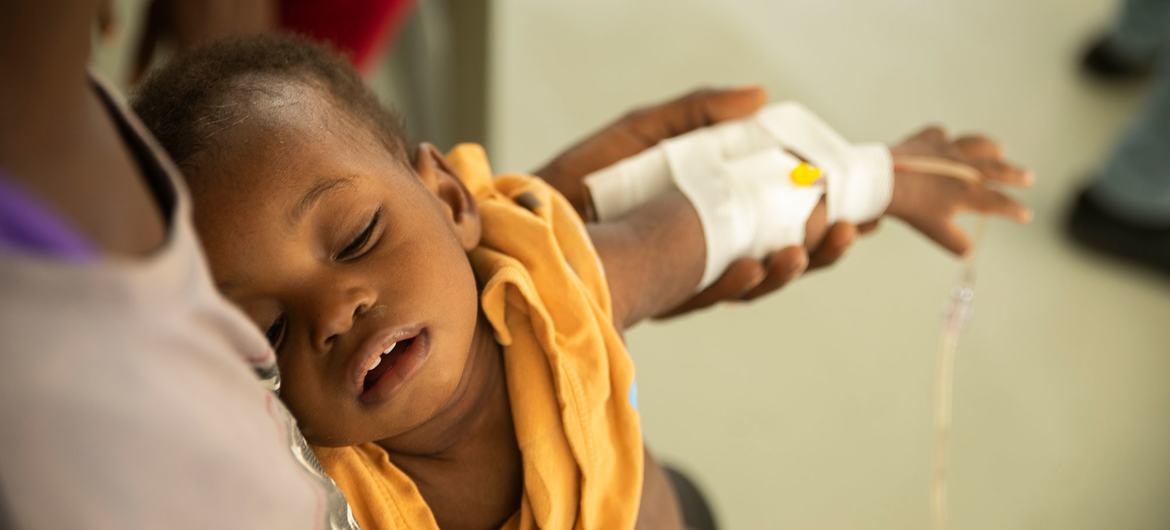
Cholera continues to have an impact on the fragile public health system in Haiti, especially in sites hosting displaced people where there is limited access to water and sanitation in complete safety.

The country of the Caribbean is confronted with several political, security and socio-economic crises, including an activity of creeping gangs mainly in the capital, Port-au-Prince.

The United Nations World Health Organization (WHO) said that between July 13 and 19, 34 new suspicious cases of cholera had been reported in six of the country’s 10 departments. Most were linked to travel sites.

Five hot shots of active transmission have been identified, notably in Port-au-Prince and in the northern regions.

Since December 2024, more than 2,800 suspicious cases of cholera have been recorded across Haiti, with 91 cases confirmed in the laboratory and 36 deaths.

Despite the financing of deficits, UN humanitarian partners continue to carry out key preventive and response to cholera.

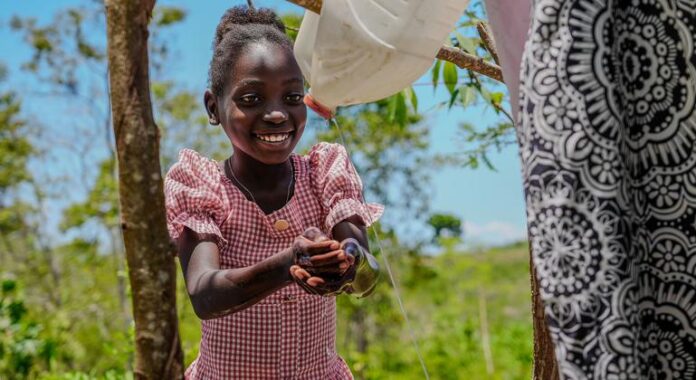
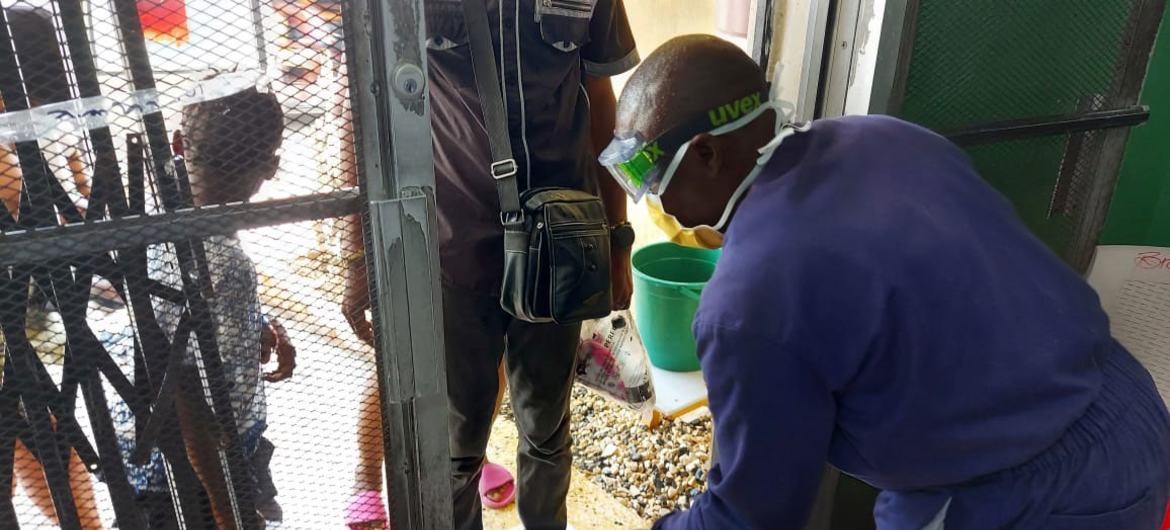
Families from the Artibonite Department have received tables for purification of water and oral rehydration salt, for example, while the partners of the Haiti center installed hand washing stations and increased community awareness.

Experts to help countries create tax policies that advance sustainable development

Secretary General António Guterres has appointed 25 Experts from a United Nations Committee to help countries design tax policies that advance their social, environmental and economic objectives.

THE Committee of United Nations Experts in International Cooperation in Tax Materials supports governments in the navigation of compromise of complex policy. His work offers countries practical options and tools based on real experiences of tax systems around the world.

The 25 experts, who will be used in the quarter 2025-2029, have diversified expertise in the design and administration of tax policy, as well as international tax cooperation.

They represent various geographic regions and tax systems, and the majority are women, reflecting the UN’s commitment to strengthen inclusiveness in fiscal leadership.

Originally published at Almouwatin.com
Sudan seized by a fatal crisis while hunger, disease and heat intensifies

0

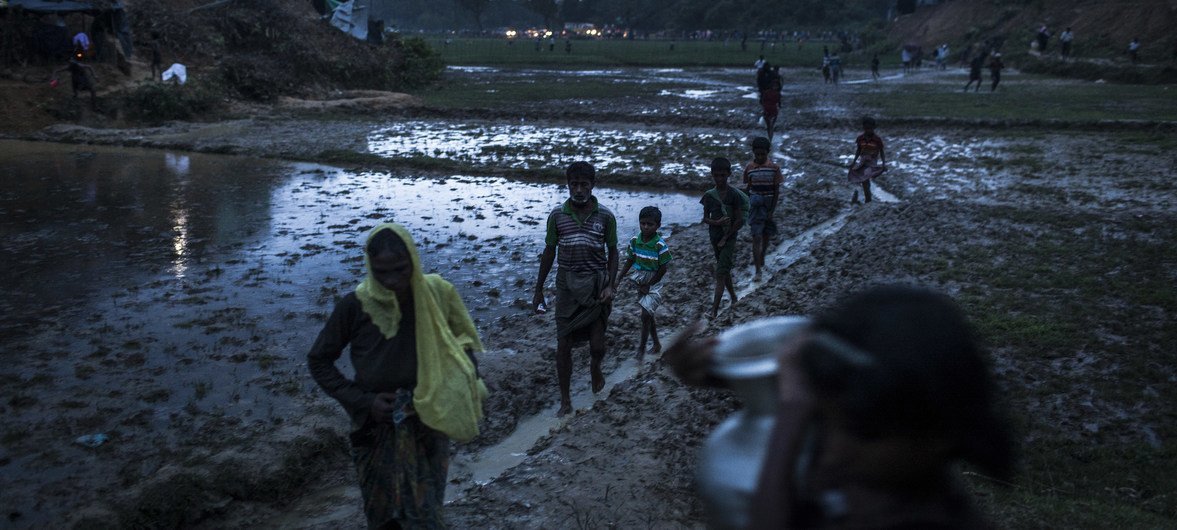
In El Fasher, the capital of the north of Darfur which has been as a seat for 15 months, the catastrophic humanitarian situation aggravates. Food shortages and prices are built up for the cuisines managed by the community to close. Generalized hunger and malnutrition would have caused several deaths and pushed some residents to eat animal food.

In the locality of Tawila northern Darfur, humanitarian organizations had to strengthen their responses to the increase in cholera cases. They have expanded the capacities of treatment centers, but the needs remain disastrous. Low water content medical supplies and the construction of latrines are urgent necessities.

In the state of eastern Darfur, the Lagawa travel site, welcoming more than 7,000 people, faces serious food shortages and repeated armed attacks. Doctors warn that the current conflict continues to block the provision of aid, so that vulnerable families find themselves without access to food or health care.

Extreme heat and torrential rain

Meanwhile, floods and storms move families and destroy houses across the country.

In the locality of Rahad of the state of North Kordofan, heavy rains moved on Monday about 550 people and damaged or destroyed more than 170 houses.

Torrential rains in the eastern state of Kasssala have devastated the Gharb Almatar travel site, affecting more than 6,000 people. Many tents have been flooded, exposing children to cold, hunger and unsanitary conditions. Displaced families need cash, shelter and protection aid.

In the coastal city of Port Sudan, Extreme Heat continues to endanger lives, with three reported deaths and 50 cases of distress this week in the midst of booming temperatures and generalized power outages.

While temperatures reach 47 degrees Celsius (116.6 degrees Fahrenheit), outdated hospitals encourage health workers to call for urgent support, including cooling equipment, medical supplies and staff.

Call on an increase in financing

With these aggravating crises, international support is desperately necessary. The 2025 response plan, which is looking for $ 4.2 billion to help 21 million of the most vulnerable people across Sudan, is only funded by 23% to date.

Ochha Once again, international donors have increased funding for the response.

Originally published at Almouwatin.com
Haitians in “despair” following the abrupt suspension of American humanitarian support

0

The cancellation of most American funds in January means that many services to the most vulnerable persons have been deleted or suspended.

Several political, security and socioeconomic crises have led 5.7 million people suffering from a lack of food and forced 1.3 million people to flee their homes.

With a spectacular reduction in funding, Haiti faces a crucial “turning point”.

UN News speak OchhaDirector of Country, Modibo Traore, on the current situation.

UN News: What is the current state of humanitarian funding in Haiti?

Modibo Traore: Humanitarian funding in Haiti involves a critical phase, marked by an increasing difference between the needs and the resources available. On July 1, only about 8% of the needed $ 908 million had been mobilized.

This partial coverage allows only a fraction of the 3.6 million targeted people.

© Unicef / Maxime the Lijour

The United Nations help agencies continue to support the Haitian people with humanitarian aid.

The most affected sectors are food security, access to drinking water, primary health care, education and protection.

This contraction in international support is part of a global context of multiple competing crises – Ukraine, Gaza, Sudan – but also reflects a loss of political interest for the Haitian issue.

UN News: What conditions in Haiti have led to such important financing needs?

Modibo Traore: The growing humanitarian needs observed in Haiti are the result of an accumulation of structural and cyclical factors. On the socioeconomic front, multidimensional poverty affects a large part of the population.

Haiti exposure to natural risks is an aggravating factor.

The country has experienced several major hurricanes that hit the South region less than a week after an earthquake that seriously affected the region, not to mention repeated droughts that have had a major impact on agriculture and breeding.

The city center of Port-au-Prince remains extremely dangerous due to the activity of the gangs.

Since 2019, a new dimension has appeared: chronic insecurity caused by the proliferation of armed groups, in particular in the capital, Port-au-Prince and now in the departments of the Center and the Artibonite.

In 2024, the multidimensional crisis that has been shaking Haiti for years has become catastrophic.

The level of violence and insecurity remains high, with devastating consequences for the population, including a massive displacement of people who were already in vulnerable situations.

UN News: How did the growing control of armed groups affect donors’ confidence?

Modibo Traore: The rise of armed groups in Haiti and their growing control of strategic locations, in particular the main roads and the entrance ports in the capital, is a major obstacle to the safe and effective contribution of humanitarian aid.

This dynamic has an impact on the perception of the risks of international donors, which now evaluate Haiti as a high threat environment for intervention. Access to beneficiaries has become irregular in many areas.

The deterioration of the security situation represents a major challenge to mobilize and maintain financial commitments.

Donors have expressed concerns about operational risks, in particular with regard to the securing of supply chains, operating prevention and responsibility.

The operational cost of aid has also increased.

UN News: What is the impact of the new approach adopted by the US administration?

Modibo Traore: On January 20, 2025, President Donald Trump signed the executive decree 14169, which imposed an immediate suspension of all new foreign funding by American federal agencies, including humanitarian programs managed by USAID and multilateral partners.

In the case of Haiti, the effects were felt by the sudden judgment of around 80% of the programs financed by the United States. The NGO partners were dismissed, the payments were suspended and the supply chains were disrupted.

Food aid in the United States is prepared for delivery following floods in Haiti in 2022.

Beyond the structural effects, this suspension has created a deep uncertainty in the Haitian humanitarian system. This situation not only weakened the continuity of essential services, but also affected confidence between beneficiary communities and humanitarian actors.

UN news: to what extent is the current situation unprecedented?

Modibo Traore: The year 2025 marks a turning point in humanitarian aid in Haiti. This crisis is not the result of a unique or isolated event, but rather a series of deterioration situations in the context of progressive international attention.

The interruption of American programs acted as a catalyst for the crisis. USAID technical partners, many of whom have managed community health programs in vulnerable neighborhoods, have ceased to operate, depriving hundreds of thousands of vital service.

Health centers funded by the United States has closed, leaving pregnant women and children without help.

The current crisis demonstrates the growing isolation of the country.

Although the previous crises caused rapid international solidarity, the humanitarian response to the situation in 2025 was slow and partial.

UN News: What difficult decisions must have been made regarding the help of help?

Modibo Traore: The interruption of funding forced humanitarian organizations to make ethically complex and often painful compromises.

In the field of protection, for example, safe spaces for women and girls have been considerably reduced.

The long -term development of Haiti is at risk as funding decreases.

The cash transfer programs, widely used in urban areas since 2021, have also been suspended. These programs have enabled vulnerable households to maintain a minimum level of food security. Their suspension has led to a resurgence of adaptation mechanisms such as child labor, less food and children leaving school.

Resilience strengthening activities have also been affected. Programs combining food security, urban agriculture and water access, often co -financed by the USAID and UN funds, have been frozen.

This compromises not only the immediate response, but also the development of medium -term solutions.

UN News: How are Haitians affected?

Modibo Traore: Children are among the hardest. Unicef And its partners have treated more than 4,600 children with acute serious malnutrition, representing only 3.6% of the 129,000 children who should need treatment this year.

The proportion of institutional maternal deaths has also increased from 250 to 350 per 100,000 living births between February 2022 and April 2025.

© Paho / Who / David Lorens Mentor

A survivor of rape is based on a site for people displaced internally in Port-au-Prince.

In terms of security, the effects are also disturbing. Gender violence on gender (GBV) has increased in neighborhoods controlled by armed groups.

In short, the withdrawal of American financing led to a multidimensional regression of the rights of women and girls in Haiti, with consequences that should last several years.

UN News: How did people in Haiti react?

Modibo Traore: The beneficiaries expressed a feeling of despair in the face of the sudden suspension of services.

In the neighborhoods of the working class of Port-au-Prince as well as in remote rural areas, the cessation of food distribution, community health care and cash transfers was experienced as a termination of the moral contract between communities and humanitarian institutions.

Humanitarian partners transparently communicate on the reduction of support, so that communities are, to a certain extent, aware of the financial constraints.

Originally published at Almouwatin.com

Children of Hungry Gaza despite the Israeli “tactical breaks”, says the UN

0

Explaining during the regular briefing in New York, the deputy spokesman for the United Nations, Farhan Haq, said that even four days after the breaks announced: “We still see losses among those who asked for help and more deaths due to hunger and malnutrition.”

He added that parents “find it difficult to save their hungry children” and have warned that the current conditions for the delivery of aid are “far from sufficient”.

The United Nations Office for Humanitarian Affairs Coordination (Ochha) said that if it uses each window available to provide supplies during unilateral breaks, the need for a need for a large thing.

“A permanent cease-fire is more than ever necessary,” said Haq, stressing that “unilateral tactical breaks alone do not allow the continuous flow of supplies necessary to meet immense levels of needs in Gaza.”

Access a major obstacle

Access remains one of the biggest obstacles.

The entrance through the Kerem Shalom / Karem Abu Salem crossing requires several layers of approval from the Israeli authorities, including a safe passage, the bombing and the literal opening of the locked doors.

“Yesterday, three facilitated missions allowed our staff to collect cargoes containing food from Kerem Shalom and crossings of Zikim and made it possible to transfer fuel to Gaza,” said Mr. Haq.

“However, the others were faced with obstacles, in particular delays in receiving the green light to move by the Israeli authorities, and you had to be canceled.”

Extreme hunger haunts children

The situation was taken up by Ricardo Pires, UnicefThe director of communication, who returned from Gaza this week.

“It’s absolutely apocalyptic,” he said UN News. “The children are injured and killed while trying to get food and help while suffering from malnutrition and hunger.”

Pires said that two of the three criteria for a famine declaration had been met, according to the Last alert of food security experts.

UNICEF and other agencies are also struggling with the collapse of basic infrastructure.

Perfect storm of suffering for children

“We are on the verge of artificial drought,” said Mr. Pires, with only 40% of the operation of water production and children turning to contaminated sources, risking deadly disease.

“Children are dehydrated. They return to contaminated water, which will make them sick, with fatal diseases or diarrhea epidemics and in some cases, even meningitis, “he added.

“It is a perfect perfect storm of suffering for children.”

UN News Interview with UNICEF Communication Director, Ricardo Pires.

Originally published at Almouwatin.com

Gaza children starving despite Israeli ‘tactical pauses’, UN says

0
Gaza children starving despite Israeli ‘tactical pauses’, UN says

Speaking at the regular news briefing in New York, UN Deputy Spokesperson Farhan Haq said that even four days into the announced pauses, “we are still seeing casualties among those seeking aid and more deaths due to hunger and malnutrition.”

He added that parents are “struggling to save their starving children” and warned that the current conditions for aid delivery are “far from sufficient.”

The UN Office for the Coordination of Humanitarian Affairs (OCHA) said that while it is using every available window to deliver supplies during the unilateral pauses, the scale of need vastly outpaces what is getting through.

“A permanent ceasefire is needed more than ever,” Mr. Haq said, emphasising that “unilateral tactical pauses alone do not allow for the continuous flow of supplies required to meet immense needs levels in Gaza.”

Access a major hurdle

Access remains one of the biggest hurdles.

Entry through the Kerem Shalom/Karem Abu Salem crossing requires multiple layers of approval from Israeli authorities – including safe passage, cessation of bombardment, and the literal opening of locked gates.

“Yesterday, three facilitated missions allowed our staff to collect cargo containing food from the Kerem Shalom and Zikim crossings and allowed for fuel to be transferred within Gaza,” Mr. Haq said.

“However, the others faced impediments, particularly delays in receiving the green light to move by the Israeli authorities, and one had to be cancelled.”

Extreme hunger haunts children

The situation was echoed by Ricardo Pires, UNICEF’s Communication Manager, who returned from Gaza this week.

“It’s absolutely apocalyptic,” he told UN News. “Children are being injured and killed while trying to get food and aid, while suffering from malnutrition and hunger.”

Mr. Pires said that two out of the three criteria for a famine declaration have been met, according to the latest alert by food security experts.

UNICEF and other agencies are also grappling with the collapse of basic infrastructure.

Perfect storm of suffering for children

“We’re at the brink of a man-made drought,” Mr. Pires said, with only 40 per cent of water production functioning and children turning to contaminated sources, risking deadly disease.

“Children are dehydrated, they are reverting to contaminated water, which will make them sick, with deadly diseases or diarrhoea outbreaks and in some cases, even meningitis,” he added.”

“It is a complete perfect storm of suffering for children.”

UN News interview with UNICEF Communication Manager Ricardo Pires.

Source link

Statement by the High Representative on behalf of the EU on the alignment of certain countries concerning restrictive measures against serious human rights violations and abuses

0
Statement by the High Representative on behalf of the EU on the alignment of certain countries concerning restrictive measures against serious human rights violations and abuses

Statement by the High Representative on behalf of the European Union on the alignment of certain third countries with Council Decision (CFSP) 2025/1110 of 28 May 2025 amending Decision (CFSP) 2020/1999 concerning restrictive measures against serious human rights violations and abuses.

Source link