Saturday, September 26, 2026
Home Blog Page 314

Sudan war: Lifesaving cholera vaccination campaign begins in Darfur

0
Sudan war: Lifesaving cholera vaccination campaign begins in Darfur

The World Health Organization (WHO)’s Deputy Representative to the country Hala Khudari reported on Tuesday that the outbreak, which started in July 2024 in Kassala, has spread to all 18 states of the country.

More than 113,600 cases have been registered so far and over 3,000 deaths – a “concerning case fatality rate” of 2.7 per cent.

Speaking from Port Sudan, she said that the past year saw surges in White Nile and Khartoum among other states, resulting from the impact of the conflict and increased population movement. This critical situation has been compounded by severely limited basic services such as water, food and health, caused by ongoing heavy fighting between the Sudanese army and the paramilitary Rapid Support Forces.

Cholera is an acute intestinal infection that spreads through bacteria-contaminated food and water. According to WHO, it can kill within hours when not treated, and case fatality rates above one per cent indicate “serious gaps in case management and delayed access to care”.

Conditions ripe for disease

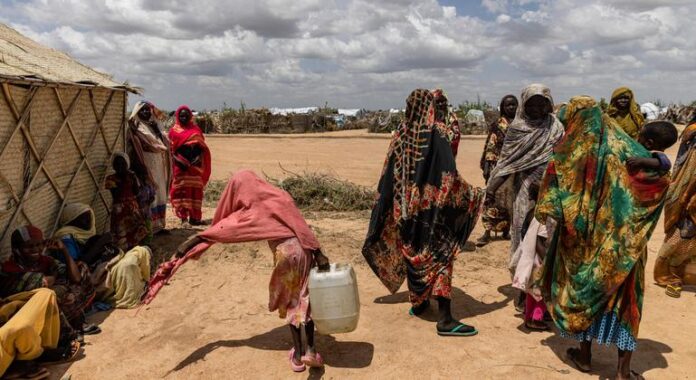
The resurgence of cholera in Sudan has been fuelled by heavy rains and flooding, overcrowding and lack of access to clean water in displacement sites and within communities.

In the Darfur region, where cholera has been spreading since May, the number of cases continues to increase amid “severe access constraints” which are impeding the response, including inaccessible roads due to the rainy season, Ms. Khudari said. As of two days ago 12,739 cases and 358 deaths were reported in more than half of all the localities of the five Darfur states.

In certain localities in West Darfur, the case fatality rate has been as high as 11.8 per cent, she said.

Ms. Khudari explained that WHO and partners have been working to control the outbreak with a vaccination campaign in the worst-hit communities. It began last Sunday “after weeks of preparations to overcome access, transport and logistical challenges”.

The campaign aims to protect 1.86 million people in six priority localities of the Darfurs.

The WHO representative said that the “biggest challenge” in launching the campaign was to “actually get the vaccines there”. She described the difficulties in delivering the life-saving immunizations and supporting supplies via “long routes” to Nyala in South Darfur state earlier this month, amid ongoing security concerns.

El Fasher survivors

Preparations are ongoing to launch the campaign by the end of September in Tawila in North Darfur State, which hosts more than 575,000 internally displaced people, most of whom have fled from the besieged city of El Fasher.

The vaccines are being deployed in Sudan with the support of the UN Children’s Fund (UNICEF), whose spokesperson Ricardo Pires raised the alarm over the severe risks of cholera for children.

Children under five have been “disproportionately affected”, he told reporters, and so far at least 380 have died.

Access to life-saving treatment for cholera in Sudan is limited as the almost two-and-a-half-year-old violent conflict has devastated the health system.

The outbreak comes at a time when “more than 70 per cent of hospitals in conflict-affected areas are non-operational, with health centres being damaged or destroyed during the conflict, lacking supplies and even staff, as well as facilities being often used as shelter,” Mr. Pires stressed.

The UNICEF spokesperson also underscored the impact of “relentless” attacks on the country’s power and water infrastructure which have off cut millions of people including many children from safe and clean water, forcing families to collect water from unsafe and contaminated sources.

Source link

Live security advice: a fragile diplomatic momentum on Ukraine must continue, Guterres exhort

0
Live security advice: a fragile diplomatic momentum on Ukraine must continue, Guterres exhort

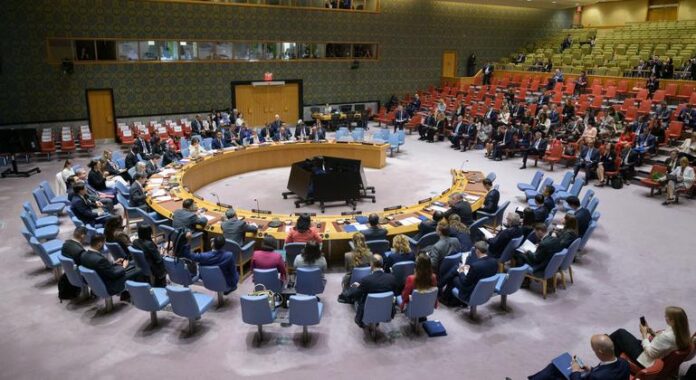
The UN Secretary General told the Security Council on Tuesday that it was important not to lose the “fragile diplomatic dynamic” between Ukraine and Russia – and international mediators – during the end of the war. He informed the ambassadors during consecutive meetings where the call to a ceasefire in Gaza, he declared that the war “day after” stops there, must be anchored in international law, rejecting any “ethnic cleaning” of the Palestinians. OUR Live meetings cover is below; UN News Application users can Click here.

Originally published at Almouwatin.com

World News in Brief: Gaza and Nicaragua human rights update, WHO hypertension alert and alarm over US autism claim

0
World News in Brief: Gaza and Nicaragua human rights update, WHO hypertension alert and alarm over US autism claim

The damaged facilities include nine schools and two health centres sheltering more than 11,000 people. At least five displaced people were injured and UNRWA’s field office also sustained damage.

The agency says that its operations in Gaza City – where Israeli air and ground attacks have intensified – have been sharply reduced after its only functioning health centre north of central Gaza was forced to close.

The UN humanitarian office, OCHA, has also reported a surge in displacement in recent weeks, along with almost 28,000 cases of acute malnutrition among children under-five recorded in July and August.

In the occupied West Bank, UNRWA says that Israeli forces have introduced more restrictions on Palestinian movement by installing new road gates.

Israel ‘intent’ to permanently control Gaza

Meanwhile, a new report from the UN Human Rights Council-mandated investigative body on Palestine says that Israel has demonstrated a “clear and consistent intent” to establish permanent control over the Gaza Strip.

The Commission investigated developments relating to land and housing in all areas of the Occupied Palestinian Territory and in Israel.

It finds in relation to Gaza that Israeli authorities “extensively and systematically demolished civilian infrastructure in the corridors and buffer zone and continuously enlarged areas under their control reaching 75 percent of the Gaza Strip by July 2025.”

Actions undertaken to expand the buffer zone and establish corridors have substantially reduced the territory available for Palestinians, with significant implications for their ability to exercise their right to self-determination.

WHO responds to claims on paracetamol and vaccines

The World Health Organization, WHO, has responded to remarks made on Monday by President Donald Trump in Washington, suggesting that paracetamol use in pregnancy may cause autism.

Spokesperson Tarik Jasarevic said that while some observational studies had raised questions, many others found no such link, and the evidence overall remains inconsistent. If there were a strong connection, he said, it would have been seen consistently across multiple studies.

Caution during pregnancy

Mr. Jasarevic stressed that medicines in pregnancy should always be used cautiously and under medical supervision, particularly in the first trimester.

Speaking in Geneva in response to journalists’ questions, the WHO spokesperson also rejected suggestions that routine childhood vaccines cause autism, noting that WHO’s immunization schedules are based on decades of evidence and have saved more than 150 million lives over the past 50 years.

Uncontrolled high blood pressure puts more than a billion at risk

Staying with the WHO, more than 1.4 billion people worldwide live with hypertension, yet only one in five have the condition under control.

The new WHO report on chronic high blood pressure – launched during the 80th UN General Assembly at an event co-hosted with Bloomberg Philanthropies and Resolve to Save Lives – highlights that uncontrolled hypertension is a leading driver of heart attacks, strokes, kidney disease and dementia, killing over 10 million people each year.

Over 1,000 lives lost per hour

“Every hour, more than 1,000 lives are lost to strokes and heart attacks from high blood pressure – and most of these deaths are preventable,” said WHO chief Tedros Adhanom Ghebreyesus. “Countries have the tools to change this narrative. With political will and investment, millions of lives can be saved.”

The report shows that only 28 per cent of low-income countries have consistent access to all WHO-recommended hypertension medicines, compared to 93 per cent of high-income nations. In 99 countries, control rates remain below 20 per cent.

Despite these gaps, progress is possible. Bangladesh, the Philippines and South Korea have shown how integrating hypertension care into universal health coverage can sharply increase treatment and survival rates.

Nicaragua: UN experts warn of escalating repression beyond borders

The Nicaraguan Government is extending its repression of critics far beyond its own borders, UN independent rights experts told journalists in Geneva on Tuesday, as they presented a new report to the Human Rights Council.

The Group of Human Rights Experts on Nicaragua said that opponents in exile are being stripped of their nationality, denied passports and targeted through digital surveillance, property confiscation and threats to relatives still inside the country.

“Their entire life is systematically dismantled, beginning with their uprooting and erosion of legal identity, cascading into economic collapse, social isolation, and pervasive surveillance,” said chairperson Jan-Michael Simon.

‘Cynical and calculated’

He added that the misuse of international systems, including false Interpol alerts, was part of a “cynical and calculated” strategy to avoid accountability while silencing dissent.

Panel member Reed Brody highlighted the June killing of retired army major and government critic Roberto Samcam in Costa Rica, noting that “even beyond borders, opponents of the Government don’t feel safe.”

While investigations are continuing and no official link has been made, he said the attack underscored the climate of fear facing exiled Nicaraguans.

Fellow rights investigator Ariela Peralta raised the alarm about a resurgence of enforced disappearances inside the country, with dozens of detainees held incommunicado and two recent deaths in custody. “When people are detained in secret and die in State custody, State responsibility is incurred under international law,” she said.

The independent body of experts urged States to consider bringing a case before the International Court of Justice (ICJ) and to step up protection for Nicaraguans exiled abroad.

Source link

President Trump criticizes the UN, NATO and the “hoax” of the climate

0
President Trump criticizes the UN, NATO and the “hoax” of the climate

“What is the purpose of the United Nations?” He asked, adding: “All they seem to do is write a really strongly written letter and never follow this letter. These are empty words and empty words do not solve war. ”

He noted that some had suggested receiving the Nobel Peace Prize, adding that “the real price will be to save millions of lives”.

On Iran, which he described as “the number one number one sponsor”, Trump said that his enrichment capacities had been “completely demolished” and that his administration had ended a 12 -day war.

Warning of “strict prices” to Russia

Regarding Ukraine, the American president said that he had thought that it would be “the easiest” the conflict to be resolved because of his relationship with Russian President Vladimir Putin. Instead, he said, the war dragged on for three years, “killing five to seven thousand young people a week”.

Trump also accused countries of hypocrisy of the North Atlantic Treaty Organization (NATO) of hypocrisy for buying oil and gas in Moscow “when they fight Russia”.

Its proposed solution is the punitive prices: “If Russia does not end the war, the United States will impose very strict prices which would end the war very quickly, but Europeans must also adopt them.”

In Gaza, he urged the immediate action to release all hostages and warned that the unilateral recognition of a Palestinian state would represent “a reward for Hamas for its horrible atrocities”.

“But instead of giving in to Hamas, such as ransom request, those who want peace should be united with a single message-release the hostages now,” he said.

The American president also criticized the UN on the renovation of his headquarters in New York which began in 2008, saying that he had proposed to rebuild him for $ 500 million, but the organization had chosen a different entrepreneur, spending “between two and four billion dollars and had not even obtained the marble floors that I promised them. »»

In migration, he said that in 2024, the UN spent “$ 372 million in cash to support 624,000 migrants to go to the United States to infiltrate our southern border”.

He added: “The UN is supposed to stop the invasion, not promote them. »»

Trump also attacked climatic policies and renewable energies, declaring that “windmills are pathetic” and calls the carbon footprint “a hoax”.

He argued: “If you do not get away from the green energy scam, your country will fail”, this “energy and open immigration destroy Europe” and that “China now produces more CO2 than all other developed nations in the world”.

Originally published at Almouwatin.com

SECURITY COUNCIL LIVE: Ambassadors return to Middle East crisis amid diplomatic impasse

0
SECURITY COUNCIL LIVE: Ambassadors return to Middle East crisis amid diplomatic impasse

A high-level briefing in the UN Security Council on the Middle East crisis has just got underway with Gaza the expected focus amid Israel’s ongoing offensive to wrest full control of Gaza City from Hamas – and stalled diplomacy in New York, following the sixth use of its veto in the chamber by the United States last week since the Gaza war erupted in September 2023. Follow live meetings coverage below – UN News app users can click here.  

Source link

UN guterres to world leaders: choose peace and cooperation rather than chaos

0
UN guterres to world leaders: choose peace and cooperation rather than chaos

Each September, the heads of state and the government meet in New York for a high -level week, where managers present their global priorities. The secretary general’s opening address traditionally sets the tone.

This year, while the UN marks its 80th anniversary, António Guterres recalled the institution’s foundation after the Second World War, when the Nations created the United Nations “as a practical strategy for the survival of humanity”.

“Eighty years later-we will once again face the question of which our founders were confronted-only more urgent, more intertwined, more ruthless,” he told delegates.

Key points of the address

  • The world faces crises that overlap – Wars, climate change and disruptive technology.
  • International cooperation is not idealism – It is essential for survival.
  • The United Nations is crucial -It provides a global platform for dialogue, law and collective action.
  • Peace, human rights and dignity must guide decisions – They are the foundation of a just world.
  • Climate action and responsible technology are urgent – They determine the future of people and the planet.
  • The UN must be reinforced – Only a robust organization can take up challenges of the 21st century.

Complete remarks Available here.

A besieged world

The UN chief described a landscape marked by violence, hunger and climate disaster.

“” We have entered an era of reckless disruption and relentless human suffering,“He said, warning that” pillars of peace and progress are to complete under the weight of impunity, inequalities and indifference. »»

He cited military invasions, armed hunger, disinformation lower than truth, smoke rising from bombed cities, anger that is tearing out on the social fabric and the seas swallowing entire coasts.

Everyone was a warning – and a question about the choices that governments are now confronted.

The unit counts

In this context, Mr. Guterres argued that the UN remains essential.

“” To its best, the United Nations is more than a meeting place, it is a moral compass, a force for peace … A guardian of international law and a rescue buoy for people in crisis.“”

He noted that today’s multipolar world could bring dynamism, but without cooperation, this risks instability.

“Multipolarity without effective multilateral institutions runs chaos-as Europe has learned the hard way of the First World War,” he said.

International cooperation, he insisted, is not naive but a necessity.

“” No country can stop a pandemic alone. No army can stop growing temperatures. No algorithm can rebuild confidence once it is broken.“It is,” he said, “pragmatism with a hard head” in the face of shared global threats.

At this time of crisis, the United Nations has never been so essential, the Secretary General said.

“The world needs our unique legitimacy. Our competition power. Our vision to unite nations, bridge divisions and confront the challenges we are seized. ”

Five urgent choices

The secretary general set out “five critical choices” for governments:

Peace on war: Sudan’s conflicts in Ukraine in Gaza show the cost of ignorance of international law. “” The charter is not optional. It is our foundation,“He said, urging ceasefires, responsibility and diplomacy.

Dignity and rights: human rights are “the foundation of peace”, He continued. The protection of civic freedoms must go hand in hand with the financing of development so that countries can invest in health, education and opportunities.

Climate justice: “fossil fuels are a losing bet”, ” He declared, urging a faster investment in renewable energies, the promises of stronger national climates and more funding for vulnerable nations. “Science says that limiting the rise in temperature to 1.5 degrees is still possible … but the window is closing.”

Technology for humanity: Artificial intelligence and other tools must be regulated responsible. “” No machine should decide who lives or dies,He said, calling for global standards to maintain technology at the service of people.

One more strongly: The crises multiplying, Mr. Guterres said that the UN must adapt and that the member states should finance it properly. He criticized the imbalance where “For each dollar invested in the construction of peace, the world spends $ 750 in weapons of war.“”

‘We must never give up’

Mr. Guterres ended with a personal note, remembering to have grown “in the darkness of the dictatorship, where the fear of voices and hope would have been almost silent.

This experience that matures under the authoritarian regime of Portugal, taught him that “The real power rises from people – from our shared determination to maintain dignity.“”

His primordial message was simple: leaders cannot go to despair.

“In a world of many choices, there is a choice that we must never make: the choice to abandon. We must never give up, ”he swore. “It’s my promise to you.”

Audio: the full address of the secretary general Guterres in the general meeting.

Originally published at Almouwatin.com

UN’s Guterres to world leaders: Choose peace and cooperation over chaos

0
UN’s Guterres to world leaders: Choose peace and cooperation over chaos

Each September, heads of state and government gather in New York for high-level week, where leaders present their global priorities. The Secretary-General’s opening address traditionally sets the tone.

This year, as the UN marks its 80th anniversary, António Guterres recalled the institution’s founding after World War Two, when nations created the United Nations “as a practical strategy for the survival of humanity.”

“Eighty years on – we confront again the question our founders faced – only more urgent, more intertwined, more unforgiving,” he told delegates.

Key points from the address

  • The world faces overlapping crises – wars, climate change and disruptive technology.
  • International cooperation is not idealism – it is essential for survival.
  • The United Nations is crucial – it provides a global platform for dialogue, law and collective action.
  • Peace, human rights and dignity must guide decisions – they are the foundation of a just world.
  • Climate action and responsible technology are urgent – they determine the future of people and planet.
  • The UN must be strengthened – only a robust organization can meet 21st-century challenges.

Full remarks available here.

A world under siege

The UN chief described a landscape marked by violence, hunger and climate disaster.

“We have entered an age of reckless disruption and relentless human suffering,” he said, warning that the “pillars of peace and progress are buckling under the weight of impunity, inequality and indifference.”

He cited military invasions, weaponised hunger, disinformation silencing truth, smoke rising from bombed-out cities, anger tearing at the social fabric and seas swallowing whole coastlines.

Each was a warning – and a question about the choices governments now face.

The UN matters

Against this backdrop, Mr. Guterres argued that the UN remains indispensable.

“At its best, the United Nations is more than a meeting place, it is a moral compass, a force for peace…a guardian of international law and a lifeline for people in crisis.”

He noted that today’s multipolar world could bring dynamism, but without cooperation it risks instability.

“Multipolarity without effective multilateral institutions courts chaos – as Europe learned the hard way resulting in World War One,” he said.

International cooperation, he insisted, is not naïve but a necessity.

“No country can stop a pandemic alone. No army can halt rising temperatures. No algorithm can rebuild trust once it is broken.” It is, he said, “hard-headed pragmatism” in the face of shared global threats.

In this moment of crisis, the United Nations has never been more essential, the Secretary-General stressed.

“The world needs our unique legitimacy. Our convening power. Our vision to unite nations, bridge divides and confront the challenges before us.”

Five urgent choices

The Secretary-General set out “five critical choices” for governments:

Peace over war: Conflicts from Sudan to Ukraine to Gaza show the cost of ignoring international law. “The Charter is not optional. It is our foundation,” he said, urging ceasefires, accountability and diplomacy.

Dignity and rights: Human rights are “the bedrock of peace,” he continued. Protecting civic freedoms must go hand in hand with development finance so countries can invest in health, education and opportunity.

Climate justice: “Fossil fuels are a losing bet,” he declared, urging faster investment in renewables, stronger national climate pledges and more finance for vulnerable nations. “Science says limiting temperature rise to 1.5 degrees is still possible…but the window is closing.”

Technology for humanity: Artificial intelligence and other tools must be governed responsibly. “No machine should decide who lives or dies,” he said, calling for global standards to keep technology in service of people.

A stronger UN: With crises multiplying, Mr. Guterres said the UN must adapt and Member States must fund it properly. He criticized the imbalance where “for every dollar invested in building peace, the world spends $750 on weapons of war.”

‘We must never give up’

Mr. Guterres ended on a personal note, recalling growing up “in the darkness of dictatorship, where fear silenced voices and hope was nearly crushed.

That experience coming of age under Portugal’s authoritarian regime, taught him that “real power rises from people – from our shared resolve to uphold dignity.”

His overriding message was simple: leaders cannot surrender to despair.

“In a world of many choices, there is one choice we must never make: the choice to give up. We must never give up,” he vowed. “That is my promise to you.”

AUDIO: Secretary-General Guterres’ full address to the General Assembly.

Source link

Celebrating 10 years of the European Week of Sport

0
Celebrating 10 years of the European Week of Sport

This year we celebrate the 10th anniversary of the European Week of Sport, an EU initiative that has helped millions of Europeans discover the physical, mental and social benefits of sport and physical activity. The week runs from 23 to 30 September after an opening ceremony in Copenhagen.

Source link

New EU4Health calls for proposals under the 2025 Work Programme

0
New EU4Health calls for proposals under the 2025 Work Programme

On behalf of the European Commission, HaDEA has published new open calls for proposals covering nine topics outlined in the 2025 EU4Health Work Programme and based on DG SANTE policy priorities: 

  • EU4H-2026-SANTE-PJ-01 – Call for proposals to pilot and implement cancer screening programmes for gastric cancer (CR/CV&NCD -g-25-12)
  • EU4H-2026-SANTE-PJ-02 – Call for proposals to pilot and implement cancer screening programmes for lung cancer (CR/CV&NCD -g-25-13)
  • EU4H-2026-SANTE-PJ-03 – Call for proposals to pilot and implement cancer screening programmes for prostate cancer (CR/CV&NCD-g-25-14)
  • EU4H-2026-SANTE-PJ-04 – A European flagship initiative leveraging AI and health data for cardiovascular health and related non-communicable diseases: Advancing Risk Prediction, Prevention, Treatments, Personalised Care and Rehabilitation (CR/CV&NCD-g-25-16)
  • EU4H-2026-SANTE-PJ-05 – Call for proposals on lifelong prevention for a healthy life with focus on cardiovascular diseases (CR/CV&NCD-g-25-18)
  • EU4H-2026-SANTE-PJ-06 – Call for proposals to support the development of a medicine pricing, reimbursement and access tracker through the EURIPID database (HS-g-25-20)
  • EU4H-2026-SANTE-PJ-07 – Call for proposals for a programme on orphan medical devices, in particular targeting paediatric patients (HS-g-25-24)
  • EU4H-2026-SANTE-PJ-08 – Call for proposals for health data for biotech innovation leveraging the European Health Data Space (DI-g-25-31)
  • EU4H-2026-SANTE-PJ-09 – Call for proposals to contribute to the organisation of conferences (OA-g-25-33) 

Indicative budget for all the calls: €56 816 810 

Interested parties are invited to learn more and apply by 6 January 2026, 17:00 CET, on the EU Funding and Tenders Portal. 

Info session: recording available 

An online info session open to all potential applicants and stakeholders took place on 9 October, highlighting the key steps for preparing a successful proposal and provide valuable insights into the specific objectives and requirements for each topic.  

The recording and presentations are available on the info session page. 

Background 

EU4Health is the fourth and largest of the EU health programmes. The EU4Health programme goes beyond an ambitious response to the COVID-19 crisis to address the resilience of European healthcare systems. The programme provides funding to national authorities, health organisations and other bodies through grants and public procurement, contributing to a healthier Europe. HaDEA manages the vast majority of the total EU4Health budget and implements the programme by managing calls for proposals and calls for tenders.     

Source link

EU and Indonesia conclude negotiations on free trade agreement

0
EU and Indonesia conclude negotiations on free trade agreement

The EU and Indonesia have finalised negotiations on Comprehensive Economic Partnership and Investment Protection agreements. Both create new export opportunities for EU companies and more secure supply chains for energy and raw materials.

Source link